Blog

  • LDWA – Hunnypot Hundred 2026 (Main Event – What to Expect)

    LDWA – Hunnypot Hundred 2026 (Main Event – What to Expect)

    There are a number of interviews with entrants of the 100 at https://www.julianwhite.uk/ldwa-100/ with more coming, but I thought that I’d summarise some of the interviews that have been received so far. And add my own commentary of my 100 in 2021 which I of course hardly mention…..

    There are many reassuring things about the LDWA 100 such as Richard at the registration desk fending off a crisis, supportive volunteers along the route and a few sore feet. The entrants that I’ve spoken to already at the 2026 Hunnypot Hundred in Kent have already produced a splendid collection of optimism, experience, mild alarm and food-based strategising. I think it’s fair to say that a reasonable number of entrants are at this stage wondering what they’ve let themselves in for, but this is a big thing to do and it’s good to be prepared.

    Mira Nair is approaching it with the correct level of determination, saying that “my mindedness is as bloody as ever”, which is perhaps the most useful quality to possess when the event involves 100 miles, hills and the inevitable moment when the human body asks whether a shorter hobby might have been available. Ercole Lugari, taking on his first LDWA 100, is looking forward to the “unique atmosphere” of the Hundreds and seeing the Kent countryside, while Mark Pennington offers the wonderfully realistic answer that he is most looking forward to “Saturday and Monday”, which does at least have the advantage of leaving out most of Sunday which is something of a sub-optimal day for many entrants.

    A strong theme running through the interviews is that entrants are not simply looking forward to completing a route, but to being part of the intriguing village, if I may refer to LDWA groups in that way, that forms around the 100. Sab describes the event as his “annual pilgrimage”, with the camaraderie, new friends, marshals and the chance to see another part of the country all pulling him back.

    Phoenyx Harritt, taking on their first Hundred, is looking forward to Pooh Sticks on Pooh Bridge, Ashdown Forest and “the camaraderie of the shared achievement”, while Graham Sherwood is anticipating “shared adversity and pain, and hopefully a few laughs”, which is a beautifully LDWA sentence because it manages to make discomfort sound like a perfectly legitimate social activity. Actually, don’t quote me on this as I’m the national LDWA comms officer, but this is perhaps why the LDWA has never needed a comms department in the conventional sense, the product rather proudly advertises itself as uncomfortable and people still keep signing up merrily.

    This reminds me of when I asked Jayne Cook, one of the heroic Norfolk & Suffolk entrants, how much of the challenge walk 100 that she actually enjoys. Her response a couple of years ago was “you’re not supposed to enjoy it, it’s a challenge”, but I know she secretly loves every moment.

    Simon Hodgin, having supported the marshal’s event, thinks entrants will especially enjoy the last 100 metres, before generously conceding that there is also plenty to enjoy before then, especially anything in daylight. But he’ll have to be careful not to let his mind wander too much with his thoughts of entering one of the Spine races….. And I wonder whether Chelle, who completed her twentieth LDWA 100 this year at the marshals’ event will be back next year. She says not, but I think in early 2027 we’ll see her studying the route with a suspiciously interested look in her eye.

    The route itself is also getting plenty of attention, not least because this year appears to contain more hills than some recent Hundreds, which may come as unwelcome news to anyone who had mentally filed Kent under “gentle orchards and nice tea rooms” which is what I had perhaps done. But, I mentally block out hills, they’re bad for the mind (well, and calves, morale and general happiness, but I’m from Norfolk and we’re not hill trained). David Morgan, who has walked, marshalled and organised more 100s than most people have owned pairs of walking socks, says the route feels surprisingly rural given its proximity to London, with the North Downs particularly pretty, although he also warns that the steepest rises come in the final third and that entrants should not go too hard too soon. I think that piece of advice is one of the most sensible, this is not an easy 100, although I accept that none of them actually are.

    Rebecca Lawrence, who has started 15 Hundreds and completed 11, says Hunnypot feels special because she loves trees and the area is full of them, while Enfys Bosworth is looking forward to a hillier route after last year’s flatter event, as well as the community and a healthy bit of FOMO. Jane Bates, meanwhile, offers a useful reminder from the back of the field which it is not about speed, it is about doing what is needed to finish within 48 hours, even if that includes accepting a second night and perhaps a cheeky little power nap. And, it really isn’t about speed, this isn’t a race but a personal journey. Quite a long personal journey, but there we go.

    And then, inevitably, there is food, which is perhaps my favourite topic which might not mark me out as an elite endurance athlete, but it does make me unusually well suited to checkpoint-based commentary. I was delighted to become an official food tester at the marshals’ event, but that’s not the first time I’ve selflessly taken on that role. No civilised discussion of the LDWA 100 can avoid food, because after enough miles catering stops being a practical matter and becomes a branch of moral philosophy.

    Mira is hoping for mac and cheese, homemade flapjacks or cake, crumpets, pizza and little yoghurts. Ercole gives perhaps the purest answer of all “tea and cake” because a cup of tea always makes things better, or a 15% stout, whatever suits the individual’s mindset. Mark looks forward to cereal, rice pudding and tea in the small hours, while David praises crumpet with tomato purée and melted cheese, plus homemade dhal and naan breads. Enfys looks forward to macaroni cheese, fish finger butties, fresh fruit and sandwiches, and Phoenyx is making a beeline for cola while avoiding anything spicy, which seems sensible when one’s digestive system is already being invited into several days of negotiation.

    The food answers also reveal the deep tactical wisdom that only long-distance walking can produce. Sab finds melon and orange easier to eat when other food becomes difficult, with peanuts and crisps working well too, though bread sandwiches become hard to face after about 70 miles. Jane is clear that food is key, warning that not eating enough early on can cause problems later, and says that anything homemade is what she really looks forward to. I think this is a good point, nutrition is hugely important although I accept that if I ran the event every checkpoint would just have pies.

    Graham needs plenty of salty food and stresses the importance of eating at every checkpoint before nausea makes it harder. I remember on my 100 that I sometimes genuinely didn’t want food and was bemused why my body didn’t crave more, but eating is important. Rebecca’s advice is equally direct which is to eat and drink as much as needed, take rehydration salts and, perhaps most importantly, do not go into any pubs en route until the end. This is a cruel rule, but probably a necessary one, particularly for those of us who regard pubs as cultural institutions. There are few downsides to pubs in my eyes, but they are quite hard to leave after seventy miles and especially if they have delicious real ale, craft beer, Mini Cheddars and comfortable chairs.

    What comes through most strongly is that the Hunnypot Hundred is not just a test of walking fitness. It is a test of judgement, humour, appetite, patience and the ability to treat each checkpoint as both salvation and a time-management threat. People are looking forward to the scenery, the trees, the hills, the company, the daylight, the finish, the conversations, the little acts of kindness and, quite reasonably, the food. There will be tough moments, of course. There will be sore feet, late hills, odd thoughts in the night, perhaps hallucinations and probably at least one personal conversation with a cheese crumpet.

    But if these interviews show anything, it is that the LDWA 100 has a strange ability to turn discomfort into memory, strangers into companions and a very long walk into something people somehow want to do again. Which is either inspiring or medically fascinating, and possibly both. Most of all it’ll be fun, well, looking back, it’ll seem like fun and that’s the main thing.
  • LDWA – Hunnypot Hundred 2026 (Main Event – Interview with Entrant Sabeersha Basheerkutty)

    LDWA – Hunnypot Hundred 2026 (Main Event – Interview with Entrant Sabeersha Basheerkutty)

    I’ve dusted off my previous page at https://www.julianwhite.uk/ldwa-100/ all about the LDWA 100 to bring it up to date for 2026.

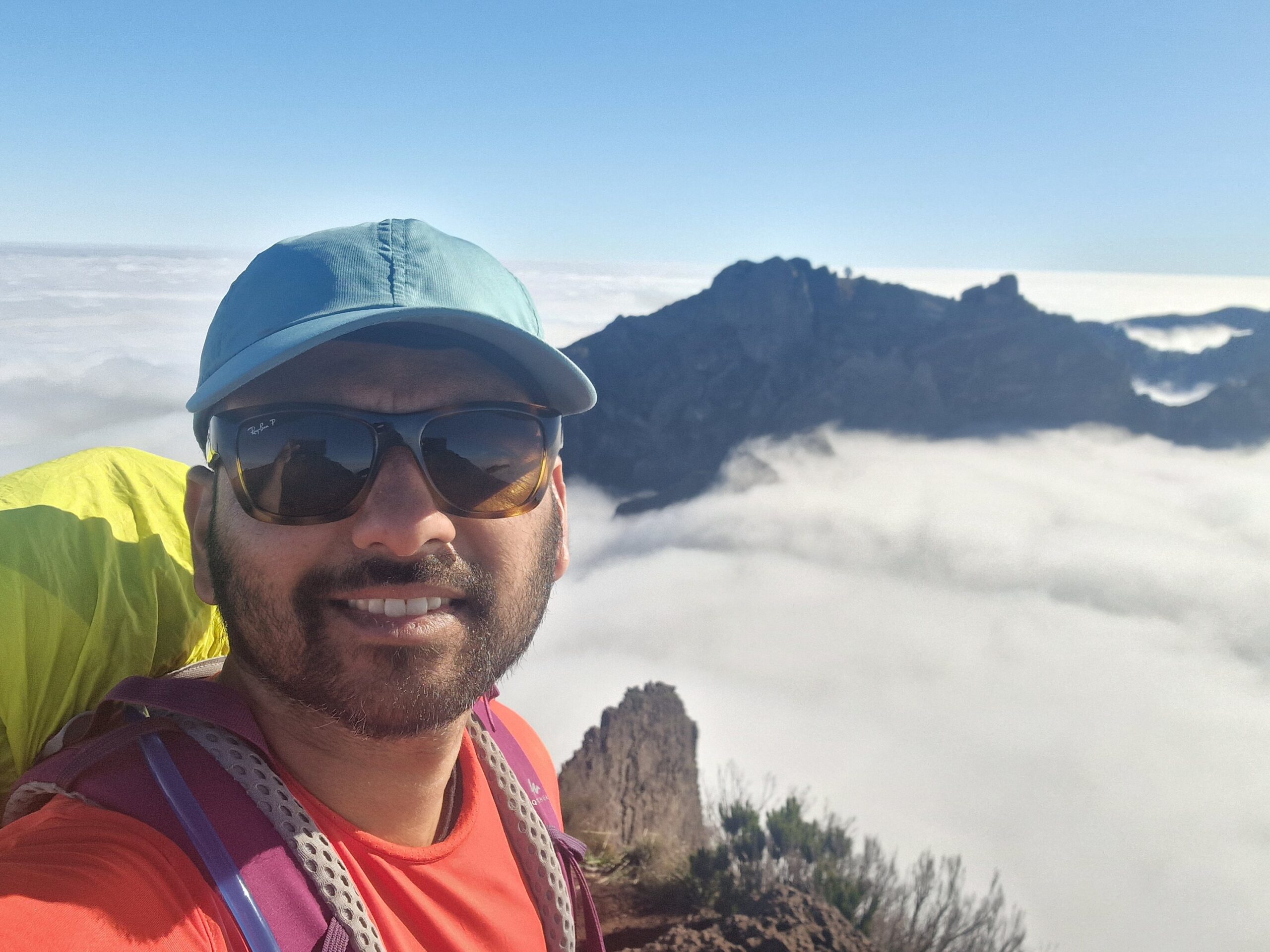
    This interview is with Sab and I liked how he refers to himself as a lazy runner, I think I’m not dissimilar to that! This will be his fourth LDWA 100 and he was kind enough to answer some questions for me.

    Q. Could you briefly introduce yourself and what got you into long distance walking?

    A. Myself Sab, moved to UK 8 years ago. I am originally from India, currently lives in Middlesbrough. As I was a lazy runner and didn’t do any solo running during Covid, I joined a walking group after Covid. My best friend from that walking group mentioned about LDWA and my first walk was the Kettlewell challenge event in 2022, there I met another walker who has done more than 20 hundreds by then. That was the first time we as a group heard about the 100, and 8 of us where at the starting line of EBB100 the following year.

    Q. How many LDWA 100s have you completed before, and what keeps bringing you back to the distance?

    A. Three hundreds so far. This is now my annual pilgrimage, if I can say that 🙂 Plan is not to miss out on one as long as I can do a 100. Plenty of reasons to do the event. To name a few, it is a great holiday where you spend time with friends, challenging yourself, hitting the wall, find the strength which you never knew you had, making new friends, meeting friends from allover the country and seeing another part of the country, the wonderful marshals etc.

    Q. How has your training been going, and has anything surprised you about the preparation this time?

    A. Training was great, done plenty of miles in April, including a few 50 milers. It shouldn’t be a surprise, but I was worn out by end of April.

    Q. How prepared do you feel at this stage, physically and mentally?

    A. Feels that I am extremely well prepared both physically and mentally.

    Q. What are you most looking forward to about the event?

    A. The camaraderie. Exploring the part of the country I have never been before.

    Q. Is there anything about this particular 100 that feels especially challenging, whether that’s the route, the distance, the timing or simply staying cheerful at 3am?

    A. The route got more elevation than my past 100s. So waiting to see how the body will cope with the ascents later in the event.

    Q. Food can become strangely important on a 100-mile event. What do you usually rely on to keep yourself going, and is there anything you absolutely cannot face after enough miles?

    A. I find it easier to eat fruits (melon and orange) even when I could not eat other food items. Peanuts and crisps work well for me too. I found it difficult to eat bread sandwiches after around 70 miles last time.

    Q. Do you have any little routines, habits or bits of advice that help you through the harder parts of a long event?

    A. “This too shall pass” true for both good and bad times, but remember it more when you have a bad time. The one thing I do when I feel sleepy while walking, just change the pace infrequently (walk fast, slow, change gait, cadence etc) so that the brain can’t find a rhythm to settle in.

    Q. When you look back afterwards, what do you think will make this year’s 100 feel memorable?

    A. New friends I made, any funny stories from the walk, the sunrise on Sunday and may be on Monday too.

  • LDWA – Hunnypot Hundred 2026 (Main Event – Interview with Entrant Simon Hodgin)

    LDWA – Hunnypot Hundred 2026 (Main Event – Interview with Entrant Simon Hodgin)

    I’ve dusted off my previous page at https://www.julianwhite.uk/ldwa-100/ all about the LDWA 100 to bring it up to date for 2026.

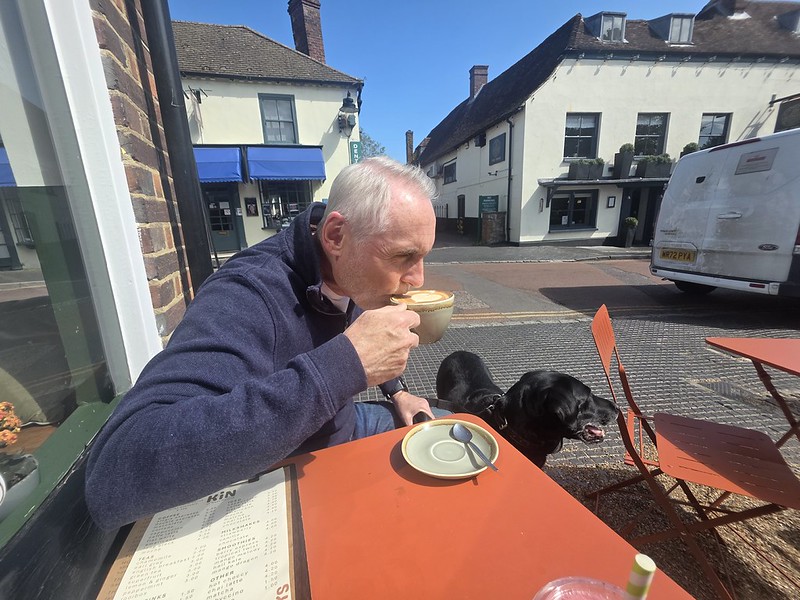
    Here’s entrant Simon Hodgin with me at the marshal’s event as we needed refreshment as supporting the Norfolk & Suffolk group was exhausting. There’s a long interview with Simon and volunteering on the podcast, of which much more very soon! But here’s a quick interview about what he’s expecting at the main event.

    Q. Could you briefly introduce yourself and how many 100s you’ve completed?

    A. Simon Hodgin, a member of the Norfolk and Suffolk group. I’ve entered and completed seven 100s to date.

    Q. Having supported others on the marshal’s event, what were your first impressions of this year’s Hunnypot 100?

    A. Like all 100s, it’s different to the others. More hills than the Suffolk 100, but with some spectacular countryside to enjoy.

    Q. Are there any particular sections of the route that you think entrants will especially enjoy or that you’re looking forward to?

    A. I think entrants will especially enjoy the last 100 metres of the route! Joking aside, there seems a lot to enjoy. For me, it’s anything in daylight.

    Q. Do you think there are any parts of the route that seemed more challenging than expected, either because of the terrain, navigation, timing or the general little arrangements that make a 100 what it is?

    A. There are more hills to navigate in the final section, so it’s a reminder to everyone to pace themselves. Generally, I really think it depends on who you are and, importantly, how you are feeling at any particular part of the route.

    Q. What makes a good checkpoint or marshal interaction when someone arrives tired, hungry or wondering why they have made such a lifestyle choice?

    A. It’s the support and encouragement you get when entering any checkpoint. The marshal role really is important, not only to make sure you are drinking and eating enough, but also to mentally help those who may need a little encouragement from time to time.

    Q. What advice would you give to someone taking on their first 100, especially if they’re nervous about the distance, the night section or keeping themselves moving?

    A. Walk at your pace and don’t get carried along in the early miles by faster walkers. Remember, if you’ve done the training, the chances are you can go the distance.

    Unless you are very unlucky with an injury, it’s all about overcoming the mind in the later miles when it questions why you are doing this. Ignore the questions, put one foot in front of the other and keep going.

    Q. What do you think makes the LDWA 100 special, both for the people walking it and for the people helping to make it happen?

    A. It’s a unique event: the challenge, the atmosphere and the support you get all the way along the route. Ultimately, you are challenging yourself. Everyone there, be it other walkers, marshals or supporters, wants you to succeed.

    Q. Finally, could you be tempted to enter one of the Spine races?

    A. You’ll just have to wait and see! [I think he will, he’s still young enough to do it! – Julian]

  • Lübeck – Willy Brandt House (3/3)

    Lübeck – Willy Brandt House (3/3)

    Although Brandt stood down as the Chancellor of West Germany in 1974, he remained the leader of the SPD until 1987. Although he hadn’t always been sure that Germany would reunite, he saw the collapse of communism across Central and Eastern Europe as well as the beginnings of German integration. He was known for the phrase “Now grows together what belongs together” for Germany and he is seen as one of the greatest of all German leaders.

    There were plenty of media screens around the place and they switched to subtitles in English when I placed my card against the panel. All nicely done.

    A series of photos of Brandt.

    There was a little special exhibition at the end of the museum tour with this section pointed away from the main doors. The letter in the display is in French and was written by Brandt to Jacob Walcher (1887-1970) on 31 October 1936. Walcher sent Brandt to do political work in Norway and their friendship broke in 1946 as their political views diverged too much.

    A photo of the building from 1930 when it was used as a library.

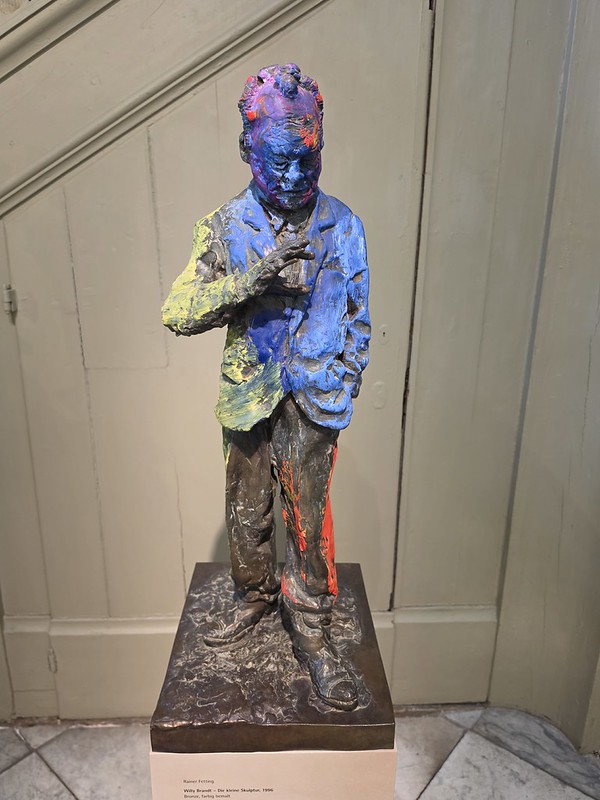
    A sculpture of Brandt created by Rainer Fetting in 1996.

    Willy Brandt (1913-1992).

    I very much liked this small museum, although it only took around thirty minutes to look around it. The team members were friendly and welcoming, with much of the text in English. I liked how the media had English subtitles for those that wanted it and I learned a great deal about European politics from this period as well as about Willy Brandt. There’s no admission charge and I thought that it was all really quite lovely.

  • Lübeck – Willy Brandt House (2/3)

    Lübeck – Willy Brandt House (2/3)

    Continuing my riveting account of the Willy Brandt House in Lübeck, this is a photograph of Brandt along with JF Kennedy and Konrad Adenauer on 26 June 1963. This is was when Kennedy made the speech:

    “Two thousand years ago — Two thousand years ago, the proudest boast was ‘civis Romanus sum.’ Today, in the world of freedom, the proudest boast is ‘Ich bin ein Berliner.’”

    Although I rather like his line in the same speech:

    “Freedom has many difficulties and democracy is not perfect. But we have never had to put a wall up to keep our people in.”

    Anyway, Brandt was here in his role as the fourth governing Mayor of Berlin, a role that he held from 3 October 1957 until 1 December 1966.

    The Nobel Peace Prize that was awarded to Willy Brandt on 10 December 1971. He was awarded the Peace Prize for both his work in unifying Europe and the development of the EEC, as well as reconciling West Berlin with the countries in eastern Europe.

    Political campaigning posters.

    This large space was used to put some televisions on as part of a media room, but it did feel like they were trying to stretch their exhibits out a little bit. There’s probably much more that could be done in a space like this. There were lots of interesting film clips here telling the story of Brandt being the Chancellor of West Germany between 22 October 1969 and 7 May 1974. His resignation came about following the Günter Guillaume scandal, he was one of Brandt’s advisers who it was revealed was a Stasi informant.

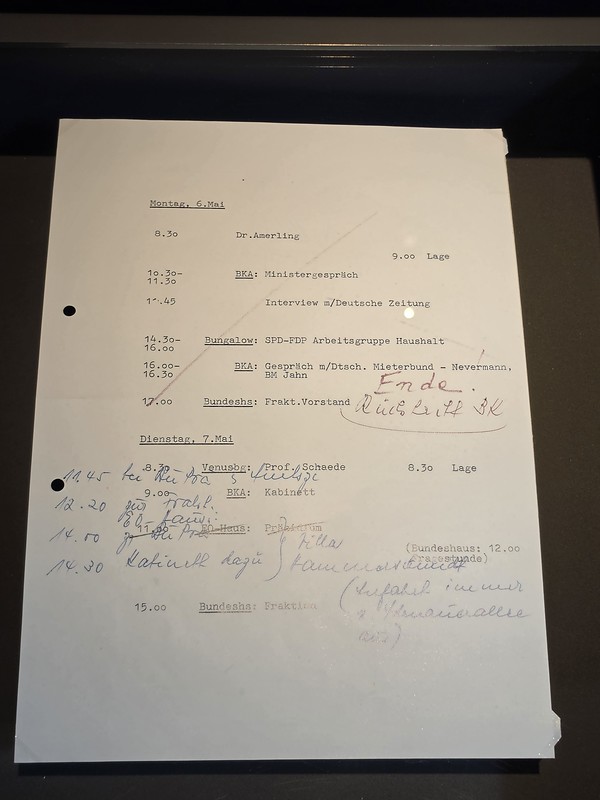
    Brandt’s schedule for his last day as Chancellor.

    Brandt’s resignation letter to the Federal President Gustav Heinemann on 6 May 1974.

    It was the end of an era, but his work on foreign policy was hugely significant and hence the Nobel Peace Prize. Brandt’s Government also pursued domestic reforms, including expansion of education, welfare and civil liberties, all leading towards a more socially liberal and outward-looking West Germany. His time of office saw Germany becoming more democratic, more self-confident and more honest about its past.

    The thing that I learned was that his kneeling at the Warsaw Ghetto memorial in 1970 became one of the great symbolic gestures of post-war reconciliation. I will look out for the memorial to his visit which is in Warsaw and I hadn’t noticed before, but he knelt as a sign of atonement for the Nazi damage to Germany. It was controversial amongst Germans, but shifted the entire debate. Very brave.

  • Lübeck – St. Catherine’s Church (St. Thomas Becket of Canterbury)

    Lübeck – St. Catherine’s Church (St. Thomas Becket of Canterbury)

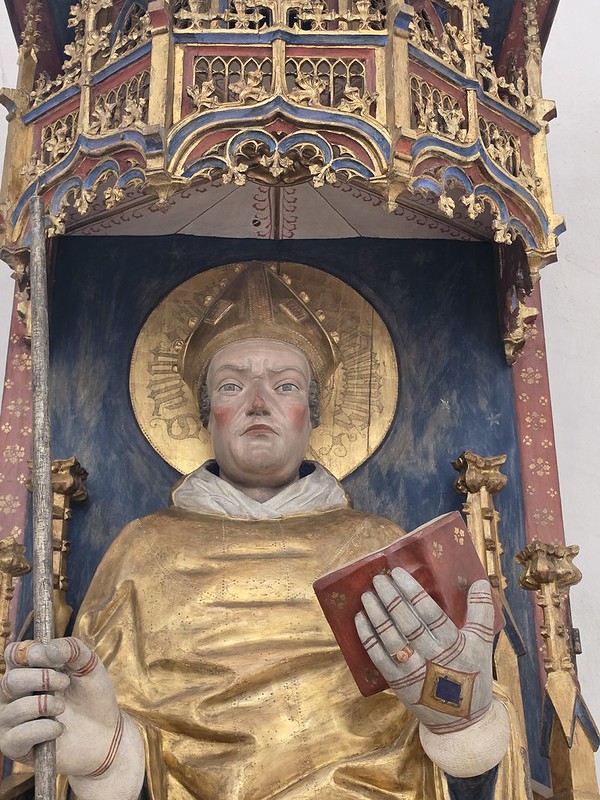
    It’s moments like this which are a reminder of how interconnected religious figures were around northern Europe. This figure of St Thomas Becket of Canterbury is a good example, although this is a 1927 copy. The original was made in Lübeck by Bernt Notke (1440-1509) for the church of Skeppstuna in Sweden. I’d been trying to establish where I’d heard of him before, but it’s because of his Danse Macabre in Tallinn.

    It shows how far the cult of Becket travelled after his murder in Canterbury Cathedral in 1170. A saint violently and sub-optimally dispatched in England somehow ended up represented in splendid painted and gilded wood for a Swedish church. The face is especially compelling as it’s pale, stern, pink-cheeked and direct, with the slightly fixed expression of someone who has seen the workings of power from rather too close a distance. The detail is decadent without being delicate; the gloved hands, the red book, the halo, the painted canopy and the little flashes of blue and gold all turn the sculpture into something quite noteworthy.

  • Norwich – Anglia Square Demolition (14 May 2026)

    Norwich – Anglia Square Demolition (14 May 2026)

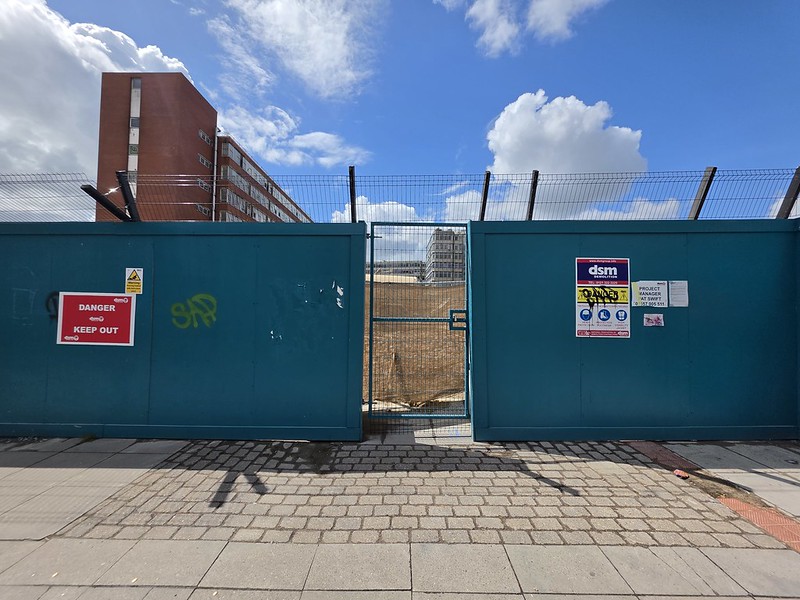
    There’s really not much of excitement visible at Anglia Square now, certainly not without me going on the top deck of a bus to see over the top of the hoarding that has now been put up. It’s a shame that they didn’t put some plastic screens up so people could see in, that seems quite common at many sites and would have likely interested a fair number of people here. Anyway, these are the only photos that I could take of the site.

  • LDWA – Hunnypot Hundred 2026 (Main Event – Interview with Entrant Graham Sherwood)

    LDWA – Hunnypot Hundred 2026 (Main Event – Interview with Entrant Graham Sherwood)

    I’ve dusted off my previous page at https://www.julianwhite.uk/ldwa-100/ all about the LDWA 100 to bring it up to date for 2026.

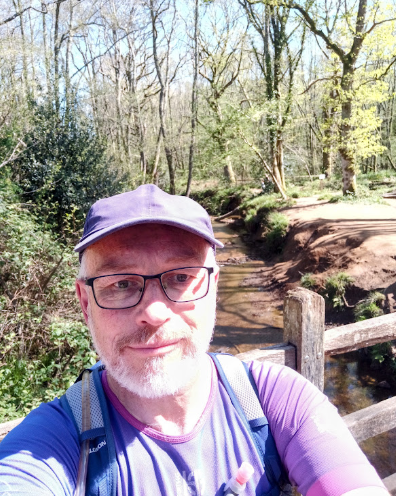
    This interview is Graham Sherwood, a member of the NEC, who gives some great advice on completing 100s. And what a debut for a social walk that he got himself mentioned in Strider! This photo of Graham was taken at Pooh Bridge on the Kent social walk in April 2026.


    Q. Could you briefly introduce yourself, including your role as LDWA groups officer, and how many LDWA 100s have you entered?

    A. I’m Graham Sherwood, LDWA local groups officer, secretary of Merseystride LDWA and co-organiser of the Open to Offas challenge event. As local groups officer, my role is to help the 41 local LDWA groups, who are the backbone of the organisation, to thrive. I joined the LDWA in 2018 having heard good things about it from fellow participants on a 35 mile charity challenge walk along the Llangollen Round.  Although I did a couple of 50 mile events shortly after joining, the thought of a 100 was just crazy. However, in May 2019, I somehow found myself on the Hadrian 100, and thanks to the support I received from other walkers and encouragement from marshals I managed to complete the event. In total now I have started five and completed four 100s – on the Trans-Pennine 100 I retired at 67 miles.

    Q. What made you decide to take on this year’s LDWA 100 in Kent?

    A. Once you start doing 100s, they become addictive. I know I can walk a hundred miles over two days and two nights and I want to prove to myself that I can do it again.

    Q. What are you most looking forward to about the route and the event weekend?

    A. I’m looking forward to getting to know this part of Kent and East Sussex better. I’m also looking forward to the social aspect of the 100 – shared adversity and pain, and hopefully a few laughs.

    Q. Have you walked much in Kent before, and is there anything about the landscape or area that particularly appeals to you?

    A. Having grown up in the Chilterns, I love chalk landscapes. I am most familiar with the area around Dover. Although I live in North Wales, my very first LDWA social walk was with Kent group in June 2018 – a 42 mile dawn to dusk walk led by this year’s 100s chair, Peter Jull. I distinguished myself by having a funny turn in the pub we called into in the afternoon and getting written up in Strider as a “fainting episode”. I’ve also completed the White Cliffs challenge four times and the Sevenoaks circular once.

    Q. How has your training and preparation been going so far?

    A. I hope reasonably well. I try to get out on a social walk at least once a week, mainly with The Irregulars or Merseystride, but I’ve also joined walks organised by East Lancs and Kent in the last few weeks. I managed to complete the Cymoedd Sir Fynwy 50 in South Wales this year, something I failed to do two years ago and I’ve also completed challenge events organised by Lakeland, West Lancs and Essex and Herts groups this year.

    Q. When you think about the 100, are you mainly focused on finishing, enjoying the route, managing the pace or some slightly alarming combination of all three?

    A. I am a slow walker and I will be focussing on getting round this route within the 48 hours – I walked a 12 mile section of the route through Ashdown Forest to Crowborough with Kent group a few weeks ago and know it’s going to be tough underfoot and very challenging. This is the first time I have ever done anything resembling a recce. My normal recce consists of a couple of fly-throughs on OS Maps and checking the gpx route on my Locus Map app.

    Q. What do you most enjoy about the atmosphere of a 100-mile event?

    A. The 100 brings the LDWA membership together – talking about it on social walks before and after the event. The support you get from other participants and volunteers at checkpoints.

    Q. Do you have any advice for entrants, particularly at times when they’re tired and when perhaps the enthusiasm has dimmed a little?

    A. The 100 is a mental as well as a physical challenge – I find the first night tougher than the second as I always feel sick. The hallucinations on the second night are rather fun. On my first hundred I got to the Kent checkpoint some 30 hours in determined to retire. Graham Smith told me to sit down, have a cup of soup and wait half an hour. That was great advice.

    Q. Food can become rather important on a long event, sometimes to a level that would alarm anyone outside the LDWA. Are there any checkpoint foods or walking snacks you’ll be especially hoping for?

    A. I need plenty of salty foods to keep me going. It’s essential to keep eating at every checkpoint as if you aren’t careful you start feeling sick and it gets really hard to eat.

    Q. As someone involved with LDWA groups nationally, what do you think events like the 100 show about the strength of the association and its volunteers?

    A. The 100 is a fantastic showcase for the LDWA and goes to show the dedication and determination of its members. I really admire those at HQ and at the checkpoints who help the participants complete the challenge – their support, encouragement and, of course, food are invaluable – we couldn’t do it without you.

    Q. Finally, when you reach the start line in Kent, what do you think will be going through your mind?

    A. I’m going to be glad to see familiar faces but nervous – this is going to be a particularly challenging route because it is hilly, the ground is rough underfoot and there are a lot of stiles.

  • Lübeck – Willy Brandt House (1/3)

    Lübeck – Willy Brandt House (1/3)

    I like a political museum and The Willy Brandt House in Lübeck occupies a restored patrician house at Königstraße 21. The idea of creating a memorial to Brandt in his home city was encouraged by Günter Grass, who has his own museum nearby and which I also visited. This building was given by the city and it had previously served the Zirkelgesellschaft of long-distance merchants, later housed the appeal court for the four free cities of Bremen, Hamburg, Frankfurt am Main and Lübeck, and was also used as the city archive and public library. In short, it’s been used for lots of different purposes and has no direct link to Brandt, which felt slightly sub-optimal.

    I didn’t know much about Willy Brandt when I entered the museum, I just knew that he was a German statesman who served as Chancellor of West Germany from 1969 to 1974. He was a leading Social Democrat, a former mayor of West Berlin and one of the key figures in post-war European politics, but that was as far as my knowledge went. There’s no admission charge and there was a friendly welcome from the staff member and I was given a brief introduction and a media card so that I could access audio elements in English.

    This is the typewriter owner by Martha Szperalski (1893-1964), born Martha Klinge, who was a Lübeck stenotypist and anti-Nazi resistance figure linked to the young Willy Brandt, then still Herbert Frahm. She worked as a shorthand typist, including recording sessions of the Lübeck Senate, and was active with her husband Johann Szperalski in the underground Socialist Workers’ Party, the SAP, after the Nazis came to power.

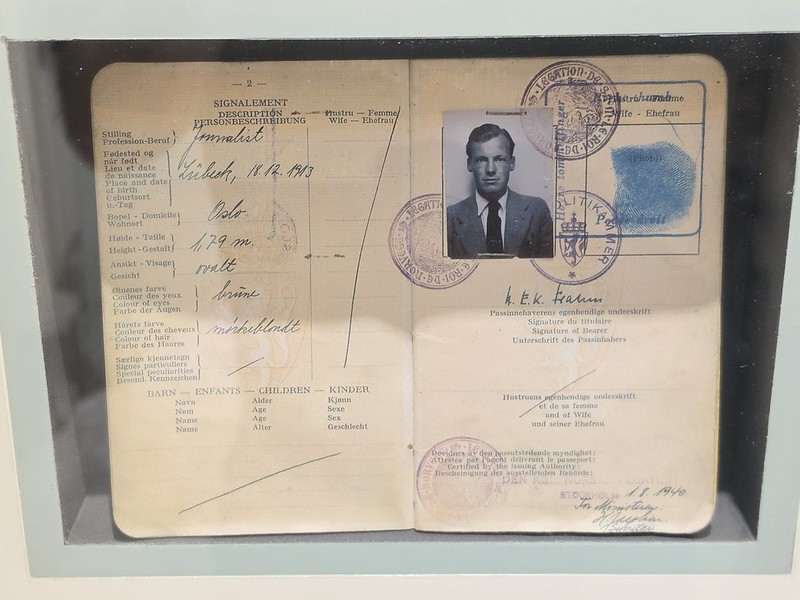
    This is Willy Brandt’s Norwegian passport issued to him on 1 August 1940. On this matter, Willy Brandt was born Herbert Ernst Karl Frahm. He changed his name because he went into anti-Nazi exile after Hitler came to power in 1933 and needed a safer political identity. “Willy Brandt” began as a pseudonym during his underground socialist resistance work and exile, especially while he was in Norway. He stuck with the name after the Second World War came to an end and then in 1949 he made it his legal name, but more on that in a moment.

    This is an October 1944 political letter from German socialist exiles in Stockholm to the leadership of the SPD group there. It is dated from Stockholm, 9 October 1944, and addressed “An den Vorstand der SPD-Gruppe Stockholm” or “To the executive committee of the SPD group Stockholm”. The signatories are applying to be accepted into the local SPD organisation and this is significant as it is a formal political statement by exiles who want to join, or rejoin, the Social Democratic Party framework. The people signing the letter had belonged to the SAP, the Sozialistische Arbeiterpartei Deutschlands, the Socialist Workers’ Party of Germany. This was a left-socialist breakaway from the SPD, founded in the early 1930s.

    The peace objectives of the democratic socialists, published on 1 May 1943.

    And here’s the formal confirmation of his name change, issued on 11 August 1949.

    This is Willy Brandt’s provisional mandate card for the first Bundestag of the Federal Republic of Germany. It dates from 1949, just as West Germany’s new democratic parliament was being created after the war, so it is a rather small piece of paper carrying a very large constitutional moment. West Berlin had a peculiar and in some ways sub-optimal status after the war. It found itself politically tied to West Germany, but because of the Allied occupation arrangements it was not a full federal state in the ordinary way. Berlin representatives could take part in the Bundestag, but they did not initially have the same full voting rights as directly elected members from the West German Länder. The Cold War certainly led to some awkward situations….

    Anyway, more of this riveting (or something like that) account of the museum in the next post.

  • Lübeck – Stolpersteine (Stumbling Stone) of Paul Gerbaulet

    Lübeck – Stolpersteine (Stumbling Stone) of Paul Gerbaulet

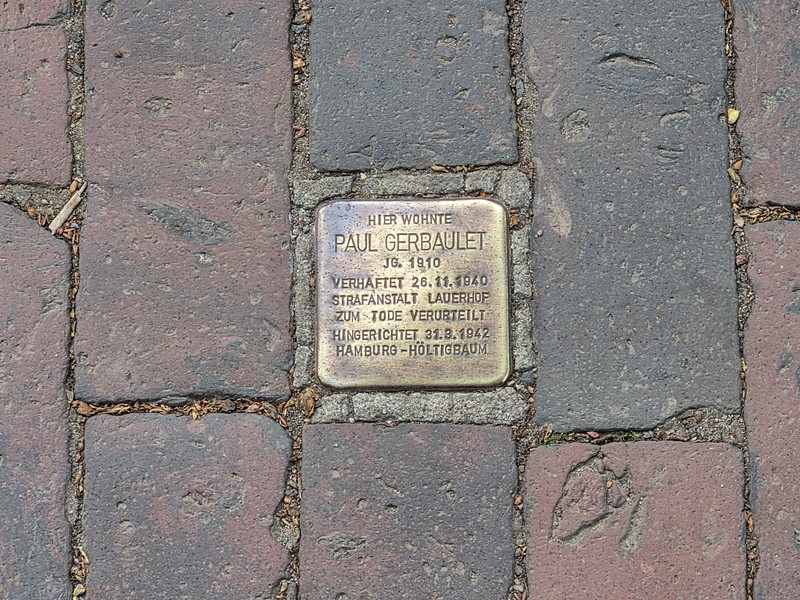
    This stumbling stone is located outside Katharinenstraße 53 in Lübeck, commemorating the life of Paul Gerbaulet, who was born on 1 April 1910 in Epe, in western Münsterland. He came from a family of blacksmiths, cattle traders and butchers, but his father’s work as a dispatcher allowed the children a good education. Paul studied veterinary medicine in Münster and he enjoyed working as a vet.

    After the outbreak of war, Gerbaulet was called up for military service. In September 1940 he moved to Lübeck, lodging with the Ahrens family at Katharinenstraße 53, a household which appears to have had connections with people opposed to the Nazi regime. He had only been in the city for a little over two months when, on 26 November 1940, he was arrested by the Lübeck criminal police. He was facing prosecution under Paragraph 175, the law used by the Nazi state to persecute men for homosexuality, and was taken first to Lübeck-Lauerhof before being transferred to Hamburg.

    The last part of his story is almost unbearable. Gerbaulet served in various military units, was wounded in action in 1941 and was later held in Hamburg. On 31 March 1942, the day before his 32nd birthday, he was shot at the Höltigbaum military training ground in Hamburg-Rahlstedt after being sentenced to death. His parents travelled to Hamburg; his father accompanied him, under guard, from the cell to the shooting range. Gerbaulet was asked whether he wanted to be blindfolded. He refused. Then he was shot in front of his parents.

    This story is horrendous at every single level. His parents must have been haunted for the rest of their lives at not just the loss of their child, but the manner in which it happened. There is very little information about Paul online, just that provided by the organisation that places the stumbling stones and they’ve done a marvellous job in ensuring that he won’t be entirely forgotten. The bravery that Paul showed is astounding, he is one of the heroes that should be remembered in this city and I’m not entirely sure that he is.