Blog

  • Foulsham – Holy Innocents Church (Grave of William Mays 1720-1805, Mary Mays 1733-1797 and Ellen Colville)

    Foulsham – Holy Innocents Church (Grave of William Mays 1720-1805, Mary Mays 1733-1797 and Ellen Colville)

    20250511_160341

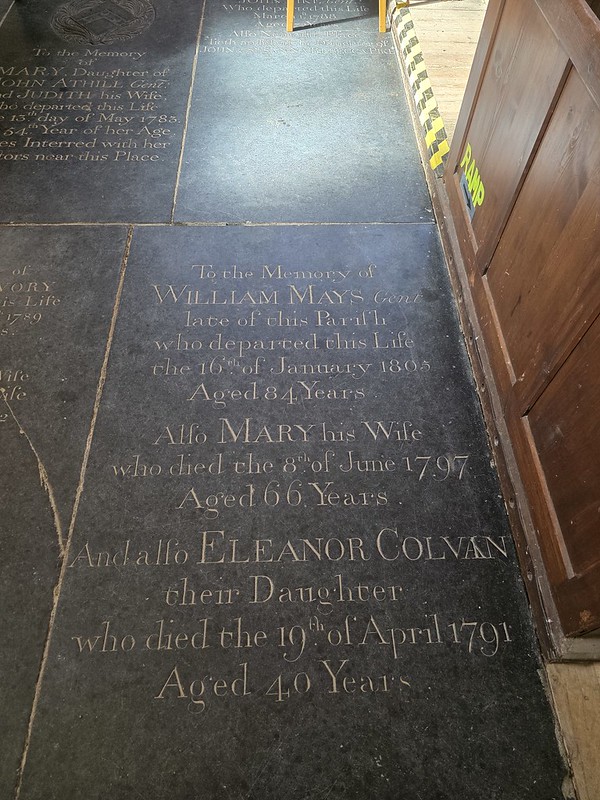
    This is the ledger stone of William Mays (1720-1805) at Holy Innocents Church in Foulsham. There are a collection of these stones in the church from this date, but that’s perhaps likely as a huge fire in 1770 gutted much of the interior and so many older ones might have been badly damaged.

    William was baptised in the church in Swanton Morley on 8 March 1720, the son of John Mays and Margaret Mays and he married Mary (nee Brown) in Thurgarton, Norfolk on 25 April 1756.

    William died on 16 January 1805 and he was buried on 21 January 1805, his wife Mary having died on 8 June 1797. The name of their daughter has been completely mauled about on the grave, it’s Ellen Colville and it’s quite clear in the church records.

    This is another instance where I suspect I’ll find out more at some point in the future, but as there are no newspaper articles about him and he pre-dates the census, there’s not much more of excitement that I can find at the moment.
  • Foulsham – Holy Innocents Church (War Grave of James Austin Armour)

    Foulsham – Holy Innocents Church (War Grave of James Austin Armour)

    20250511_161317

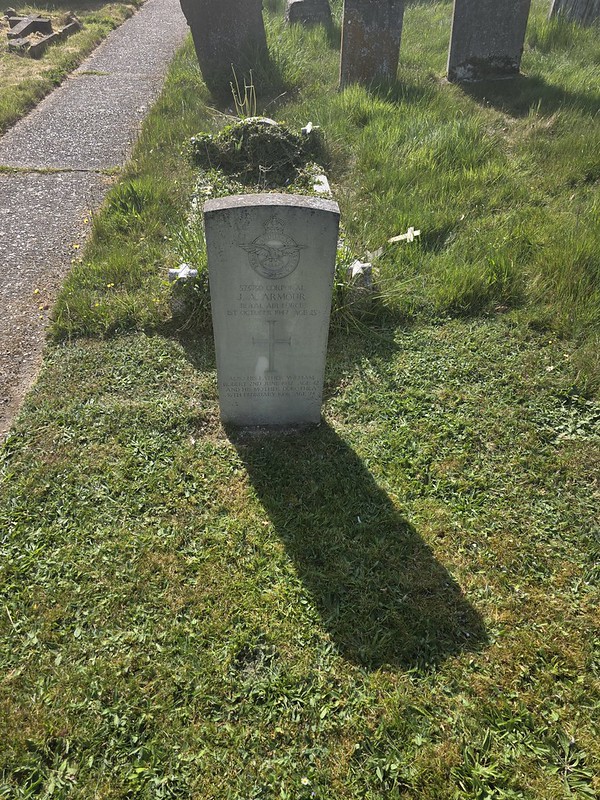
    This is the Commonwealth war grave of James Austin Armour located in the churchyard of Holy Innocents Church in Foulsham.

    James was born in 1922, the son of William Robert Armour and Dorothea Armour, who was a Corporal in the RAF (service number 573750). He was educated at Hamond’s Grammar School in Swaffham and he had joined the RAF as an apprentice in August 1938.

    James died at King’s Lynn hospital on 1 October 1947 and he was buried on 6 October 1947. He received a war grave from the Second World War shortly before the official end date of 31 December 1947, so this must be one of the last ones issued.

    The death wasn’t directly war related, the Lynn Advertiser reported on 3 October 1947

    “Motor-cycling fatalities

    The second fatal motor-cycling accident in West Norfolk this week involved Corporal James Austin Armour (25), R.A.F., of Foulsham. He was involved in a collision on Wednesday near Modney Bridge, Hilgay, with a motor-car driven by Mr. A. W. Underwood, 3 Crown-lane, Littleport.

    Dr. W. J. Tavendale (Downham) attended Corporal Armour, who was removed to Lynn Hospital by the Downham motor-ambulance. He had been stationed at Oakington, Cambridgeshire. The first fatality involved Percy Hewitt (27), Freebridge-terrace, Middleton, who died in Lynn Hospital on Monday.”

    The probate issued in 1948 showed that he had assets of £127 which went to his mother. His parents are also listed on the war grave, his father died on 2 June 1932 at the age of 42 and his mother died on 16 February 1966 at the age of 74. This must have been a very difficult time for his mother given the early death of her husband, then seeing her son survive the Second World War before dying in a motorcycle accident.

  • Twyford – St. Nicholas Church (Barbara Savory)

    Twyford – St. Nicholas Church (Barbara Savory)

    20250511_154005

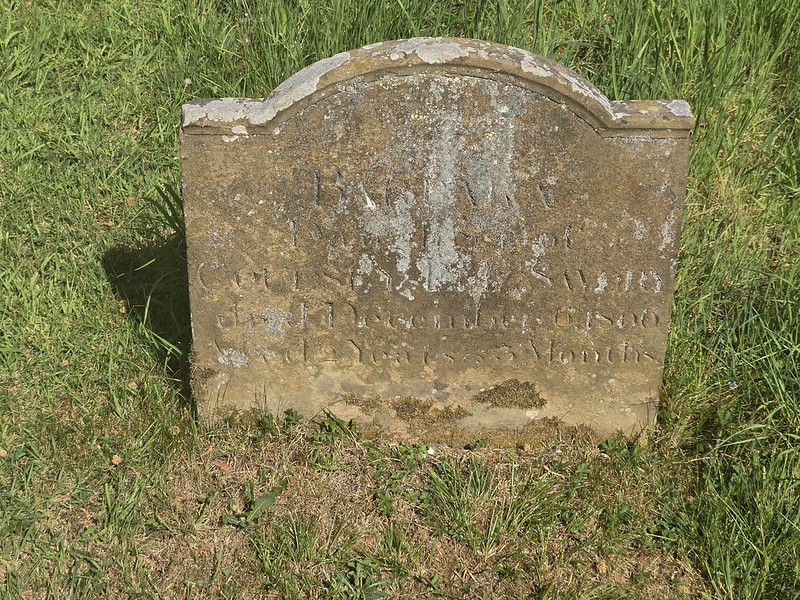
    This grave at St. Nicholas Church in Twyford commemorates the life of Barbara Savoury, the daughter of Coulsey and Elizabeth Savory. Coulsey seems an interesting person, he was a small-scale landowner who found himself in a financial situation later in life that was sub-optimal, although like Alan Partridge, he bounced back. He was to die in 1837 and was buried in the church, although his gravestone is no longer extant.

    At first, I struggled to read the name on this grave, but the death at a young age was visible and I was intrigued. It was easy to work out by going to do the burial records of the church from that year and this is the only death in 1800. Barbara died on 6 December 1800, aged just two years and three months. Although there’s quite a lot of media attention about her father over the decades, there’s no mention of Barbara other than the birth and funeral record. A few years after her death, her parents had another girl who they also named Barbara, although she also died young and was buried on 4 February 1829 at the age of 20. Her parents also had a son called Edward who was born in 1807 and he grew up and lived in the village, later naming his own child Barbara Savory and I’m pleased that she had a much longer life. So, in some form, the name of young Barbara did live on.

  • Twyford – St. Nicholas Church

    Twyford – St. Nicholas Church

    20250511_154106

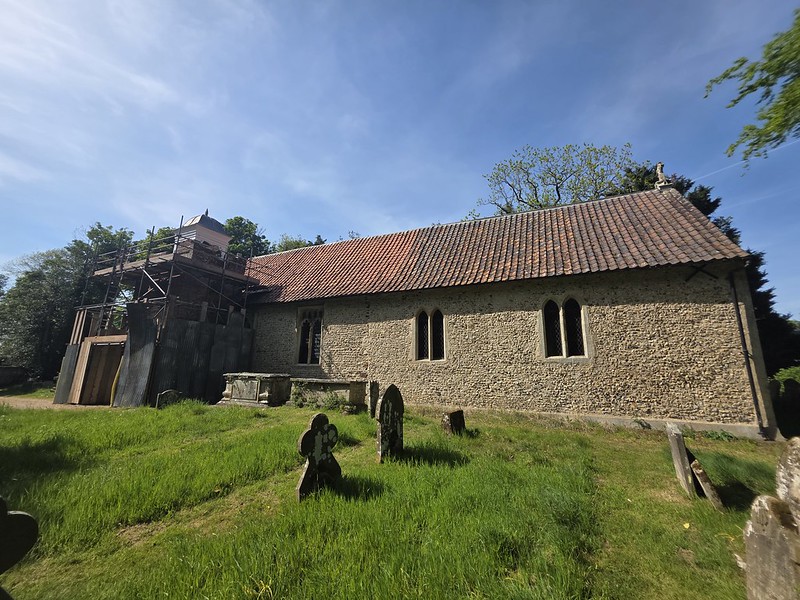
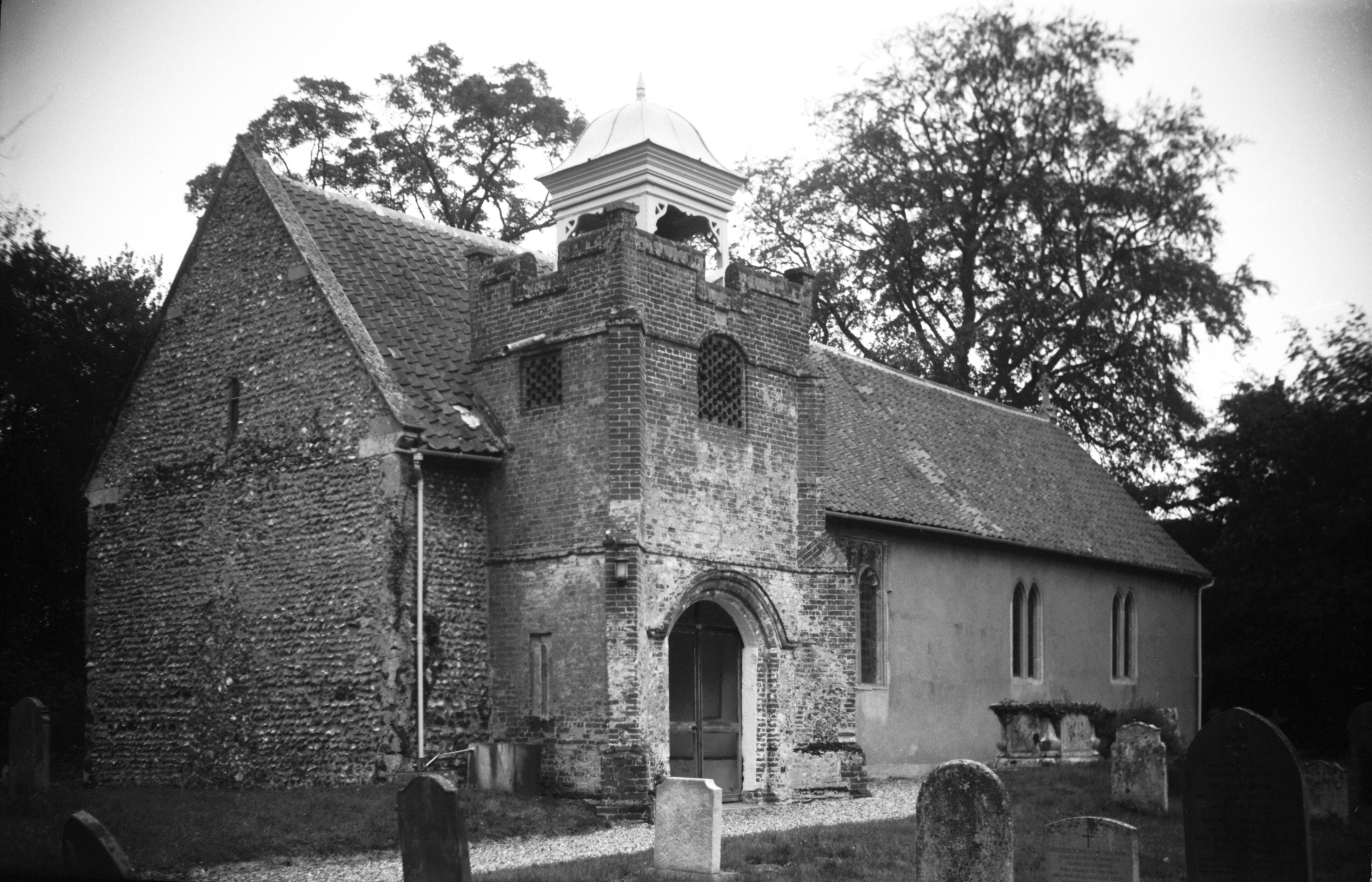
    St. Nicholas Church in Twyford feels both remote, but also heavily impacted by the heavy road going right by it. The village currently has fewer than thirty residents, which has inevitably made this rather challenging to run as a viable church. The name of the village, meaning ‘double ford’ is Saxon, but there’s no evidence of a religious building here from before the Norman period. It’s thought that the nave dates to the early twelfth century and the chancel is a little later, although they are now under the same roof, which I’m not entirely sure has always been the case. George Plunkett came this way in 1992 and since that visit, the render has been removed from the chancel so that the historic stone is visible.

    20250511_153918

    There’s scaffolding up as there was a little incident a couple of years ago when a tree fell down during a storm and hit the church and some gravestones. This porch, which could arguably be called a tower, has been added to the church in 1732 and I’m not sure that it was ever the most congruous of arrangements.

    20250511_153936

    Work on the porch, which is expected to be completed by the Autumn of 2025. Unfortunately, the church was locked and so it wasn’t possible to look inside.

    20250511_153847

    The news update about the matter.

    20250511_154337

    It’s not clear that there was ever a tower to this church, although it would have likely been where the porch is located if there had been, which I doubt was the case. There looks like a bricked up door here into the nave, although it’s hard to make out.

    20250511_154201

    The end of the chancel. There was some remodelling during the Victorian period, but I suspect it was more tidying up than anything more substantial.

    20250511_154246

    This former doorway is thought to date from the fourteenth century and it’s another church that I’d like to go inside, but I suspect arranging that would be relatively difficult. It’s positive that there is funding to repair the damage to the porch, but I can imagine this is a tough one to fund raise for given the limited local population size.

  • Grudziądz – Wall Art

    Grudziądz – Wall Art

    [I originally posted this in June 2018, but have reposted it to fix the broken image links]

    20180620_112749

    I have no idea who this is, but it’s an impressive size….

    20180620_132830

    This made me want a beer….

  • Bintree – St. Swithin’s Church (Grave of John Gill)

    Bintree – St. Swithin’s Church (Grave of John Gill)

    20250511_152129

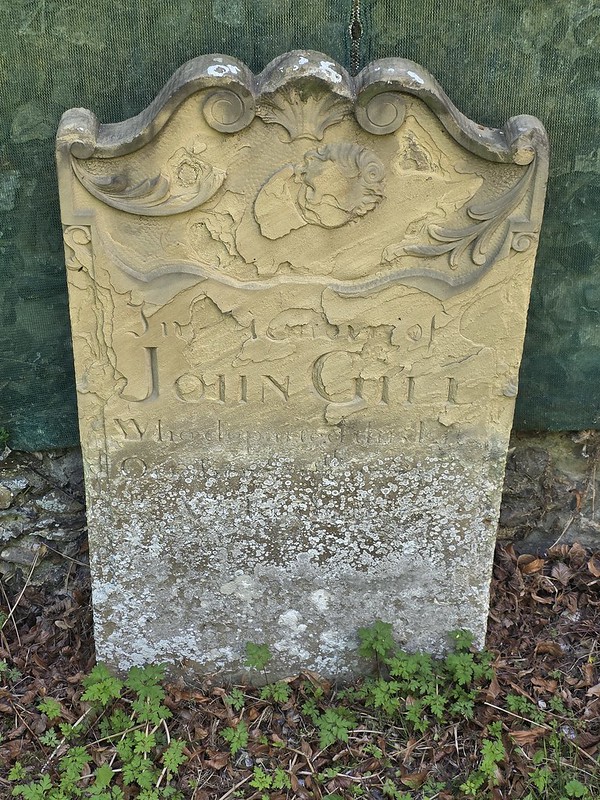
    This grave is located at St. Swithin’s Church in Bintree and I took a photo of this gravestone as some sort of record given the perilious state that it’s in. It has transpired to be older than I had realised as the only evidence I can find of a burial at this church of a John Gill was on 15 October 1773. He married Anne Brooke at the church on 4 June 1759 and they had a son also called John Gill, but I’m not sure that the younger one was buried here. Looking at the photo in some detail does seem to suggest that the 1773 date is still visible, but it is very hard to read.

    I thought that the gravestone looked early nineteenth century, but ChatGPT thinks:

    “This style of headstone—with its scrolled “shoulders,” rococo shell-and-cherub motif at the top, and the deeply incised lettering—was most popular in the mid-18th century. My best guess is that this grave marker dates to around 1740–1760, making it roughly 260–280 years old.”

    Google Gemini comes in with:

    “I would estimate the gravestone likely dates from the late 1700s to the early 1800s.”

    So, this sandstone gravestone is something of a survivor, dating back to 1773, although I’m not sure how many more decades it’ll hold out for.

  • Grudziądz – Church of the Immaculate Heart of Mary

    Grudziądz – Church of the Immaculate Heart of Mary

    [I originally posted this in June 2018, but I’ve reposted it to fix the broken image links]

    20180620_133623

    There are a few buildings in the city, including the nearby former Post Office, which were constructed when Grudziądz was part of the Prussian Empire.

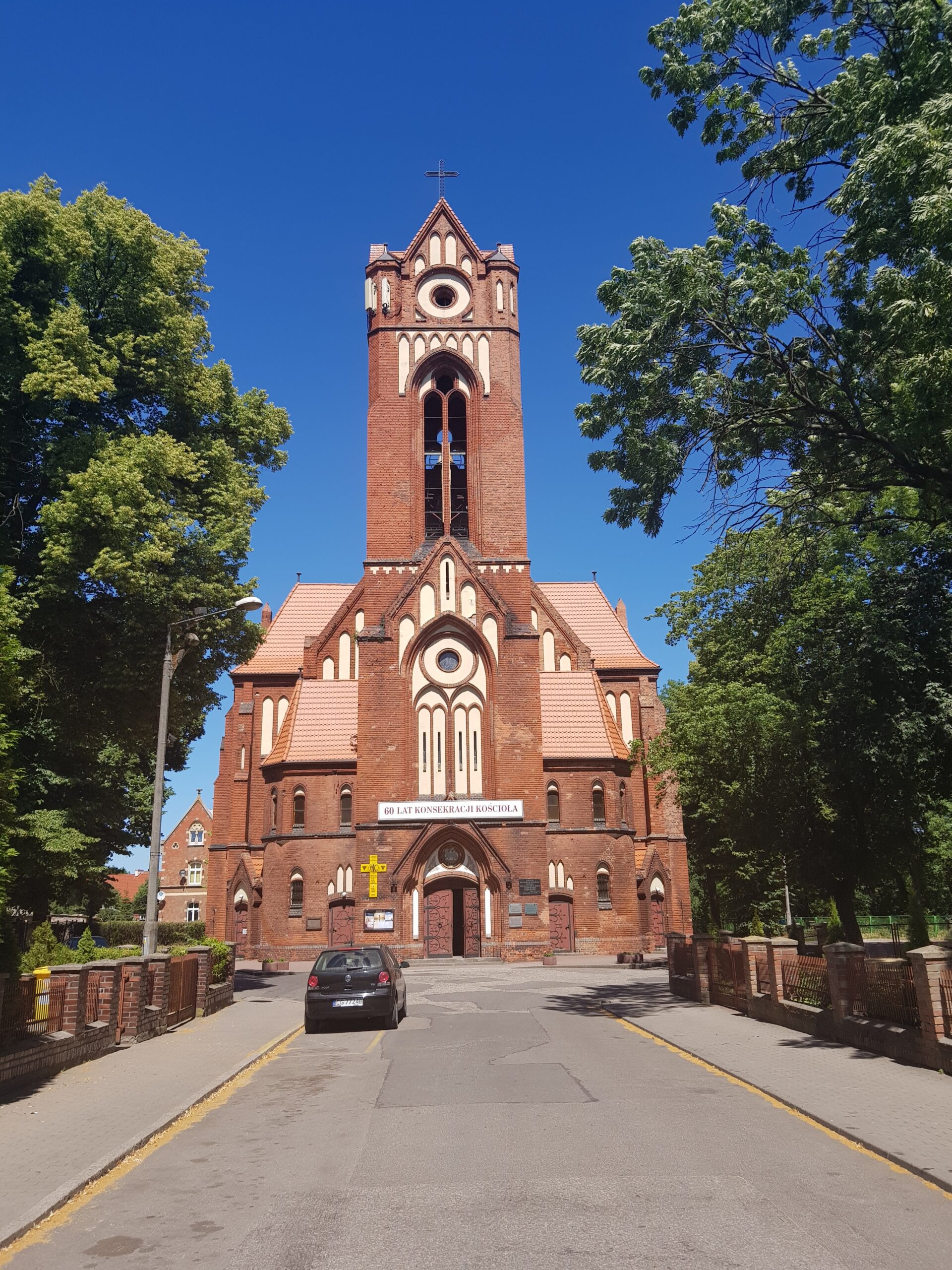
    This looked rather Prussian and it was constructed in the last few years of the nineteenth century. It remained a Lutheran church until after the end of the Second World War, when it became a catholic church.

    20180620_133719

    The church was damaged during the Second World War, but was quickly reconstructed.

    20180620_133806

    Unfortunately, the main part of the church was closed, but there were information boards in the porch. Looking through the glass doors, the interior seemed quite plain. All of the interior from the late nineteenth century has sadly been lost.

  • Grudziądz – St. Francis Xavier Church

    Grudziądz – St. Francis Xavier Church

    [I originally posted this in June 2018, but have reposted it to fix some broken image links]

    20180620_131612

    St. Francis Xavier Church is centrally located and was built in the baroque style in the late seventeenth and early eighteenth centuries. The high altar is of particular interest  and goes to the full height of the nave. It was also a busy church during my visit and that was entirely of worshippers, rather than just visitors to the building.

    20180620_131126

    The altar was funded by Jan Czapski who was then the Governor of Chelmno and also a Great Crown Treasurer.

    20180620_131129

    I couldn’t find the date of the grand pulpit, but it seems contemporary with the altar, and this is again richly decorated.

  • Grudziądz – Banks of the River Vistula

    Grudziądz – Banks of the River Vistula

    [I originally posted this in June 2018, but have reposted it to fix some broken image links]

    20180620_092551

    20180620_092811

    20180620_092826

    20180620_093542

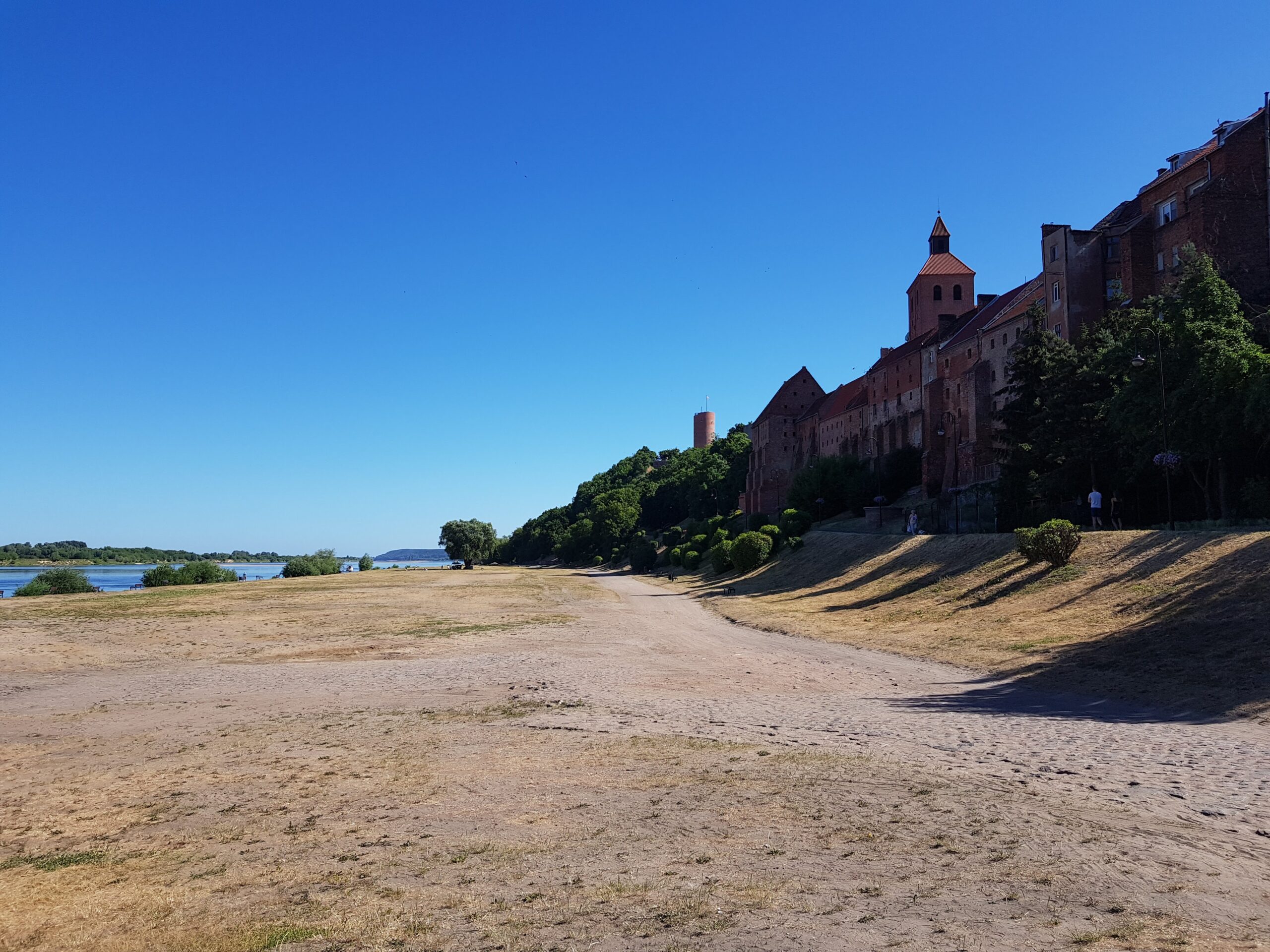
    I didn’t expect such a quiet and riverside area so close to the city centre. Very peaceful and there are lots of seats along the river.

    The Vistula is the longest river in Poland, and also goes through Krakow, Warsaw and Gdansk.

    20180620_094133

    I was surprised to see an orangey yellow bus randomly parked here with no-one in it. Clearly so were the police as a few minutes later a car came with lights flashing. After some investigation from the police it was given a ticket.

  • Bintree – St. Swithin’s Church (War Grave of Ernest George Vince – Deserter)

    Bintree – St. Swithin’s Church (War Grave of Ernest George Vince – Deserter)

    20250511_151925

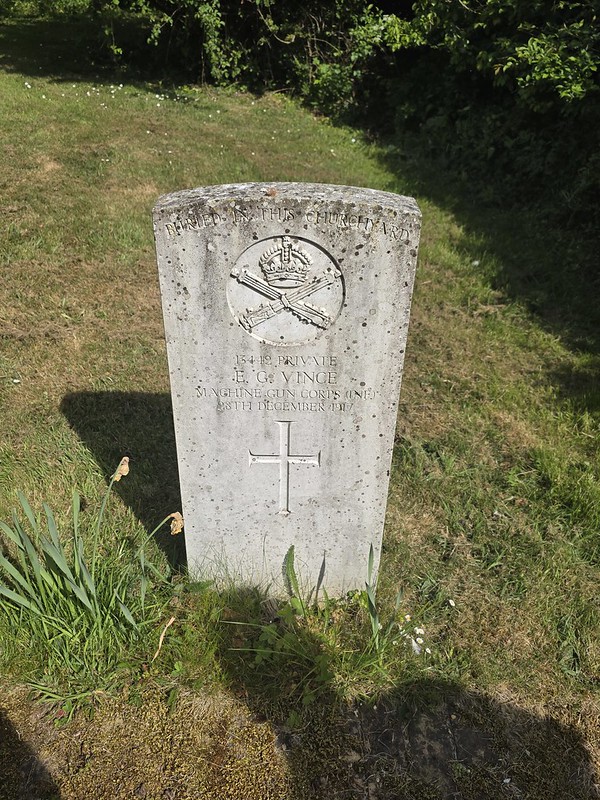
    Located at St. Swithin’s Church in Bintree is the Commonwealth War Grave of Ernest George Vince.

    Ernest was born in 1888, the son of George Vince and Susanna Vince, the younger brother of James and Emma. George and James worked as bricklayers and this is also the trade that Ernest went into a few years later and he’s listed on the 1911 census as being the only child of the family still living with his parents. I can tell he struggled at school as his records are on-line and he was last in the class and on 11 July 1900 it was reported by the school that he was working illegally and I can imagine that he was being inducted into the bricklayer trade early on.

    And herein lies what is likely a tale of woe and an individual probably not really given a chance before things went wrong. Over the next few years there was a constant run of criminality, including stealing a watch on 20 March 1907, stealing a bicycle on 1 July 1916, stealing a bicycle on 28 August 1916 and, once again, stealing another bicycle on 4 April 1917. He was also found guilty of larceny with intent to defraud, obtaining food and lodging by false pretences and numerous other cases of cheating. On 24 March 1917, the press reported that he had deserted from the British Army and when arrested by soldiers he had managed to escape from them. He lied about being a soldier to a lady in order to get food and accommodation, deciding not to mention he was a deserter.

    He was a private with the service number 13442 in the Machine Gun Corps (infantry), formerly 18316 in the Norfolk Regiment, but his service records don’t seem to exist in any useable form. Ernest died on 28 December 1917 and was buried on 4 January 1918.