Author: admin

  • Basel –  The Elisabethenkirche

    Basel – The Elisabethenkirche

    20250423_101412

    The Elisabethenkirche, known in its contemporary function as the Offene Kirche Elisabethen (Open Church of St. Elisabeth), was constructed in the mid-nineteenth century as the first Protestant church to be built in the city since the 1529 Reformation. Faced with substantial growth in the city, a decision was made in the 1850s to construct this church. The impetus and financial backing for the Elisabethenkirche came from Christoph Merian (1800-1858) and his wife Margarethe Burckhardt-Merian (1806-1886). Christoph Merian was a significant figure in Basel as he was a wealthy banker, an accomplished agronomist and one of Switzerland’s largest landowners, having received the extensive Brüglingen estate as a wedding gift. Unfortunately, he promptly died before seeing the church complete, but at least wife saw the finished building.

    A competition for the design took place in 1855 and it was won by Ferdinand Stadler, with construction of the church starting in the following year. It was built in the Neo-Gothic style and stands 72 metres in height, one of the tallest buildings in the city.

    20250423_101620

    The pulpit is grand and looks rather splendid.

    20250423_101512

    The side aisle. There were plans in 1968 to demolish the building as the congregation size had fallen, but, fortunately, it was saved.

    20250423_101547

    Since 1994, the church has been classed as an “Open Church” which is welcoming to anyone and the plan is that they are “diverse spiritual, cultural, and social needs of contemporary urban dwellers, explicitly welcoming people irrespective of their background, origin, race, religion,or sexual orientation.”

    20250423_101633

    The Chancel.

    20250423_101639

    Looking back along the nave.

    20250423_101718

    The decorative ceiling. It’s fortunate that the building is still standing and it gives an impression of being older than it actually is. There are some who clearly aren’t impressed with the church’s new role in society, with someone complaining alongside their one star review that they had a LGBT banner on display, but the owner responded with “and what wrong with this, other than your narrow mind?” which is entirely the right reply as far as I’m concerned. Another person posted that “It is a cafe, and the building is used for promotion of activist causes.”

    The reply was:

    “You are so wrong and only show by this review how yesterday-ish you are! We are and allways will be: a place to worship and celebrate. But we have to earn our own money – so we rent the church out, when we don’t need it to pray or celebrate. It’s unfair by you to rate with 1 point, what you can’t tell or judge. And obviously you can’t! Hopefully won’t be judged so harsh like you judge.”

    I’m going now to leave them a five star review. There’s an irony here that the situation is now perhaps more tolerant, welcoming and diverse than it was when it was a church. That’s perhaps a little controversial for my little blog, but there we go.

  • Basel – St Johanns Tor

    Basel – St Johanns Tor

    20250423_091229

    St Johanns Tor (St. John’s Gate) is one of three remaining gates into Basel, once attached to the city walls although they were nearly entirely pulled down in 1859. Back in the late fourteenth century, matters were quite different as there were seven major gates, forty towers and a heap of battlements to keep the riff raff out. It’s located relatively near to the River Rhine and it’s something of a medieval survivor. As some background, 18 October 1356 was quite a bad day for Basel as it was hit by one of the worst earthquakes to have taken place in central Europe. It’s not a surprise that chunks of the city promptly fell down. That did though give the city authorities a chance to rebuild and expand their defences.

    20250423_091243

    20250423_091250

    It’s a chunky door and is some centuries old. There was once a portcullis arrangement here, but they replaced it with a system where vertical oak beams could be lifted individually.

    After it was decided not to demolish the gate, it was restored in 1874 and then again between 1983 and 1985. During the 1980s renovation, it was decided to reverse the new roof added in 1874 and return to something more as the building would have looked like in the medieval period. There are some sculptures on the exterior of the building, but they’re replicas from the early twentieth century and the originals are in the Historical Museum of Basel.

    20250423_091305

    Looking towards France. The rooms in the gate are now used by Basel’s cantonal police force (Kantonspolizei Basel-Stadt) so it continues a tradition of civil function, although it means that the structure isn’t open to the public.

    20250423_091356

    There are some steps to get to the level above and it’s possible to walk down to the Rhine from here.

  • Basel (Saint-Louis in France) – Aparthotel Adagio Access Saint-Louis Bâle (Accor Hotels)

    Basel (Saint-Louis in France) – Aparthotel Adagio Access Saint-Louis Bâle (Accor Hotels)

    20250423_085211

    I haven’t stayed at an Adagio before, but this one was showing as the cheapest Accor option in the area. The Adagio Aparthotels brand is offered in three distinct tiers, Adagio as the standard option, Adagio Access for budget-friendly stays and Adagio Premium for a more upscale experience. No surprise I was visiting an Adagio Access, I know where I stand in the hotel hierarchy….

    20250422_215456

    After the faff of getting here, I was pleased to see the welcome gift of crisps and water, a nice little gesture. The check-in had been a little convoluted as the person in front decided to ask far more questions than I felt necessary about the hotel, but as patience is one of my middle names, I just stood and tried not to look too passive aggressive whilst standing there waiting. The team member at reception was helpful and engaging, with everything feeling well managed here. Unusually, I was given an actual key to get into the room rather than a card, it felt like something of a throw-back…

    20250422_215500

    The bedroom area of the room, with everything being clean and organised.

    20250422_215504

    The kitchen area, with the desk and bathroom at the rear of the photo. I didn’t need to use the kitchen area at all, as I decided to eat my crisps from the packet rather than from a plate, but I noticed from signage that they would be charging if the washing up wasn’t done.

    20250423_084713

    The view from the window over semi-rural France. It’s located in the French village of Saint-Louis and is literally a one minute walk from the Swiss border and it’s easy to meander into Basel from the hotel.

    As I rather like doing this, since I don’t get out much, I thought I’d have a little look at the reviews to see if there was anything exciting.

    “I was going to take a shower and didn’t have hot water, tried to call the reception and they wouldn’t answer the telephone. Had to go there in a towel.”

    No, there is no logical requirement here to walk to reception in a towel.

    “Catastrophic. Having to leave the hotel at 7:00 a.m., I asked if it would be possible to have a simple breakfast made for me, namely a small coffee and a glass of orange juice. I was told that breakfast opened at 7:30 a.m., period.”

    I’m not sure that being a refused a breakfast before they were open is “catastrophic” especially when each room has a little kitchen, but each to their own….

    “Well situated, but disastrous bedding. Definitively NOT recommended for side sleepers as the beds are as hard as a rock.”

    Disastrous?

    “We reserved 2 rooms at this Aparthotel when flying from Denmark to Basel. Unfortunately, our flight was cancelled at the last minute after we already traveled to Copenhagen Airport and got our boarding passes. We had no options at that point but to cancel our trip to Switzerland, France, and Germany, because we had to return to the USA soon. On top of this great disappointment, the hotel would not cancel the room and refund our money. We called as soon as the flight was cancelled, which was late, but they were unwilling to make any adjustment. I understand that was their policy, but in a situation like this, I would expect better customer service, rather than hiding behind their policy.”

    I liked that the hotel reminded them that they had booked non-refundable rooms and that their policy was common in the industry, adding “the cancellation of your flight was not our doing” and they’re not wrong there….

    As they’re designed as apartments for slightly longer visits, I doubt that many guests usually stay for just one day at these hotels, but I suspect they are sometimes quite cheap as they have gaps between bookings that they can’t easily fill. Anyway, it’s not really a brand within the Accor chain that I’d prioritise in terms of staying as I don’t need kitchens and the like, but if it looks like an affordable option I suspect that I’ll be there again…..

  • Basel Airport – Going Out the Wrong Door…..

    Basel Airport – Going Out the Wrong Door…..

    20250422_204623

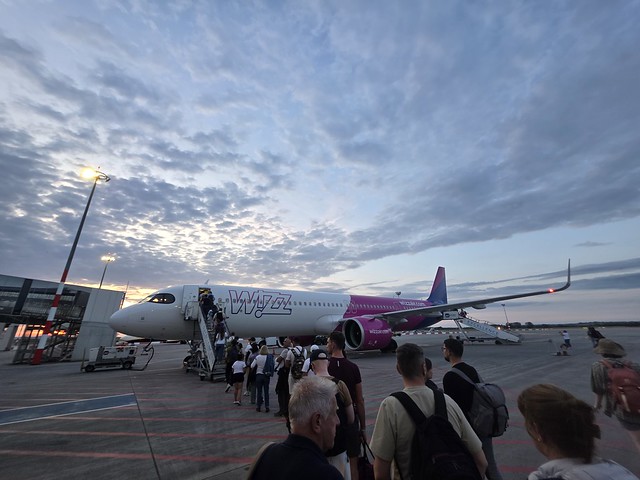
    My Wizz Air flight from Warsaw was uneventful, I had been given a window seat (always random as I refuse to pay extra) and although we set off late, it was a dramatic delay. During the flight, my fellow passengers were exhibiting only baseline levels of annoying behaviour, nobody tried to initiate a singalong, perform interpretive dance in the aisle or applaud when we landed, so frankly, a resounding success.

    But, back to the unique nature of this airport, which is properly known as EuroAirport Basel-Mulhouse-Freiburg as it’s serving the three countries of France, Germany and Switzerland. I was aware that there were two exits at the airport, both visible in the above photo, and Bill mentioned on Facebook to make sure that I got the right one. His comments were sensible, but it was unclear to me what I was actually supposed to do here and why. I was staying in France and I didn’t need to enter Switzerland at all, so I went for the French option. This proved not to be quite the correct choice.

    20250422_204749

    I got outside and realised I needed to walk down here, but there’s a problem as someone has taken part in some ‘bring your own fence to work day’ arrangement. Switzerland is in Schengen, so I hadn’t quite expected this level of fencing everywhere. I did wonder perhaps the Swiss just wanted to keep their side tidy, but that seemed a slightly stereotypical thought….

    20250422_205038

    I realised from Google maps that there was another pedestrian walkway so I left the French side of the airport to discover that it was a gated footpath for those who had a code. I considered this whole arrangement as sub-optimal.

    20250424_095234

    So, after navigating the ‘Great Fence of EuroAirport’ outside, I was genuinely bracing myself for some sort of Herculean faff to get back to the side I actually needed, or some sort of passport check. The only alternative seemed to be hailing a taxi which would have been an act of such wild extravagance my thrifty soul practically recoiled at the thought, so that wasn’t happening. However, it it was just like meandering through a shopping centre, there was no security, customs or border controls. If I had wanted, I would have had time to buy a Toblerone and everything.

    20250422_205827

    And that little stroll back through the airport meant that I was back on track and heading towards my hotel in France.

    20250422_211615

    It’s hard to read here, but it says “open borders” and I wish they were at this airport. It was then a three mile walk and it was pleasing that they had street-lights all the way along the path, but less pleasing that they hadn’t switched them on. The road was relatively busy and my eye-sight adjusted, so it was a fast walk and I then realised that this path was also heavily secured, I think a legacy of just over ten years ago when Switzerland weren’t in Schengen. Which meant that I had to walk into Switzerland which isn’t what I had intended.

    20250422_213746

    There’s the Swiss border. I was in Switzerland for around five minutes and only because there was no way to access all the paths in France. And this is a legacy of the history of this airport, which was built in France as Basel didn’t have space, a process all overseen by a 1949 international treaty. So, because of this, the pre-Schengen path was something of a secure corridor straight into Switzerland, logical as I had left the Switzerland side of the airport.

    20250422_214530

    Still on the Swiss side, there’s the former border control post, now just used as a customs post.

    20250422_214503_001

    There was no-one there and people could walk freely through. Luckily the hotel was literally a one minute walk away from here and I was pleased to get there after yet another slightly unexpected journey. I had started to consider myself as an expert in the Swiss and French border, although that was until the next day, but I’ll save that riveting story….

  • Warsaw – Metro System : A2 Natolin (Visiting Every Station)

    Warsaw – Metro System : A2 Natolin (Visiting Every Station)

    20250405_110328

    Next in my series of visiting every metro station on the Warsaw network was Natolin and, I have to admit, I did struggle to find a great deal of interest around here as it was so residential. It’s relatively near to two other stops, limiting the option to walk a little further in search of excitement.

    20250405_110401

    The sun was shining and it was too hot. Not that I moan about the heat…. The metro station takes its name from the district that it’s located in, Natolin.

    20250405_110630

    I found a small park nearby, Park Lasek Brzozowy, or ‘Birch Wood Park’. It’s nice, but I wouldn’t recommend that people come from other countries just to visit.

    20250405_111003

    I went to walk around a housing estate, trying desperately to find anything old.

    20250405_111248

    A little shopping centre.

    20250405_111437

    Going back into the metro station. The metro station was on the first stretch of the network that opened, on 7 April 1995.

    20250405_111459

    The decoration on the platform.

    20250405_111513

    It wasn’t overly busy.

    20250405_111521

    The plan of the metro station.

    20250405_111606

    And leaving…. I must admit, this is likely to be one of the dullest metro station reports and I likely set the bar quite low with the whole concept. But, I don’t rule out going back and trying to find something which will surprise and delight my two loyal blog readers.

  • Warsaw – Archaeological Finds at Pałac Saski w Warszawie (Saxon Palace)

    Warsaw – Archaeological Finds at Pałac Saski w Warszawie (Saxon Palace)

    20250422_124245

    I’ve followed the progress at the Saxon Palace in Warsaw for some years and it’s all looking very exciting. It was destroyed during the Second World War, like nearly everything else in Warsaw, but finally the Government is kick-starting change at the building. But, as some more detailed history…

    Initially, the site was occupied by the Morsztyn Palace, a baroque structure built in the latter half of the seventeenth century. In 1713, King Augustus II the Strong (I love names like that), who was the first of Poland’s Saxon kings, purchased the palace and initiated its expansion and transformation into a grand royal residence. This project, overseen by prominent architects, gave rise to the Saxon Palace and the development of the surrounding Saxon Axis, a significant urban plan that included the Saxon Garden. The palace became a cultural hub, even more decadent than Wetherspoons.

    Over the following decades, the palace complex expanded with the addition of adjacent noble residences, including the Brühl Palace and the Blue Palace. However, after the death of King Augustus III, the Saxon Palace lost its status as a primary royal residence and gradually fell into decline, though it remained in Saxon hands and was rented out to whoever would have it. In 1794, during the Warsaw Uprising, a major battle took place in front of its eastern side which I suppose would have added some excitement to the evening for the residents. In the early nineteenth century, the Warsaw Lyceum was housed in the palace and the family of Frédéric Chopin resided there for several years. After Poland regained independence following the end of the First World War, it became the headquarters of the Polish General Staff and, in 1932, Polish cryptologists working within the palace achieved the groundbreaking feat of breaking the German Enigma cipher. Then the Germans blew it up in December 1944. Only a few fragments of the central arcade remained survived and that has housed the Tomb of the Unknown Soldier, but recently there have been plans to restore the building to surprise and delight residents and visitors.

    20250422_124407

    There’s a bit of an archaeological dig taking place and these are some of the finds that they’ve located.

    20250422_124416

    This is a fragment of stone cladding from the former Beck Pavilion.

    20250422_124445

    A fragment of a sculpture.

    20250422_124424

    Some glass bottles from the second half of the eighteenth century.

    20250422_124501

    A ceramic pot with a handle from the second of the eighteenth century and a Kiddish cup from the first half of the twentieth century. There’s a lot of poignancy in the latter, this would have been owned by one of the large Jewish community who lived in the city, but who were nearly entirely wiped out during the Second World War.

    20250422_124543

    The remains of the central arcade.

    20250422_124547

    The Tomb of the Unknown Soldier.

    20250422_124626

    20250422_124700

    The archaeological dig.

    20250422_124724

    And the Tomb of the Unknown Soldier again. I didn’t want to take photos of the two members of the Polish military who were guarding it, although I don’t think that there are any restrictions on doing so (within reason). They are planning to open a new building by 2030 and I will watch developments with interest…..

  • Warsaw – Execution of 70 Poles on 14 December 1943

    Warsaw – Execution of 70 Poles on 14 December 1943

    20250422_123832

    This memorial is located on ul. Wierzbowa, opposite the Polish National Opera building. Although the situation in Warsaw had been terrible since the German occupation, the Nazi terror had increased in the city primarily because of the appointment of SS-Brigadeführer Franz Kutschera as the SS and Police Leader (SSPF) for the Warsaw District on 25 September 1943. In a system of evil, he was one of the worst examples of hate and it’s no real surprise that special efforts were made by the Polish Army to execute him which is something they achieved on 1 February 1944.

    The campaign of terror that took place in Warsaw involved various branches of the Nazi occupation apparatus. Roundups were typically conducted by officers from the Gestapo (the Secret State Police), the SD (Sicherheitsdienst – Security Service) and the Ordnungspolizei (Order Police) which were all often supported by members of the Waffen-SS. In some instances, regular members of the Wehrmacht (German Army) and Luftwaffe (German Air Force) as well as members of the Hitler Youth, also participated in these operations.

    One of the executions on 14 December took place in full view of the public at ul. Wierzbowa 9/11, located near Plac Teatralny (Theatre Square) – a prominent and culturally significant space in central Warsaw. The selection of such a visible and symbolic location aligned with the Nazi tactic of leveraging public executions for maximum psychological effect and intimidation, they wanted fear. By staging the killing near a major square and theatre, the occupiers not only took lives but also defiled a key emblem of Polish civic and cultural identity, intensifying their message of terror and asserting total control over the heart of the city. As if things weren’t bad enough for the remaining Poles, the German leaders wanted to ramp up the pain even more.
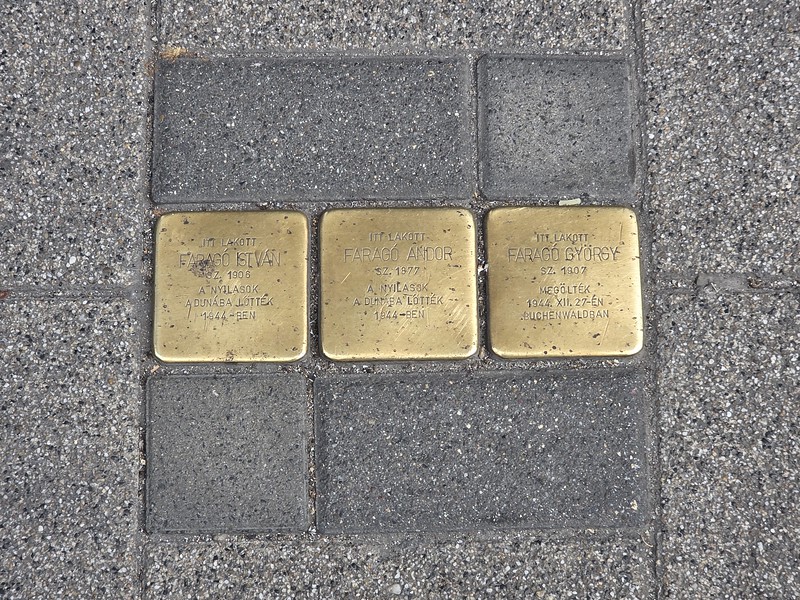
    The seventy condemned prisoners would have been transported by truck from Pawiak prison under heavy guard and the Nazis wanted this to be seen by as many people as possible. It’s not entirely clear which prisoners were murdered that day, but they included members of the Polish intelligentsia, political prisoners, resistance fighters and likely just some members of the public just randomly arrested on the whim of some Nazi guard.

    20250422_123835

    The informational sign located underneath which mentions the execution of seventy Poles rather than the one hundred and thirty Poles that are mentioned on the stone memorial. The reason for this, I think, is that they included those killed on the same day on ul. Bonifraterska, again murdering prisoners from Pawiak prison.

  • Warsaw – Complex Pedestrian Crossings

    Warsaw – Complex Pedestrian Crossings

    20250422_123748

    As another random, and to be fair irrelevant, post…… There are a few of these crossings dotted around Warsaw and I’m always slightly confused when using them as although they are logical in their appearance, car drivers often look very confused at them. Warsaw pedestrians seem confident with them, but I’ve watched car drivers and there’s some sharp braking and erratic driving going on rather frequently at them.

  • London – Giant Stickers on Elizabeth Line to Tackle Unexpected ‘Backprint’ Problem

    London – Giant Stickers on Elizabeth Line to Tackle Unexpected ‘Backprint’ Problem

    20250411_220009

    I thought that it would be a marvellous idea for Liam and I to go a slightly convoluted way back to the hotel after the LDWA Capital Challenge to see these new stickers that TFL had put at some stations along the Elizabeth Line last week. The stickers have the moquette design that is used on Elizabeth Line trains, with a total cost of £30,000.

    20250411_220016

    The sleek, pale wall panels, admired for their minimalist aesthetic, had instead become rather unintended canvases for human outlines which was seen by TFL as sub-optimal. TFL said that they would ensure that the stickers blended in and added:

    “The Elizabeth Line has been hugely popular, and with high footfall comes unexpected wear. These stickers are a simple, cost-effective way to maintain the appearance of the stations while reducing maintenance needs.”

    Liam pretended he was really excited at this piece of infra-structure development.

  • Warsaw – Muranow Craft Beer

    Warsaw – Muranow Craft Beer

    20250421_193418

    I’ve managed to visit just about every craft beer bar in Warsaw, but this one is new to me and the beer list at https://craft-beer-muranow.ontap.pl/ looked intriguing.

    20250421_192959

    The outside seating area was full, but I wasn’t engaged with that, especially as the inside was spacious and felt welcoming.

    20250421_190608

    These photos might make it look quiet, but they were doing a decent trade during the time that I was there. There’s an upstairs area to the venue as well.

    20250421_185627

    The beer list was neatly presented on the wall and was clearly visible to customers.

    20250421_185741

    And a food menu. The service was friendly, efficient and engaging, so it all felt a welcoming environment.

    20250421_190311

    I went for the Ju-Rajska Pomarańcza from Browar na Jurze. I liked the initial orange flavour of this, but thought it thinned out quickly, although the taste remained pleasant and I was pleased with my choice. The brewery is from Zawiercie, which isn’t overly far from Katowice, and it’s not a brewery I’ve had a beer from before.

    Definitely a decent little bar and they have a fridge of some intriguing craft beers as well to add to the offer. The service was friendly, there was an excellent choice of beers and styles with the pricing being reasonable. So that’s yet another place I’ve got to keep coming back to.