This is progress….. In the past, if BA changed seats for operational reasons they had a habit of never telling anyone. Well, they told some people, but not the customer. This was relatively common for those in emergency exit row seats when they switched to a different aircraft, thereby either leaving the customer in a non-emergency exit row seat or shoved somewhere random near to the back of the aircraft.
I received the above e-mail about my flight to Poland in September, and BA had switched my seat number, but they moved the seat to where the emergency exit row now was. I accept this is of limited excitement, but it’s a better system than they used to have.
Not with any great degree of seriousness, but I compiled my favourite pubs of 2019 last year, primarily in a bid to remember where I’d been. One of those pubs was the Hop & Vine in Hull (or the Hop & Vibe as I managed to call them on Twitter) and last week Tony answered some questions about how things are going in the current challenging climate.
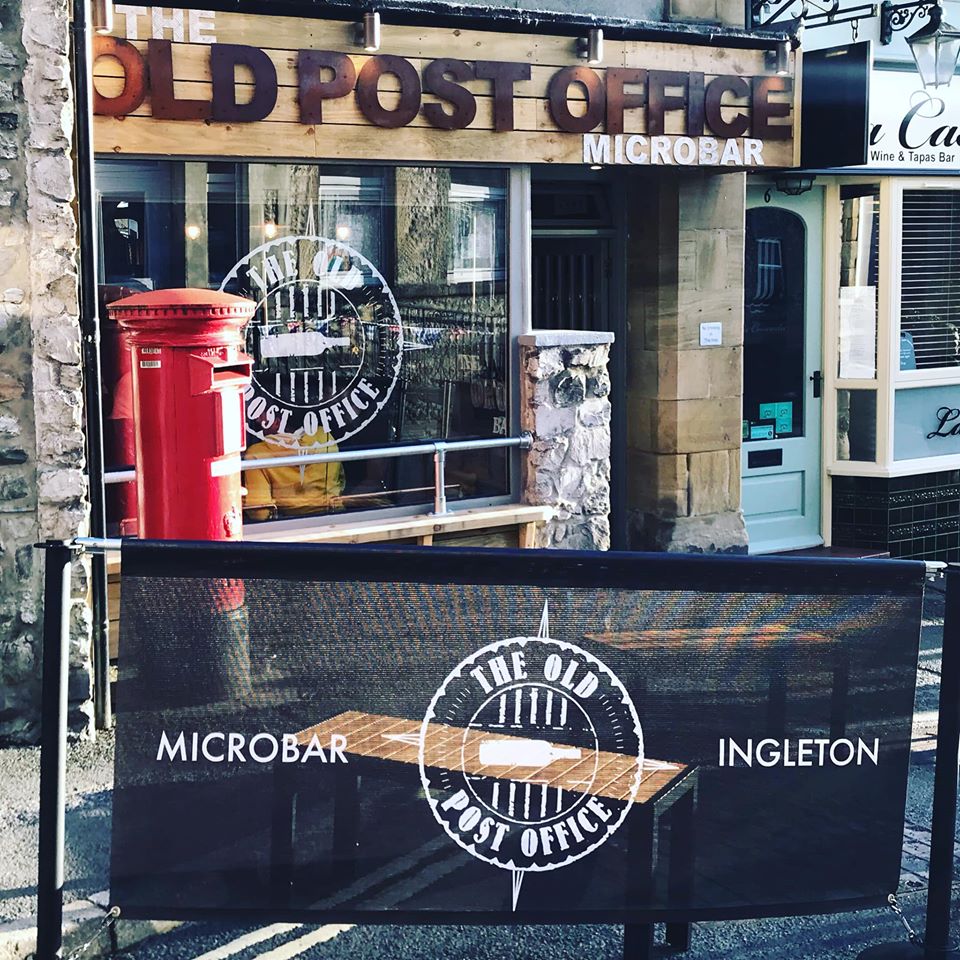
And, another one of my favourite pubs was the Old Post Office in Ingleton which, as its name suggests, is a conversion from a former post office into a cosy little arrangement which has a decent choice of beer and welcoming atmosphere, but above all, excellent customer service. Excuse the quality of my photos, I took them on my previous visit although I was intending to visit the pub again in a few weeks to take more. Unfortunately, accommodation is proving difficult to find given the number of staycations being booked, but I’ll get there sometime over the next few weeks.
Adam and Rob from the pub kindly answered questions about how things are going with them and it gives me an idea of a place to go that I haven’t been, which is Preston. And I haven’t heard of Se7en Brothers brewery (Nathan will tut at that, as I probably should have done and I’m sure they’re on his spreadsheet), but their marshmallow stout looks marvellous!
Anyway, onto the questions:
You’re back open again, was it a successful re-opening for you?
We reopened on the 4th July, as soon as we were given the green light by the government. From the word go we have been overwhelmed by people’s support. We find that most days we are open all our tables are full which is fantastic.
How easy has it been to implement social distancing in the space that you have and have customers been prepared to come back?
As a microbar we are naturally limited for space, so the distancing has been challenging. We have tried different layouts in the bar, and we have ensured that the 1m plus rule can be stuck too. Our main concern was that as a customer you would feel safe to come in and have a drink. We sat in each seat and measured the distance and tested the mitigations we had put in place. We have found a large number of our regulars come back which is fantastic to see, there are naturally going to be some who don’t feel safe and that’s fine. I’m sure they will return in time.
When I visited, I didn’t notice your back room of the Armoury. It looks marvellously quirky in the photos, what inspired that theme?
We have always been interested in history, from the Roman era, medieval to Napoleonic and the world wars. We used to own an older property in Cumbria, the style of the property suited that theme. We decided to create ‘the armoury’ to show off our collection and to create something different. (you certainly wouldn’t expect that in a small village).
What do you see the future being for pubs in North Yorkshire, is there cause for optimism?
I think the future is uncertain but I hope the industry makes a full recovery from recent events. With less holidays abroad and people staying in the UK this year we all hope to be busy. We are lucky to be in a touristy area surrounded by beautiful countryside, everyone likes a well earned pint after a day in the hills!
It was clear from my visit that you have a real community feel. Were the community and your regulars supportive during the period of closure?
During lockdown we offered a takeaway and delivery service to the local community and upto 10 miles away. We had repeat customers most weeks and they were fantastic at supporting us. It was great to get out on the deliveries and check in and see how our regulars were and have a chat. It brought a bit of normality in what was a very strange time.
I liked the choice of beer that you had in the fridges. Given your small serving space, you offer a wide selection of options. Do you think some pubs with more size are missing out by not offering craft beer options?
I think at the moment the craft beer industry is booming, you only have to look at the amount of small breweries in the UK. There are some fantastic beers out there. Everyone likes a choice and at times wants to try something different and unique, other venues should give it a go and see if it works for them.
How do you go about choosing the beers? Are you guided by wholesalers, customers or inspired by extensive travel to other pubs?
We like to conduct a lot of research and product testing! In all honesty at the start we stocked what we liked to drink, it just grew from there. We like to try the more quirky beers that you cannot find easily. That’s one positive to come out of our lockdown experience. We looked at other suppliers and stockists and broadened our search for beers. We certainly found some great breweries to work with that’s for sure.
It’s not all about the beer. You’re big on gin, is this still a popular spirit, or is something else becoming more in favour?
Gin has been a big seller for us since we opened but rum is catching up! There are so many different rums out there now, some really fantastic small batch bottles too.
Would you be willing to name your other favourite pubs, whether in Yorkshire or further afield?
Too many to mention but a bar we really want to visit as soon as we can is Applejacks Microbar in Preston, we follow them on social media and have been in contact during lockdown offering each other support. We can not wait to meet them in person and try their selection of cakes and ales.
And, finally, do you have a favourite beer and/or spirit?
This changes weekly! But at the moment our favourite beers are ‘Honeycomb pale ale’ from Se7en Brothers brewery and ‘Pump up the Jam’ from Tiny Rebel. Spirits wise we quite like the Salford spiced rum.
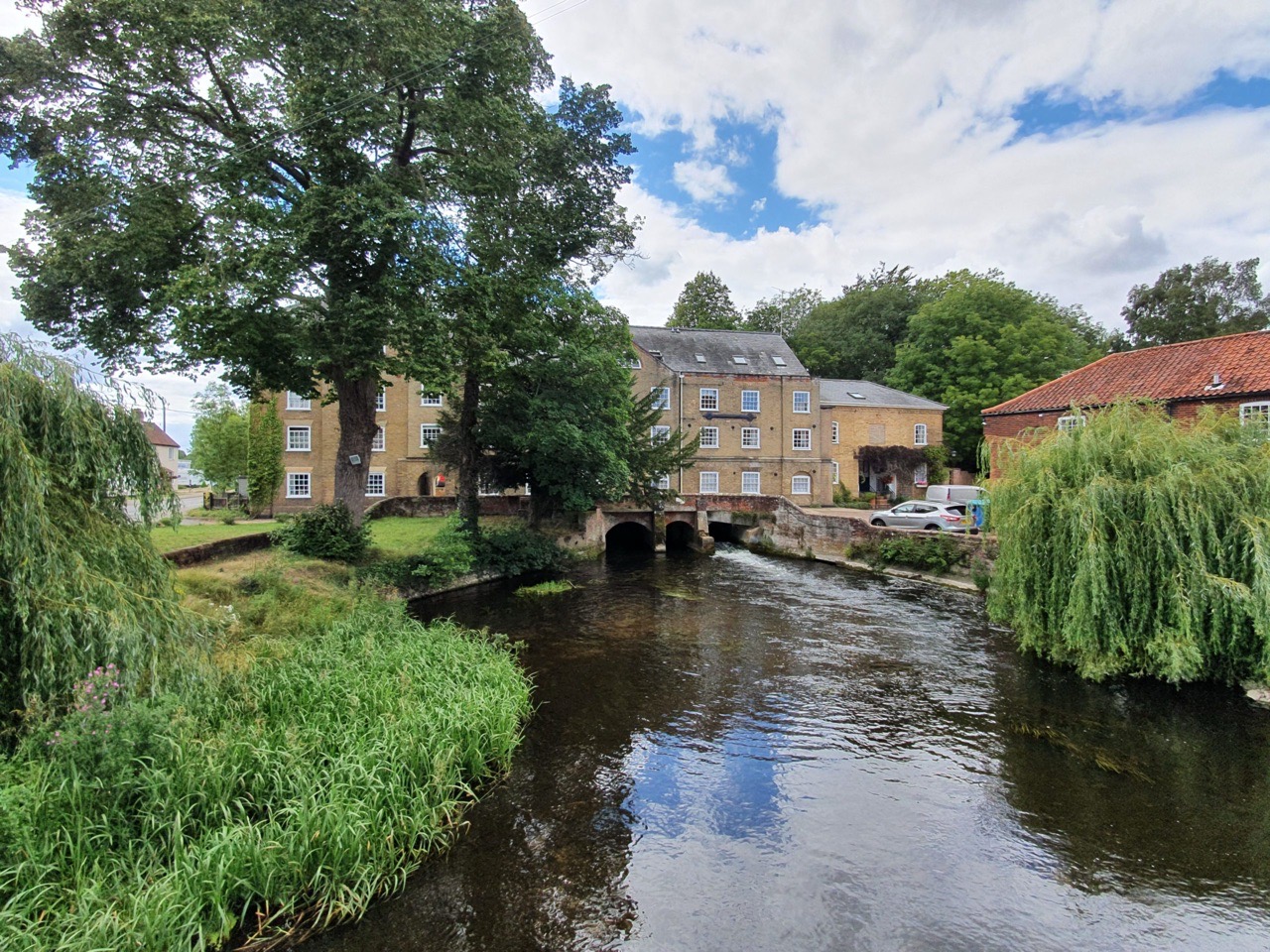
Slowly, but surely, I’m getting around the Fakenham heritage trail by visiting a few locations on it every time I come to the town. This is Fakenham Mill and there has been a mill here since at least 1240. A new building was constructed in 1620 and the route of the River Wensum was altered to suit the new structure.
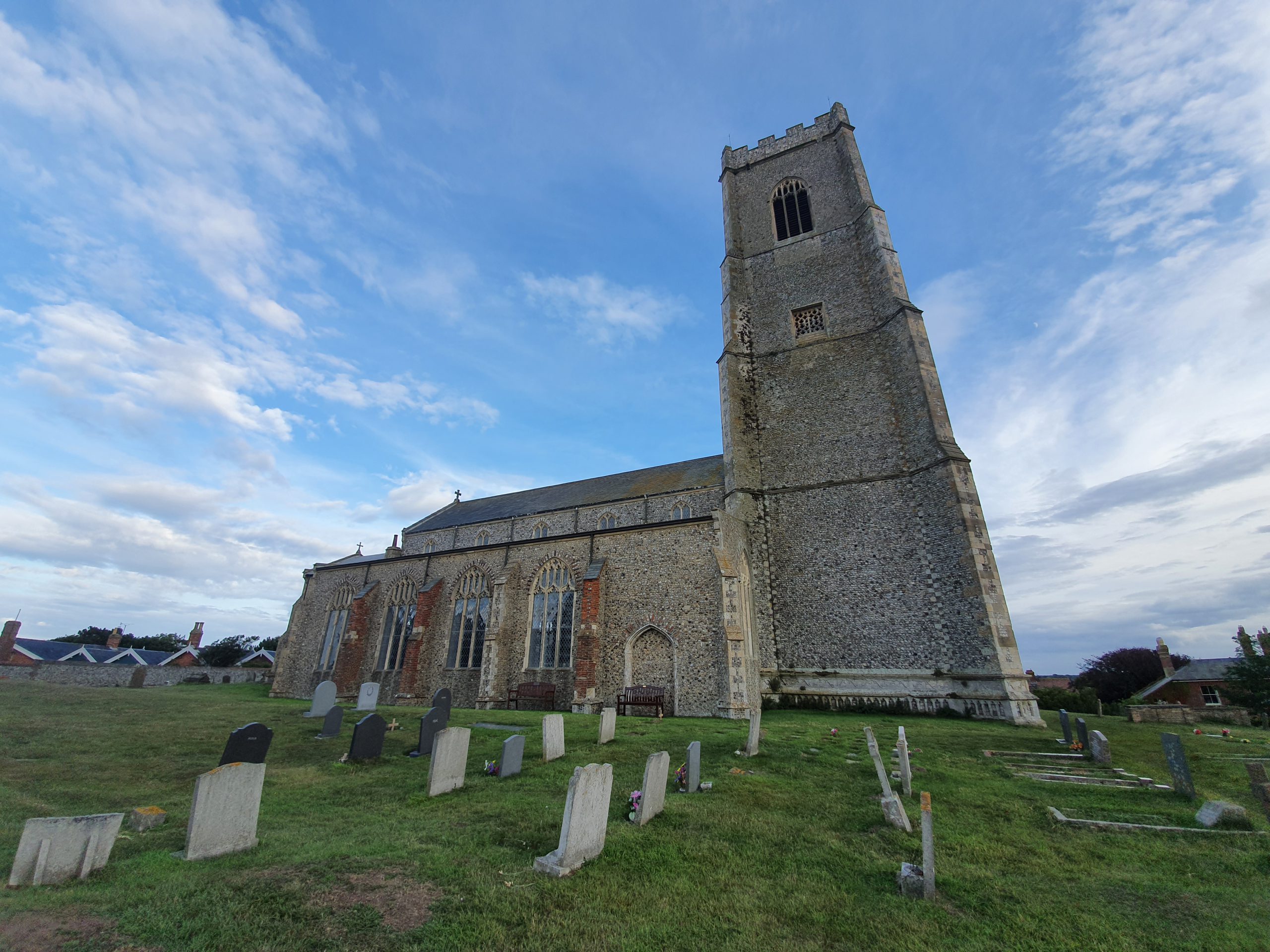
Happisburgh is one of those Norfolk placenames that is difficult for non-locals to guess the pronunciation of, it’s something akin to ‘haze-bruh’. The Concise Oxford Dictionary Of English Placenames says about the origins of the name:
Happisburgh, Norfolk. Hapesburc in Domesday Book, Apesburga in 1150 and Hapesburg in 1272. Happing is from Haep’s people.
So, the settlement of Haep’s people, whoever Haep was. The contraction of ‘borough’ or ‘burgh’ into ‘bruh’ isn’t rare, it’s happened with Middlesborough, Farnborough and Hillsborough. I imagine it evolved quite quickly into ‘hap-is-bruh’ and then then ‘p’ was taken out over time to make it easier to say. Well, that’s my best explanation, so I’m going with that.
A body was found off Happisburgh on 23 August 1947, thought to be a sailor who had died during the Second World War. He was given a war grave and he now rests in peace “known unto God”.
I have very little to add about this grave, but I haven’t seen one with the RNLI insignia on it before. It’s the grave of Derek James Harrison, who was born on 31 May 1965 and died on 13 August 1984. I can’t find out much more, other than Derek was buried on 20 August 1984 and he was listed as living at Hill House Hotel in Happisburgh.
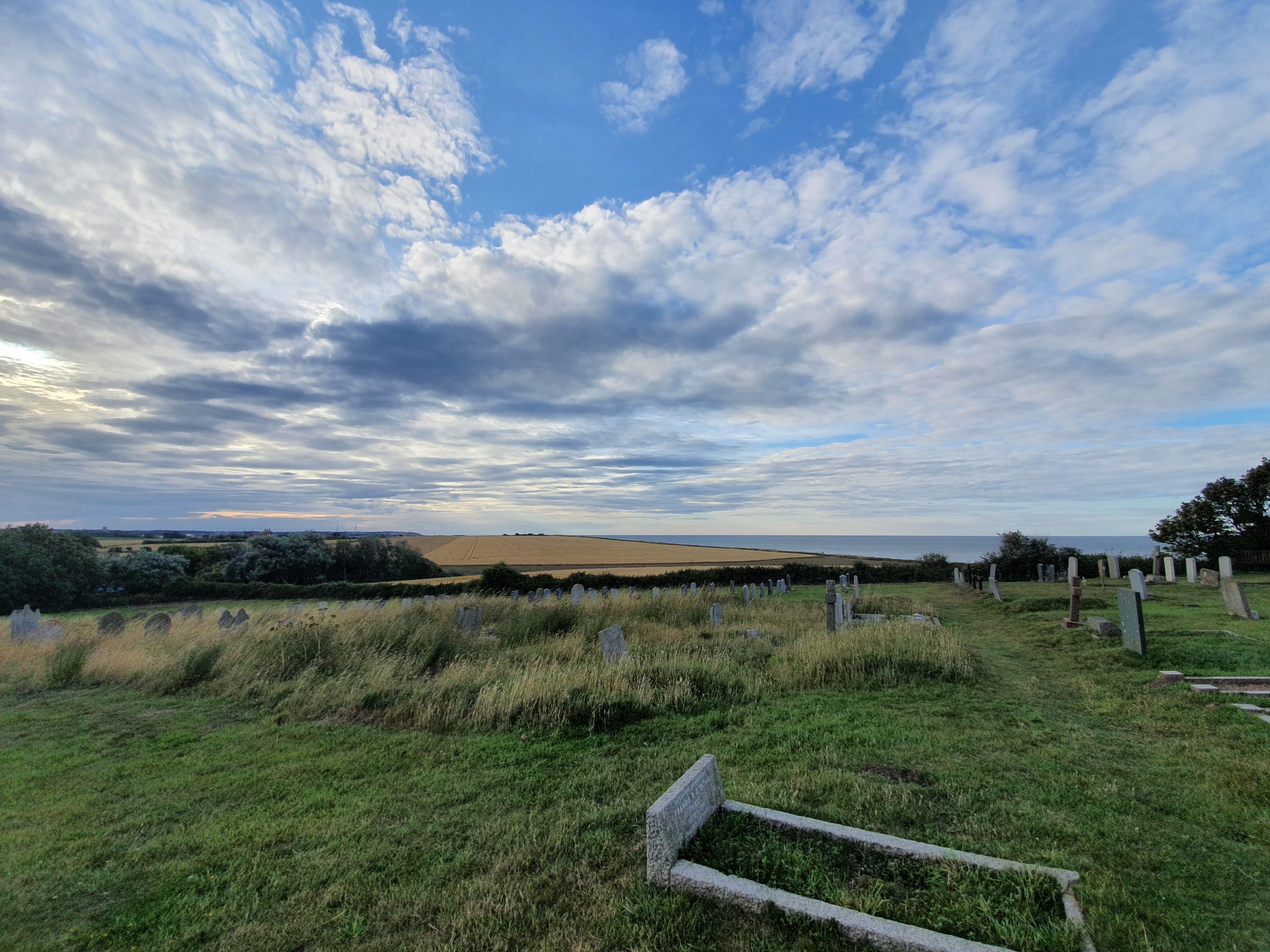
This memorial is in a prominent position in the churchyard of St. Mary’s church in the coastal town of Happisburgh.
HMS Invincible was launched on 9 March 1765 and was used in the American War of Independence. She was sailing from Great Yarmouth on 16 March 1801 when she hit the sandbank off Happisburgh known as the Hammond Knoll Rock. Although the admiral and 195 sailors were saved, around 400 men lost their lives. The harbour pilot, who died when the ship sank, was later blamed for the incident, which was one of the worst maritime events of the eighteenth century.
This memorial stone was added here in 1998 as by chance when digging a drainage channel in the churchyard, the bodies of many of the ship’s crew were discovered. It was known that there had been a large communal grave, with carts bringing the bodies to a section of land located just off the main churchyard, but the exact spot of the burials wasn’t previously known. They were buried just three feet under the surface, with no real order to the remains.
This letter was written by one of the sailors on board:
“Only two days have elapsed since I last wrote to you, and in that short space the most melancholy accident has happened, namely, the total loss of our ship. We set sail from Yarmouth on Monday morning for the Sound, to join the fleet under the command of Admiral Sir Hyde Parker; and about two o’clock in the afternoon the ship struck on a sand-bank, where she beat most violently for upwards of two hours, when her masts were cut away, and her anchor was then cast, and we all thought our selves safe; for, notwithstanding she leaked considerably, the water gained but little upon us. Our signals of distress were heard and answered by a cutter, which immediately bore down to Yarmouth, to give intelligence of our distress; and we therefore hoped, with the assistance that should arrive, to be able to save the ship as well as ourselves; but God ordained it otherwise.
The rudder being unfortunately gone, the ship became unmanageable, and in the evening she again drove on the bank, when we all gave ourselves up for lost. Through God’s providence, however, a fishing smack, at this awful juncture, hove in sight, and the admiral; my self, and two or three more, succeeded in getting on board of her; but the rest, in endeavouring to do the same, lost all the boats they were able to get over-board. In this melancholy condition she remained till the following morning, when, shocking to relate, she entirely sunk; we being all the time spectators of the distressful scene, without any possible means of affording the sufferers the least assistance, as any attempt to that effect would only have involved ourselves in the general calamity. By God’s providence, however, the ship’s launch, full of men, at length got clear of the wreck, and by her assistance we were enabled to save some others. In the whole, about 195 are saved.
The greater part of the officers, including the captain, have unfortunately perished.”
The Invincible was heading towards a fleet led by Norfolk’s hero Horatio Nelson when it sank, and the great admiral himself visited Great Yarmouth to see some of the injured crew who had survived. Today, there’s a play park near the church named HMS Invincible Park, a reminder of the sad event which cost so many men their lives.
The Dictionary of the Vulgar Tongue was first published at the end of the eighteenth century, and given that the current health crisis is giving too much time to read books, I thought I’d pick a daily word from it until I got bored….
Frog’s Wine
A lot of thought was put into the definition of this word in the dictionary, it’s listed solely as “gin”. Back in the early part of the eighteenth century, gin was causing all manner of problems in society, in a similar way to how Stella exists today. A ‘gin craze’ had developed and Parliament was forced to pass a series of laws to try and control how much was being drunk, with some success as its usage had fallen by the end of the century. I’m not sure of the etymology behind ‘Frog’s Wine’, but it was a derogatory slang term.
This is all a handy excuse to use one of my favourite images, Gin Lane by William Hogarth.
Ridlington is a small village in North Norfolk and after I had a little visit to their church, this is what The Concise Oxford Dictionary Of English Placenames say about the origins of the name.
Ridlington, Norfolk. Ridlinketuna in Domesday Book, Redlington in 1199 and Ridelington in 1254. May be derived from a person, Hrethel.
I’m not sure who this person might be, but it’s the settlement or enclosure of Hrethel and his people. It’s not the most descriptive of place names, I like the ones which say they’re up a hill or something, but it’s an old English name that has stuck relatively unchanged for nearly 1,000 years.
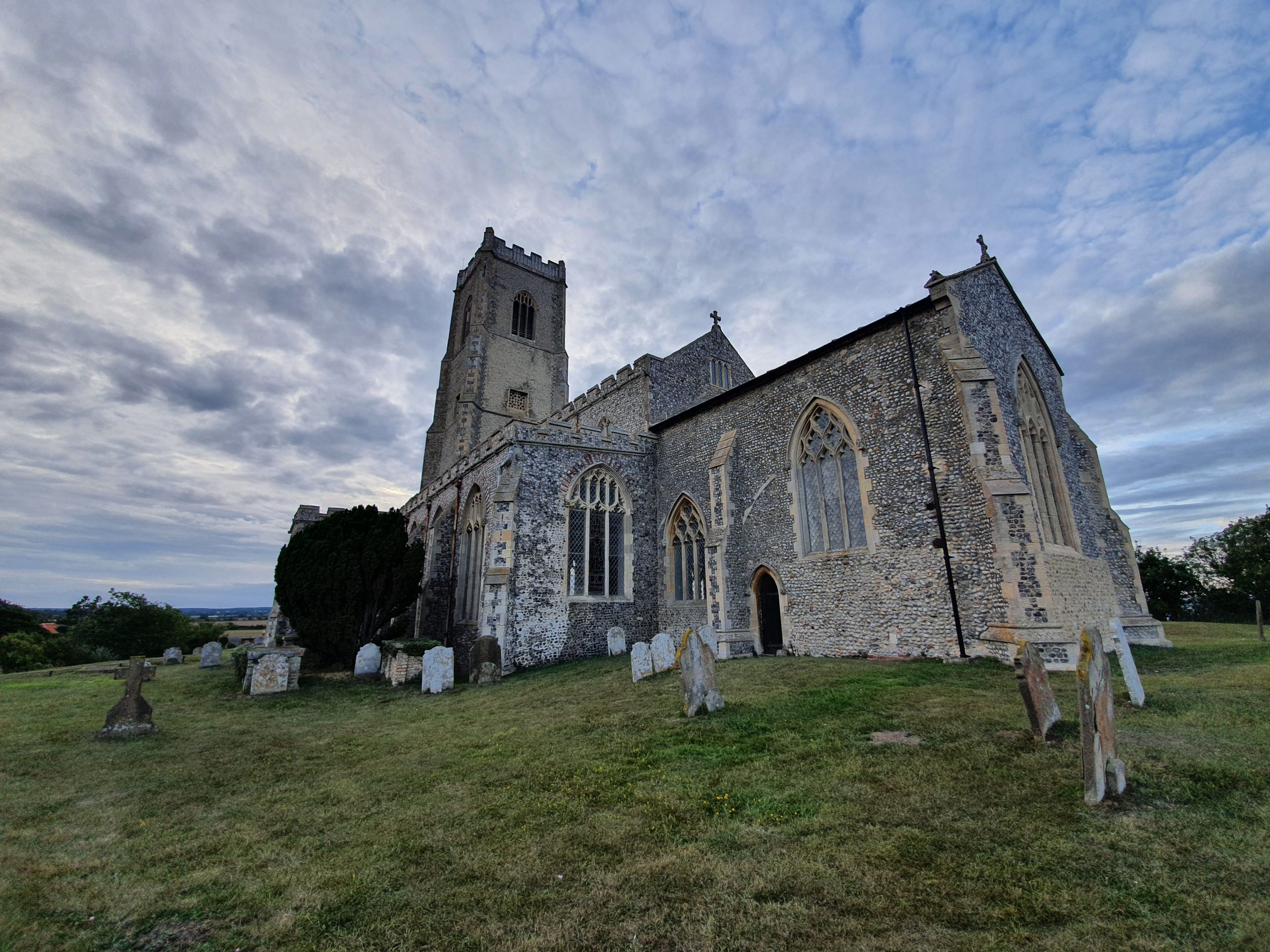
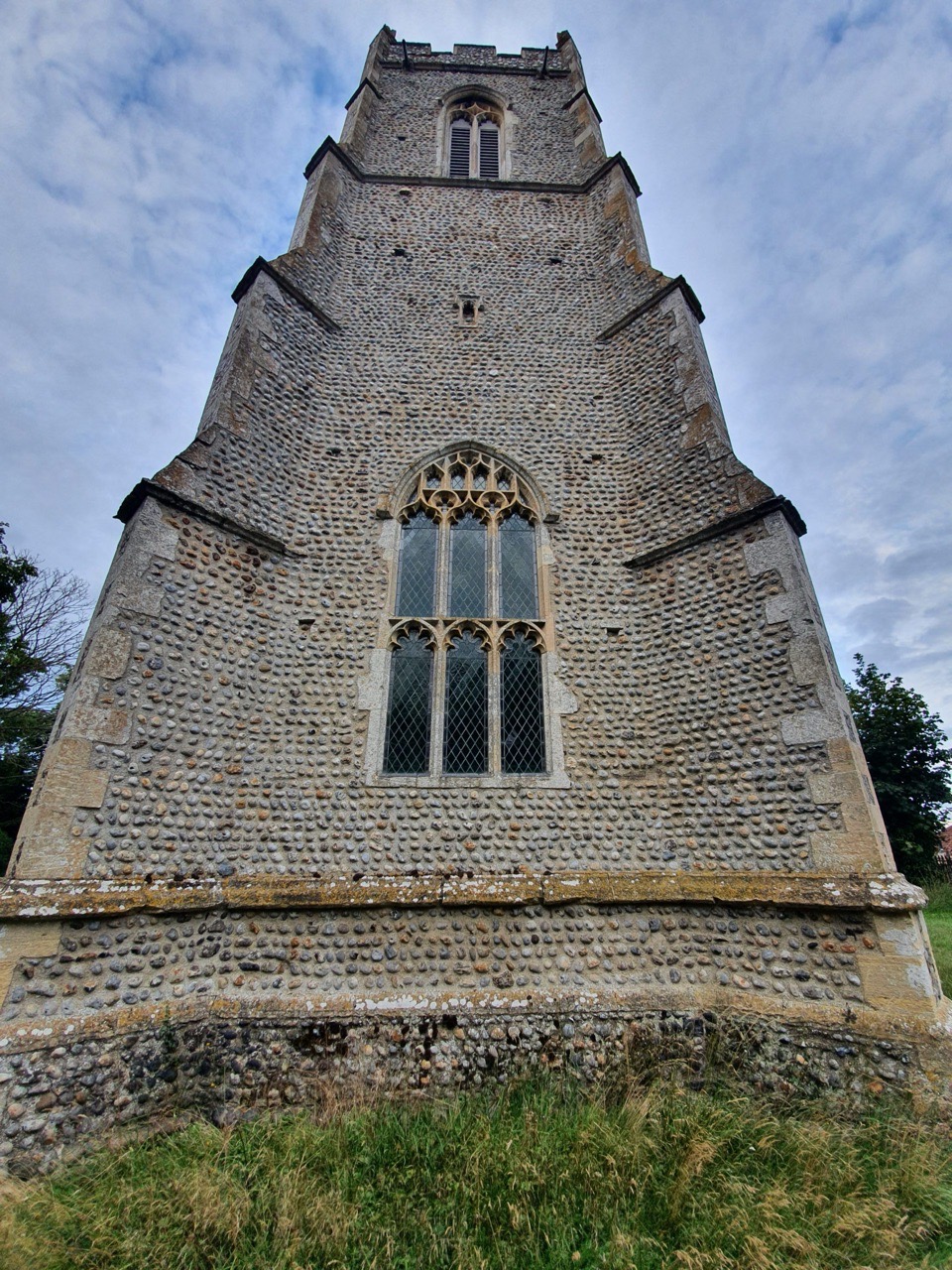
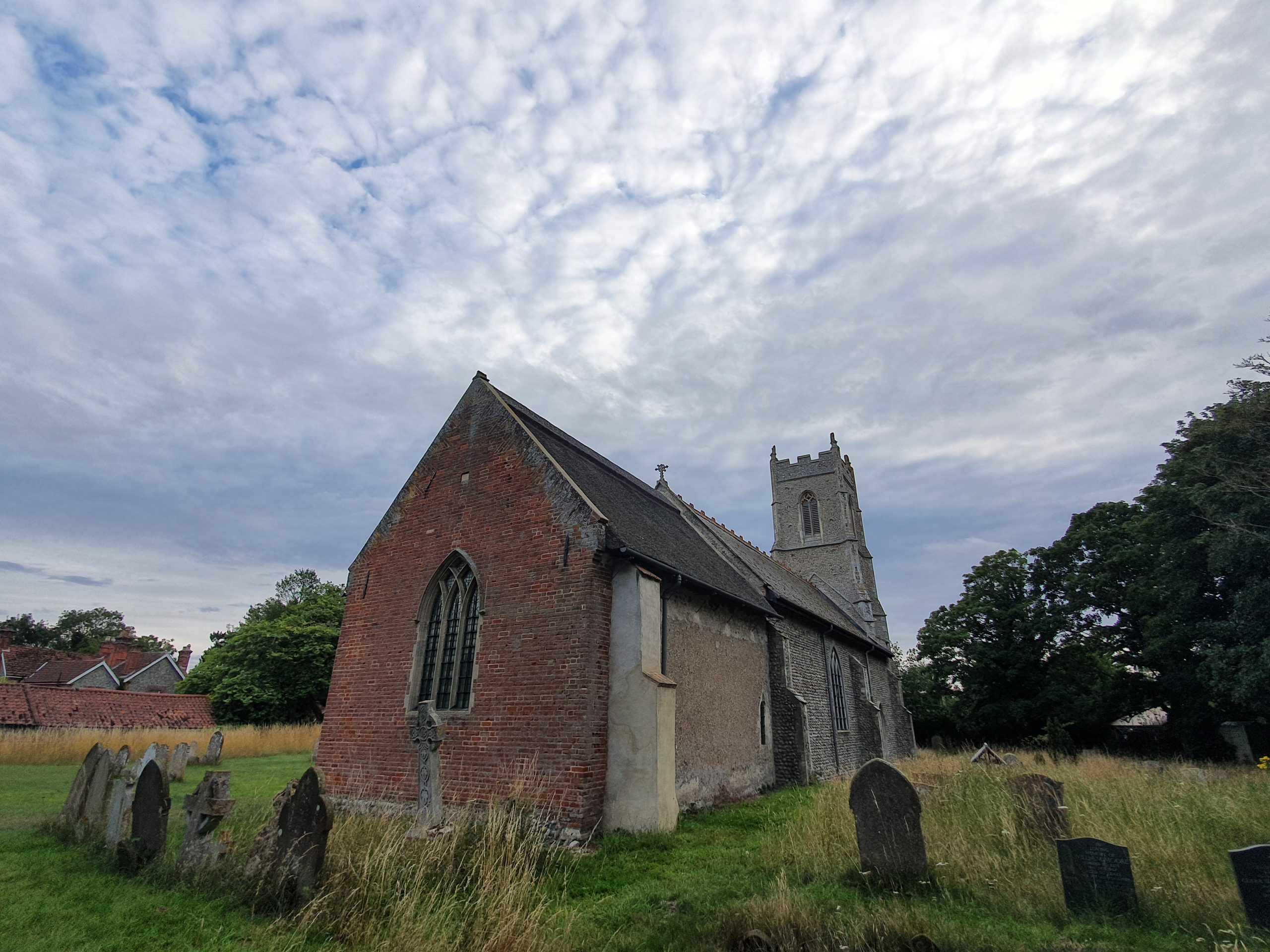
Ridlington’s church is located nearby to the glorious churches of Witton and Crostwight, but this one didn’t seem to me to have quite the magic and quirkiness of those buildings. The current building mostly dates from the fifteenth century if the listed building record is to be believed, although there would have been something here before then, with substantial changes made both internally and externally during the Victorian period. The church still has its thirteenth-century font, a reminder of its earlier existence.
In 1760, the church was rebuilt with red brick at one end which was to protect the structure. The chancel floor started to collapse in 2001, with an investigation finding that the Victorian restoration had reused stone and medieval tiles in its repair, but this had been laid above unprotected wet ground. There was once thatching to both the nave and chancel, although this roofing now only remains in the latter and the church mentions that it’s one of the few remaining which has reeds from the Norfolk Broads.
The three-stage tower is also fifteenth-century, the previous incarnation of the church may well though have had a round tower.
The church’s own web-site gives an earlier date for the construction of the church, suggesting that the nave was built in the early fourteenth century and the chancel was completed later on in the fourteenth century. I’m not very good at dating walls so I’m happy with either date.
The south porch, where the church has at least filled in the empty niche where the previous statue was likely removed following the Reformation.
One other interesting snippet from the church is that some of the stained glass windows were blown out during the First World War when a Zeppelin attacked on 24 April 1916. I suspect the locals must have considered themselves quite unfortunate to have suffered that slightly random attack, especially as it also partly damaged the chancel end of the church. Although at least no-one was injured, or no human at least, as a bullock was killed during the raid. The Zeppelin used during the raid was L23, which had been brought into service on 8 April 1916 and which survived until it was shot down over the North Sea on 21 August 1917.