Author: admin

  • Oradea – Oradea Neolog Synagogue

    Oradea – Oradea Neolog Synagogue

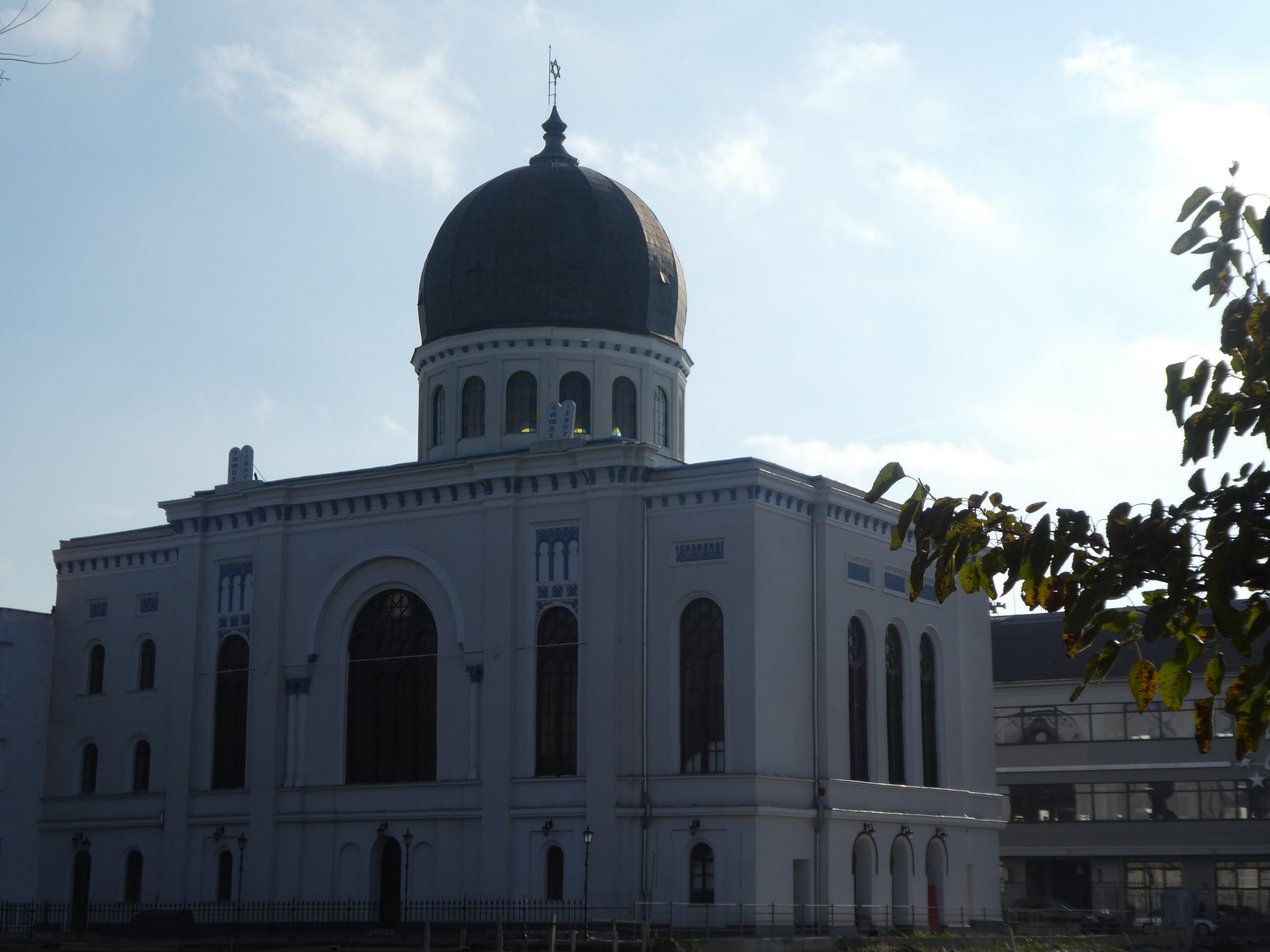
    Located in a prominent riverside site in the heart of Oradea is the Neolog synagogue, which is one of the largest buildings of its type in Europe. There were two Jewish communities in Oradea, the Neolog and the Orthodox, which jointly made the city one of the hearts of Judaism in the Austro-Hungarian Empire.

    The stone records the completion of the synagogue, which was in 1878, with work having started in October 1876. The building could house over 1,000 people and was similar in design to the synagogue in Nuremberg, which the Nazis ripped down in 1938.

    When the building was restored recently, this letter from 1878 was found in a sealed container.

    This photo is taken from upstairs and it’s a beautiful building, being spacious and light. I didn’t expect this synagogue to be open, it’s rare to find a building such as this which survives, given the damage done to them during the Nazi years. There was a small admission charge to get in (5 lei, so just under £1), but they’ve allowed access to nearly all parts of the building.

    However, the restoration of the building is recent and must have been a real labour of love to get to this stage. The Jewish community in the city was nearly destroyed by the time that the Second World War had ended, so the synagogue fell out of religious use. There had been efforts to keep the synagogue open for religious services in the late 1940s, but the new communist regime didn’t take positively to this plan. The small Jewish community that had survived the war, which was just a few hundred, decided though that they wanted to try and keep the building for what might be a more positive future and so they maintained it as best as they could.

    Another photo from upstairs, looking towards the rear of the synagogue.

    The organ.

    Looking down into the synagogue.

    Two photos of the dome.

    The whole building is ornately decorated. One mystery to me is how the Jewish community managed to keep ownership of this building during the communist era in Romania, I’m surprised that this piece of prime real estate wasn’t taken off of them. I can only imagine that there were some determined members of the community who fought to prevent any such action.

    Two panels, which again I’m surprised have survived as so many of these were lost during the Second World War and the run up to it. The last rabbi of the synagogue was István Vajda, who was forced to become a member of the Jewish council overseeing the new ghetto, and he had to endure the knowledge that his wife was being tortured. He sadly died in a concentration camp.

    Standing proud once again in the heart of Oradea.
  • Oradea – Crișul Repede

    Oradea – Crișul Repede

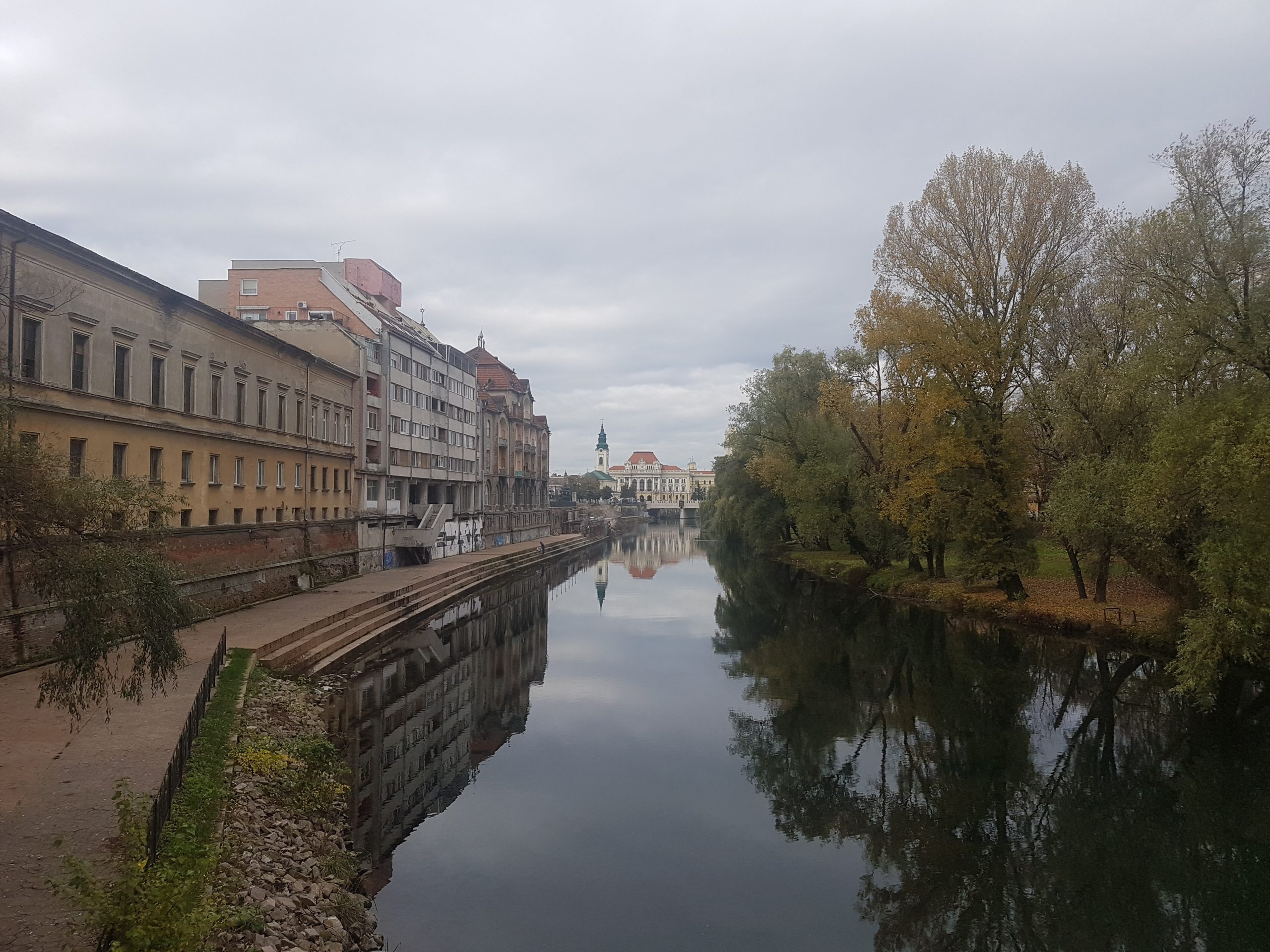
    Just photos, this is the Crișul Repede, which runs through the heart of Oradea. It would be nice if they could complete a riverside path all the way along, but unfortunately there are some buildings where access isn’t possible at the moment along the bank. Some of the buildings also need some repair, although when I visited in 2017 there were numerous projects to fix things up, so I assume progress is being made.

    The building at the rear of the below photo is Oradea’s Town Hall, it’s not possible to walk along the left-hand side bank to get to it, but that would make a marvellous little promenade area.

  • Sports Drink

    Sports Drink

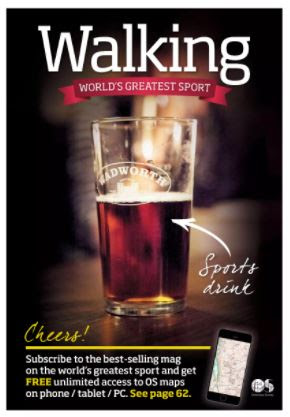
    I still like this ad……

    Beer. A proper sports drink.

  • Die Sonderfahndungsliste G.B.

    Die Sonderfahndungsliste G.B.

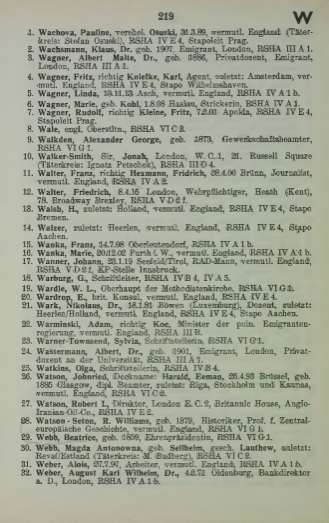
    I had heard of this book, but I hadn’t realised that the contents of it were on-line. It’s the Sonderfahndungsliste G.B., which was the list of names produced by the Schutzstaffel (SS) in 1940 who were to have been arrested if the Germans had successfully invaded the UK. There are 2,820 names in the book and in some cases, it gives information on which division of the SS had authorised the arrest and who would have received the prisoner.

    At the rear of the book, there are also a list of organisations and establishments that the SS would have shown an interest in. More on this book in future posts….

    The Text of the Book (.pdf format)

  • Southend – Last Post

    Southend – Last Post

    I’ve been to relatively few JD Wetherspoon pubs in Essex, but I visited here in 2017. It’s a grand former Post Office building which was constructed in 1896, with the transformation into a pub being sympathetic.

    When I visited the pub in the evening there was a fight taking place and customers being dragged out by staff. Just what you want on a weekday in the early evening, but I like a bit of excitement to be fair. The photo above was taken during breakfast, when things were just a little more sedate and peaceful.

    The half chicken and chips, something which has now been withdrawn from the menu, but which tasted fine. I can’t remember the real ale selection, but JD Wetherspoons rarely let me down in that regard.

    And the breakfast, with the egg being overcooked, but all else was well.

    Disappointingly, the pub seems to have picked up no comments on TripAdvisor that seem ridiculous, so nothing worth quoting from there. Well, other than the complaint:

    “Ordered a bottle of Pinot Rose. Very rude bar staff with long brown hair argued with me for about then mins telling me there is no such thing as Pinot Rose and Pinot was White. Please educate your staff as Pinot is a brand n not a damn colour. Never felt so angry, the way she spoke to me was disgusting, serious attitude problem. Embarrassing. Then I got given some nasty Hardy’s Rose bottle.”

    The staff member was likely right, I’ve got a copy of the 2017 menu and they did only sell Pinot as a white wine at the pub, so she would have struggled to give him another other type of Pinot.

    This can’t be an easy operation to run, a cheap pub in a seaside destination which gets stag and hen groups amongst others, I imagine their door staff are frequently challenged. There’s always a risk that these beautiful Victorian buildings are lost, so all credit to JD Wetherspoons for ensuring that they have been kept and remain in use.

  • Dictionary of the Vulgar Tongue – Day Thirty

    Dictionary of the Vulgar Tongue – Day Thirty

    The Dictionary of the Vulgar Tongue was first published at the end of the eighteenth century, and given that the Coronavirus crisis is giving too much time to read books, I thought I’d pick a daily word from it until I got bored…..

    Black Book

    The dictionary defines this as “he is down in the black book, ie, has a stain in his character. A black book is kept in most regiments, wherein the names of all persons sentenced to punishment are recorded”. It seems that this was also true on a wider scale, court books and punishment books in academia were also often black.

    Today, the phrase seems to have shifted somewhat, normally being used to refer to a list of secret contacts, rather than a list of people who should be punished. I prefer the old meaning, there’s something more sinister about having a book full of people who have committed misdemeanours. Perhaps Hike Norfolk should have one….

  • Norwich – West Cornwall Pasty (Railway Station)

    Norwich – West Cornwall Pasty (Railway Station)

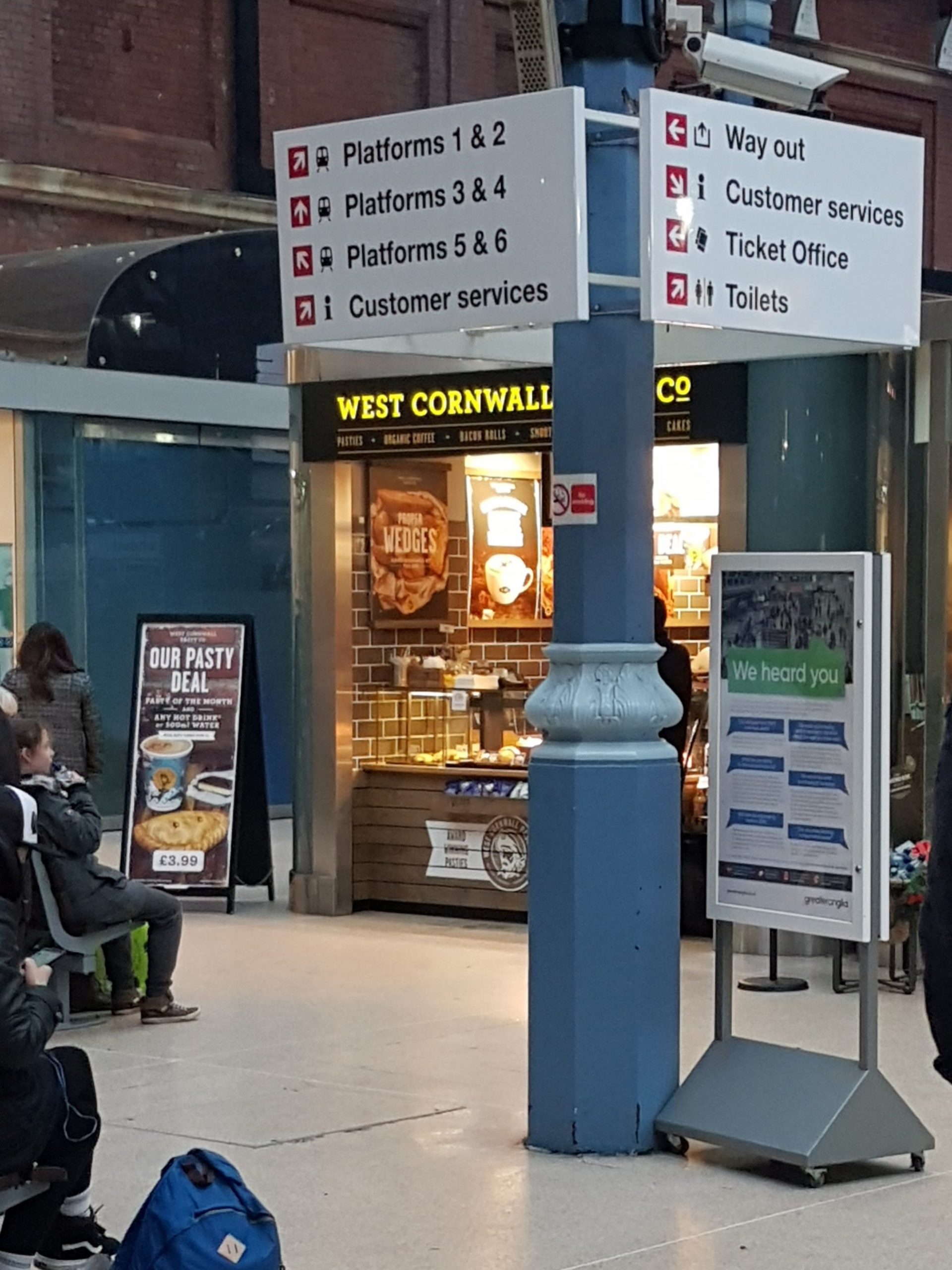
    There are two West Cornwall Pasty outlets in Norwich, one in the Haymarket and the other at the railway station.

    These photos are from their Christmas selection, since the outlet is currently shut due to this bloody virus. At this precise moment in time I could well do with a lovely pasty from here though…. Incidentally, I think their best two options are the chicken & chorizo pasty and the Thai green vegetable curry, with the potato wedges being rather less exciting.

    It’ll be open again soon enough no doubt…..

  • Streets of Norwich – White Lion Street

    Streets of Norwich – White Lion Street

    Part of my Streets of Norwich project….

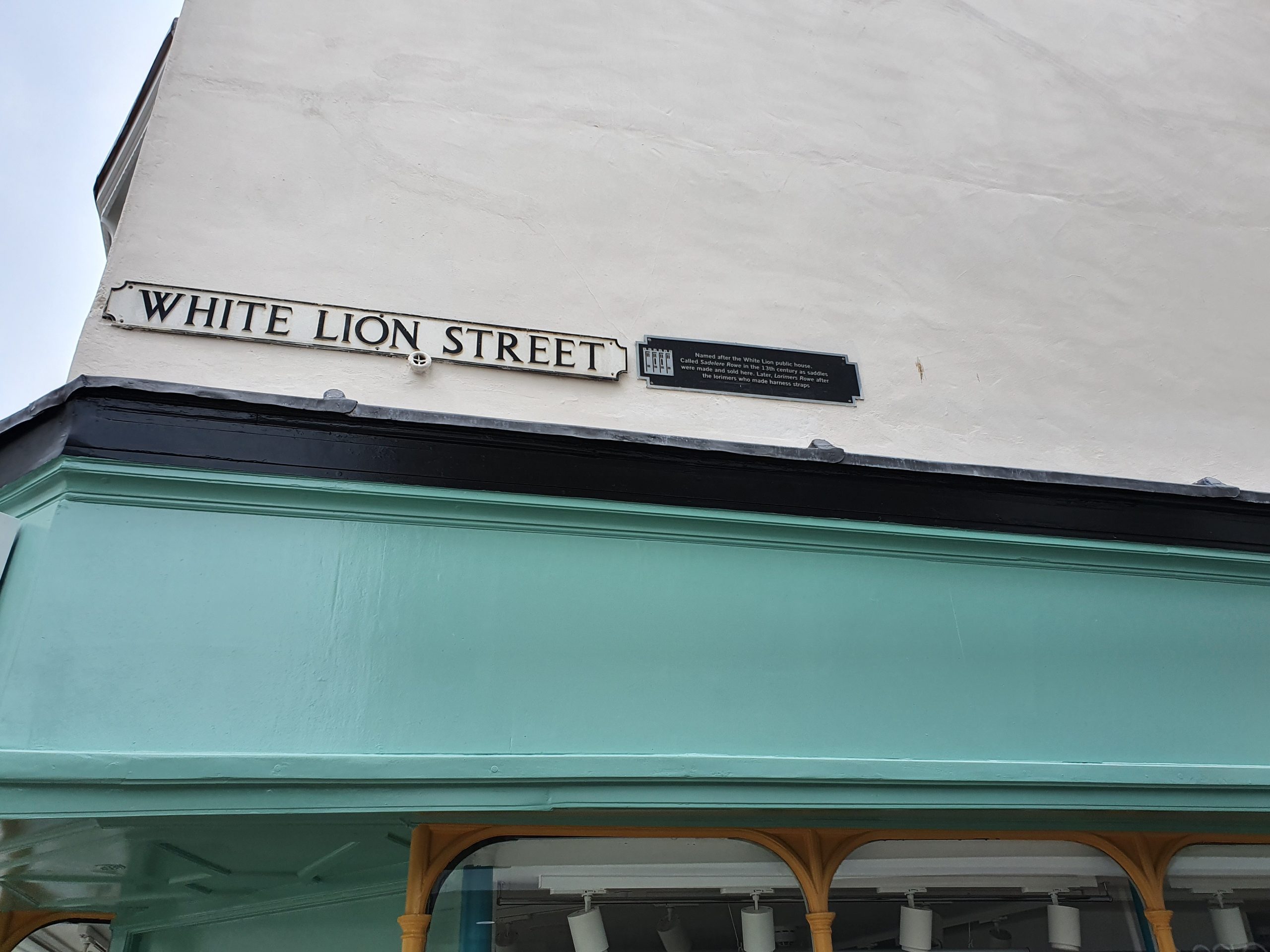
    White Lion Street runs from Gentlemans’ Walk and bends into Orford Hill and Red Lion Street, all very much unchanged over the last 150 years. The street takes its name from the former White Lion pub, but was originally called Sadelere Rowe in the thirteenth century due to the saddle-making industry here, and later Lorimers Rowe due to the harness strap makers that were located along the street.

    Although it’s relatively short, there used to be a few pubs down this street, with the Adelphi (13 White Lion Street), the Fruiterers Arms (2-4 White Lion Street) and the White Lion / Haymarket Stores (10 White Lion Street).

    The end of the street, which is all now pedestrianised, which joins Gentlemans’ Walk.

    Looking along the road to the Castle Quarter shopping centre. WH Smiths is on the left, this is the former Fruiterers Arms and is a real loss to the city centre as this would be a rather lovely setting for a pub. The building dates to the seventeenth century and was a pub from the mid-nineteenth century until 1989.

    Looking back towards to the market place area. The building to the left of Ladbrokes was Costa, but they closed in early 2020, so it’s up for rental, with this being the former Haymarket Stores pub. The Haymarket Stores, which was once known as the White Lion, closed in 1974.

    Back in 1912, the businesses along the street were:

    NORTH SIDE

    1 – Pearks, grocers

    1A – Albert Turner, confectioner

    3 – Cozen Randall, hairdresser

    5 – Sam Ellis, fruit merchant

    7 – W. Fletcher, butchers

    9 – Eastern Counties Rubber Company

    11 – London & Norwich Cycle & Rubber Company

    13 – Back’s, wine and spirits merchants

    15 – Back’s, tobacconists

    17 – Henry Moore William, wine and spirits store

    19-21 – Grix William, dining rooms

    SOUTH SIDE

    2-4 – Fruiterers Arms, pub

    6 – Edward Richard Pooley, shoe warehouse

    10 – White Lion, pub

    12 – E. Reeve & Son, grindery


    The 1939 register had the following residents living on the street:

    1A – Rosetta Clarke, Douglas Clarke, Frances Webster, Olive Johnson

    6 – Norah Sage

    10 – Edward Thaxton, Emmeline Thaxton, Leonard Thaxton

    13 – William G Gerry, Lily Gerry, William J Gerry

  • Dictionary of the Vulgar Tongue – Day Twenty-Nine

    Dictionary of the Vulgar Tongue – Day Twenty-Nine

    The Dictionary of the Vulgar Tongue was first published at the end of the eighteenth century, and given that the Coronavirus crisis is giving too much time to read books, I thought I’d pick a daily word from it until I got bored…..

    Bishop

    This is a cocktail of sorts according to the dictionary, “a mixture of wine and water, into which is put a roasted orange”. It’s a drink that Samuel Johnson enjoyed, so it dates back to at least the seventeenth century. Interestingly, the drink still seems to exist today, although rum has been added into the concoction of red wine, water and an orange. I can’t see it catching on at JD Wetherspoons, but it’s right up Nicholson’s street…..

  • Dictionary of the Vulgar Tongue – Day Twenty-Eight

    Dictionary of the Vulgar Tongue – Day Twenty-Eight

    The Dictionary of the Vulgar Tongue was first published at the end of the eighteenth century, and given that the Coronavirus crisis is giving too much time to read books, I thought I’d pick a daily word from it until I got bored…..

    Birds of a Feather

    The meaning given by the dictionary is “rogues of the same gang”, so this is one of those phrases that has for some reason remained in usage over the centuries, although it’s not just about rogues and criminals now. Although, perhaps, the TV comedy Birds of a Feather perhaps did revert to the rogues usage. The phrase dates back to at least the sixteenth century and it was used widely and commonly in print, unlike some of the other phrases in this dictionary which I still wonder if the author made up.

    The Bath Chronicle posted a long epistle (their word, not mine) to ‘a friend in the country’ in December 1774, which included the lines:

    “What a strange revolution – we us’d all together, to flock to one place, like birds of a feather. And pass the long evening, in chat or at play, when a thousand soft amorous things one might say”.