Author: admin

  • Florence – Rucellai Sepulchre

    Florence – Rucellai Sepulchre

    The Rucellai Sepulchre is the tomb of Giovanni di Paolo Rucellai, located in a private chapel which is known as the Rucellai Chapel. It’s part of the San Pancrazio Church, which has now been decommissioned and is used as a museum. Tours to this private chapel have only been available for a few years and it’s a quiet and dignified chapel.

    This is the altar of the chapel. Rucellai obtained his money from the wool trade, although he also became involved with politics and the arts within Florence. He lived from 1403 until 1481, when he was laid to rest in the tomb which he carefully planned and funded.

    This is the sepulchre itself, standing proud within the chapel. The chapel dates to around 1417, with work on the sepulchre lasting from around 1458 until 1467. The sepulchre was designed by Leon Battista Alberti, who was responsible for many other buildings throughout Florence.

    The front of the sepulchre.

    Inside the sepulchre, through the little door. There are frescoes inside the tomb, although I didn’t know whether I was meant to be prodding my camera inside, so I didn’t investigate too far.

    There’s something a little sad that the owner of this tomb had thought that he would remain within an active church for eternity. Instead the main part of the church became a tobacco factory in the nineteenth century, although is rather more dignified today as a museum. At least though this chapel has remained intact, it could have easily been demolished or remodelled when the church itself became used for different purposes.

  • Florence – Porcellino

    Florence – Porcellino

    Porcellino means piglet in Italian and there has been a bronze sculpture at Mercato Nuovo since at least the early seventeenth century, although this is a modern copy from 2008. The sculpture is part of a fountain and initially this was part of the system to get clean water for the market traders.

    The original sculpture by Pietro Tacca is now safely in the Museo Bardini and it was considered good luck, and would ensure a return to Florence, for anyone who put a coin in the sculpture’s mouth and then rubbed his snout. From the state of Porcellino’s snout, it’s clear that very many people take part in this tradition, although I decided against it as there was a queue and I had more museums to get to.

    Actually, I rather suspect that some clever market manager at some stage many centuries ago thought that this was a marvellous idea, get people to come to the market, shove coins through their sculpture and then tell them that it’s good luck. I suspect that the people with the most good luck here are the market managers, but nonetheless, it’s popular with children at least. Incidentally, it’s only really those who put coins which fall through the grate who get the good luck and by fortunate chance, it’s the heaviest coins which are more likely to do this. To their credit though, the money is today given to charity,  to the Opera della Divina Provvidenza Madonnina del Grappa, so it’s all in a good cause.

  • Florence – Bright Evening Sky

    Florence – Bright Evening Sky

    These photos aren’t edited, but do show just how bright the sky was during the evening…. Unfortunately, they’re also a bit blurry, but there we go, can’t have everything.

  • Florence – Rower

    Florence – Rower

    I can think of worse places to go rowing than on the River Arno through the centre of Florence……

  • Florence – Photos from South Bank of River Arno

    Florence – Photos from South Bank of River Arno

    Above is the River Arno, which flows through the heart of Florence.

    The bridge to the far left of this photo is Ponte Vecchio, with the nearer bridge being the slightly less exciting Ponte alle Grazie.

    All very peaceful, the building to the far left of the above photo is the Florence National Central Library, one of the largest libraries in Italy.

  • Florence – Lindt Shop

    Florence – Lindt Shop

    When we were meandering around in the evening, we stumbled across the Lindt Store, centrally located in Florence near to the Cathedral. It looked exciting with the vibrant colours and it was even more exciting when we got a free chocolate when we entered the store…..

    Definitely colourful, although the prices seemed just a little combative…..

    There were also bars of chocolate for those who preferred a more intense taste, especially that 100% cacao one….

    A lovely shop though, which also has a cafe at the rear which we intended to come back to, although never quite found the time. Looking at the prices for the cafe, these seem very reasonable, so if I make it back to Florence one day I might pop in for a hot chocolate as these are apparently the pinnacle of liquid richness.

  • Florence – Brewdog (One Good Visit, One Bad Visit)

    Florence – Brewdog (One Good Visit, One Bad Visit)

    OK, I’ll start with the bad visit, which was the second one that I made. I had booked to go to the bar via The Fork, which had otherwise worked brilliantly this weekend, and would give me a 20% discount. Unfortunately, despite the bar having that booking they decided against opening which is fine if they had bothered to tell me. So, probably best not to book for this bar unless visiting in the evening.

    Anyway, back to the first visit, which was much better.

    The Brewdog in Florence is smaller than most of the others in the chain that I’ve been to, which is also reflected in the smaller selection of beers. However, the selection is still well-balanced and there was plenty of choice available. I had the Zombie Cake porter and it tasted as I expected, rich with plenty of chocolate in flavour, as well as some vanilla. The prices were as I’d expect from Brewdog, it’s not the cheapest, but the quality is pretty much guaranteed.

    The bar was relatively compact, but there was a reasonable amount of seating available as there are two floors to the building. The welcome at the bar was friendly and immediate, with the staff member being engaging, helpful and polite. All rather lovely.

    The downstairs of the bar, which shows live sports and can I understand get a little crowded in the evening at times.

    This is the well, one of the features of the downstairs bar, which also felt slightly damp (the downstairs that is, not the well which was had no water in it at all). The atmosphere was laid back on the first visit, it’s a safe and comfortable environment.

    I was so pleased with the first visit that I decided to go back for food, but as mentioned earlier on, the bar didn’t open. There’s one thing opening late as there are likely many reasons, but perhaps it’d be helpful just to alert customers rather than just ignore the situation. It might have been that they opened just a little late, but if I had known, I could have waited, but I’m not going to stand outside for what might be hours. So, unfortunately, I can’t say much about the food, but I like that they’ve got some localisation going in, rather than just having the standard menu which we have in the UK. Incidentally, they have free snacks in the evening, although I’m not sure between what times, although I suspect they’re probably erratic…..

  • Florence – Museo della Misericordia (Saint John the Baptist by Giovanni Martini)

    Florence – Museo della Misericordia (Saint John the Baptist by Giovanni Martini)

    Giovanni Martini was born in Udine in the 1470s and died in the city in 1535, having painted mostly religious images throughout his career. This image of Saint John the Baptist was painted in the early 1490s and I hadn’t realised that the Ecce Agnus Dei on this painting means “Behold the Lamb of God”, the words used by John Baptist before baptising Jesus. It’s one of the more sympathetic portrayals of John the Baptist that I’ve seen, quite an elegant artwork.

    Martini spent most of his time in Friuli, north of Venice, so I’m not sure if he ever visited Florence. The National Gallery in London have another of Martini’s works, which is a panel painting which would have been used as an altarpiece. It was in such poor repair that the gallery didn’t show it, but recently a significant project was undertaken to restore it and bring it back on display, with details at https://www.nationalgallery.org.uk/whats-on/complex-conservation-an-altarpiece-in-need-of-attention.

  • Florence – Firenze Card

    Florence – Firenze Card

    For anyone who wants to visit a lot of attractions within Florence, which are nearly all historical sites or galleries, then the Firenze Card is likely to be worth it. It’s not cheap, costing €85, but it gives entry into more museums and galleries that it’s possible to visit in the three-day validity period of the card, with over 75 sites taking part in the scheme. I visited in February when Florence was relatively quiet, but the card also gives fast track into many of the sites, which can save plenty of time in queueing.

    Although the card period is set at 72 hours, there is a way of extending it by 48 hours by paying an extra fee and there’s also the option of paying €7 more and getting free public transport. The card includes entrance into the Cathedral and its museums, with the handy benefit that this lasts 72 hours in itself, which can be used after the card itself has expired, as long as the ticket is purchased within the validity period of the Firenze Card. So, in my case, my Firenze Card lasted from Friday to Sunday and I collected the Cathedral ticket on Sunday evening, meaning that I could visit the museum on the Monday morning and complete the Dome climb on Tuesday morning.

    I purchased by ticket at the Uffizi as this made it easier, with this museum requiring advance reservations, as does the Galleria dell’Accademia. By purchasing my ticket here, the helpful member of staff was able to make my reservations for both sites free of charge, saving time and hassle working out how else to do it. I was also given a map of where all the museums were and a thing to put round my neck, I forget what they’re called, although I decided against this frivolity.

    There’s a list of all the sites which are included with the pass available at http://www.firenzecard.it/.

    I visited the below, and I’ll add links to them when I’ve finished writing about them. I don’t think that I’ve forgotten any that I visited, but I likely have….

    SITES I VISITED (and their usual individual entrance prices)

    Grande Museo del Duomo-Battistero (€18 including all five Cathedral sites)

    Grande Museo del Duomo-Campanile

    Grande Museo del Duomo-Cupola

    Grande Museo del Duomo-Museo dell’Opera del Duomo

    Grande Museo del Duomo-Cripta di Santa Reparata

    Palazzo Pitti-Galleria Palatina e Appartamenti Monumentali (€10 including six Pitti Palace sites)

    Palazzo Pitti-Galleria d’arte moderna

    Palazzo Pitti-Tesoro dei Granduchi

    Palazzo Pitti-Museo delle Porcellane

    Palazzo Pitti-Museo della Moda e del Costume

    Palazzo Pitti-Museo Giardino di Boboli (€6)

    Museo di Palazzo Vecchio (€19.50)

    Palazzo Medici Riccardi (€10)

    Horne Museum (€7)

    Museo Marino Marini (€9.50)

    Franco Zeffirelli Museum (€10)

    Gallerie degli Uffizi (€12)

    Galleria dell’Accademia (€12)

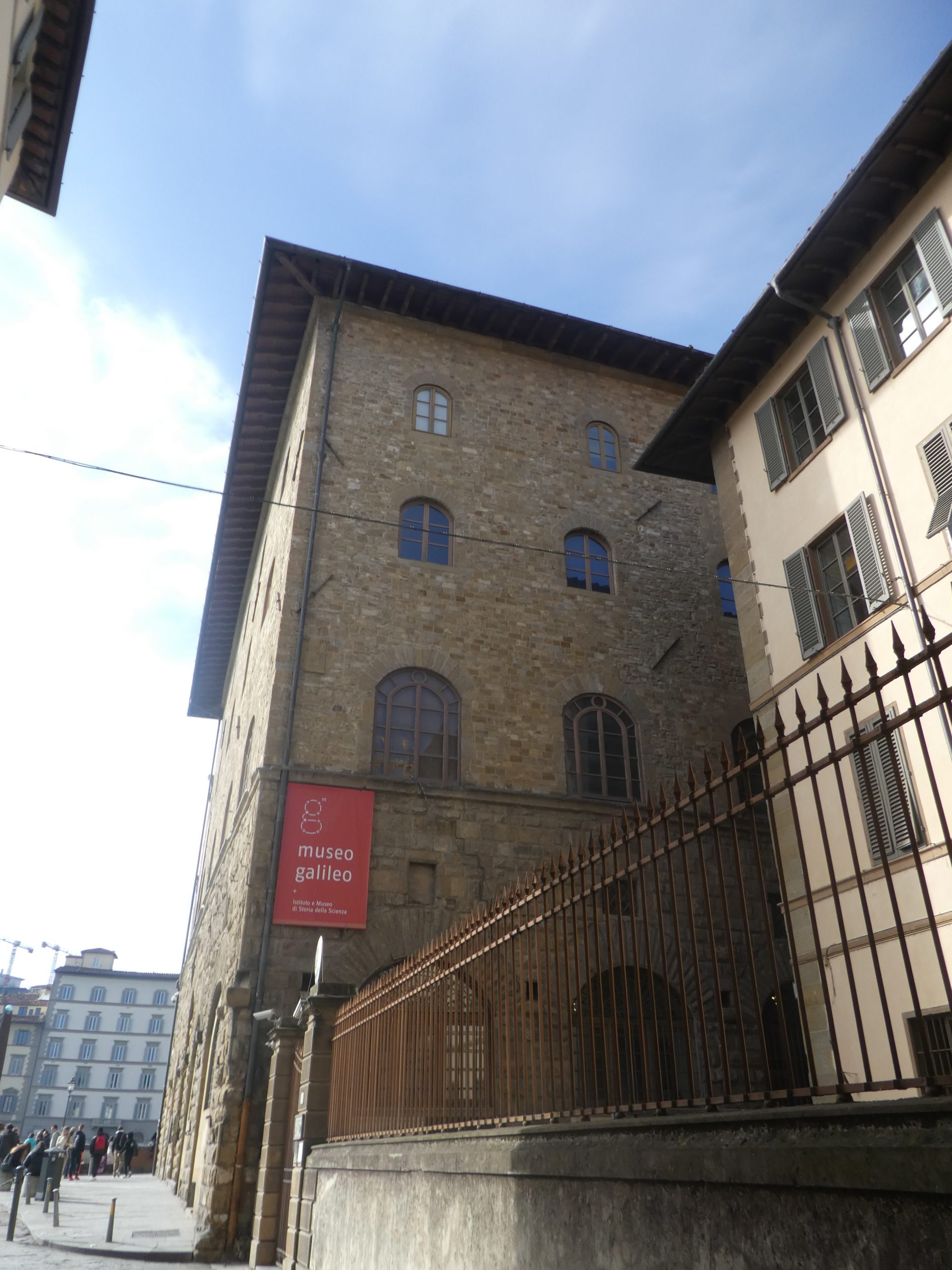
    Museo Galileo (€10)

    Museo della Misericordia di Firenze (€5)

    Basilica San Lorenzo (€8.50)

    I think that’s €137.50 worth of admissions that I got for my €85, so I’m entirely content that I got my money’s worth. Ideally, I’d have visited a few more museums to get even better value for money, but some of the above locations are of international importance and it would be a shame to rush them, so I didn’t.

  • Florence – Florence Cathedral (The Dome)

    Florence – Florence Cathedral (The Dome)

    I’ve posted separately with photos from the top of the Dome.

    The queue to climb the Dome is separate from the queue to enter the Cathedral, with the latter being visible on the right-hand side of the photo. The entrance to climb the Dome is on the door on the left in the above photo and it’s essential to have an advance ticket. The advance tickets have to be, well, booked in advance, which can be done by using the terminals in the Cathedral’s museum. I tried to book on Sunday morning, with Tuesday morning being the first available time that I could pick. There was around a twenty-five minute wait in the queue, during which time there were some people trying to extort money from those queueing. There is a charge to climb to the Dome, but I had a Firenze Card and this was included as part of that.

    The climb up isn’t particularly difficult for anyone of at least average fitness, with a stop off at the base of the Dome’s interior where it’s possible to look down into the Cathedral.

    Visitors can walk along the rim of the Dome, underneath the fresco painted by Giorgio Vasari and Federico Zuccari over an eleven-year period. It’s nearly 39,000 square foot in size, that’s not an inconsiderable amount of painting that was required.

    The herringbone arrangement of bricks used by Filippo Brunelleschi, considered to be one of the first modern engineers.

    Some of the brickwork above the steps.

    There’s a display of some pieces of equipment which were used in the construction of the Cathedral.

    The final part of the climb got steeper as it’s necessary to walk up the edge of the Dome itself.

    A similar view looking down.

    The last section is a little more difficult, with people needing to go down backwards.

    I did this bit slowly, but very bravely…..

    The view of the bell tower, which I climbed yesterday.

    There’s not as much as protection on the edge of the Dome as there is on the Bell Tower, it’s a little more challenging for those scared of heights. On which note, I am scared of heights, although there wasn’t much of difficulty in that sense with the climb as there were no really exposed areas. Most of the climb up and down use different staircases, although there are some sections which are used in both directions, meaning a wait of a few minutes. There’s a staff member who guides visitors up the last section, but otherwise I didn’t see any staff during the climb up or down. However, it all felt safe and secure, although is a tougher climb than the Bell Tower.

    The highlight for me was though being able to look down into the Cathedral and to see the frescoes on the ceiling of the Dome’s interior, all quite spectacular. Having written that, the views over Florence are of course exceptional and it’s a good little workout. There are 463 steps to get to the top, although it didn’t really feel like that, other than on the steeper section towards the end perhaps. It’s unfortunate that the sheer number of people wanting to do this climb means that it is often sold out for some days ahead, but for anyone who can get to climb it, it’s definitely worth it.