Author: admin

  • Skeyton – War Memorial (Gunner Alfred Allard)

    Skeyton – War Memorial (Gunner Alfred Allard)

    One of the saddest elements of the war memorial in Skeyton is that it commemorates three members of the Allard family who died, all brothers. They are Gunner Alfred Allard, Driver Bertie John Allard and Private Percy Walter Allard.

    The parents of the men were Edward John Allard (born in 1853) and Ann Elizabeth Allard, who were living at Workhouse Corner in the village at the time of the 1911 census. At the 1911 census, there were five people living at that household, Edward John Allard, Ann Elizabeth Allard, Bertie John Allard, Kathleen Hetty Allard and Percy Walter Allard. Rolling back to the 1901 census, this shows that the family was bigger, with Edward and Ann as the parents, along with their children Louisa, Alfred, Alice, Bertie, Kathleen and Percy, along with their grandchild Spencer.

    Alfred Allard, service number 30620, worked as a farm labourer before he went off to war. He joined the 72nd Heavy Battery of the Royal Garrison Artillery and was sent off to Mesopotamia, alongside men who had come from India and who formed the British Indian Army. It’s hard to imagine what a young man from a rural Norfolk village must have made of this, fighting the Turkish army in what is now Iraq.

    Alfred would have seen the defeat of the British by the Turks in early 1916, in what turned into something of a capitulation in some aspects. He didn’t see the British fight back and gain back control in 1917, as he died on 6 June 1916 at the age of 28. I’m unsure of the reason for his death, as it didn’t appear to occur during military action, but he could have been wounded in the earlier conflict, or just became unwell.

    Alfred is buried at Basra War Cemetery, but for the moment, this is not a peaceful location. The cemetery has been badly vandalised and desecrated and the Commonwealth War Graves Commission is doing everything it can to try and restore it. There is security fencing up and efforts are being made to get contractors in to restore the site, but it remains closed to the public and will likely remain so for some time.

  • Dictionary of the Vulgar Tongue – Day Ninety-Eight

    Dictionary of the Vulgar Tongue – Day Ninety-Eight

    The Dictionary of the Vulgar Tongue was first published at the end of the eighteenth century, and given that the Coronavirus crisis is giving too much time to read books, I thought I’d pick a daily word from it until I got bored….

    Cunning Man

    Over 200 years on from the publication of this dictionary there are some who still believe in astrology and I’m sure there are some cheats out there who prey on that. The dictionary defines this phrase as “a cheat, who pretends by his skill in astrology to assist persons in recovering stolen goods: and also to tell them their fortunes, and when, how often, and to whom they shall be married; likewise answers all lawful questions, both by sea and land. This profession is frequently occupied by ladies”.

    The phrase more commonly used today is “cunning folk” and it wasn’t always used in a derogatory manner. There’s far more about this at https://en.wikipedia.org/wiki/Cunning_folk_in_Britain, a legacy perhaps of the widespread fear that existed of witches over the last few centuries.

  • LDWA 100 – Recommended Kit Suggestions

    LDWA 100 – Recommended Kit Suggestions

    This page is all part of my effort to walk the 2021 LDWA 100.

    This list of suggestions is from Mike, who wrote more about his 100 experiences. Every 100 has a minimum kit list, and there are checks that entrants are carrying these items, but advice on what to take is really useful. I’ll try and collect more of these, they’re a really practical list that entrants can use.

    100 EQUIPMENT CHECKLIST

    TO WEAR :

    Tracksters / underwear / t shirt / trainers / wool mix socks

    TO CARRY IN BACKPACK – all spare clothing in plastic or dribag

    Route description / map / compass
    Survival bag
    Whistle
    Headtorch+ spare batteries
    Small led hand torch + spare batteries
    500 ml water bottle + isotonic powder or tablets
    mug
    lightweight waterproof jacket
    lightweight waterproof overtrousers
    ultra lightweight windproof jacket
    gloves
    buff
    hat
    cotton scarf / hanky
    3 pairs of spare socks
    Long sleeve thermal base layer or microfleece
    Travel wipes
    Footcream
    Travel tooth brush and small amount of toothpaste
    Spare food
    Walking poles (if used)
    Emergency food (bars and dried fruit)
    First aid kit = paracetamol + compeed + precut plasters+ micropore tape + zinc oxide strapping + small scissors + tweezers + needle for blister + antihistamine tablets + antiseptic wipes / bum butter

    BREAKFAST BAG

    Wash kit and travel towel
    Spare headtorch + batteries
    5 spare pairs of socks
    Spare underwear
    Tracksters
    Spare bra (if female)
    Spare pair of trainers
    Hairbrush
    Thermal base layer
    Spare cotton scarf or hanky
    Spare Fleece
    Heavyweight waterproof top (if very bad weather)
    Spare emergency food
    Small pack of travel wipes
    First aid kit
    Spare spectacles

    NOTE. List can be personalised. It anticipates the possibility of bad weather

  • LDWA 100 – Advice from Mike (entered 26 Hundreds)

    LDWA 100 – Advice from Mike (entered 26 Hundreds)

    This page is all part of my effort to walk the 2021 LDWA 100.

    Below is some wonderful advice from Mike, who is one of the most experienced 100ers, which is practical and informative. One thing has become clear to me in my planned attempt is that completing the event is, as Mike puts it, “a unique personal experience”. I’ll also be pleased to get Mike’s support on my attempt next year, as it’s the marshal’s walk that Nathan and I are going to have a go at completing.

    As well as this interesting advice, Mike has also put together a suggested kit list.

    So, in Mike’s words:

    MIKE

    From 1991 to 2019 I entered 26 LDWA Hundreds. (In 2015 – 2016 I was suddenly hit with a series of illnesses, and it took me a while to recover and get the confidence to try again. I think my recovery was helped by having a target, and I have since completed the Cinque Ports 100 (hot) and Hadrian Hundred (not easy) I realise that in future I shall necessarily be one of the backmarkers, and that does not trouble me at all. I know many of the other people who will also be at the back and it is quite a nice friendly little community. Before each hundred, I draw up a “walk plan” on a simple spreadsheet which uses my estimated walking speed (variable) between CPs, time spent in checkpoints and breakfast. It also takes into account the difficulty of the terrain. I try to allow for really bad weather, the need to concentrate on navigation at night and for the occasional 30 minute nap at a checkpoint (rest works wonders) The walk plan is customised by experience. On the Hadrian Hundred, my estimate was 47 hours, and it took me 47.13.

    In parallel with taking part in the actual event as walkers, my partner and I have been marshals at a number of 100 checkpoints. We also have graduated to supporting the 100 “Marshals’ Walk” – this is a wonderfully engaging task, which we look forward to enormously. I think that running a CP on the Marshals’ Walk is a real pleasure. A LDWA 100 is always interesting, but the Marshals’ Walk is an extraordinary event in its own right, and not just an afterthought to the main event. OK, so why does an average walker (like me) come back year after year?

    It is sociable, life enhancing and interesting. Each Hundred is a unique personal experience. I like the non-competitive ethic. It is irrelevant what someone else can do, or even how I did last time. It is what my physical and mental resources allow on this particular event. It is best treated as an individual expedition. I don’t start full of confidence. By the time I have got to the breakfast point (If I get there and assuming that I have developed no serious physical problems) I begin to think I might be able to do it. Psychologically, it is the first 40 miles that I really struggle with. That is the bit I find hard. I try to concentrate on just getting to the breakfast stop. For me that is a target. Pack your breakfast bag carefully, and think what you are going to need. Don’t skimp on kit, particularly spare socks. Once I have washed, changed into clean dry clothes, and had breakfast, I know I will feel better. The next task is to leave the breakfast stop and keep walking. Don’t retire at the breakfast stop unless you have to. It gets easier after that point.

    When I get to 70 miles, I tell myself it is just a long day’s walk to the finish.. I am encouraged by people who I may be walking with, by the support at checkpoints, and by my interest in the landscape. I also try to encourage and support other people. Finding a couple of walking companions for the second night is a good idea. Other people have different strengths, and a bit of team effort is really helpful when you are tired. I change socks often, particularly in wet conditions. We got through 10 pairs each on the very wet 1996 Yorkshire Dales Hundred. I don’t usually have trouble with blisters, but that is because I have experimented a lot and found out what works for me.

    I love the unique quality of the route, and the fact that each one takes place somewhere in Britain that I may never ordinarily visit. (I never do a recce) You meet extraordinary people. The LDWA has a truly diverse membership. For 48 hours, I am completely out of my usual comfort zone. Other problems and issues of life are set aside. I concentrate on walking, navigation, getting to the next checkpoint and wondering what the food will be like there. Did someone say there would be scones? The support is wonderful. Walking through the night and out into the dawn is transformational. You cannot “buy” an experience like that, you have make it for yourself.

    Each year, from February onwards, I start preparing physically and mentally. The effort is as much part of the event as the actual 100. Perhaps I should not invest so much emotional and physical energy in one event, but I do enjoy the training, and it gives me focus and a target. One day, I will get too old. I hope that I will realise that, and go out gracefully. Until then…

  • LDWA 100 – Q & As with Alan Warrington

    LDWA 100 – Q & As with Alan Warrington

    This page is all part of my effort to walk the 2021 LDWA 100.

    This is part of my series of asking some experienced 100ers about their past walks and I am honoured to feature today the LDWA 100s co-ordinator, Alan Warrington. Another calm, cool and collected member of the NEC, I’m impressed how many times he mentions Greggs at meetings, he is a true inspiration to me. You can follow Alan at https://twitter.com/100scoordinator.

    Alan had some excitement last year with his health and few at this year’s LDWA AGM will forget the appearance of jump leads…… Alan has started six 100 events, completing four of them, and will be helping out on many future events. I must admit, Alan’s answer on the GPX question is impressive, the idea of reading a route description in the dark fills me with dread.

    Q. When was your first 100?

    First attempt in 1979 Dartmoor Hundred. It rained. Second attempt and first completion – Games Hundred in 2012. It really rained!!

    Q. When you finished your first 100, did you think you’d do another?

    No. (Ignoring the fact that both my feet had swollen and looked like they belonged to a Hobbit for about a week after the event). I genuinely had such a laugh and great time throughout the event I felt that there was no need to enter anymore. How could I ever beat the whole experience?

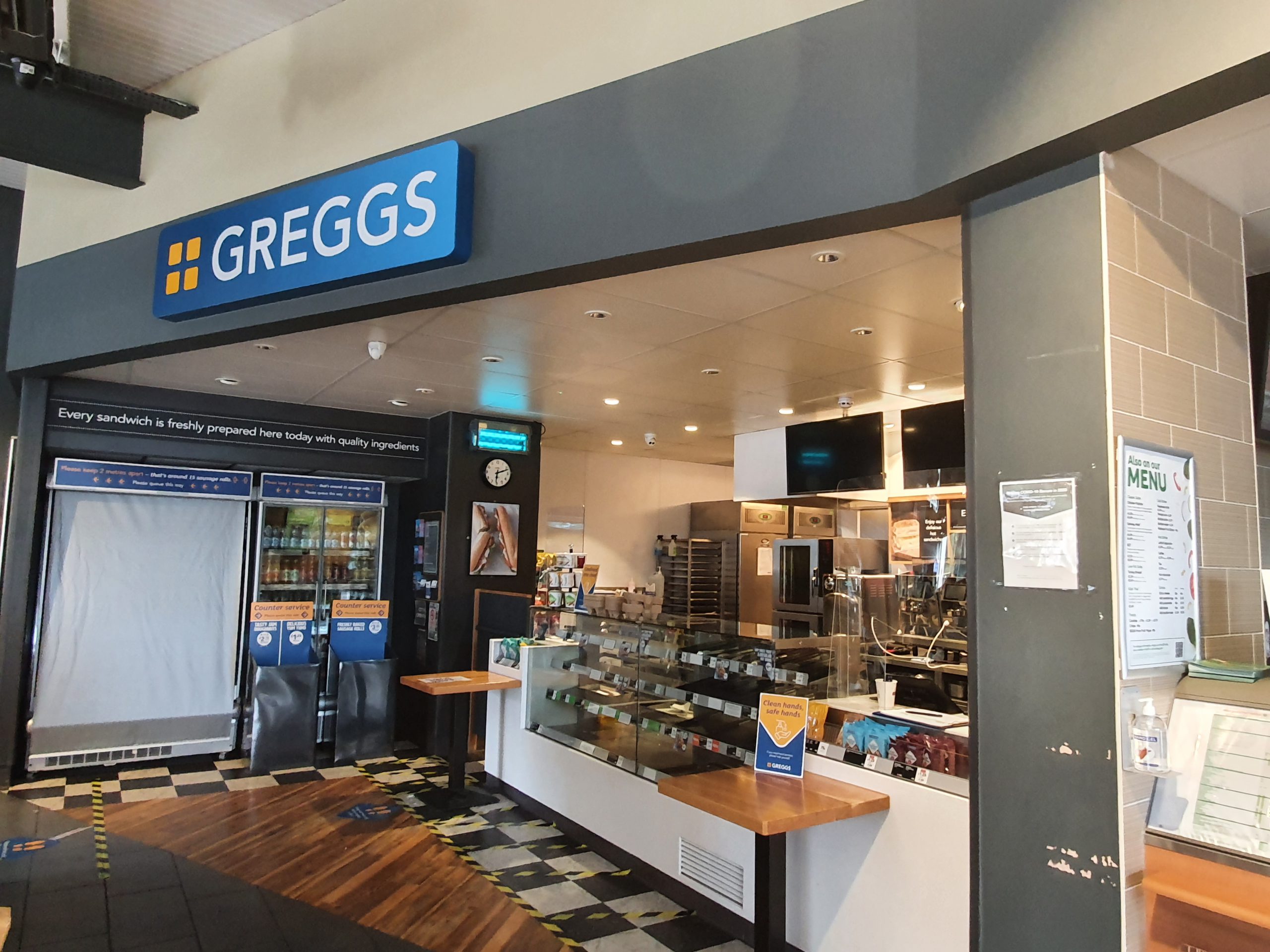
    Needless to say I got talked into another and another. A bit like you and Greggs Chicken bakes just can’t give them up.

    Q. As the 100s co-ordinator, what are your top tips for those taking part in the 100 event for the first time? And if it’s just as much a mental challenge as a physical challenge, how should entrants approach the event?

    Maintain a positive attitude throughout that you want to do the event, are definitely going to finish and walk at your own pace. Accept that you will get tired and are likely to go through incredible highs and lows, might even go astray. You may even get the odd ache or pain, even the odd blister.

    Most of all don’t think of the total distance. Relax it’s just a lot of short walks between a large number of checkpoints. Don’t blast around you have up to 48 hours to complete, although manage your time wisely at the checkpoints. Many misjudge and are then under lots of pressure to get around before checkpoint closure. Savour the sights, sounds and smells, oh and don’t forget to read the route description!

    Q. What would you pick at a checkpoint, two sausage rolls, one chicken bake or one steak bake?

    Steak bake. (Although I have become addicted to Cornish Pasties on these long events and have learned that it’s wise to eat little and often).

    Q. How important are the marshals to you at checkpoints on longer challenge events?

    Critical. These events just would not occur if it wasn’t for the time and energy of these volunteers who provide incredible physical and mental support. I’ve seen many participants want to call it a day. After some refreshments a little rest and some words of encouragement they go on, many to successfully finish. I always thank the volunteers at every checkpoint as a matter of courtesy.

    Q. Is there any area of the country where you’d personally like to see a 100 event take place?

    Anywhere the association has never been before, irrespective of the terrain. We haven’t been to East Anglia yet!

    Q. There has been feedback from some entrants of the 100 next year that they’d like chicken bakes at checkpoints. Something for the future that can be considered?

    Definitely something for the catering team. However, the chicken population may have other ideas!

    Q. Many people (well, one which is primarily me) wonder why there have to be such big mountains on the 100 to climb up?

    Even the smallest mole hill looks like the North face of the Eiger or K2 towards the end of a Hundred. The good news is you often have to go down the other side!

    Q. Have you hallucinated towards the end of a walk?

    Yes only the once during the Games Hundred. Crossing Chobham Common early on the second night during a torrential downpour. Did I tell you it rained A LOT? A long stretch of about one mile which didn’t require much navigation so brain relaxed. Leapt out of my skin as this Giant Spider appeared on the side of the path. I laughed so much when I saw it was just a huge tree trunk with massive roots coming out the side.

    Q. Will it rain in Wales on the 2021 100?

    Can you ask me one on nuclear physics please? I think Wales has run out of rain after the amount that fell during the Valley’s Hundred in 2014 but don’t quote me on that!

    Q. When walking events, do you rely more on the route description or the GPX file?

    Absolutely route description every time. Keeps the mind active and is always primary source of information. I’ve completed many events without even looking at GPX.

    I managed one event which was a figure of eight. Laughed my head off when I received a call from 3 entrants who had started the second loop only to realise half way around they were walking in the wrong direction. That’s what happens if you don’t read the route description. Doh!!

    Q. Have you been scared of a sheep / cow / snake / pig / seagull or similar on a challenge walk?

    No, although the seagulls along the Moray coastline during the Laich O’Moray 50 were huge!

    Q. To those people who are thinking about taking part in their first challenge event, maybe just 18 miles, what advice would you give them to get them started?

    Take your time and enjoy it.

  • Skeyton – War Memorial

    Skeyton – War Memorial

    Skeyton’s war memorial is located in front of the village church, commemorating the nine men who lost their lives in the First World War and the three men who lost their lives in the Second World War. The memorial is a listed monument and is in the form of a Celtic cross with the image of a sword.

    Perhaps the most noticeable element of this war memorial are the three Allard brothers who died during the First World War, although more on them in a separate post. The memorial was installed here in 1920 and for friends and relatives of those who had died, this is all that they had because bodies of the dead weren’t brought back.

  • Skeyton – All Saints Church

    Skeyton – All Saints Church

    There’s something of a majestic beauty about Skeyton Church, pretty much alone in the landscape and there was likely an Anglo-Saxon church here. The current building is primarily from the late twelfth and early thirteenth centuries, although the church was reworked in the fifteenth century, including with the installation of the large nave windows.

    The tower which was rebuilt in the fifteenth century and has meant that it’s all a bit off-centre.

    One thing that I’ve seen posted relatively frequently over recent years is how people in the past respected religious buildings and wouldn’t have caused any damage to them. Unfortunately, this wasn’t the case and the newspapers are littered with cases of churches being vandalised. The Morning Post reported in January 1826 that “on Saturday night last, or on Sunday morning, some evil disposed persons broke the windows of Skeyton Church; they took the road to Aylsham, breaking windows in almost every house they passed; great hopes are entertained that such cowardly miscreants will be brought to justice”.

    Some of the monuments in the graveyard are looking a bit bedraggled, but I like that they’re still there and haven’t been moved away to make things easier for the church to flatten out the ground.

    Unfortunately, the current health situation means that churches are still generally closed, although the interior was apparently mostly redesigned in the early nineteenth century and not a great deal has changed since then. They were proud at the time of the carefully designed church benches installed in the nave, with their carved endings, whilst the former box pews were removed.

    There was a modernisation and renewal of the building in 1937, which had apparently become unsafe, with the Bishop noting that “they had followed the way of their ancestors in renewing the white walls, this bringing light and brightness into the church”. I suspect their ancestors would have had wall paintings which were hidden under whitewash, but it’s interesting how once churches were colourful and heavily painted, but tastes evolved to just wanting white paint.

  • Dictionary of the Vulgar Tongue – Day Ninety-Seven

    Dictionary of the Vulgar Tongue – Day Ninety-Seven

    The Dictionary of the Vulgar Tongue was first published at the end of the eighteenth century, and given that the Coronavirus crisis is giving too much time to read books, I thought I’d pick a daily word from it until I got bored….

    Cully

    This dictionary doesn’t often mention where words originate from, but does here and notes “a fog or fool: also a dupe to women: from the Italian word coglione, a blockhead”. It’s probably also wrong insomuch as more recent dictionaries explain that the word comes from the Old English word “cullion”, which is a despicable person. It’s a nice word though….

    The word was much more frequent in the seventeenth century and it started to die out some time ago.

  • Lamas – St. Andrew’s Church

    Lamas – St. Andrew’s Church

    Although there was a previous church on this site from the Anglo-Saxon period, the current nave mostly dates to the fifteenth century and until relatively recently, the church would have been thatched. What is noticeable is that the chancel is at an angle to the nave, which the listed building record explains is known as a weeping chancel. The chancel was rebuilt in the 1880s (there’s a plan from 1887 here), using stone from the former chancel, likely on the foundations of the old structure.

    Ian Hinton, from the UEA although he doesn’t specifically mention Lamas, wrote a document about weeping chances and there seems to be no single reason as to why they were constructed like that. It doesn’t seem that anyone knows why the chancel here is built like this, although Hinton gives plenty of suggestions as to why churches were once constructed in this manner.

    The church tower, which was partly rebuilt in the 1880s.

    The lean is also visible from the north side, with one of the doors bricked up. Incidentally, this church is sited in a rather tranquil location and it is also located by the peacefully flowing river.

    This is a scratch dial, or a mass dial, and since the one at Ingham Church was explained to me by a guide, I’ve started to notice more of them. They are used as a sundial for canonical hours and there would have been a peg in the hole which would have cast a shadow. Having written that though, this one looks quite new and so is probably from the late nineteenth-century renovation.

    I thought that this was quite a graceful tree in the churchyard.

    Always sad to see stones broken, but at least they haven’t been turned into paving slabs.

    The south porch which was renovated in 1977 for the Queen’s Silver Jubilee which the listed building record notes has a coffin lid step.

    Sadly, I suspect that the readable element on this stone won’t last much longer.

  • Swanton Abbott – St. Michael’s Church

    Swanton Abbott – St. Michael’s Church

    St. Michael’s Church is strangely detached from the rest of the village, but on this occasion, it’s unlikely that the settlement has moved much, rather the church is on a slightly elevated hill platform.

    The tower, which dates from the early part fourteenth century, is the earliest section of the current church, with the nave being added later on during the fourteenth century and the chancel was constructed in the fifteenth century. There was though likely a Saxon church that existed on the site before work started on the current building.

    The porch was added in the fifteenth century, with the more modern set-up unfortunately masking the medieval wooden door.

    The south side of the church, with the priest’s door visible between the two windows. The church has received a grant in recent months from the Norfolk Churches Trust which will allow for some repairs to the guttering and also work to remove a flock of pigeons that has been causing issues in the tower.

    I’m unsure why the east window has been partly bricked-up, I assume it was for structural reasons.

    I’ll return to the church at some point when it’s likely to be open (I’ve been able to do that), with the interior being of note, as there’s a mauled about rood screen which was heavily, and badly, restored at the beginning of the twentieth century which is worth seeing. The pulpit has some medieval carving work to it, there’s fifteenth-century stained glass and the font is of a similar age, all along with numerous memorials of interest.