Author: admin

  • Camping – Day 1 (Night Hike)

    Camping – Day 1 (Night Hike)

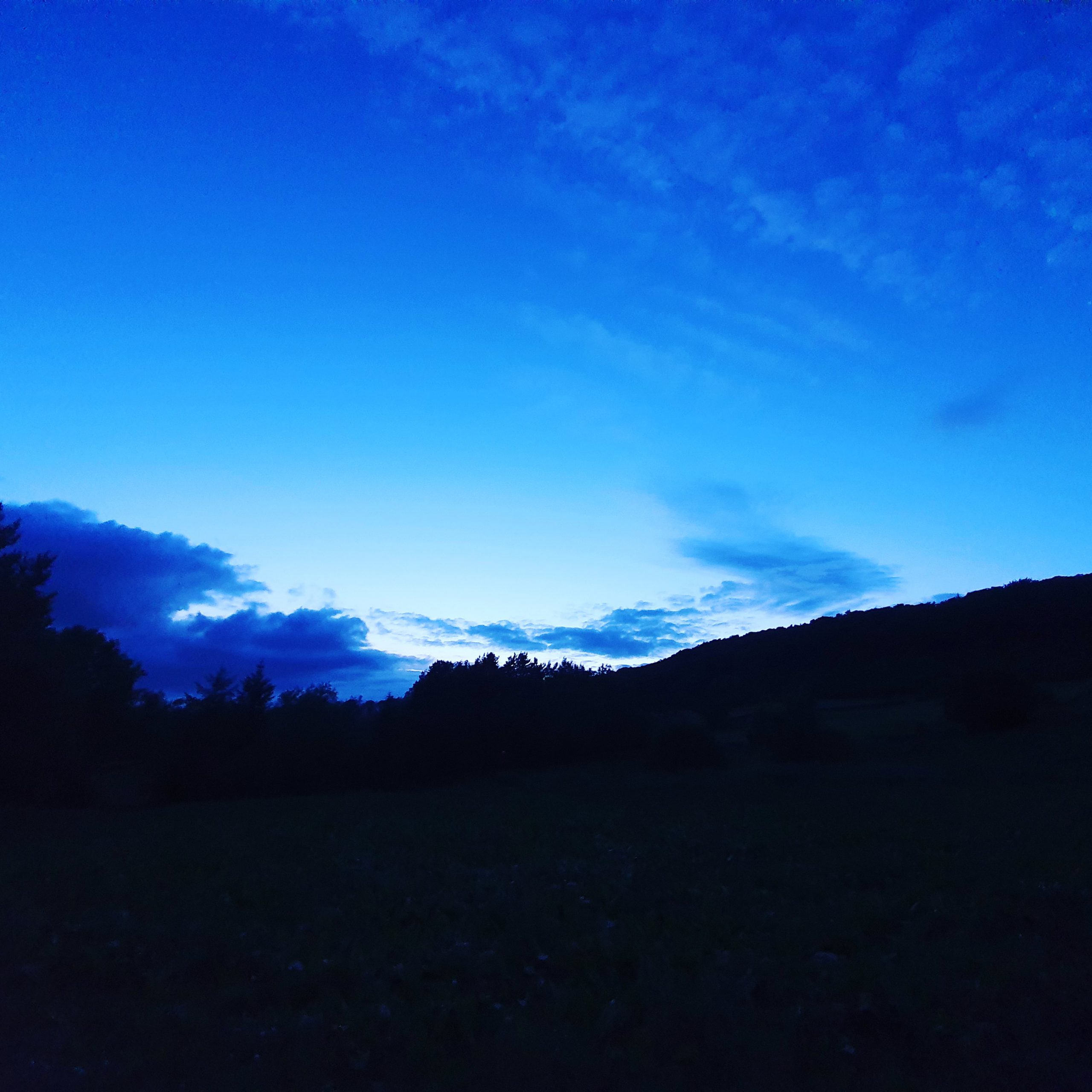
    Just photos again, these are of our relatively short night hike from the camp-site we were staying at. Fortunately, some people had a stronger headtorch than me, as mine definitely need a battery change. We were politely asked by a land-owner what we were looking for near to the start of the walk and he keenly pointed us towards a pub as he assumed that’s where we’d be heading. We weren’t, but it was useful to get our bearings and he didn’t seem to think we were going to rob his house or pinch his sheep.

    It was a relatively uneventful walk, although the road we were walking along was closed and we discovered why when we found a series of enormous cracks in the surface. These were probably caused by mines underneath and the road could have given way at any time, but we lived to tell the tale. It’s quite relaxing to walk at night-time, although there seemed to be more cars on the road than at a Formula 1 track, and some were going at a similar speed.

    It may have only been a walk of a few miles, and I missed the ideal time to take photos when there was a little more sun out, but it’s another happy memory of Derbyshire.

  • Battlefield Tours in 1919

    Battlefield Tours in 1919

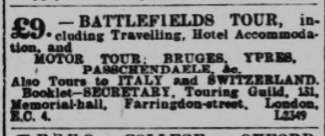
    This is another one of my random posts, but it never occurred to me that tours of the Belgian battlefields were being operated just a few months after the end of the First World War. I assume that relatives would want to go and see where their family had fought, and perhaps died, but it must have still been very much a scarred landscape.

  • Matlock – St. Giles’s Church (Cyril Walthall)

    Matlock – St. Giles’s Church (Cyril Walthall)

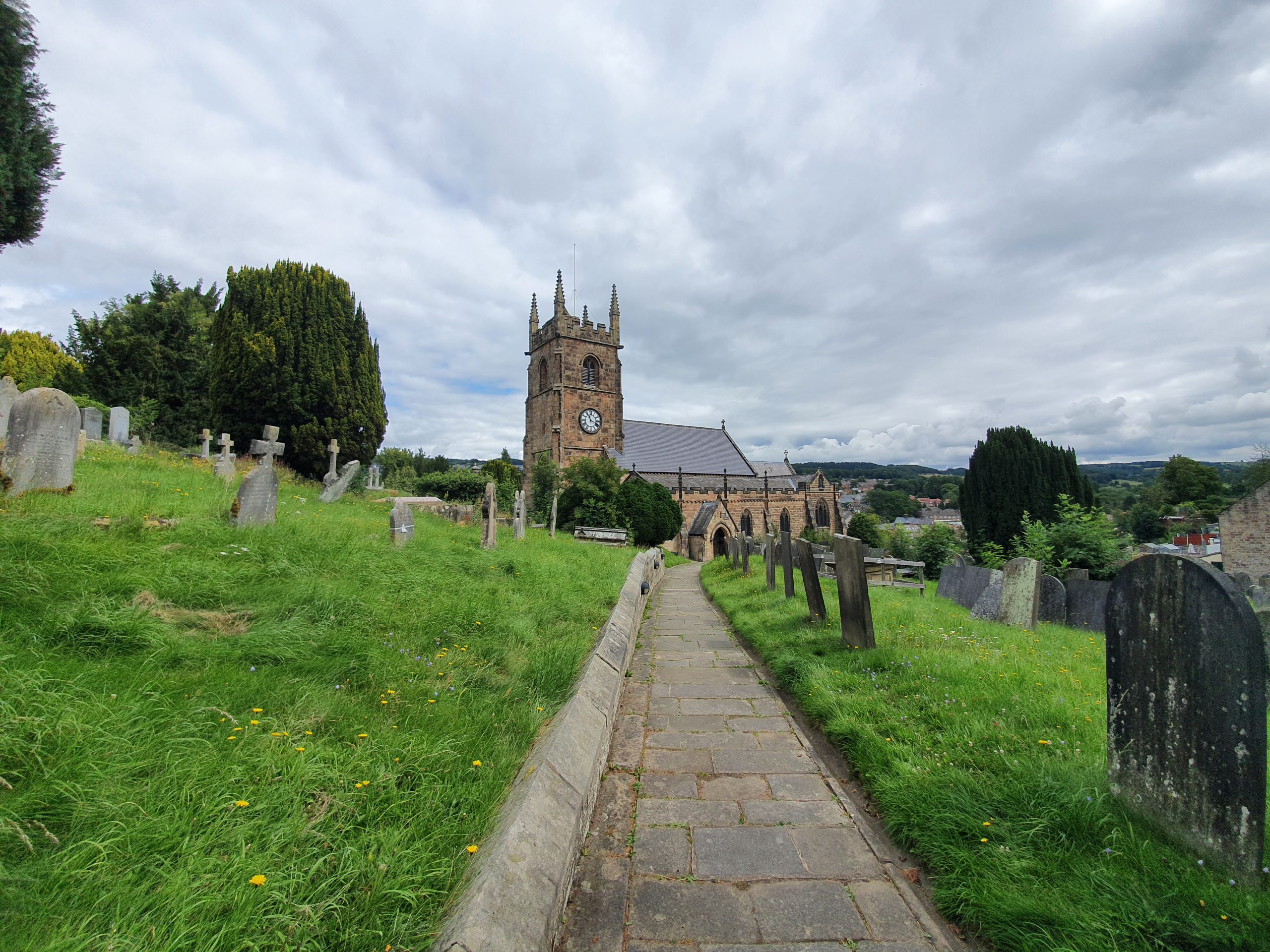
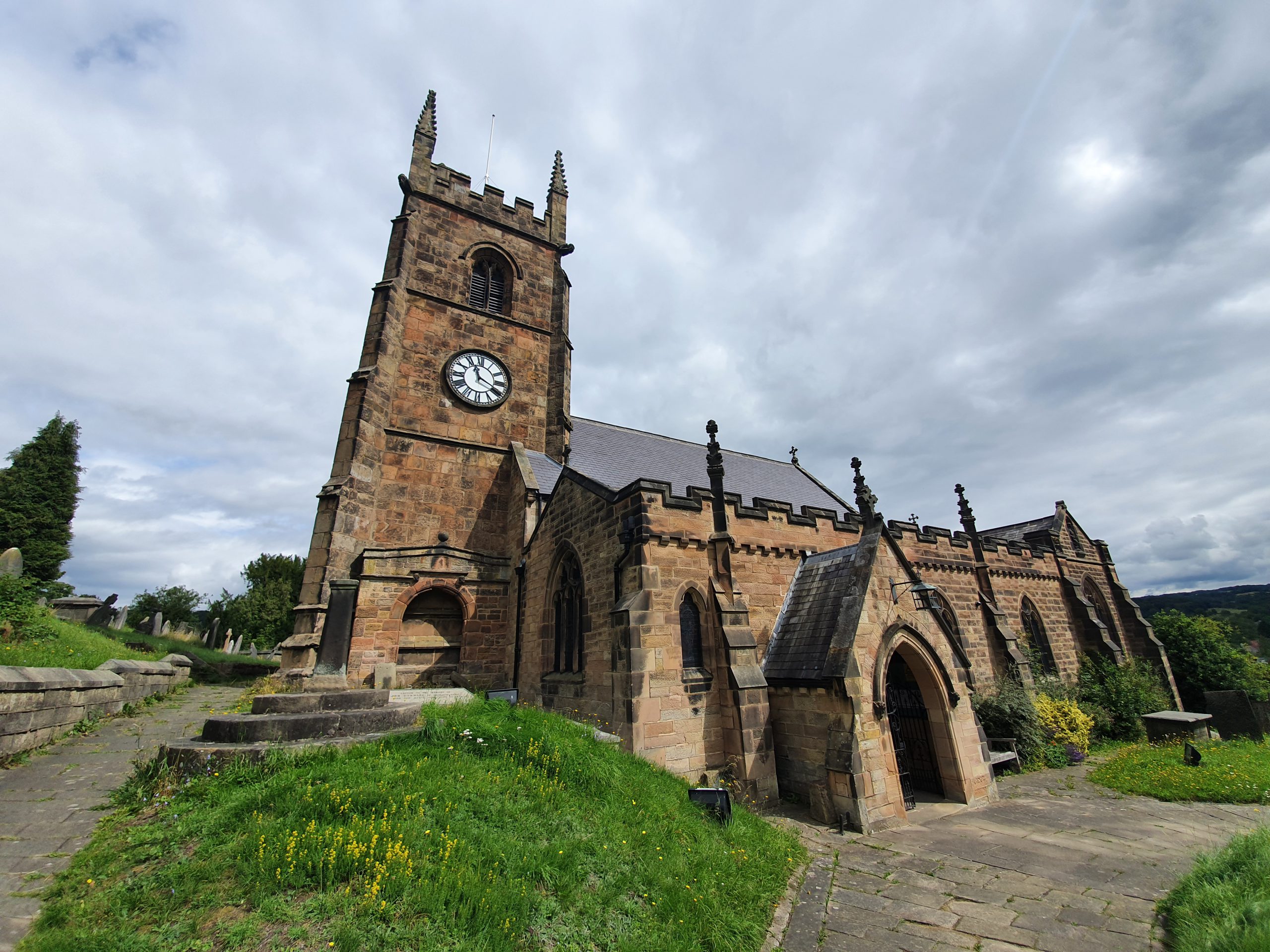
    Cyril Walthall was born on 31 July 1912, in Bakewell, Derbyshire, the son of Harry Walthall and Ada Walthall (nee Britland), of Matlock Bath. Cyril married Phyllis Birch, who had been born on 2 October 1912, in 1937 at the Farley Hill Congregational Chapel. By the time of the 1939 register, Cyril was living in Matlock with Phyllis and he was working as a fine gauge knitting machine operator at a hosiery manufacturer.

    During the war, Cyril was an aircraftman, service number 2202724, in the Royal Air Force Volunteer Reserve. He died on 4 February 1944 and was aged just 31. His estate was worth £1,166 when he died, and this went to Phyllis, who at this time was living at Glen Mona on Jackson Road in Matlock. Phyllis died in Matlock on 8 August 2007, at the age of 95 and 63 years after her husband died.

  • Matlock – St. Giles’s Church (Mary Crossley)

    Matlock – St. Giles’s Church (Mary Crossley)

    This is the grave of Mary Crossley (nee Lovatt), the wife of Thomas Crossley and the couple married on 11 November 1804 in Mickleover, Derbyshire. Mary died on 24 September 1816, aged just 36 and she was buried on 27 September 1816. The other sad story is that Elizabeth, “the daughter of the aforesaid Thomas and Mary” died on 7 November 1816 when just an infant and she was buried on 10 November.

    Thomas Crossley went on to marry Harriet Caithness in Crich, on 9 March 1825. He’s listed on the 1840 census, being 60 years old, whilst Harriet was just 40 years old, so I wonder if that was a controversial marriage. They had several children, including Elisa, John, Edwin, Josiah, Emma, Hannah and Elizabeth. That must have also been an emotional time for Thomas, having another girl named Elizabeth, 25 years after the first died.

    There are so many stories to be told here, but they’re likely lost to time. It’s not clear why Mary died, perhaps complications from childbirth and that might explain the death of the child a few weeks later. Then for the husband to find a young bride and start what turned out to be a large family, it can only be left to the imagination to know how much he missed Mary and what impact her death had on his life.

    But, this gravestone is neatly carved and over 200 years on it remains readable and standing proud in the churchyard.

  • Dictionary of the Vulgar Tongue – Day 142

    Dictionary of the Vulgar Tongue – Day 142

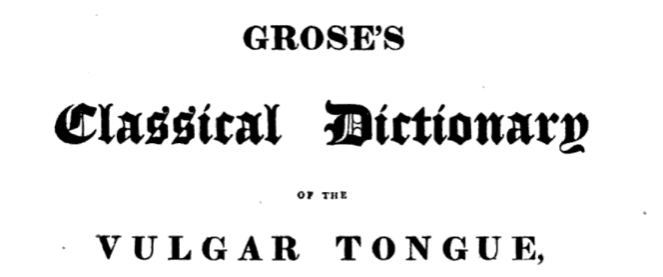
    The Dictionary of the Vulgar Tongue was first published at the end of the eighteenth century, and given that the current health crisis is giving too much time to read books, I thought I’d pick a daily word from it until I got bored…. And I’ve now caught up after getting behind last weekend when on a camping expedition.

    Gog and Magog

    The dictionary defines this as “two giants, whose effigies stand on each side of the clock on Guildhall, London; of whom there is a tradition, that, when they hear the clock strike one, on the first of April, they will walk down from their places”. I’m relying on Wikipedia to tell me that “in Ezekiel 38, Gog is an individual and Magog is his land; in Genesis 10 Magog is a man, but no Gog is mentioned; and centuries later Jewish tradition changed Ezekiel’s ‘Gog from Magog’ into ‘Gog and Magog’”.

    There were carved depictions of Gog and Magog at London’s Guildhall from the medieval period, with the legend saying that they were originally giants who were chained by Brutus to the gates of the building. The carvings were unfortunately destroyed during the Great Fire of London in 1666, but replacements were installed in 1708, designed by Captain Richard Saunders. It is these that Grose refers to in his dictionary, but, sadly, these too were destroyed when fire damaged the building in the 1940s during the Blitz. New replacements were installed in 1953, carved by David Evans and these remain there today, but have yet to walk down from their places.

  • Camping – Day 3 (Matlock – Footstool Shortage)

    Camping – Day 3 (Matlock – Footstool Shortage)

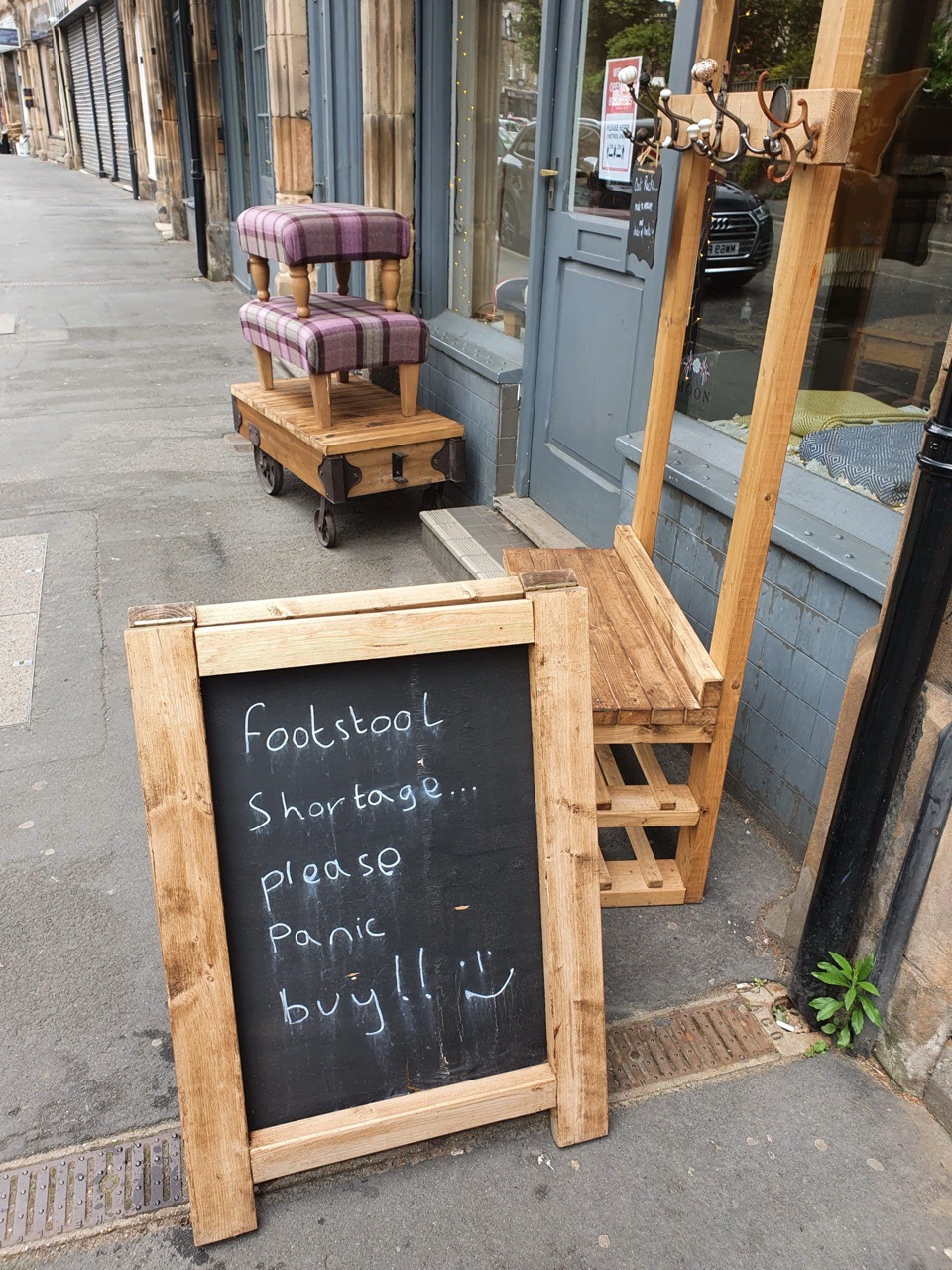
    I liked this advertisement from a shop on Dale Road in Matlock. Worth a try!

  • Camping – Day 2 (Kinder and Jacob’s Ladder)

    Camping – Day 2 (Kinder and Jacob’s Ladder)

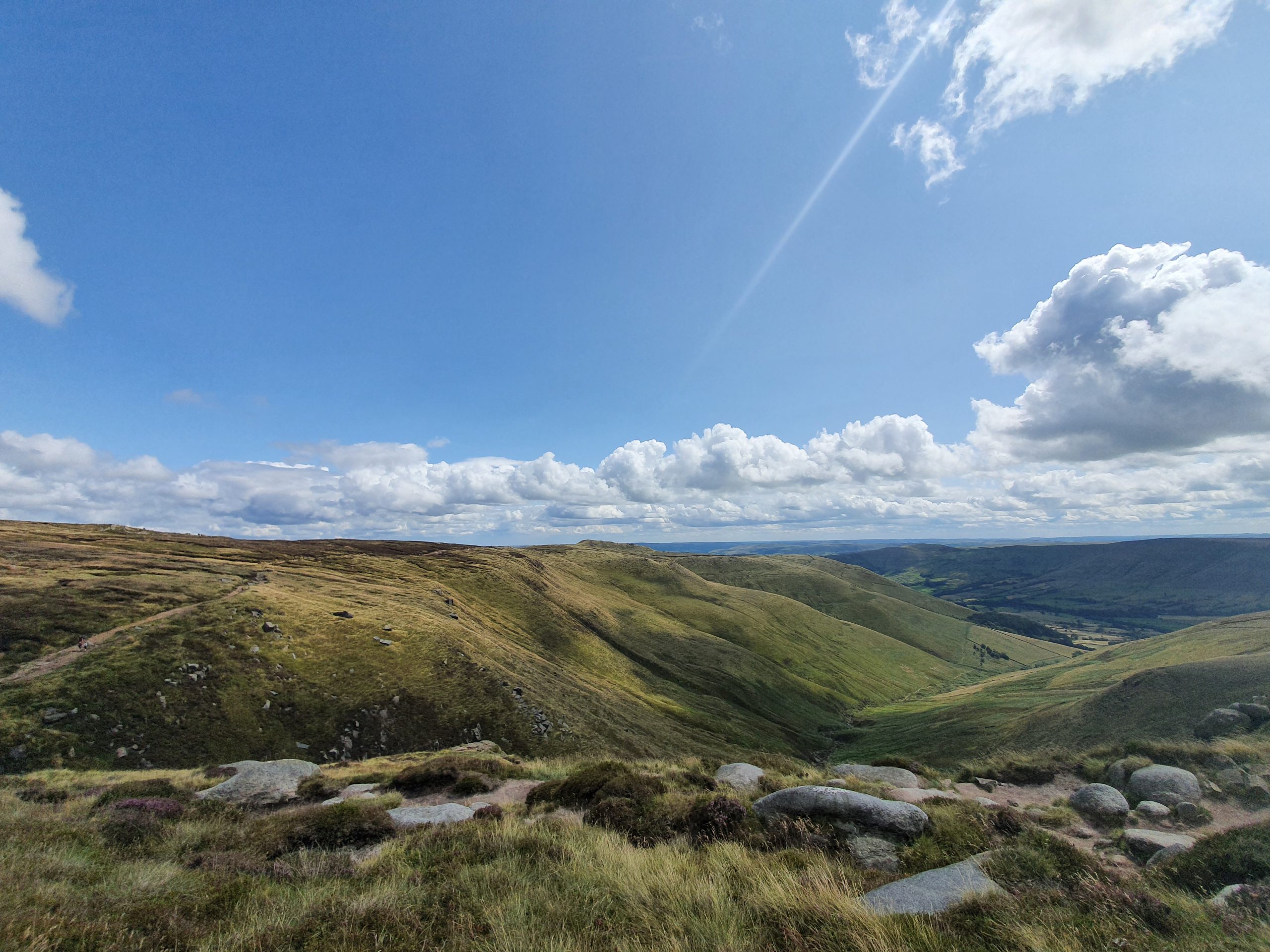
    This post is just photos, and quite a lot of them, of our circular walk starting and ending in Edale. It was a relatively short walk, just seven miles, of moderate difficulty although there was some minor scrambling involved. We started the walk at the official beginning of the Pennine Way and then up via Jacob’s Ladder, then going around near to Kinder Scout before dropping back down to Edale. The GPX of the route we took is at https://www.thinkadventure.co.uk/a-guide-to-climbing-kinder-scout-via-jacobs-ladder/.

    Anyway, the photos…


  • Dictionary of the Vulgar Tongue – Day 141

    Dictionary of the Vulgar Tongue – Day 141

    The Dictionary of the Vulgar Tongue was first published at the end of the eighteenth century, and given that the current health crisis is giving too much time to read books, I thought I’d pick a daily word from it until I got bored….

    Gluepot

    This is quite a charming word, defined by the dictionary as “a parson: from joining men and women together in matrimony”. The word wasn’t in usage much, from the late eighteenth-century into the mid-nineteenth century. What I prefer though is that in the United States, and some other countries, this same word evolved in the twentieth-century to mean a pub. The logic here was that it’s a place that people would want to get stuck in. Now, I very much like that and I will do what I can to use this in reference to my favourite pubs…..

  • Camping – Day 3 (Alfreton – 0 Miles Milepost)

    Camping – Day 3 (Alfreton – 0 Miles Milepost)

    In the late eighteenth-century and the early nineteenth-century, Alfreton became an important stop-over for stagecoaches and numerous coaching inns were set-up to supply food, drink and accommodation to travellers. Turnpikes were opening up at a pace, with Alfreton seeing the quality of its roads improving in the late eighteenth-century, which also gave an obligation to the trustees of these operations to install milestones.

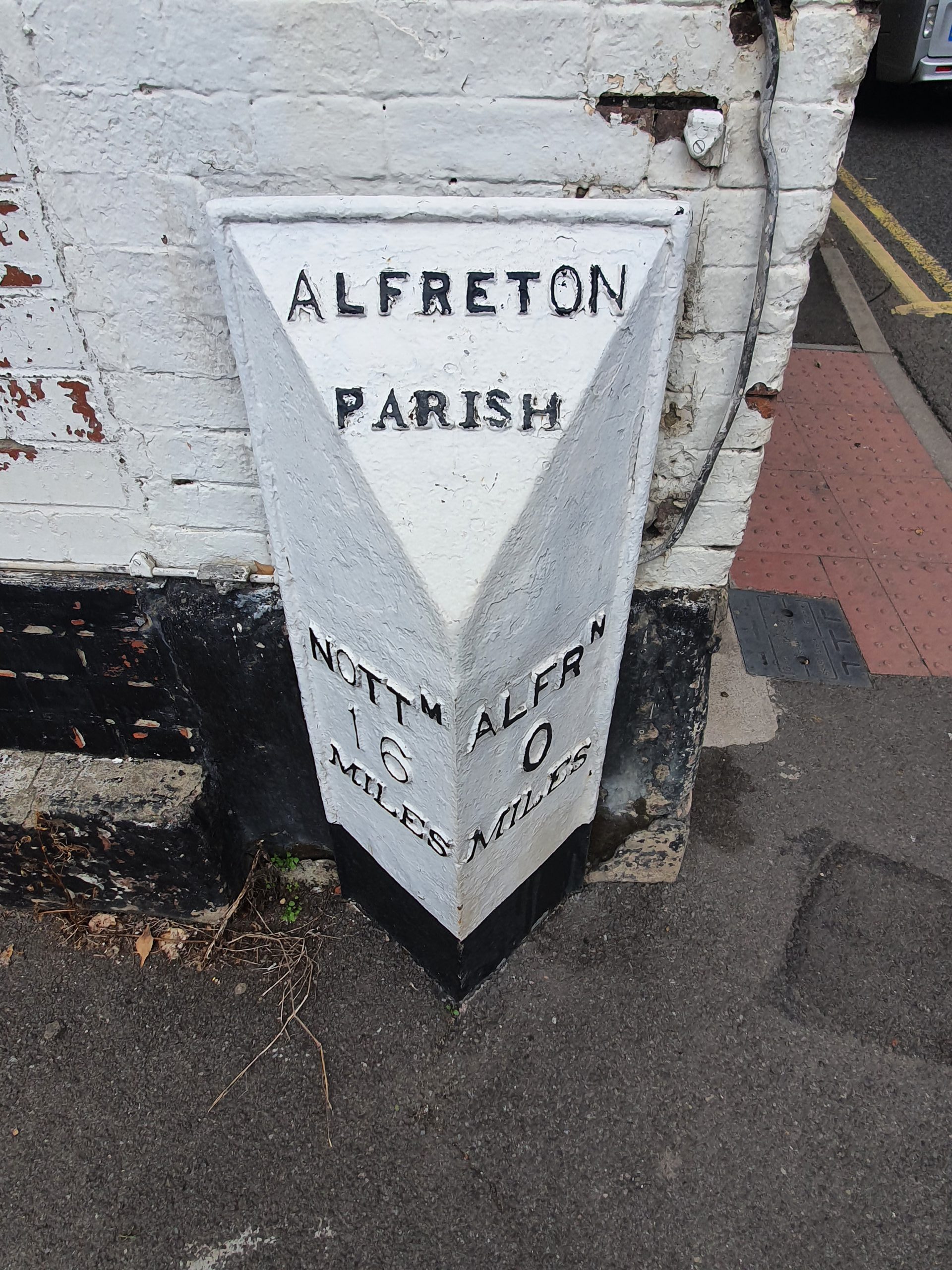
    This cast-iron milestone is listed as being from the early nineteenth century, although might perhaps be just a little older, and it has a rather unusual format. Usually, the top of the milestone would have the name of the current city or town, which it does have, but on the sides would be the distances to the nearest settlements. Obviously the local residents didn’t feel the need to advertise the next town on the route, instead just adding that Alfreton was 0 miles away. Very helpful to travellers, although I suppose if they had too much ale, it might be useful the next morning.

    Alfreton did well out of all the turnpikes, it connected the town to Derby, High Peak, Nottingham and Mansfield amongst others. This milestone was originally placed outside of the Old George Hotel, which was where the Turnpike Trust held their official meetings.

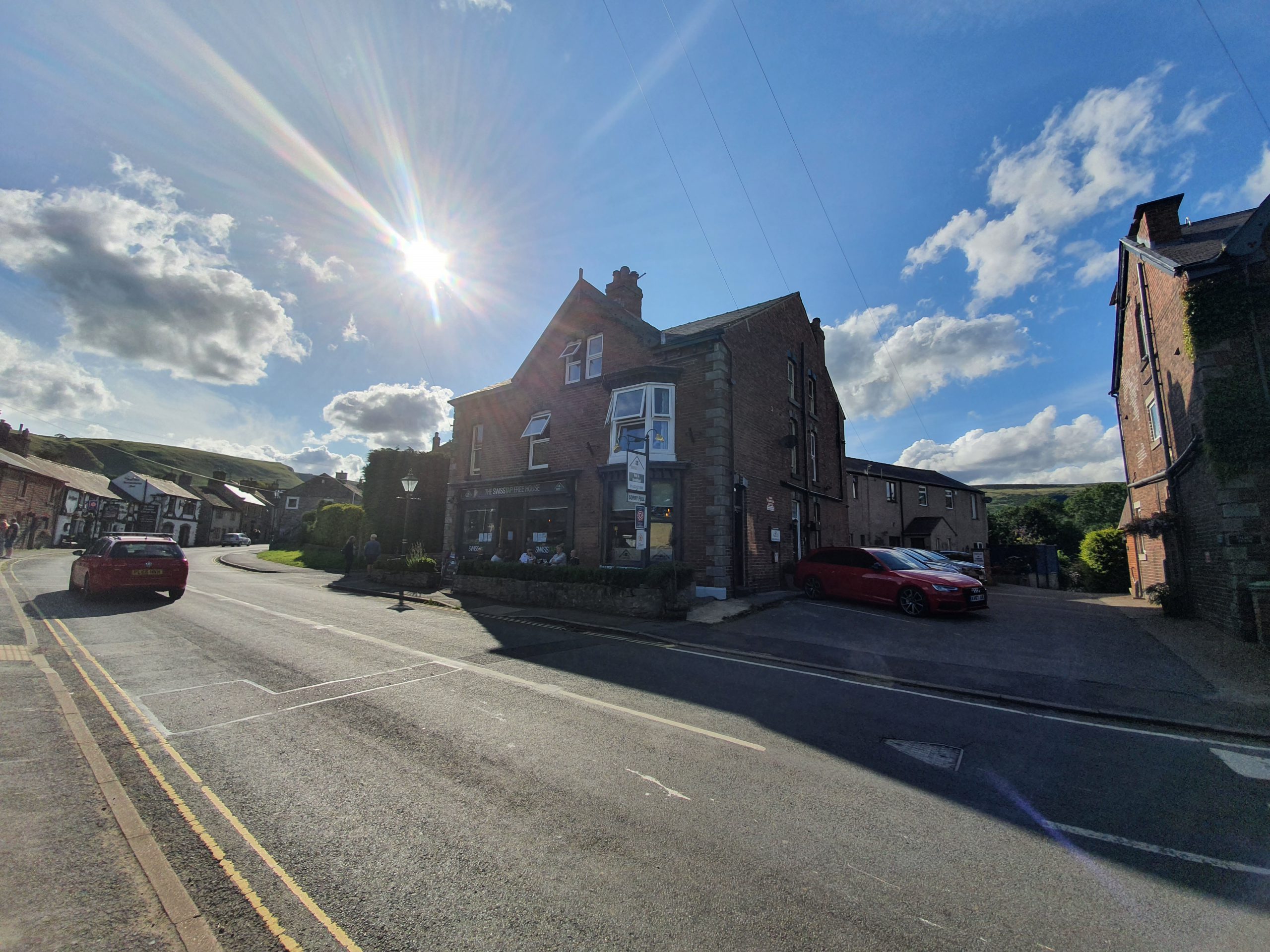
  • Camping – Day 2 (Castleton – Swiss Tap Free House)

    Camping – Day 2 (Castleton – Swiss Tap Free House)

    Our initial plan after walking Kinder was to pop into a Good Beer Guide listed pub in Castleton, but unfortunately, the centre of the town was so busy that we couldn’t park and there were queues coming out of the pubs. So, we thought we’d move on until Steve handily noted this little outlet as were driving out of the town, it’s an extension of the Swiss House B&B. All that I can say about this is that the bar opened in late 2019 and if this doesn’t appear in the next issue of the Good Beer Guide, then something has gone wrong.

    Most of the real ale range is from Jolly Boys’ Brewery, but this pleased me as it meant that there was a porter available. Refreshing and well-kept, this was a credit to the brewery which is based in Barnsley. Also pleasing was that the owners have thought about the beer selection and have a range of different styles, rather than that damn habit some places have of offering four IPAs.

    I have a habit of not holding back from effusive praise when I find a pub where customer service just flows. It would be unfair to expect every pub to manage to match the Hop & Vine in Hull, but just getting close excites me. And the service here was excellent, absolutely faultless. They had the disadvantage that we were in a group of four and went into a separate room, so perhaps they would have engaged even more if I was on my own, but the welcome seemed genuine and authentic. There was also a relaxed atmosphere in the pub, I like that element of calmness.

    We weren’t quite ready for food, as I hadn’t long forced my way through a family-sized pork-pie, but this looked like a very moderately priced menu for hot food. I suspect they’re doing the thing of offering food at low prices to encourage people to visit for drinks, or at least to stay longer for another drink. Also, there was an attempt to offer some different bar snacks, and Richard took quite a fancy to the Snyder’s Pretzel Pieces. So much so that about an hour later he ordered a large boxful of the things to arrive with him when he got home.

    Whatpub aren’t over-selling the location at the moment, the description of “a family run B&B with a bar open to non-residents offering a range of four real ales” doesn’t really inspire and delight. This place is much better than this text suggests, but perhaps it’ll get lengthened in time. I might be entirely wrong about this, but I got the impression that the B&B set up this bar because someone there likes beer, they didn’t just do it to try and be on-trend. The reviews for the B&B are also high, I got the impression that the owners want to do things properly, that was certainly evident with their bar.

    So, along with Hoppiness in Warsaw, Pułapka in Gdansk and the George & Dragon in Acton, I now have my fourth entrant into my entirely pointless and self-serving pub of the year award for 2020…. Very lovely.