Author: admin

  • London – Lambeth – Imperial War Museum

    London – Lambeth – Imperial War Museum

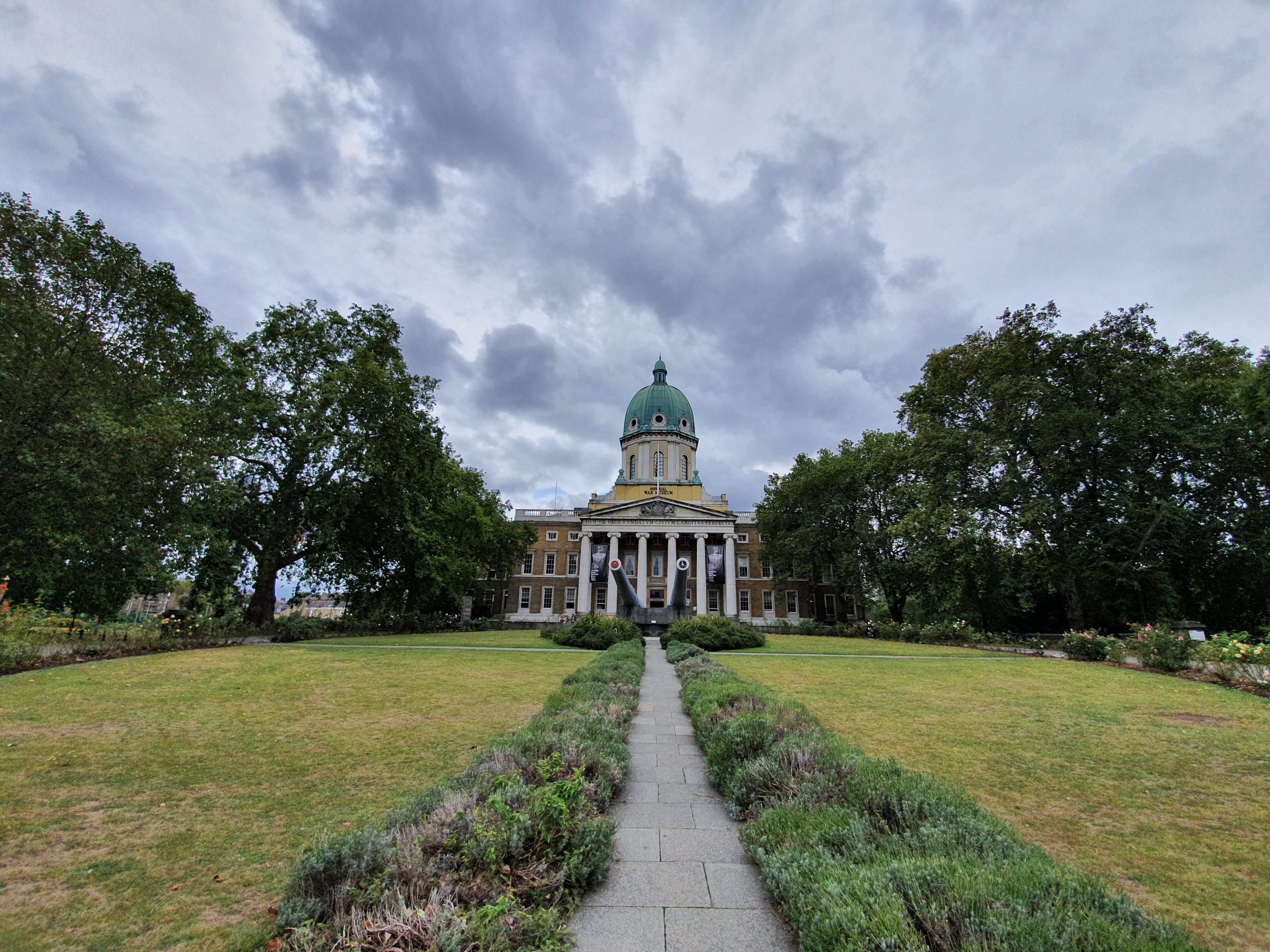
    I last went to the Imperial War Museum before it closed for a substantial refurbishment in early 2013 and the opportunity to visit now when it was quiet seemed quite appealing. It remains free of charge, provided with substantial funding from the Government, whilst it makes the rest from its commercial activities.

    The museum first opened in 1920 and it had become essential to tell the story of the First World War and other conflicts that the British had become involved with. This first museum was located at the Crystal Palace, before a new site being found in South Kensington in 1924 and then, finally, the museum moved to its current site in 1936, at what was previously the Bethlem Royal Hospital in Southwark.

    The entrance hall is impressive, with various military vehicles and planes visible. There are, broadly, four main exhibition halls which cover the First World War, the Second World War, the Holocaust and the Lord Ashcroft Gallery.

    The First World War gallery is perhaps the museum’s best, although I found it drifting all over the place and it didn’t present a clear narrative. The Second World War gallery was, in my limited view, hard to follow and again lacked any clear direction. There were lots of facts presented in a random manner and I’m not sure that I discovered anything new about the Second World War. It is a country mile behind the Museum of the Second World War in Gdansk, although it might be unfair to compare it to this Polish institution, which is I think one of the best museums in the world.

    I’m not entirely sure why the Holocaust exhibition has been shoved into the Imperial War Museum, although it has been given the size and status that it deserves within the building. The UK needs a Holocaust Museum that isn’t just part of another institution, but the Imperial War Museum is currently working on a new set of displays that are meant to complement the controversial Holocaust memorial being built by the Palace of Westminster. The Holocaust displays are excellent, although very powerful, perhaps too powerful. They have some graphic images of nudity and videos of people about to be hanged, I’m always uneasy that someone who suffered in the Second World War should be further humiliated in this way. But, this was a sizeable display and it was laid out clearly and with a central narrative. Ideally, I’d have liked the Imperial War Museum to operate a Holocaust Museum on another site (preferably nearby) where it could have more space and more funding.

    This is the top of the building, I’m not sure what it’s usually used for.

    The Lord Ashcroft Gallery was, I think, designed for children and it has the world’s largest collection of Victoria Crosses. I struggled to engage with this gallery, I wanted them to pull out interesting stories of some of the individuals who had been awarded military honours, but there were just a few words about many individuals and the most confusing mixed usage of fonts, media and display methods that I think I can recall. I think I’m getting old and grumpy, but I did see lots of children reading the displays and that’s perhaps the most important thing, that they engage with the history.

    All told, I think I preferred the more traditional nature of the old museum displays, rather than the pared back current building. I often come to that conclusion though, but the Imperial War Museum is well-reviewed and is clearly doing something which appeals to the majority of visitors. But, the staff were all helpful and engaging, with visitors seeming to be enjoying their experiences. I think I wanted something with more narrative and I would have liked more exhibits and more stories about individuals. It was a perfectly pleasant way to spend a couple of hours though and more people should come here.

    And, as an aside, I have discovered that the Imperial War Museum has placed part of their vast photographic archive on-line, which is very exciting as there are over 350,000 photos on their web-site. That’s an impressive effort, but they have 11 million photos so the size of this archive will be incredible when they’ve finished making it all available.
  • Sudbury – Grover & Allen

    Sudbury – Grover & Allen

    Our weekend mostly consisted of visiting pubs in the Good Beer Guide, but there was a quick visit I thought I’d make, which was to the only JD Wetherspoon outlet in Norfolk and Suffolk that I haven’t been to. I accept that I need to get out more, but this also proved to be a handy breakfast spot.

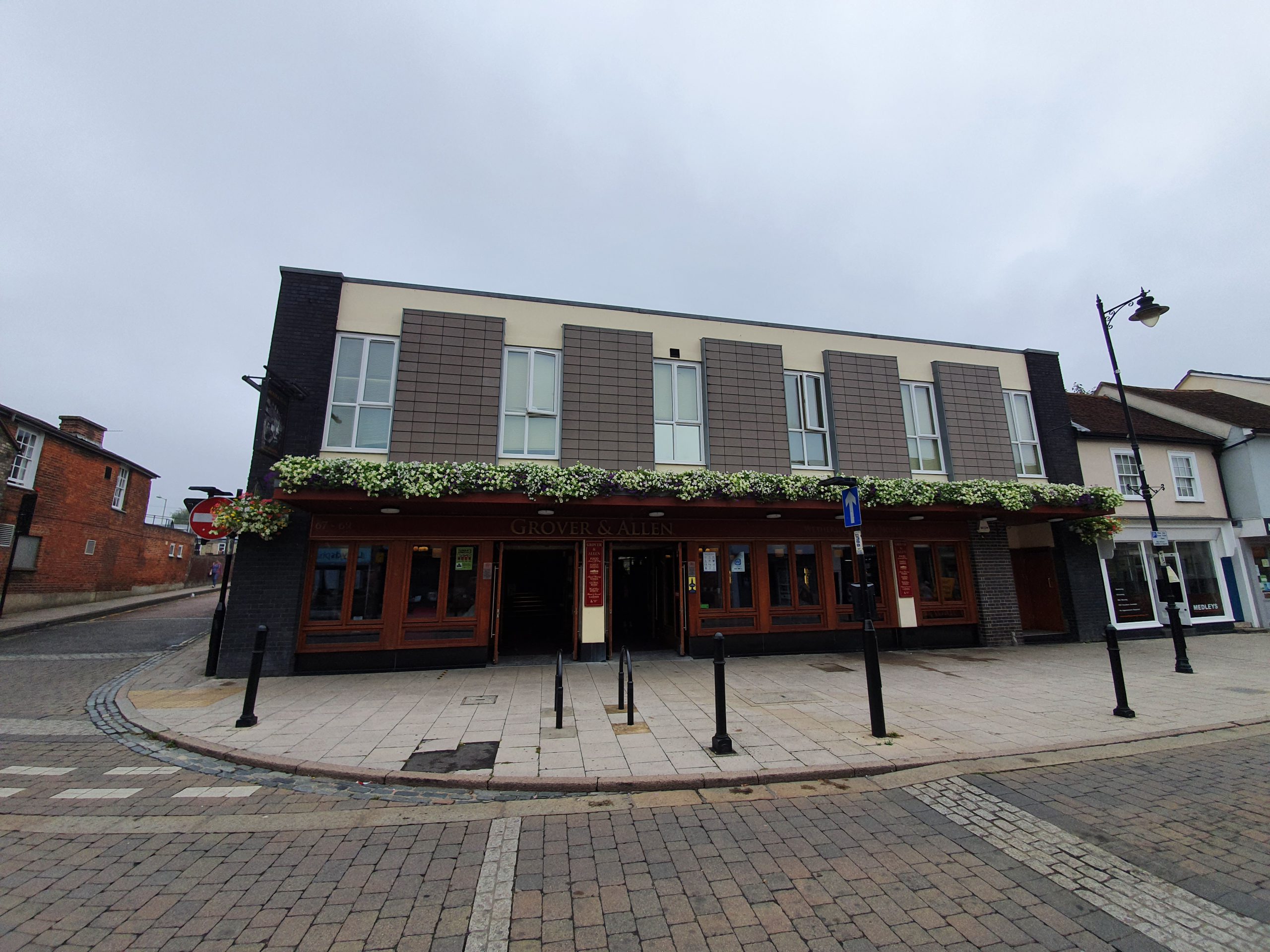
    It’s not the most inspirational of buildings and it takes its name from the grocers who traded on this site between the 1870s and the early 1900s. They, as can be imagined, had a rather more beautiful and glamorous building, with the site taken over by the Co-op during the twentieth century, until it became a Wetherspoons.

    The breakfast which was perfectly adequate other than the egg was over-cooked. But, this isn’t an expensive breakfast, so I managed to cope with what was served. Someone appears to have pinched the pub’s milk jug though, as they didn’t have one and I was invited to just pour it from the 4-pint plastic containers that the pub had behind the bar.

    The reviews on TripAdvisor for this pub are pretty dreadful for a JD Wetherspoon outlet, mainly about cleanliness. I have to say, when we visited, it could have all been cleaner. Everything was keenly priced though and so there was little to complain about, but equally, there was nothing particularly exceptional. Anyway, that at least means I’ve visited every JD Wetherspoon in Suffolk.

  • Greater Anglia : Norwich to London Liverpool Street

    Greater Anglia : Norwich to London Liverpool Street

    So back off to London, on another £10 fare from Norwich with Greater Anglia and there’s a high availability of this price when travelling off-peak. Unlike my trip last week, the barrier staff are back at Norwich railway station, although most of the food outlets on the concourse are still closed.

    The outbound 10.30 train was the inbound 10.27 train, which meant that there was no time to properly clean it down, although a cleaner came through to collect rubbish. But, the carriages all looked clean and well maintained, but there’s not exactly a huge passenger load on them at the moment.

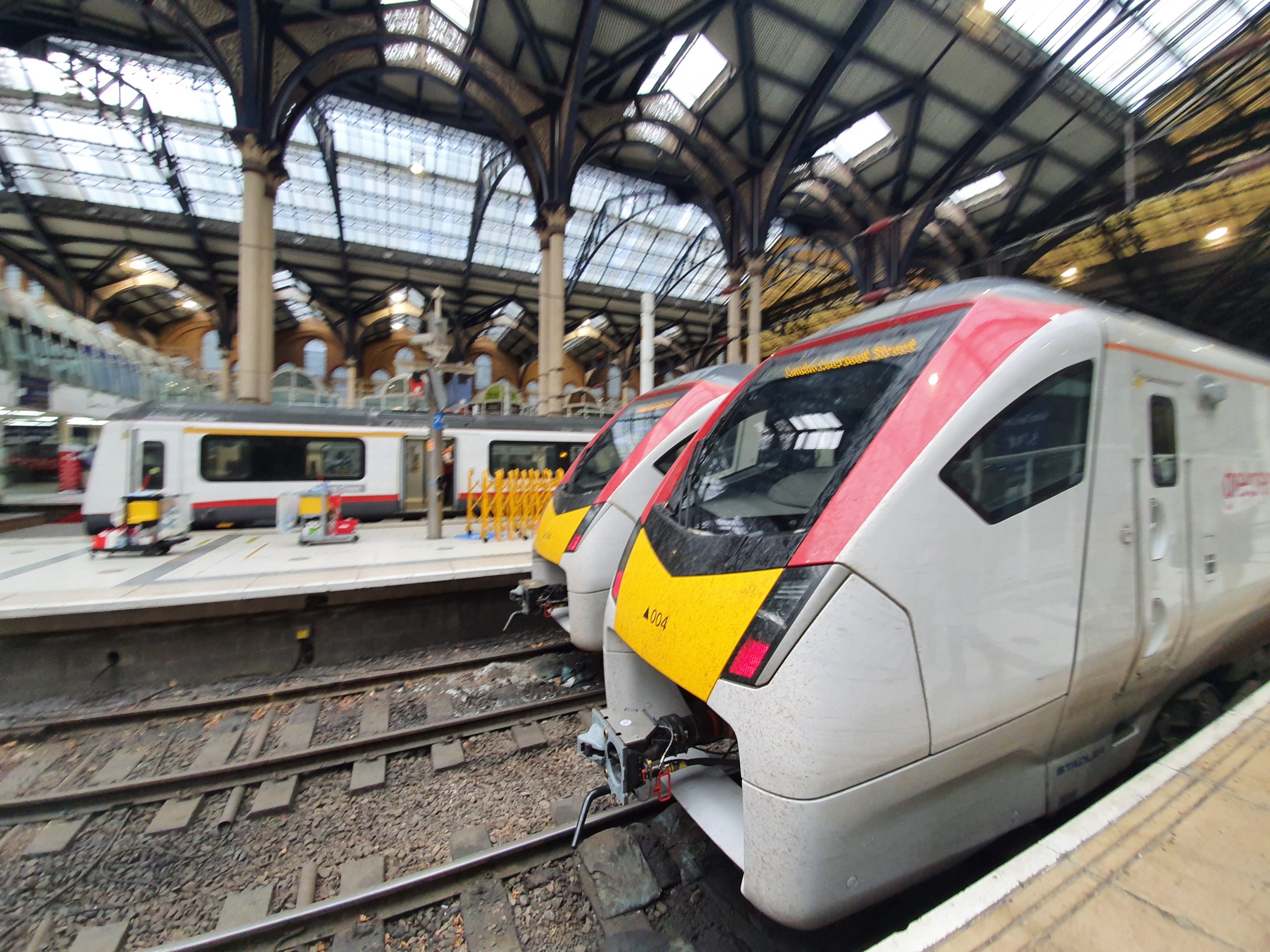
    The train pulling up onto platform 2 at Norwich railway station. The journey was uneventful as everything worked well and the train arrived at Colchester railway station a few minutes early. It wasn’t a particularly busy service, a handful of customers in each carriage and every customer I noticed was wearing a mask.

    The guards aren’t walking up and down the train due to the current health issue, but there was an announcement mid-way through telling a passenger with a grey t-shirt to get their feet off the seats. I liked that the guards were clearly looking at CCTV, it’s reassuring from a general safety point of view, as well as helping to ensure that the train stays clean and presentable.

    And safely in London Liverpool Street, all on time. It still seems a shame that these new trains are sweeping up and down the country with so few passengers on them, but at least it made for a comfortable journey for me.

  • Dictionary of the Vulgar Tongue – Day 151

    Dictionary of the Vulgar Tongue – Day 151

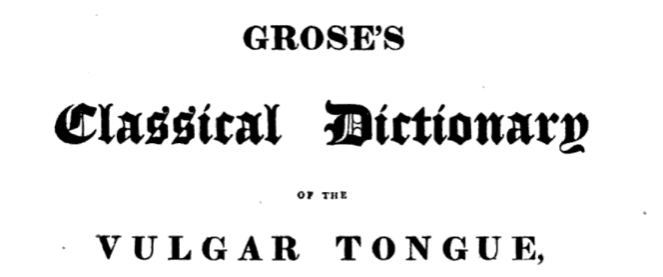
    The Dictionary of the Vulgar Tongue was first published at the end of the eighteenth century, and given that the current health crisis is giving too much time to read books, I thought I’d pick a daily word from it until I got bored….

    Helter Skelter

    This phrase is normally used today when referring to an amusement park ride, but its definition in the late eighteenth-century dictionary was “to run helter skelter, hand over head, in defiance of order”. The exact word origins for this phrase have long been lost as it has been used since at least the early sixteenth century and Shakespeare also used the term. ‘Skelten’ in Middle English meant to hasten, so it’s likely linked to that, with the ‘helter’ bit added later for extra emphasis.

    Despite the reusing of the word in the early twentieth century as a ride, the phrase had remained in relatively constant use during the nineteenth century. There was a small uptick in usage during the 1960s, but this is likely due to the Beatles issuing a song entitled, well, Helter Skelter.

  • Colchester – St. Botolph’s Priory (Vault of William Hawkins)

    Colchester – St. Botolph’s Priory (Vault of William Hawkins)

    I don’t know who William Hawkins is, but he must have been relatively powerful or influential to have had a vault here at St. Botolph’s Church. The vault would have been here since before the fire at the church in 1648, and perhaps before the Dissolution of the Monasteries just over a century before. It’s perhaps not an ideal situation for your vault, which was deliberated designed to be inside, to be left out in the open. However, it’s also interesting that the site has been marked and not left to be forgotten over the centuries.

  • London – Kensington – Churchill Arms

    London – Kensington – Churchill Arms

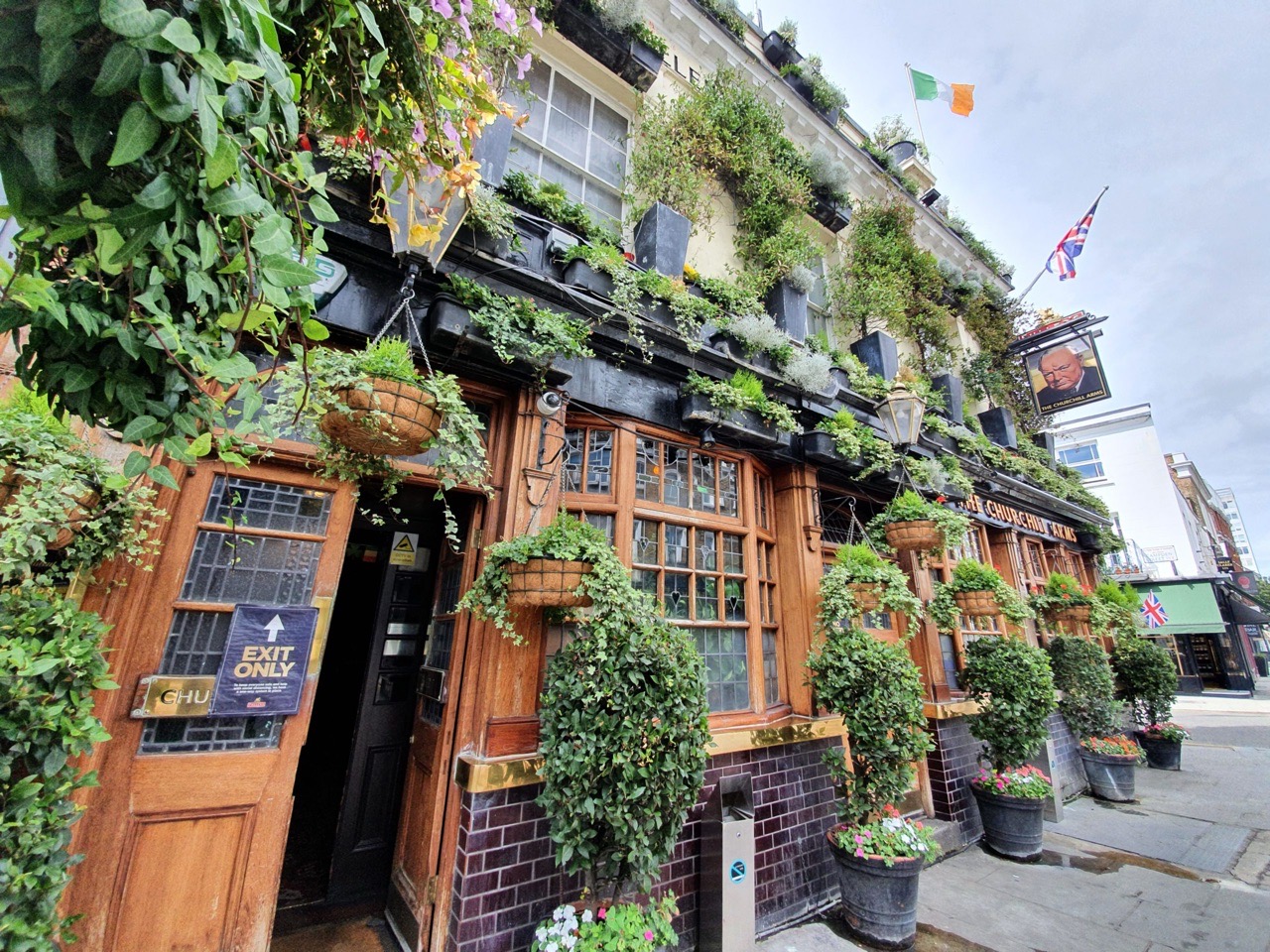
    It’s hard to deny that this pub obviously has character, even before walking in that’s evident. Although it wasn’t originally named after Winston Churchill, it is now at least a little themed around him and the pub’s web-site notes that his grandparents drank there.

    The interior of the pub was no less quirky. The staff in the pub were friendly, with the operation of track and trace being handled professionally and everything seemed clean. Just as my view, the beer selection was weak with no dark options, limited to London Pride (and I know many people like London Pride, but its appeal is a little lost on me) and Honey Dew, both from Fuller’s Brewery, who operate the pub. The pricing was some of the most expensive that I’ve seen, over £6 for a pint of real ale which tops the prices of nearly every central London pub I’ve visited. I was rather pleased that I only ordered half. The drink was, well, metallic in flavour with some sweetness. Lovely if you like Metal Mickey I suppose.

    The Honey Dew taste and price was enough for me to abort my plans to eat food, which was awkward as the staff member seemed moderately confused as why I hadn’t ordered after I said I was planning to. This was quite a surprise even to myself, as it was half price day for food as part of the Eat Out to Help Out, and the Thai kitchen menu items seemed intriguing and tempting. The reviews suggest that the food is excellent (and I could hear the number of phone calls coming in asking for reservations, but they were full), but there is something I didn’t like about any pub, even in Kensington, topping £6 for a pint of real ale, so I resisted the temptation of the Jungle Curry.

    But, the pub is clearly a local favourite and it has a long tradition with a friendly welcome. It wasn’t for me though, but I’d have probably been more of a fan of the whole experience if they’d stocked Fuller’s Porter. Incidentally, although the Thai cuisine perhaps seems a little mismatched for the British theme of the pub, it clearly works as they’ve been doing it since the early 1990s. Besides, any pub which has its own page on Wikipedia is likely worth a visit.

  • Colchester – St. Botolph’s Priory

    Colchester – St. Botolph’s Priory

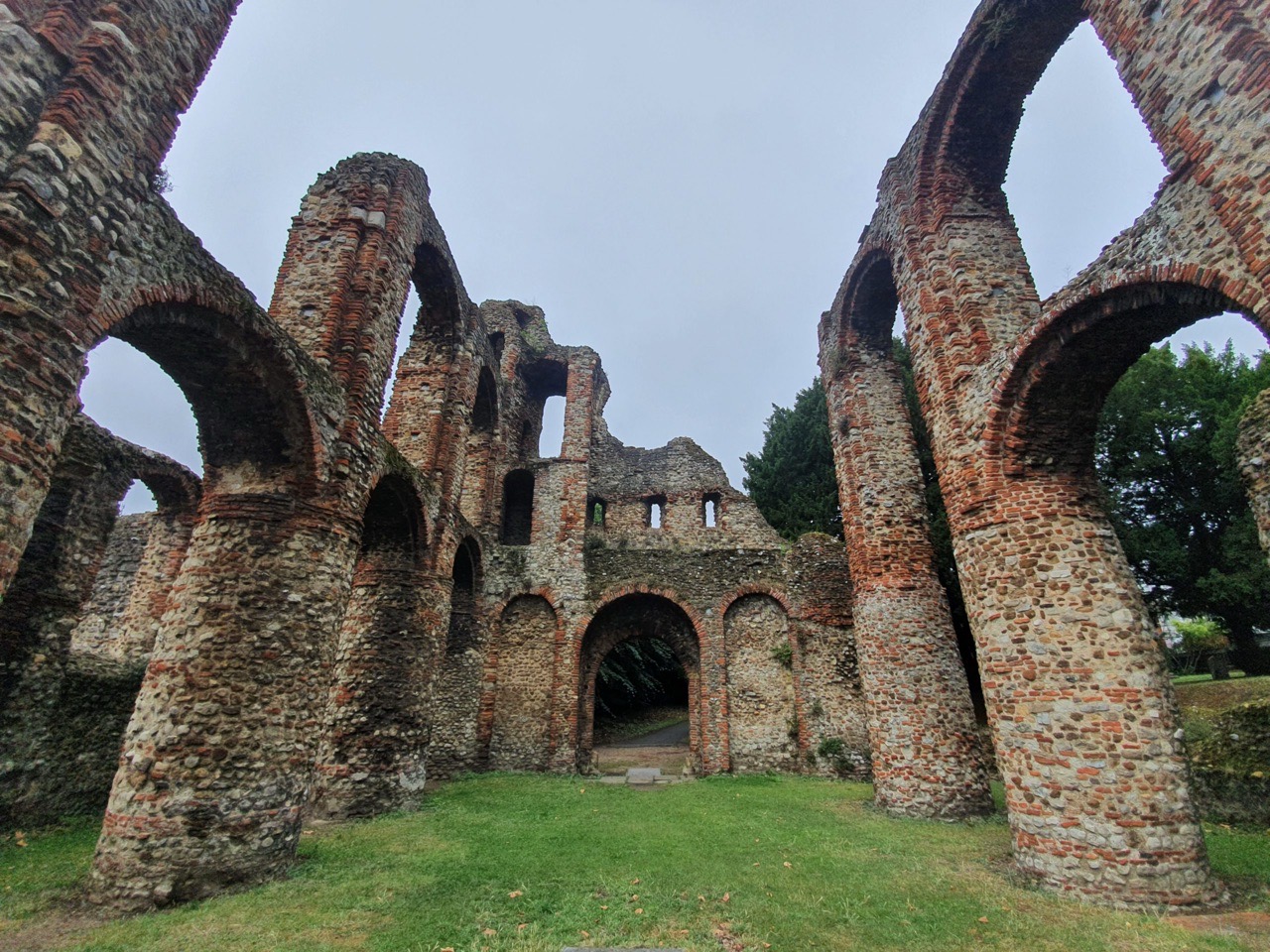
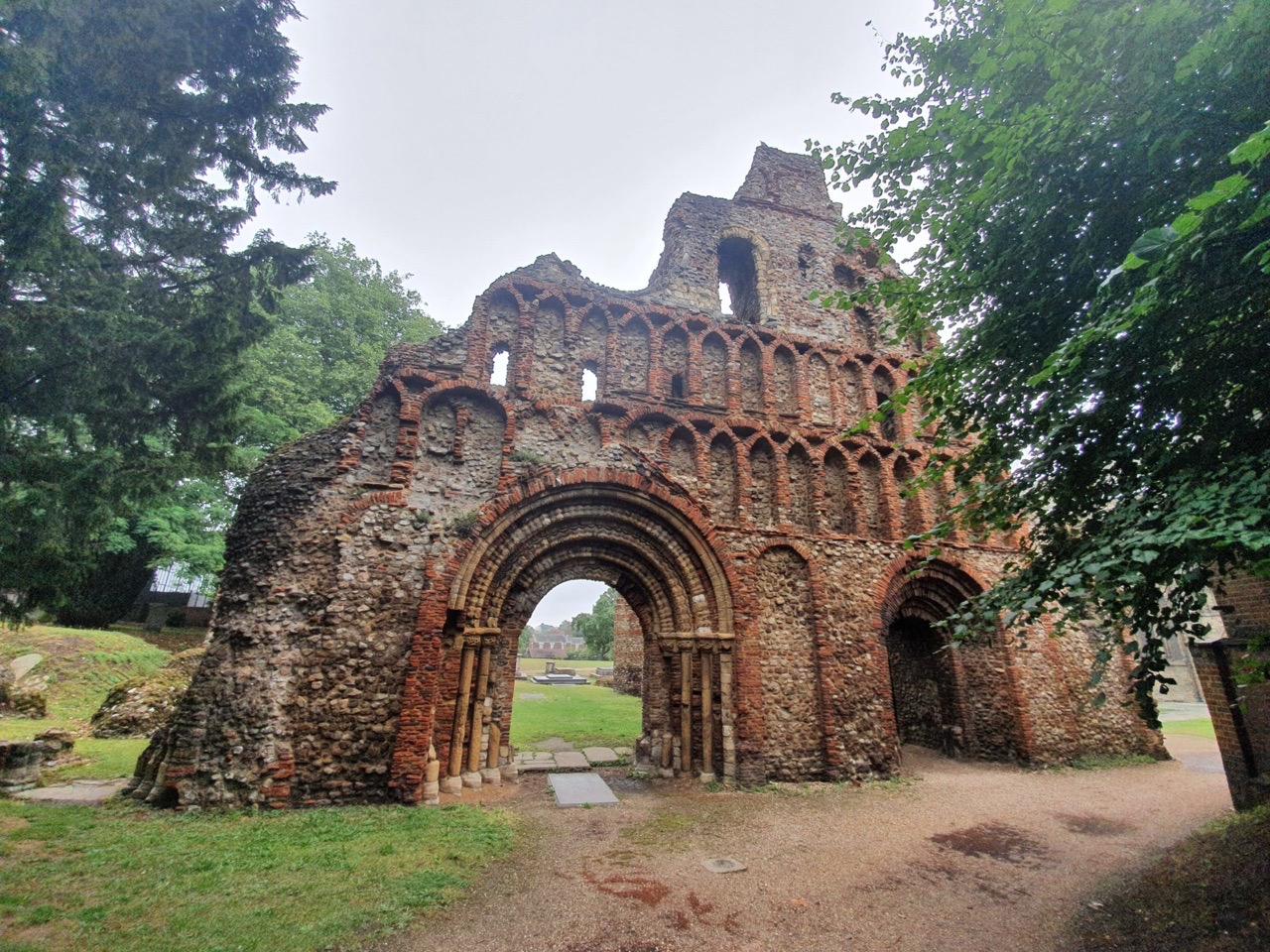
    In the tenth century, there was a church here dedicated to St. Botolph, but a Kentish priest with the name of Norman fancied setting up an Augustinian priory. So, after some research and approval, this magnificent structure was built and the religious institution was established. It was the first Augustinian priory to be constructed in the country and it also, very sensibly, honours St. Julian.

    The rather glorious remaining section of the west front of the priory.

    Much of the church has been reconstructed using Roman brick that was robbed from various walls and buildings around Colchester.

    These pillars have stood the test of time…..

    This is the nave, looking towards the west end of the priory. The priory was closed down during the Dissolution of the Monasteries, but the nave area was saved as this was used by the local population at their church. Everything that the monks used, such as the cloisters, numerous chapels and their area for prayer was all pulled down.

    The church in its new form survived until 1648, when it was destroyed during a siege that took place during the English Civil War. There were plans to rebuild the church after the Civil War, but they never came to pass, so the ruins have stood here now for over 350 years, currently under the management of English Heritage.

  • Dictionary of the Vulgar Tongue – Day 150

    Dictionary of the Vulgar Tongue – Day 150

    The Dictionary of the Vulgar Tongue was first published at the end of the eighteenth century, and given that the current health crisis is giving too much time to read books, I thought I’d pick a daily word from it until I got bored….

    Hedge Creeper

    I’m moderately confused by this definition from Grose, where he notes this phrase means “a robber of hedges”. I’m not convinced by this, as I’m really not sure many hedges were robbed and this phrase was more commonly used to describe someone who hid in a hedge to commit a crime, perhaps a highwayman. It is possible that Grose meant that it’s a robber who steals something from hedges, perhaps clothing left out to dry, although that’s getting a bit tenuous. So, on this, I’m unsure….

  • Colchester – Site of Shooting of Charles Lucas and George Lisle

    Colchester – Site of Shooting of Charles Lucas and George Lisle

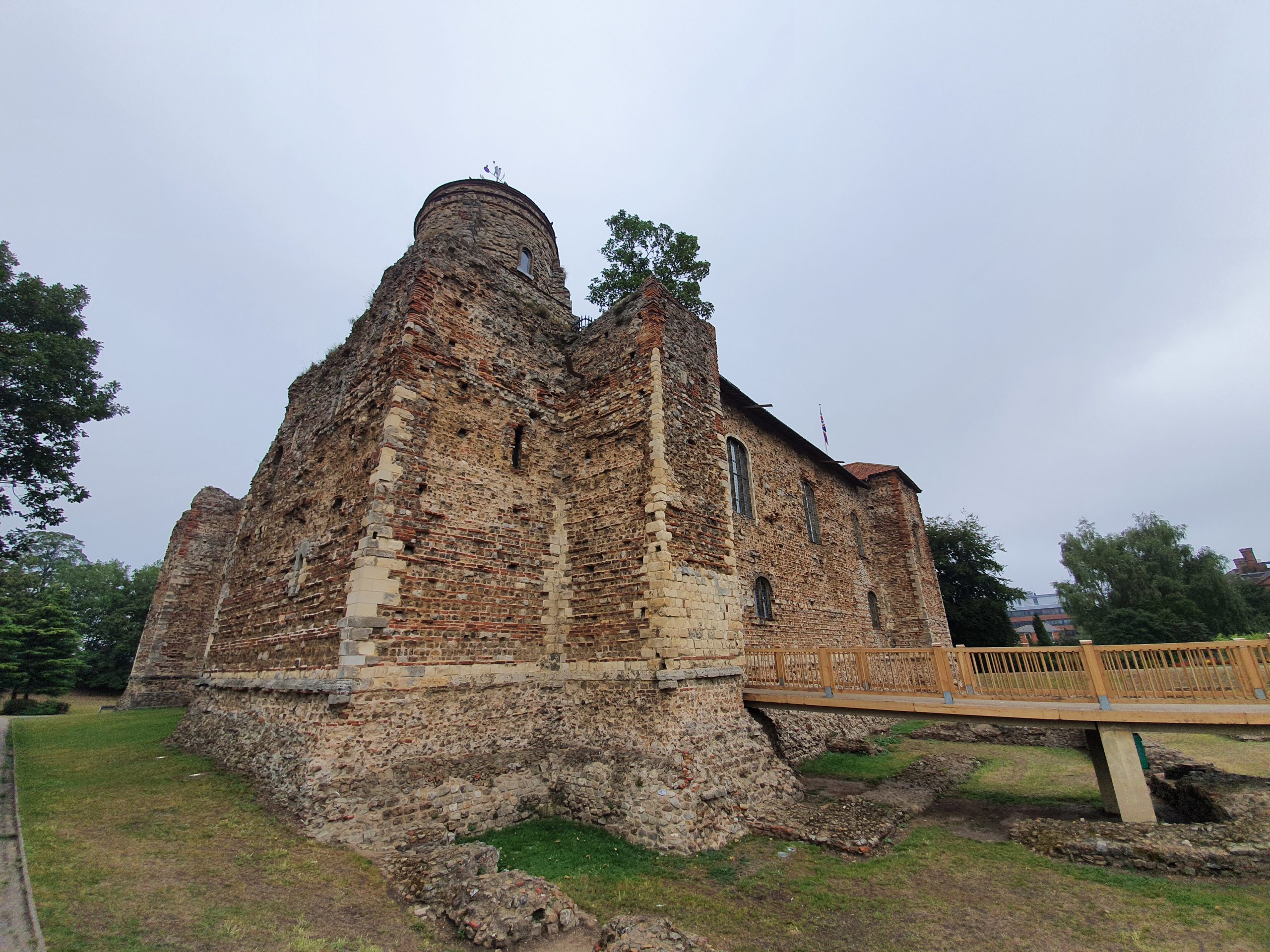
    This memorial notes where Sir Charles Lucas (1613-1648) and Sir George Lisle (1610-1648) were shot on the orders of Sir Thomas Fairfax, the Parliamentarian General. The two men were shot in the castle yard on 28 August 1648, following the surrender of the town to Parliamentary troops during the Civil War. The men were buried at St. Giles’s Church in the town and after the restoration of the Monarchy, there was a commemoration ceremony and the actions of Fairfax were rejected by many. Lucas was given a posthumous peerage in 1666 and the decision to shoot them was seen as a miscarriage of justice, even for the period. Lisle had said to the firing squad “now rebels, do your worst” and Lucas was equally brave.

    This memorial stone was unveiled here behind Colchester Castle, where the men were killed, on 20 October 1892 at a ceremony attended by Henry Laver.

  • Dictionary of the Vulgar Tongue – Day 149

    Dictionary of the Vulgar Tongue – Day 149

    The Dictionary of the Vulgar Tongue was first published at the end of the eighteenth century, and given that the current health crisis is giving too much time to read books, I thought I’d pick a daily word from it until I got bored….

    Hedge

    This term, which is now a multi-trillion industry in the form of hedge funds, was defined by the dictionary as “to make a hedge; to secure a bet, or wager, laid on one side, by taking the odds on the other, so that, let what will happen, a certain gain secured, or hedged in, by the person who takes this precaution; who is then said to be on velvet”.

    The word hedge is from the old English ‘hegg’, similar to the Dutch word ‘heg’ and the German word ‘hecke’, with the financial version just meaning to be on both sides of a hedge.