Author: admin

  • Cockley Cley – Church of All Saints

    Cockley Cley – Church of All Saints


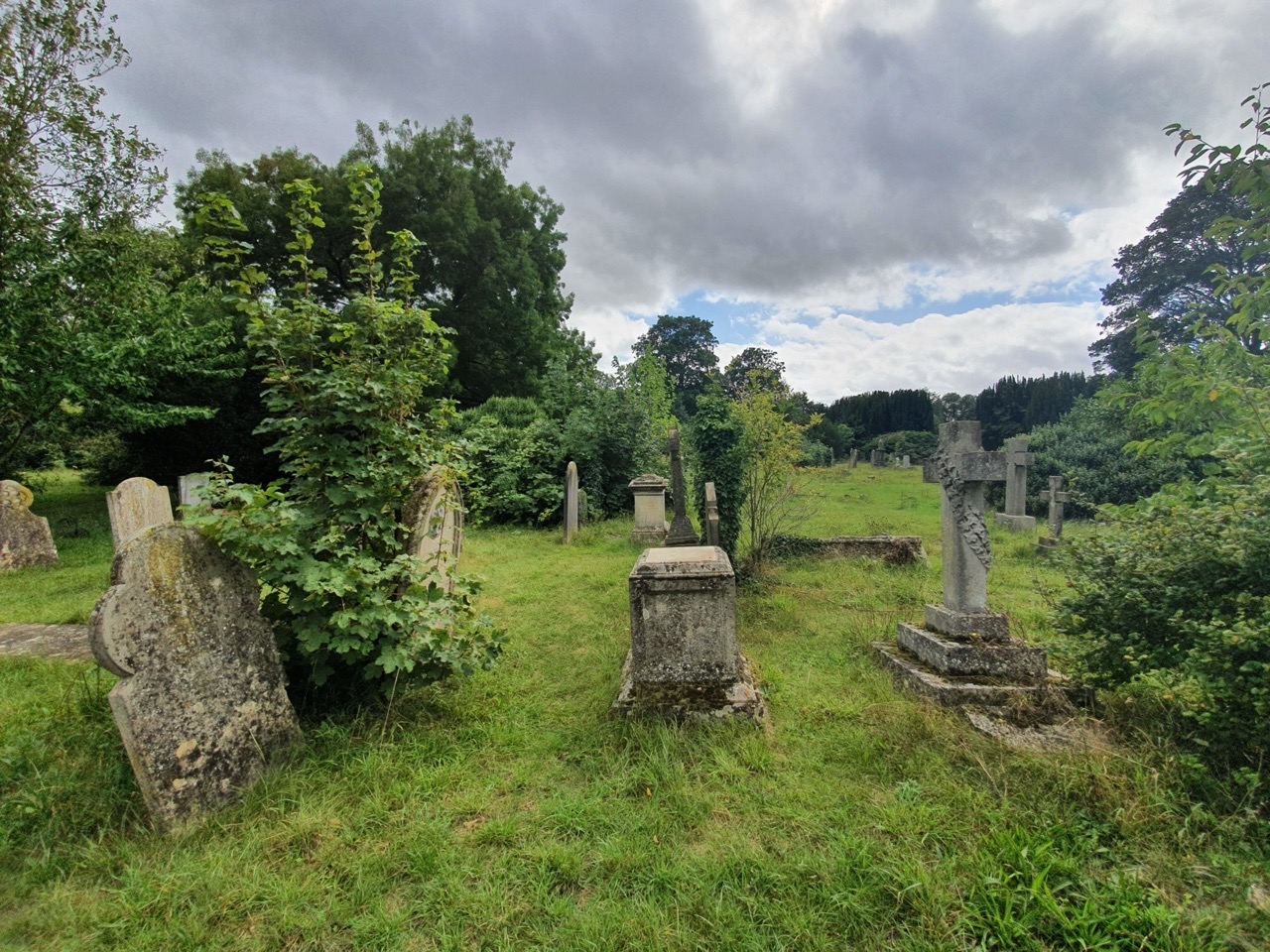
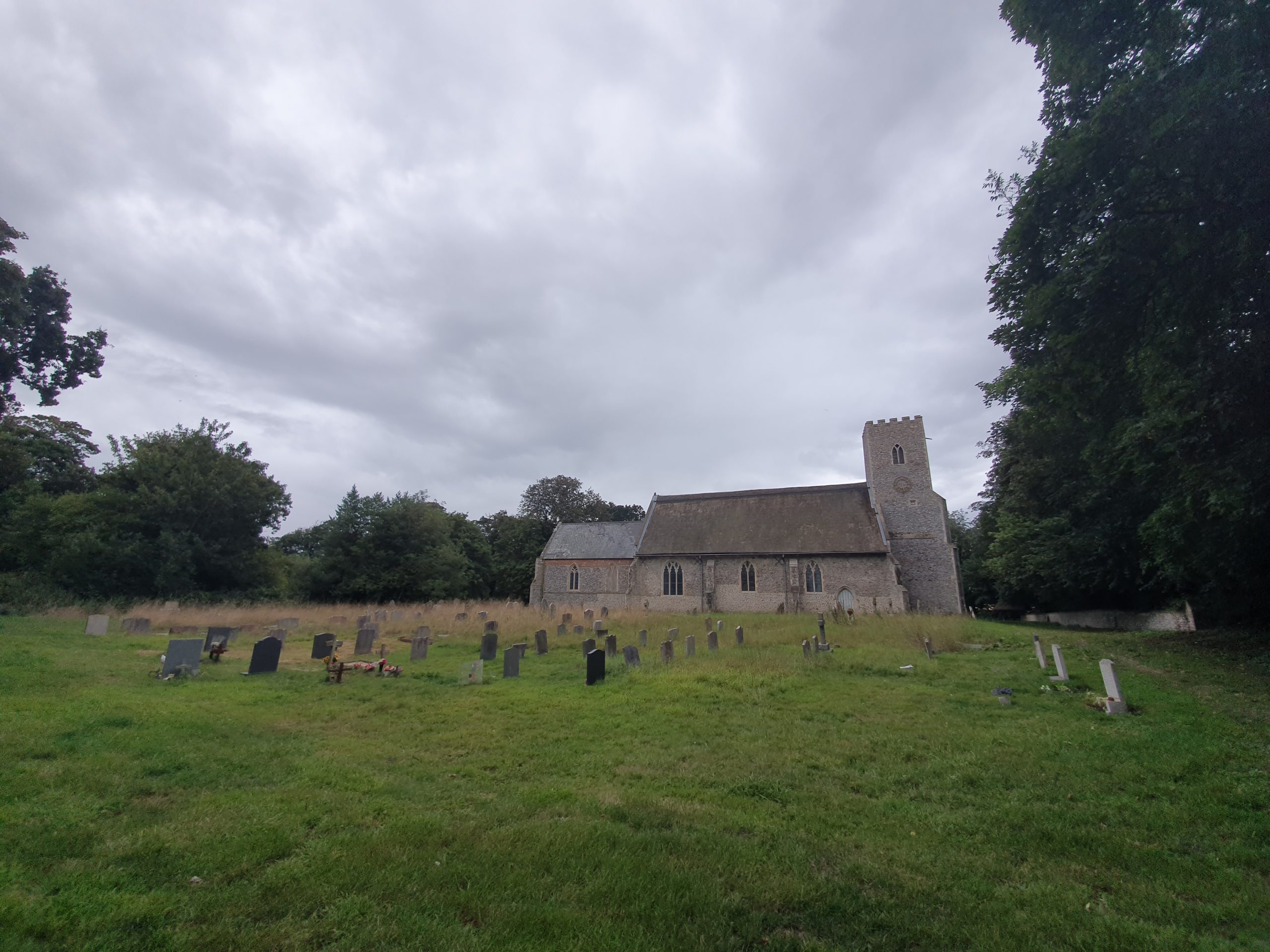
    There has been a church here since probably around the twelfth to thirteenth centuries (and perhaps there was another building from before that), and most of the current exterior dates to that period, albeit with some restorations during the nineteenth century. The roof was also replaced during this time and the interior was refitted, all under the supervision of Richard Phipson.

    The east end of the church, and the neat and tidy churchyard.

    The south porch is a more recent addition, dating from the late nineteenth century, when the interior was also altered and Victorianised.

    A somewhat less than ideal situation developed for the church in August 1991, when the tower fell down. It did though give archaeologists a chance to look in-depth at the stone which had been used in the tower, and they found numerous pieces with masons marks on them.

    There are some photos of what the tower looked like, including one just after it fell down, at https://www.roundtowers.org.uk/cockley-cley-all-saints/. In fairness to the Victorian restoration, it was concluded after an investigation that the tower hadn’t been touched during those works, so this wasn’t anything they’d fiddled about with.

    The interior of the church wasn’t open, but by all accounts, it’s quite a Victorian interior inside and not much pre-dates that.

  • Oxborough – Oxburgh Hall (Secret Jacobite Drinking Glass)

    Oxborough – Oxburgh Hall (Secret Jacobite Drinking Glass)

    This is one of eleven glasses that were commissioned by Sir Henry Arundell Bedingfeld (1689-1760) and the National Trust has done a fair chunk of research on what the glass represented. As an aside, the glasses were all sold in 1908 and all bar this one has gone missing. This particular glass is on temporary loan from the Drambuie Collection and the research conducted received some widespread media attention earlier on in the year.

    It seems that Bedingfield was a supporter of the Jacobite movement, a plot to return the House of Stuart to the British throne. James Francis Edward Stuart (1688-1766), who was for a few months the Prince of Wales and would have been King if it hadn’t been for the Glorious Revolution of 1688 which placed William III on the throne. Bedingfield supported the restoration of the Catholic James Francis Edward Stuart, which meant opposing the Kingship of the Protestant King George II.

    The glasses were probably made in the 1750s, when it was prohibited for anyone in the country to drink to the health of the Stuarts. So, the glasses were made with hidden messages such as the rose and twin buds, which were meant to represent James Francis Edward Stuart, along with the inscribed ‘fiat’, meaning ‘let it come to pass’.

    As for the other ten glasses in this collection? I imagine most people wouldn’t have ever even begun to have recognised the significance of the glasses, so they could be anywhere today, even supposing they’ve survived. It’s a nice find, but without the National Trust offering an explanation and background, I wouldn’t have had a clue what it represented.

  • The Ideal Walking and Running Ratio

    The Ideal Walking and Running Ratio

    As far as I’m concerned, this is the perfect ratio of walking to running. Running is just too tiring….

  • Oxborough – Oxburgh Hall (Herbaceous Border)

    Oxborough – Oxburgh Hall (Herbaceous Border)

    Just photos here, as I have no knowledge about herbaceous borders or the plants in them. And this most certainly is not going to be a gardening blog…..
    There was once a high hedge on one side of this path and this gave the garden some privacy, making it a peaceful location for Lady Augusta Bedingfeld to walk down when she was pregnant (and likely when she wasn’t pregnant, although the National Trust note she had eleven children, so I’m not sure how much other time she had). There were also doors at either end, but now these have gone and the hedge has been lowered.

  • Caldecote – Bus Stop

    Caldecote – Bus Stop

    This bus stop sign is at least ten years old, although at some stage it has become part of the hedge. The sign helpfully informs anyone walking by looking for a bus stop that there are no buses that serve this area. I’m not sure that the council is generally in the habit of meandering around the countryside putting up signs in remote locations saying there’s no bus stop, so I assume that there was once a service.

    The public transport situation isn’t good around here, especially given that Oxburgh Hall is located near to this closed bus stop. Oxburgh Hall themselves don’t even put walking as an option to get there (quite rightly, very few people would decide to walk there in the way I did), although do suggest cycling. For those getting a train, the advice is “Downham Market, 10 miles, then taxi, no public transport”. Marvellous….

  • Oxborough – Bedingfield Arms

    Oxborough – Bedingfield Arms

    This historic country pub has the benefit of being opposite the entrance to Oxburgh Hall, the large National Trust property. Like the country house, it’s not accessible by public transport, so it’s car-only or by bike. Or you can walk from Swaffham as I did, but this is probably not a common option.

    There’s a well-managed system given the current crisis, which was to wait at a designated area for a member of staff to seat customers. This designated area has a bell to summon staff, which makes entire common sense, but being slightly British I felt it made me look too demanding to press it. Not this proved to be an issue, a staff member came over after ten seconds anyway, resolving that potential dilemma.

    I think that there were tables inside for customers who wanted them, but I was happy in the beer garden. The staff member took the order and then brought the drinks over, all very simple. The pub was asking for customers to pay by card, but since I prefer this payment solution, this didn’t prove to be a problem.

    There was a choice of only two real ales, and no craft beer, but since the pub re-opened yesterday that’s at least better than nothing. The Woodfordes Wherry was well-kept and at the appropriate temperature. I’d have preferred something a little more innovative, but it’s a local beer and I’m sure it’s a popular option. I think it was priced at around £3.60, which is entirely reasonable for a pub in this location.

    The pub’s menu was quite broad, although I felt slightly sorry for the serving staff after three groups in a row asked for sandwiches. The staff politely explained that they weren’t an option at the moment and the three groups then didn’t order any food at all.

    I didn’t order food since I was half-way through what transpired to be a 20-mile walk, and sometimes anything too stodgy at lunchtime can be hard work to walk off. Having said that, if there had been an intriguing dark beer, then I might have ordered the cod and chips. But there wasn’t, so I didn’t.

    I have no idea.

    This is a perfectly pleasant pub, it’s got a charm to it and the owners are quite honest in their responses to TripAdvisor reviews. I like the:

    “One of the chefs has chosen an alternative place to work where the pressure is less and better for his nerves.”

    and:

    “A new chapter has begun with the return of Patron Chef, Giles Cunliffe, who is very personable and often ‘out front’ happy to be in touch with his customers and not hiding in the kitchen!”

    and I like the honesty with this response to one long-winded review:

    “Paragraphs make for easier reading…”

    I appreciate responses that are to the point and answer the question. Some chains insist with posting responses such as ‘all your feedback is really important to us’ and then some bland and dull apology. Anyway, all very relaxing and a peaceful way to spend 45 minutes.

  • Swaffham – Snailspit Farm

    Swaffham – Snailspit Farm

    I misread this farm’s name at first and it’s probably evident what I thought the sign said. It’s actually derived from Snail’s Pit, a local lake.

  • Shingham – St. Botolph’s Church

    Shingham – St. Botolph’s Church

    There isn’t much to Shingham and it has been a little subsumed into Beachemwell now, but its glorious church has remained. The above photo was taken from the main road (I say main road, but it’s not exactly the Las Vegas Strip) and I’ve no idea why the church is stuck back there. The land in the foreground wasn’t part of the church’s land even a century ago and was just part of the field.

    It’s not known when the church was built, some histories suggests the thirteenth and others suggest the fourteenth centuries.

    There’s something about this beautiful south door which to my very untrained eye just feels like the church is twelfth or thirteenth century. I hadn’t realised at the time that John Sell Cotman greatly appreciated this door and it’s pleasing to see the arch is still as he drew it nearly 200 years ago, with nothing dropped off.

    The church was redundant by the mid-nineteenth century, as there simply weren’t enough people in the local area to support it. The thatched roof had mostly fallen in by the late nineteenth century and the walls were in a bad state of repair by this time. However, there was a saviour, money was raised at the beginning of the twentieth century to repair the church, to put an iron roof on, to re-plaster the walls and to fix the broken floor. All of the work was completed in just five weeks in early 1904, an impressive effort.

    Despite the restoration in 1904, not much had ever really changed with the church. The interior had been modernised a bit, but it retained its seventeenth-century pulpit and communion rails, as well as having some medieval benches. Unfortunately, the church is nearly never open now, so it’s hard to see inside. But, very little was ever added to this church, so although the roof isn’t really entirely in keeping with the structure, it feels like little else has changed here over the last millennium.

    A correspondent for the Illustrated London News visited the church in 1892, commenting that “in living memory, the parish clerk was a woman, who led the responses, gave out the hymns, knocked the boys on the head during the service when necessary, and in the absence of the rector, prepared the young parishioners for confirmation”. No wonder the boys stopped going…..

  • Fakenham – The Old Fire Station (Heritage Trail 26)

    Fakenham – The Old Fire Station (Heritage Trail 26)

    Since I was back in Fakenham today, I thought I’d tick off a few more heritage trail sights. Not that I took much care in this, I meandered about until I had found a few, it’s more exciting that way to stumble across stuff.

    Some care has gone into this fire station building at Hall Staithe, which was constructed out of brick in 1911 (the fire station, not the staithe). The cars parked in front make it a little harder to see the building clearly, but it was clearly a functional structure. Well, functional for the height of fire engines at the time, probably not quite so useful for the current ones.

    The decorative effort that has gone into the building and the heritage trail sign is also visible, noting that both then and now, the fire station is manned by volunteers. The new replacement fire station is much larger and it’s now located on Norwich Road in the town.

    The heritage trail’s web-site has some glorious photos of how it used to look when it was in use.

  • LDWA – The Slow Ways Project led by Dan Raven-Ellison

    LDWA – The Slow Ways Project led by Dan Raven-Ellison

    One exciting new walking project is Slow Ways, an attempt led by Dan Raven-Ellison to create a network of walking routes across the UK. This is of interest to the LDWA, we’re always keen to find ways of connecting shorter routes together to create something longer, but what’s impressive is how many people have already engaged in this project. They’re looking for 10,000 volunteers to help with this work and I’m hopeful many members of the LDWA will be interested in this.

    There’s lots more information on the Slow Ways official web-site, but David Morgan, the national LDWA chair, and myself, the national LDWA communications officer, were keen to find out even more. Below are some questions and answers from Dan, which we will also be using in numerous ways on our social media and internal communications.

    Q. Can people use this project to plan long-distance walks?

    That’s one of the aspects of the Slow Ways that I’m most excited about. While each Slow Way route connects two neighbouring settlements, people will be able to combine routes for long distance journeys. Someone who wants to walk from Falmouth to Huddersfield or Swansea to Norwich will be able to see multiple options for making those journeys that use existing footpaths. Critically, they’ll also be able to see a village, town or city that they can stop, rest or sleep in at the end of each day.

    We are so fortunate to have a wealth of incredible long-distance paths and routes in Great Britain, but while they do connect on the ground they don’t necessarily connect in people’s imaginations, ambitions or stories. The Slow Ways will help more people make more of those connections more of the time.

    Q. You’ve got a large number of people working with you on the project already, how did you engage so many people so quickly?

    For many different reasons. Most people involved just got the idea of the Slow Ways straight away on an intuitive level. In February we held a hack-day to start creating the network that was attended by 70 people from across the country. People for a mixture of reasons. They either liked maps and plotting routes, loved walking, were interested in the environmental, health, economic, cultural and social benefits of more people walking or wanted to be part of the Slow Ways in a very personal way.

    After the success of the hackday I had planned to organise 10 more events in 10 different regions of Great Britain, but then Covid-19 hit and the country went into lockdown. In response to that challenge a small team of volunteers from the hackday spent four weeks creating an overview plan for the network and setting things up so that anyone who loved maps, were missing walking and had an internet connection. We then used Twitter, Zoom, Skype, Google Docs and OS Maps to recruit and train 700 volunteers who then created over 7,000 Slow Ways routes that stretch for over 100,000km.

    Lockdown certainly helped to bring people together and catalyse the effort.

    Q. How could LDWA members help you on this project?

    We’d loved LDWA members to help with the project. We are going to be looking for 10,000 volunteers to help test the routes. We need people to ground truth, verify and rate all the routes and in some places, suggest new ones. I’m hoping that we’ll have everything set up for people to help with this giant effort before the autumn.

    Anyone who wants to help should sign-up for the Slow Ways newsletter on my website ravenellison.com. We’re currently working on a website to host the development of the routes.

    Q. Do you think that the lockdown has brought about a new era in walking and people wanting to explore their local communities?

    I think there is lots of evidence that more people have been out exploring their local neighbourhoods. I’m interested to see how this translates into people deciding to walk longer distances. I think the Slow Ways can help with that as people want to avoid public transport and walking to a neighbouring settlement will be an option for many people.

    Q. Is ‘Slow Ways’ relying on paths that are known to exist on the ground, or theoretical rights of way that in reality have been lost?

    Slow Way is a principle and an idea. It’s the idea that you can walk to your neighbouring settlement and the principle that it should be possible to do so directly, safely and enjoyably. This is not always the case.

    Each Slow Way might have multiple route options. These route options may be more or less direct, safe, doable or accessible. Volunteers were asked to create Slow Ways routes that used footpaths and rights of way that are visible on OS Maps. There will certainly be many “lost ways” included in the network and we need to do the ground truthing to find, test and potentially even challenge some of these.

    I’m also interested in where there are no safe rights of way but should be. The Slow Ways help to expose places where the walk between neighbouring settlements is unacceptable. In these places I hope they inspire parish councils, councils and local groups to create new routes and rights of way.

    Q. Will ‘Slow Ways’ liaise with the Ramblers ‘Don’t Lose Your Way’ campaign as ancient routes are protected for the future?

    I’m good friends with Jack Cornish who leads on that and Jack’s been volunteering on the Slow Ways from the start. We’re chatting about the best ways to collaborate and combine energies.

    Q. And for many of our members this would be of interest, would these walks let them encompass a pub visit easily?

    Great question. When designing the routes I asked volunteers to make sure they, as far as possible 1) Start and finish at a good central point 2) are direct 3) are off-road 4) are safe and accessible 5) have resting places every 5-10km 6) pass through train and bus stations 7) are enjoyable and beautiful and 8) use already established routes.

    The “resting points” requirement meant using OS Maps to find regular villages where people could stop for rest, sustenance and potentially a bed. The guidance was to look for a pint glass symbol on Explorer maps as an indicator for good places to pick. So yes, in some ways the Slow Ways could be considered to be world’s longest-distance pub crawl.