Something new for 2026 is a series of podcasts that I’m planning for the LDWA. It’s going to take a fair few podcasts to start getting the editing quality sorted, but I have to start somewhere and Simon Hodgin of Norfolk & Suffolk group kindly agreed to help with the first one.
I reference in the podcast that there’s a lot more to the LDWA than just the 100, but I felt the need to ask Simon about some of his challenge event achievements. I’ve recorded a couple more podcasts and they’ll be advertised within the LDWA. After a while, they’ll advertised more widely hopefully when I’m content that I know what I’m doing.
The first few podcasts will be with LDWA members, talking about their volunteering experiences and their walking, but there will be more focused podcasts on how to prepare for any challenge event, what to pack for a 100 mile event, as well as podcasts about specific walking trails. Then there will hopefully follow podcasts featuring other people involved in outdoor adventure activities, as well as those involved working on trails, B&Bs owners used to dealing with walkers and much more besides.
When I’m happy that I’m getting there with the quality, then they might start appearing in the usual places where podcasts are found. So, that’s the background! The podcast download for the first episode is below.
One running theme of the 1830s was the sheer excitement of so many people about the possibilities of the rail network and the amount of time it could save them.
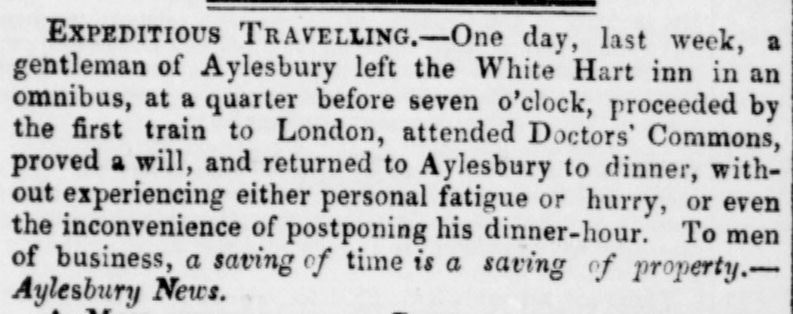
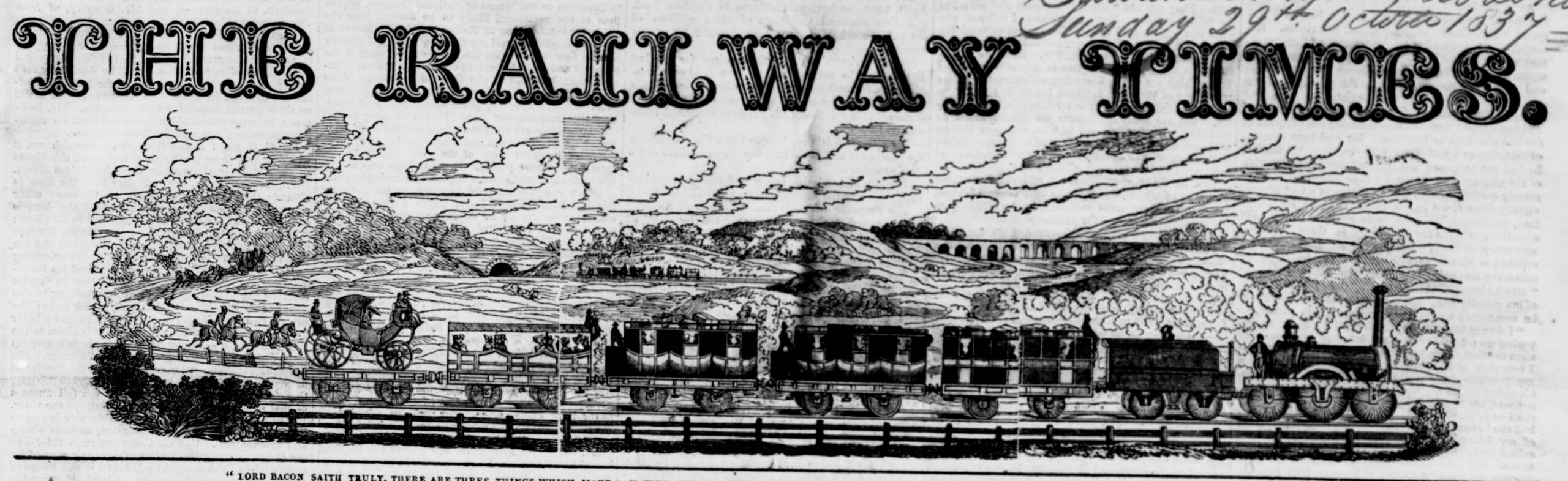
The Railway Times reprinted a news story that had been published in Aylesbury News in November 1837, although they must have got the omnibus to another nearby station (perhaps Tring railway station which had opened in October 1837) as the railway was another eighteen months from opening in Aylesbury.
“One day, last week, a gentleman of Aylesbury left the White Hart inn in an omnibus, at a quarter before seven o’clock, proceeded by the first train to London, attended Doctors’ Commons, proved a will, and returned to Aylesbury to dinner, without experiencing either personal fatigue or hurry, or even the inconvenience of postponing his dinner-hour. To men of business, a saving of time is a saving of property.”
This feels like a perfect example of the sort of thing that would have excited me, to be able to get a lunch in London without any “personal fatigue or hurry” and without having my evening meal late…
As another random aside, back to my reading through old back issues of the Railway Times…. There was an article in December 1837 which gave progress on the line between Birmingham and Gloucester.
“We have much pleasure in being able to inform our readers that considerable activity is displayed on this line. Fourteen contractors are at work—four in the Birmingham division, and ten in the Gloucester—five are engaged in earth-work, one brick-work and masonry, four fencing, and the remainder stone suppliers. Four miles of earth-work, and twenty miles of fencing are in progress.”
What amuses me is reading that the route of the line had been planned by Captain William Scarth Moorsom (1804-1863) who had worked with Robert Stephenson. He delivered a route which was economical, efficient and well planned, but unfortunately, it was economic as he had missed out nearly all the towns en route to save money. This displeased residents of numerous towns, including Cheltenham. The compromise was that Pearson Thompson (1794-1872), a member of a key committee of the railway and resident of Cheltenham, paid for much of it so that was a handy arrangement for the railway.
The whole project was successful, it was decided not to build a new railway station in Birmingham and instead they decided to share Curzon station. This building is interesting, it opened in 1838 but ceased to be used for rail purposes in 1966. It is very visible now amid all the civil engineer works when arriving into Birmingham as it is being integrated into the new Curzon HS2 railway station which should be open in around three to four years.
As for the towns that they missed, the railway network decided to build a series of branch lines, including to locations such as Tewkesbury and Worcester. That seemed to be a very reasonable compromise although Tewkesbury lost its rail connection following the Beeching cuts. Eventually the whole arrangement became part of the Midland Railway which then in turn became the London, Midland and Scottish Railway in 1923.
I didn’t get around at the time to writing about the Mercure Cardiff North hotel where we stayed for my birthday weekend in Cardiff in November. This is an Accor branded hotel and I had booked some time in advance, with the rates being very reasonable.
Firstly, there’s something unusual about their online reviews on Google as nearly every single one mentions a staff member by name. This isn’t usual on Google and doesn’t really help people get a fair understanding of what is happening here. If I read through the verified visits on Accor’s website, the situation is more as I would expect and staff members are rarely named, so that feels more reliable.
Instead of using my normal metric of Google Reviews, I’m going to use the Accor aggregated score, which shows that this hotel has a rating of 3.9 which is towards the lower end of the scale for the chain.
In fairness, the hotel was managing perfectly well at the accommodation element that was offered here. Liam and I had a twin room which was clean, at the appropriate temperature and everything worked as expected. There were no noise issues, either from inside or outside the hotel, so that all felt positive. The interior felt generally modern and so I suspect that there has been a refurbishment here recently.
I think my main negative about this hotel is I don’t know why they’re trying to be part of Accor. The hotel was playing fast and loose with the loyalty scheme offered by Accor and didn’t offer most of the benefits.
The situation with the welcome drink was downright awkward as the member of bar staff said that it was one drink a room. This isn’t right, this has never been right and it’s really not something I want to debate as it’s hard not to sound entitled about the matter. But holding Liam’s drink hostage whilst the staff members blamed each other is entirely sub-optimal. The reception desk resolved the matter, but the concept of the welcome drink was rather lost at this point.
It was partly a shame that the bar service was borderline rude as the drinks selection wasn’t unreasonable and although they’d made no effort getting local drinks in, at least they had a couple of options such as this Singha.
We had breakfast included in our room rates and on the first day it was poor, the second day it was better. it might not be relevant to me personally, but I like that they’re trying to do a gluten free area, but it could perhaps be a little more, er, exciting.
To be fair, I suspect guests would have worked out the labelling error here.
The hot food options, although this isn’t perhaps the best way to keep the food hot. As with the drinks at the bar, there was no effort to source food locally which is a shame as numerous Accor hotels are keen to do at least something.
The first day’s breakfast options were broadly dreadful. The bacon was dripping with grease, the cold cuts were of a very low quality, the cheese was already sweating in the displays and the whole arrangement looked sub-optimal.
I do agree with Richard’s comment that it’s a shame that there isn’t any fresh bread available here. But, to be fair to the hotel, this isn’t as common in the UK as it is on the European mainland.
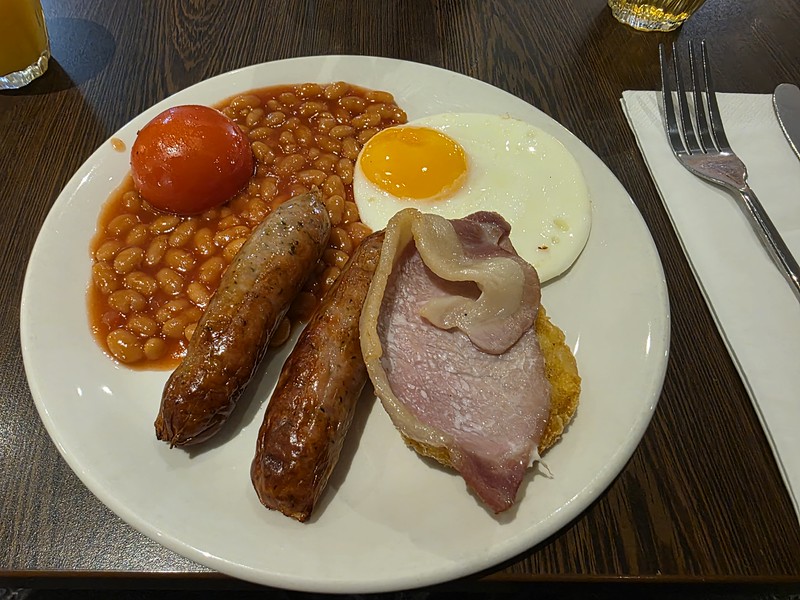
They actually had fried eggs on the second day and the presentation of the food was much better. That bacon isn’t cooked anywhere as much as I’d like it, but I accept that’s a personal preference. The egg was cooked to my tastes and everything tasted as expected.
Overall, I thought that the stay was fine as the room was clean, the team members were generally friendly and there were no noise issues. Certainly breakfast could have been better on the first day, but we got there just as service started and it’s easy to be critical. My main comment about the hotel is that they should perhaps either embrace (or at least accept) the rules that Accor set them, or just go independent and be free of those guardrails.
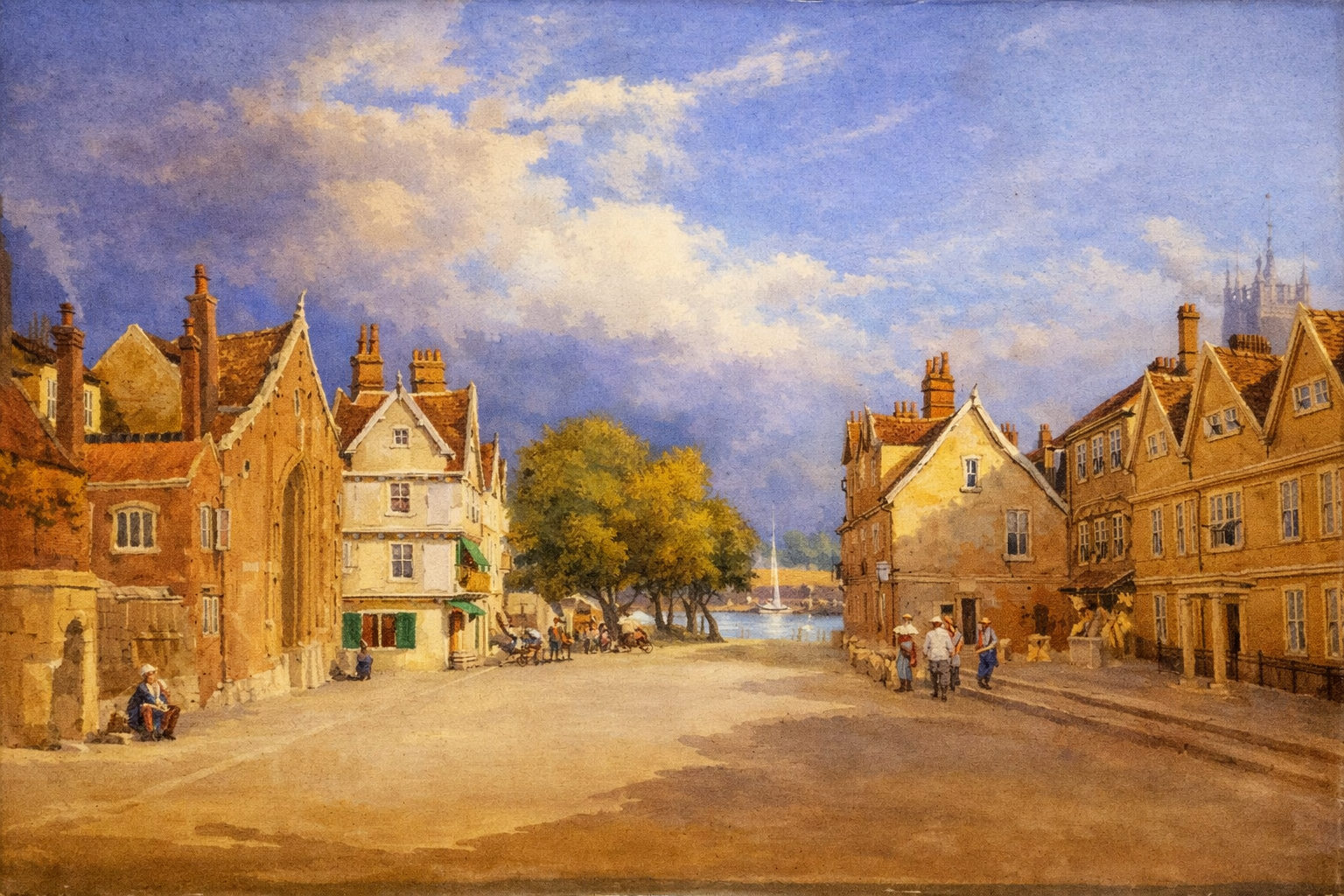
I’m finding this interesting as it’s a view of Tombland from 1830 which I haven’t seen before. Although in very many ways nothing has really changed here in terms of the Erpingham Gateway, the road layout and the buildings on the right hand side of the road, there are some other changes.
One change is the removal of the buildings to the right hand side of the Erpingham Gateway which is where the statue commemorating the life of Edith Cavell is now located. There’s also a gateway that I hadn’t known existed on the extreme left of the painting, that’s now gone but there is a blue door there today which gives entrance to Norwich School and there is today evidence of the former gateway that surrounded it.
Back to the artist, John Thirtle (1777-1839) who became a key member of the Norwich School group of painters and he became known for his watercolour landscapes. He was also an art framer and print-seller and Norwich Castle Museum, who own this artwork, have several of his paintings in their collections. Some of his artworks have suffered from the fading of the indigo pigment he used on many paintings, something which is a little sub-optimal. He suffered from illness towards the later part of his life, from long-time health issues from tuberculosis reducing his output.
I’ve asked AI to restore the image to how the sky might have looked and I think it’s done a generally decent job here. There’s a mistake that AI thought there was a fountain, and thus water, in the background that isn’t actually there, but the image does feel like it has been brought back to life.
I led a walk, which was well attended which is rather nice, yesterday about the historic parish of St. George at Tombland, so expect a few posts now following my research about that.
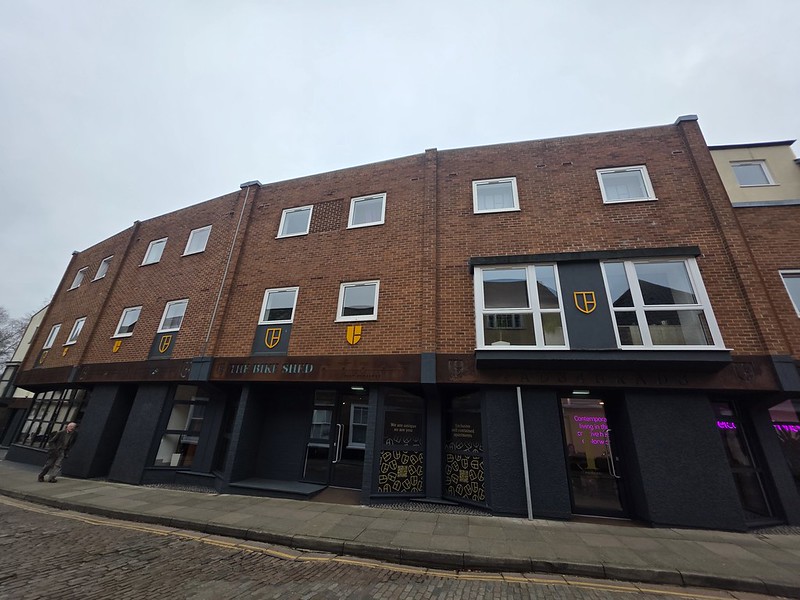
I noted in a post in 2021 that it was really positive that this parish boundary marker had survived a move to a new building. However, it appears that it might have disappeared and the people that I’ve asked have no idea where it has gone. Dating from 1834, the marker is no longer visible following work undertaken on Princes House Residences.
The building with the parish boundary marker now missing…..
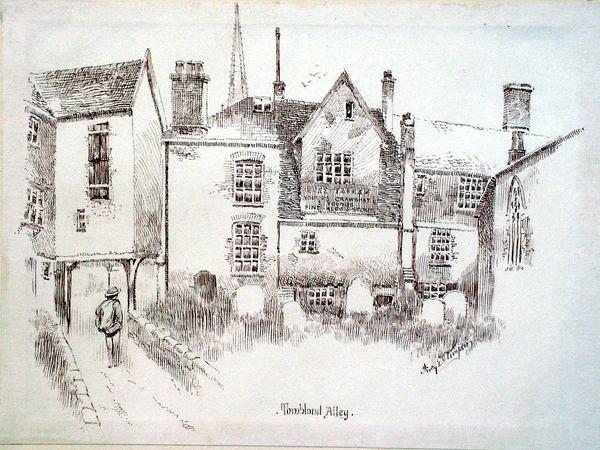
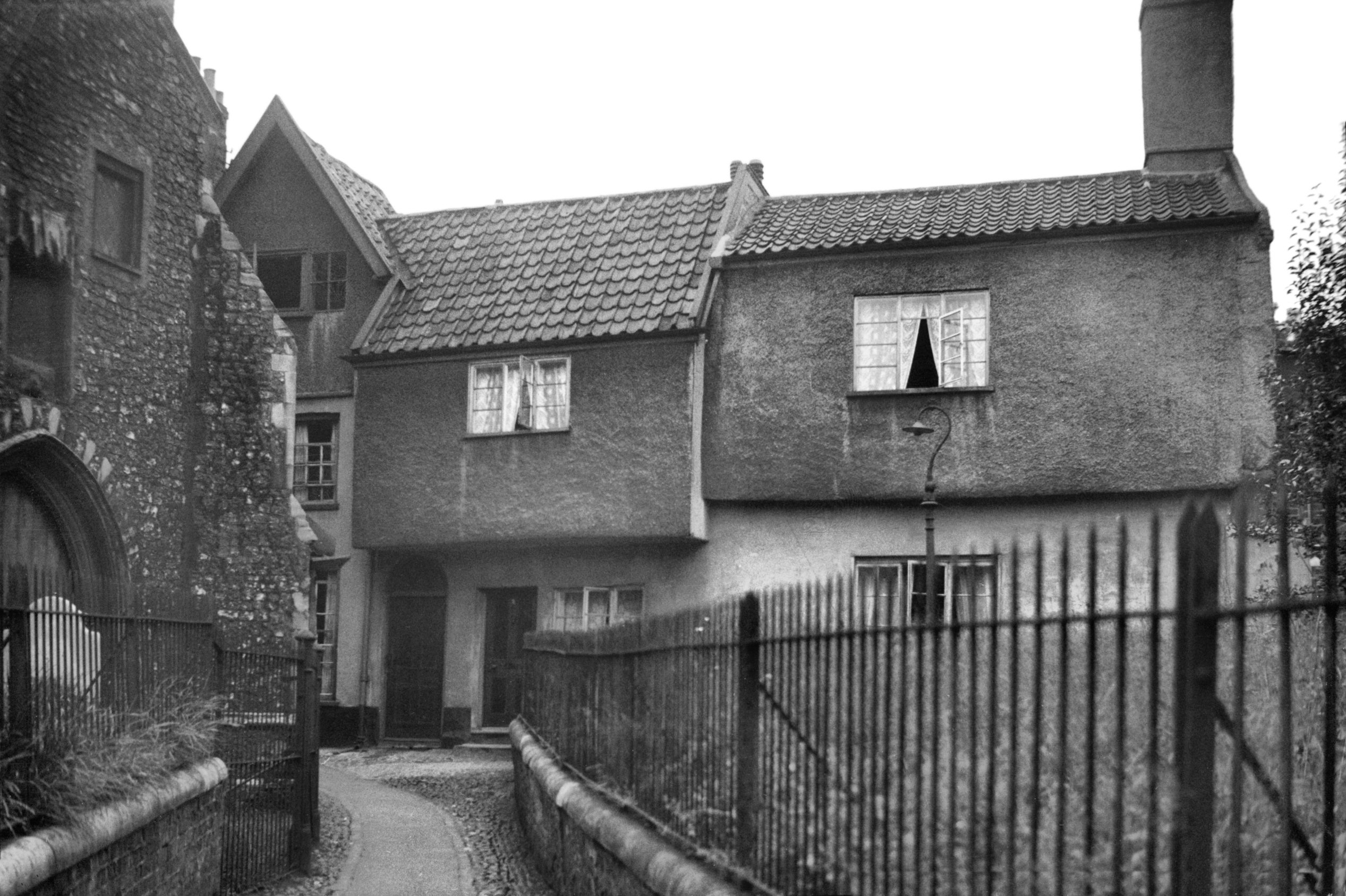
This is how Tombland Alley looks today, an alley that runs behind St. George Tombland and comes out opposite the Erpingham Gate. The areas of raised ground is where the burials took place and they were once more contained than they are now with railings, some evident in the photo taken by the late great George Plunkett in 1936.
This image is from Percy Stimpson (1880-1948) and so would date to around the 1920 or 1930 period. The iron railings that were removed during the Second World War for scrap iron are still visible, and I think interestingly, so are numerous gravestones. It’s not quite clear to me when these might have been removed, but it appears to have been around the 1950s or 1960s.
This post is more about the history of the Louis Marchesi pub, but here’s a photo of a beer that I’ve had at the pub whilst on an ale trail…..
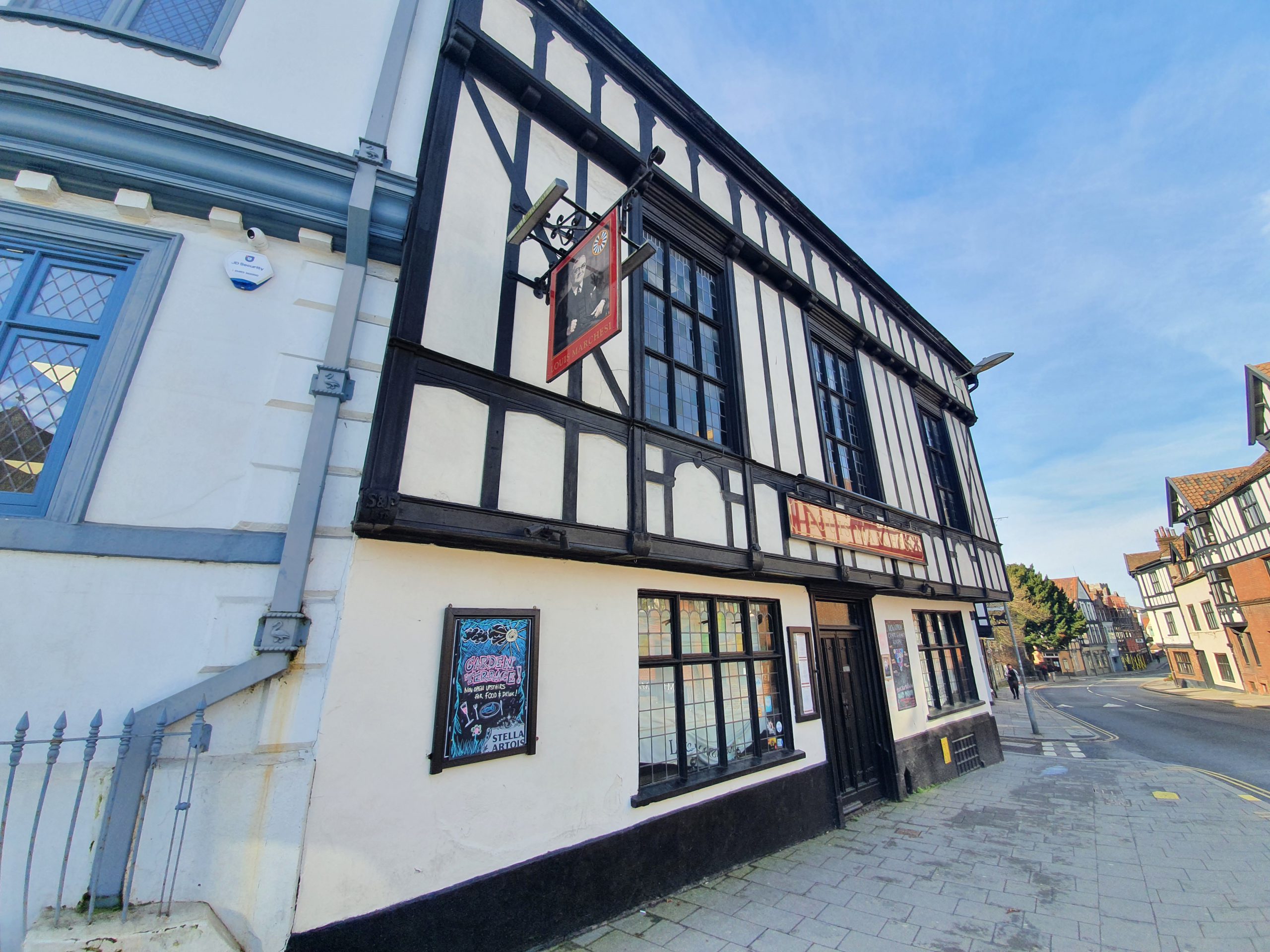
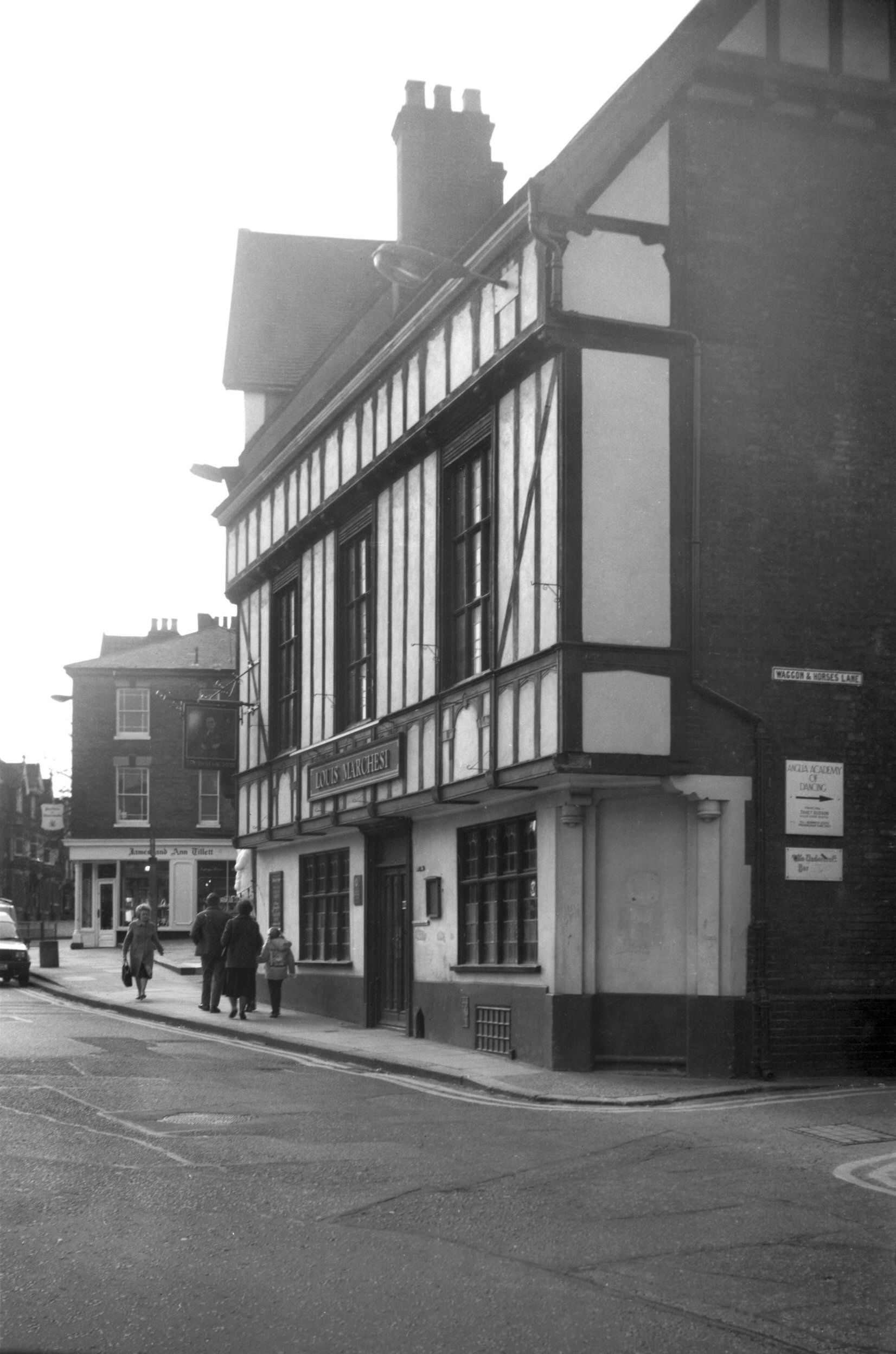
The pub has for most of its licensed life been known as the Waggon and Horses, with the adjoining road still having that name. It became a licensed premises at some point in the early 1780s and became a pub owned by the brewery Steward, Patteson & Steward. The timber frontage is not original, that came at the beginning of the early twentieth century in an attempt to make it look Tudor with a similar thing happening to the Maid’s Head located over the road.
It wasn’t though built to be a licensed premises, there was a fifteenth century residential property here and the undercroft of that building is still present. Although the Tudor frontage and the roof might be twentieth century, the timber frame of the structure is also fifteenth century, although much changed over the centuries.
Although Tombland, which the pub faces onto, might not have changed much, the adjoining Waggon and Horses Lane has a different character today. To the disappointment of the sanitary committee, a second slaughter house licence was granted to a property owner in the late 1880s.
It later became a pub operated by Watney Mann in the 1960s and in 1975 it was renamed as the Louis Marchesi. Erminio William Louis Marchesi (1898-1968) was a local Norwich man who founded the Round Table, designed to be a younger version of the Rotary Club. The late great George Plunkett doesn’t have an older photo of the pub, but he has one from 1989.
Going back to some previous licencees, Daniel Fiddymont was the landlord between 1822 and 1830, but there was a tragedy in 1829 when his wife died. That meant that he was left running a pub with five young children, it’s perhaps not a surprise that he remained at the venue for only a few more months.
There was another tragedy in July 1831, when the new landlord Henry Morris died at the age of 46, leaving a wife and ten children. His widow looked after the pub for a few months until it no doubt became unsustainable and the brewery advertised for a new landlord. Henry had been a brewer for the Steward, Patteson & Steward brewery for over twenty years. Every morning at 06:00 he served purl, which was a warm ale served often mixed with gin and milk, with soups available for lunch.
Taking over in October 1831, John Bushell advertised in the Norwich Mercury that he had taken on the inn, which suggests that it did provide accommodation of some sorts. He noted that he had London porter and fine ales on draught, alongside a similar bottled selection. He remained the landlord of the pub until his death in 1839.
In 1851, the pub was once again advertised to let and in the newspaper the brewery mentioned that it was “doing a good trade and has accommodation for fifty horses” and there remains a large yard at the back of the venue today.
Probably to the annoyance of the landlord, in 1925 the pub was refused a renewal of their Saturday afternoon licence as the police said that they had found that it had been “badly conducted” when they visited. The pub’s representative complained and the magistrate suggested that they seek legal advice, which must have felt sub-optimal to the venue at the time. This meant that they lost their ability to open between 15:00 and 17:30 which were compulsory closing periods at the time.
More recently, in 2004 the pub became more of a cafe bar arrangement and took the name ‘Take Five’ which felt sub-optimal from a historical perspective, but since 2017 it has now once again become a pub and retaken the Louis Marchesi name.
Today, the pub offers around four real ales and from my experience they’re usually from local breweries. The undercroft and private room upstairs can both be booked for private events, but I don’t think that they’re routinely open for the public. I do prefer when pubs keep their original names, but at least it has the Louis Marchesi one back now….
This year, I took considerably more photos than I ever had chance to write about, so to surprise and delight just about no-one other than myself, there will now follow a few end of year things that I feel I should have written about so I don’t forget them.
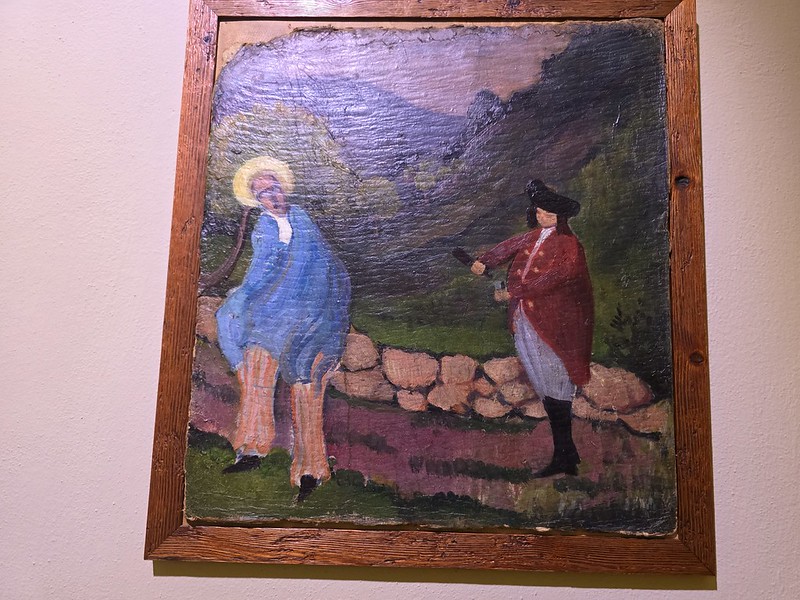
This painting is by Stanisław Ignacy Witkiewicz (1885-1939) who is an intriguing character as he seems to have decided that merely being a painter, playwright, novelist, philosopher and photographer was far too sensible, and so set about turning his entire life into a sort of extended, slightly unhinged performance piece. He ran a formalised “Portrait Painting Firm” with price lists that varied depending on which drugs he was on at the time, annotated his works with cryptic notes about nicotine, peyote or existential despair, and wrote plays so strange that even other avant-gardists occasionally backed away slowly. In the end, he committed suicide shortly after Germany invaded his home country of Poland and it was perhaps fortunate that he didn’t see the destruction of so much of his country.
Back to the artwork, which he painted in 1912, it’s just called “Costume Scene in a Landscape” which doesn’t help with any meaning which the artist intended. I can’t work out what I’m actually looking at, which certainly adds some complexity to arrangements. Is the character on the left wearing an interesting hat or is that a halo? And what is the meaning between the two characters?
But, what reassures me is that the artist was known for trying to engender “the strangeness of existence” in the viewer, where it isn’t possible to establish what reality he was looking for. I’ve decided that’s all the meaning I need…..
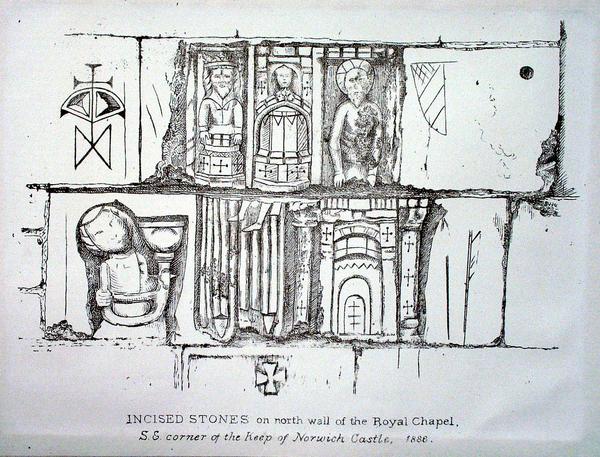
I’m getting a bit niche now, so this is my last post about the Castle for a few days….. I posted about these stone inscriptions a few days ago.
I’ve just found this image drawn by Cornelius Jansson Walter Winter (1817-1891) in 1888. The castle ceased to be the city’s prison in 1887 and this image would have been done as part of the work for the new castle museum.
What I’m impressed by is that nearly 150 years later, the stonework is still in nearly the same condition as it was then. Although, there’s one exception and that’s in the top photo there’s a chunk of ironwork on the right hand side of the image and part of the stone above appears to have been removed. I should probably not be too worried about the removal of a piece of stone, but I’m intrigued.