
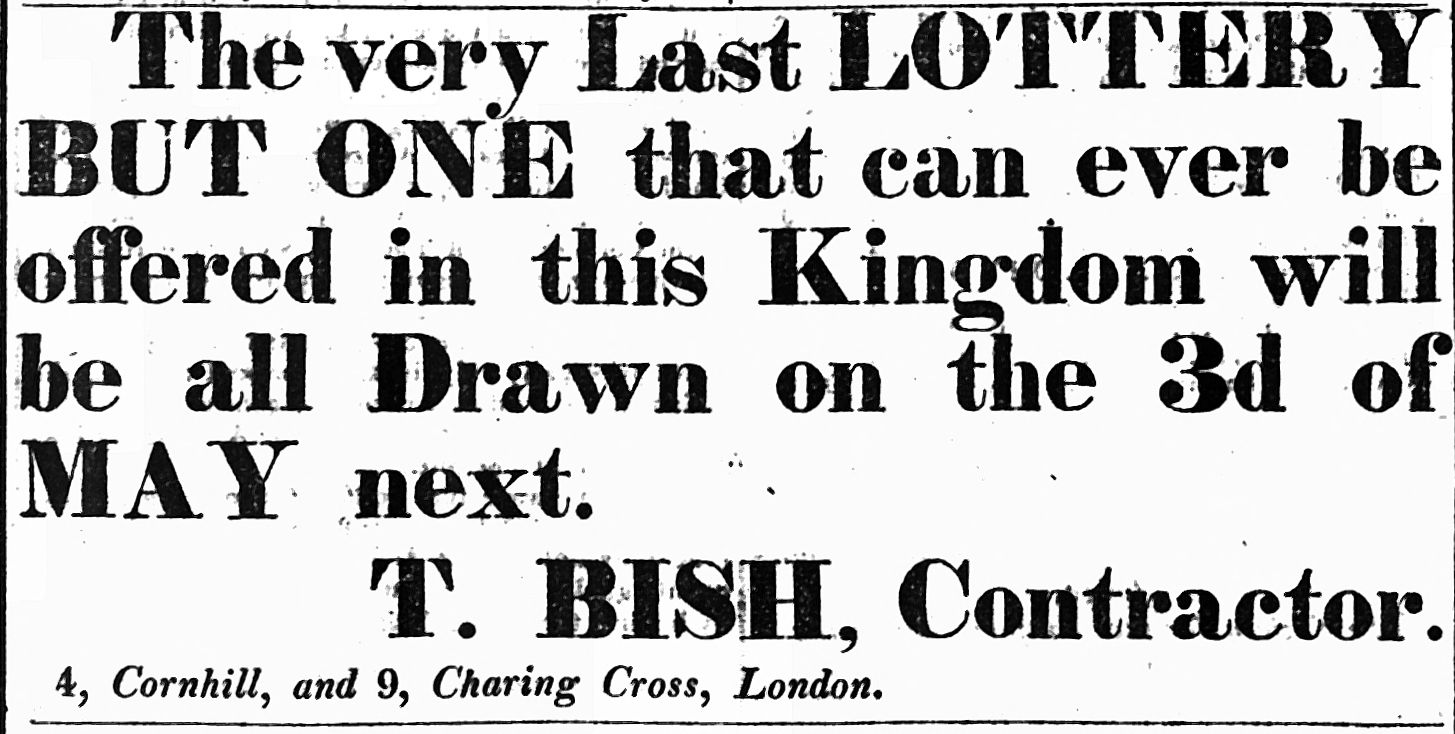

In the early 1820s, the British public was gripped by a peculiar form of gambling fever orchestrated by Thomas Bish, someone who seemed quite a character to say the least. The advert above was in the Norwich Mercury from 200 years ago, although the lottery arrangement was a national one.
Bish was the most prominent lottery contractor of his day and he turned the sale of state lottery tickets into a massive marketing spectacle. Operating out of offices at 4 Cornhill and 9 Charing Cross in London he managed to get his whole lottery system sanctioned by the state. He put bold ads in newspapers, such as the Norwich Mercury, he created eye-catching handbills and used humour in his adverts. He was ahead of his time.
The era of these grand lotteries came to a close in 1826 when the Government finally abolished the state lottery as it didn’t suit their needs. Bish did not go quietly as he campaigned vigorously against the ban and even managed to get himself elected as an MP for Leominster twice although his first win was unseated because of his Government lottery contracts. Bish advertised that it would be the last ever lottery conducted in the Kingdom, but then in the 1990s, John Major came along and introduced the National Lottery once again.