

I’ve already written several posts about Risiera di San Sabba and they’re visible at https://www.julianwhite.uk/tag/risiera-di-san-sabba/.
Risiera di San Sabba began as a rice-processing plant on the outskirts of Trieste but was seized by the Nazis in 1943 and turned into a detention, transit and killing centre under the authority of Odilo Globocnik, already notorious for overseeing mass murder in occupied Poland. Thousands of people were imprisoned there, including partisans, political opponents, civilians caught in reprisals and Jews who were held before deportation to Auschwitz.
In a building that really wasn’t ideal in terms of its design, the SS created tiny, airless cells, torture rooms and an on-site crematorium, making it the only Nazi camp with such a facility on Italian soil. Executions were carried out in a former boiler room which were adapted to be used as killing space, with bodies burned to hide the evidence. The camp operated until the final weeks of the war, when the retreating Nazis attempted to destroy parts of it, but it was finally recognised as a national memorial in the 1960s.

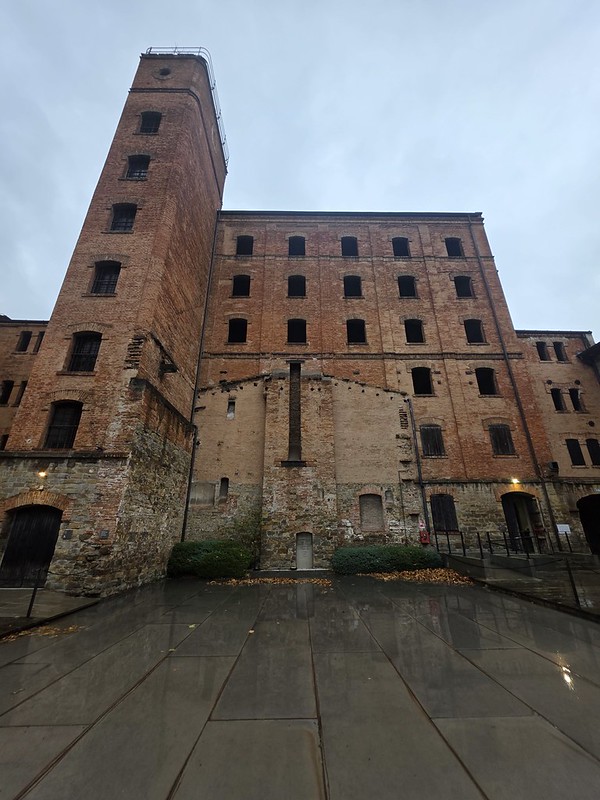
This is the main courtyard of the site, the former crematorium is in the centre of the photo where the exposed brickwork is, the museum is on the ground floor behind that and the prison cells are to the centre right of the photo.

There’s a model in the museum which shows how it was going to be converted into a national memorial. It took twenty years for the Government to decide that they needed to create a memorial here, they had taken some time to really confront the atrocities that had taken place in the country. The design of the building was overseen by Romano Boico (1910-1985), a local architect.

It’s not used for this purpose at the moment, although it was when I visited before, but these are the imposing walls that visitors enter the site through.

These big tall walls are deliberately designed to be stark, threatening and to feel imposing, the architects of the memorial didn’t want the whole site softened as they wanted visitors to feel some of the oppression that the prisoners would have felt.

There’s a fairly large museum to visit at the site, which is all free of admission and without charges. This gives the background to the site, what happened here and how the buildings were used.

Some of the Jewish property which was seized.

The location of the German concentration camps around Europe.

This large space, which has been deliberately cleared of everything other than what is needed to stop the building falling down (and the fire extinguishers) was used as a transit and holding area. This is effectively where people were held before being deported, assuming that they weren’t being killed on the site, and large numbers went through here.

Another view of the tall and imposing walls which now surround the rear of the site.

This is the temporary entrance of the site and there was a helpful staff member who gave an introduction to the museum. It might not have been the most obvious place to visit on my birthday, but it’s a powerful site and what went here shouldn’t be forgotten.