Tag: Wymondham

  • Wymondham – Green Dragon

    Wymondham – Green Dragon

    Just a brief post, as I’ve written about the Green Dragon before.

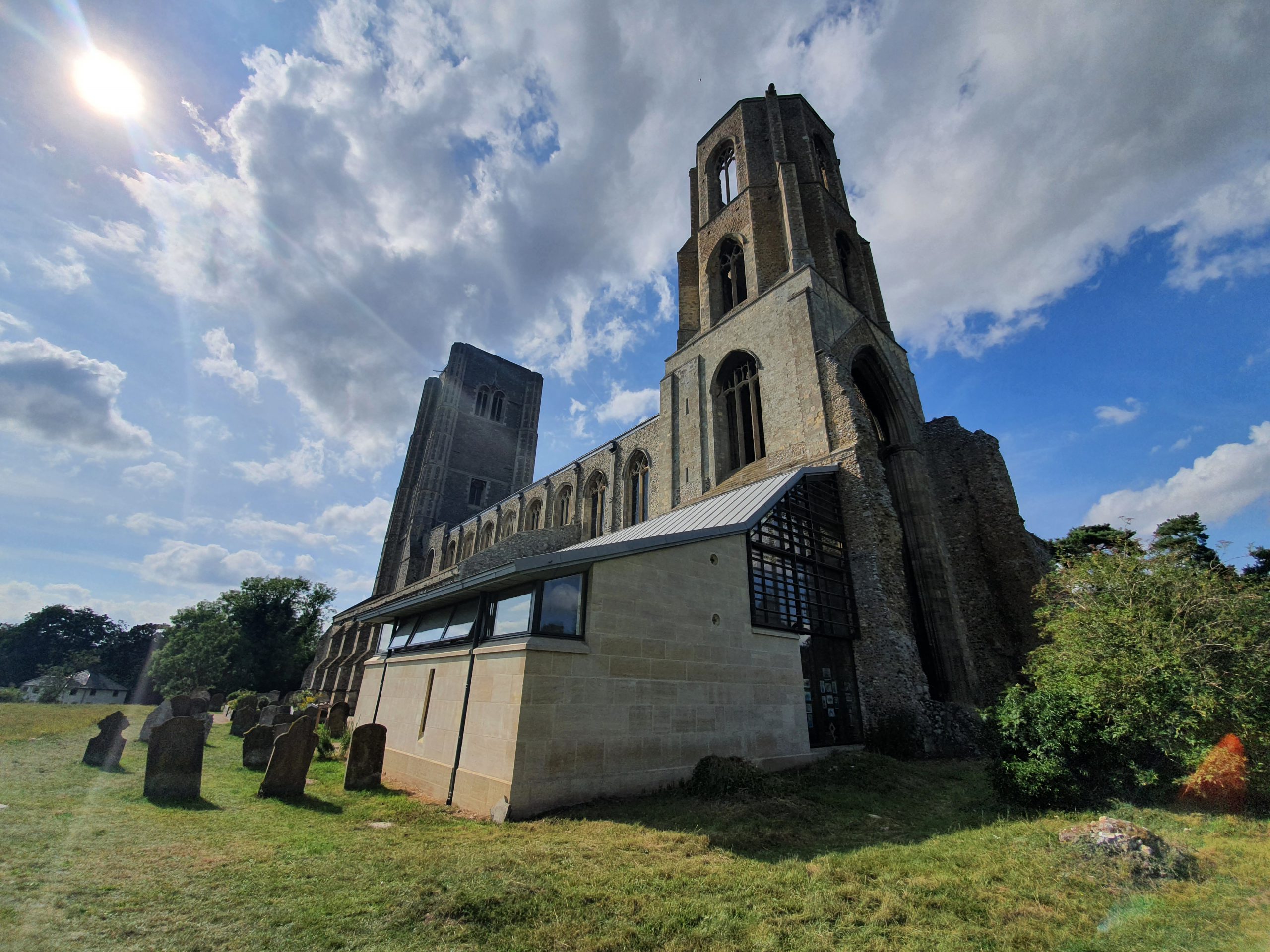
    As an aside, this is Wymondham Abbey which is very near to the pub and we had a very quick walk to.

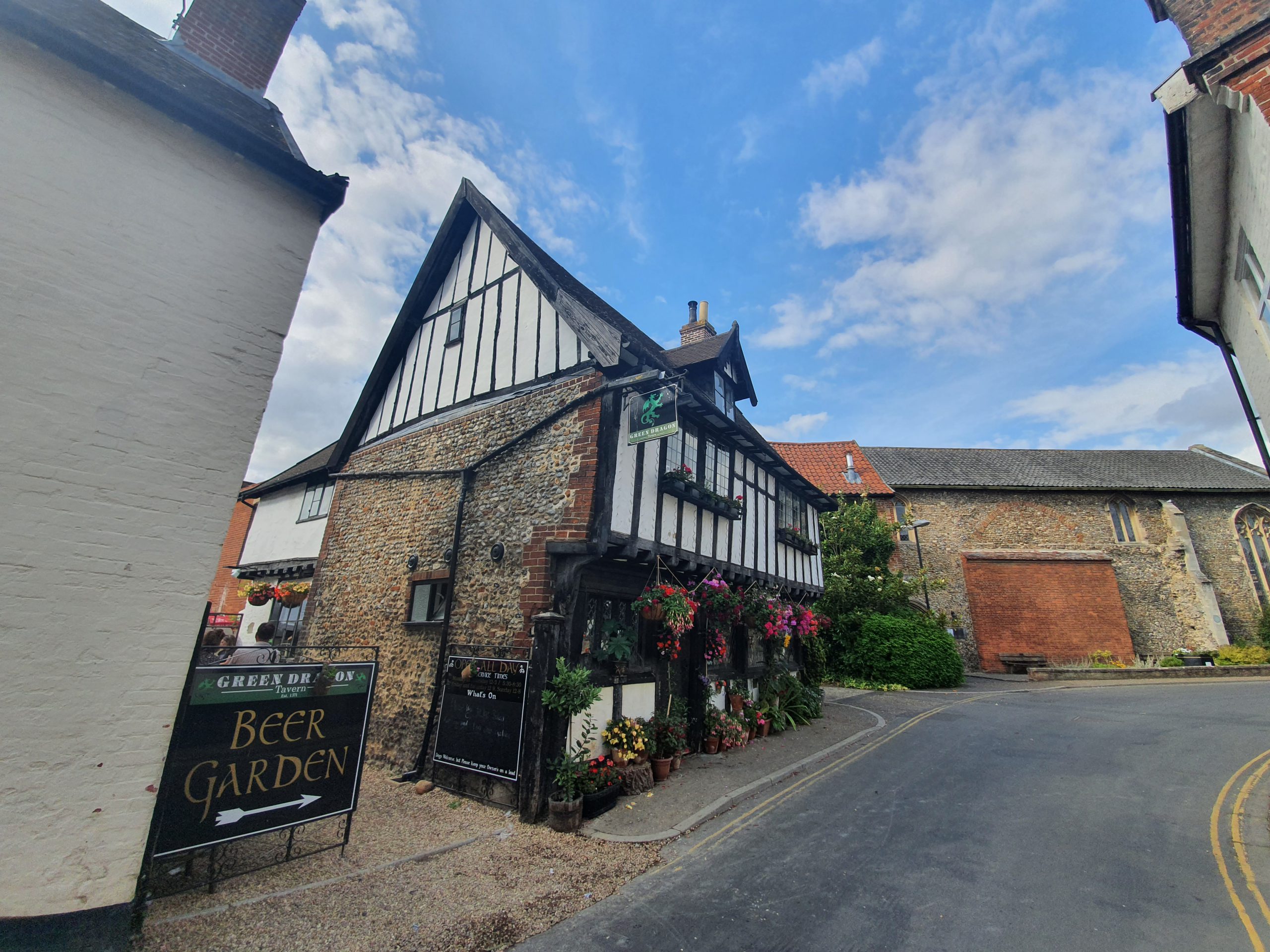
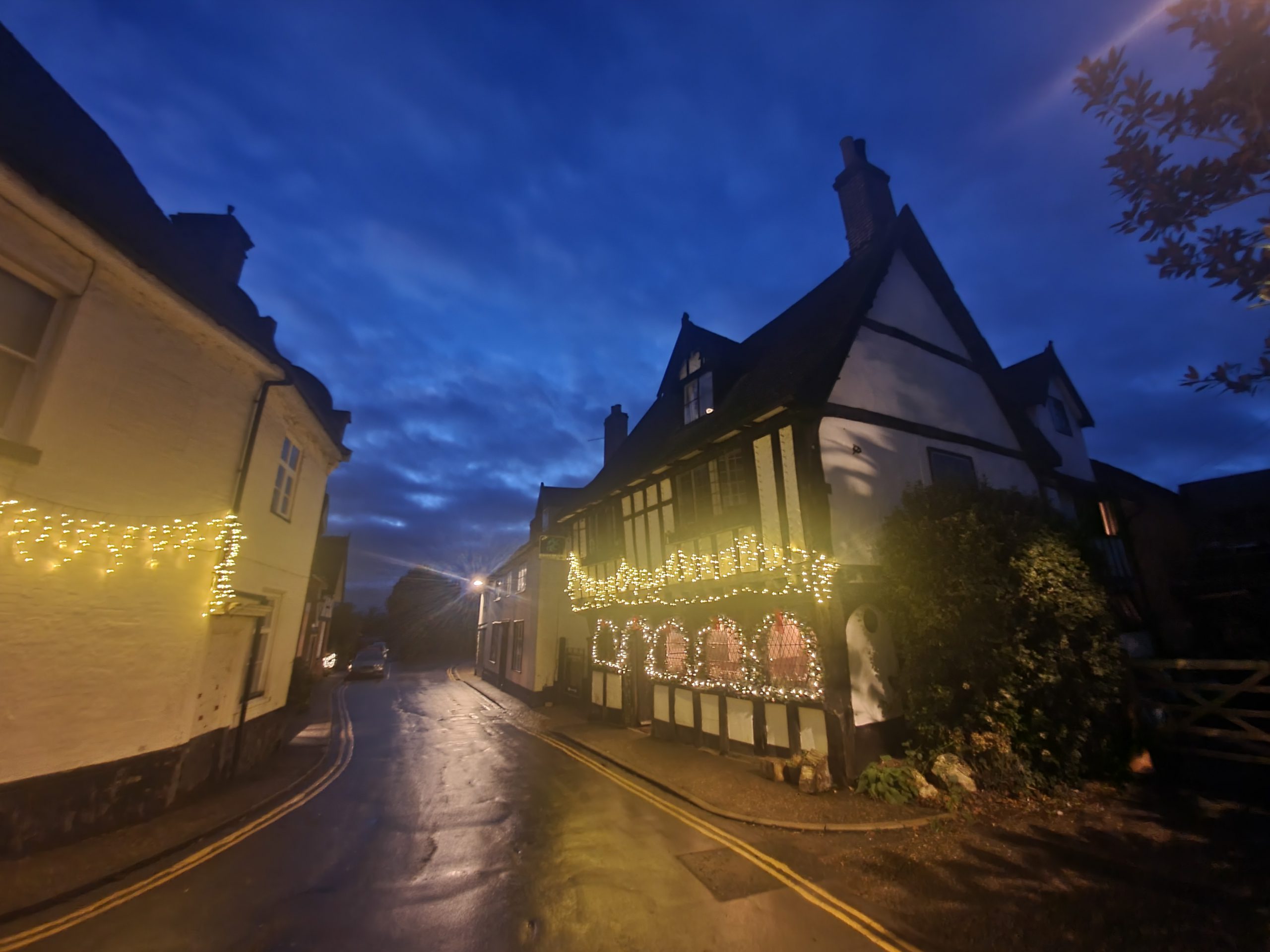
    And here’s the pub itself, looking quite festive.

    When I last visited it wasn’t possible to sit inside due to national restrictions in force at the time. That meant this time I was able to have a look at the interior and it’s certainly rich with history. It’s worth a visit for anyone interested in pub history and this is a CAMRA recognised pub interior. The room in which we were seated is at the front of the pub and was originally a separate shop area with its own fireplace. There’s a small hatch through to the main bar, which is a compact arrangement despite there being a relatively recent expansion to it.

    The beer tasted well kept, although the choice wasn’t as decadent as I would have ideally liked. However, the Farmers Blonde I had from Bradfield Brewery was acceptable and at the appropriate temperature. The service at the bar was attentive and polite, so the environment felt comfortable and welcoming. It wasn’t that busy in the pub, although they had a couple of larger groups in who were dining at what I assume were some sort of festive gatherings.

    We didn’t order food on this occasion, but I repeatedly hear that it’s of a decent quality and I can imagine that’s the case given the professionalism of the service that we had. It’s a lovely historic environment and definitely worth a visit, all really rather lovely.

  • Wymondham – Shapla

    Wymondham – Shapla

    After some meanderings around some nearby historic churches, in an attempt by Richard and I to complete our project of visiting every one in Norfolk (which I suspect will be never-ending as we have to work out how to get inside some churches as well as walking around them), we thought we’d sample some culinary delights in Wymondham.

    The Shapla seemed to be the best reviewed Indian restaurant in the town, so we opted for that and it has apparently been trading for over thirty years. We were welcomed promptly and although we didn’t have a reservation, we were found a suitable table. The interior decor was modern and appropriate, with the venue being clean and organised. Menus provided and the selection looked comprehensive, with traditional dishes that an Indian might have, as well as some chef specials. They didn’t have any lassi which I had hoped for, so I made do with a Coke to drink.

    The poppadoms were really rather lovely, or at least the assorted dips were. There was mango chutney, onion salad, tamarind sauce, apple pickle and mint sauce, all of which were decent and the apple pickle was a particular favourite as I haven’t had that before.

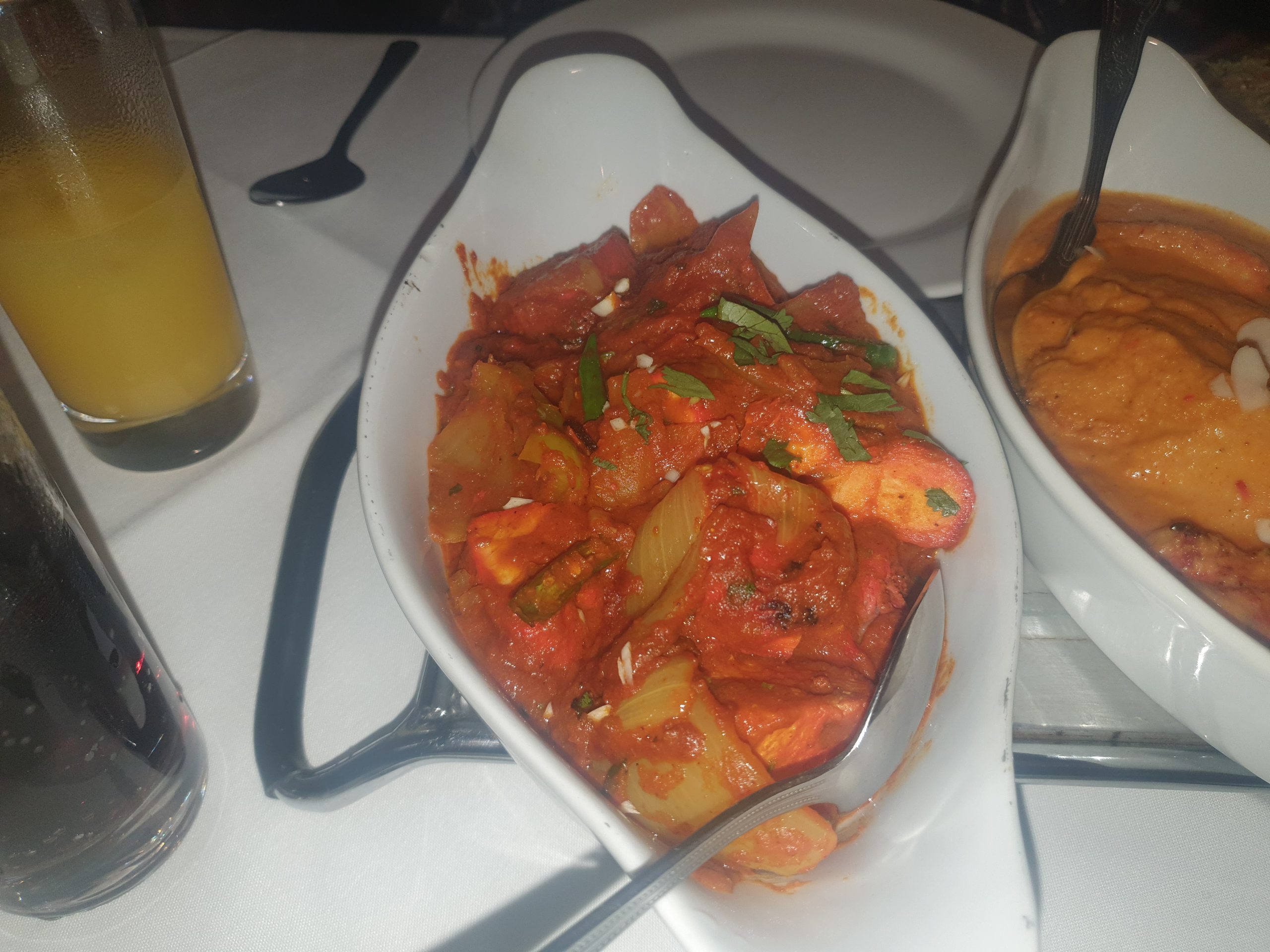
    The Roshoni Chilli Chicken Tikka which had some real heat to it from the chillies, but it wasn’t overpowering, nicely balanced. The chicken was tender and had a depth of flavour, with the shallots adding texture and the portion size being sufficiently generous. There was no lemon rice, my personal favourite, but the pilau rice I ordered was cooked well.

    Service was attentive throughout and it was a friendly environment, with the restaurant being relatively busy for a Sunday evening. I suspect that reservations are usually required for weekend evenings and there were a steady stream of customers picking up takeaway orders. All really rather lovely and I think that I’d come back here again.

  • Wymondham to Forncett Railway – The Swedes and Swimmers Line

    Wymondham to Forncett Railway – The Swedes and Swimmers Line

    The Wymondham to Forncett railway line was constructed between April 1880 and May 1881, allowing a connection between the Norwich to Cambridge line and the Norwich to London line. This was mainly for freight purposes, but there were passenger services also, with one station along the six-mile route, which was Ashwellthorpe railway station. Wymondham railway station had been open since 1845 and Forncett railway station since 1849, meaning this line only needed the construction of Ashwellthorpe, which opened in 1881.

    The line has since been nicknamed the Swedes and Swimmers Line, apparently after the food which the navvies building the railway were eating at the time. This was a combination of swedes, which aren’t particularly delicious in my opinion, and swimmers, which are Norfolk dumplings. I like the idea of naming lines after what the construction staff were eating and drinking at the time, the Crossrail line would be much better if it were called the Greggs and Coffee line.

    The service stopped for passengers in the days after the Second World War was announced and although it was only initially intended for the duration of the conflict, the trains never returned here for anything other than freight. The last freight service was on 4 August 1951 and the track was lifted in February 1952.

    Some of the line did last longer and I’ll quote the excellent page at Forncett History to tell the story:

    “A short two-mile spur of the line remained at the Wymondham end at Hethel until 1976 and in December 1954 this was used to stable the royal train overnight. The spur was subsequently used by Archie King for scrap railway carriages, the wooden superstructures being burnt before the steel undercarriage was broken up. Eventually the scrap dealer realised that there was a market for the more valuable pieces of ornament in the carriages, and they were removed before being torched. In 1967 the North Norfolk Railway rescued the Gresley Quad set of coaches from this scrapyard. In 1970 the actual carriage that had been robbed in the Great Train Robbery seven years earlier was burned here, in the presence of police and Post Office representatives, in order to avoid it becoming the target of souvenir hunters.”

    This is Wymondham railway station looking in the Norwich direction, and this railway line spurred off to the left around 250 metres down the line. There’s nothing left of the Swedes and Swimmers line today other than a few bridges, some destroyed bridges and lots of embankments along the route. One thing that became evident to me whilst looking at what was left is just how much soil had to be moved to create those embankments, who says Norfolk is flat?

    For anyone wanting to walk a section of the former line, a chunk can be reached by going down Lizard Lane in Wymondham. On my expedition along the railway line I was accompanied by Liam, along with the two younger railway surveyors, Dylan and Leon. They were very helpful indeed, although I think I might have exhausted them with railway history by the end.

    An information board about the Lizard.

    The railway embankment is visible at the rear of this photo, and there’s a circular path for those who want to walk around this area.

    This is where the railway line once connected into the Wymondham to Norwich line, now overgrown and also fenced off at the rear.

    The closed line is the one which goes off to the right on this map.

    This entire section is on a raised embankment, little changed other than they’ve entirely lifted the track and all evidence of it. Which is quite a bit change I suppose, but the embankment here is intact.

    This section of the railway ends here as the A11 has been built in front of it.

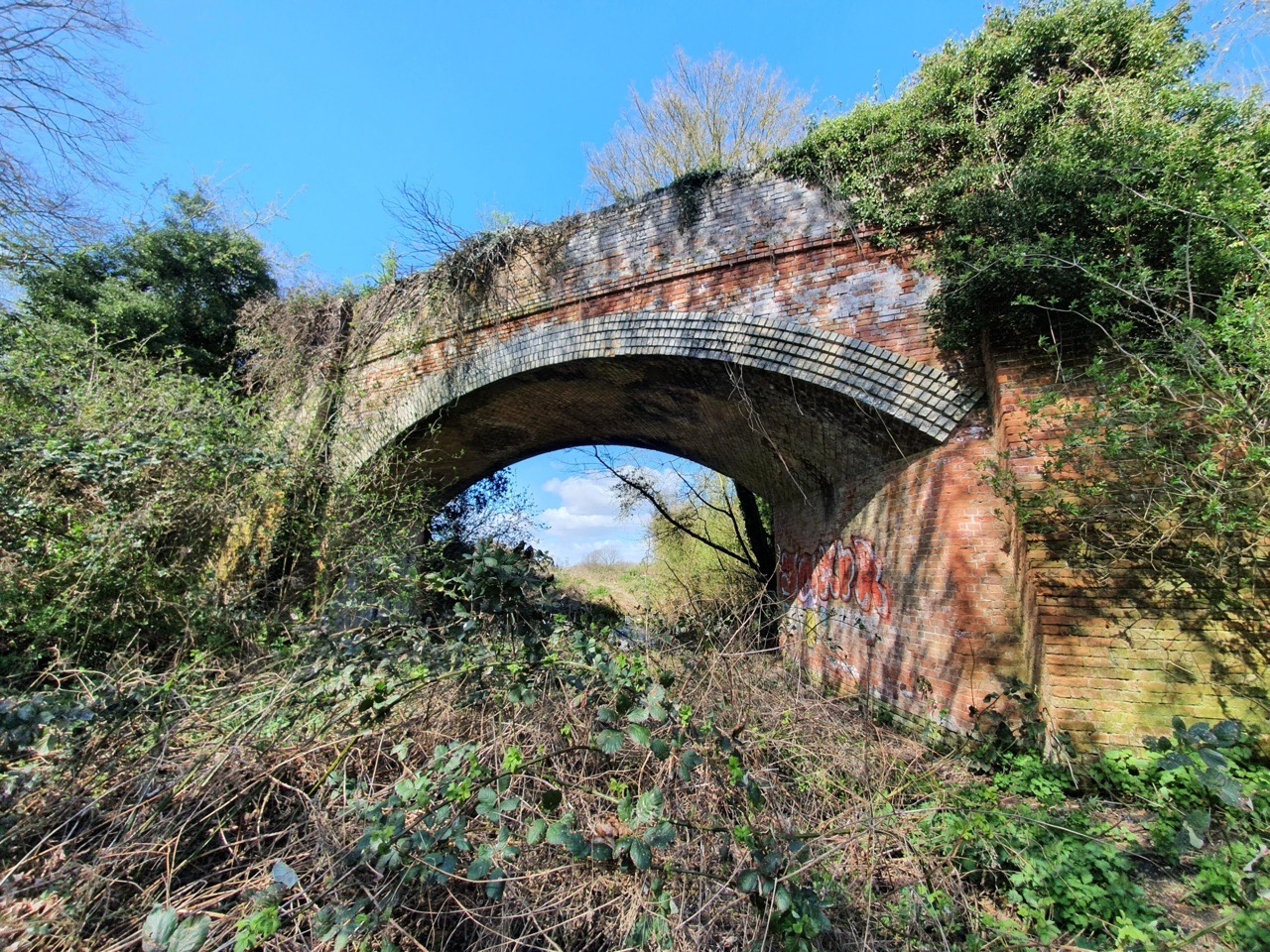
    The railway bridge here is intact and it’s possible to walk over it, although that requires fighting through bushes and brambles.

    The side of the bridge, where Dylan randomly found a Geocache. I thought it was some abandoned rubbish, but he clearly has a better eye for hidden treasure than I do.

    The A11 is around 50 metres in front at this point.

    The A11 now cuts through here from north to south.

    This photo was taken on a gazebo type structure, showing the embankment. At this stage we walked back to the start, ready to go to the next section of the former line.

    This photo was taken in the staff car park of Goff Petroleum, where the line once went straight through.

    Looking in the other direction, there’s not much evidence of the line here in the car park….

    We moved on a little at this point, this photo looks back towards Goff and a huge gravel pit has appeared in recent decades. The former route of the line is visible snaking through the middle of the photo, although the section in the foreground has been removed.

    I took this photo, and the one above, on the railway bridge which is on Bridge Road. This one shows the view from the other side of the bridge.

    This is Long’s Wood, an area of land given to the community by Dennis Long in 1994, and what a rather lovely contribution it is. The railway line goes through the centre of the wood and there’s also a trail that children (and indeed adults) can follow. Dylan and Leon liked looking for the various 20 different bosses around the site, I think we found just under half of them.

    The line further down in Long’s Wood.

    This is the railway bridge at the northern end of Long’s Wood.

    Looking over the bridge towards Wymondham.

    Underneath the bridge, which today seems rather superfluous and isn’t used by traffic of any kind, but perhaps it was once useful for farm machinery.

    Now rather moist, this is the former track under the bridge.

    And this is what that bridge crossing looked like 100 years ago on the map.

    Moving a little further down the line, this is the view of the bridge at Wymondham Road.

    And looking the other way.

    This section of bridge on Ashwellthorpe Road survives on one side, with the railway then running parallel to the road for a short distance.

    The Blacksmiths Lane bridge.

    The bridge at Blacksmiths Lane from the other side.

    At Blacksmiths Lane, the railway went across this field, but there’s no evidence of that unless looking on overhead views, where it’s sort of visible in crop markings.

    The railway came sweeping in near to High Road / Blacksmiths Lane, in this place not quite meeting the road, although it crossed it a little further up.

    The bridge at High Road / Blacksmiths Lane.

    This is all that remains of the Fundenhall Road bridge, what looks from this angle just like a small vertical section of stone.

    From the other side, the support for the bridge is more substantial than it initially appears.

    The other side of the bridge on Fundenhall Road.

    This is what that section looked like on the map.

    The Bayes Lane crossing looking away from Wymondham, with my photo taking opportunity limited here as a family were having a picnic. I thought they might consider it strange if I took a photo of them busily eating their lunch.

    The Bayes Lane crossing looking towards Wymondham.

    I’m slightly surprised that they haven’t taken down this section at Chequers Hill, it’s a large section of viaduct that is quite near to where the Norwich to London mainline is. I think it would be possible to get up the right-hand side and they’ve put fencing on top of the bridge there to stop people falling off the structure, but I decided not to try and scramble up as that often leads to me scrambling back down again soon after in a way that isn’t ideal. I’m really not a born climber, but I might see if Liam fancies popping up there to get some photos in the future. He doesn’t seem to slide back down slopes in the way that I do.

    The map of Chequers Hill.

    The other side of the bridge at Chequers Hill.

    The bridge which carries the Norwich to London mainline.

    And this is the track of the mainline, looking towards Norwich.

    And this is where the former junction where the lines met, although nearly all trace of this has now gone.

    Although significant chunks of the route can be walked along, there are also sections across private fields where farmers wouldn’t appreciate people trekking. The line was six miles long, but anyone wanting to walk the route would now need to walk probably ten miles, as there would be some diversions along the road in several places. For those who like railway heritage, it’s an interesting piece of transportation history though. In terms of the walk, the sections at The Lizard and Long’s Wood are perhaps slightly hidden treasures in the countryside.

    I often write that closing railway stations is a mistake, and it’s clear that there was very limited passenger traffic to be had at either Ashwellthorpe or Forncett. It wouldn’t be too challenging to put the Forncett railway station back if there was ever a demand, but there clearly isn’t at the moment with such a small population. It would also slow down the Norwich to London trains, where there is already pressure on them to speed up as part of the 90 minute journey pledge.

    However, removing the track does seem like a mistake to me, as this was a potentially very useful line that connected the two lines without going into Norwich. Even if passenger services aren’t necessarily required via something like Diss to Thetford, it might well have been useful for Greater Anglia to have been able to move trains about with a little more ease. And if there was an obstruction anywhere around Norwich, this might have performed a useful function in moving trains. Also, it might not have been unhelpful to connect Thetford, Attleborough and Wymondham to stations such as Diss and Stowmarket, otherwise passengers have to go into Norwich or Cambridge to make that connection.

    There will be more in another post about the three railway stations that this line was served by, which were Wymondham, Ashwellthorpe and Forncett. Wymondham is still there and in use, Ashwellthorpe railway station is now a private residence and Forncett is no longer a station, but the track is still the mainline. My story about those railway stations might drone on for quite a while, hence why that can wait for another post.

  • Wymondham – Wymondham Abbey (Robert Dixon Print)

    Wymondham – Wymondham Abbey (Robert Dixon Print)

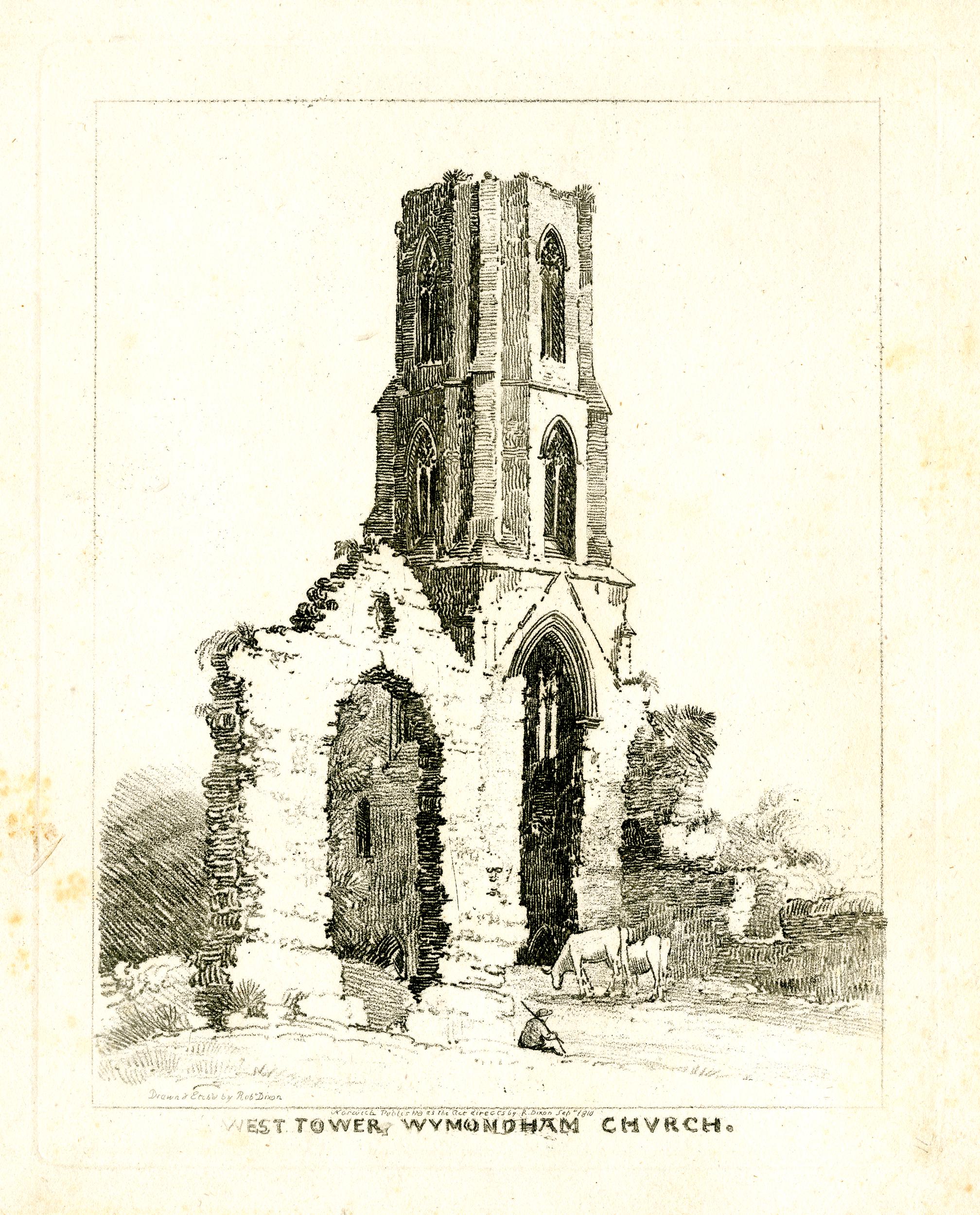
    This print (© The Trustees of the British Museum) is in the collections of the British Museum, created by Robert Dixon (1780-1815) in 1810. Dixon was a Norwich man, who lived in Tombland for much of his life, working as a set painter at the Theatre Royal and also earning money house painting. He was trained at the Royal Academy, also working as an architectural draughtsman, specialising in landscapes from around Norfolk and particularly coastal scenes.

    The print was purchased from James Reeve in 1902, a curator of the museum who collected works by members of the Norwich School of artists. Looking at the print, not much has really changed over the last 200 years, although fortunately the cows have been moved away from the churchyard. That’s the last thing I’d want when meandering around looking at gravestones.

    Here’s what the tower looks like today.

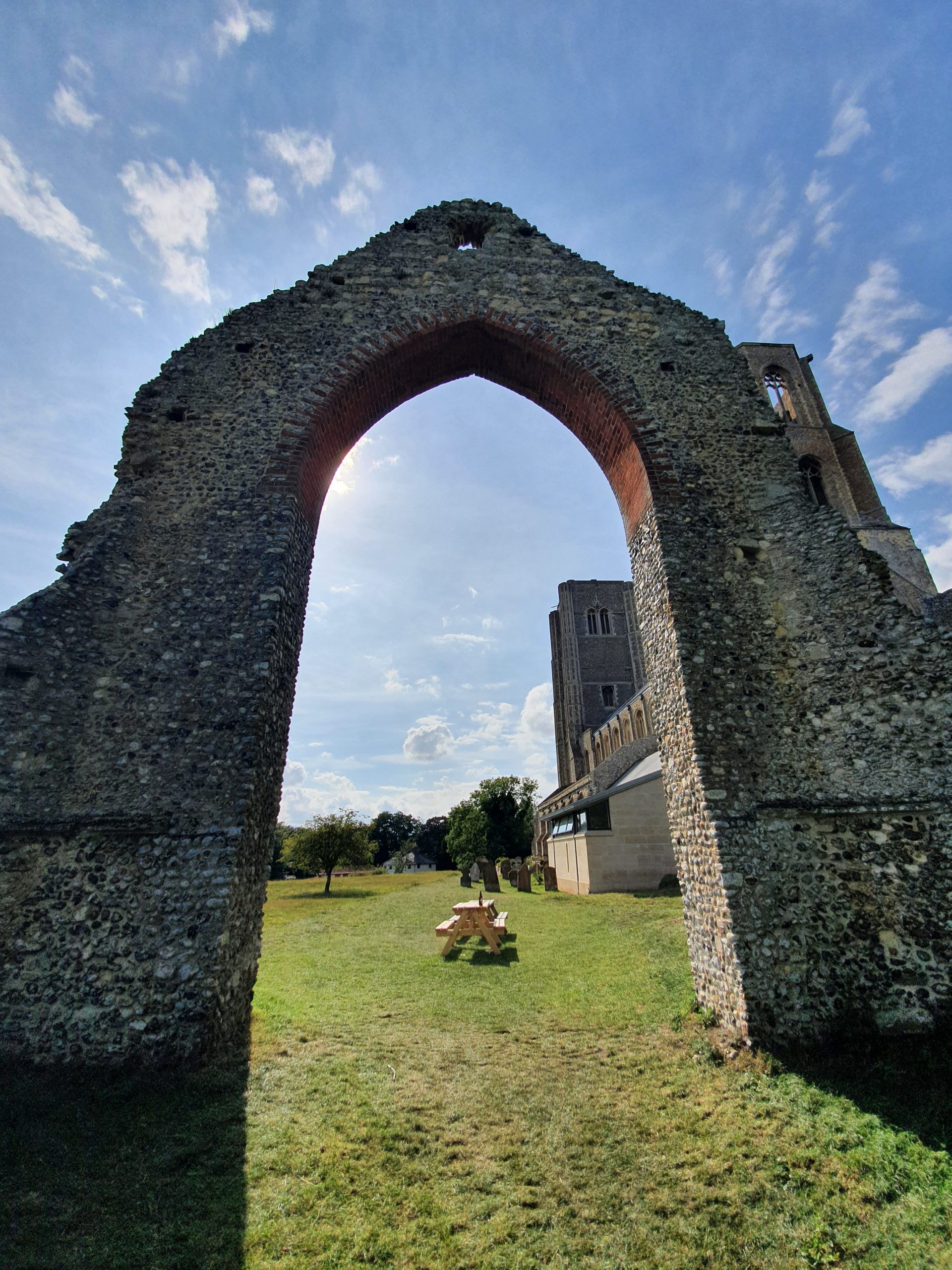
    And the arch which is on the print, still in nearly the same condition, a testament to how well it must have been built.

  • Wymondham – Name Origin

    Wymondham – Name Origin

    Following my little visit to Wymondham yesterday, I had a look at what The Concise Oxford Dictionary Of English Placenames said about its name origin. The town name is interesting insomuch it isn’t pronounced as it looks, it’s something more akin to ‘win-dum’.

    Wymondham, Norfolk. Wimundham in Domesday Book, Wimundehamia in 1150, Wimundeham in 1168. Wigmund’s ham.

    So this is an Anglo-Saxon name, simply meaning the settlement or village of Wigmund, which wasn’t an uncommon name at the time. It does look like it would have pronounced as it was spelled back then, with the corruption of the town name evolving over the centuries into its shorter version today.

  • Wymondham – Wymondham Abbey (William d’Aubigny)

    Wymondham – Wymondham Abbey (William d’Aubigny)

    This tablet marks that William d’Aubigny is buried near to this spot at Wymondham Abbey, the founder and benefactor of the institution in 1107. It’s not known exactly where he was buried, but it was likely in the section of the abbey used for monks, which was taken down following the Dissolution of the Monasteries.

    William d’Aubigny was likely born just after the Norman invasion of England and he was born in France, near to the village of Saint-Martin-d’Aubigny. He received the support of King Henry I, who gave him great swathes of land across Norfolk. When King Stephen ascended to the throne in 1135, William retained his power and influence at the Royal Court, but he died a few years later in 1139 and his body was brought back to Wymondham to be buried.

  • Wymondham – Wymondham Market Cross

    Wymondham – Wymondham Market Cross

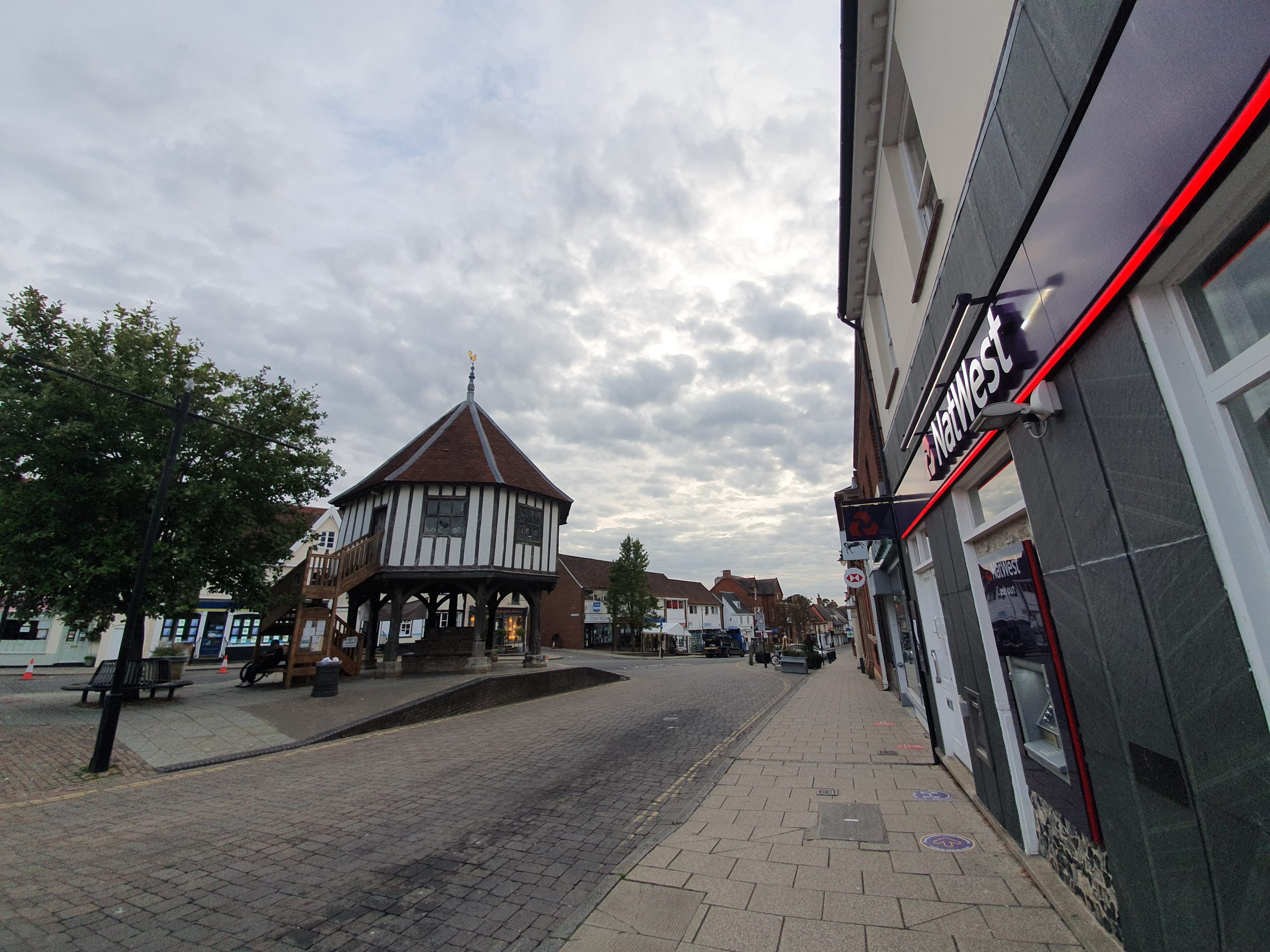
    Wymondham Market Cross was built between 1617 and 1618, replacing the previous structure which had been destroyed by the great fire of Wymondham in 1615.

    There’s a staircase that allows access to the top of the building. During medieval times, this would have been the site of the market, where some punishments took place and official announcements were made.

    There’s not much decoration to the structure, but the market cross has become one of the symbols of the town. During the nineteenth century, the town’s subscription reading room was located here. The Thetford & Watton Times reported in 1899 that the reading rooms were under-funded and that the entire structure was in a “somewhat dilapidated condition”.

    H. Rider Haggard, the Norfolk born author, presided at a fund-raiser in 1899 to help finance the repairs. At a speech at the event, he explained how markets were often originally held inside a church, but they could be loud and disrupting so they tended to be moved to a more public area which would be marked by a market cross. He added that if there was a proclamation of a new Monarch, a felon to be executed, a martyr to be called to sacrifice his life for God or a pageant to take place, then it would occur at the market cross.

    Talking about the Kett brothers who led Kett’s Rebellion, with one being hanged at Wymondham Abbey, he noted that “in those days they would be called rebels and were hanged in chains, nowadays they would be called moderate liberals”. With reference to the reading rooms that were in the market cross, Haggard noted that 84% of the books taken out of the Norwich Free Library were fiction and he considered this a very good thing. He added that free libraries provided books which were good, honest works which amused and informed readers.


    The market cross in 1950.

  • Wymondham – Green Dragon

    Wymondham – Green Dragon

    This is the first time that I’ve been to the Green Dragon in Wymondham, a Good Beer Guide listed pub which is also one of the oldest in the county. The owners say that it has been here since 1371, no doubt used by those involved in the building and operation of Wymondham Abbey.

    The pub itself isn’t open for inside customers at the moment, it’s all a bit difficult to manage any safe form of distancing. What is open is the beer garden and there’s a staff member at the entrance guiding customers to their tables, which usually have to be pre-booked. The pub has also made clear what to do and where to wait, with track and trace being in operation here.

    The beer selection of the day, with no darker beers available. The staff member said that they had been getting several requests for a dark beer, but I don’t know whether it was a conscious decision not to get one, whether there’s one waiting to go on or whether they can’t get hold of anything exciting. I didn’t like to ask and sound like a difficult customer…..

    The beer garden, all nicely laid out, clean and organised. This is apparently usually where music performances, beer festivals and the like take place. It’d be interesting to see the interior when they’re open, the photos I’ve seen certainly make it look quirky and historically interesting. The listed building record notes that the current building is likely from the mid-fifteenth century and was probably constructed as a shop and private residence.

    The Lavender Honey from Wolf Brewery, well-kept, at the appropriate temperature and with a clean taste with a strong note of lavender and honey. I’m not sure that I would have wanted two, it was a bit insipid for my liking, but the flavours were interesting.

    The pub was having some problems with its logistics, we waited 24 minutes for a round and when it arrived they’d brought out one too many beers. However, this was fine, they gave it away free, so I was enormously forgiving. Although it meant I had another pint of Lavender Honey. The other pint was Trawler Boy from Green Jack Brewery, I didn’t get much from it at all, although it was smooth and well-kept.

    Service was efficient throughout, with the forgivable error of one round probably getting lost in their ordering system. Staff at the pub were engaging, friendly and polite, always welcoming. I understand a couple of pubs in the town are still closed at the moment due to social distancing not being possible, but I suspect this pub would have been busy anyway. There’s a community feel evident to it and someone new to the area could likely come to this pub and feel welcome. Staff knowledge on the drinks selection was a bit weak, but, being fair again, these are challenging times and the set-up is inevitably different.

    I didn’t order food, but others at the table did, and it was of a decent quality and not unreasonably priced. I thought the packaging look a little random at first, but when it was opened up it was well presented and the hot elements kept away from the cold. It certainly saves on the challenges of washing-up at the moment.

    All told, a welcoming pub, although for my own tastes, I would have preferred a wider selection of beers as it felt rather unbalanced. Unfortunately, the pub doesn’t respond to their negative TripAdvisor reviews, I like reading them to get a measure of how they react to problems.


    And a photo of the pub from the 1950s…..

  • Wymondham – Wymondham Abbey (Thomas Betts)

    Wymondham – Wymondham Abbey (Thomas Betts)

    This gravestone caught my eye as it probably doesn’t have long left, the back is heavily eroded and there’s now a hole at the top.

    Surprisingly, the front of the gravestone is still partly readable. I think it’s the Thomas Betts who died on 28 June 1861 and was buried here on 4 July 1861. The probate records suggest that he didn’t die a wealthy man, with only minimal assets. Assuming this is the correct Thomas Betts, which I think is, he lived on Damgate Street with his family and so he would have looked out onto Wymondham Abbey.

    The 1861 census was taken a few months before he died, when he lived with his wife Mary Ann and his children, Thomas, Sarah Ann, Harriet and Rosa. He worked as a carrier in the town, as did his son of the same name. Betts sadly died at the age of 43. At least, for the moment, his gravestone remains readable and in the churchyard of the beautiful Wymondham Abbey.

  • Wymondham – Wymondham Abbey

    Wymondham – Wymondham Abbey

    Wymondham Abbey sits almost a little adrift in the local landscape, a former Benedictine monastery which is still in use as a church. It’s imposing and impressive with its two towers and a more recent modernisation is the latest part of the building’s evolution. Work started on the building at the beginning of the twelfth century and the first main section of the monastery was completed by 1130.

    There are interpretation boards around the site that are sensibly placed and have plenty of useful information on them.

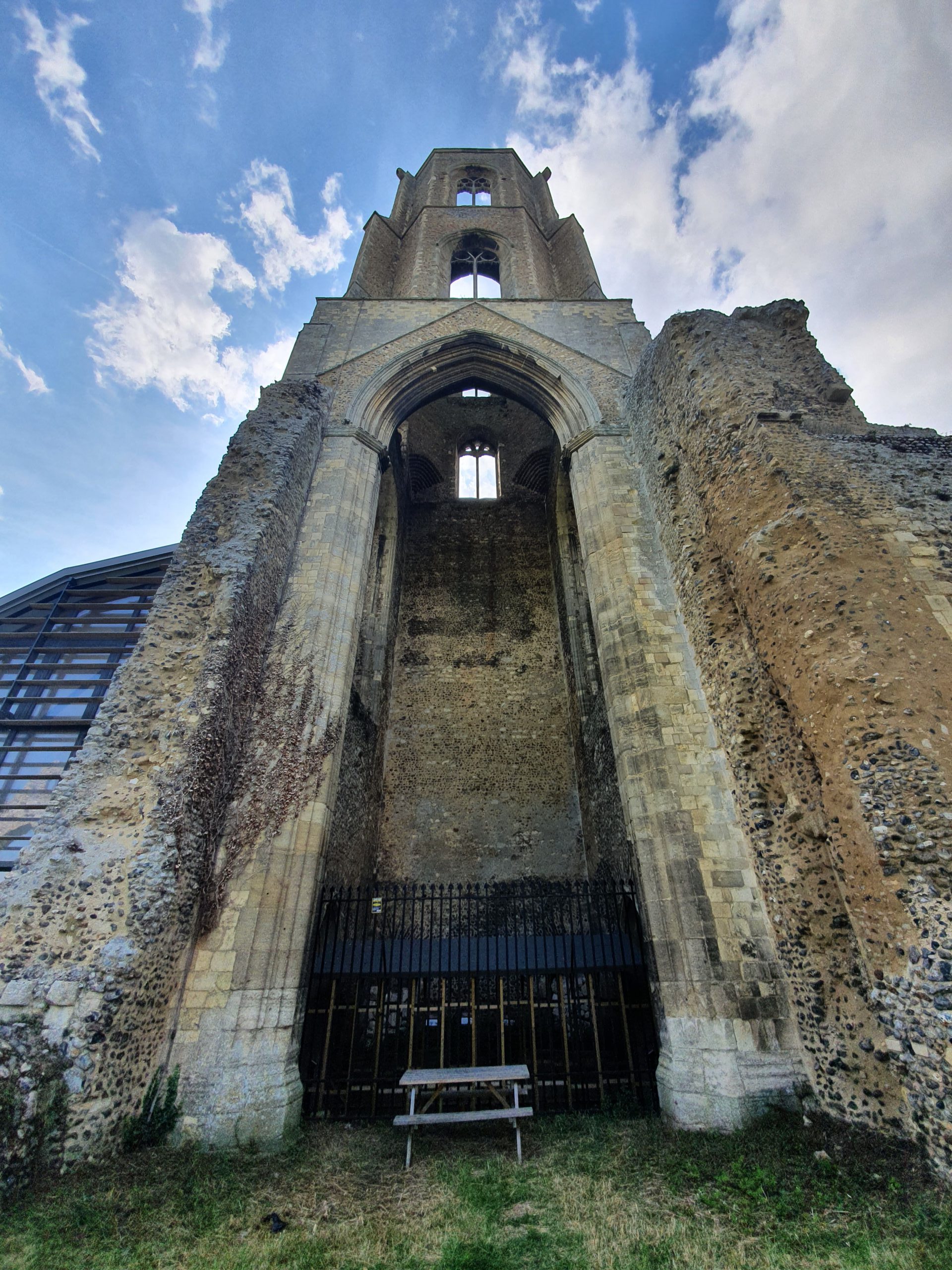
    This is the west tower which stands 42 metres high, although it was initially intended to be even higher before the money ran out. It was also where William Kett, brother of Robert who led a rebellion in 1549, was hanged from.

    The west window was added in the 1450s and this turned out to be a bit of a mistake as the tower was at risk of falling down. So, they put a new central pillar through the middle of the window to help to support the structure. Not the most elegant perhaps, but it works.

    This is what is left of the Monks’ Tower, or the east tower, which was built in 1380 to replace the earlier Norman tower that was falling down. Although this is now the end of the church, it previously went back further and this central area is where the choir stalls were once located. The monastery had been used by the town and the monks, so when the Dissolution of the Monasteries came it was decided to take down the monks’ church and leave the rest of the main building. The structure started to fall into some disrepair after this, but Queen Elizabeth I came by in 1573 and she pledged money to help fix the problems.

    This is the entrance to the chapter house of the monastery and the cloisters would have sat behind this. The complex was large, and although it has been re-landscaped the area hasn’t been built on. The church’s interior isn’t currently open given the national situation, but hopefully it’ll be back to its normal opening hours again soon.