Tag: Wymondham Abbey

  • Wymondham – Wymondham Abbey (Robert Dixon Print)

    Wymondham – Wymondham Abbey (Robert Dixon Print)

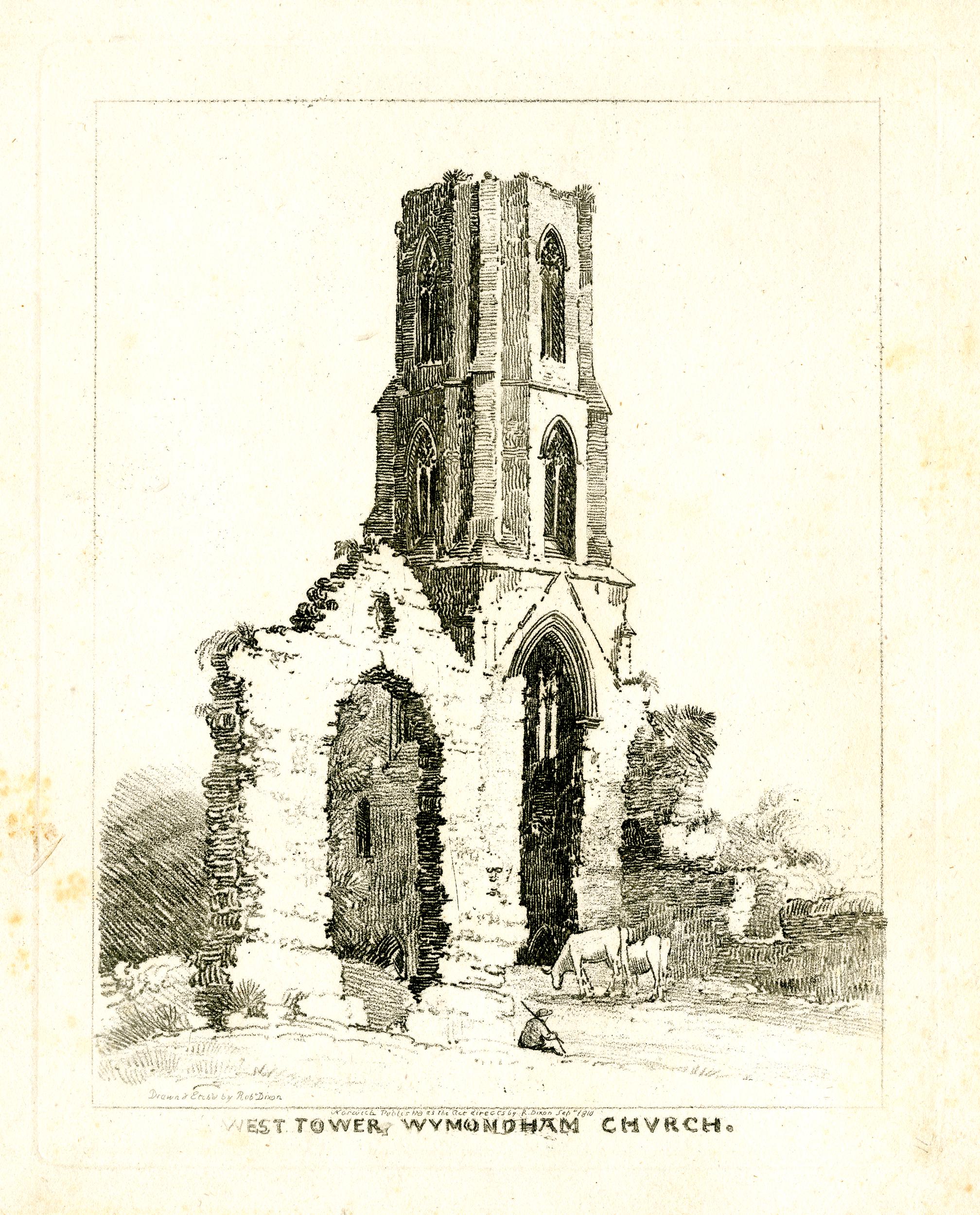
    This print (© The Trustees of the British Museum) is in the collections of the British Museum, created by Robert Dixon (1780-1815) in 1810. Dixon was a Norwich man, who lived in Tombland for much of his life, working as a set painter at the Theatre Royal and also earning money house painting. He was trained at the Royal Academy, also working as an architectural draughtsman, specialising in landscapes from around Norfolk and particularly coastal scenes.

    The print was purchased from James Reeve in 1902, a curator of the museum who collected works by members of the Norwich School of artists. Looking at the print, not much has really changed over the last 200 years, although fortunately the cows have been moved away from the churchyard. That’s the last thing I’d want when meandering around looking at gravestones.

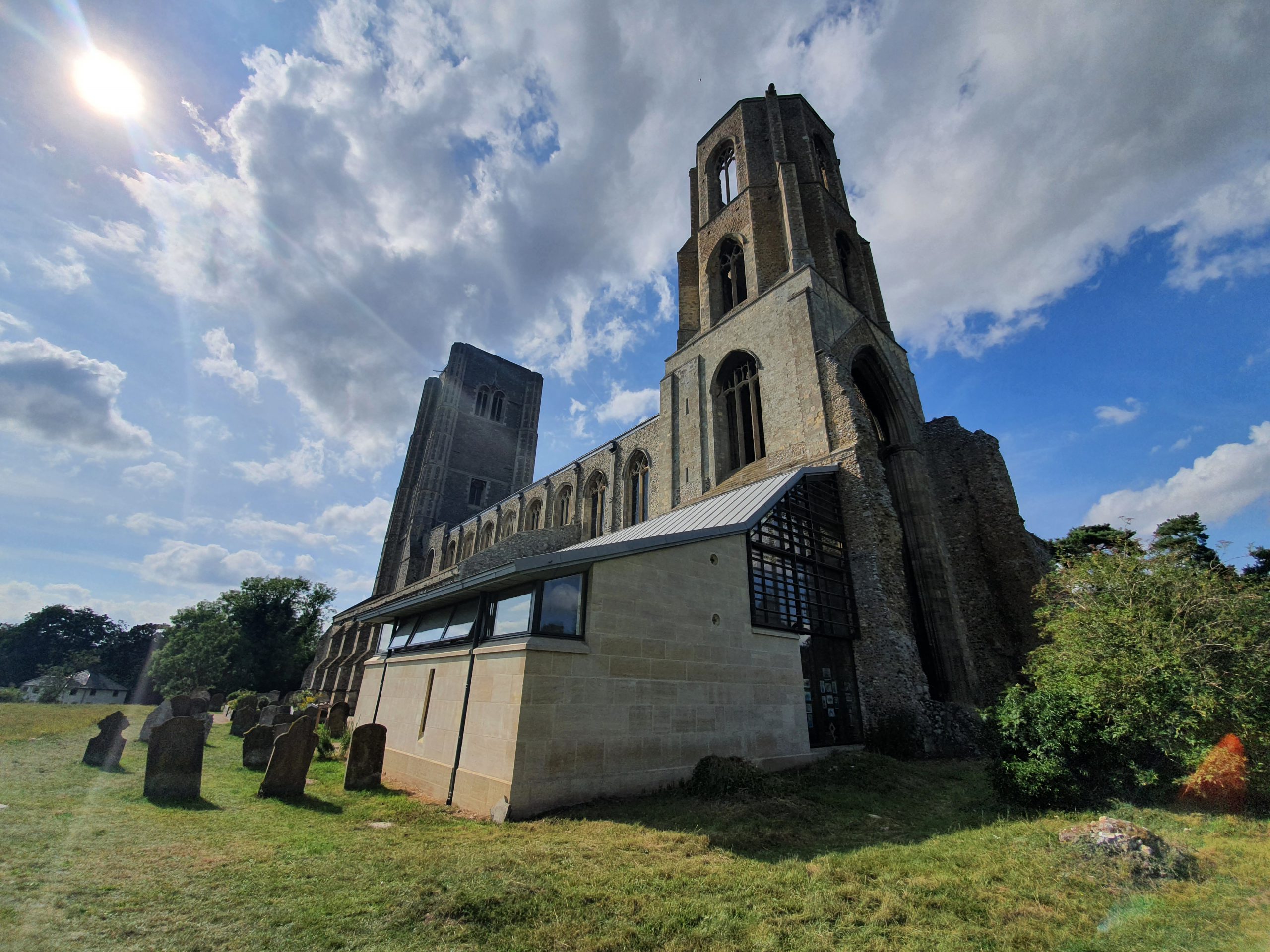
    Here’s what the tower looks like today.

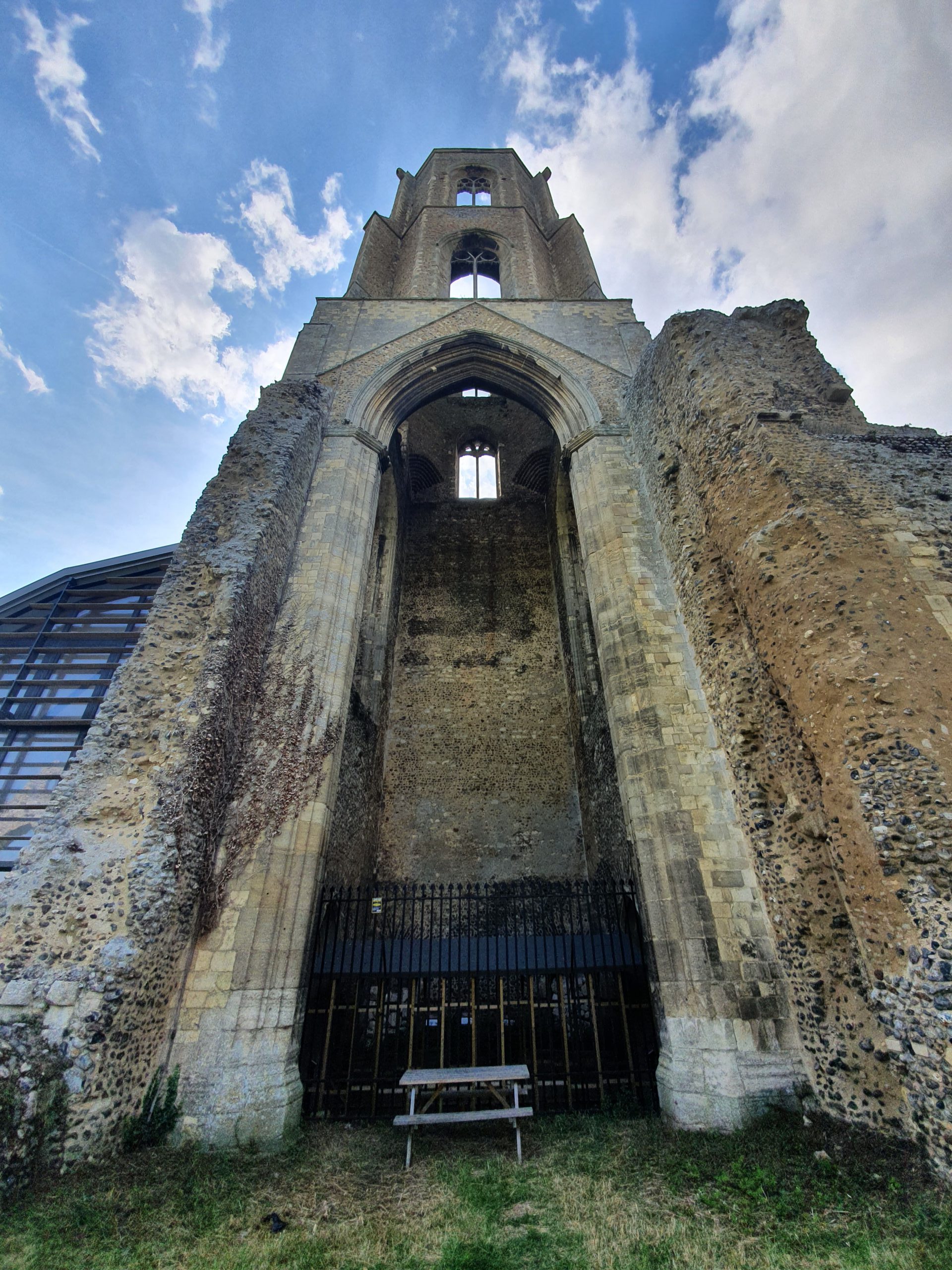
    And the arch which is on the print, still in nearly the same condition, a testament to how well it must have been built.

  • Wymondham – Wymondham Abbey (William d’Aubigny)

    Wymondham – Wymondham Abbey (William d’Aubigny)

    This tablet marks that William d’Aubigny is buried near to this spot at Wymondham Abbey, the founder and benefactor of the institution in 1107. It’s not known exactly where he was buried, but it was likely in the section of the abbey used for monks, which was taken down following the Dissolution of the Monasteries.

    William d’Aubigny was likely born just after the Norman invasion of England and he was born in France, near to the village of Saint-Martin-d’Aubigny. He received the support of King Henry I, who gave him great swathes of land across Norfolk. When King Stephen ascended to the throne in 1135, William retained his power and influence at the Royal Court, but he died a few years later in 1139 and his body was brought back to Wymondham to be buried.

  • Wymondham – Wymondham Abbey (Thomas Betts)

    Wymondham – Wymondham Abbey (Thomas Betts)

    This gravestone caught my eye as it probably doesn’t have long left, the back is heavily eroded and there’s now a hole at the top.

    Surprisingly, the front of the gravestone is still partly readable. I think it’s the Thomas Betts who died on 28 June 1861 and was buried here on 4 July 1861. The probate records suggest that he didn’t die a wealthy man, with only minimal assets. Assuming this is the correct Thomas Betts, which I think is, he lived on Damgate Street with his family and so he would have looked out onto Wymondham Abbey.

    The 1861 census was taken a few months before he died, when he lived with his wife Mary Ann and his children, Thomas, Sarah Ann, Harriet and Rosa. He worked as a carrier in the town, as did his son of the same name. Betts sadly died at the age of 43. At least, for the moment, his gravestone remains readable and in the churchyard of the beautiful Wymondham Abbey.

  • Wymondham – Wymondham Abbey

    Wymondham – Wymondham Abbey

    Wymondham Abbey sits almost a little adrift in the local landscape, a former Benedictine monastery which is still in use as a church. It’s imposing and impressive with its two towers and a more recent modernisation is the latest part of the building’s evolution. Work started on the building at the beginning of the twelfth century and the first main section of the monastery was completed by 1130.

    There are interpretation boards around the site that are sensibly placed and have plenty of useful information on them.

    This is the west tower which stands 42 metres high, although it was initially intended to be even higher before the money ran out. It was also where William Kett, brother of Robert who led a rebellion in 1549, was hanged from.

    The west window was added in the 1450s and this turned out to be a bit of a mistake as the tower was at risk of falling down. So, they put a new central pillar through the middle of the window to help to support the structure. Not the most elegant perhaps, but it works.

    This is what is left of the Monks’ Tower, or the east tower, which was built in 1380 to replace the earlier Norman tower that was falling down. Although this is now the end of the church, it previously went back further and this central area is where the choir stalls were once located. The monastery had been used by the town and the monks, so when the Dissolution of the Monasteries came it was decided to take down the monks’ church and leave the rest of the main building. The structure started to fall into some disrepair after this, but Queen Elizabeth I came by in 1573 and she pledged money to help fix the problems.

    This is the entrance to the chapter house of the monastery and the cloisters would have sat behind this. The complex was large, and although it has been re-landscaped the area hasn’t been built on. The church’s interior isn’t currently open given the national situation, but hopefully it’ll be back to its normal opening hours again soon.