
Tag: World of Volvo

  • Gothenburg Trip – Day 4 (Gothenburg World of Volvo Museum – Volvo Bus B513)

    Gothenburg Trip – Day 4 (Gothenburg World of Volvo Museum – Volvo Bus B513)

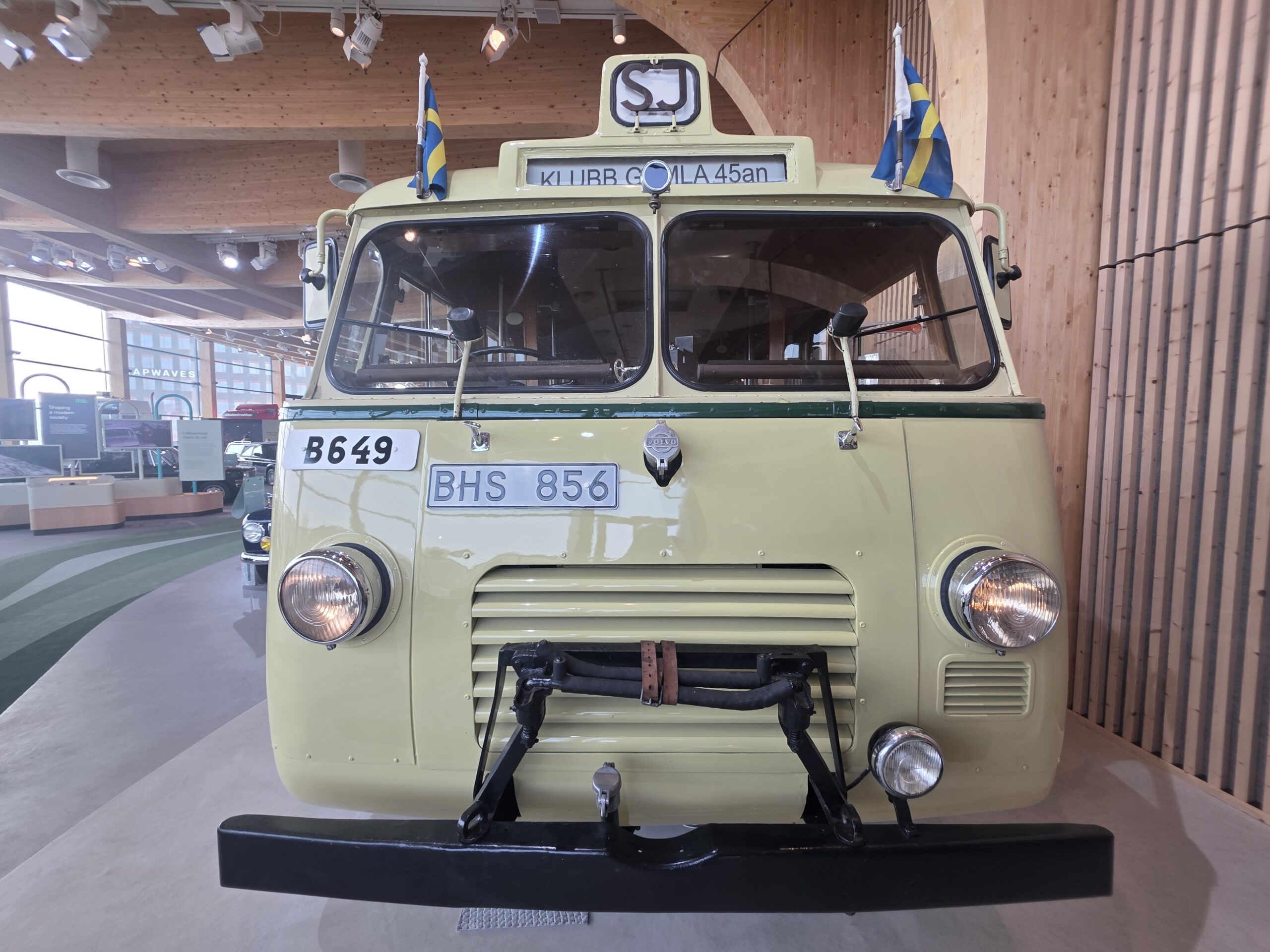
    The Volvo B513 was a bus chassis introduced by Volvo in the mid-1940s, part of the company’s early post-war range of commercial vehicles designed for public transport and regional services. First appearing around 1946, the B513 was typically used for single-deck buses built by independent body manufacturers, which meant the final vehicles could look quite different depending on the coach-builder and their particular favourite arrangements. These buses were widely used in Sweden and Scandinavia for local routes, school transport and rural services, and some versions could seat around 35 to 40 passengers.

    This particular bus had a little accident in the late 1950s, but it was fully restored before being left unloved in the Swedish Railway’s garage in Dalsjöfors, near to Borås. It was forgotten about until it was restored some considerable time later and returned to pristine condition.

    My own view on these things is that I would have rather they wheeled in the bus which had been left unloved and with bits falling off it. Personally, I like authenticity and to see the bus as it last was, with all of its faults and missing bits. I rather feel that I’m looking at a modern copy with these things, although I’m sure huge amounts of work got it to look as it currently does.
  • Gothenburg Trip – Day 4 (Gothenburg World of Volvo Museum – ÖV4, the Very First Volvo)

    Gothenburg Trip – Day 4 (Gothenburg World of Volvo Museum – ÖV4, the Very First Volvo)

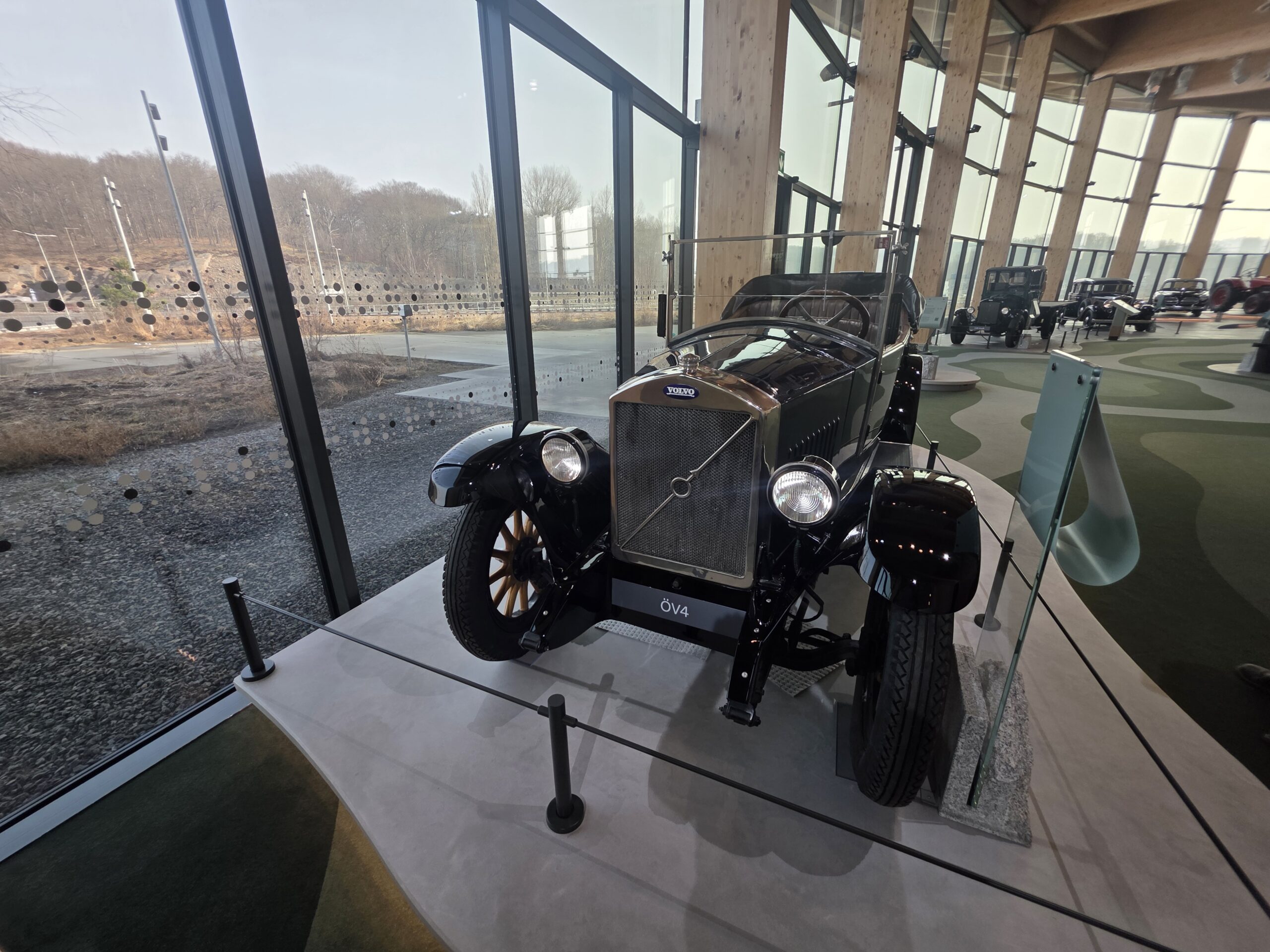
    This is one of the first Volvo cars, the ÖV4, one of 205 cars that were produced between 1927 and 1929. It had a four-cylinder engine and 28 horsepower which might not have been the most powerful in the world, but it was the first mass produced car in Sweden.

    The first car came rolling off the factory line in Gothenburg on 14 April 1927, a date regarded as the birth of the company’s car manufacturing. The name comes from the Swedish Öppen Vagn 4 cylindrar, meaning “open car, four cylinders” and the model was a four-seat open tourer designed to cope with Sweden’s rough roads.

    Built with a wooden body frame covered in steel panels and usually finished in dark blue with black wings, the car was sometimes nicknamed “Jakob” after an early prototype. The premiere of the car went a bit wrong, a rear axle gear was installed incorrectly and the car only drove in reverse. It was a sub-optimal situation for the inaugural test drive, but the museum notes that from then on “Volvo moves forward”…..