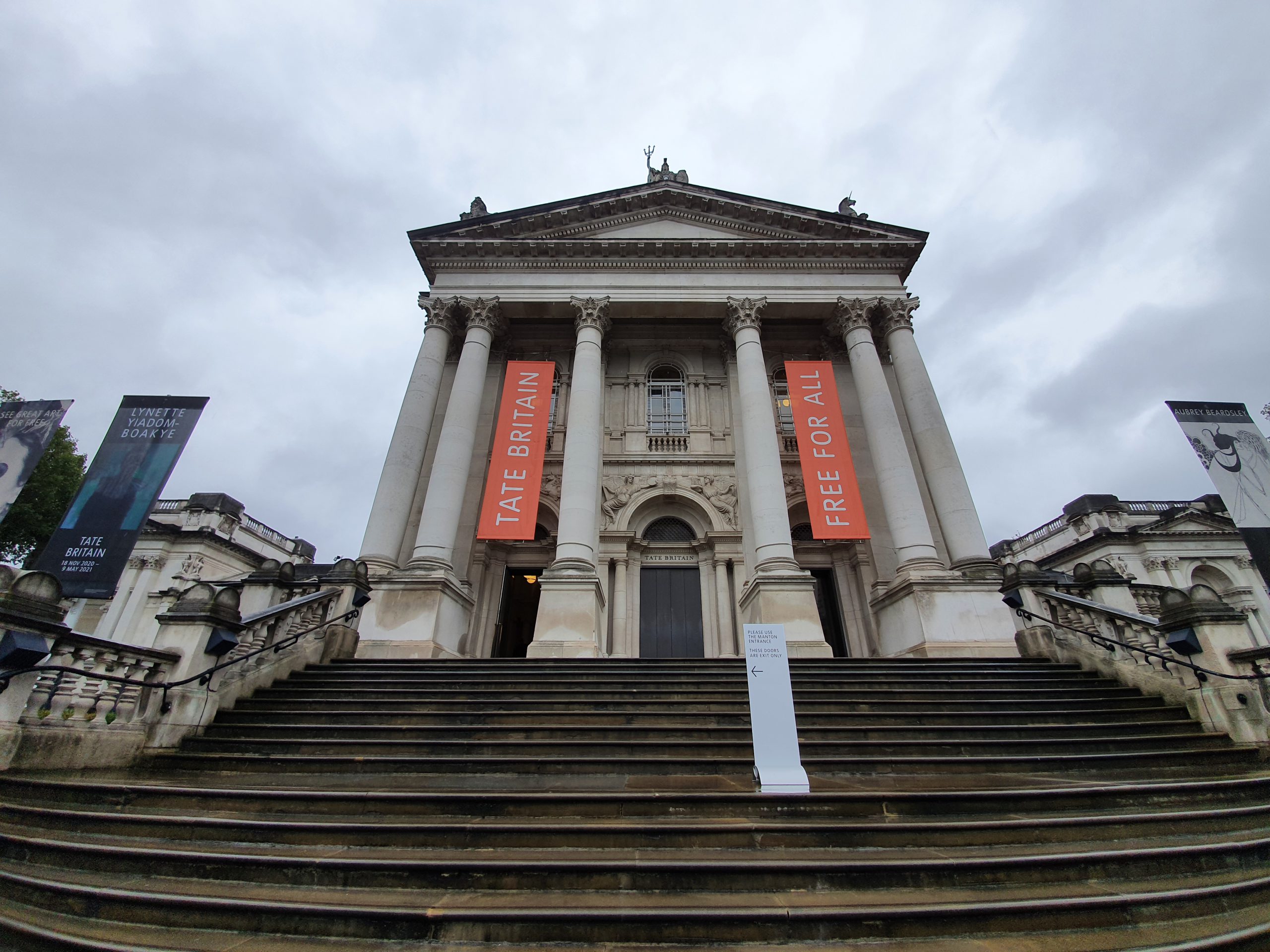
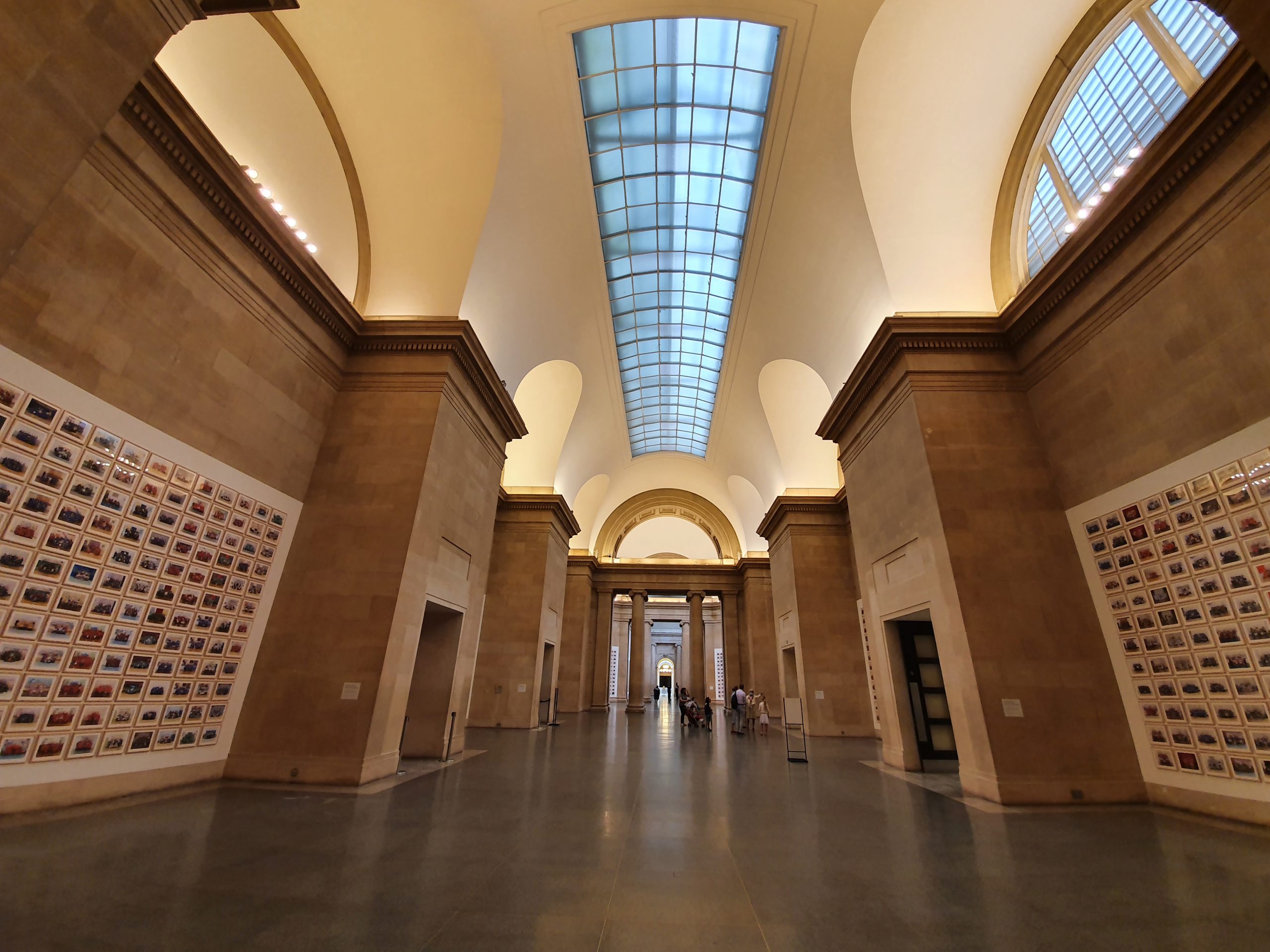
Tag: Westminster

  • London – Westminster – Tate Britain (Lady Anne Pope by Robert Peake)

    London – Westminster – Tate Britain (Lady Anne Pope by Robert Peake)

    This artwork is of Lady Anne Pope (?-1629), the daughter of Sir William Pope and Anne Pope, and is likely to have been painted in an attempt to find a suitor for her. It didn’t work as she remained unmarried, with the pearls, long hair and cherries all indicating a pure and virtuous woman. The painter was Robert Peake (1551?-1619) who worked in the Royal Court under Queen Elizabeth I, before later becoming the Serjeant Painter to King James I.

    It is really just an early version of Tinder and it must have been quite a nuisance to have to find a date by having a painting drawn by an expensive artist (although by all accounts, Sir William Pope could afford it). But such were the responsibilities no doubt of the upper classes at this time, they had to find someone appropriate. Peake also painted the portrait of Elizabeth Pope, who was Anne’s sister-in-law, at the same time, and in this case, the artwork might have perhaps been more of a status symbol.

    The Tate acquired this painting, which was presented anonymously to them, in 1955. At that time, the artwork was in Wroxton Abbey in Oxfordshire, although the lease had been taken over by Trinity College, Oxford University. It’s not likely that the artwork ever left Wroxton Abbey, as this was the family estate rebuilt by Sir William Pope. And so here in Tate Britain it now permanently resides.
  • London – Westminster – Tate Britain (An Allegory of Man)

    London – Westminster – Tate Britain (An Allegory of Man)

    I’m quite interested in medieval religious imagery (yes, I know, it’s not exactly a drunken weekend in Ibiza with friends), but I found this a moderately unsettling artwork. It’s later, from after 1596, and it’s not known who painted it, but it’s unusual as it’s a painting of a religious subject which has survived from a time when Protestant values wouldn’t have wanted this to be displayed. It would have been displayed as a devotional piece, but it’s quite dark and moralistic, I prefer the more gentle interpretations of Jesus or Mary.

    The gallery has kindly provided the text which is on the artwork:

    “‘O MAN THOW WRETCED CREA ¦ TVRE HOW MAIEST THOVE DEL ¦ ITE IN RICHES BEWTY STRENGTH ¦ OR OTHER WORDLY THINGE. RE ¦ MEMBRINGE THINE ENEMYES WHICH CONTINVALLY ¦ SEEKE THEE TO DESTROYE & BRINGE THEE TO NOTHING ¦ BVT SINE SHAME AND FYER EVERLASTINGE. THEREFORE ¦ FAST WATCH & PRAYE CONTINVALY WT FERVENT DESIER ¦ VNTO IESVS THE MIGHTIE CAPTAYNE WHO ONLY IS ¦ HABLE TO DEFEND THEE FROM THEIR FIERIE ASSAWLTS.’ in bottom cartouche; ‘COVETVSNES’ on the miser’s arrow, lower left; ‘GLOTONY’, ‘SLOWTH’ and ‘LECHERY’ on the lady’s three arrows, centre left; ‘GRATIA ME SVFICIT TIBIE, 2 COR[.] 12.’ on scroll by Christ, top; ‘BE SOBER THEREFORE & WATCH FOR ¦ THOW KNOWEST NEITHER THE DAY NOR ¦ THE HOWRE.’ on scroll, centre right, above Death the skeleton; ‘BEHIND THEE Y STEALE ¦ LIKE A THEIF THE TEM / PORAL LIFE TO DEVOWER’ on shield (oval target) of Death; ‘PRYDE’, ‘WRATH’ and ‘ENVYE’ on three arrows of devil, bottom right; ‘TEMPORANS’, ‘GOOD REISINES’, ‘CHASTITY’, ‘ALMES DEEDS’, ‘AND COMPASSION’, ‘MEEKENES’, ‘CHARITY’, ‘PACIENS’ on scroll encircling central figure of Man.”

    For a long time, the artwork was thought to be a little earlier, from the mid sixteenth century, but then the wood went through a dendrochronological analysis and the earliest that it could be was from 1596. Which goes to show that sometimes even the collective wisdom of numerous art experts can still be wrong at dating an artwork. The painting was given to the museum in 1990 as a gift from the Patrons of British Art.

    As an aside, Tate Britain is one of the most excellent galleries which makes an attempt to establish the provenance of all of its artworks and presents that information on-line. Until 1913, this painting was owned by John Charles Robinson (1824-1913), who was married to Elizabeth Newton who was the daughter of a Norwich alderman. Between 1880 and 1901, Robinson held the role of the Surveyor of the Queen’s Pictures, a role later held by Anthony Blunt.

  • London – Westminster – Tate Britain (Captain Thomas Lee by Marcus Gheeraerts)

    London – Westminster – Tate Britain (Captain Thomas Lee by Marcus Gheeraerts)

    I like the sign to the left of this painting by Marcus Gheeraerts (1561/2-1636) which reads “what would you wear in a photo if you really wanted to impress someone?” as this certainly looks like some sort of dare. But, it’s not, it’s very serious and it was the uniform of an Irish soldier, who kept their legs bare for reasons that I’m not sure that I can understand (but is probably related to the need to fight in Irish bogs). The embroidered top isn’t quite part of the uniform, that’s just an indication of how wealthy Captain Thomas Lee (1551-1601) was. The painting is also seen as an attempt by Lee to impress Queen Elizabeth I, although his life plan didn’t quite work out as he was executed at Tyburn in 1601 and the Queen didn’t stop it.

    The artwork was painted in 1594, which was the prime of the artist’s career as he fell a little out of favour after this. The museum holds a few paintings by Gheeraerts, but I’d say that this one is the most spectacular looking and the gallery was able to acquire this painting in 1980.

  • London – Lambeth – Imperial War Museum (Damage to Downing Street)

    London – Lambeth – Imperial War Museum (Damage to Downing Street)

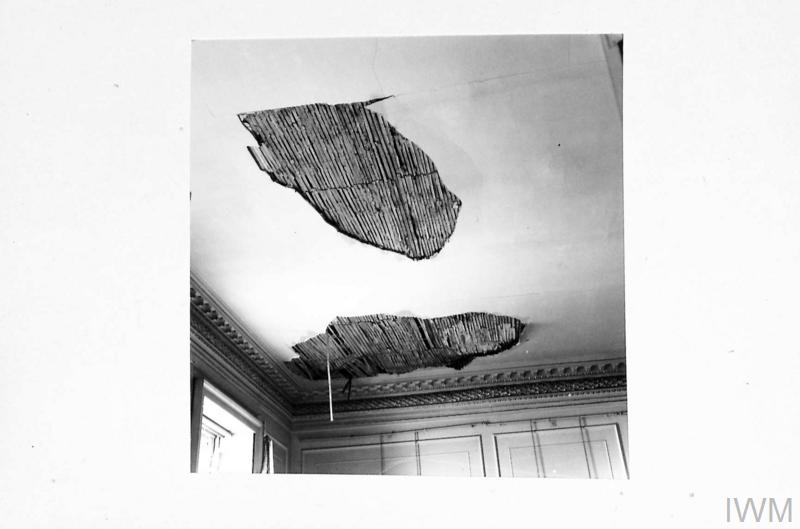
    I will, at some point, stop faffing about looking through the Imperial War Museum’s on-line photographic album, but these are interesting photos (well, I think) of damage done to Downing Street on 20 February 1944. A fleet of 200 German aircraft attacked London, killing 600 people and doing damage to numerous Government and residential buildings.

    Repairing the damage with ladders. This was towards the end of the bombings in London, the last Luftwaffe air raids were in May 1944.

    An annoying hole in the ceiling of the drawing room and that isn’t snow on the ground, it’s glass. The work of a sentryman had to continue though, so they made a path through the glass for him.

    The photographer at the time, Captain Horton, noted that although the window was blown out, the photograph of Winston Churchill was left intact.

    And thanks to the Imperial War Museum – © IWM H 36080 © IWM H 36081 © IWM H 36087 © IWM H 36091 © IWM H 36092 © IWM H 36088.

  • London – Westminster – Tate Britain (Portrait of Elizabeth Roydon by Hans Eworth)

    London – Westminster – Tate Britain (Portrait of Elizabeth Roydon by Hans Eworth)

    This painting of Elizabeth Roydon was completed in 1563 when she was aged 40. The artwork was painted by the Dutch-born Jan Eeuwowts, better known in English as Hans Eworth, and there are over 40 paintings by him that have survived. It’s not known for sure, but it may have been that Eworth was the court painter during the period of Queen Mary I’s reign between 1554 and 1558. Roydon was wearing all black as her second husband, Cuthbert Vaughan (1519-1563), had just died in a military engagement in Le Havre in France. She was though later to remarry a final time, to Sir Thomas Golding in 1564.

    This is beyond my art knowledge (as most things are), but the gallery notes that “the present painting is in extremely good condition for its age and, with its very fine brushstrokes, is carried out in a technique similar to that of a miniaturist. The translucency of the paint in the flesh areas means that the freely drawn underdrawing is now visible”.

    The heraldic arms in the corner of the painting were also added later on, for reasons likely related to wanting to prove some heritage line. The Tate acquired the artwork in 1972, when it was bequeathed to them by Miss Rachel Alexander and Miss Jean Alexander.

  • London – Westminster – Tate Britain (A Young Lady by Artist Unknown).

    London – Westminster – Tate Britain (A Young Lady by Artist Unknown).

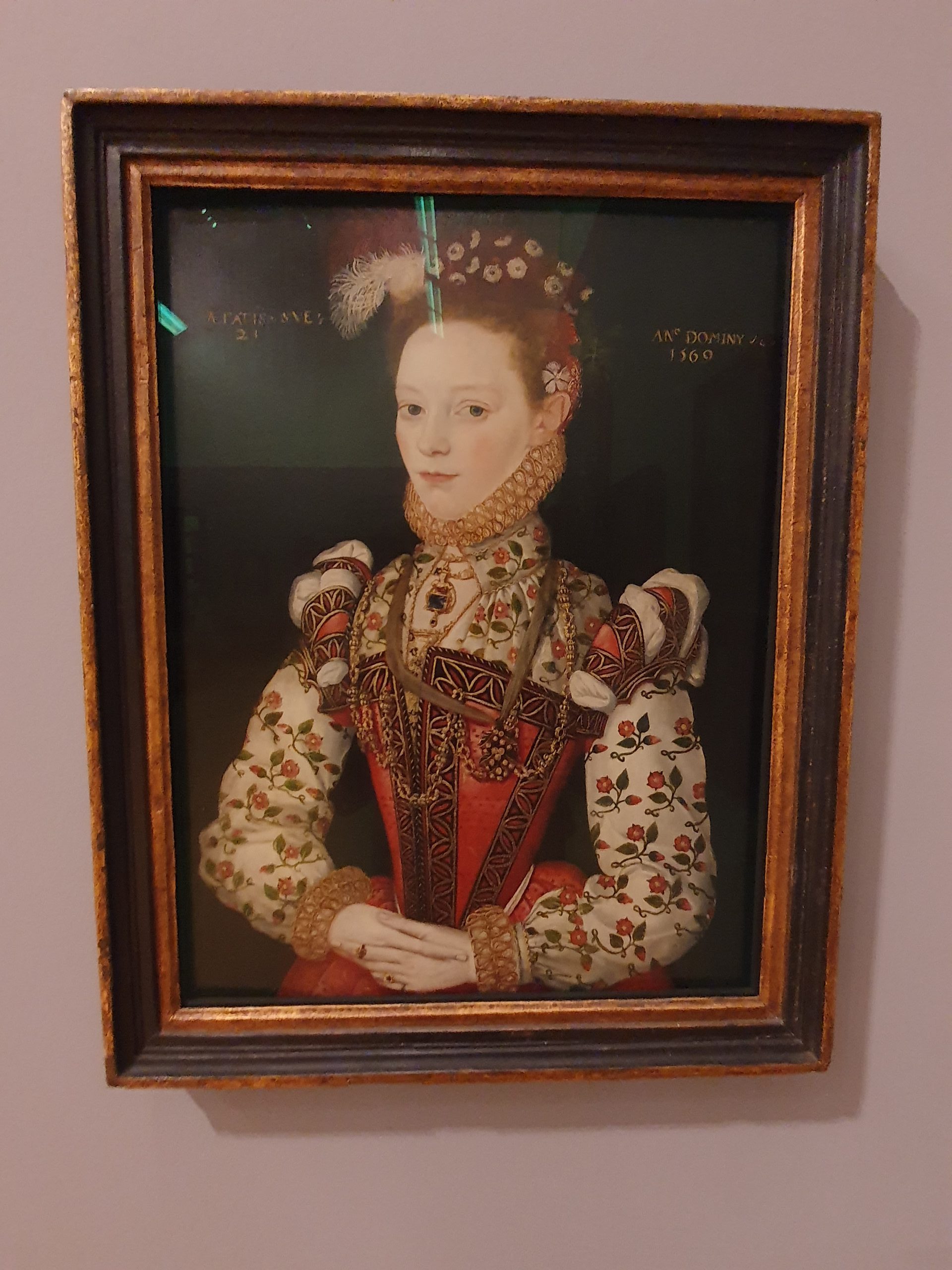
    It’s not known who painted this artwork (given by the Friends of the Tate Gallery in 1961), which must be annoying as the Tate says that the same artist was thought to have had quite a body of work from the 1560s. It’s thought that the sitter was likely the Swedish-born Helena Snakenborg, later the Marchioness of Northampton, who was to be the chief mourner at the funeral of Queen Elizabeth I.

    The painting is also a reminder of the corset and bodice arrangement that was likely seen as a fashion necessity by women of wealth and prestige at this time. The artwork is from 1569 and, two years later, she married the Marquis of Northampton who was a fair bit older than her. The gallery notes that the carnation behind her ear was likely a symbol of that betrothal.

  • London – Westminster – Tate Britain (A Man in a Black Cap by John Bettes)

    London – Westminster – Tate Britain (A Man in a Black Cap by John Bettes)

    This is the oldest artwork in the Tate’s collections, painted by John Bettes (?-1570) in 1545. It’s not known who the sitter was, other than he was aged 26. Bettes was a court painter for King Henry VIII, so likely to have worked with Hans Holbein the Younger and records note that Catherine Parr paid Bettes for several of his paintings in miniature.

    The background was painted with smelt, a blue pigment, but this has over the centuries turned brown. Which isn’t ideal, although some Holbein’s paintings of King Henry VIII have avoided that fate and have retained their blue.

    It’s only through this painting that anything at all of use is known about John Bettes, as he wrote on the back of the artwork “done by John Bettes, Englishman”. This, along with the 1545 date on the front of the painting, meant that a few other artworks could be credited to Bettes as well. His son, John Bettes the Younger (?-1616) also became an artist who worked in London.

    The Tate acquired this artwork in 1897 and it’s oil painted onto oak.

  • London – Westminster – Victoria Railway Station

    London – Westminster – Victoria Railway Station

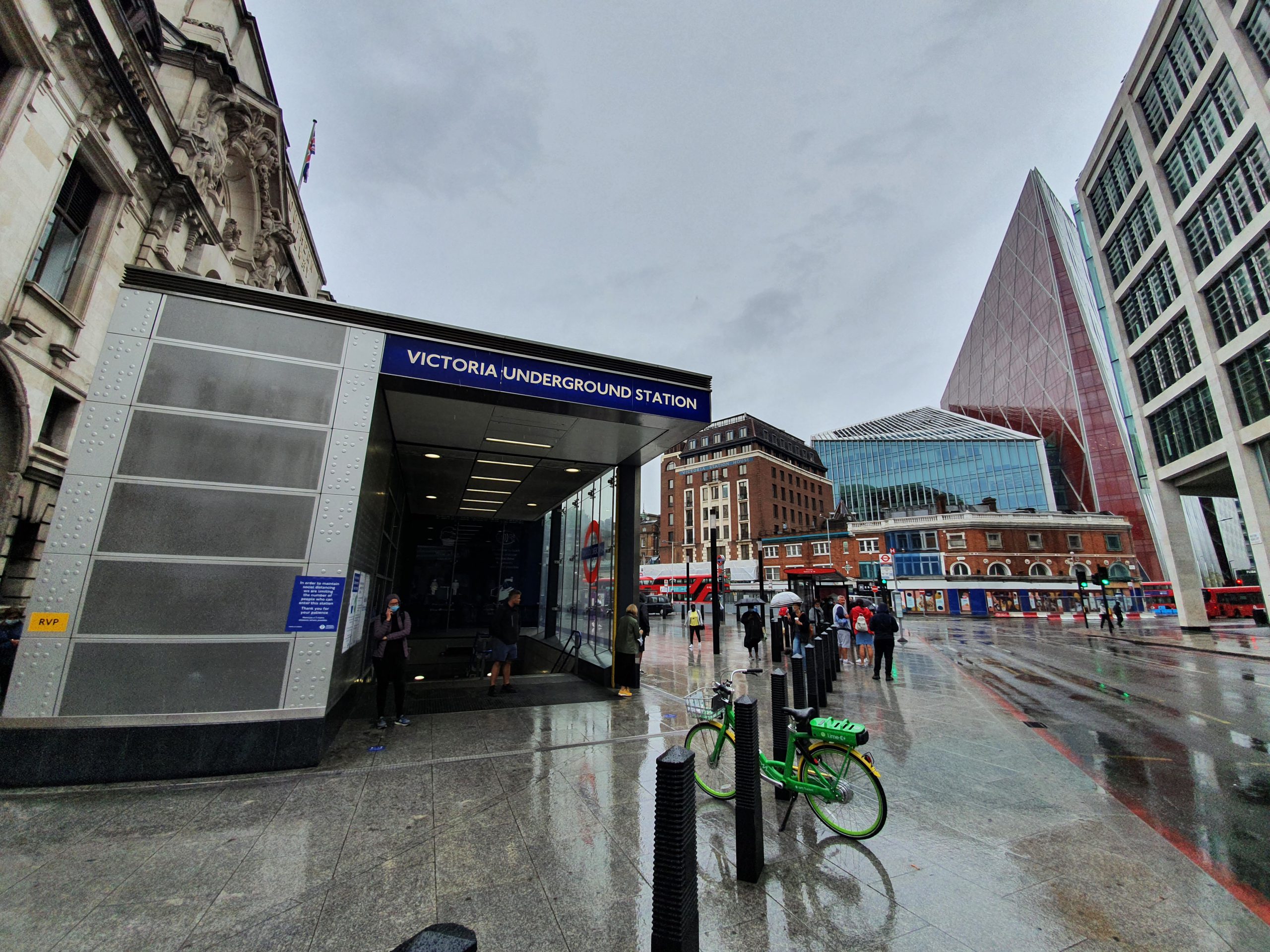
    Just photos, but this is a snapshot of Victoria railway station in August 2020, so when things are meant to be back to some sort of normality. They’re clearly not, with fewer passengers and most food outlets are still shut…..

  • London – Westminster – Lord Moon of the Mall Closed

    London – Westminster – Lord Moon of the Mall Closed

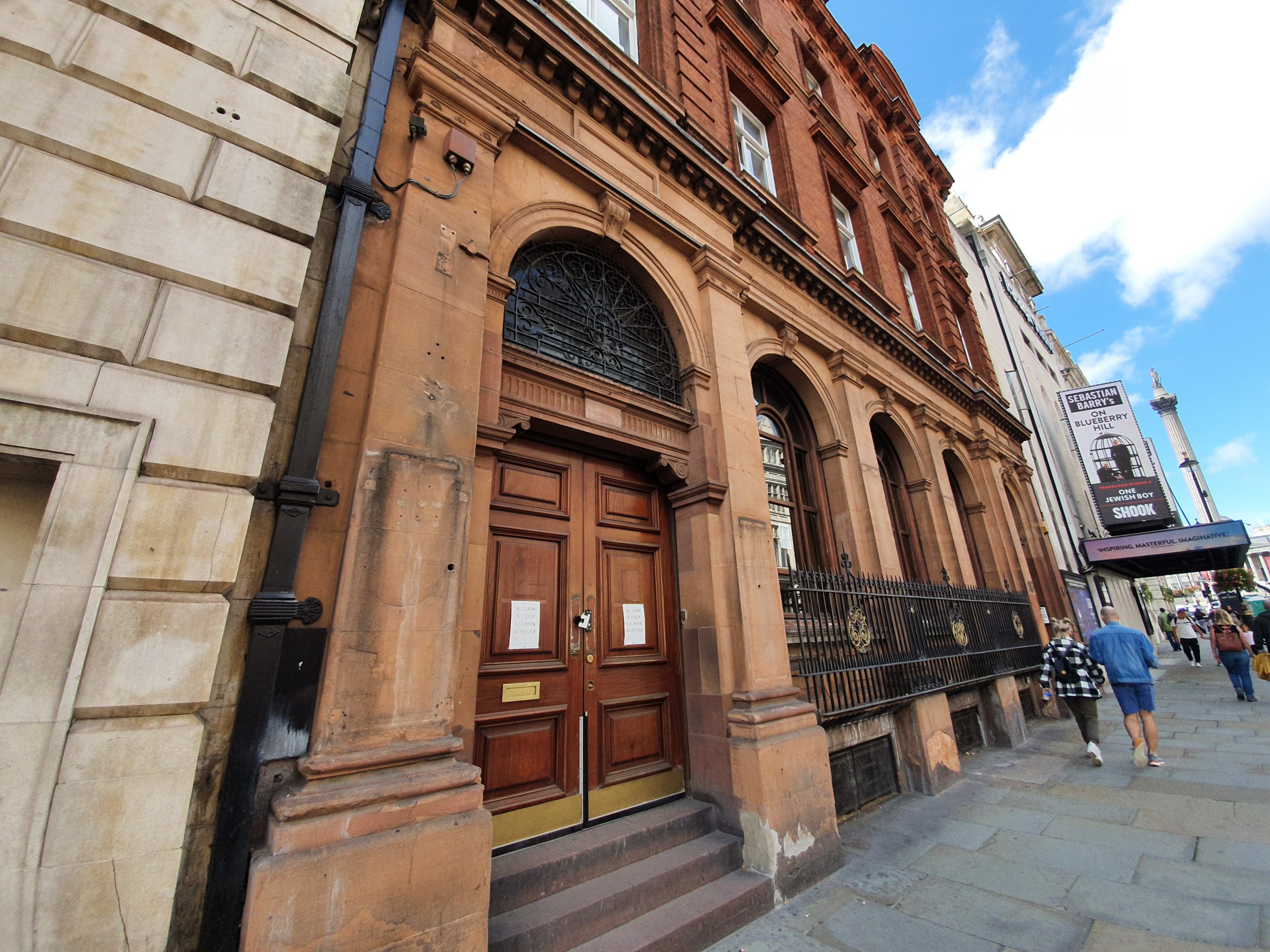
    The Lord Moon of the Mall has closed this summer, the only JD Wetherspoon outlet in the country that I knew that had a pub sign with the face of Tim Martin on it. I had thought that this was an odd size for a Wetherspoons as it’s quite small, but I’m surprised they gave up on it given its prominent location on Whitehall.

    The pub is becoming a McMullen’s operated venue and it appears that they actually purchased the freehold a few years ago in 2015. I assume that JD Wetherspoon have done a deal to move out for a reasonable cost as McMullen’s believe that they can make money by operating the site themselves, although I suspect that might be a challenging trading environment given how small it is.

    The building was the former banking hall of Cocks, Biddulph & Company and was used as a bank until 1992, when Barclays Bank moved out.