
Tag: Warsaw

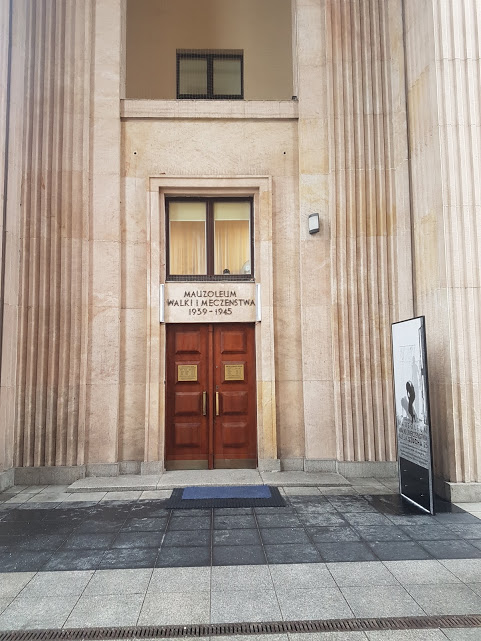
  • Warsaw – Mausoleum of Struggle and Martyrdom

    Warsaw – Mausoleum of Struggle and Martyrdom

    Rather appropriately in some ways, in terms of never forgetting what happened here, this museum is located within the building of the Ministry of National Education. Before the Second World War, the building was used as the Ministry of Religious Beliefs and Public Education, but during the Nazi occupation of Poland, the basement was repurposed as a prison. On the floors above, the secret police set up their offices and began their work in trying to oppose the work of the Polish resistance, the influence of the church and those who sought to damage the rule of the Germans in the city.

    A visit starts with a video presentation, with the staff member helpfully putting on an English translation for me. I was the only visitor for much of the time (I visited in February 2018, at a time when it was cold and starting to snow…) and the staff were warm and engaging, but otherwise let me get on with visiting the museum. Although this did mean that I was then walking around the cells and former torture areas on my own, which does allow for a more atmospheric visit. By atmospheric, I mean slightly unnerving.

    A corridor between offices used by the Nazis, with torture and killings being commonplace in the cellars. One of the rooms used by the officers has been restored to as it might have looked and there’s a radio there, a reminder that this was played loudly during some periods of torture, to drown out the sound. Torture was also often performed in front of the victim’s friends and family, with the individual sometimes being dragged back unconscious into their cell.

    A corridor with located cells off it. During the period of the Warsaw Uprising, a large number of people were executed here and their bodies burned in nearby buildings.

    Graffiti scratched into the wall by the prisoners, usually by using their fingernails. Over 1,000 inscriptions were found in the cells, including prayers, names and details of those who had been killed.

    One of the cells, with some of the rooms having bullet holes in the wall, a reminder of the horror which took place here. Prisoners would be seated in some areas and have to wait in silence for their interrogation.

    After the Germans left the city, a decision was made relatively quickly to preserve the basement area as a museum, dedicated to all those who suffered there. There have though, at the museum’s admission, been some structural changes made to the building since then, so I’m a little unsure of just how much looks the same as it did. Given that so much of Warsaw was destroyed by the Nazis before their departure, this remains though one of the best preserved of the buildings which the Germans used during their time here.

    The TripAdvisor reviews are nearly all positive, with few exceptions, although one Canadian was really pleased with their visit:

    “A dark corridor and rooms with a bed, that’s what we could see.”

    Hmmm…..

    It’s a small museum, with a low admission charge, with everything being well curated and there was plenty of information about what happened in the basement. Much of that information is presented on video screens, with English translations available, a sobering reminder of the past.
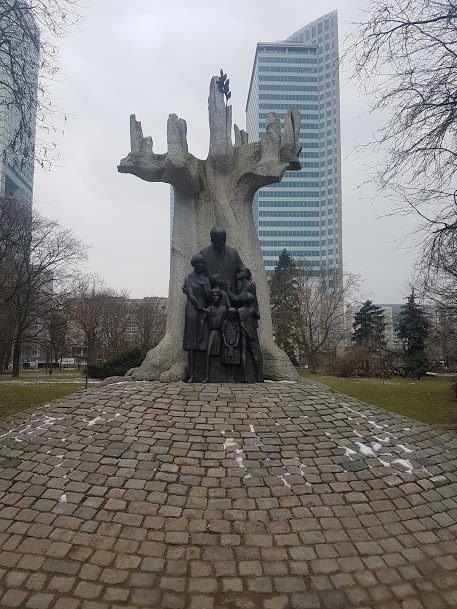
  • Warsaw – Monument to Janusz Korczak

    Warsaw – Monument to Janusz Korczak

    Located at ul. Świętokrzyska, in the shadow of the ridiculous Palace of Culture and Science, this monument is to the author Janusz Korczak. His real name was Henryk Goldszmit and he was not just an author, but also an educator who was heavily involved with orphanages. Korczak served as a lieutenant in the Polish army during the First World War and he tried to join the army once again at the outbreak of the Second World War, but he was 61 years old and thought to be too old.

    Korczak ran an orphanage when the Second World War began and he went with it when it was moved inside the Warsaw Ghetto, but he did his best to protect the children in his care. When the ghetto was liquidated in August 1942 all of the children, around 192, were rounded up to be sent to concentration camps and Korczak had two opportunities to leave the ghetto, both of which he declined. It’s not known what happened to Korczak and the 192 orphans, but it’s thought that they were all murdered at Treblinka.

    Władysław Szpilman saw Korczak and the children being marched out of the ghetto and wrote:

    “He told the orphans they were going out into the country, so they ought to be cheerful. At last they would be able to exchange the horrible suffocating city walls for meadows of flowers, streams where they could bathe, woods full of berries and mushrooms. He told them to wear their best clothes, and so they came out into the yard, two by two, nicely dressed and in a happy mood.”

    Some of Korczak’s writings in the ghetto survived, and they aren’t in the form of a descriptive diary, but are more of a literary bent. I particularly liked this text, of which there’s no shortage of existentialist meaning. The PDF of his book is available here.

    “I know that many are dissatisfied at my clearing the table after meals. Even the  orderlies seem to dislike it. Surely they can manage. There are enough of them. If there were not, one or two always could be added. Then why the ostentation, the obstinacy, and even maybe I’m nasty enough to pretend to be diligent and so democratic.

    When I collect the dishes myself, I can see the cracked plates, the bent spoons, the  scratches on the bowls. I expedite the clearing of the tables and the side table used for the  little shop, so that the orderlies can tidy up sooner. I can see how the careless diners throw about, partly in a quasi-aristocratic and partly in a churlish manner, the spoons,  knives, the salt shakers and cups, instead of putting them in the right place. Sometimes I watch how the extras are distributed or who sits next to whom. And I get some ideas. For if I do something, I never do it thoughtlessly. This waiter’s job is of great use to me, it’s  pleasant and interesting.”

    The monument was unveiled in 2003 and was jointly funded by the Shalom Foundation and the Janusz Korczak Association. One of the underlying principles of the monument was to ensure the words of Korczak weren’t forgotten:

    “Sorrow is too cold for the children, so they quickly run into the sun of joy”.

    His sacrifice meant that many children had just a little bit of hope in their final days.

  • CNN – Warsaw In List of Best Beer Cities

    Well, how lovely, Warsaw has been listed as one of the 15 best beer cities in the world according to CNN. I haven’t previously given much attention to craft beer in the Polish capital on my previous visits, but I shall fully investigate this matter in a few days when I arrive there…..