Tag: Victoria and Albert Museum

  • London – Kensington and Chelsea (Borough of) – Victoria and Albert Museum (Soul at Death)

    London – Kensington and Chelsea (Borough of) – Victoria and Albert Museum (Soul at Death)

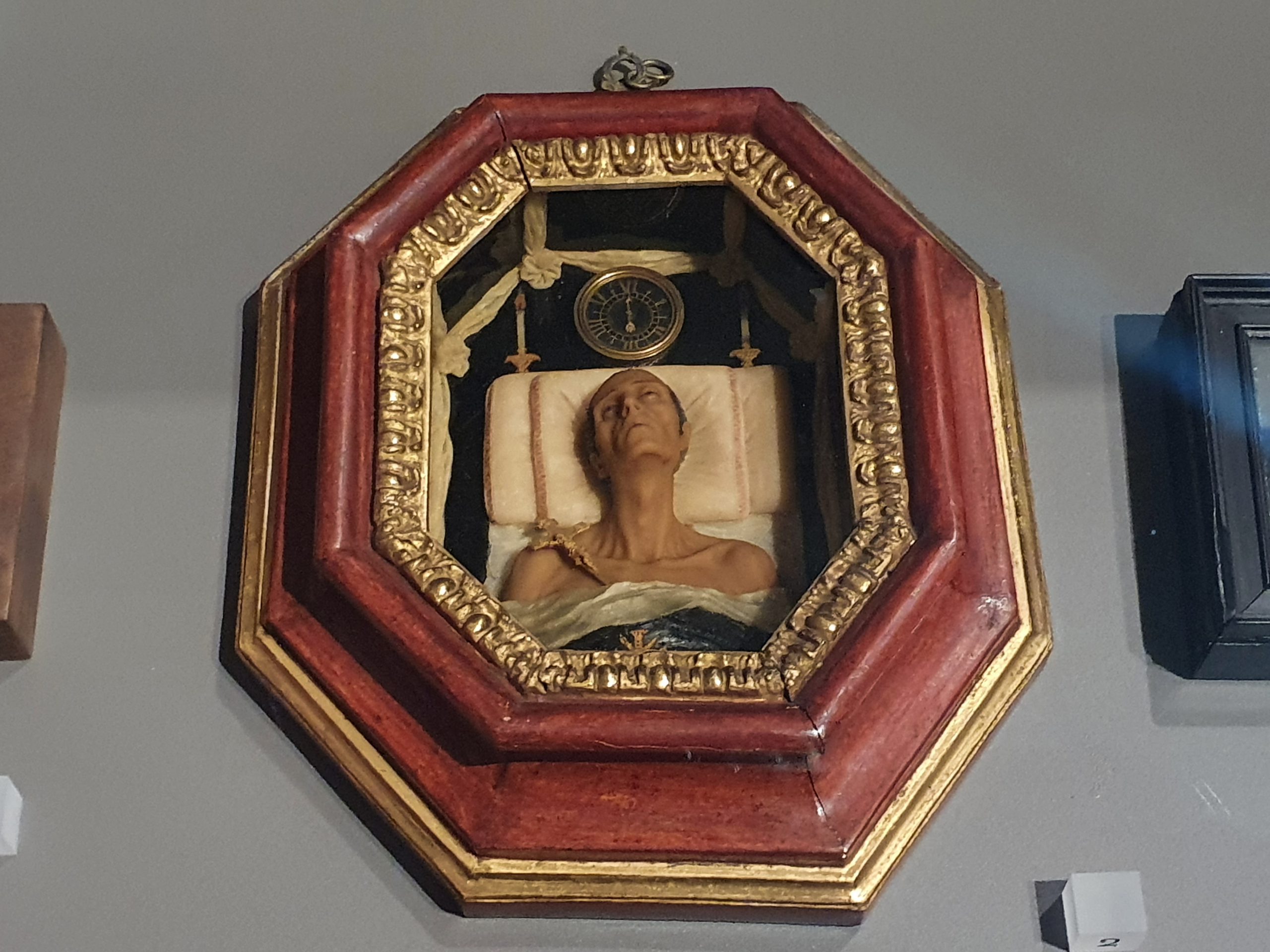
    Well, this is, er, frightening. And, that was actually the aim of this sculpted piece from the 1620s, designed by Giovanni Bernardino Azzolini. Individuals bought these items for devotional purposes, to remind them that prayer would ensure that they didn’t end up in hell or purgatory. This wax sculpture depicts what happens at the time of death, when the soul makes its journey into what is hopefully heaven after judgement day has taken place.

    I’m really not sure that I’d want this, I would have thought there are more inspirational pieces to encourage one to engage in a life of prayer. There’s an inscription on the back which reads ‘Mors malis vita bonis’ or ‘Death to the bad, life to the good’. This whole ‘Memento mori’, or being reminded of death, seems to have been much more common in previous centuries and I’m not sure whether it’s because families were more reminded of death or because we’ve become somewhat afraid to tackle the subject today.
  • London – Kensington and Chelsea (Borough of) – Victoria and Albert Museum (13th Century Doors from Gannat)

    London – Kensington and Chelsea (Borough of) – Victoria and Albert Museum (13th Century Doors from Gannat)

    OK, I’ll admit that this doesn’t perhaps seem like fascinating blog content. It’s some old wooden doors from the thirteenth century with ironwork and they’re from Gannat, a commune in central France. The museum has some notes about just how rare these are and how they can be dated from their design and also as it was a transitional process of how chisels were used on the iron scrollwork.

    To be honest, that level of detail is a little over my head, I just like the element of history here. These doors would have been in use for hundreds of years and at one stage they were hung upside down, which is evident from the much later keyhole and lock. It’s not known which building these doors are originally from, but such decorative iron would have been expensive, so this would have been a substantial property.

    What does interest me here is just imagining how many people used these doors over the centuries. There are several church doors in Norfolk that date from the Norman period and there’s something quite magical about the thought of just how many people have passed through the doors for baptisms, marriages, funerals and the more routine sermons (of which I’m sure at least a few have been quite dull and mundane). The next stop on the church tour that Richard and I are doing is Runhall Church, where the tower door is thought to be contemporary with the building of the tower itself in the twelfth century. More on this in the next few weeks hopefully….

    The V&A likely have these doors on display as they want to show the design of the ironwork from the period, but I just liked that things such as this have survived and are visible to the general public. For anyone fascinated by old doors (I’m not sure how big that niche is….), there is just one left in the UK which is made from wood felled in Saxon times and it’s at Westminster Abbey.

  • London – Kensington and Chelsea (Borough of) – Victoria and Albert Museum (Figures From Bristol High Cross)

    London – Kensington and Chelsea (Borough of) – Victoria and Albert Museum (Figures From Bristol High Cross)

    These are two of those random items at a museum, in this case the Victoria and Albert Museum, that might not look overly exciting at first glance, but they have a rather exotic heritage. Well, sort of. They date to around 1400 and were part of the Bristol High Cross, located in the heart of the city. Unfortunately, it was so central that it got in the way of traffic and so in 1733 it was taken down, in a forerunner to many similar decisions from councils in the centuries that followed.

    So, after the council faffed about with the bits of their High Cross for a few years, it was moved to College Green in 1736. And here it is above, located near to Bristol Cathedral, well out of everyone’s way. Then people complained again, it was in the way of how they wanted to promenade around the area, so they took it down in 1762 and shoved the bits in the cloisters of the Cathedral.

    Then, an overly generous Cutts Barton, the then Dean of Bristol, gave the city’s entire High Cross to the banker Henry Hoare II for his country estate at Stourhead. I’m not convinced that this was for the many and not the few, but there we go. A century later, the Victorians wanted to get their High Cross put back in Bristol, but it was now thought to be too badly damaged. After much faffing about, there is now a replica in Bristol which has been moved on numerous occasions to deal with the latest wave of complaints.

    Until 1980, all of Bristol’s High Cross still remained at Stourhead, now a National Trust property. This is when the four statues were sent to the Victoria and Albert Museum, although the rest of the cross is still there. And here they are today, likely representing four Kings who it’s thought might be King John, King Henry III, King Edward I and King Edward III.

  • London – Kensington and Chelsea (Borough of) – Victoria and Albert Museum (Reliquary Diptych)

    London – Kensington and Chelsea (Borough of) – Victoria and Albert Museum (Reliquary Diptych)

    This rather lovely item (or, to be precise, two items as it’s two halves of a folding reliquary and has two catalogue numbers) is in the collections of the Victoria and Albert Museum. And, whilst I’m wittering on, I’m very impressed at the level of information about this item (and I’m hoping many others) on their web-site, there are tens of paragraphs of information about these reliquaries and far more than I can ever really understand.

    I like reliquaries, especially personal ones which would have been deeply important to their owners, although this was likely made for a monastery. This one is thought to have been made in Spoleto, a town nearby to Perugia in Italy, in the 1320s. Some of the relics are still in the recessed area, although others are missing or have moved about. It’s not entirely clear who each item was associated with, but there are a few bone fragments.

    There’s lots of provenance for this item, something I’m nearly always intrigued by, I quite like how ownership of items has worked out over time. It was owned by Serafino Tordelli (1787-1864) who was a collector of items who lived in Spoleto, and it was purchased by the dealer Giuseppe Baslini (1817-1877) after Tordelli’s death. The museum then purchased the reliquaries for £4 (£250 in today’s money according to the National Archives) on 17 July 1868.

    The number of faked relics reached the point in the medieval period that there were more body parts for some saints than the individual had limbs for. Many of relics were destroyed during the Reformation and there’s no evidence for many relics at all, other than hearsay. But, at the time it was a personal connection which would have been important and the destruction of so many relics during the Reformation must have caused some considerable distress.

  • London – Kensington and Chelsea (Borough of) – Victoria and Albert Museum

    London – Kensington and Chelsea (Borough of) – Victoria and Albert Museum

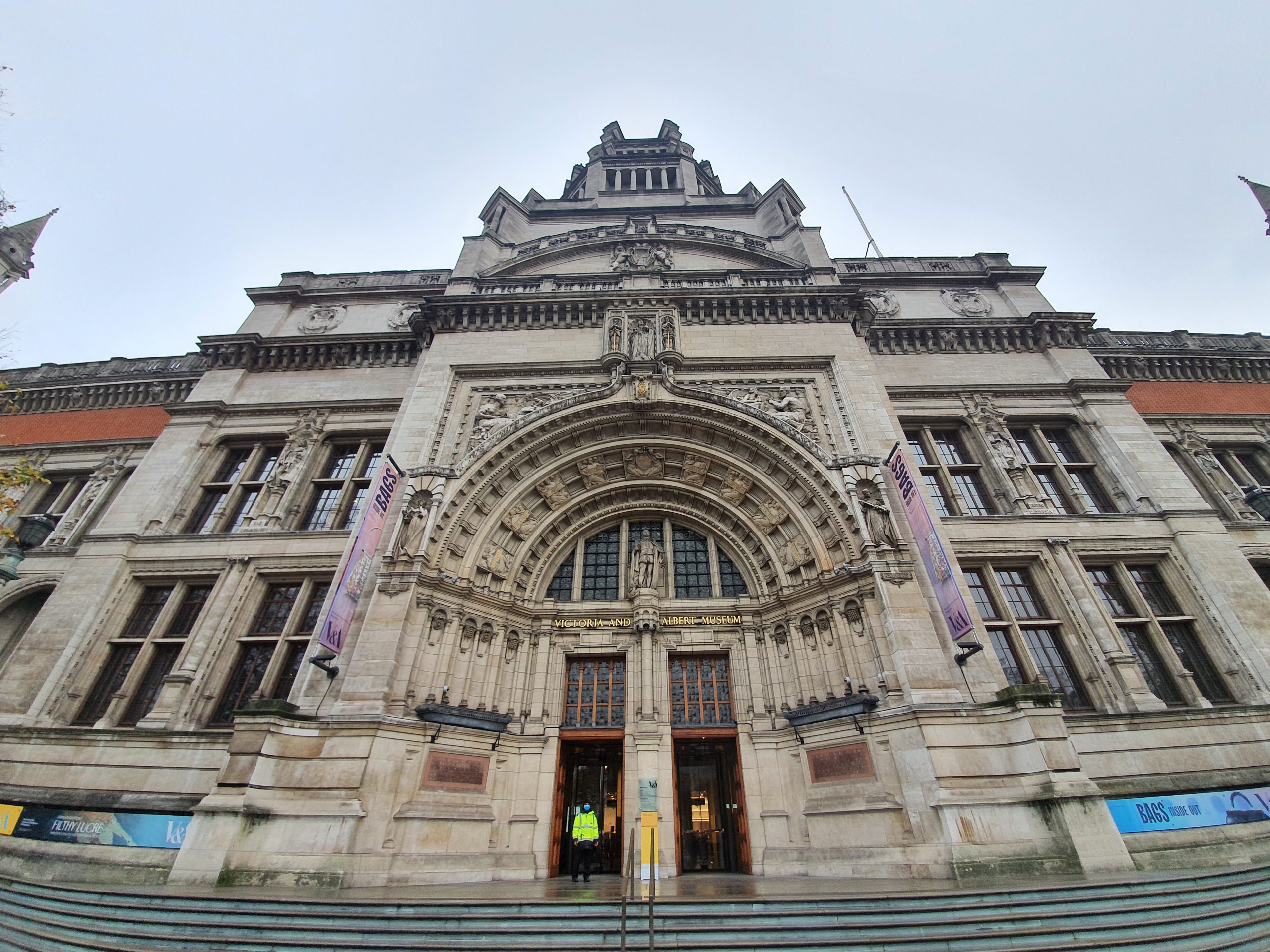
    I can’t remember the last time that I went to the Victoria and Albert Museum, it certainly isn’t in the last few years. I’ve also never quite understood what the collections policy of the museum is and what they focus on, although I think it’s primarily decorative items that aren’t covered by other national museums.

    The museum opened in 1852 as the Museum of Manufactures, something of a legacy from the Great Exhibition of 1851. The museum was renamed as the South Kensington Museum, moved to its current location in 1857 and was renamed again as the Victoria and Albert Museum in 1899.

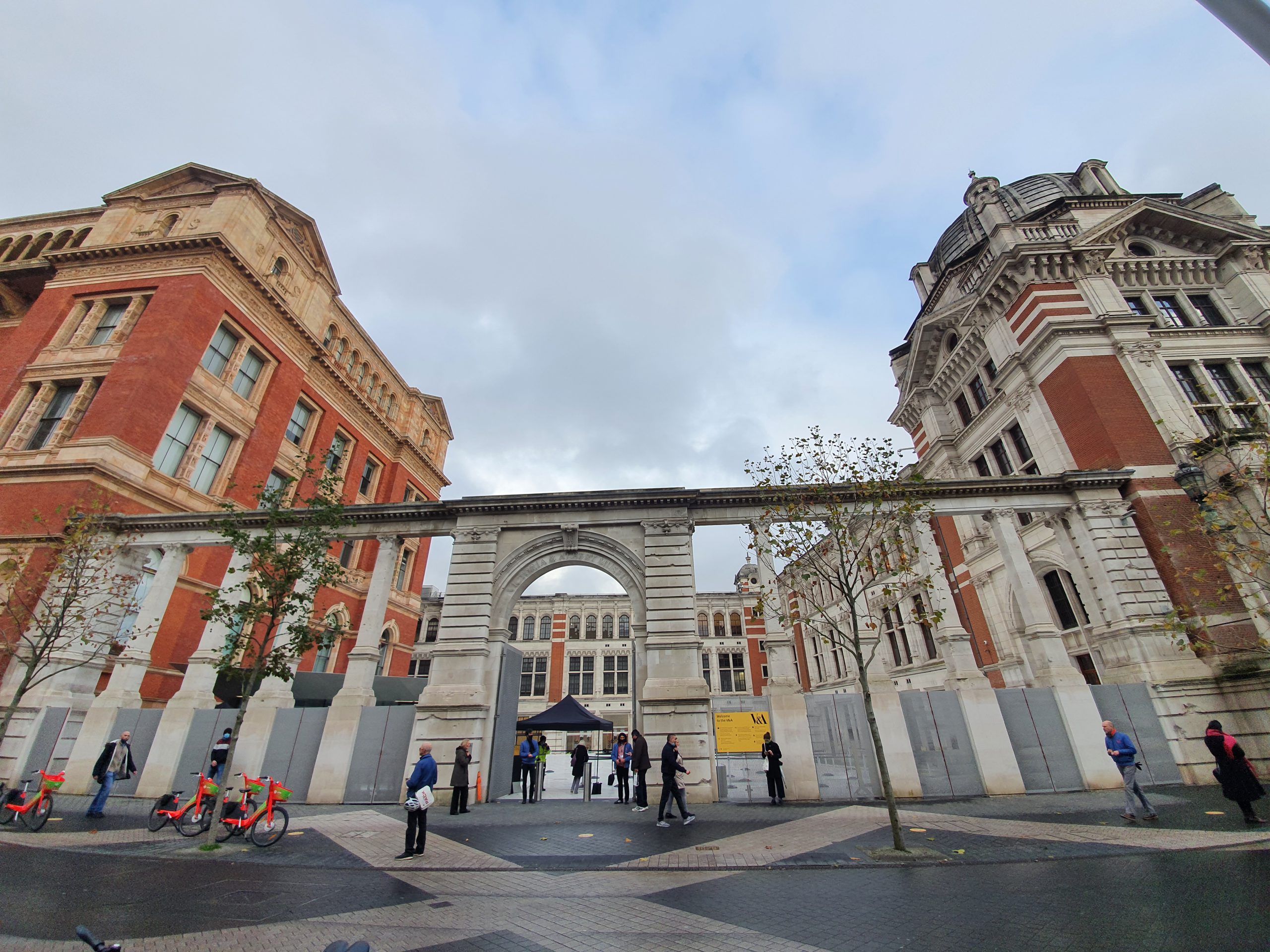
    The V&A is is one of the best rated museums in the world on review sites and I couldn’t find anything negative about my four hour visit there today. The staff at the entrance were welcoming, the security guard was friendly, the signage was clear, the web-site is detailed, everything worked as it should. The collections are enormous, I hadn’t realised that there were seven miles of exhibits should they somehow be stretched out.

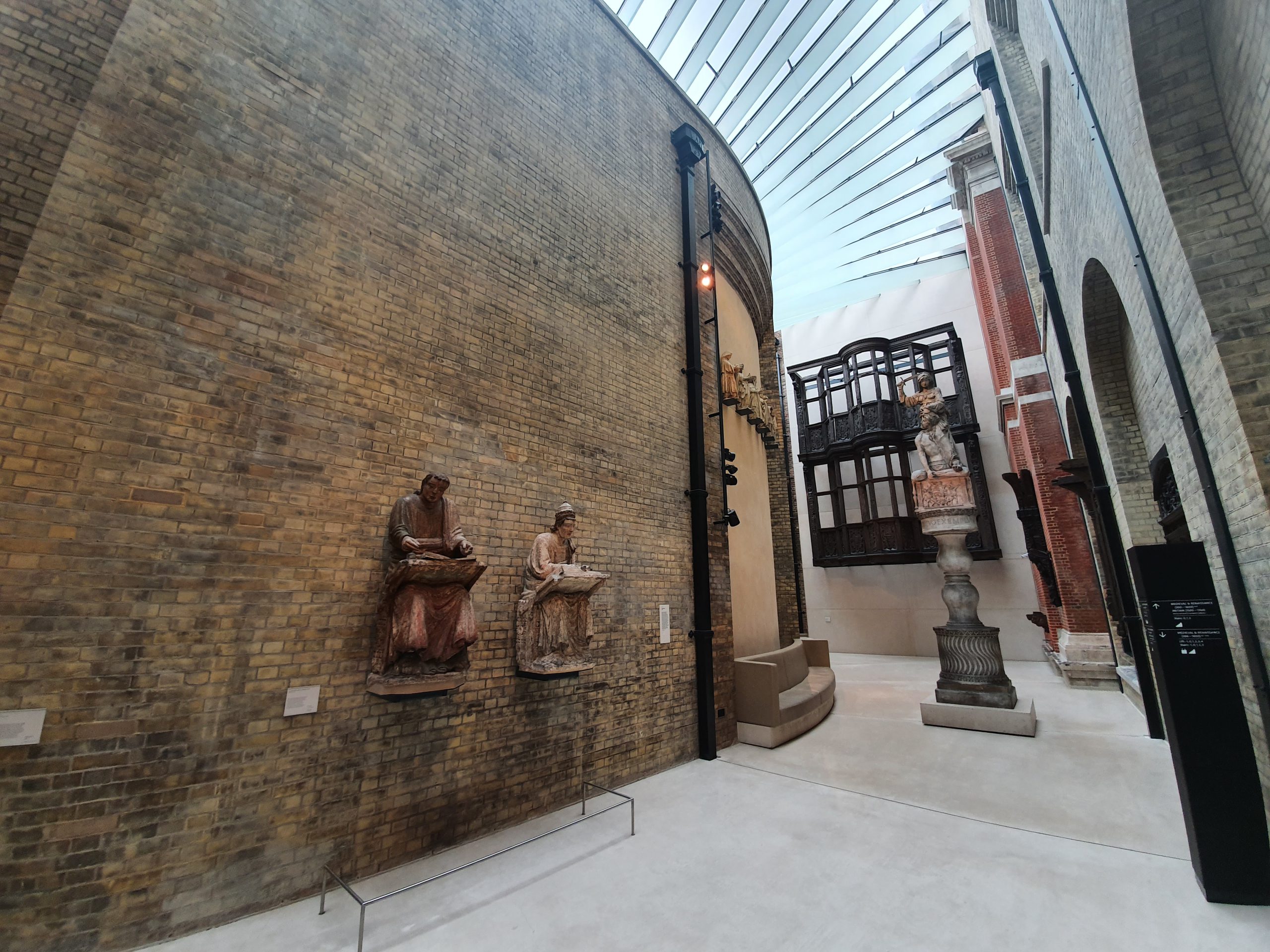
    Anyway, lots more individual posts on certain exhibits to follow, but below are some photos from the interior. One thing that might be apparent is that it wasn’t exactly packed with other visitors. Despite spending four hours at the museum, I didn’t get to see everything, this is somewhere that needs multiple visits to properly understand.