Tag: Uffizi Gallery

  • Florence – Uffizi Gallery (1470s Sculpture of an Evangelist)

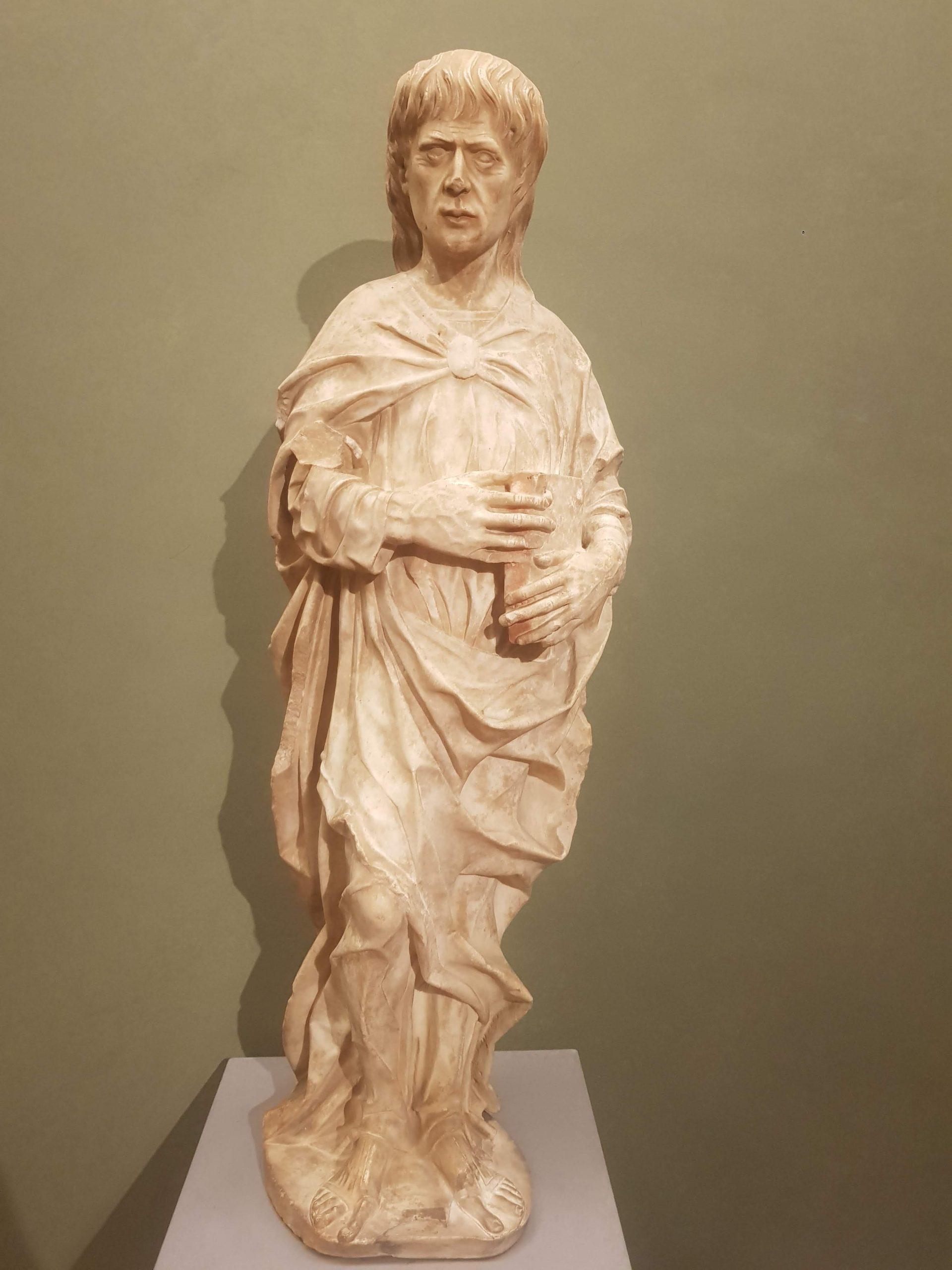
    Florence – Uffizi Gallery (1470s Sculpture of an Evangelist)

    Another part of the legacy provided to the Uffizi by the controversial Count Alessandro Contini-Bonacossi, there’s not a vast amount known about this marble sculpture. However, experts have managed to pinpoint it to likely being from between 1475 and 1480 because of the style, they suspect it’s of St. John and it’s likely from the circle of artists linked to Giovanni Antonio Amadeo. Certainly an impressive piece of deduction by the curators to ascertain all of that. And, other than a dent to the nose, it’s in a pretty good state of repair given it’s over 500 years old.

  • Florence – Uffizi Gallery (The Supper at Emmaus by Vincenzo Cateno)

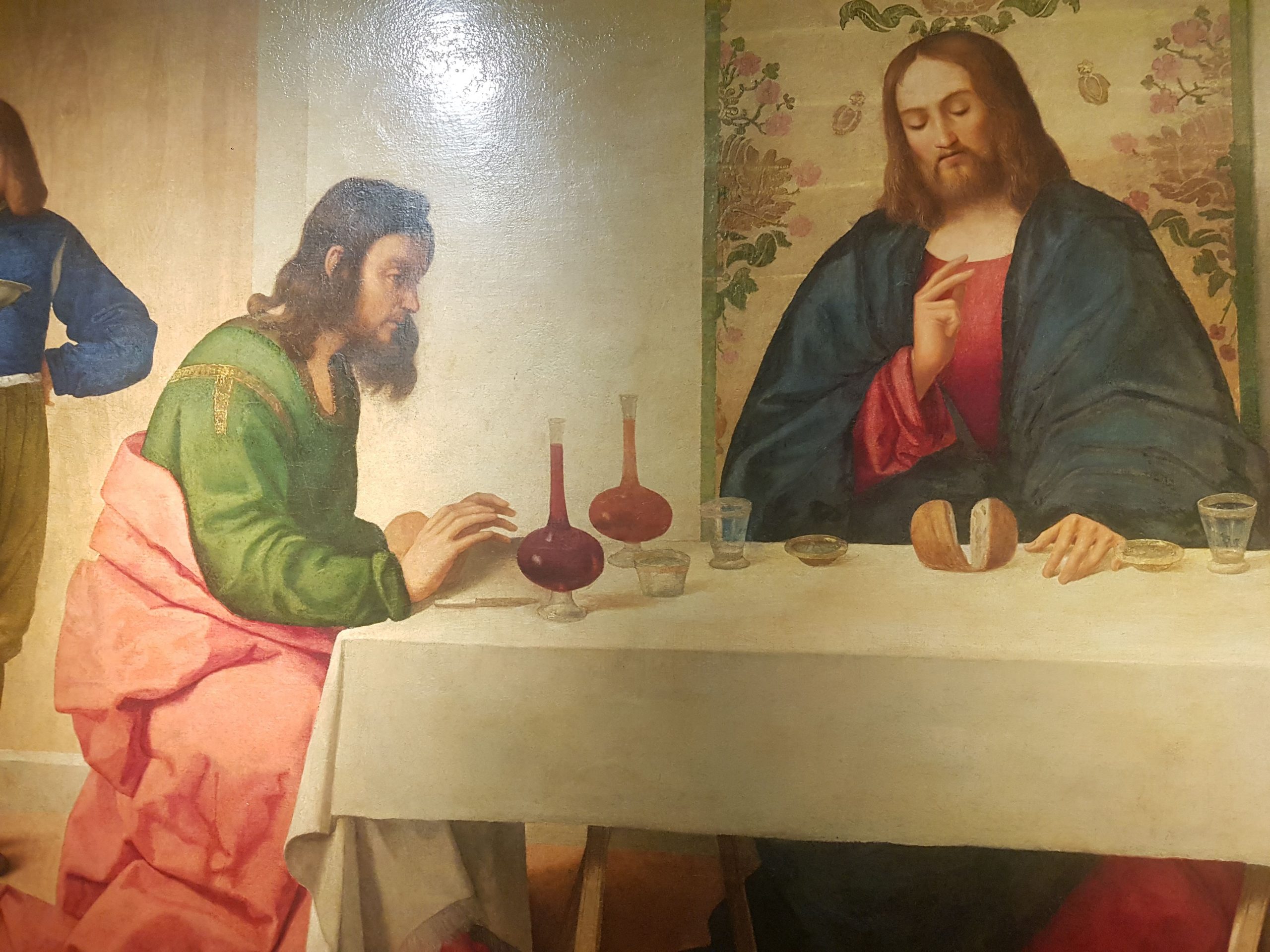
    Florence – Uffizi Gallery (The Supper at Emmaus by Vincenzo Cateno)

    Painted at some point between 1515 and 1520 by Vincenzo Cateno, the artwork shows the two apostles meeting with Christ after He has risen. The information by the painting notes that the figure in black was likely the patron who funded the artwork.

    The information also notes that “the two apostles recognise their Master when Christ blesses and breaks the bread just as He had done at the Last Supper”. The artist was Venetian and lived between 1480 until around 1531, with this painting being part of the legacy provided by Count Alessandro Contini-Bonacossi (who appears to have been an enormously controversial figure) who died in Florence in 1955.

  • Florence – Uffizi Gallery (Parade Hat)

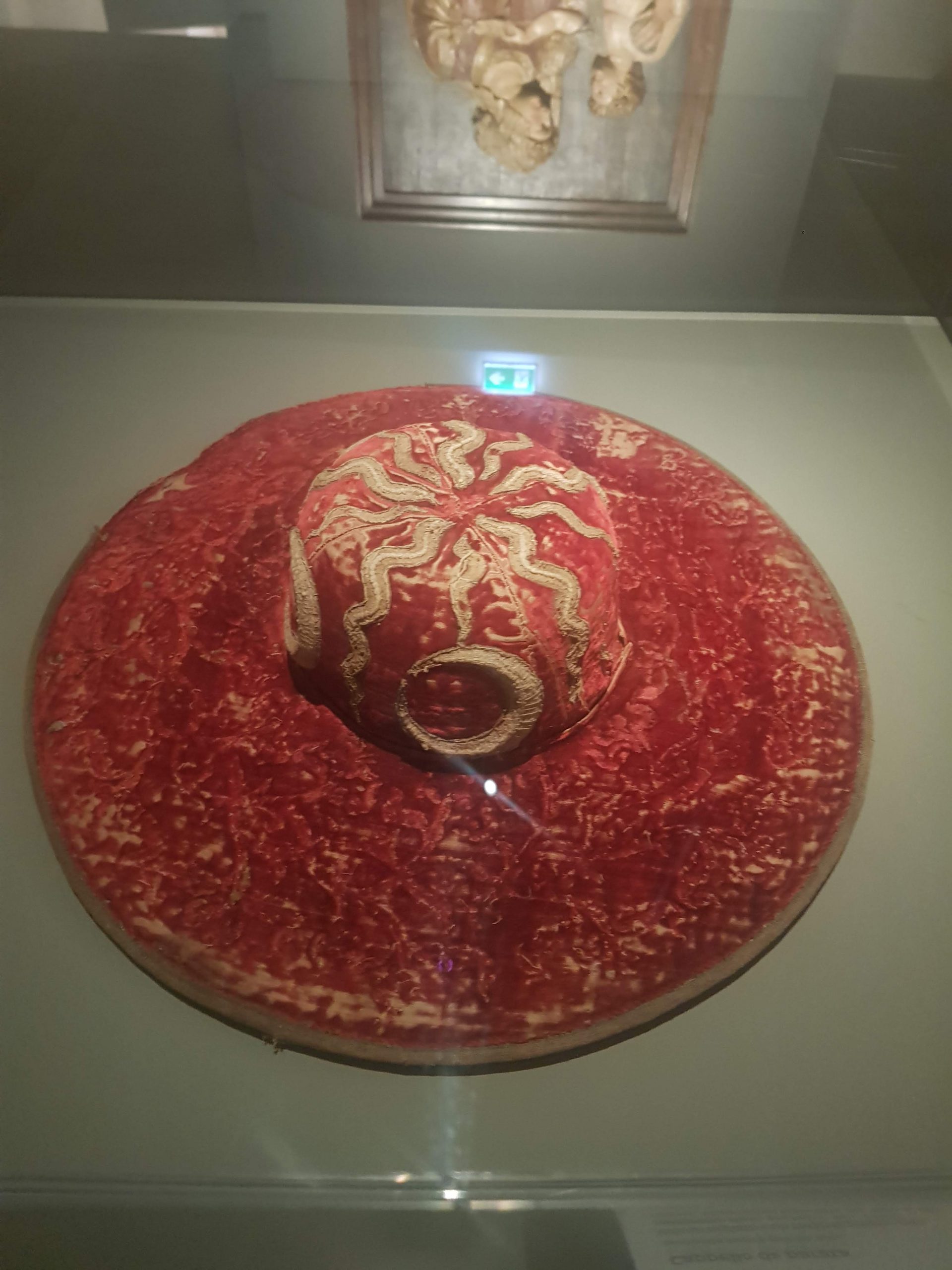
    Florence – Uffizi Gallery (Parade Hat)

    This parade hat dates from the second half of the fifteenth century, which makes it a fascinating exhibit for any museum. Of course, this being the Uffizi, their collections are exemplary and not only has this item been preserved, but it’s thought that it might have belonged to Pope Pius II or Pope Pius III (he’s the Pope who was in the position for just 26 days). It’s made from velvet, with silk and gold braid, so a very elegant piece.

  • Florence – Uffizi Gallery (Hercules Slaying the Centaur Nessus)

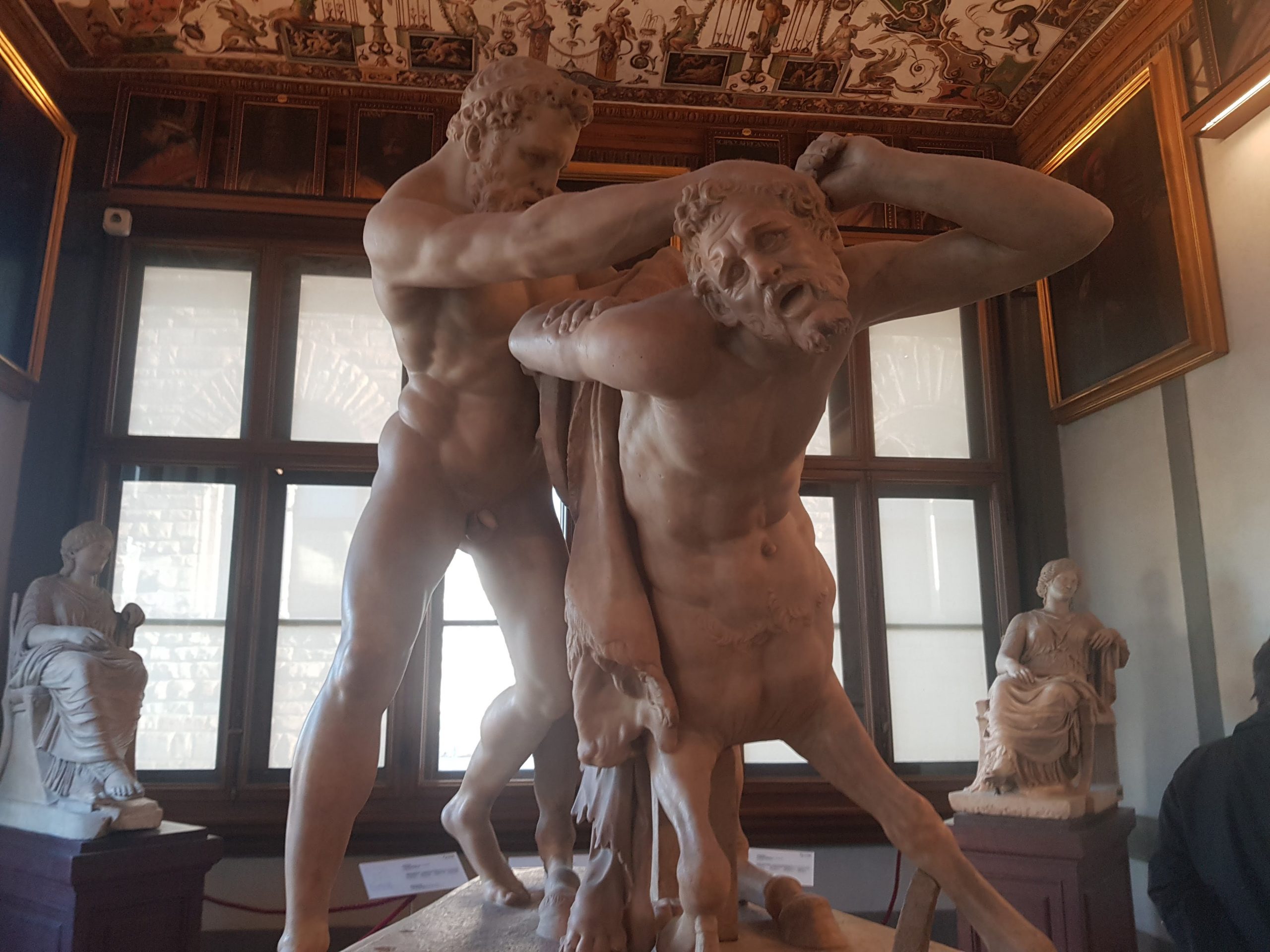
    Florence – Uffizi Gallery (Hercules Slaying the Centaur Nessus)

    I thought at first that this sculpture was Roman, but only the torso of the centaur (half man, half horse) remained and so the rest, including the head and legs of the centaur and the entirety of Hercules, was added in the sixteenth century. Well, other than the feet of Hercules, they’re mostly original Roman as well. It depicts Hercules slaying Nessus who had tried to kill Deianira, the wife of Hercules.

    The element that I liked most about this sculpture is that it has been on display in this corridor since 1595 and it’s near the main entrance to the upper floors of the gallery, which is where visitors start their tour. There must have been countless millions who have looked at this sculpture and there can’t be many artworks in the world that have had this uninterrupted period of being on public display.

    The sixteenth century additions to the sculpture were made by Giovanni Caccini, but over the last few years there has been a restoration of it and they’ve been able to see exactly where the joins in the sculpture have been made, the merging of the old and new. They also discovered that the stance of the centaur was changed slightly and that more work was done on the foot of Hercules than had previously been realised. The same recent re-examination of the sculpture also found that the original marble is from Asia, whereas Caccini used marble from Tuscany.

  • Florence – Uffizi Gallery (I Corridoi di Galleria)

    Florence – Uffizi Gallery (I Corridoi di Galleria)

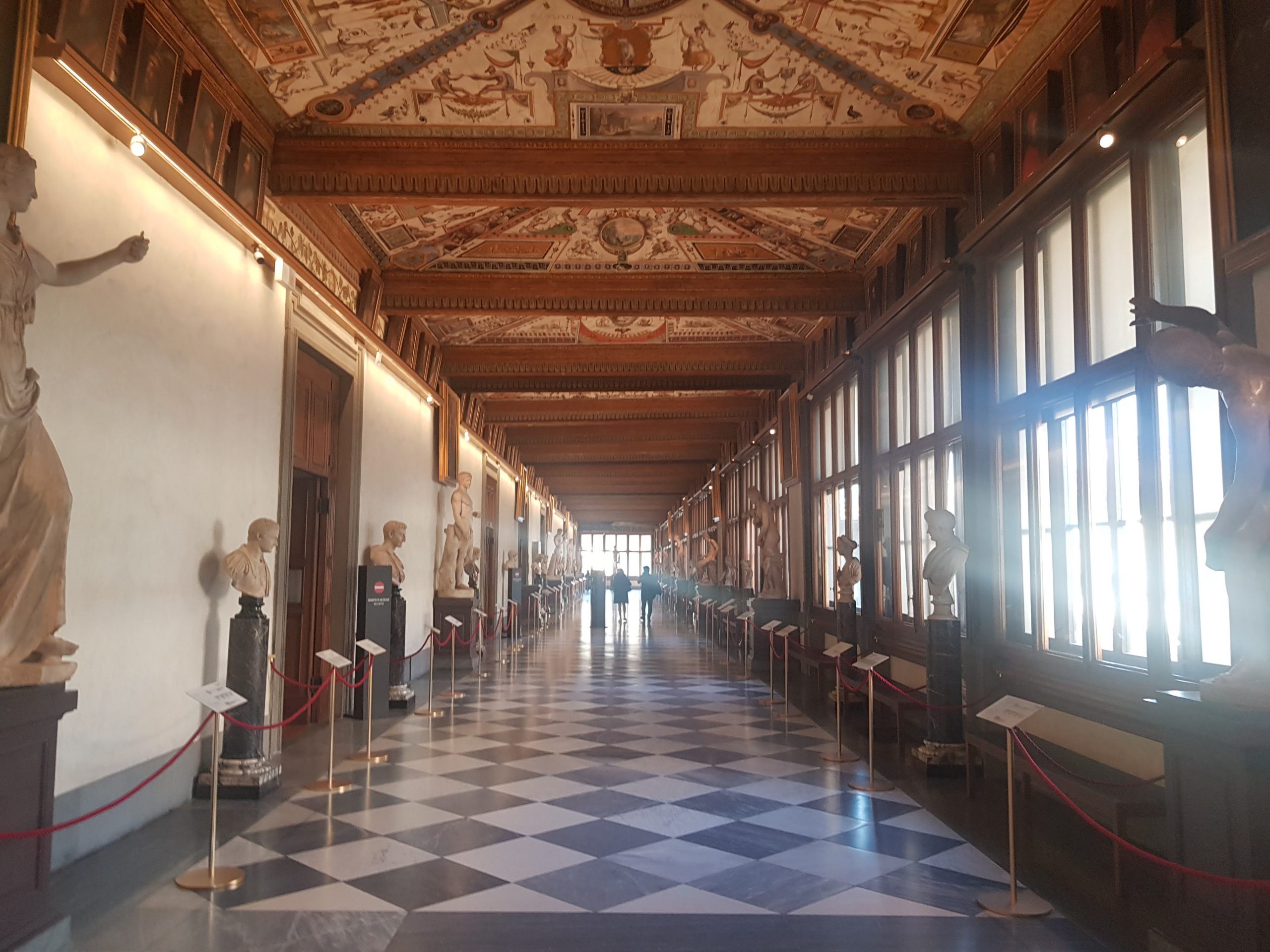
    The corridors of the Uffizi are iconic and they form the base of the gallery’s large collections, with rooms leading off them. And what is interesting is that the word ‘gallery’ in the sense of displaying artworks or artefacts may derive from here, when the word originally meant an area at the side of a building.

    This is the view towards the Palazzo Vecchio from the crossing gallery, with the top floor windows on each side containing the corridors.

    The frescoes on the ceiling date to the late sixteenth century and the early seventeenth centuries. There would have been tapestries on the walls, but these have now been removed as the light was damaging them. As an introduction to the museum, these corridors are an exciting sight as they stretch off into the distance.

  • Florence – Uffizi Gallery (Saint Luke the Evangelist)

    Florence – Uffizi Gallery (Saint Luke the Evangelist)

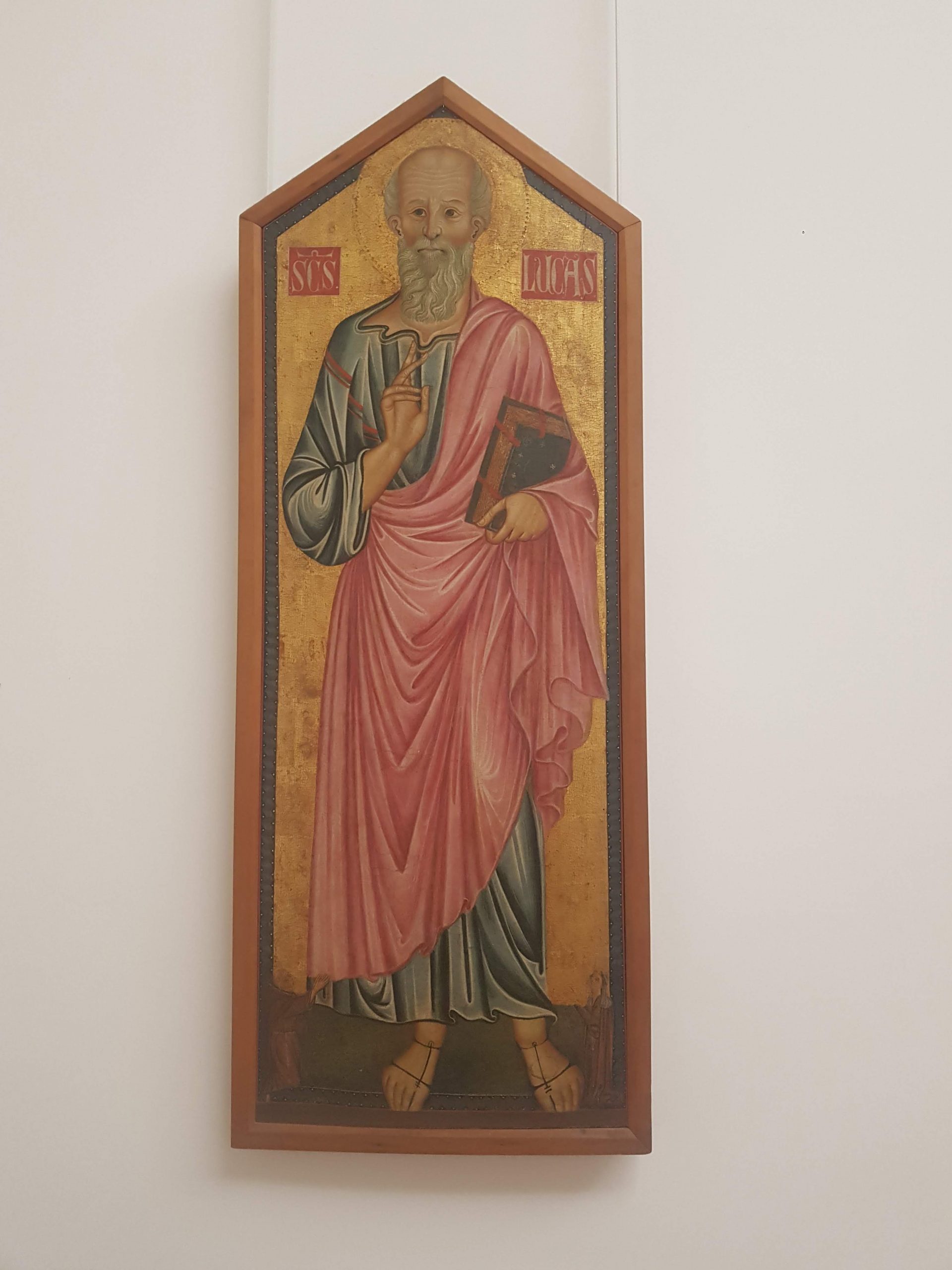
    The provenance of the artworks in the Uffizi is quite outstanding, although it’s not known which Franciscan church in Florence this was originally painted for. It was painted in around 1280 to 1290 and there’s a Poor Clare and a Franciscan friar at the saint’s feet. It was moved to Church of SS. Annunziata in the city at some stage, where it remained until 1881 when it came to the Uffizi Gallery. It was on display there until 1936, when it was moved to the Accademia Gallery.

    The painting arrived at Montegufoni Castle on 19 November 1942, taken there to protect it from damage or theft during the Second World War. It returned to the Accademia Gallery on 19 July 1945 and was moved to the Uffizi Gallery in August 1948, where it has remained since. It has been restored twice in the twentieth century and is now in Room 1 of the gallery’s collections. The artwork’s frame is original and it has vibrant colours, although how much of that is due to the restorations I’ll never know…..

  • Florence – Uffizi Gallery (Madonna Pisa)

    Florence – Uffizi Gallery (Madonna Pisa)

    When I was in the National Gallery of Art in Bucharest last week I struggled on occasion to find out much about the artworks, either at the site or on-line. The Uffizi Gallery is the reverse, hundreds of their works have their own Wikipedia pages, research documents and endless commentaries about their heritage.

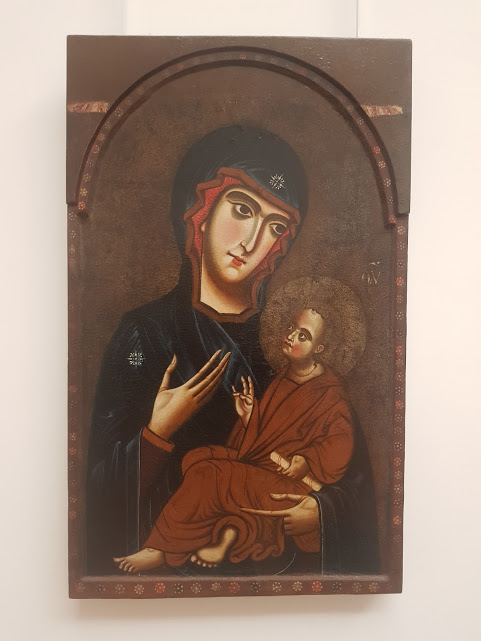
    This artwork was painted between 1250 and 1260, although some think it’s very slightly later, although it’s not known who the creator was, but it may have been Maestro della Sant’Agata. The painting is named after Luigi Pisa, who was a previous owner of the work, and whose heirs gave it to the Uffizi Gallery in 1933 and it has been on display since 1948.

    This was how the painting looked before 2015, in its unrestored state. Personally, as a non-art expert, I prefer this to how it looks now, it has heritage, authenticity and a sense of history to it. The current heavily restored painting is almost faultless, but I’m sure many like seeing how it might once have looked and it’s certainly now much cleaner.

    The Virgin Mary has long fingers and the gaze of Jesus and his mother deliberately don’t meet. The painting is in Room 1 of the Uffizi, a newly re-opened room which houses some of the oldest paintings which have mostly been recently restored.