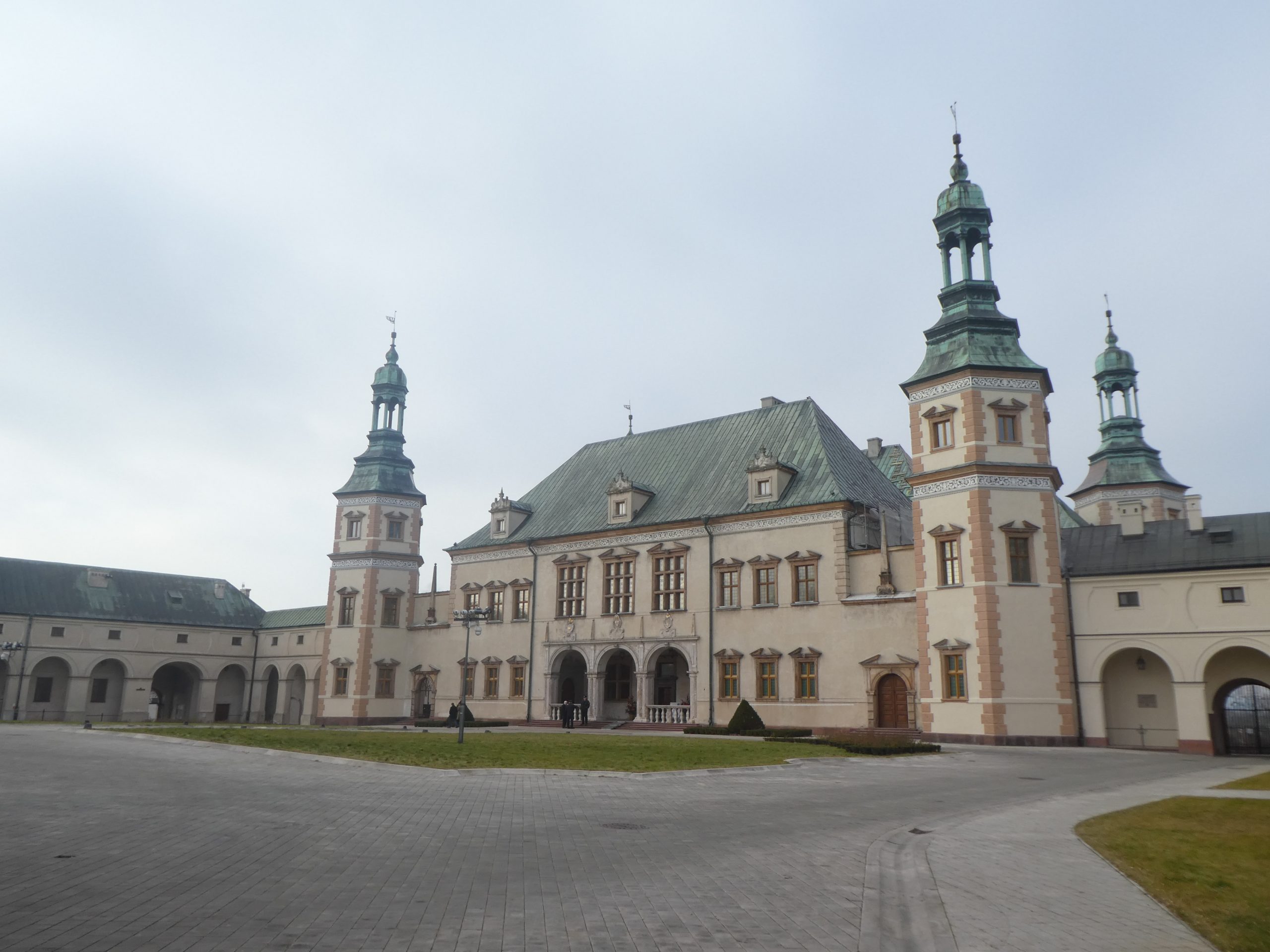
This is the National Museum’s outpost in Kielce, located in the former Palace of the Krakow Bishops. As can be seen from the front of the building, not much expense was spared for the comfort of the bishops. Very humble…. Today, the building is used as a museum, although some of it is currently closed due to renovation work.
The welcome at the counter was friendly, with the museum staff giving me a rather nice little book in English giving the history of the building. It’s one of the most professional books that I’ve seen given to visitors, equivalent to the books that museums usually charge several pounds for in the UK. I knew that entry to the museum was free on Saturdays, but I pretended to be excited when the staff member told me, not least because it was a relief I had got the correct day for free admission.
The museum has a little problem at the moment with trying to get visitors around the building when part of it is shut. This is a particularly big problem for the staff when they have an English visitor who can only follow very basic instructions in Polish, and even then, likely wrongly. So, I was escorted through sections of the building at some speed, but it was always done kindly. I did get lost at one point, but so did a Polish visitor, so we teamed up to work out where to go. All was well, such is the benefit of an international collaboration.

The first part of a visit to the museum is to see the former private rooms of the Bishops of Krakow, which were used between the building’s construction in 1642 until the State Treasury decided they wanted it in 1789. Above is the First Bishop’s Room, which was formerly the second antechamber, later used for private meals although it was for a long time a bedroom. Handily, there were cards in English in each room which gave a history of what it was once used for, as well as an explanation of the exhibits.

Originally a lobby, this is the small room that Bishop Kajetan Soltyk used as a bedroom.

The grand Upper Hall, where celebrations would have taken place.

This well is from the eighteenth century and goes down a long way. I like the little alcove which is visible in the floor below, with this well being located within the centre of the former Palace.
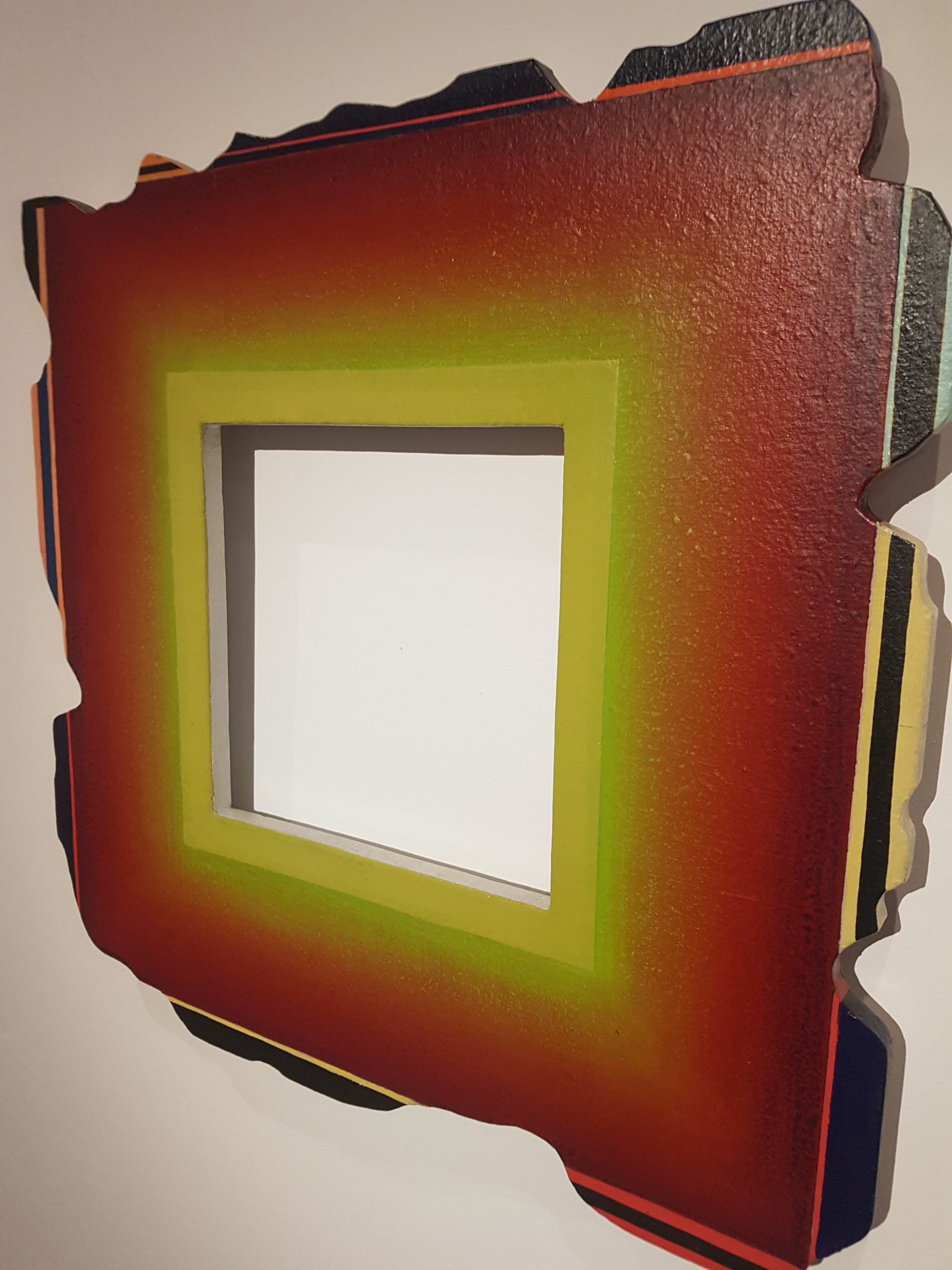
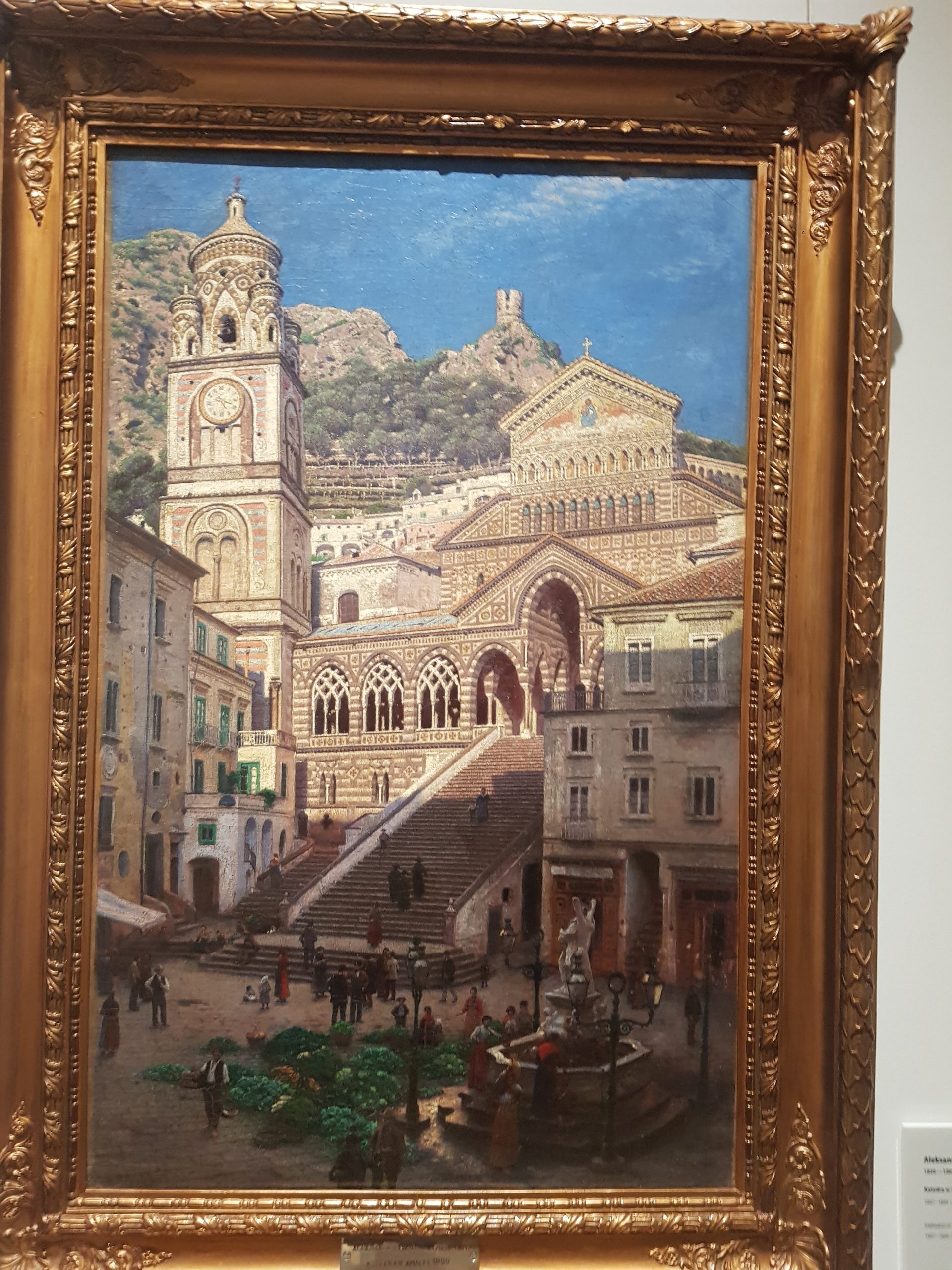
The next part of the visit is to the collection of the Polish paintings, which takes up fifteen or so rooms. There is also an international collection, but this is part of the museum which is closed, with many of the artworks temporarily being located at Szczecin. I’ve posted about the Amalfi Cathedral painting and the Concentrating Area XVII elsewhere, with the Polish collections being interesting, although I hadn’t heard of many of the artists.
It’s a grand building and it’s positive that it is in use as a museum, as it has been used for all manner of things since it was taken in 1789. It’s been used by the local government, as a technical academy, a mining school, by the Poles in military campaigns and by the Germans in military campaigns. There has been some restoration work to show the painted ceilings and interiors as they might have been, although much of the original features have remained.
All told, this is a nicely managed museum, especially given the technical problems they must be facing at the moment shunting visitors around the building. There’s also apparently an impressive garden which can be visited in the summer, which I can imagine isn’t as exciting in January……