
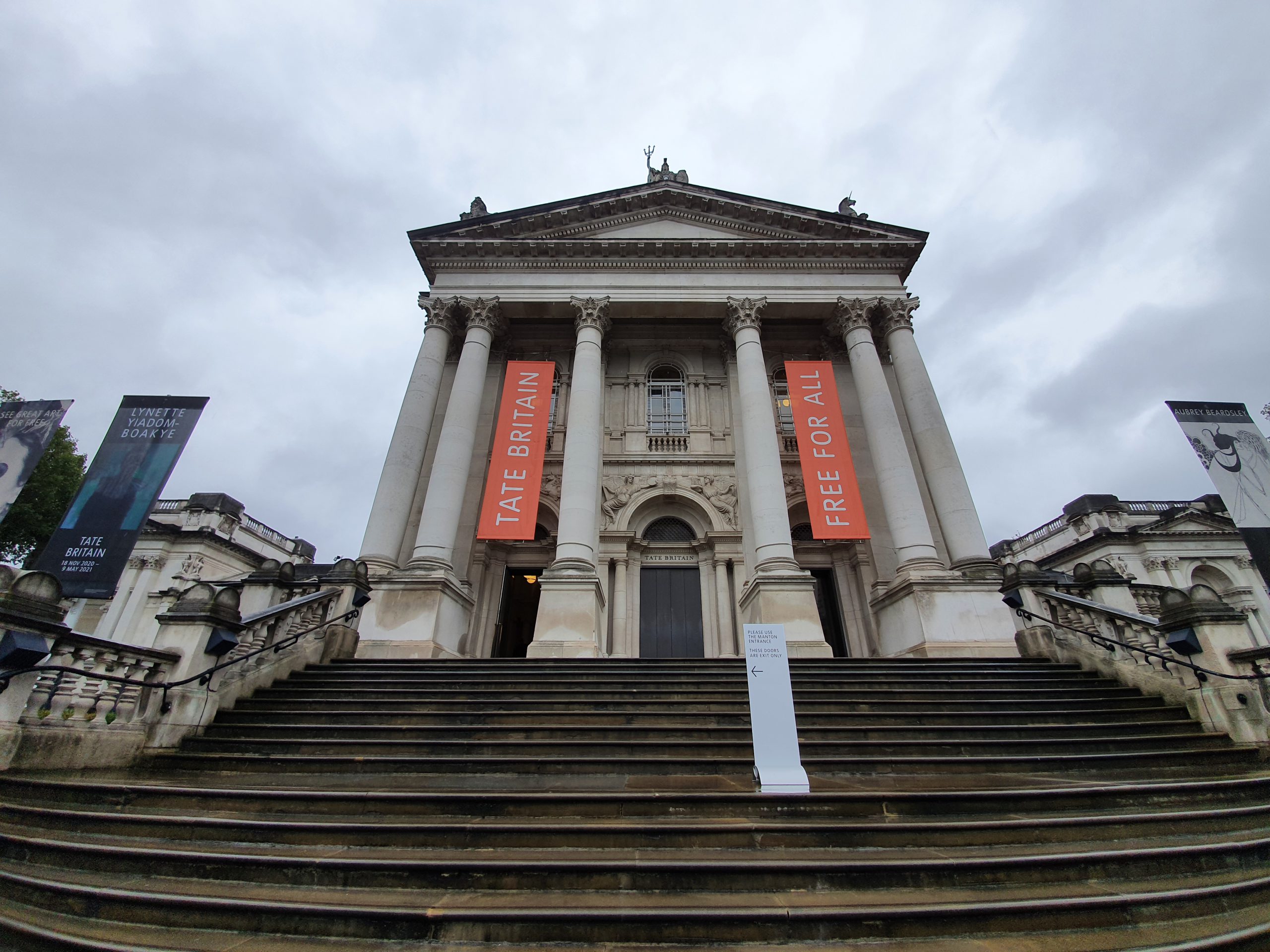
Tag: Tate Britain

  • London – Westminster – Tate Britain (Lady Kytson by George Gower)

    London – Westminster – Tate Britain (Lady Kytson by George Gower)

    This artwork doesn’t make Lady Kytson (1547-1628) look the most glamorous, but it wasn’t the done thing at this time to smile for portraits. She was a brave lady and remained a Catholic at a time when this wasn’t perhaps entirely wise under the Protestant rule of Queen Elizabeth I, meaning that Kytson was arrested and her activities were monitored.

    The artist was George Gower (1540-1596) who was a popular portrait painter of the period (there were more P’s there than I initially intended). This artwork was acquired by the Tate in 1952 and is the oldest surviving work by Gower, along with the portrait of her husband, Sir Thomas Kytson. By 1581, Gower had become the Serjeant Painter to Queen Elizabeth, meaning that he had become something of a court favourite. As an aside, the gallery only worked out what the hat she was wearing was meant to look like when the painting was thoroughly cleaned in 1995.

  • London – Westminster – Tate Britain (Portrait of Elizabeth Roydon by Hans Eworth)

    London – Westminster – Tate Britain (Portrait of Elizabeth Roydon by Hans Eworth)

    This painting of Elizabeth Roydon was completed in 1563 when she was aged 40. The artwork was painted by the Dutch-born Jan Eeuwowts, better known in English as Hans Eworth, and there are over 40 paintings by him that have survived. It’s not known for sure, but it may have been that Eworth was the court painter during the period of Queen Mary I’s reign between 1554 and 1558. Roydon was wearing all black as her second husband, Cuthbert Vaughan (1519-1563), had just died in a military engagement in Le Havre in France. She was though later to remarry a final time, to Sir Thomas Golding in 1564.

    This is beyond my art knowledge (as most things are), but the gallery notes that “the present painting is in extremely good condition for its age and, with its very fine brushstrokes, is carried out in a technique similar to that of a miniaturist. The translucency of the paint in the flesh areas means that the freely drawn underdrawing is now visible”.

    The heraldic arms in the corner of the painting were also added later on, for reasons likely related to wanting to prove some heritage line. The Tate acquired the artwork in 1972, when it was bequeathed to them by Miss Rachel Alexander and Miss Jean Alexander.

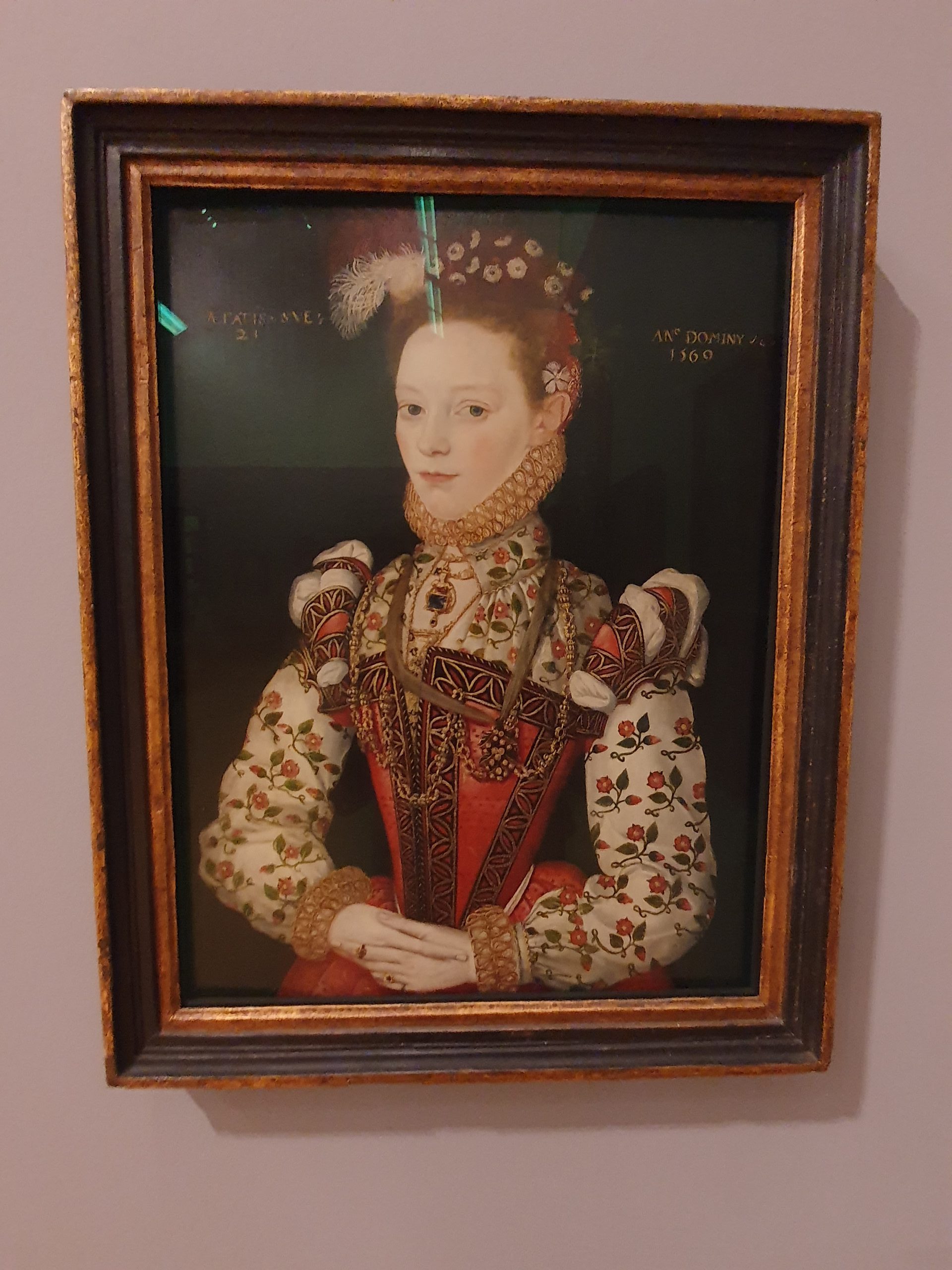
  • London – Westminster – Tate Britain (A Young Lady by Artist Unknown).

    London – Westminster – Tate Britain (A Young Lady by Artist Unknown).

    It’s not known who painted this artwork (given by the Friends of the Tate Gallery in 1961), which must be annoying as the Tate says that the same artist was thought to have had quite a body of work from the 1560s. It’s thought that the sitter was likely the Swedish-born Helena Snakenborg, later the Marchioness of Northampton, who was to be the chief mourner at the funeral of Queen Elizabeth I.

    The painting is also a reminder of the corset and bodice arrangement that was likely seen as a fashion necessity by women of wealth and prestige at this time. The artwork is from 1569 and, two years later, she married the Marquis of Northampton who was a fair bit older than her. The gallery notes that the carnation behind her ear was likely a symbol of that betrothal.

  • London – Westminster – Tate Britain (A Man in a Black Cap by John Bettes)

    London – Westminster – Tate Britain (A Man in a Black Cap by John Bettes)

    This is the oldest artwork in the Tate’s collections, painted by John Bettes (?-1570) in 1545. It’s not known who the sitter was, other than he was aged 26. Bettes was a court painter for King Henry VIII, so likely to have worked with Hans Holbein the Younger and records note that Catherine Parr paid Bettes for several of his paintings in miniature.

    The background was painted with smelt, a blue pigment, but this has over the centuries turned brown. Which isn’t ideal, although some Holbein’s paintings of King Henry VIII have avoided that fate and have retained their blue.

    It’s only through this painting that anything at all of use is known about John Bettes, as he wrote on the back of the artwork “done by John Bettes, Englishman”. This, along with the 1545 date on the front of the painting, meant that a few other artworks could be credited to Bettes as well. His son, John Bettes the Younger (?-1616) also became an artist who worked in London.

    The Tate acquired this artwork in 1897 and it’s oil painted onto oak.