Tag: Tallinn Trip

  • Tallinn Trip – Kadriorg Art Museum (The Martyrdom of St. Stephen)

    Tallinn Trip – Kadriorg Art Museum (The Martyrdom of St. Stephen)

    20241010_161041

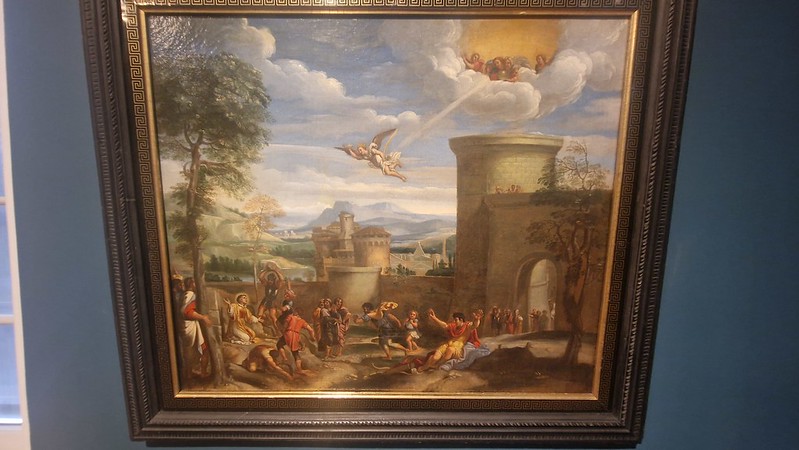
    More art commentary, not that I know what I’m talking about, but I do like a bit of old religious art. I don’t really fully comprehend why people used to like this imagery, you’re got the thoughtful St. Stephen being martyred here in some form of biblical game of dodgeball but with rocks being used as projectiles. And the angel has arrived a bit late in proceedings to be of much use here, a bit like some buses that I’ve tried to catch. But, I digress once again. There are a lot of rocks everywhere, but I suppose when you want to do some throwing it’s always handy to have them available.

    St. Stephen was the first martyr in Christianity, that’s quite a claim to fame. Many others followed in his somewhat rocky footsteps, but it’s a hefty price to pay for beliefs at what was quite early on in the whole religious movement. The artwork was painted in the studio of Annibale Carracci (1560-1609) and I have no idea whether it was for a church or a private household, but I can’t imagine it came cheap. It’s not that I dislike the artwork or the style, it’s just that I can’t see myself being cheered up by this stoning.

    On a different matter, he perhaps watches from his celestial perch with bemused amusement as the denizens of Norwich queue up for their steak bakes and sausage rolls, blissfully unaware of the saintly connection in the Greggs that lies on St. Stephen’s Street which is effectively named after him. I’d like a street named after me with a Greggs on I think. Right, I really am digressing now and perhaps regressing if I’m being honest at this rate.
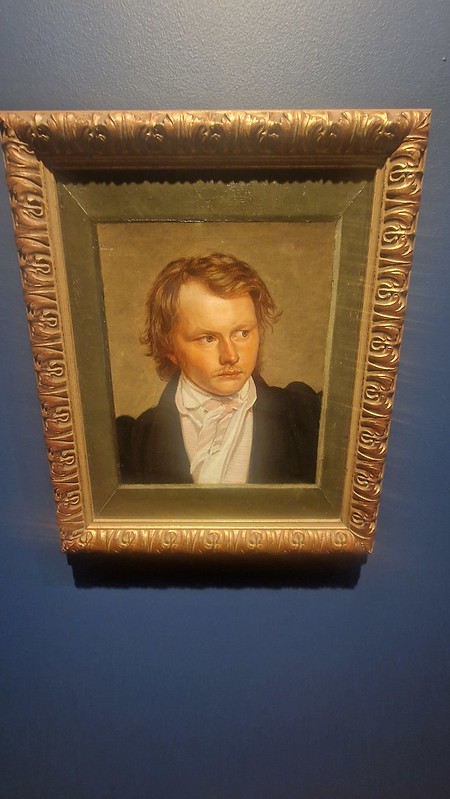
  • Tallinn Trip – Kadriorg Art Museum (Self-Portrait by Friedrich Ludwig von Maydell)

    Tallinn Trip – Kadriorg Art Museum (Self-Portrait by Friedrich Ludwig von Maydell)

    20241010_160747

    Firstly, Google AI is on top form in describing artworks, simply uploading this image produced the result:

    “Freidrich Ludwig von Maydell, the subject of the portrait, exudes an aura of quiet contemplation. His piercing blue eyes, framed by a cascade of silver hair, seem to hold a lifetime of stories and experiences. The gentle lines etched upon his face speak of wisdom and resilience, while the hint of a smile suggests a depth of kindness and compassion. He is adorned in a simple yet elegant attire, a dark suit and tie complementing his distinguished demeanour. The backdrop of the portrait is a blurred tapestry of warm colours, hinting at a life richly woven with diverse experiences and emotions.”

    I couldn’t have put it any better myself. The information board at the gallery notes that:

    “The portrait belonged to the collection of Freidrich Ludwig von Maydell’s grandson. At the outbreak of the Second World War, Eveline, donated the painting along with several other works and family archives to the Art Museum of Estonia on condition that if the works were not reclaimed within 35 years, or 10 years after her death, they would remain with the museum. In 1946, the museum gave the documents and family photographs accompanying the works, as well as many of Eveline von Maydell’s own works, to the National Archives”.

    Maydell (1795-1846) joined the Russian army before realising that he was better at art than being a soldier (and the tumult of the Napoleonic Wars likely didn’t make for a peaceful period in the armed forces compared to the potential excitement of self-expression away from the front line), learning new artistic skills in Germany and Italy before returning to Estonia. He died in Tallinn in 1846 of cholera, part of numerous epidemics of the disease which were sweeping across Europe at that time.

    Back to Eveline von Maydell (1890-1962), she was a silhouette artist and clearly feared the implications of the Second World War not just from a human perspective but also fearing for fragility of civilisation on a wider level. She was fortunate to be a US citizen, it meant that she was able to leave Estonia for safety in the United States before the Soviet occupation began in 1940. I mention all this as there’s something about the enduring power of the artworks of the Maydell family to survive the darkest of times which Estonia has faced.
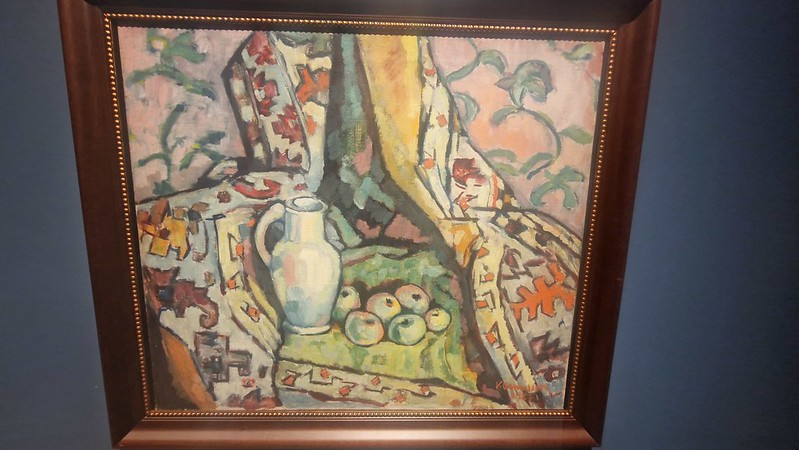
  • Tallinn Trip – Kadriorg Art Museum (Apples on a Rug by Villem Ormisson)

    Tallinn Trip – Kadriorg Art Museum (Apples on a Rug by Villem Ormisson)

    Here’s Julian the art critic once again…

    20241010_160706

    I don’t really understand artworks like this, although it’s from 1927 and is something of its time. However, I asked Google AI what it thought of the painting and it had quite a lot to say about it.

    • The Cloth: A cascading Morning Glory vine, symbolising affection and the ephemeral nature of beauty, entwines with bold Sunflowers, representing adoration and longevity. These blossoms dance against a backdrop of Pink Roses, whispering gratitude and grace.
    • The Apples: Scattered like fallen fruit, Yellow Apples convey success and good health, while hints of Green Apples symbolize new beginnings and harmony.
    • The Pitcher: A vessel of purity, the White Pitcher echoes the innocence of Lily of the Valley, promising a return to happiness.

    The artwork’s overall message is one of hopeful abundance, with a touch of melancholy for the fleeting nature of beauty. It’s a reminder to cherish the present moment, like a bouquet that blooms only briefly.

    I’m not sure there’s much hopeful abundance here, it’s some apples on a rug and that’s the name of the artwork. Google AI really has been outstretching itself here to come up with terminology and thoughts such as this and the technology behind it is fascinating to me. The arguments it’s making are coherent and sophisticated, although have little resemblance to reality.

    The artwork is by Villem Ormisson (1892-1941) and I wanted to mention him as he committed suicide in 1941 as he was so distraught about the Second World War. The Soviets hated him and posthumous exhibitions of his works were banned following the Second World War, he was seen as a dissident. Much as still life artworks don’t do much for me, it shows how much the Soviets hated anything vaguely artistic as it hardly seems revolutionary…..

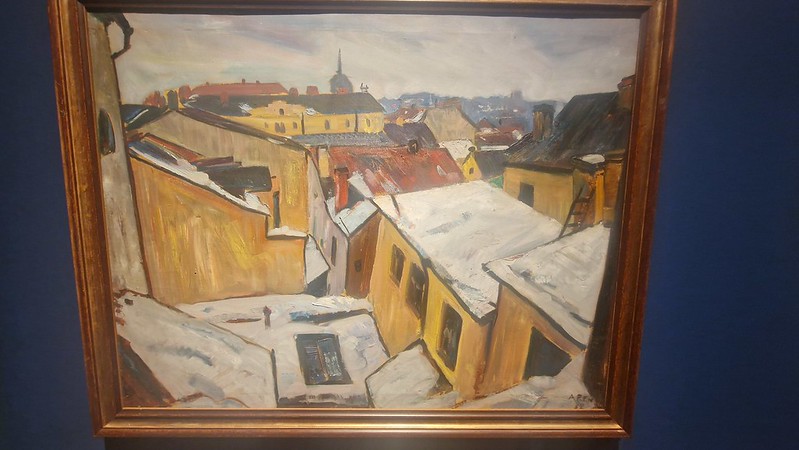
  • Tallinn Trip – Kadriorg Art Museum (Tartu by Peet Aren)

    Tallinn Trip – Kadriorg Art Museum (Tartu by Peet Aren)

    And another one in my series of irrelevant art posts.

    20241010_160641

    I’d like to visit Tartu, the second largest city in Estonia which has a mostly derelict cathedral and is the home of Pühaste Brewery (I mean Tartu, not the derelict cathedral). Peet Aren (1889-1970) painted this in 1928 and the Tallinn City Government, in a fit of either foresight or impulsive bidding, snagged it a few years later. There’s a wintry atmosphere and loose brushwork, I thought it was quite evocative of an early twentieth century European city.

    Lovely oil painting as it is, it feels intriguing that this must have felt such a different time for Aren, as he fled Estonia in 1944 and lived the rest of his life in New York. The element that is perhaps unusual is that there is a lot of information on-line about his pre-war paintings, but nearly nothing about after he arrived in New York although he did keep painting. Whilst in the big city, he did seem to do a few street scenes but I can’t see any evidence that he captured the essence of the city, namely hot dogs. This whole thing about just how many people had their place of residence permanently changed because of the outcome of the Second World War interests me as I wonder how individuals coped with it, suddenly scattered around the world in a location they might never have imagined and then trying to lead a new life.

    I feel that I’m wittering again…..

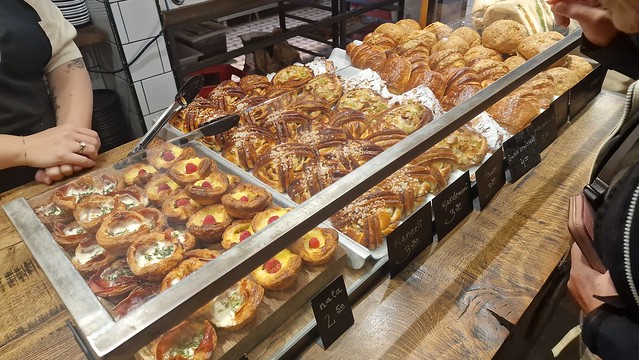
  • Tallinn Trip – Rost

    Tallinn Trip – Rost

    20241009_094515

    Steve found this rather decadent food option for breakfast and it was near to where we needed to get our tram from. The queue wasn’t too bad when we got there, but at times it’s evidently a victim of its own success with a shifting line that sometimes snaked outside the door and onto the pavement.

    20241009_092601

    The breakfast selection.

    20241009_092714

    My blurry photo of the kitchen, but it’ll have to do. The cafe is cosy but modern, not an easy design model to be able to deliver. There’s also some high seating, which is my personal favourite arrangement for being comfortable, although I’m aware that others vary in that opinion.

    20241009_092737

    And my cardamom pastry, which was actually really rather lovely and had a depth of flavour to it. The top was crispy, the cardamon was aromatic and sweet, although it might not have been the healthiest of breakfasts. To be fair, I often don’t prioritise the most healthy of breakfasts though, there’s a need for balance in life.

    20241009_092725

    I can understand their logic here, it’s a small bakery which is very busy and has a fast turnover of customers. There are better options for people like me who like to see for ages with a laptop where it’s easier to get a second drink and where there’s simply more space. I noticed they’ve had a little push-back about this on-line, but cafes such as this aren’t equipped to be offices for those who want to spend three hours working in exchange for the purchase of a single espresso.

    It’s all very on-trend, functional and welcoming, a rather good choice from Steve and we were unanimous in that. To be able to maintain an average of 4.8 on Google Reviews really is very impressive though in such a high volume business. We left feeling more alive and a little more caffeinated.

  • Tallinn Trip – Pohjala Brewery Taproom

    Tallinn Trip – Pohjala Brewery Taproom

    20241008_194119

    I didn’t bother with my usual three choices for everyone to pick from for this evening’s food, as I wanted to go to Pohjala Brewery’s Taproom and so that’s where we were going. I can be quite demanding like that, but my friends generally like my beer-fuelled odysseys even if they’re not the most hardcore of beer drinkers.

    20241008_194205

    Anticipation increasing…..

    20241008_194234

    Views over the taproom. Pohjala are the largest craft brewery in the Baltics and they’ve been trading since 2011, known (well, known by me at least) for their range of dark beers.

    20241008_194304

    I was excited and delighted to see that were flights for €15 which included 100ml of five different beers, just look at the almost sacred text of the craft beer board. I noticed that there were some exceptions and I expected to be told that the high ABV beers were excluded. Fortunately, the only beer that was excluded was the Brewdog they had imported, the only beer that I didn’t really need to try in Estonia. It did mean that I could go for the beers that were over 10%, some true behemoths of craft excellence that I just knew would be the decadent treat I needed.

    20241008_194432

    I was surprised and delighted by the breadth of the choices and it soon became evident to me that I was going to need two flights. The bar was busy, with what looked and sounded like plenty of British ex-pats, the lingua franca was very much English.

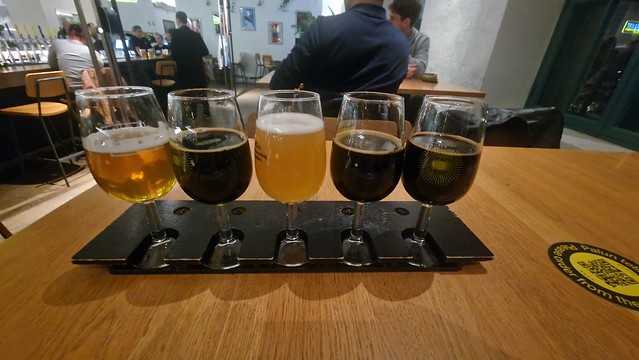
    20241008_195203

    The first flight. The second one from the left is the Tallinn at Dawn, rich tasting with chocolate, coffee, roasty flavour and delicious, with an alcoholic kick at the end although that was unsurprising as it was 11%. The one at the far right is the Dark Engineering from the Cellar Series, flavours of whisky, oatmeal, cherry, vanilla, chocolate and coffee, all making for a proper warming beer which was my standout of the evening.

    20241008_203149

    I was pleased with this, although we were all bemused as to why the chips were quite a small portion for the price, whilst other elements seemed generous. The chicken was tender and I liked that the skin was crispy, I can’t be doing with the soggy disappointment of flabby chicken skin, the culinary equivalent of a wet blanket.

    20241008_211906

    The second flight. The one on the right is Cosy Nights, smooth, sweet and chocolately, a suitable way to end the evening.

    20241008_205559

    Bev and Susanna were excited by this lovely beer visit. They were a bit excited by the lagers, as was Ross, and at least it wasn’t mass-produced rubbish even if they didn’t veer into the more liquid symphony of flavours of beers that Steve and I were enjoying.

    20241008_220620

    And walking back to the tram. A marvellous evening and Pohjala have gone up a notch in my list of favourite breweries, there was a little bit of magic to the surroundings and I could leave with a warm glow. We might have had a slight wobble in our step when leaving, but that to me was just testament to the quality of the beer and potency of those Estonian hops.

  • Tallinn Trip – Fat Margaret Museum (Views From the Top)

    Tallinn Trip – Fat Margaret Museum (Views From the Top)

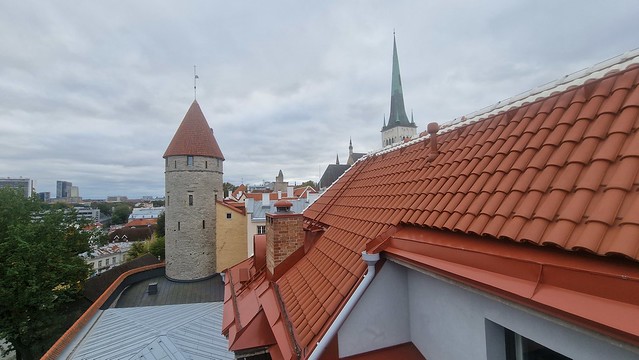
    The views from the top of the Fat Margaret Museum. There was a slight element of déjà vu as we had already climbed a number of tall buildings in the city, and I never failed to be brave of course, but it was interesting to see the range of architectural styles. I partly hoped that there would be something just a little different at the top, maybe a petting zoo or a bouncy castle, although perhaps the latter isn’t the best thing to put at the top of a building. The medieval city was visible with bits of the ancient walls and I’m sure that I saw a squirrel jumping around on a nearby roof, but it was probably an athletic rat. There was a lift up and down this tower, not something I benefited from later in the week when I quite exhausted myself climbing a church tower, but more of that soon…..

    20241008_162402

    20241008_162437

    20241008_162451

    20241008_162630

    20241008_162735

  • Tallinn Trip – Fat Margaret Museum (Oldest Cobblestone Pavement in Tallinn)

    Tallinn Trip – Fat Margaret Museum (Oldest Cobblestone Pavement in Tallinn)

    20241008_160043

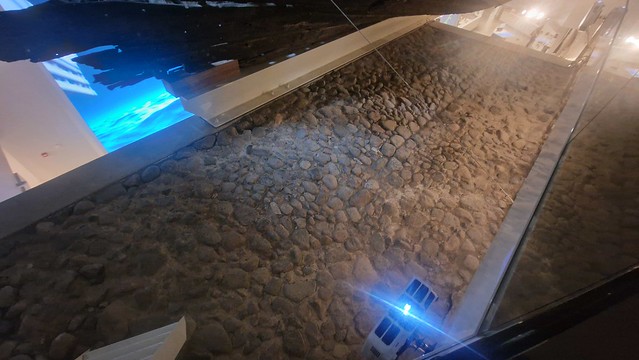
    This is the sort of random stuff that appeals to me and as a quick backdrop to this, the museum is built in an old building which has some historic interiors. And this seventeenth century cobblestone pavement was at ground level in what is described as the “frontal fortification zone”. The museum notes that this is “probably the oldest cobblestone preserved cobblestone pavement in Tallinn, which is stacked so as to form a rainwater drain”. There were hardly any archaeological finds when this area was excavated, the information board said that “order prevailed in the military site and the courtyard was kept clean”.

    This whole thing only makes sense to someone not there by looking at https://arheoloogia.ee/ave2019/AVE2019_15_Reppo-Kadakas.pdf, the second page of that document (noted 178 at the top), this pavement is the uppermost cobblestone pavement in the bottom right of the plan. There’s a photo of the pavement on page 7 (noted 183) when it was being excavated. It’s all been neatly and carefully incorporated into the museum.

    20241008_154911

    More of the old structures.

    20241008_155605

    A part of the old city wall.

    20241008_155951

    A drainage channel for sewage and rainwater, dating to the seventeenth century.

    I’m conscious that I must have reached a certain age where I find inspecting old brickwork to be something notable, but I’m more into moss covered castles than modern art museums. You know where you are with old stones…..

  • Tallinn Trip – Fat Margaret Museum (Tallinn’s Time Capsule Boat)

    Tallinn Trip – Fat Margaret Museum (Tallinn’s Time Capsule Boat)

    Carrying on with my little series of posts about what I considered to be interesting things at the Fat Margaret Museum.

    20241008_160226

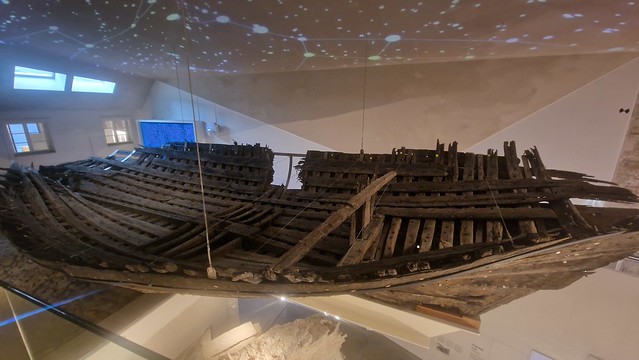
    What is evidently a rather fascinating discovery provided something of a unique window into the city’s maritime past and it’s this old boat, which I accept is a little past its best. During construction work near the Old City Harbour, this 700-year-old cog, a type of merchant vessel prevalent during the Hanseatic League era, was unearthed. Dating back to the 1360s, the ship’s remarkable preservation offered new insights into medieval shipbuilding and trade.

    20241008_154548

    Viewed from underneath, the cog, which is 24.5 metres long and 9 metres wide, was carefully excavated and is now on display at the museum. Its construction, using overlapping oak planks (a technique known as clinker building) sealed with animal hair and tar, is rather a testament to the craftsmanship of medieval shipbuilders given that it hasn’t fallen apart. The vessel’s flat bottom and single mast made it ideal for navigating the shallow waters and varied conditions of the Baltic Sea trade routes, which extended from the North Sea to Russia. I was going to see what Bev and Susanna thought about the arrangement, but they were around five rooms behind me reading every word they could find. Ross had already gone back to the hotel, worn out from museums.

    20241008_160019

    This particular cog is particularly significant (I obviously didn’t know this, it’s written on the information board) because it may represent a previously undocumented Scandinavian design. While initially thought to be a transitional form between a cog and a hulk (apparently a larger vessel with two masts), further research suggests it may be unique to the region. The ship’s cargo hold contained a wealth of artefacts, including everyday items like leather shoes and wooden spoons, as well as tools and even the skeletal remains of two rats. They even discovered a functioning dry compass (https://en.wikipedia.org/wiki/History_of_the_compass#Dry_compass), the oldest of its kind found in Europe, highlighting the advanced navigational technology of the time. The Tallinn cog is now something of a highlight of the museum’s collections and it’s not the most subtle of little things, being the first thing visitors see when they enter.

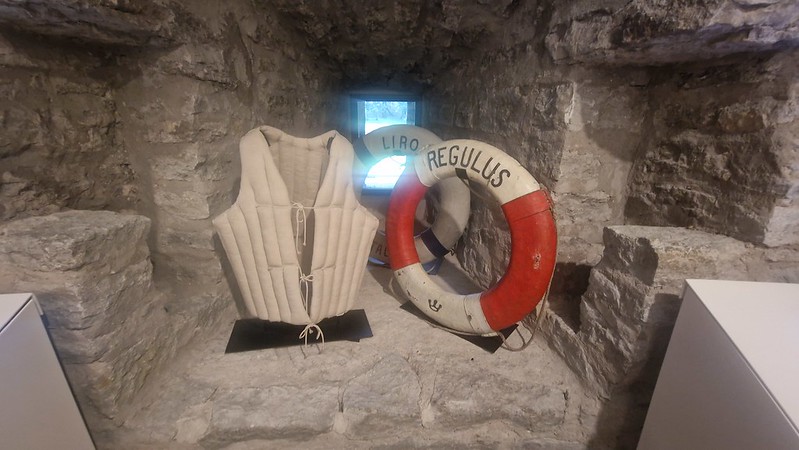
  • Tallinn Trip – Fat Margaret Museum (Life Buoy from Cargo Steamer Regulus)

    Tallinn Trip – Fat Margaret Museum (Life Buoy from Cargo Steamer Regulus)

    The next few posts will be some things that I thought were interested from the Fat Margaret museum (that’s the name of the tower that the maritime museum is located in).

    20241008_161214

    This is the life buoy from the cargo steamer Regulus, found on the shore of the Kopu Peninsula before the Second World War. The ship was made in Rotterdam for a Finnish company, being completed on 28 April 1921. It was surrendered to the USSR as war reparations in January 1945 and then renamed Parnu. And this is what particularly interested me, I hadn’t realised that Finland had to pay war reparations to the Soviet Union, but they did and it was worth around $6.5 billion in today’s money (although around a third wasn’t paid as the matter was later renegotiated). Finland had fought alongside Germany against the Soviet Union during the Second World War, something of an extension of the Winter War fought between Finland and the Soviet Union between 1939 and 1940. The Regulus wasn’t a one-off either, Finland had to give the Soviet Union 500 new sea vessels and an additional 119 used ones. I’m not sure quite why this life buoy was lost from the ship, I can only imagine that this story has been lost to history.