Tag: Tallinn Trip

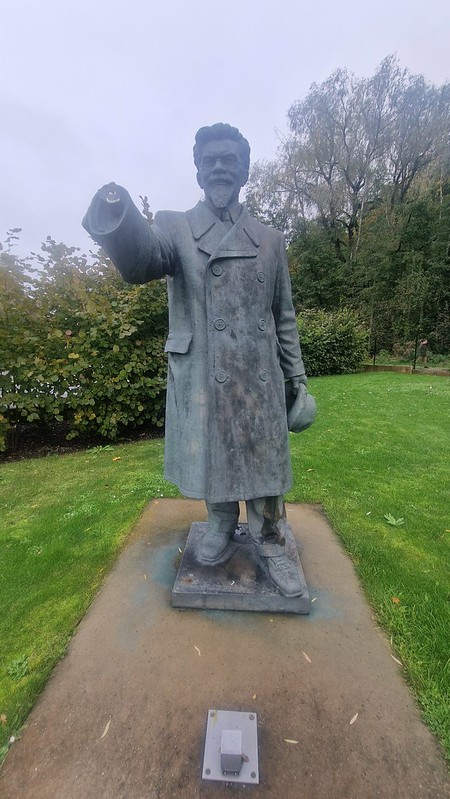
  • Tallinn Trip – Soviet Statue Graveyard (Statue of Mikhail Kalinin)

    Tallinn Trip – Soviet Statue Graveyard (Statue of Mikhail Kalinin)

    20241010_150934

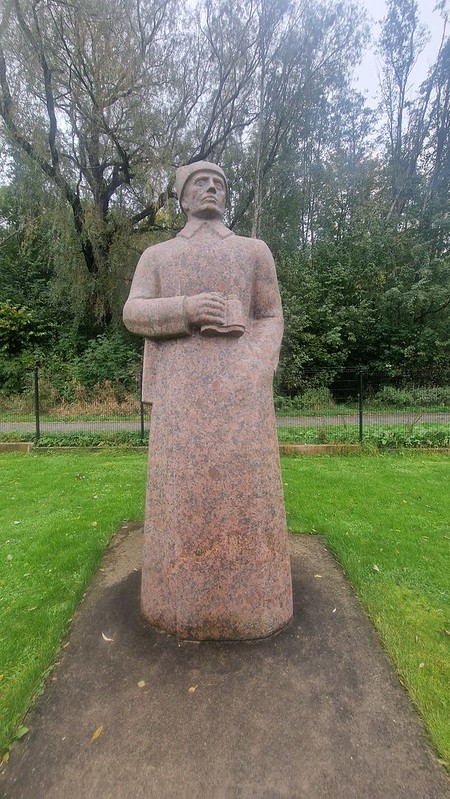
    Mikhail Kalinin (1875-1946) was a prominent figure in Soviet history, known for his long tenure as head of state, first of the Russian Soviet Federative Socialist Republic and then of the Soviet Union, from 1919 to 1946. He was often referred to as the ‘All-Union Elder’ due to his peasant background and his perceived role as a grandfatherly figure for the nation. Born into a peasant family, Kalinin’s early life was marked by hard work and a desire for education. He became involved in revolutionary activities as a young man, joining the Bolshevik faction of the Russian Social Democratic Labour Party.

    Kalinin played an active role in the Russian Revolution of 1917, and after the Bolsheviks seized power, he rose through the ranks of the Soviet government. His appointment as head of state was partly due to his peasant origins, which the regime used to portray itself as representing the interests of the common people. However, despite his high position, Kalinin’s actual power was limited, especially after Joseph Stalin consolidated his control over the Soviet Union. Kalinin’s role was largely ceremonial, and he often acted as a spokesperson for the regime, travelling throughout the country and meeting with ordinary citizens, a bit like John Prescott with Tony Blair. Effectively, he was just a puppet, unable to do anything and even unable to save his wife from political repression.

    After his death, the Estonian authorities wanted a statue as they obviously didn’t have enough statues of other people dotted around everywhere. They held a competition and then rejected all of the results, instead going with a design by Aleksander Kaasik. In 1950, they plonked the granite and bronze arrangement down at what was then Stalingrad Square, but is now Towers’ Square. The museum notes that when Estonia voted for independence some workers at the Kalinin Factory, which was initially constructed as a railway works, took the statue into protection for fear that the city authorities might remove it. Anyway, this plan worked marvellously until the guards had a lunch break and the authorities took it on 3 May 1991. At some stage the hand has been lost, likely to bronze thieves. Not much exists in Estonia now with his name on it, although for the moment at least his name lives on in Königsberg, known by the Russians as Kaliningrad and one of the few cities to have kept the name of a leading communist.
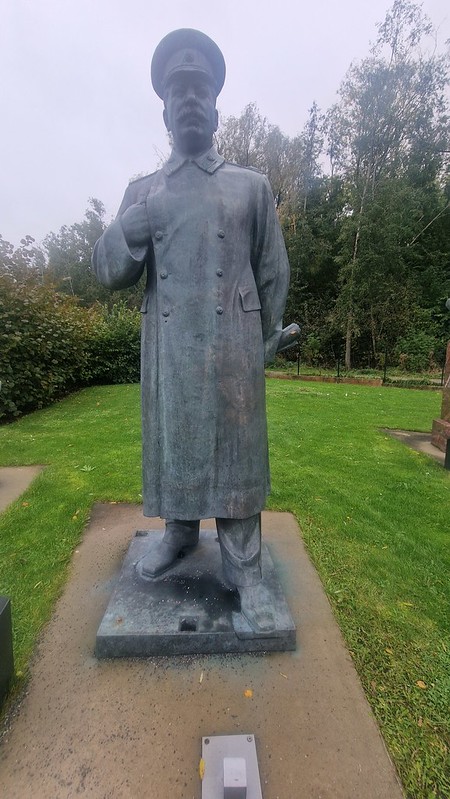
  • Tallinn Trip – Soviet Statue Graveyard (Statue of Joseph Stalin)

    Tallinn Trip – Soviet Statue Graveyard (Statue of Joseph Stalin)

    20241010_150908

    The timeline of this sculpture is different to the ones that I’ve wittered on about so far on this blog. It’s a statue of Joseph Stalin (1878-1953) and it was unveiled in Tallinn on 20 July 1950 in a green area opposite the Baltic Station. The bronze statue was designed by Nikolai Tomski and used metal that had been melted down from a statue of Martin Luther. When Stalin died the Soviet authorities thought that they might rethink things somewhat and so the statue was removed and put into long-term storage at the Department of Roadbuildings and Repairs, barely lasting ten years. It was nearly sold for scrap metal, but following Estonia’s independence it was brought to the museum.

    There’s no nuance needed here really when writing about Joseph Stalin. Google AI puts it as succinctly as I could….. “Joseph Stalin is widely regarded as one of history’s most brutal and tyrannical dictators. His actions caused immense suffering and death, and his legacy is overwhelmingly negative.” It’s thought that there might have been tens of thousands of statues of Stalin in the Soviet Union in the 1950s and a few of them are still standing, mainly in Georgia and remote areas still heavily under communist influence.

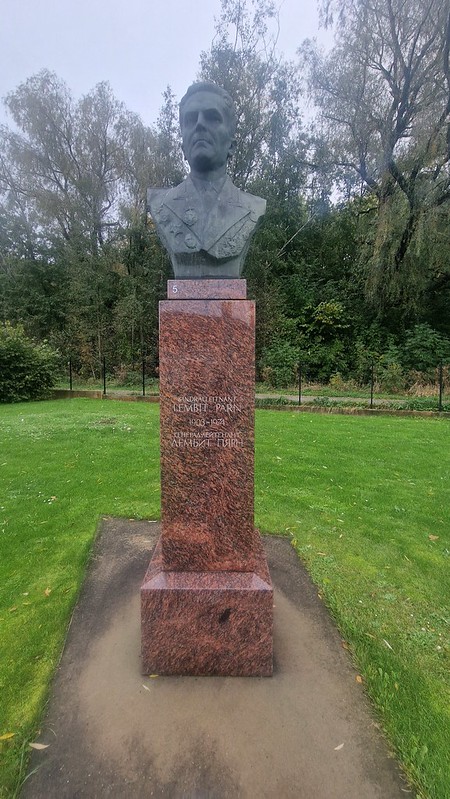
  • Tallinn Trip – Soviet Statue Graveyard (Memorial to Lembit Pärn)

    Tallinn Trip – Soviet Statue Graveyard (Memorial to Lembit Pärn)

    20241010_150838

    This memorial commemorates the life of Lembit Pärn (1903-1974) and it’s unusual in this little series of posts to have someone that actually wasn’t executed by the Soviets and then forgiven a couple of decades later. Pärn was born in Suure-Kõpu Parish in Estonia and he began his military career in the Estonian Army in 1926. He furthered his training at the Military Academy in Tallinn and held various officer positions. When the Second World War erupted and the Soviet Union occupied Estonia, Pärn was drafted into the Red Army. He rather liked this arrangement and he steadily climbed the ranks and was ultimately appointed commander of the 8th Estonian Rifle Corps in 1942. This corps, largely made up of Estonian conscripts, participated in crucial battles on the Eastern Front, including the Battle of Narva.

    At the end of the Second World War (and above is a photo of him in Tallinn on 16 June 1945) Pärn remained in the Soviet Army, holding several high-ranking positions, such as serving as the Estonian SSR’s People’s Commissar of Defence in 1945. He was also instrumental in establishing Estonian military units within the Soviet military structure and trying to resist any attempts of the country becoming independent.

    This bronze and granite memorial was unveiled on 5 May 1985 in Tallinn, designed by Arseni Mölder, and it lingered for longer than many others in this museum collection as it was only removed on 29 May 2001 on the orders of the Tallinn City Government. He was probably a brilliant military commander (and he did well not to be executed in the Great Purge) and is buried in Novodevichy Cemetery, the same location that Boris Yeltsin was interred.

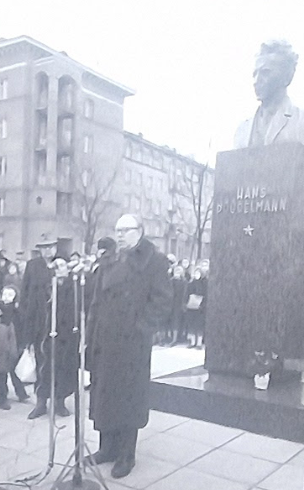
  • Tallinn Trip – Soviet Statue Graveyard (Memorial to Hans Pöögelmann)

    Tallinn Trip – Soviet Statue Graveyard (Memorial to Hans Pöögelmann)

    20241010_150802

    Coming back to this series, and there aren’t a huge amount left, this is a statue of Hans Pöögelmann. He was born on 30 December 1875 in Aidu Parish, Governorate of Livonia (present-day Estonia) and was a dedicated socialist and later communist politician and poet. He began his career in journalism and became deeply involved in the Estonian socialist movement, joining the Bolshevik faction. In 1917, he was elected to the Estonian Provincial Assembly and rose as a leading figure in the Estonian Bolshevik movement, translating The Communist Manifesto into Estonian. However, after the Estonian War of Independence, Pöögelmann left Estonia for the Soviet Union in 1919. He continued his political activities and writing while in the USSR, producing numerous works on economics and the workers’ movement in Estonia. During the Stalinist Great Purge in 1938, Pöögelmann was arrested on charges of ‘anti-Soviet activities’ and executed in Moscow. His legacy was later revisited, and he was officially rehabilitated by the Soviet authorities after Stalin’s death.

    The memorial was designed by August Vomm and was unveiled in Tallinn at the Imanta Street Square on 30 December 1960. The bronze element was removed in July 1992 and then the granite base was removed in spring 2000. From 25 September 1959 until 1 January 1991, there was a Hans Pöögelmann Street in Tallinn, but it has now been renamed Kaupmehe tänav (or Merchant Street). There’s limited evidence to suggest that he was involved directly in war crimes, but he remains a controversial figure.

  • Tallinn Trip – Soviet Statue Graveyard (Memorial to Jaan Anvelt)

    Tallinn Trip – Soviet Statue Graveyard (Memorial to Jaan Anvelt)

    20241010_150729

    This memorial is to Jaan Anvelt (1884-1937), a prominent Estonian Bolshevik revolutionary and writer who played a significant role in the political landscape of Estonia during the early 20th century. Born in Viljandi County, he became involved in socialist politics at a young age and was a member of the Russian Social Democratic Labour Party and a leader of the Estonian student socialist movement. Anvelt was a passionate advocate for the rights of workers and peasants and believed in the establishment of a socialist state in Estonia.

    During the tumultuous years of the Russian Revolution and the subsequent Estonian War of Independence, Anvelt emerged as a key figure in the Estonian Communist Party. He served as the first premier of the Soviet Executive Committee of Estonia and later as the chairman of the Council of the Commune of the Working People of Estonia. Anvelt was instrumental in establishing Soviet power in Estonia, albeit briefly, before it was overthrown by Estonian and German forces.

    Following the Estonian War of Independence, Anvelt fled to Soviet Russia, where he continued his political and literary activities. He held various positions within the Communist Party and the Soviet government, contributing to the development of Estonian culture and literature within the Soviet Union. However, Anvelt’s fate took a tragic turn during Stalin’s Great Purge in the 1930s. He was arrested by the NKVD in 1937 on fabricated charges of counter-revolutionary activities. Imprisoned and subjected to torture, Anvelt died from the injuries sustained during a brutal beating while in custody.

    Designed by Martin Saks, the statue was placed on what was then Jaan Anvelt Street on 24 July 1962 and it remained there until 1992, with a pressure to remove it more in case it was stolen by criminals for scrap metal than any immediate need to take him off display. It would be easy to write him off as a traitor to the Estonian people, but he was a well read man and he has made significant contributions to literature. As with many historical figures, Estonians and Russians tend to have rather different perspectives on his legacy. Let’s just say he’s a reminder that history is rarely black and white, and even revolutionaries can have a complicated story to tell.

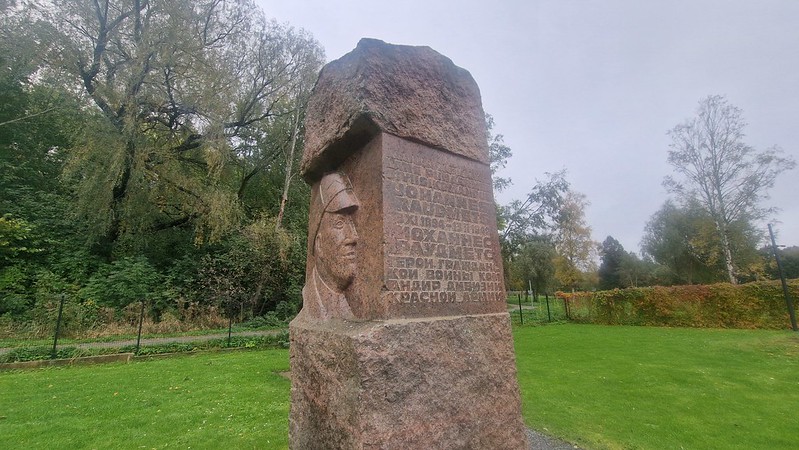
  • Tallinn Trip – Soviet Statue Graveyard (Memorial to Johannes Raudmets)

    Tallinn Trip – Soviet Statue Graveyard (Memorial to Johannes Raudmets)

    20241010_150723

    Next in line in the almost comedic line-up of Soviet heroes that the Soviet Union executed is Johannes Raudmets (1892-1937). He was an Estonian-born Soviet military leader who played a significant role in the Red Army during the tumultuous years of the Russian Revolution and Civil War. Born in Virika, Governorate of Estonia, he began his military career in the Imperial Russian Army during the First World War. However, with the outbreak of the Bolshevik Revolution, he switched allegiance and joined the Red Army, where he quickly rose through the ranks.

    Raudmets proved to be a skilled and capable commander, earning the prestigious Order of the Red Banner for his service. He held various important positions within the Red Army, including command of the 15th Rifle Division. His dedication to the Bolshevik cause and his military achievements led to his promotion to the rank of Komdiv (division commander), a high-ranking position within the Soviet military hierarchy. In 1937, during the Great Purge, he was arrested on fabricated charges of treason and conspiracy. Despite his loyal service to the Soviet Union, he was convicted and executed on 9 September 1937. In 1966, the Soviet Union changed their mind and decided he was a hero.

    20241010_150707

    The museum itself notes that the situation is entirely ridiculous, noting that some said “the only thing red about Raudmets was the colour of the monument.” And note that even when this granite statue, designed by Ernst Kirs, in 1975 was installed they pretended that he had died in 1942 so it looked more like he died fighting in a war rather than being killed by Stalin.

    His wife attended the unveiling of the statue, which was placed in Paide to mark the 35th anniversary of the Estonian Soviet Socialist Republic. I don’t know what she thought about all of this, but I suspect it’s what the Soviet secret police told her to think. This memorial actually stayed in place until 2007 before it came to the museum, not least perhaps as Raudmets wasn’t really a direct threat to Estonia.

  • Tallinn Trip – Soviet Statue Graveyard (Memorial to Jakob Palvadre)

    Tallinn Trip – Soviet Statue Graveyard (Memorial to Jakob Palvadre)

    20241010_150649

    Jakob Palvadre (1889-1936) was an Estonian politician and Soviet military leader, born in Tõlliste Parish in southern Estonia. He pursued academic studies in history and philology at the University of Tartu and later in Saint Petersburg. From a young age, Palvadre embraced socialist politics, joining the Estonian Social Democratic Workers’ Party and actively participating in the 1905 Russian Revolution. He served in the First World War, first in the Russian Imperial Army and then in the Red Army, obviously having some competence as they kept promoting him. He then fought against Estonians wanting independence and later worked as a history professor at Leningrad State University. However, in 1936, the Soviet Union declared him as an enemy against the people and he was taken onto a barge and drowned on 11 October 1936, with his family then being repressed.

    Anyway, the Soviet Union decided that perhaps he wasn’t an enemy of the people and this granite statue, designed by Ernst Kirs, was unveiled on 28 October 1981 in Valga City Park. This is where this becomes a complete mess for his reputation. So, initially he was a Soviet fighting against the Estonians. Then the Soviets said he was a spy for the Estonians fighting against the Soviets. Then, after they executed him, they changed their minds and said he was a Soviet hero fighting against the Estonians. Then Estonia becomes free and the population of a liberated nation don’t want this enemy of the Estonian people on display. The statue was taken down on 18 September 1991 by members of the Estonian Defence League and brought to this museum in 2008.

  • Tallinn Trip – Soviet Statue Graveyard (Memorial to August Kork and Aleksander Kukk)

    Tallinn Trip – Soviet Statue Graveyard (Memorial to August Kork and Aleksander Kukk)

    20241010_150623

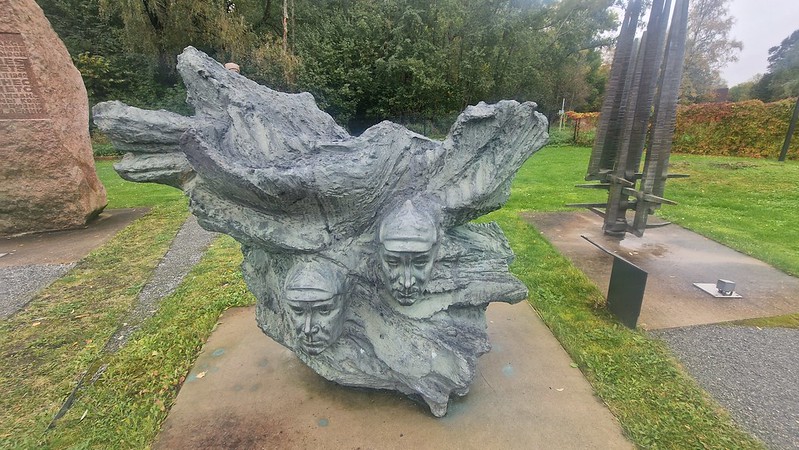
    It’s genuinely getting just a little difficult to take the Soviets seriously with memorials such as this, commemorating the lives of two Red Army commanders, August Kork and Aleksander Kukk. August Kork (1887-1937) was an Estonian-born military leader who rose to prominence in the Red Army during the Russian Civil War. He held significant commands and was a decorated hero of the Soviet Union. However, he was later caught up in Stalin’s purges and executed in 1937. Aleksander Kukk (1886-1932) was another Estonian who served as a Red Army commander during the Russian Civil War. He also held important positions in the Soviet military but died under unclear circumstances in 1932.

    So, Kork was executed by the Soviets for attempting to overthrow the communist regime, a likely ridiculous claim and he was realistically part of Stalin’s Great Purge and did nothing wrong. He went from hero to zero to hero and back to zero when Estonia was liberated. In reality, the Soviets did admit in the 1950s that he had been treated badly and that is why they wanted to reinforce his hero status, but executing your own military leader and then trying to apologise feels somewhat sub-optimal. Much of this really is based around the four hour ‘secret speech’ made at midnight by Khrushchev in February 1956, a confusing little arrangement which is a fascinating story in itself.

    The information board at the museum notes that the statue was unveiled in front of the building of the Chair of Military Science of Tartu State University and that the students there disliked the compulsory military studies they were taught. The monument was pulled down in 1990 and has been at the museum since 2007, a testament to the shifting tides of history.

  • Tallinn Trip – Soviet Statue Graveyard (Monument to the Coup of 1 December 1924)

    Tallinn Trip – Soviet Statue Graveyard (Monument to the Coup of 1 December 1924)

    20241010_150450

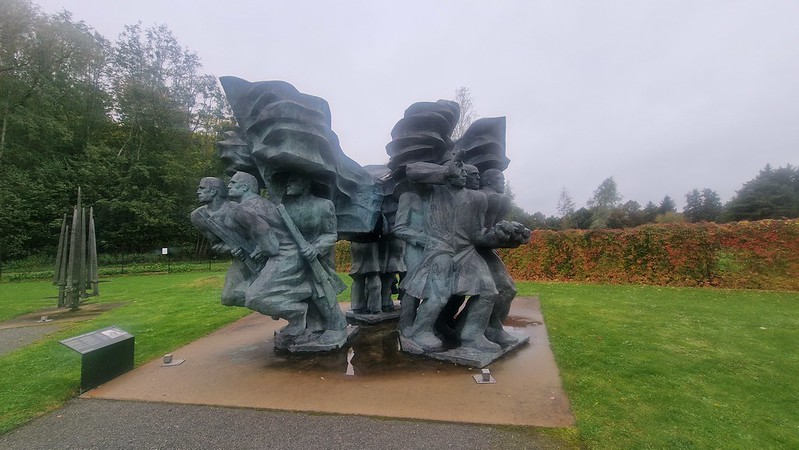
    This isn’t the most subtle of the monuments at the museum and it was installed at the Baltic railway station in Tallinn on 17 July 1975 to mark the communist coup of 1 December 1924. The location was chosen as the railway station was one of the places that the communists were able to seize and it was a huge structure, standing eight metres high although only these bronze sections remain.

    20241010_150517

    There are three groups of people in the monument:

    Group 1 : ‘Attack’ which depicts armed workers dashing into battle towards Baltic Station.

    Group 2 : ‘New Fighters, Taking the Place of the Fallen’ which pledged to continue the fight.

    Group 3 : ‘The Raging People’ depicting the anger of the workers towards their oppressors.

    20241010_150550

    The monument was designed by Matti Varik and the bronze elements were made in St. Petersburg. The bronze figures from the monument were removed in February 1993 and the stone base was removed in 1994. The monument was widely mocked, the coup was operated from the Soviet Union and entirely failed. 125 of the Soviet insurgents were killed and the Estonian people wanted nothing to do with this attempt to remove their Government.  The very thought that this monument would somehow inspire the people of Estonia shows just how out of touch political leaders had become in their attempt to con the nation.

  • Tallinn Trip – Soviet Statue Graveyard (Helene Kullman Statue)

    Tallinn Trip – Soviet Statue Graveyard (Helene Kullman Statue)

    20241010_150427

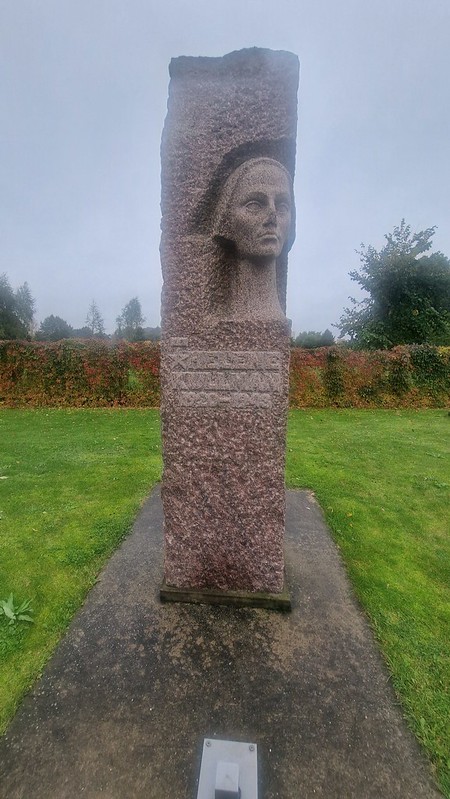
    Another displaced statue and another contested Soviet claim, they certainly don’t make things clear-cut in their propaganda. Anyway, Helene Kullman, also known as ‘Leen’ was an Estonian woman who became a Soviet intelligence agent during World War II. Born in Tartu in 1920, she was trained in espionage and sent to gather information on German troop movements in occupied Estonia. Posing as a refugee, she successfully infiltrated German-held territory and relayed valuable intelligence to the Soviet Baltic Fleet. However, her mission was cut short when she was arrested by the Gestapo in Tallinn in 1943. Despite enduring torture, Kullman refused to betray her comrades or reveal sensitive information. Well, that’s the story, but it’s controversial and might not have happened. There is credible evidence that she survived the war and so she remains something of a complex enigma with the further complexity that there’s a suggestion that she might have been a double agent.

    The memorial to her was designed by Elmar Rebane and unveiled in front of the Helene Kullman vocational school on 23 December 1972. The unveiling was attended by her twin sister and a room at the school was used as a museum to the agent. The monument was removed in the early 1990s and brought to the museum in 2006. When walking around these memorials, it didn’t occur to me just how controversial the facts behind them were. Like with much else, to most Russians she would be a hero, to most Estonians it’s fair to speculate that the matter is rather less clear cut.

    As an interesting comparison between different Wikipedia pages depending on the country, the Estonian Wikipedia page has two death dates for her depending on which account is believed and it has a lot of content about the controversial subject of whether she was actually even on the side of the Soviets. The Russian Wikipedia page doesn’t have both dates and has a section titled “Estonian press claims about Leen Kuhlman’s double life” which it rejects as Russophobic nonsense and doesn’t much concern itself with the controversy at all.