Tag: Tallinn Trip

  • Tallinn Trip – Niguliste Museum Viewing Platform

    Tallinn Trip – Niguliste Museum Viewing Platform

    20241008_100249

    I’ve rather muddled up the order of our few days in Tallinn with these blog posts, but this was the first place that we visited with our shiny new Tallinn Cards. It’s a museum in a former church (St. Nicholas’s Church) and it also has a rather decadent viewing platform to add to the mix.

    20241008_101246

    We lost Ross early on, he was very excited by the rather futuristic looking lift to the viewing platform, but Susanna wasn’t far behind.

    20241008_101413

    My middle name is brave, but even I wasn’t climbing these and I thought I’d use the lift. Bev and Susanna climbed them and realised that they didn’t go anywhere, so they traipsed back down. I was pleased with my decision if I’m being honest.

    20241008_101554

    Steve also discovered that they weren’t entirely functional stairs from a visitor’s point of view. Bev kept trying to ring all the bells, but they’d taken the clappers out (or whatever they’re called) because of people like Bev. I didn’t say anything of course.

    20241008_101631

    We walked up and got the lift down, which is probably a sub-optimal way of going about these things.

    20241008_101928

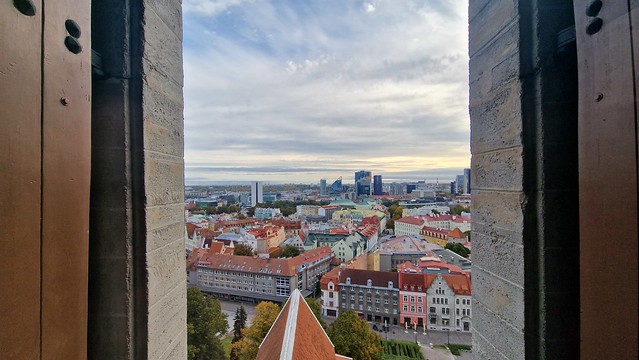
    The view was worth it….

    20241008_101942

    This is the museum that we were heading to next, Kiek in de Kök.

    20241008_102009

    They were better views than we had when we visited the TV tower a couple of days later when we surrounded by fog.

    20241008_102018

    The corporate heart of Tallinn.

    20241008_102038

    It’s not a big city for a capital, but this was a useful way of orientating ourselves a little. I decided at this point that it was far too hot and I read several reviews commenting on this issue about how warm it got in the summer months. I accept that we visited in October, but I’m quite sensitive to heat and much prefer snowstorms and cold winds. Susanna, who is always sympathetic, didn’t have the same problem, but given half a chance she’d be wearing furs in the Sahara as her ideal temperature.

    20241008_102048

    More on this in a later post, but this is the Russian Orthodox Alexander Nevsky Cathedral and its demolition has been mooted, although I suspect highly unlikely.

    20241008_101501

    We then got the lift back down, ready to explore the rest of the building. There’s something quite atmospheric about museums in former churches, I’ve been to a few and this transpired to be a particularly good one.
  • Tallinn Trip – Lump of Rock (and Part of the Monument to Lutke van Oyten)

    Tallinn Trip – Lump of Rock (and Part of the Monument to Lutke van Oyten)

    20241008_111550

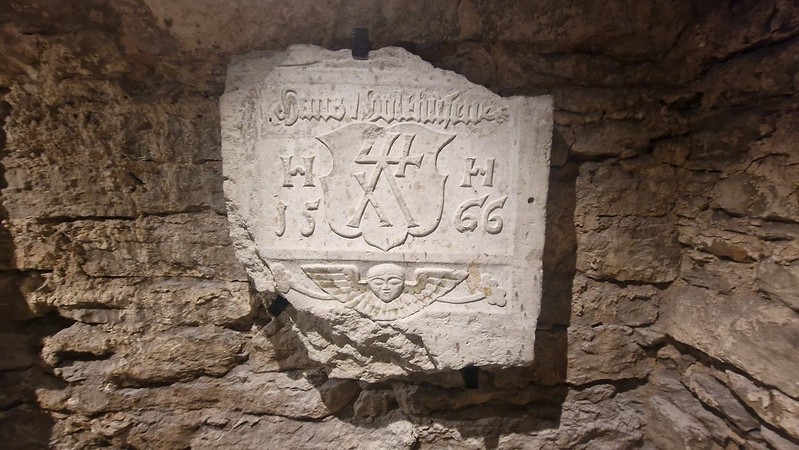
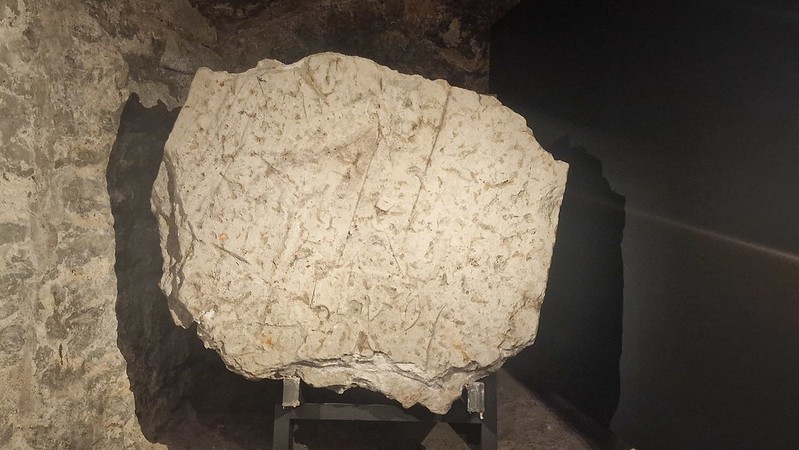
    It looks like a lump of rock, but fortunately there was information by it to give a little more background about this arrangement. It’s what is left from the monument to Lutke van Oyten which stood at 4 Kaura Street before the Second World War. Then the top fell off, which feels slightly sub-optimal, but the museum has what is left. I mean, it’s not exactly the Rosetta Stone, but it’s something. Lutke van Oyten was born in Germany in the early sixteenth century and he became a member of the Brotherhood of Blackheads in 1528 and then a citizen of Tallinn in 1533. From 1554 until 1557 he became an Alderman of the Great Guild and he was a Town Councillor for Tallinn from 1557.

    The Blackheads in Estonia weren’t dermatological blemishes, but rather a fascinating and influential brotherhood that played a significant role in the country’s history. The Brotherhood of Blackheads was a medieval association of unmarried merchants, ship owners, and foreigners that flourished in Livonia (present-day Estonia and Latvia) from the 14th century until 1940. Their intriguing and slightly humorous name is linked to their patron saint, St. Maurice, who was a North African Roman legionnaire. Often depicted in art with dark skin, St. Maurice became associated with the group, leading to the name ‘Blackheads’.

    The Brotherhood was more than just a social club or group such as the BNI. They were a powerful force in the economic and social life of medieval Tallinn and Riga who held considerable wealth and influence, owning property, conducting trade, and even participating in local governance. Their headquarters, the magnificent House of the Blackheads in Tallinn, still stands as a testament to their prominence. We did want to visit the Museum of Blackheads in the city as it was free with the Tallinn Card, but it was shut and so we didn’t. Susanna was most disappointed, but Steve and I distracted her by going to the pub. We’re good like that.

    The Blackheads were renowned for their vibrant social life, they hosted lavish feasts and celebrations, so it’s a bit like Hike Norfolk was. The Brotherhood’s influence waned with the rise of nation-states and changing economic conditions. The Soviet occupation of the Baltic states in 1940 forced the Blackheads to flee to Germany, where they continue to exist in Hamburg. So this bit of rock is a bit of their story, perhaps not the most important part, but enough for me to witter on in this blog post about.

  • Tallinn Trip – Proto Museum and More Virtual Reality

    Tallinn Trip – Proto Museum and More Virtual Reality

    20241009_130150

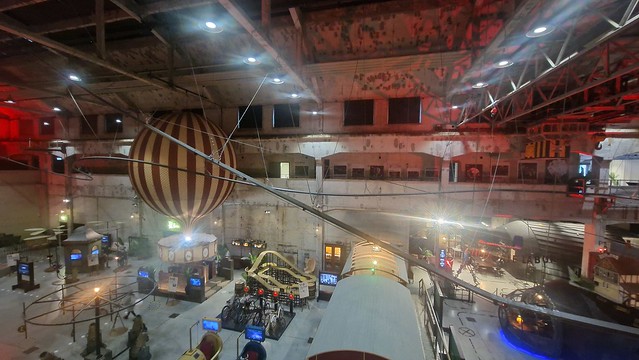
    This museum isn’t one that we would have likely considered paying for, but as it was included in the Tallinn Card it seemed worthwhile popping in. Located in a former submarine factory, it’s something of a blend of history and hands-on technology with a fair chunk of virtual reality. Now, we were already experts on this given the previous day’s experiences, so we were full of confidence. The reviews of the venue were also very positive, although it’s fair to say that we were really not sure what to expect at all.

    20241009_131737

    Ross and Steve having a go at virtual reality teamwork. There were plenty of staff around to offer assistance in times of need, which was handy as I am often in times of need at places such as this.

    20241009_134401

    Susanna having a lovely time in a balloon. There were something like twelve different concepts to try, some were more complex than others. This particular one was making a few people just a little dizzy and Steve and I couldn’t work out the carriage one at all. And if Steve, a car expert, can’t work it out then I had no hope. I took remarkably few photos here, although there are a couple of videos that I have when I finally wrap up these series of posts about Tallinn. And yes, to my two loyal blog readers, I know that this feels as though it is going on forever and I’m now about eight trips behind, but I’ll get there eventually.

    As an experience, it was really quite exciting and showed what is possible with virtual reality in a museum type environment. Actually, there’s not much museum here really, but there’s a lot of potential in the whole educational element. I rather enjoyed the immersive experience of the whole arrangement and we tried several of the different activities, my favourites were the joint shooting of something underwater and the car one. Excuse my lack of precision here in terms of the details, I wasn’t quite sure if there was some educational logic behind them, but I was just trying to work out what I was doing. The first part of the experience, where you put on headsets and try and construct things with your hands, was a complete non-starter for me and I didn’t have a clue what I was doing. I suspect my friend Liam, a civil engineer, would have been able to understand the whole thing.

    I’m all for expanding horizons and all that, so this was a fun experience and one that I will remember (not least as I can read it back on this riveting blog). Bev and Susanna, who threw themselves into the various bits of kit, were unharmed but exhausted at times, whereas Steve, Ross and I were more sedate. There was a bit of childlike wonder here and the beginning of perhaps not a revolution in museums, but certainly it’s going to be a new way of telling historic stories. We had to work our way around the children who were very much enjoying themselves and this is something that the museum will potentially have to work at, as I initially had the impression that it was aimed at children and it actually wasn’t at all, it had aspirations to appeal to all.
  • Tallinn Trip – KGB Prison Cells

    Tallinn Trip – KGB Prison Cells

    20241009_150719

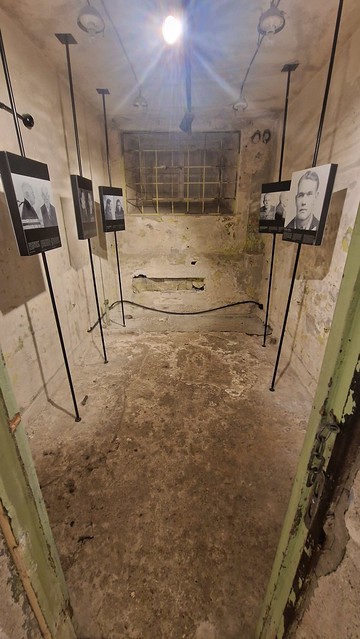
    The KGB Prison Cells are located at Pagari 1 in Tallinn in a structure that was constructed in 1912 as an apartment building. It was briefly used by the Estonian Provincial Government in 1918 and then by the Estonian Ministry of War between 1920 and 1940. Following the Soviet occupation of Tallinn, the building was taken over by the NKVD (People’s Commissariat for Internal Affairs), which later became the KGB and they built the cells in 1941. It was opened as a museum in 2017 to remind visitors what totalitarian regimes were like and the cells used up until the late 1950s were made accessible.

    20241009_144604

    We got free admission with our Tallinn Cards, but to visit individually it would be €9 which felt very excessive to me given that it’s effectively one corridor with some cells.

    20241009_144620

    Susanna reading everything. There are some museums and galleries in the world where she has got there first thing in the morning and then had to leave at the end of the day as they’re closing. We use Bev to try and keep her under some control as otherwise Susanna rarely seems overwhelmed by the number of exhibits or the amount that there is to read.

    20241009_145251

    That’s the reverse of a staircase and was used as a very tight cell. I’m slightly sceptical just how many times that this might have been used.

    20241009_145337

    This old plan of the floor shows where the above cell is located. The only area open to the public is the corridor on the right hand side and the six cells.

    20241009_144504

    It’s noted that chairs such as this were used for the interrogation of prisoners, although I’m not sure that this particular one actually comes from this building. There is though an interesting document written in 1977, which has been translated into English, which is on display as is a guide for prisoners on how they should behave during interrogation and questioning. It’s a ‘Samizdat’ document, which is means self-published and relates to documents that were copied and handed around to dissidents and members of the resistance movement.

    20241009_144057

    The cells wouldn’t have been pleasant and those who found there way here would have nearly always ended up in a larger prison or would have been executed.

    20241009_144856

    A cupboard. The museum claims that cupboards such as these would have been used from the 1940s until the 1980s to temporarily isolate individual prisoners, although that wouldn’t have happened here for that length of time. I’m not sure that the museum has much detail about this particular structure, although they say that it does come from the property. The cells were mostly cleared out in the 1950s, so there’s been a lot of imagination required here.

    As with all these things, they’re useful reminders of the repression that took place in Tallinn during the Soviet occupation between 1945 and the late 1980s. However, the prison cells stopped being used by the KGB in the 1950s and although the museum notes that were “the most notorious cells in Estonia”, they weren’t much used as they were turned into a space for archives in the late 1950s. A visit here isn’t likely to take more than around twenty minutes, but it’s worth popping in for holders of the Tallinn Card and I’m glad that these have been preserved for future generations. It is though difficult to leave a museum such as this with feeling a slightly heavy heart for the dark side of history that feels so nearby so often.

  • Tallinn Trip – Statue of Jaan Poska

    Tallinn Trip – Statue of Jaan Poska

    20241010_154301

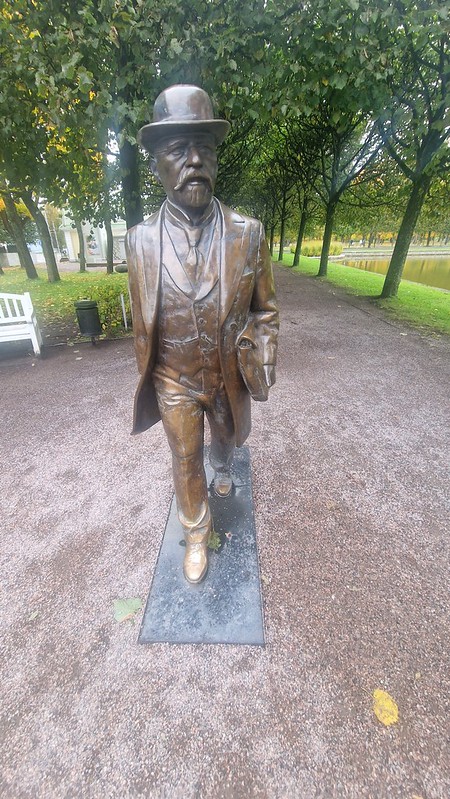
    I’ve already written about Jaan Poska (1866-1920), one of the architects of Estonian independence, but there are numerous representations of him around Estonia. This one was unveiled in 2016 in Kadriorg Park to commemorate the 150th anniversary of his birth and was designed by the sculptor Elo Liiv. Anyway, I mention this as the designers wanted him to be at street level as one of the people instead of on top of a pedestal removed from the people.

  • Tallinn Trip – Carved Stone Museum

    Tallinn Trip – Carved Stone Museum

    Located just after the Bastion Tunnels is the Carved Stone Museum, all of which is located within the Kiek in de Kök tower fortifications complex museum. There are over 200 carved stone fragments from around Tallinn and they date from between the sixteenth and nineteenth centuries.

    20241008_121244

    I rather get the impression that they didn’t know where to put this collection and here seemed as good as place as any. It’s one of those collections which museums need to keep, but are unlikely to attract enough tourists in their own right, so this seems like the perfect compromise.

    20241008_121254

    It’s an interesting little arrangement.

    20241008_121319

    There are short summaries about many of the pieces of stone, although not a great deal is known about a lot of them.

    20241008_121325

    There were a few gravestones in the mix.

    20241008_121428

    The stone background of the walls felt appropriate.

    20241008_121448

    Some stalactites had started to form, it all added to the atmosphere somewhat.

    20241008_121721

    Lots more stone and they’ve done a decent job here given that some of this was usually partly underwater about 25 years ago before they started the repairs. There are four different rooms, ‘Garden of Eden’, ‘Pillar Hall’, ‘Death Hall’ and ‘Sun Hall’ and if I have to pick a favourite (and who doesn’t when visiting a carved stone museum?) it would be the room with the pillars in it. Another exciting surprise was finding where the tunnels came out, it was much further away from the museum than we had anticipated.

  • Tallinn Trip – Bastion Tunnels

    Tallinn Trip – Bastion Tunnels

    Built in the 17th and 18th centuries, the tunnels were an integral part of Tallinn’s formidable defence system. As cannons and firearms became increasingly powerful, traditional medieval walls were no longer sufficient protection so they went underground. The Bastion Tunnels snaked through the city’s earthen fortifications, connecting various bastions and allowing soldiers to move undetected, transport ammunition, and even launch surprise attacks. Since then, they have been used in numerous different ways throughout the generations.

    20241008_114803

    The warning about not slipping.

    20241008_114743

    But I was more worried about the sign warning of no wi-fi or mobile signal. It sounded a very dangerous place that I wouldn’t be spending much time in.

    20241008_114835

    Ross, Steve and I trekked down the stairs and wondered where Bev and Susanna were. It transpired that they were still visiting the museum as we’d missed a bit out, but my loyal blog readers needn’t worry as we returned to the museum that afternoon to ensure we didn’t go without seeing what the young ladies had.

    20241008_114950

    It looked rather exciting. Signage explained that the tunnels had been extensively renovated between 2004 and 2007 as they had filled with junk and parts had flooded. They removed 800 cubic metres of stones and dirt whilst installing new ventilation and fire safety systems.

    20241008_115247

    The tunnels were used unofficially for a while by partying punks and there were even small-scale concerts that were held down here.

    20241008_114950

    And also by the homeless. It couldn’t have been very pleasant, but at least it would have offered some shelter. There are numerous sightings of ghosts down here, although I suspect the naturally eerie surroundings of the whole arrangements somewhat add to that. They must have a fair number of rodents floating about the place though, and for a while the tunnels were used by a family of foxes who must have used some initiative to get in.

    20241008_115258

    The tunnels provided potential refuge for any nuclear war which might have broken out, something which didn’t look unlikely in the 1960s. A whole new set of air ventilation had to be put in at this stage just in case residents would have been forced to live down here for some time.

    20241008_115359

    Some Soviet leaders to remind visitors about the constant threat of war.

    20241008_115411

    The text on the banner says “AU TÖÖLE!” in Estonian, which translates to “HONOUR TO WORK!” or “GLORY TO LABOUR!” in English. This phrase reflects Soviet-era propaganda themes emphasising the value of labour and work to support society, or, more precisely perhaps, to support the wealthy elites.

    20241008_115538

    I thought initially that this was a ghost, but it was Ross.

    20241008_115622

    The tunnels were used to protect locals from the air raids of the Second World War.

    20241008_121112

    This is Metropolitan Arseni, an important religious figure in Estonian Orthodox history. He opposed many of the reforms made by Catherine the Great and he was punished by being held in the tunnels as a prisoner until his death in 1772. There are some rumours that he was walled up, but these seem fanciful and he was just imprisoned in a more traditional manner.

    It’s a fascinating piece of history and I’m pleased that they’ve made such efforts to drain and repair the tunnels to make them accessible. There is more than in the above photos as the next stage of the tunnels goes to the carved stones museum, more of those in a later post.

  • Tallinn Trip – Soviet Statue Graveyard (Freedom May be Fleeting)

    Tallinn Trip – Soviet Statue Graveyard (Freedom May be Fleeting)

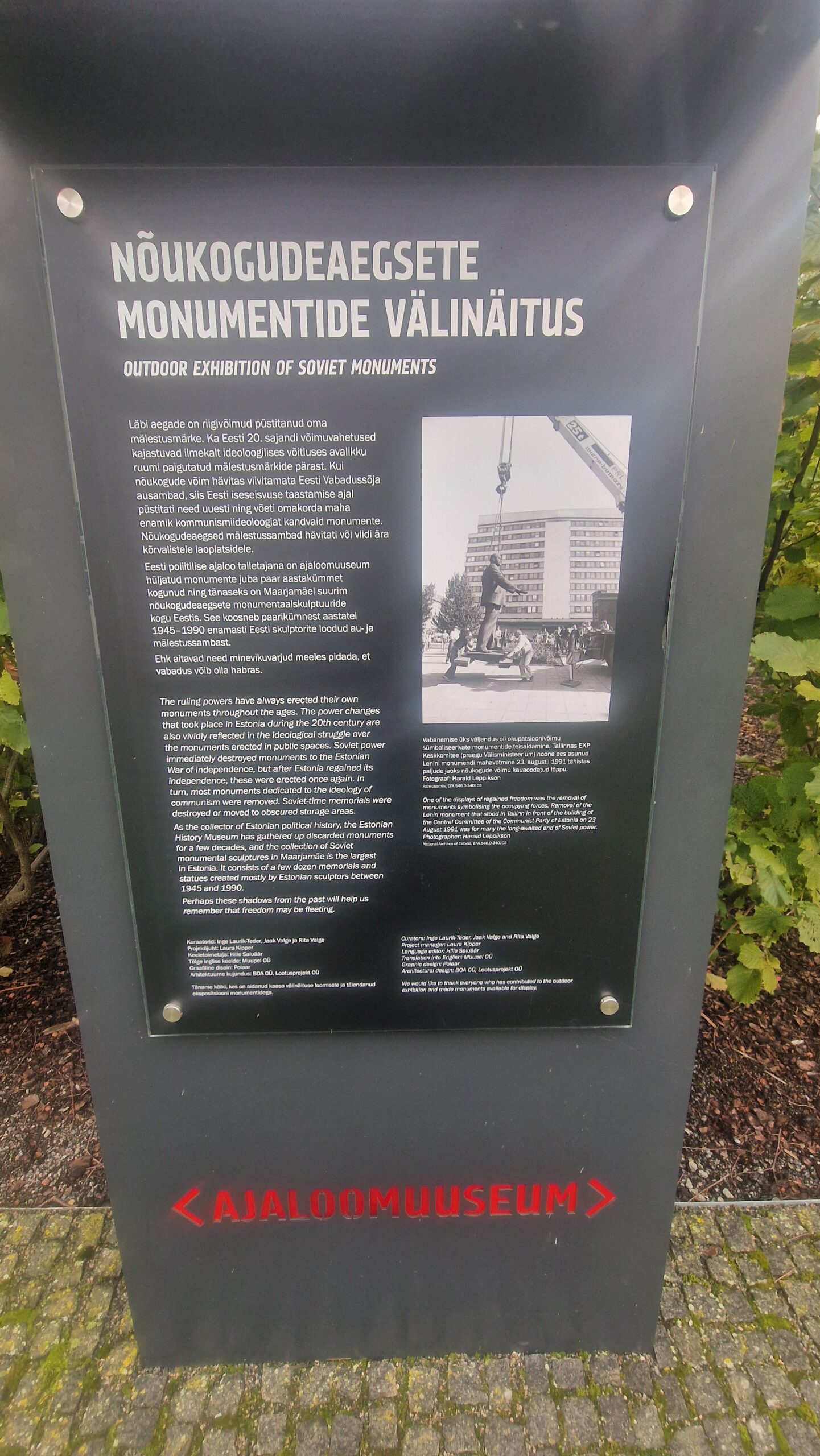
    I think I’ve posted enough about the Soviet Statue Graveyard, but this is the introduction panel and I rather like the power of their line that “freedom may be fleeting”. Tyrant power can crumble and even the most imposing figures can find themselves toppled.

  • Tallinn Trip – Soviet Statue Graveyard (Statue of Vladimir Lenin That Did Go on Display)

    Tallinn Trip – Soviet Statue Graveyard (Statue of Vladimir Lenin That Did Go on Display)

    20241010_151036

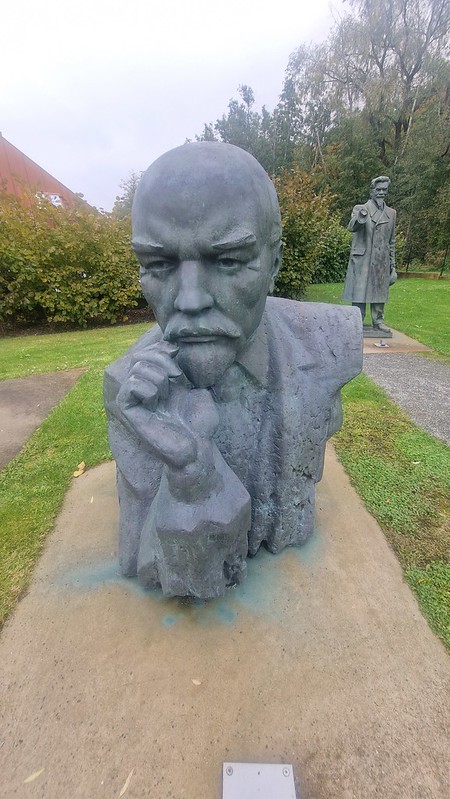
    Unlike my last post of a Lenin statue that didn’t go on display, here’s one that did. It was unveiled on 4 November 1981 in Pärnu and is a copy of Matti Varik’s monument that was in Kotka City in Finland, designed to make him look thoughtful and statesmanlike although it’s more a look of an unwanted houseguest now. It was only removed relatively recently because the Finnish no longer wanted anything to do with Russian oppression and there are now no Lenin statues left in Finland on public display. Even when the Finnish statue was standing, it wasn’t revered and was treated as something of a figure of fun. This monument was on display at Rüütli plats in Pärnu until it was removed on 20 September 1990. It was plonked into storage by the Pärnu Government until it was transferred to this museum in 2016. As these things go, I thought that this was one of the better designed sculptures and at least it’s obvious who it is and doesn’t make him look too much like a gnome.

  • Tallinn Trip – Soviet Statue Graveyard (Statue of Vladimir Lenin That Never Went on Display)

    Tallinn Trip – Soviet Statue Graveyard (Statue of Vladimir Lenin That Never Went on Display)

    20241010_151023

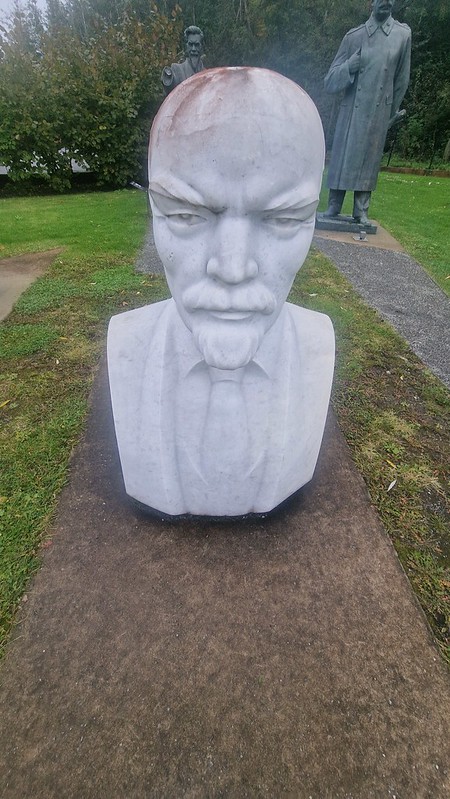
    Well this was a bloody waste of money, but for reasons unknown the communist authorities were still merrily ordering statues of Lenin in the late 1980s. This one was designed by Matti Varik between 1987 and 1988, ready to put somewhere prominent in Tallinn. Unfortunately for all concerned, by the time they had got around to thinking about where to put it, Estonia broke free of Soviet oppression and went independent. At that point, it was evident that a statue of Lenin wasn’t going to go down well in Tallinn, although in reality it’s not clear if anyone really wanted it before independence. It was stored in the monumental sculpture studio of the artists’ union ARS for some years and then it came to this museum in 2008. Part of the reason that I really engaged with this collection of statues and memorials is that I liked understanding their previous placement and relevance to their surroundings, but this one is quite different. Although I still like the story that it tells, the naivety of the authorities that they thought that this was ever a good idea.