Tag: Tallinn Trip

  • Tallinn Trip – Ryanair Flight Home and End of the Trip

    Tallinn Trip – Ryanair Flight Home and End of the Trip

    IMG-20241011-WA0013

    I suspect my two loyal blog readers thought that this Tallinn series would never end. Well, whilst I was trying to be decadent in the lounge, Bev was having a lovely time judging by this photo that Steve sent. I didn’t say anything.

    20241011_104906

    We were all reunited once again, at least for a short while. Bev and Susanna, who are quite upmarket, had paid for the posh bit of Ryanair and we were separated via this glass screen. I think Bev rather enjoyed being with the elite, but I’m used to being in the poor section.

    20241011_110543

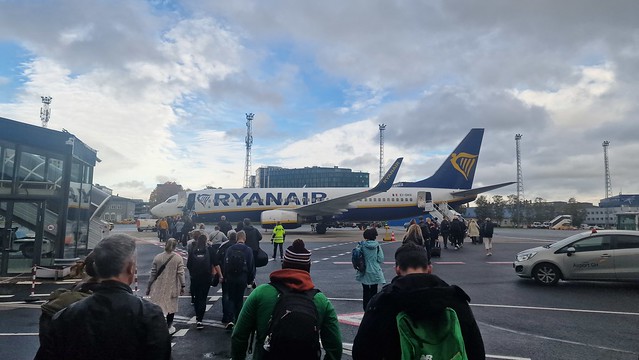
    And ready to board, aircraft EI-DHX, not an aircraft that I’ve been on before (although as I’ve mentioned before, my records are a little incomplete). The aircraft is 19 years old and is a Boeing 737. Anyway, slightly geekiness aside.

    20241011_122205

    The flight itself was uneventful, I was fortunate that although the flight was busy I had no-one next to me so the whole arrangement was suitably comfortable. I’ve had plenty of trips with Ryanair recently, but although their reputation isn’t always great, I’ve found no issues with them. We got delivered back in the satellite terminal which delayed matters somewhat and because Susanna and Bev dithered we had to wait for them after the border. Ross rushed off to get his train, we didn’t see him again…. I sat at the back of the shuttle and it’s mildly entertaining to watch it go along, like a DLR in reverse.

    20241011_125814

    And to my great delight: luxury of luxury, Susanna had parked her car in the posh part of the airport so we could just walk there. I had tried to take us to the shuttle bus just assuming we were in some cheap car park. I was fortunate that everything went to time as I had only three hours before I got back to work, but Susanna dropped me off with at least a little time remaining. All told, this was another quite marvellous trip and I’m pleased to report that the group is next year going to what is likely Ljubljana and Slovenia, so I’d better start planning that. And thanks to Susanna, Bev, Steve and Ross for their company, I have many happy memories of Tallinn and look forwards to returning. I’m also pleased to report that the whole adventure went very well as Bev managed to catch the plane this time and there were no issues at the end like in Gdansk when Susanna and Bev slept in after their wild night out. Once again, Steve and I were inspirational, but we don’t like to go on about it.

    There were numerous things that I still wanted to post about, I might get around to adding them in some sort of special feature, but now it’s time to start another exciting series of posts  🙂
  • Tallinn Trip – Tallinn Airport LHV Lounge

    Tallinn Trip – Tallinn Airport LHV Lounge

    20241011_102313

    Using my new Priority Pass card, I thought I’d pop into the lounge at Tallinn and risked trying to get in over three and a half hours before my flight which is earlier than they need let passengers in.

    20241011_081232

    20241011_083611

    20241011_083619

    The staff member was helpful and didn’t query my early arrival, but when I entered I could see her logic in thinking that the lounge would cope with the numbers. Lots of power points and chairs of various heights, although I would have preferred more high tables.

    20241011_081016

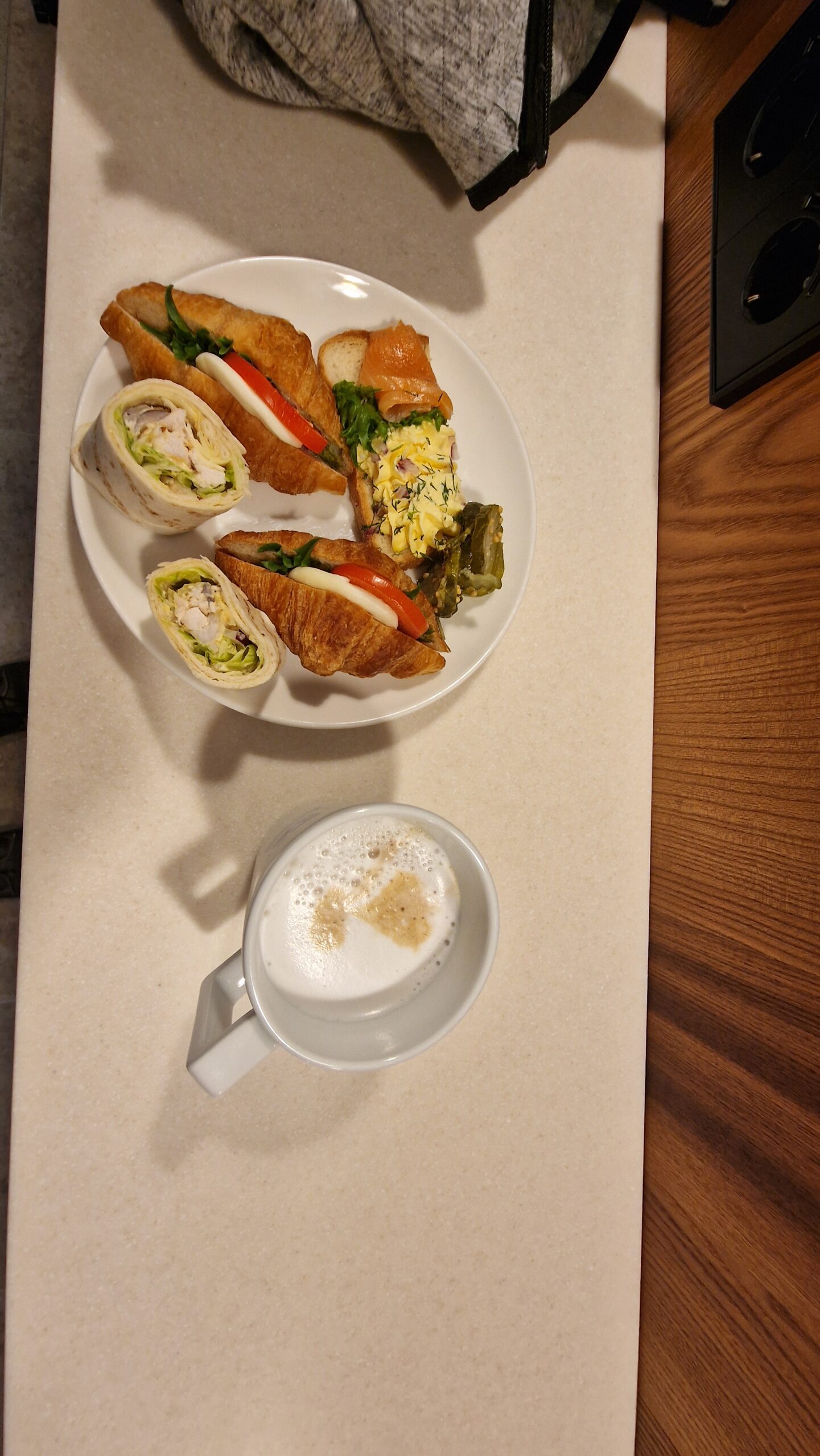
    The range of sandwiches, yoghurts and croissants.

    20241011_080958

    Salad elements were available as well. The on-line reviews are mostly positive although some people weren’t entirely surprised and delighted by the lack of hot options in the morning. It all felt sufficient to me, although I do prefer cold breakfasts to hot, so I might be biased on that. I enjoyed this lounge and it was clean, comfortable and it all felt well managed.

    Thanks to this haven of tranquility, I emerged refreshed, rejuvenated, and ready to face whatever the rest of the day threw at me. And what was waiting for me on the other side of those frosted glass doors? Ah yes, the motley crew of Bev, Susanna, Steve, and Ross, who had been faffing about in the airport cafe. I can only imagine the horrors that they had witnessed. The stale pastries…. The overpriced coffee…. The lingering smell of despair…..

  • Tallinn Trip – The Flight Back Begins

    Tallinn Trip – The Flight Back Begins

    20241007_130304

    Okay, buckle up buttercup, because this Tallinn saga is hurtling towards its grand finale (much like Susanna storming up those steps, bless her!). I’m sure I’ll come back to fill in some gaps, but for the moment I think I’ll draw this riveting series of posts of our Tallinn trip to a close. Above is Freedom Square (Vabaduse väljak) with St. John’s Church in the background and the Victory Column (Võidussammas) to commemorate those who died during the Estonian War of Independence.

    20241011_073611

    So, the final day dawned, and fuelled by my usual travel anxiety and an insatiable craving for complimentary croissants, I bolted for the airport solo knowing that it was only about an hour walk.

    20241011_074147

    By chance, a bus stopped near to me at a bus stop which was an airport bus and since I still had my Tallinn Card with free public transport, I rushed on it. This arrangement promptly meant I was very early arriving at the airport, but plus ça change….

    20241011_075651

    Just five hours before my flight, so once again I cut it quite fine. I have never missed a flight and I know that it will happen at some time and I’ll likely post very extensively about it.

    20241011_075836

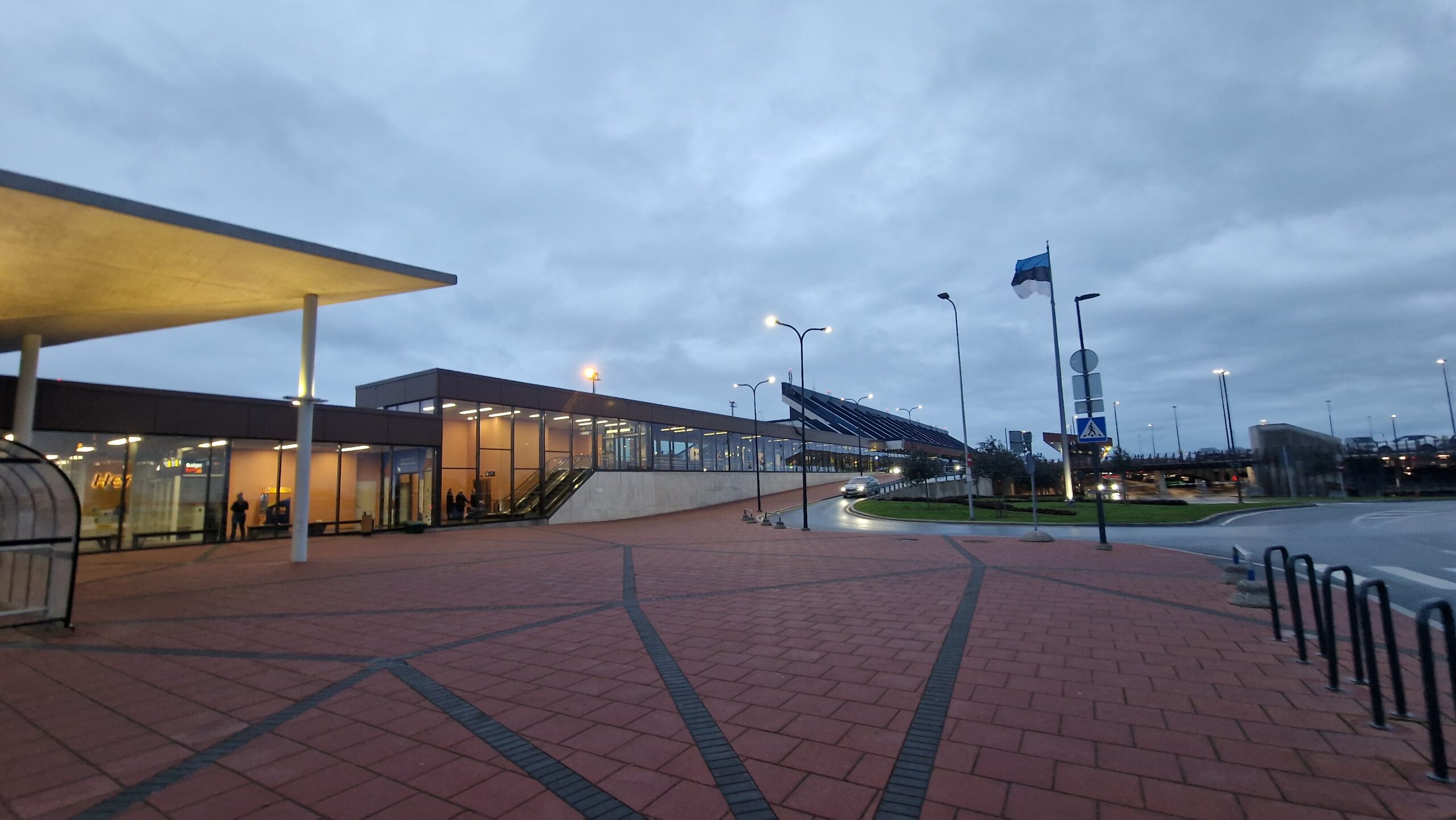
    The terminal at Tallinn Airport was packed….

    20241011_080049

    Ours was the 11:30 flight to Stansted Airport.

    Right, just two posts left in this series, the lounge and the flight. I bet my two loyal blog readers can’t wait to see what I’m start writing about after those. I loved a bit of tension and anticipation.

  • Tallinn Trip – Baltic Way

    Tallinn Trip – Baltic Way

    20241007_130450

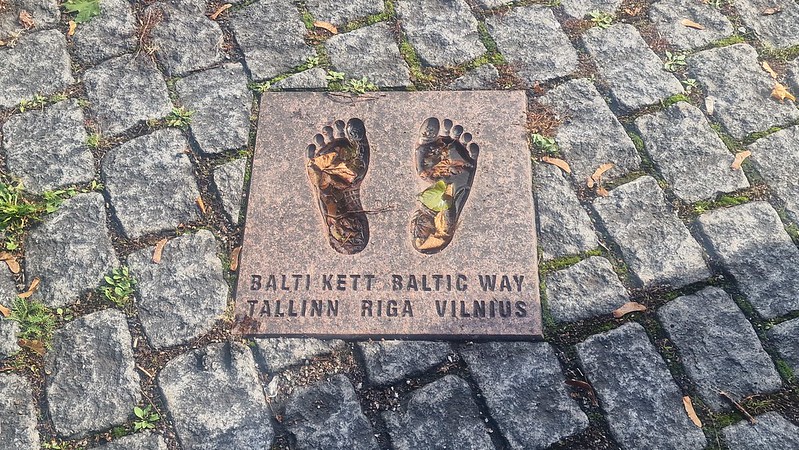
    I wrote about the Baltic Way a couple of weeks ago, forgetting that I had visited these footprints marking where the route of this heroic moment took place. There are similar markers in Riga and Vilnius, “two million hands, one unbroken chain, freedom regained”. Or ‘nationalistic’ and ‘anti-Soviet’ as Russian leaders referred to it as, as they were not keen to acknowledge the Molotov-Ribbentrop Pact and the secret protocols which tore Europe apart.

  • Tallinn Trip – Alexander Nevsky Cathedral

    Tallinn Trip – Alexander Nevsky Cathedral

    20241008_113403

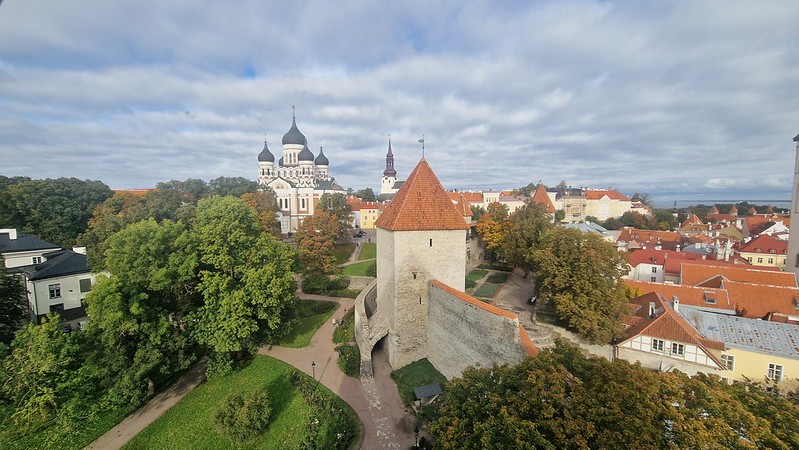
    Firstly, it’s no secret to those I witter onto about this, but I’m using AI more and more in numerous aspects of life. However, I wondered whether AI could recognise where I took this photo of the Alexander Nevsky Cathedral from and it correctly identified it as Kiek in de Kök. Impressive.

    20241007_132018

    The Alexander Nevsky Cathedral stands as something of a majestic monument to the Russian Orthodox faith in the heart of Tallinn. Perched atop the important Toompea Hill, its imposing silhouette and gleaming onion domes dominate the city skyline, a constant reminder of the complex history between Estonia and Russia. Constructed between 1894 and 1900 during a period of intense Russification, the cathedral was intended as a symbol of imperial power and dominance. It’s fair to say that things changed quite quickly in that regard during the first twenty years of the twentieth century. Its location, directly facing the Estonian Parliament building, further underscores this historical tension. The cathedral’s significance extends beyond its visual grandeur as it serves as the main church of the Estonian Orthodox Church of the Moscow Patriarchate, and it remains an active place of worship for many Orthodox Christians in Estonia.

    Despite its beauty and religious importance, the Alexander Nevsky Cathedral continues to be a source of controversy in Estonia. For many, it represents a painful reminder of Russian imperial rule and the suppression of Estonian national identity. Calls for its demolition have surfaced periodically throughout history and numerous politicians have talked about it again since the Russian invasion of Ukraine. I can’t imagine they’d ever seriously consider demolishing it, it would be something of a breach of religious freedom and just show intolerance. But, I can see the anger and difficulties that exist with this building.

    Back to the dedication of the Cathedral though. Alexander Nevsky (1221-1263) was a pivotal figure in medieval Russia, renowned as a prince, military leader and saint, so that feels like a life well lived. Born into nobility, he became Prince of Novgorod while still young and quickly established himself as a skilled warrior and strategist. He defended his lands against invasions from Sweden and the Teutonic Knights, achieving decisive victories in the Battle of the Neva (1240) and the Battle on the Ice (1242). These triumphs secured Russia’s northern and western borders, preventing Swedish and Teutonic expansion. Recognising the growing might of the Mongol Golden Horde, Alexander wisely chose a diplomatic path showing his skills as something of a statesman. He submitted to Mongol rule and paid tribute, ensuring relative peace and stability for his people while other Russian principalities suffered greatly. This pragmatic decision, though controversial, allowed him to focus on strengthening his lands and consolidating his power. A devout Orthodox Christian, Alexander fostered close ties with the Church and supported its growth. His piety and commitment to his faith led to his canonisation as a saint by the Russian Orthodox Church in 1547. Alexander Nevsky remains a revered figure in Russian history, celebrated as a national hero, a skilled military leader, a wise ruler, and a symbol of Russian resilience and resistance against foreign invaders. It’s not necessarily the perfect fit for a major religious building in Tallinn, but there we go.

    20241007_131048

    We went inside the Cathedral, but I didn’t take any photos as they’re discouraged. It’s a grand affair, slightly dark and suitably blinged up, although I hope that doesn’t cause any religious distress as a comment as it’s undeniably opulent. However, it is also peaceful and calm, there’s a spiritual feeling to the whole arrangement and that seems a suitable thing in a cathedral.

    Although back to AI, Google Gemini created me a generic image of inside a Russian Orthodox church, although this looks nothing like Alexander Nevsky Cathedral so it’s just another one of my meanderings down some side street of irrelevance. Since I’m on this tangent though, I’ll continue by noting there’s a possibility that Google AI will at some stage scan this article and think that this is an interior from the Cathedral, which will distort matters in the future on a wider level in numerous ways. This is the same way that AI poses a threat that there are ever fewer journalists because AI is writing ever more and just copying things that it finds on-line, with perhaps an inevitable decline in standards. But, I digress once again.

  • Tallinn Trip – Niguliste Museum (Tombstone of Herman Nieroth and His Wife)

    Tallinn Trip – Niguliste Museum (Tombstone of Herman Nieroth and His Wife)

    20241008_105042

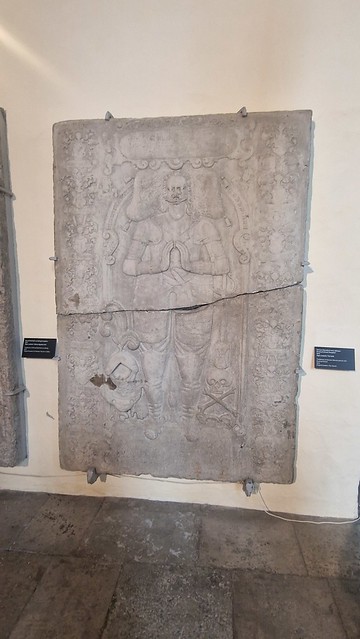
    It frequently surprises me that anything in churches has survived the centuries of war and religious change, but this tombstone dates to 1642 and is from Türi church (which I assume is St. Martin’s Church). It’s the tombstone of Herman Nieroth and his wife Gerdruth Brinck. His effigy shows him in full armour, showing what a brave fighter he must have been, whilst there’s no effort made to depict Gerdruth. I have no idea when the tombstone cracked, but it was probably placed down in a church and thousands of people would have traipsed over it.

    Herman Nieroth (c. 1572 – 1642) was a Swedish military officer and administrator who played a significant role in 17th-century Estonia. He served in the Swedish army during the Livonian War, eventually attaining the rank of Colonel. From 1633 to 1642, he held the important position of Lord Marshal of Estonia, responsible for maintaining law and order and overseeing the nobility. He also acted as an advisor to King Gustavus Adolphus of Sweden and participated in diplomatic negotiations with Russia and other neighbouring powers. Nieroth acquired substantial landholdings in Estonia, reflecting his wealth and influence. His tomb, featuring an effigy in full armour, is located in St. Nicholas’ Church, Tallinn, serving as a lasting reminder of his service and status. Nieroth’s career exemplifies the Swedish influence in Estonia during this period and the prominent role military figures played in the administration of the province. As for Gerdruth, I couldn’t find anything about her other than she was married to Herman.

    I like seeing these in museums, churches and galleries as I must confess to a certain affection for a weathered and worn out tombstone, something which has seen a few centuries slide by and how it represents so many forgotten stories.

  • Tallinn Trip – Niguliste Museum (Passion Altarpiece)

    Tallinn Trip – Niguliste Museum (Passion Altarpiece)

    20241008_104815

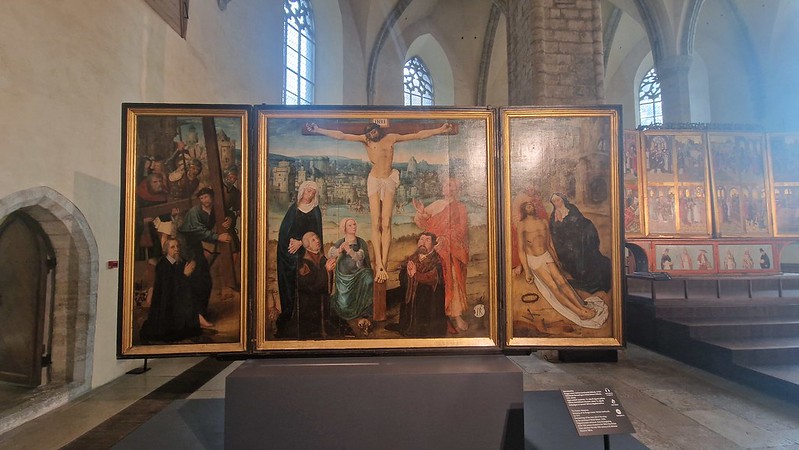
    This is the Passion Altarpiece dating to around 1515, attributed to the workshop of the Flemish painter Adriaen Isenbrandt, which was located in the Tallinn Dominican friary in the early sixteenth century and then in this building from the mid-sixteenth century. The altarpiece depicts the Passion of Christ, focusing on the events leading up to and including his crucifixion, so yet another cheery bit of imagery for church goers. It’s a poignant and dramatic scene filled with emotion and symbolism and telling the story of the crucifixion. Those three figures at the front who are praying, one in the left panel and two in the central panel, are overpaintings from a slightly later period and they’re of wealthy people who donated to the church.

    20241008_104840

    The rear of the altarpiece. I’m hardly a medieval art historian, but this is evidently part of the Renaissance change from some rather rough artworks in churches to some authentic looking artistic efforts. This seems rather more evident to me with Jerusalem in the background, it’s quite a creative and well-drawn landscape. Anyway, enough of Julian’s artistic reviews….

  • Tallinn Trip – Niguliste Museum (Danse Macabre)

    Tallinn Trip – Niguliste Museum (Danse Macabre)

    20241008_104027

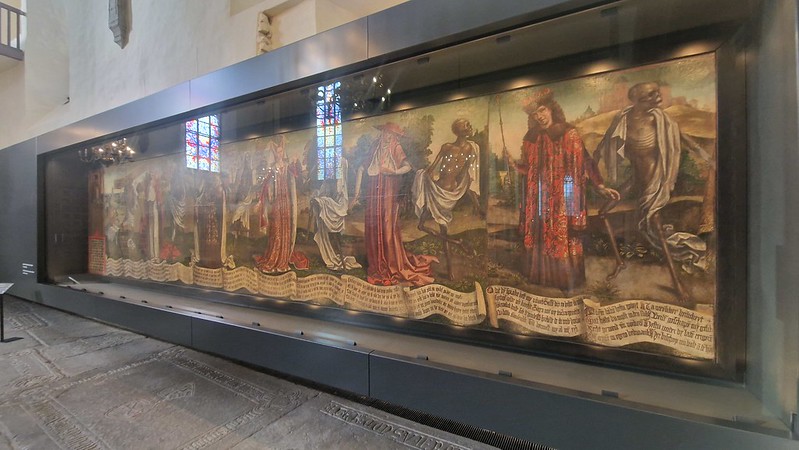
    This isn’t just another religious painting, but somewhat of a chilling reminder of our mortality, a medieval ‘memento mori’ that has echoed through the centuries. Fifteenth century Tallinn wasn’t quite the decadent place it is today, with plague, war and general illness leading to a much shorter life expectancy. The Dance of Death emerged as a popular artistic theme, a way to deal with the inevitability of death and the fragility of life whether it was for a peasant or the Pope. Artists depicted skeletons, the ultimate personification of death, leading people from all walks of life in a macabre dance.

    Bernt Notke, a renowned Late Gothic artist from Lübeck, was one of the masters of this theme. The well-known Danse Macabre, painted for St. Mary’s Church in Lübeck in 1463, is sadly lost thanks to a British bombing raid during the Second World War. But this sizeable fragment of a very similar work by the same artist survives in Tallinn, although the original was thirty metres in length, and the artwork is still in St. Anthony’s Chapel where it has been since (other than for restoration, war and other distractions) at least 1600 and likely since the 1480s. This fragment, measuring about 7.5 metres long, is a procession of figures, each paired with a gleeful skeleton. It’s the only surviving medieval Danse Macabre painted on canvas and it’s only because they were careful with it during the Second World War that it has survived at all. The missing section of this one is likely down to poor storage over the decades and it got damp and was mostly destroyed. The remaining sections were restored in Moscow in the 1980s, two bits were joined and now it’s back here.

    20241008_104132

    And it didn’t matter how religious you were as you were still going on this dance, so it’s a cheery little number….. These works were very popular in the fourteenth to sixteenth centuries, but seemed to die away a little (excuse the pun) after this as, to be honest, do people really needed to be reminded of death in quite such a way? Although, it’s certainly a good leveller, a reminder that whether rich or poor, death would still come.

  • Tallinn Trip – Niguliste Museum (Tallinn As It Was in the 1590s)

    Tallinn Trip – Niguliste Museum (Tallinn As It Was in the 1590s)

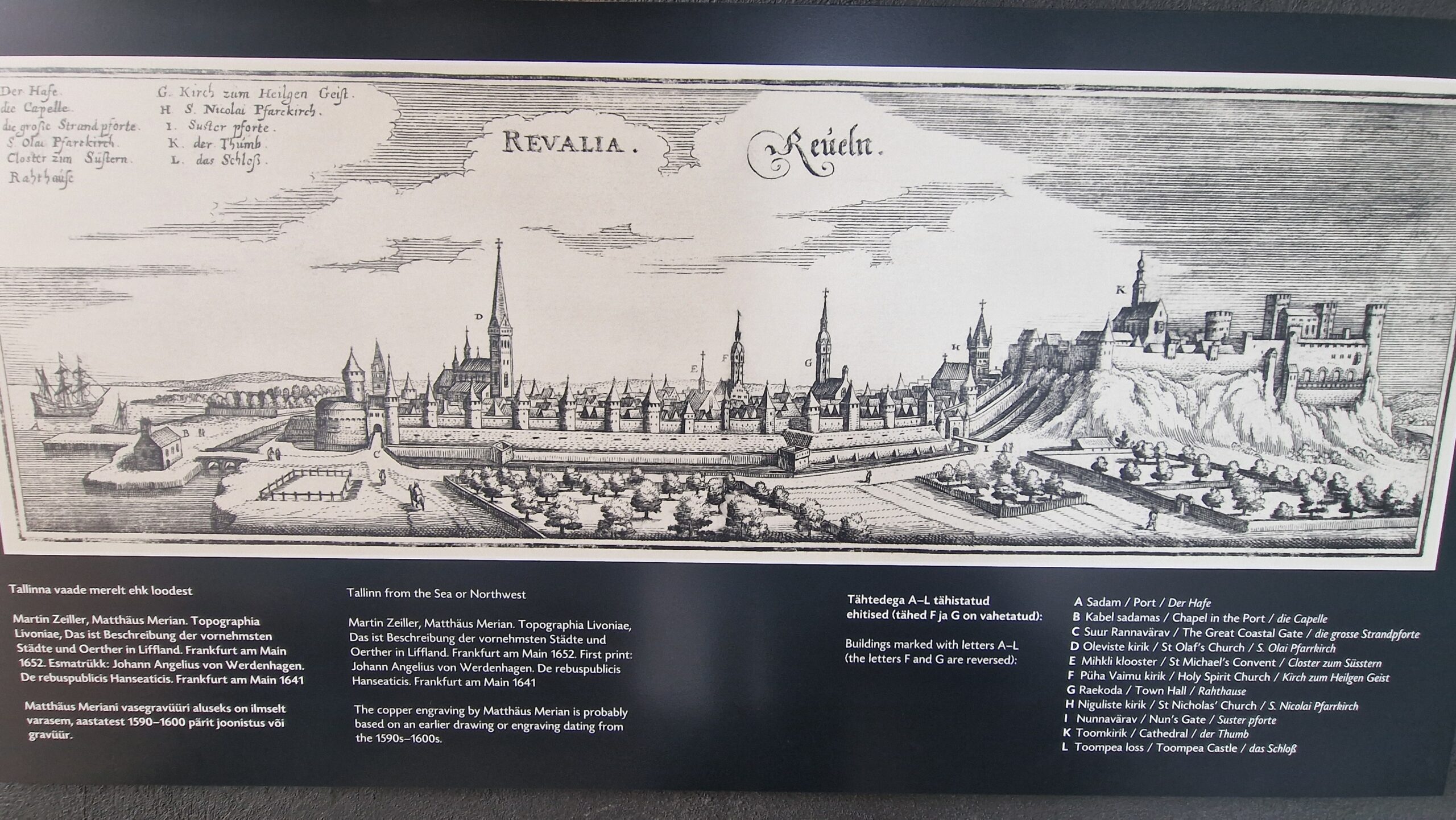
    Tying in relatively well time-wise with my last post (H is the church in which Bogislaus von Rosen was buried), this is Tallinn (known as Revalia or Revel in official use until Estonian independence 1918 when they settled for Tallinn as the authorities liked that the best) from the sea in the late sixteenth century. It looks a well fortified city, but then again that was fairly essential and it was attacked time after time with the Livonian Wars (1558-1583), the Polish-Swedish War (1600-1629) and the Russo-Swedish War (1656-1658) to name just a few. This engraving was done in the 1640s by Matthäus Merian the Elder (1593-1650) but based on imagery from the 1590s. Although many have had to be repaired on numerous occasions, a surprising number of these buildings are still standing given all the conflicts that have taken place in the region.

  • Tallinn Trip – Niguliste Museum (Bogislaus von Rosen Chapel)

    Tallinn Trip – Niguliste Museum (Bogislaus von Rosen Chapel)

    20241008_101159

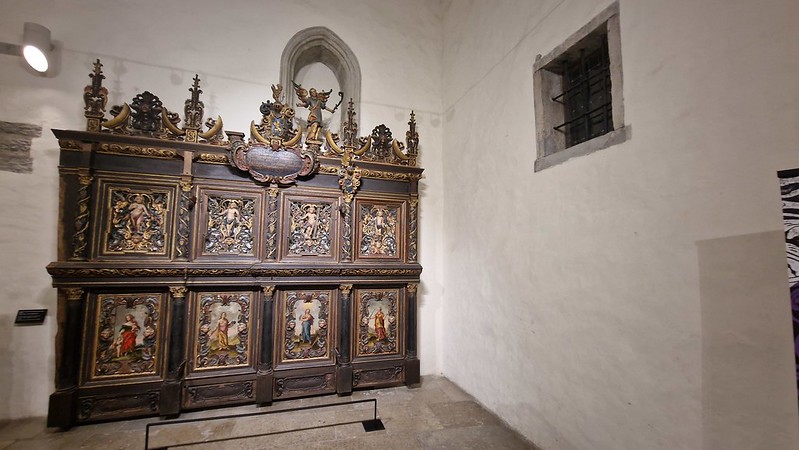
    They didn’t have to move this very far for the museum as it’s the decorative screen and entrance doors of the memorial chapel of Bogislaus von Rosen (1572-1658), located on the northern side of this building when it was St. Nicholas’s Church. It dates from around 1655 and is an interesting Gothic style piece, designed by Franz Hoppenstätt.

    I find these private chapels quite intriguing, they were effectively a status symbol so a family could show off their wealth, influence and piety all at the same time. God forbid that the common folk might go near these private chapels which were fitted out with all this bling. Bogislaus, a wealthy merchant, got this chapel finished in time though, he died in 1658 and was buried in his rather decadent chapel in early 1659. He had two wives during his lifetime and they’re also both buried here, along with their children, an arrangement which strikes me as challenging to work out in heaven. Most was lost in the Second World War bombing of the building, but at least this screen remains.