Part of my Streets of Norwich project…. [updated in October 2023]

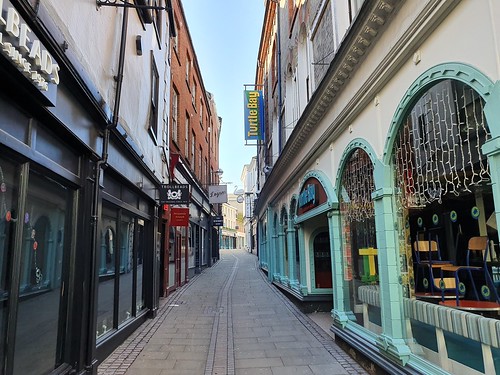
Swan Lane is located in central Norwich and was originally called Rakeytheslane, or Rackey Lane, as Robert de Rakheythe had a house along the street. It changed its name in the nineteenth century because this was the location of the Swan Tavern, and I think it’s a rather lovely idea to name streets after pubs.

Fortunately, given its width, this is a pedestrianised street. At one end is London Street, which was the first street to be pedestrianised in the country, but motor vehicles had already long since been banned from going down Swan Lane.

The city in 1830, and not much has changed with the street layout of Swan Lane in the last two hundred years. The Swan pub was at number 8 from around 1750 until the early 1860s, although there are no pubs at all along the street by 1870. And that, in Norwich, is a fairly rare state of affairs….

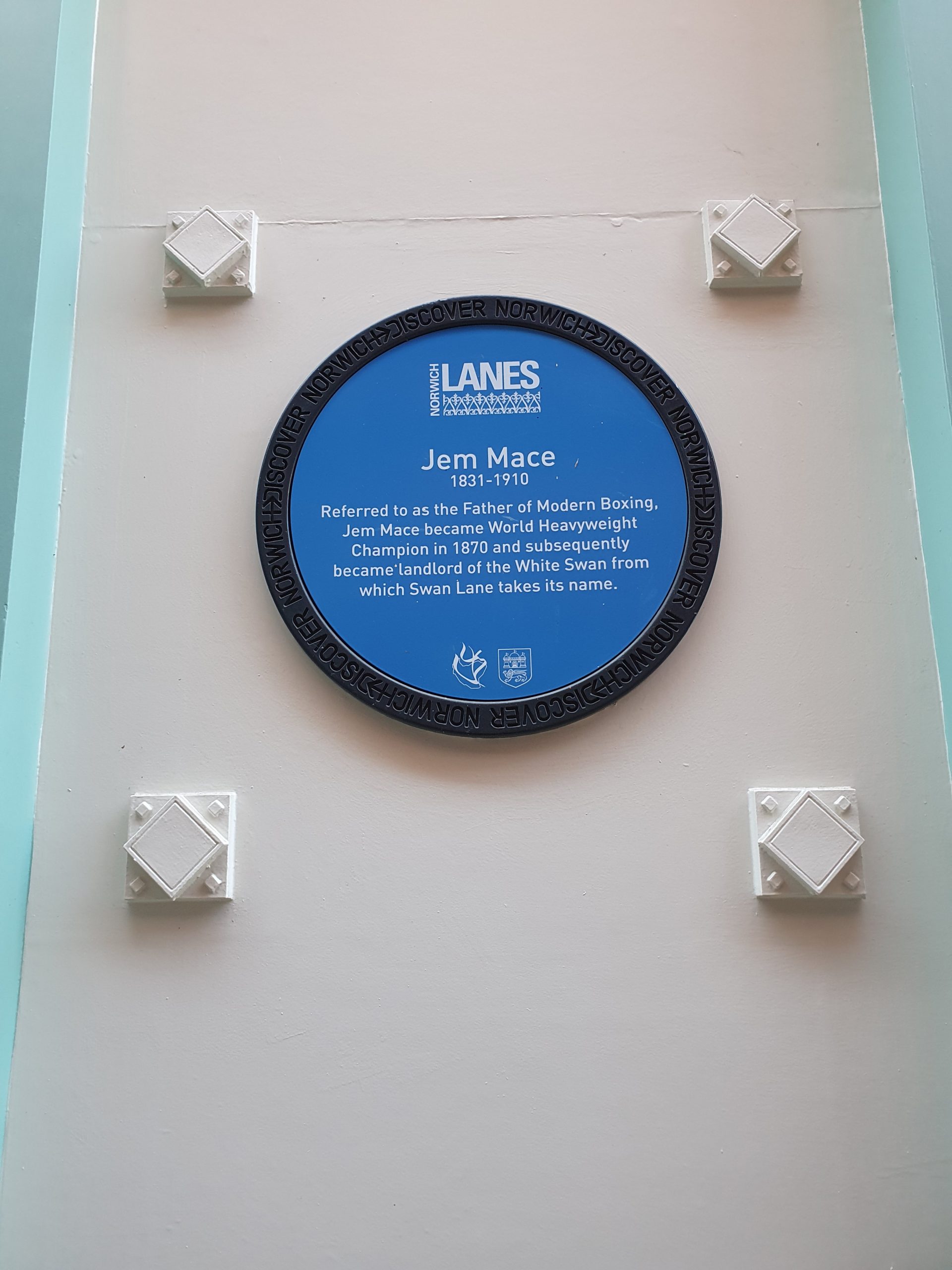
This sign about Jem Mace is on the side of Turtle Bay.

Changing street numbers can be a curse to trying to understand building history, but this might fit in, as in around 1870 the property at number 8 had been rebuilt. The new structure was a grand building, with 4 bays facing onto Bedford Street and 5 bays onto Swan Lane. This was used as a shop until only a few years ago, when it was converted from being the Fabric Warehouse into the Turtle Bay restaurant, which is the building on the right in the above photo.

The entrance to Swan Lane from London Street, with something I missed (hence why it’s not very clear in the photo either), which is the entrance to a courtyard at 2 Swan Lane, on the far left of the Dipples building. I only noticed it from the listed building record, as Dipples is a Grade II listed property, originally constructed in the early nineteenth century and the frontage of the shop is original (apparently not the right-hand side window).

The swan in the front of Dipple and Son. The history of this company is interesting in itself, their web-site mentions:
“Dipples itself is nearly 140 years old. The jewellery business was originally founded in 1878 in Woodford, Essex, by George Henry Dipple. George did not stay in Woodford for very long as by 1890 he is no longer registered as living in Woodford. Between 1888 and 1890 the business was relocated to Ipswich. The jewellery store made a final move to Norwich around 1894 and has been located in Swan Lane every since.”