Tag: St Nicholas’s Church

  • Potter Heigham – St. Nicholas’s Church (Walter Robert Linkhorn)

    Potter Heigham – St. Nicholas’s Church (Walter Robert Linkhorn)

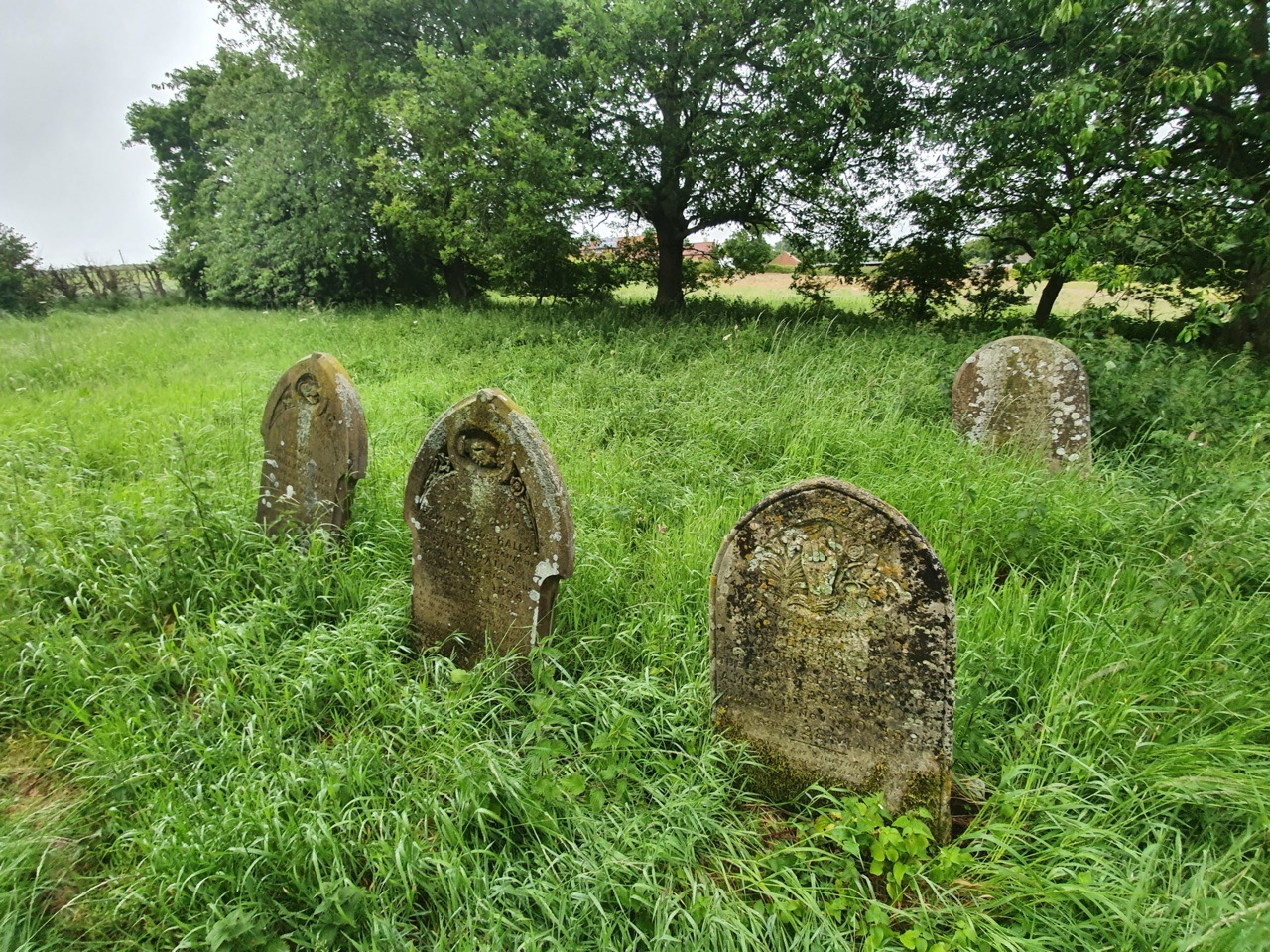
    Walter Robert Linkhorn is buried in the churchyard of St. Nicholas’s Church in Potter Heigham. He was born on 29 March 1887, the son of farm labourer William and Sarah Ann Linkhorn, and the official records say he was baptised on the same day (very efficient if true, but probably not). At the 1891 census, Walter was living in Potter Heigham with his parents, along with his older brothers James, Edward, Charles and Francis, as well as with his older sisters Sarah and Priscilla.

    By the 1901 census, the Linkhorn family had moved to Hickling Road in Catfield and along with his parents, he was living with James, Sarah, Charles and Francis as well with his nephew Norice (that name doesn’t sound right, but I can’t see what else it says) and niece Victoria. All of the males of the Linkhorn family were by this time working as farm labourers, although I can’t imagine what other jobs there would be in the Potter Heigham area.

    Walter joined the Royal Naval Reserve with service number 5073/DA and served on HMS Attentive III. I don’t have much knowledge in this area (well, none really), but I think HMS Attentive III was shore-based, so something of an administrative unit. Walter died of illness on 14 March 1919, having reached the rank of deck-hand, with his next of kin being his father, William Linkhorn, who by this stage lived at Howe Hill in Ludham. As an aside, some of his medals were sold recently in an auction, which seems a slightly sad end to the story.

  • Potter Heigham – St. Nicholas’s Church (Fence in Tree)

    Potter Heigham – St. Nicholas’s Church (Fence in Tree)

    This caught my eye at St. Nicholas’s Church in Potter Heigham as I like the idea that the tree and fence have been here for decades, getting ever closer.

  • Potter Heigham – St. Nicholas’s Church

    Potter Heigham – St. Nicholas’s Church

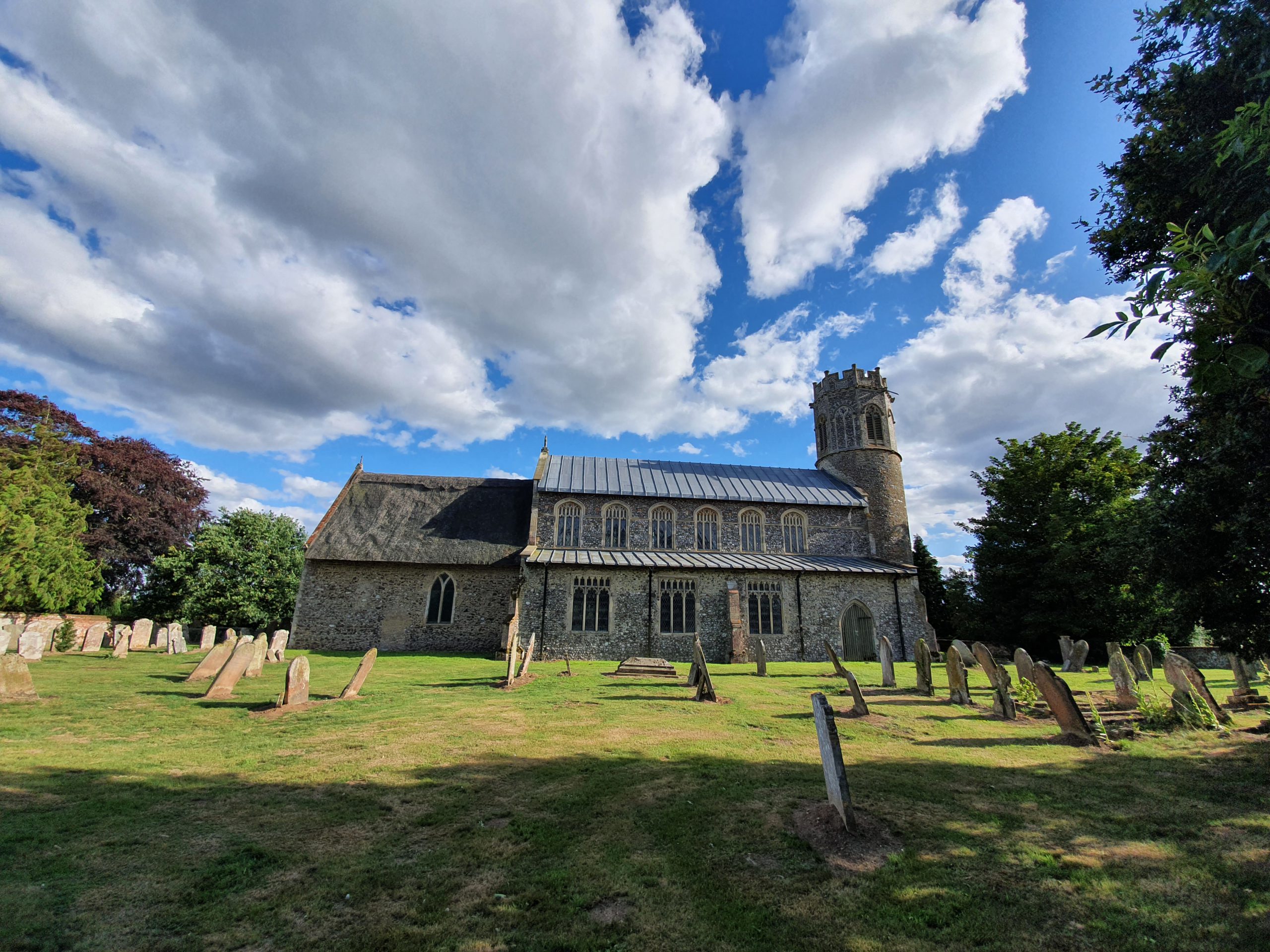
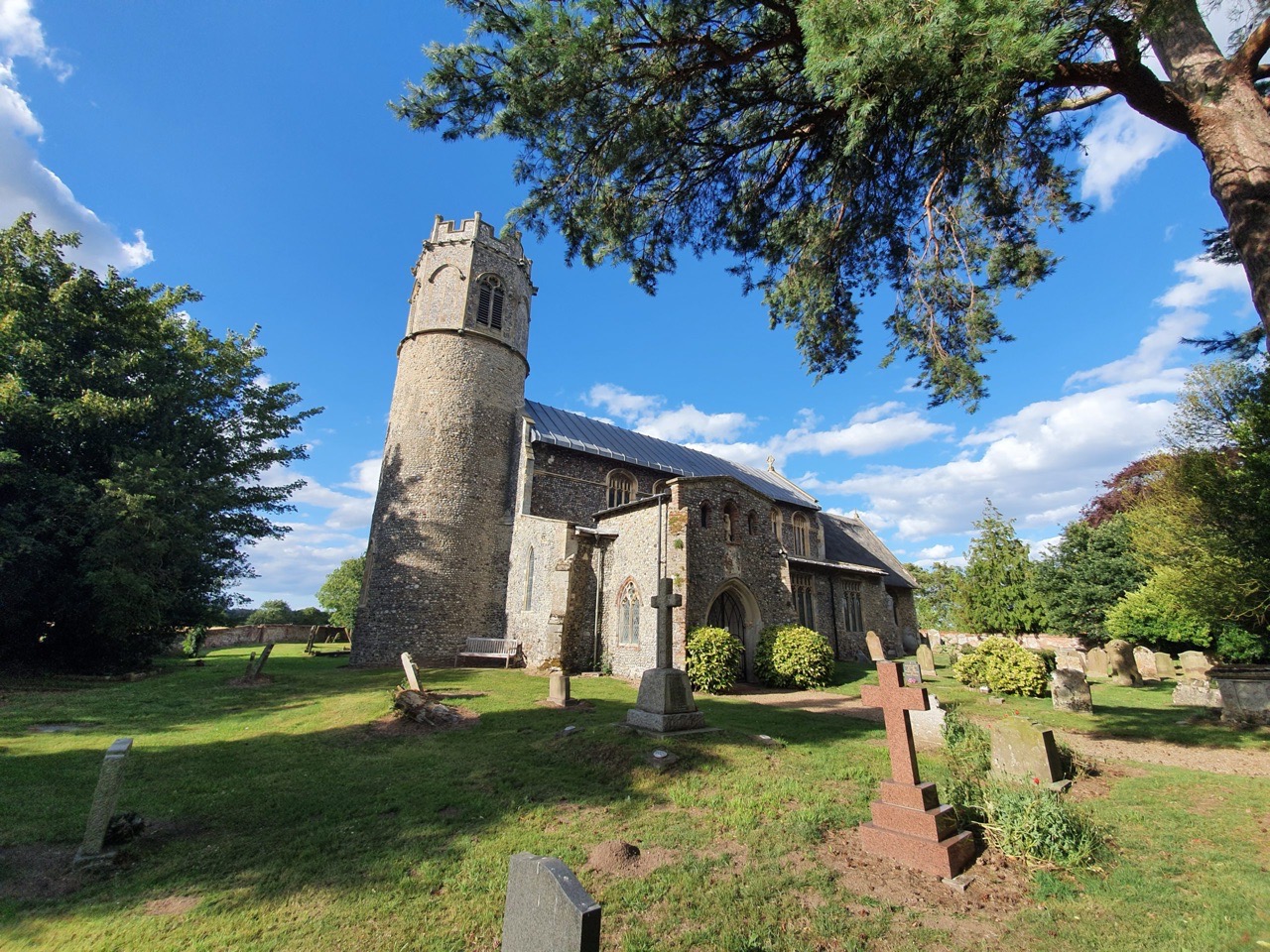
    I still struggle to think of Potter Heigham without linking it to Latham’s and their memorable radio ads, but this church is a little way from there and in a relatively peaceful countryside spot. It dates from the twelfth century, although the nave was substantially remodelled in the early sixteenth century. The round tower has some heritage, probably twelfth century but perhaps as early as the eleventh century, with some Norman elements visible in the main structure of the tower and church.

    The chancel is from the thirteenth century and remains thatched, making a curious difference to the leaded nave. And, this is recent, the nave was changed from thatch to lead in the last decade and although I’m sure it was necessary for some technical reason, I can’t say it looks aesthetically particularly pleasing.

    The sizeable porch, which has gates from the Queen’s coronation in 1953.

    The church’s round tower had an octagonal top added in the fourteenth century, a relatively common regional addition that has been better executed here than in some local churches.

    The sizeable and peaceful churchyard, which seems a little bereft of older graves and I do wonder where they’ve gone. It hasn’t always looked in such good repair, when some antiquarians visited it in 1870, they noted “the churchyard looked as if the inhabitants were using it as a place for the cultivation of the rankest weeds”. They also added that the church needed “judicious restoration”, which was a typical Victorian strategy that often caused more damage than good to the buildings.

    Getting inside the church isn’t yet possible, although it apparently holds some treasures in the form of medieval wall paintings and a hammer-beam roof of note.

  • Buckenham – St. Nicholas’s Church

    Buckenham – St. Nicholas’s Church

    This is the secluded church of St Nicholas in Buckenham. Unfortunately, the churches are currently closed given the ongoing health issue, but it’s possible to peer inside at the boxed pews and otherwise quite empty interior. There’s not much else in the area of the church, although it is a short walk from Buckenham railway station for those who can navigate themselves onto one of the few trains which stop there.

    The Norman tower, which was originally round and was later reworked to make it octagonal. That’s also an original Norman doorway and is in situ and probably wasn’t moved here from elsewhere in the church.

    The entrance to the stairs within the tower.

    The nave, which is the oldest part of the church and dates to the eleventh century.

    The fourteenth-century chancel.

    The north side of the church.

    The east window, and this tells a story of its own. The church was deconsecrated in 1968 and was just left by the Church of England to a slow abandonment. Fortunately, it was taken over by the Redundant Churches Fund around ten years later, but there had been vandalism and destruction during that time. One of the oldest bells in Norfolk was stolen and much of the Victorian stained glass had been smashed. The Churches Conservation Trust gathered up what glass they could and they’ve reset it in the upper part of the window, but the lower part is now just plain glass. This could though have very easily had a different fate, perhaps something more like what happened at Bixley.

    It’s difficult to know whether this is a deliberate wildlife garden approach to their graveyard, or whether they just haven’t been able to cut the grass recently. The village of Buckenham depopulated over the centuries, so there hasn’t been much of a congregation to support it for some time. The church was remodelled in the 1820s, which gives it a different feel to the much more brutal and comprehensive restructurings of the later nineteenth century, although a guide from the beginning of the twentieth century called the changes “fitful and destructive”. Numerous Roman remains have been found in the area, suggesting some form of Roman encampment locally, likely because there was a ferry site nearby.

  • Hamburg – St Nicholas’s Church (Museum)

    There isn’t much of St. Nicholas’s Church which is still left standing, but the crypt did survive and there is now a museum located within it. It’s not a large museum, but it tells the story of how and why the bombing of Hamburg took place, which was in reprisal for the German bombing of historic British (and other countries) cities. The museum also explains about how the previous church was lost to fire and how the replacement church was built.

    The previous church had burnt down during the great fire of Hamburg of 1842, so they reused some of the copper to make commemorative coins to help raise funds for the new building.

    This is an invite to the laying of the cornerstone of the new church on 24 September 1846. The church was designed by George Gilbert Scott, responsible for many Gothic churches in the UK and beyond.

    Parts of the shattered altar, which destroyed both the interior and exterior of the church during the Second World War.

    Items found during the demolition of the church.

    Some of the interior of the museum. The ticket includes both the elevator to the top of the tower and this museum, with the staff member at the entrance desk being particularly engaging and conversational. All in all, a fascinating site.

  • Hamburg – St Nicholas’s Church (Memorial Tablets)

    I have photos of the ruins of St. Nicholas’s Church, but these two tablets on the ruined wall are particularly interesting.

    The top tablet marks the names of those members of the church’s congregation who were killed in 1915. I assume that there were more tablets in the church which are sadly no longer in existence.

  • Hamburg – St Nicholas’s Church (Ruins)

    Photos from the ruins of St Nicholas’s Church. The ruins have been left in this state to mark the horrors of war, with the only sections preserved being the tower and the crypts.


  • Hamburg – St Nicholas’s Church (Elevator and Views)

    This glorious church was the tallest building in the world between 1874 and 1876 and it still remains the fifth tallest church in the world today. Unfortunately, other than the tower, the church was mostly destroyed during allied bombing of the city in 1943. Disappointingly, it could have been repaired after the Second World War as enough was left standing, but a decision was made to knock down most of what remained in 1951.

    There are several parts of the church which remain today, some of the walls, some memorials and also the crypt which is now a museum. More of those in other posts…

    There’s an elevator to the top of the tower and it’s fast and efficient, allowing visitors to get to just over 75 metres. The tower itself though is taller, topping out at 147 metres high. The sides are made of glass, so there are some good views of the tower’s interior when going up and down in the lift.

    The elevator holds around eight people, although it wasn’t particularly busy when I visited. There’s a charge of €5, which includes admission to the museum, which was reduced for me as I had purchased the Hamburg Card.

    The River Elbe and the Rathaus.

    The Rathaus dominates the background.

    Other views of the city centre, including the docks and old town areas. I’m not entirely sure that the whole elevator structure fits entirely well into the church, but if it brings money and people into the building then that’s a positive element.