Tag: St. Mary’s Church

  • Great Yarmouth – St. Mary’s Catholic Church

    Great Yarmouth – St. Mary’s Catholic Church

    [I posted this in August 2018, but have reposted it to fix the broken image links]

    20180830_170359

    I’ve walked by this church on Regent Road hundreds of times over the years, but never actually gone in it. The church opened in 1850 after three years of construction, replacing a small chapel which couldn’t cater for the growing congregation. At the time this was the only building on Regent Road and it now looks a little out of place with the mainly tourist orientated shops and restaurants that are on the street today.

    20180830_170340

    The church was designed by Joseph John Scoles, who also designed St. Peter’s Church in the town. It was built for the Jesuits, although was taken over by the Diocese of East Anglia in the mid-twentieth century. When the church opened it had a congregation of over 800 people, showing why the previous building had been of an inadequate size.

    20180830_170037

    The font is from the 1850s and was also designed by Scoles.

    20180830_170059

    There are numerous of these painted artworks around the church and there are information sheets (well, pieces of paper stuck to the wall) which give information as to what they represent. The information sheets are though useful and give a little bit more context about the building’s history.

    20180830_170024

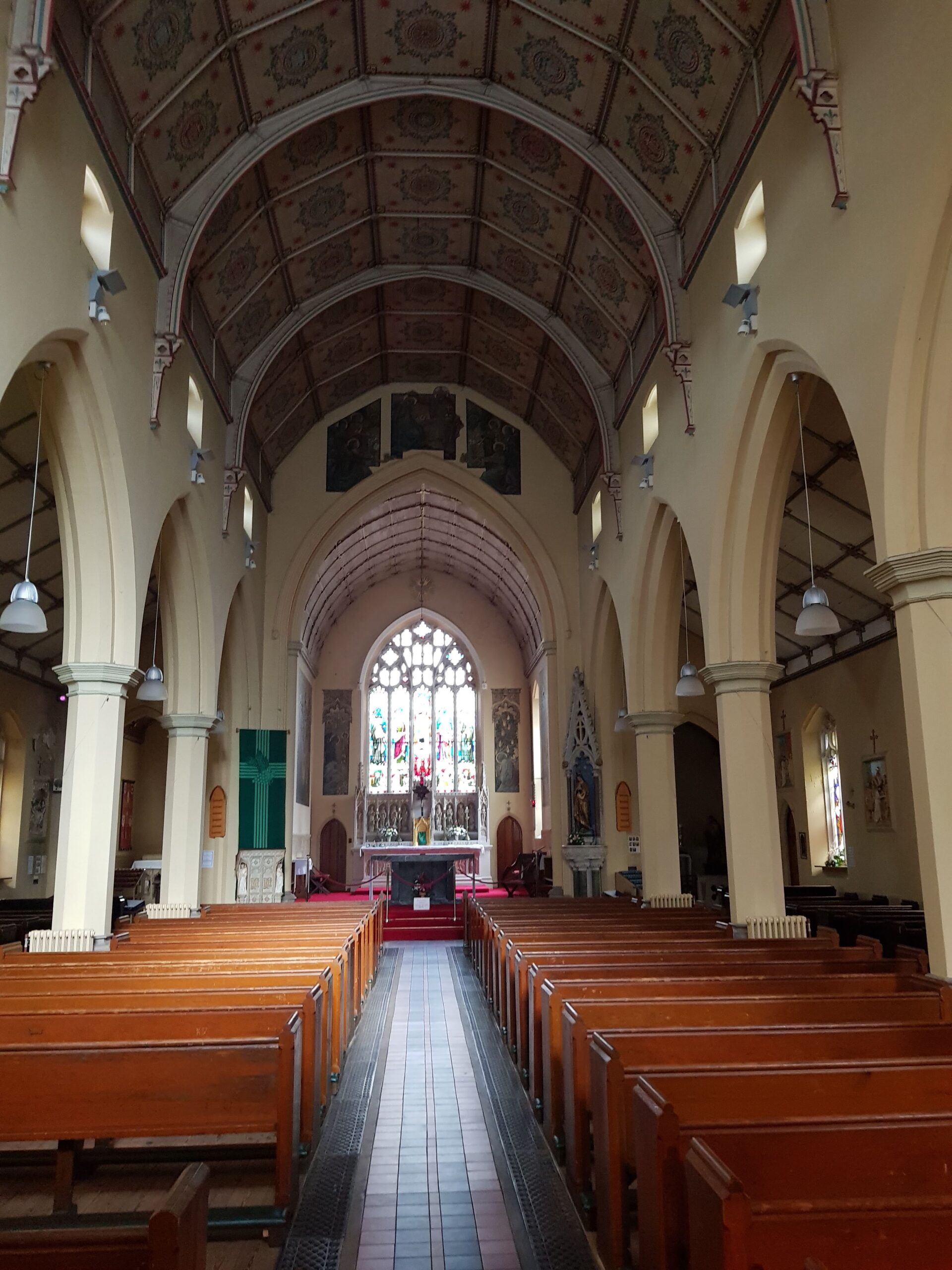
    The impressive interior, which is relatively unchanged since the church was built, with some interesting roof decorations. There are over 800 carved roof bosses in the church and there are a few of the original mid-nineteenth century pews remaining in situ.

    20180830_170206

    The pulpit was apparently designed by Pugin, although there seems some doubt on this, and it was installed under the supervision of George Myers.

    20180830_170138

    The stained glass window, which I think is from the mid-nineteenth century.

    20180830_170144

    The organ dates from the late nineteenth century and has 1,032 pipes.

    I had wondered why there were numerous CCTV signs and warnings of alarms, but assumed it was a general security measure. Unfortunately though it now makes sense, as some yob tried to set the church on fire earlier on in 2018. Fortunately the damage wasn’t too severe and the idiot was caught and charged with committing hate crimes.

    It’s a peaceful and quiet environment in the church, in contrast to the rather busy and noise shopping street outside. I can’t imagine this church when it was located on a little quiet road which led to the beach, but I’m pleased that it has survived intact.
  • Ridgeway – Day 4 (St. Mary, North Stoke)

    Ridgeway – Day 4 (St. Mary, North Stoke)

    [I originally posted this in June 2018, but have reposted it to fix some broken image links]

    20180614_111006

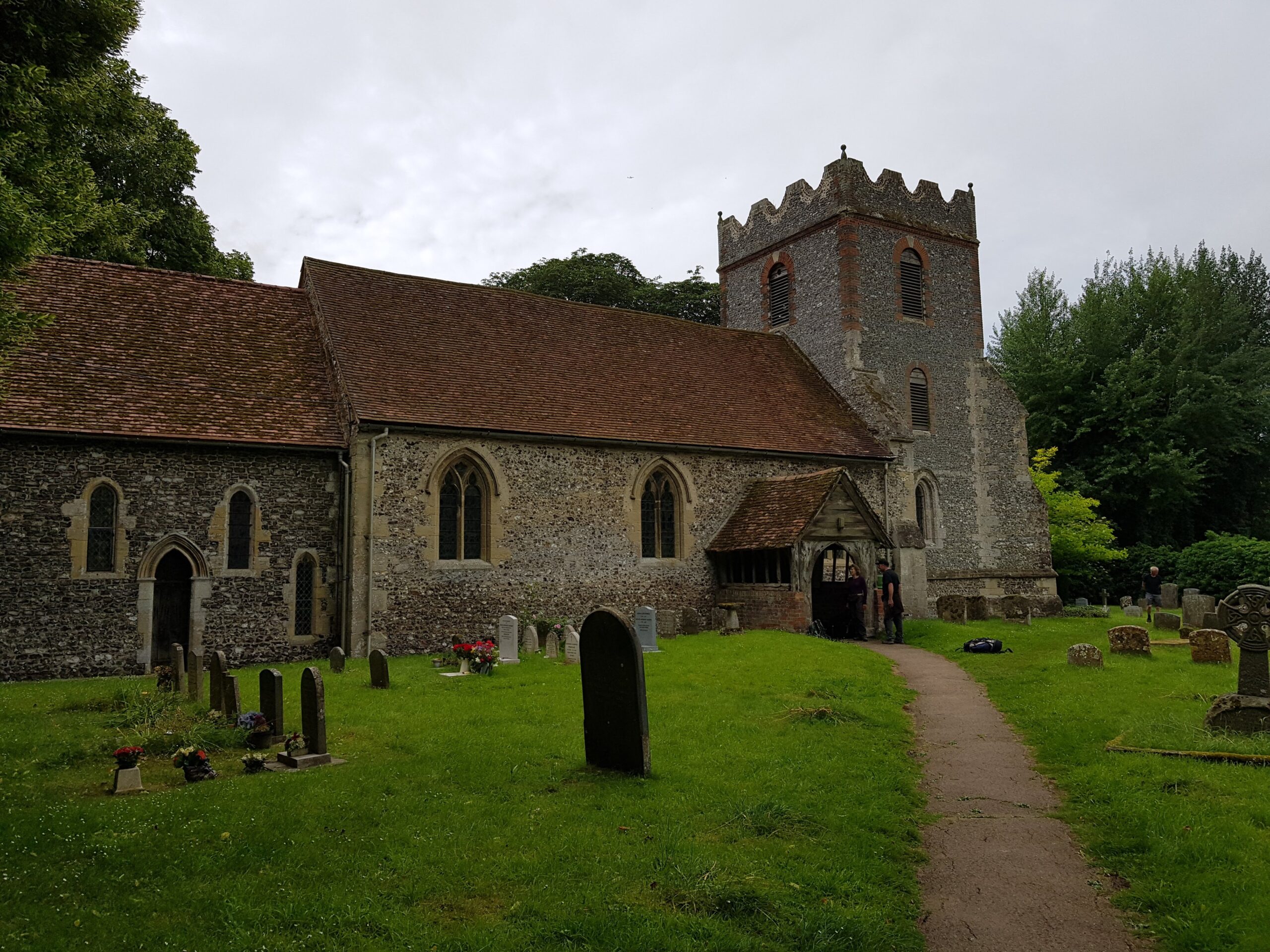
    The thirteenth century church of St. Mary in North Stoke is the only churchyard which the Ridgeway actually crosses, so we thought that it would be rather pleasant to go inside. We were delighted to see on approaching the door that it was open.

    20180614_110907

    After I had failed to open the door, Steve and Dave decide that they’ll use their wit and initiative to enter. It soon transpires that the church is unfortunately locked, despite the open sign on the door. This doesn’t stop Susanna, she finds a phone number on the church noticeboard and calls the church warden, a pleasant man who comes rushing over to open the building. His efforts were much appreciated, as the interior of the church meant that a stop here was certainly worthwhile.

    20180614_112220

    Susanna enjoying the beautiful interior of the church, with the nave dating to a slightly later period to the chancel.

    20180614_112126

    20180614_112402

    The font dates to the early English period, probably thirteenth or fourteenth century, although the cover appears to be much later.

    20180614_111846

    20180614_112117

    20180614_112022

    20180614_112107

    One of the earliest of burials in the church, which is located in the chancel. The chancel itself dates from around the early thirteenth century, and this grave appears to be contemporary to that date or just after.

    20180614_111850

    This path is the official route of the Ridgeway, which cuts across the churchyard.

    20180614_112254

    20180614_112009

    Some of the wall paintings, which are relatively very well preserved. They date to the fourteenth century and one includes the killing of Thomas Becket in the late twelfth century.

    20180614_111808

    I hadn’t heard of her at the time, and I didn’t take a photo of the grave, but Dame Clara Butt is buried in the churchyard. Susanna knew of her and was particularly excited at the news.

    20180614_113019

    20180614_111835

    This lychgate dates to 1923 and uses some of the oak from the old Goring bridge which had been constructed in 1837.

  • Rosliston – St. Mary’s Church

    Rosliston – St. Mary’s Church

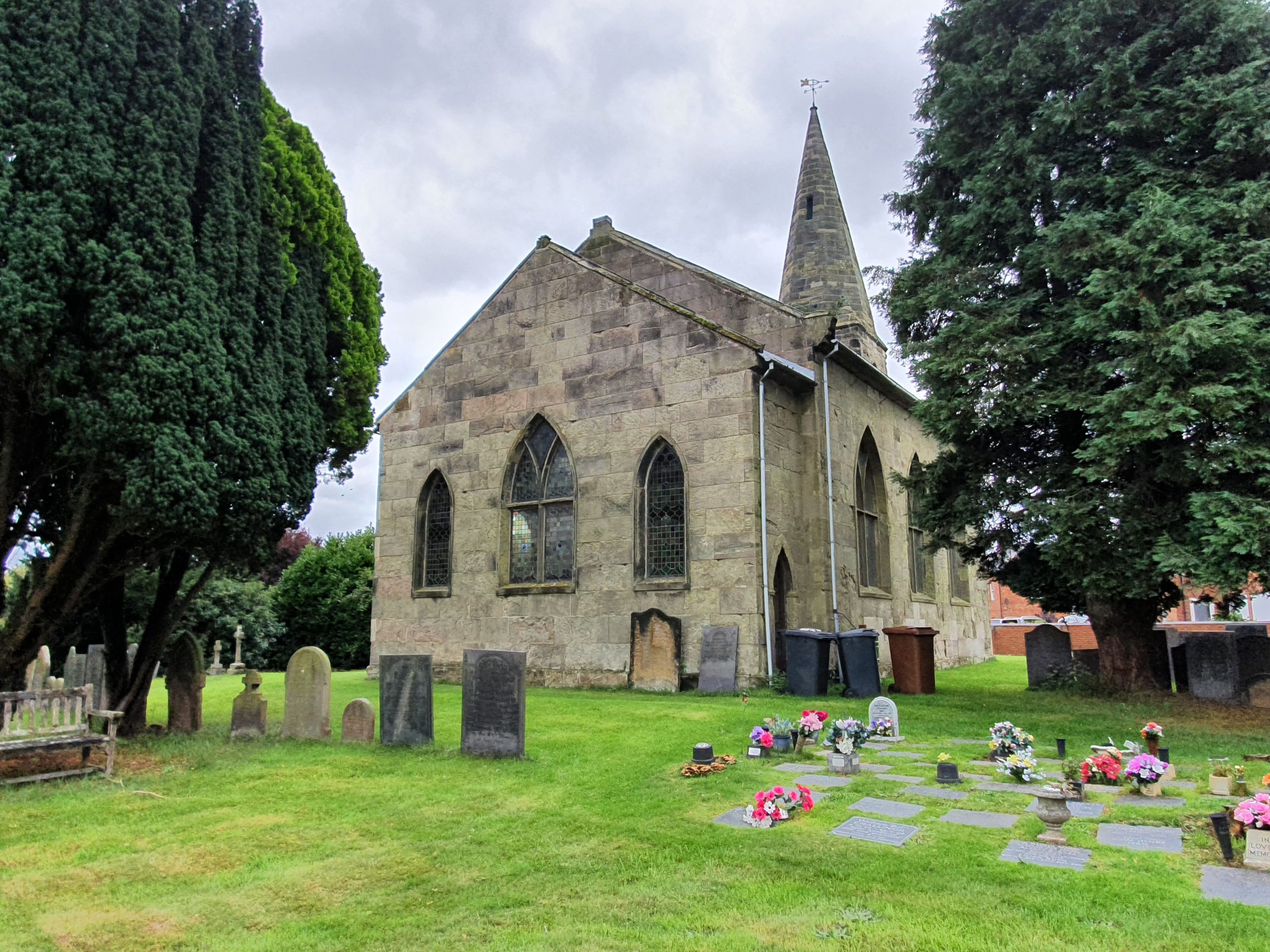
    St. Mary’s Church in Rosliston doesn’t look at first sight the sort of place where a huge controversy took place at the end of the nineteenth century, when the Bishop called his own vicar “cruel and wicked”.

    There has been a church here since either the late Saxon or early Norman period. The current structure partly dates to the fourteenth century, although it was restored in 1802 and the nave and chancel were then rebuilt in 1819 using some of the same materials. There was an advert in the Staffordshire Advertiser in early January 1820, which offered two pews, in the eastern corner of the church, for sale at auction which is a rather different situation to religious services today.

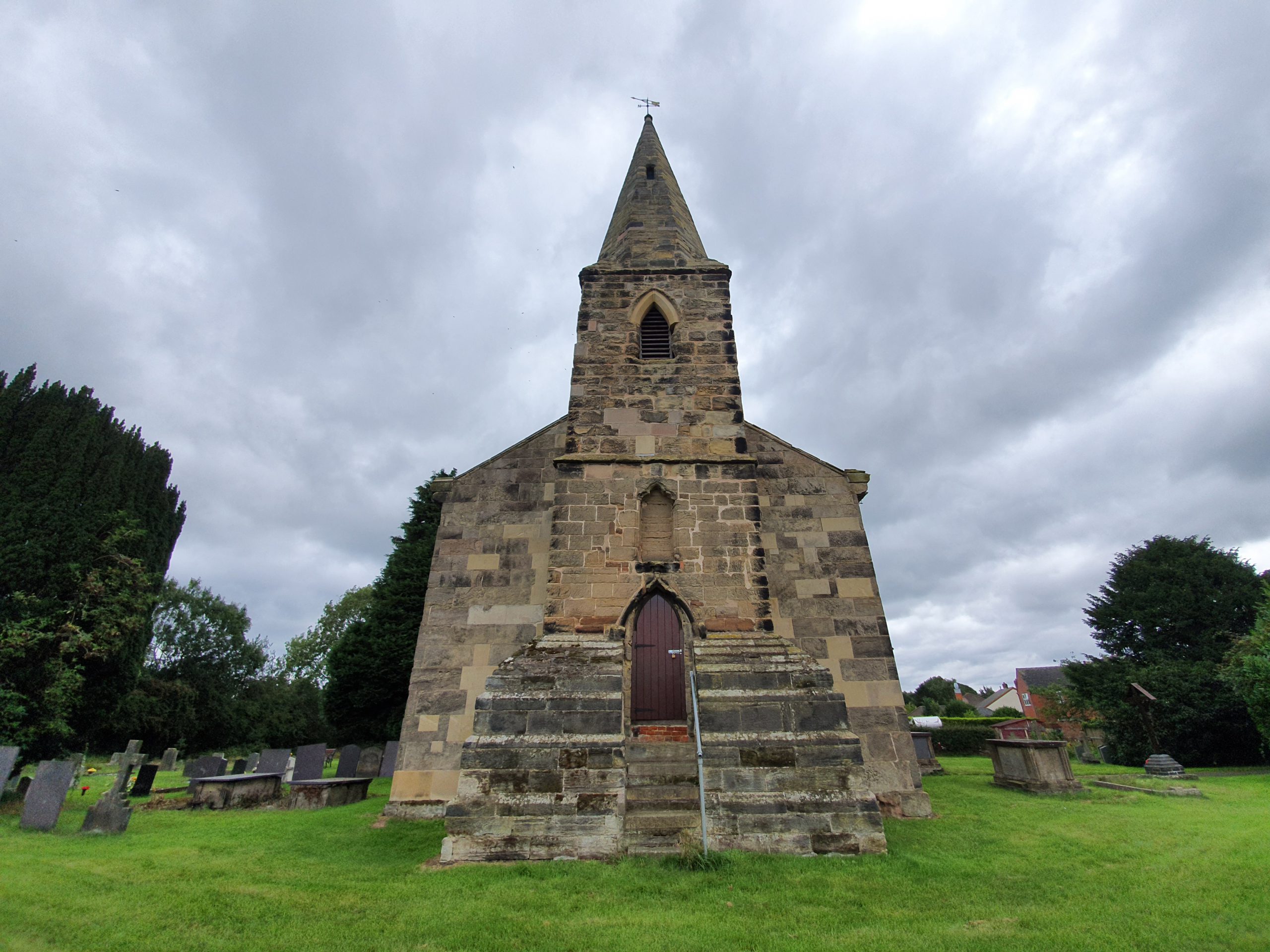
    Most of the tower, including the doorway and steeple, date to the fourteenth century.

    Unfortunately, the interior of the church was closed, although most of the contents appear to date from the late nineteenth century. It does feel peaceful today, but I can imagine the build-up of anger towards the rather wayward vicar which the parishioners once had to deal with.

  • Rosliston – The Strange Case of John Vallancy

    Rosliston – The Strange Case of John Vallancy

    It’s hard to find a history of St. Mary’s Church in Rosliston which doesn’t mention John Vallancy (1843-1906), the village’s vicar at the end of the nineteenth century.

    It was reported by the Reynolds’s Newspaper in July 1894 that:

    “The Rev. John Vallancy, the representative of Christ at Rosliston, near Burton, teaches us the meaning of Christianity as interpreted by the Church established by Parliament in that part of the kingdom called England. Miss Mary Wright and her father placed flowers on the grave of a relative, after being warned by the state-manufactured ‘reverend’ against this display of affection. The representative of Christ swept the tributes away from the grave and brought an action for trespass against the lady, claiming 1s 6d in the special ‘mansion’ in the Father’s House which will be allotted to the Rev ‘Vallancy’, he is likely to be the sole tenant. Boarders will not stay, and in vain will be exhibit a notice ‘apartments to let’”.

    This was a devastating attack on Vallancy, but matters were to get worse. The Derby Mercury reported on 13 May 1896:

    “At the Swadlincote Petty Sessions on Tuesday before Mr. L Barber and a full bench of magistrates John Holden, of Rosliston, appeared in answer to a summons taken out by the Rev. John Vallancy, perpetual curate of Rosliston, who complained that he was in bodily fear of the defendant, and asked that he should be bound over to keep the peace. Mr. Vallancy conducted his own case, and Mr. Capes represented the defendant.

    From the evidence, it appeared that on the 18th April the defendant went to the complainant’s house and asked Mr. Vallancy where the cross had gone that had been placed on his brother’s grave, and why it had been removed. Upon that the complainant ordered him off the premises, but defendant refused to go until he got the information required.

    Complainant said that the defendant threatened to “do” for him, that he had “one wing broken” and that he would break the other. He also stated that the defendant threatened to strike him with a stick which he carried. Mr. Vallancy called four witnesses, whose evidence was most contradictory when under cross-examination.

    Mr. Capes submitted that there was no case for him to answer, but the Bench decided that he must proceed. Mr. Capes then addressed the Court, and called a witness and the defendant himself, who denied either threatening the complainant or using bad language.

    The Bench retired, and after a brief absence, Mr. Barber said they had come to the conclusion that the case must be dismissed for they did not think Mr. Vallancy was in need of any protection.”

    The church authorities had to act as allegations against Vallancy started to pour in and the Bishop of Southwell summoned Vallancy to the consistory (or church) courts in April 1897. The vicar had been accused of holding a revolver in the air against a parishioner, which he denied and said “it was a large church key”. Some parishioners responded by burning an effigy of their vicar outside the church, which isn’t really an ideal state of affairs.

    Vallancy had been so incompetent in role that he was starting to threaten the church’s reputation in the region, with the Bishop noting that:

    “He has been cruel and wicked, utterly unworthy of his position and fatal to any usefulness in the parish of which he was at the present moment the incumbent”.

    There’s no easy way of coming back from that allegation from the local Bishop and Vallancy was suspended from his position for eighteenth months. Vallancy was fortunate that the tabloids didn’t exist then in the same way that they do today, he would have found himself getting international attention.

  • Happisburgh – St. Mary’s Church

    Happisburgh – St. Mary’s Church

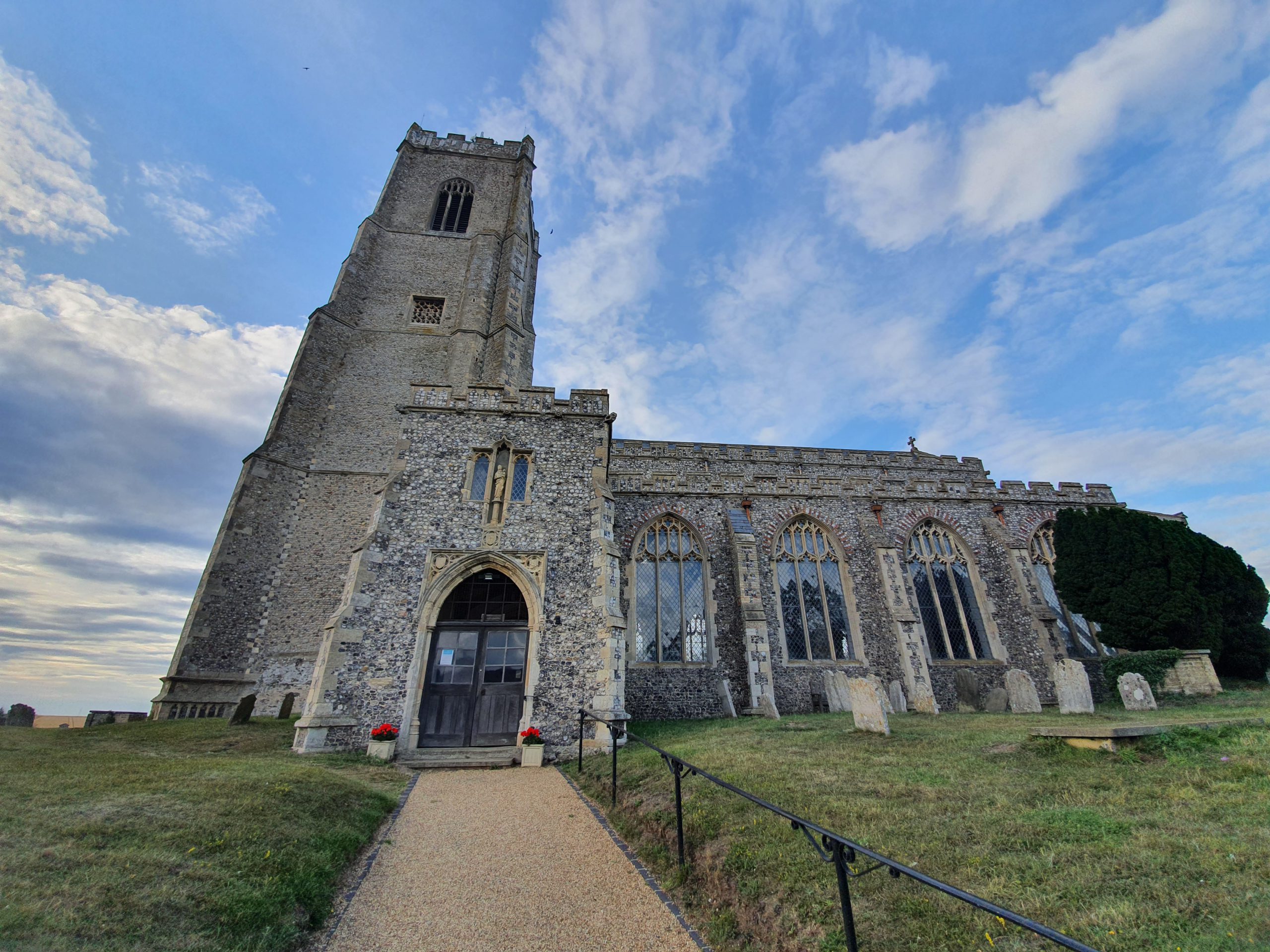
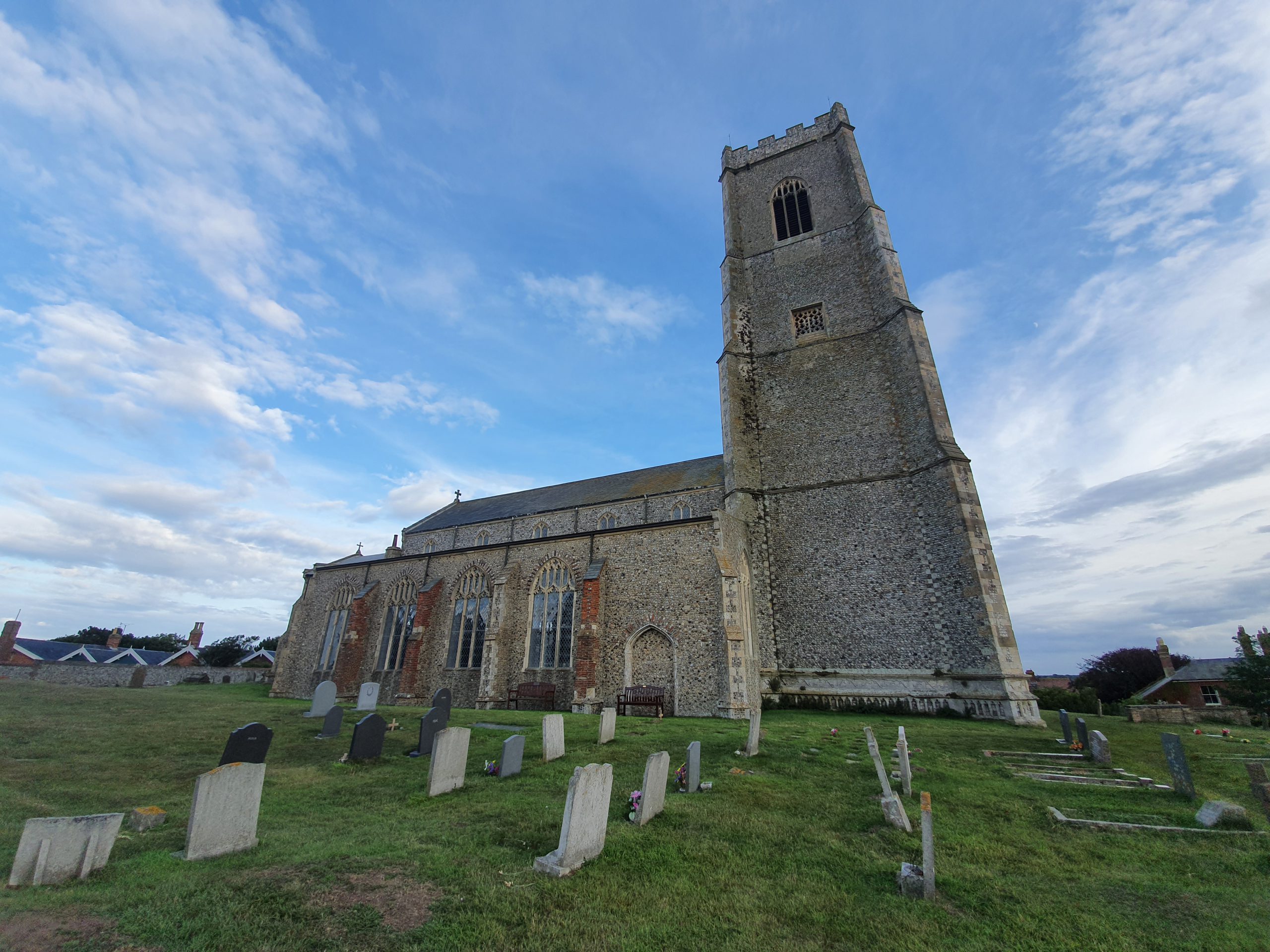
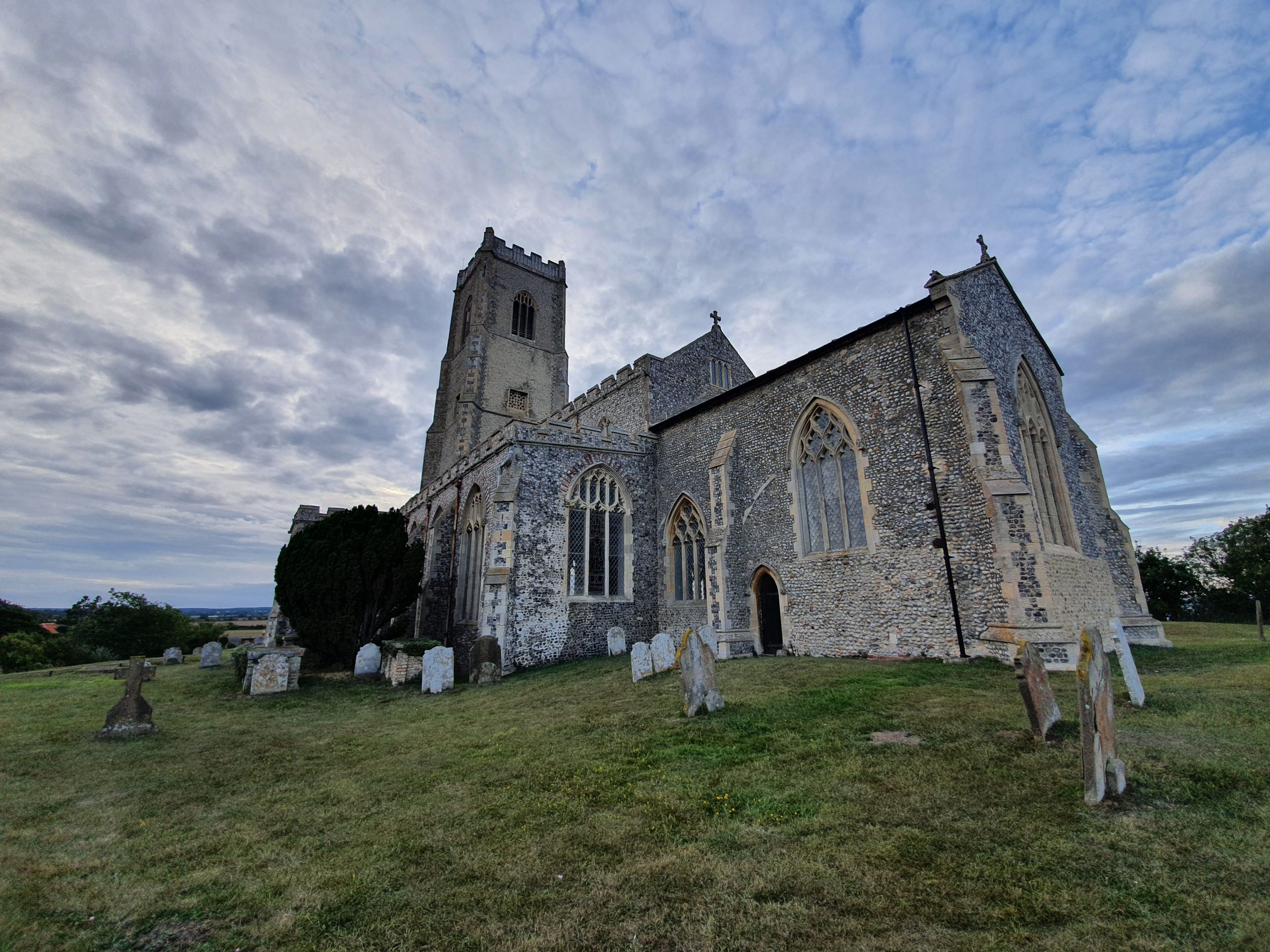
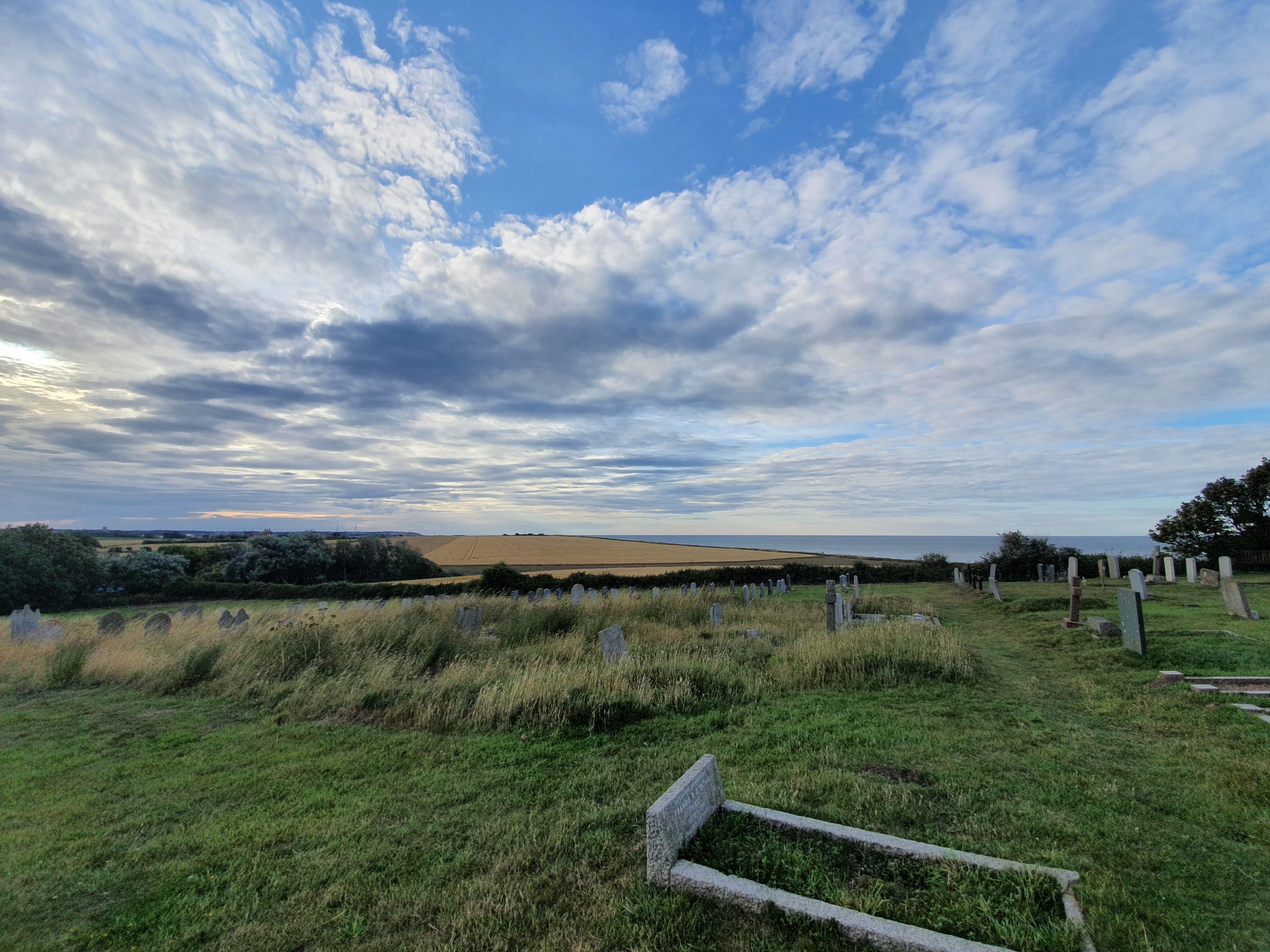
    Located on a windy hill overlooking the North Sea, the current Happisburgh church was constructed in the fourteenth century and then finances allowed in the fifteenth century for a substantial rebuilding. There has though been a church here since the early Norman times and perhaps even the late Saxon period, with a few traces of early Norman architecture in the church tower.

    The roof of the nave is slate, whilst the chancel roof is lead.

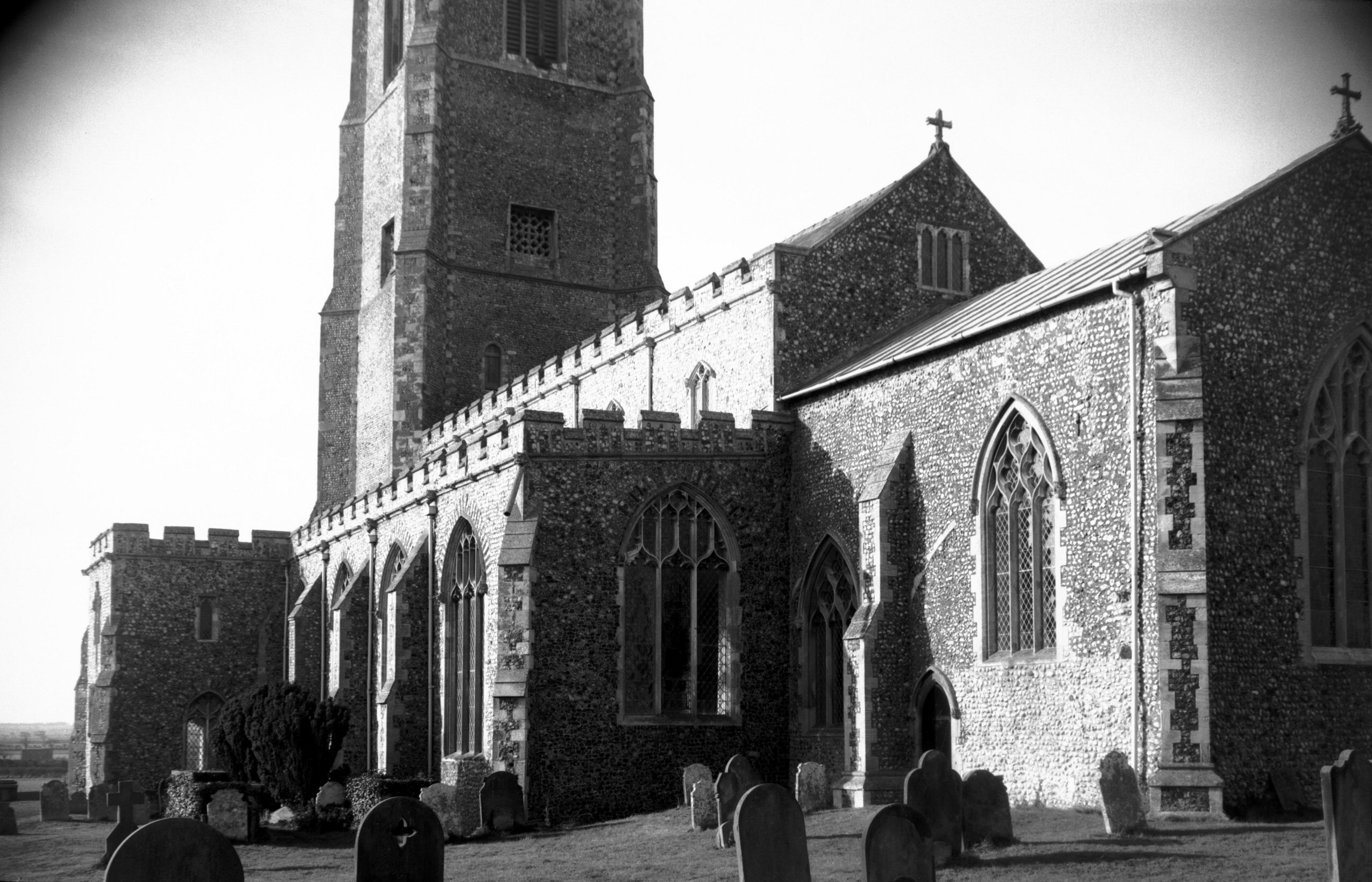
    The north side of the church, which Household Words (a journal edited by Charles Dickens) said in the 1860s was “calculated to be engulfed [by the sea] before the close of the nineteenth century”. The church has avoided a watery fate, but the erosion issue was still of great concern in the early part of the twentieth century.

    By chance, and I should try to ensure in future that this is more by design, I took a photo in nearly the same location as the marvellous George Plunkett. It’s evident that since his photo in 1977 that a few gravestones have gone missing from the churchyard, no doubt distributed around the exterior somewhere…..

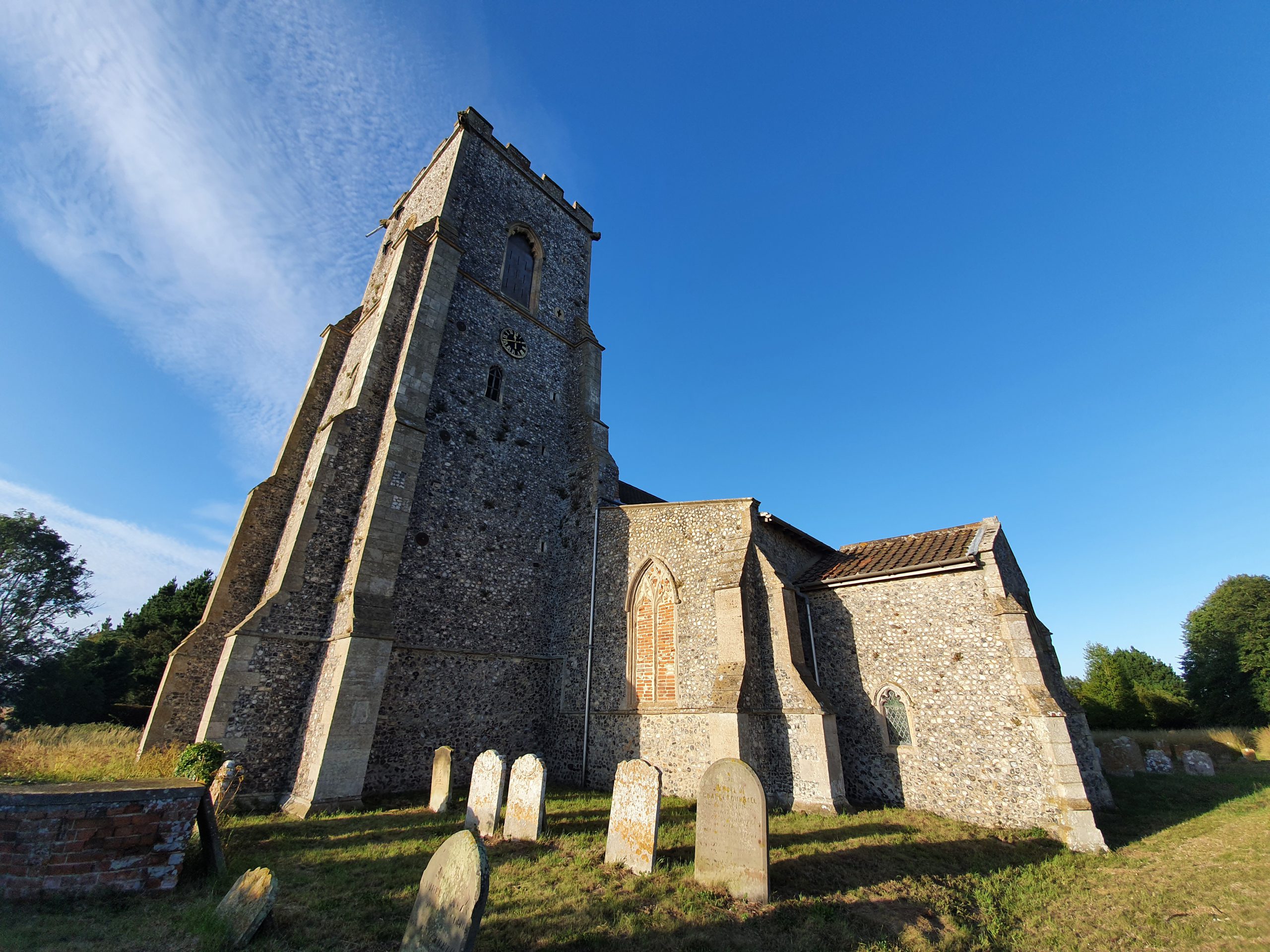
    The four-stage tower isn’t leaning, that’s just my photographic skills, and it was restored following the Second World War due to bomb damage. The church perhaps made itself a bit of a target to enemy bombers as there was a military aerial placed on top of the church tower, which is one of the highest in the county. Its height has certainly given it some trouble over the centuries, it has also been hit by lightning on numerous occasions with some considerable damage caused in June 1822.

    In 1903, an architect was called as a substantial crack appeared in the tower and his report stated that the situation was “very serious”, which would certainly worry me if I was the vicar. The architect noted that “the walls consist almost entirely of flints and chalk lime mortar, and, the upper stages being comparatively thin for so lofty a structure, subject to the tremendous stress by winds and frost”. The church authorities would be pleased with his comments that a Victorian restoration of the tower likely saved it from destruction, but the architect’s suggestion of the addition of rolled steel joints in the structure that was now necessary must have been a worry financially.

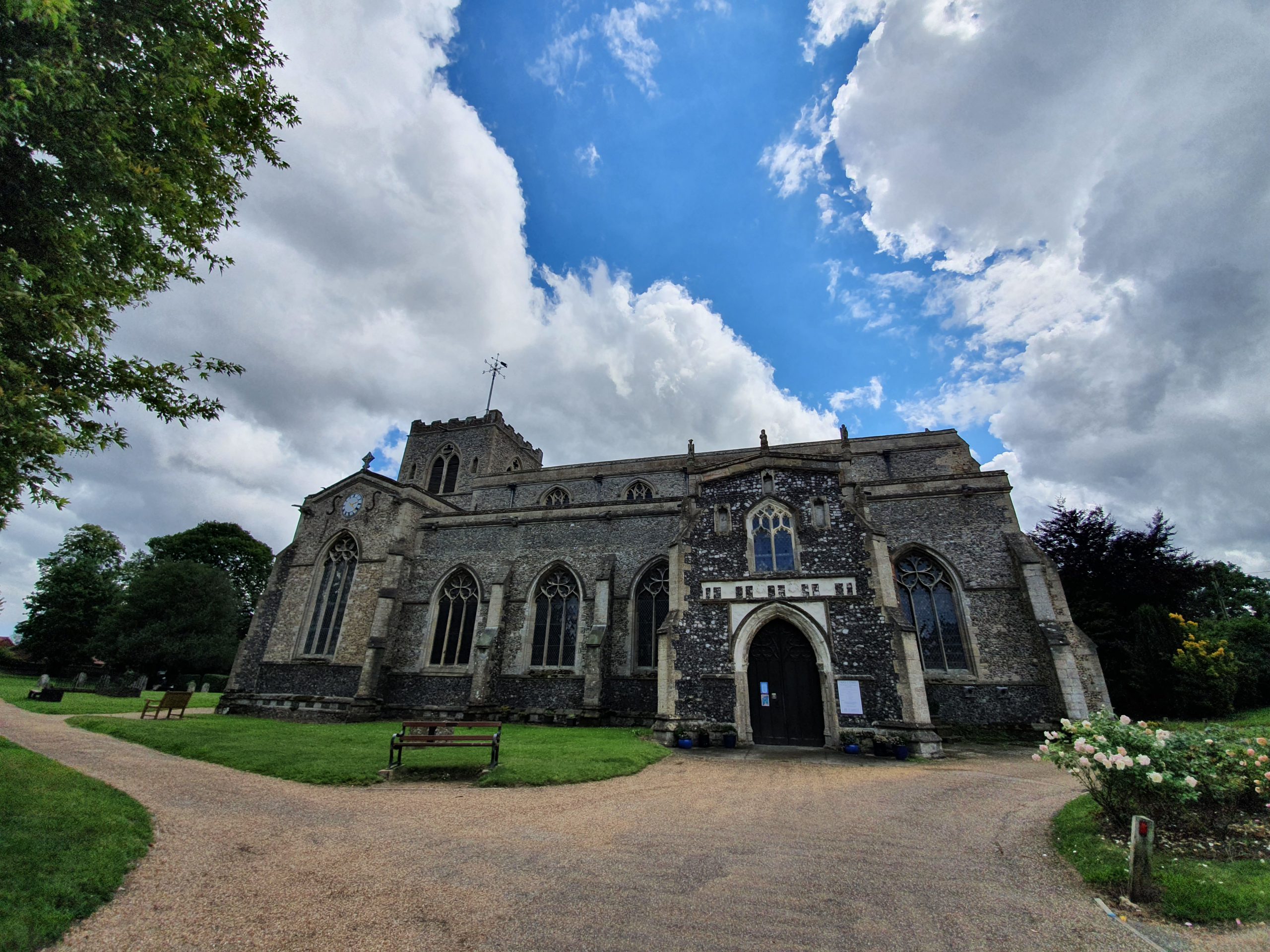
    The sizeable south porch.

    The end chancel wall and this window led to a slight war of words in the local media in 1863. I moderately enjoyed going through the exchange, one reader called it “monstrous” and not holding back on his words, saying it was “a large blank space with a small window in the middle and a child would detect its glaring incongruity”. This caused John Henry Brown some problems, as he was the architect responsible for the west window and he wrote to the Norfolk Chronicle and stated that the Ecclesiastical Commissioners were responsible for the chancel end. He noted that the original reader’s comments had proved “injurious to my reputation” and wanted it clarified there were two different architects, for reasons no doubt seeming sensible to the church at the time. The original author wrote back to apologise for the lack of clarity and he compared the quality of the “beautiful restoration” of the west window and doorway to the “wretchedly mean restoration” of the chancel window, which is certainly a passionate argument to make.

    In the graveyard is a memorial to those men lost on the HMS Invincible in a shipping disaster that took place in March 1801.


    The church in 1955.

  • Happisburgh – St. Mary’s Church (Unknown Sailor)

    Happisburgh – St. Mary’s Church (Unknown Sailor)

    A body was found off Happisburgh on 23 August 1947, thought to be a sailor who had died during the Second World War. He was given a war grave and he now rests in peace “known unto God”.

  • Happisburgh – St. Mary’s Church (Derek James Harrison)

    Happisburgh – St. Mary’s Church (Derek James Harrison)

    I have very little to add about this grave, but I haven’t seen one with the RNLI insignia on it before. It’s the grave of Derek James Harrison, who was born on 31 May 1965 and died on 13 August 1984. I can’t find out much more, other than Derek was buried on 20 August 1984 and he was listed as living at Hill House Hotel in Happisburgh.

  • Happisburgh – St. Mary’s Church (HMS Invincible Memorial)

    Happisburgh – St. Mary’s Church (HMS Invincible Memorial)

    This memorial is in a prominent position in the churchyard of St. Mary’s church in the coastal town of Happisburgh.

    HMS Invincible was launched on 9 March 1765 and was used in the American War of Independence. She was sailing from Great Yarmouth on 16 March 1801 when she hit the sandbank off Happisburgh known as the Hammond Knoll Rock. Although the admiral and 195 sailors were saved, around 400 men lost their lives. The harbour pilot, who died when the ship sank, was later blamed for the incident, which was one of the worst maritime events of the eighteenth century.

    This memorial stone was added here in 1998 as by chance when digging a drainage channel in the churchyard, the bodies of many of the ship’s crew were discovered. It was known that there had been a large communal grave, with carts bringing the bodies to a section of land located just off the main churchyard, but the exact spot of the burials wasn’t previously known. They were buried just three feet under the surface, with no real order to the remains.

    This letter was written by one of the sailors on board:

    “Only two days have elapsed since I last wrote to you, and in that short space the most melancholy accident has happened, namely, the total loss of our ship. We set sail from Yarmouth on Monday morning for the Sound, to join the fleet under the command of Admiral Sir Hyde Parker; and about two o’clock in the afternoon the ship struck on a sand-bank, where she beat most violently for upwards of two hours, when her masts were cut away, and her anchor was then cast, and we all thought our selves safe; for, notwithstanding she leaked considerably, the water gained but little upon us. Our signals of distress were heard and answered by a cutter, which immediately bore down to Yarmouth, to give intelligence of our distress; and we therefore hoped, with the assistance that should arrive, to be able to save the ship as well as ourselves; but God ordained it otherwise.

    The rudder being unfortunately gone, the ship became unmanageable, and in the evening she again drove on the bank, when we all gave ourselves up for lost. Through God’s providence, however, a fishing smack, at this awful juncture, hove in sight, and the admiral; my self, and two or three more, succeeded in getting on board of her; but the rest, in endeavouring to do the same, lost all the boats they were able to get over-board. In this melancholy condition she remained till the following morning, when, shocking to relate, she entirely sunk; we being all the time spectators of the distressful scene, without any possible means of affording the sufferers the least assistance, as any attempt to that effect would only have involved ourselves in the general calamity. By God’s providence, however, the ship’s launch, full of men, at length got clear of the wreck, and by her assistance we were enabled to save some others. In the whole, about 195 are saved.

    The greater part of the officers, including the captain, have unfortunately perished.”

    The Invincible was heading towards a fleet led by Norfolk’s hero Horatio Nelson when it sank, and the great admiral himself visited Great Yarmouth to see some of the injured crew who had survived. Today, there’s a play park near the church named HMS Invincible Park, a reminder of the sad event which cost so many men their lives.

  • East Ruston – St. Mary’s Church

    East Ruston – St. Mary’s Church

    One of the first obvious things of note about St. Mary’s Church in East Ruston is that it’s not really in East Ruston. It instead has a rather precarious position by a main road and is one of the few churches that looks entirely different depending on which side it’s viewed on.

    The main part of the churchyard has been turned (perhaps not deliberately) into a large wildlife garden, making it rather difficult to take photos of the church from some angles. The foliage is quite high and I could just sense the snakes that were lurking in the undergrowth, so I didn’t intend to charge in.

    So, I’ve used this photo (by John Salmon, https://commons.wikimedia.org/w/index.php?curid=13001263) to show what the church did look like before the foliage surged in height.

    And this is the church from the other side, the nearest I could get to it. It looks like a completely different church, but it’s because the north aisle was removed in 1778. It’s an interesting question of why bricks were used in this transformation given the rest of the church was made from flint, were people at all concerned about the aesthetic appearance of the building then?

    There is record of one of the vestry meetings which was held before the north aisle was removed, and there was a problem because a decision was made to use bricks, but no-one at the meeting knew how many would be needed. They tried to work this conundrum out, but failed, so they instead sought the assistance of the young Richard Porson, a local boy who became a well-respected mathematician.

    Another view of the north side of the church, as best I could get, with a strange wall at the front of the photo which is underneath the tower. I have no idea what that’s there for.

    The tower is contemporary with the main part of the church, which is fourteenth-century, although there was likely a previous church on the site from an earlier date.

    The church once had a spire, but it was either taken down or fell off. The almost inevitable Victorian restoration came to this church late, financed in the mid-1880s with funding from Maria Atthill, the wife of the former churchwarden. Before this money came in, the church had fallen into a state of some considerable disrepair.

    The south porch is a little later than the rest of the structure, being added in the fifteenth century. As the church is redundant, the building is now under the care of the Churches Conservation Trust, but the interior is currently closed until they can complete a risk assessment. There is apparently a chancel screen inside which is worth seeing, as well as a fifteenth-century font, so I shall hopefully meander along again to see the interior.

  • Attleborough – St. Mary’s Church (Theodosia Colman)

    Attleborough – St. Mary’s Church (Theodosia Colman)

    The grave of Theodosia Colman is located on a path, which isn’t really ideal, at St. Mary’s Church in Attleborough.

    Theodosia was born in 1752 as Theodosia Howes and she married William Colman on 6 February in 1778 in Besthorpe, a village near to Attleborough. Theodosia died at the age of 76 on 12 October 1828 and was buried on 18 October 1828 at a service overseen by the curate, John Fairfax Francklin.