Tag: St. Andrew’s Church

  • Bacton – St. Andrew’s Church

    Bacton – St. Andrew’s Church

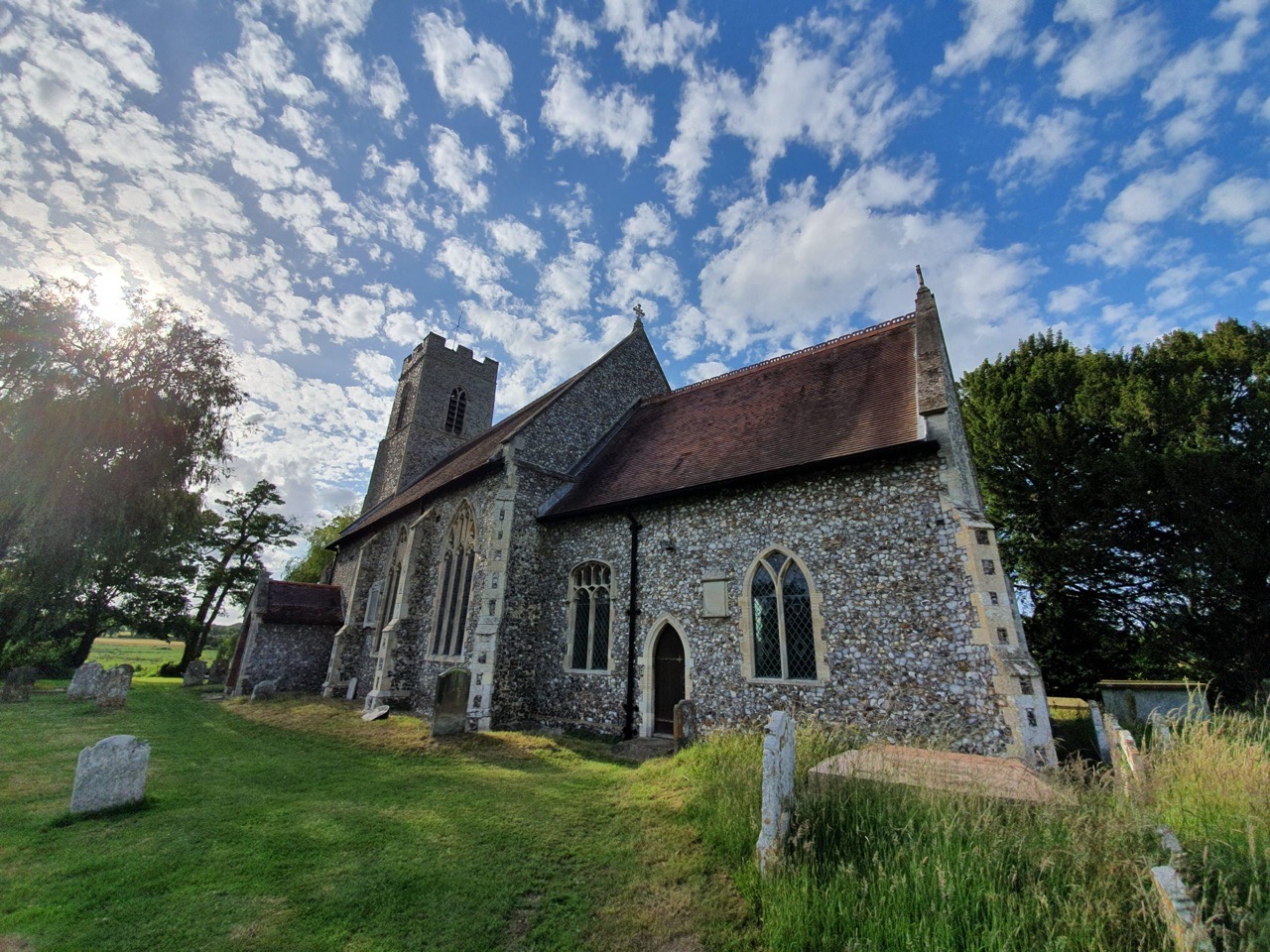
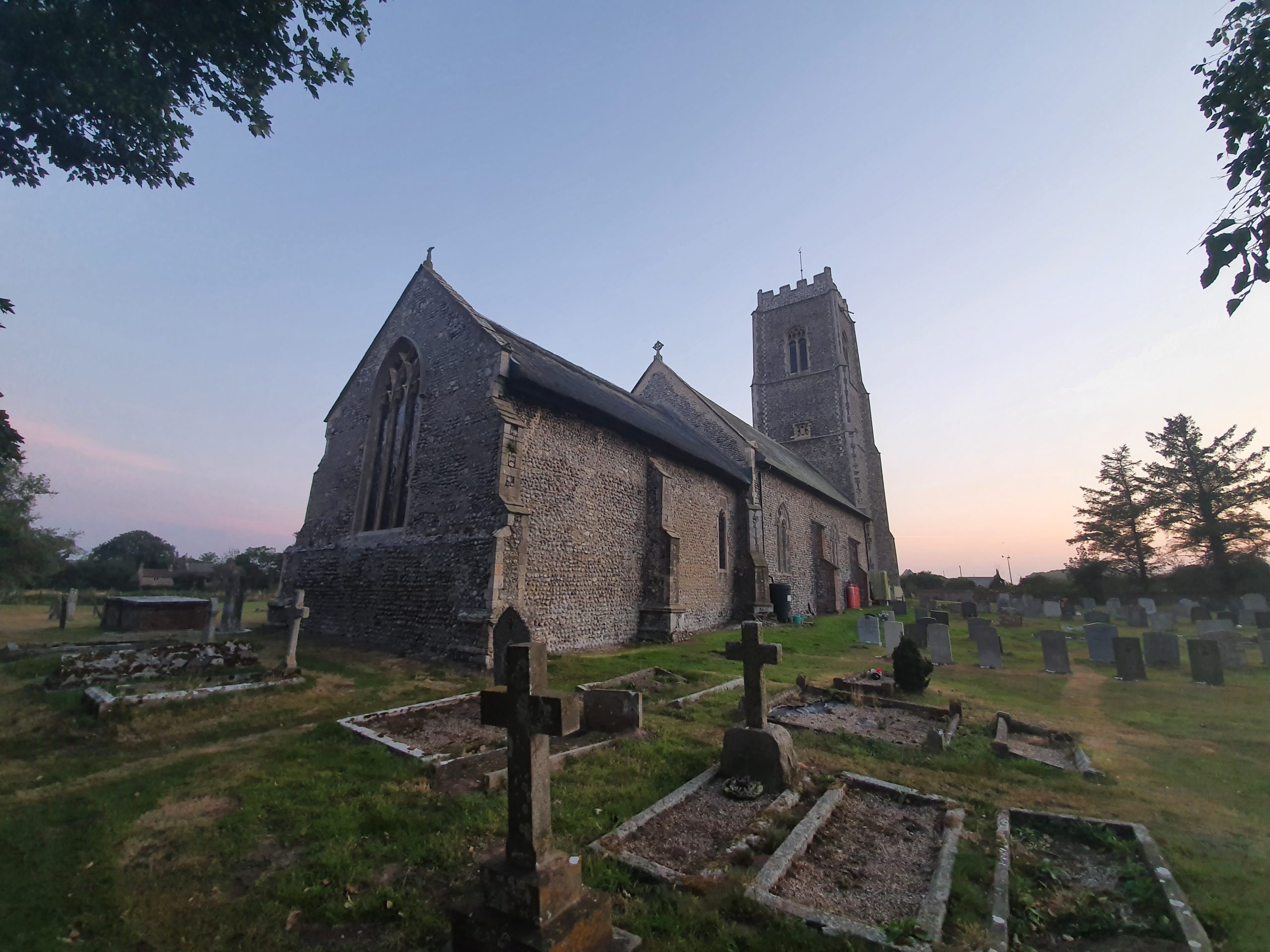
    Overlooking the sea and Bacton Gas Terminal, this church was originally constructed in the fourteenth century, although was remodelled in the fifteenth century.

    The church was heavily restored and faffed about with in 1847 and it was partly reroofed in 1895. What was discovered during the Victorian restoration were numerous wall paintings, some half an inch thick, which displayed stories relating to St. Christopher. Some of these wall paintings, thought to be from the late fifteenth or early sixteenth centuries, are still visible inside the church. And, as a reminder that crime has always been a problem for churches, in the 1840s someone pinched lead from the roof.

    The sign said that the church was open. The church was shut.

    The four-stage tower is from the mid to late fourteenth-century.

    I understand that sometimes creativity is needed with historic buildings when elements such as air conditioning, heating or ventilation are added. But this is bloody ridiculous.

    I’m not sure that we were entirely aware when we were at the church how dark it had become.

    Below is a photo of the church in 1955, those neat bush things leading to the porch have now gone.


  • Gorleston – St. Andrew’s Church

    Gorleston – St. Andrew’s Church

    There has been a church here since the Saxon period, although the current building primarily dates from between the thirteenth to fifteenth centuries.

    The church is relatively sizeable, with aisles on both sides of the building. The church is built with flint and pebbles, with an extensive Victorianisation taking place in 1872, as well as a long-needed repair to the dilapidated thatched roof, which was replaced with slates. There’s a modern-day extension to the building which is used by the parish, but it’s not particularly sensitive and it perhaps disrupts the feel of the churchyard.

    The church has put protection up on its windows, I assume due to past problems with vandalism. It’s sad to see a priest’s door with an iron grille up outside of it though, but best to be safe than sorry. On the left is the south porch, which was reconstructed in 1872. If I had visited this church 200 years ago it would have looked probably quite beautiful with its thatched roof, extensive churchyard and medieval feel, but much has changed since then.

    The three-stage church tower, which is from the thirteenth century and is quite understated with its relatively small windows.

    I have no idea what is going on with the churchyard, but there is some ridiculous spacing going on of the gravestones. Normally, gravestones are vaguely near to each other, but for reasons unknown to me there are sizeable gaps between them all. I can only imagine that someone has been moving them about, or taking some out, unless for centuries they seem to think that the dead are somehow anti-social.

    There was a theft here in 1909, when Edward Lighton of 20 Nile Road in the town wrote to the press to report that his books had been stolen from the box where he placed them under one of the pews. Although his box shouldn’t have been there, he found it convenient to store his prayer and hymn books. Not wishing to become a cold case crime detective, I just get the suspicion that another parishioner didn’t like him doing that. Lighton wrote in his letter that “two wrongs don’t make one right, and although I illegally left them, it cannot justify a thief in stealing them”.

    The church was open to visitors when I meandered around it, but there was a funeral taking place and so it hardly seemed an appropriate moment to pop inside.

  • Lamas – St. Andrew’s Church

    Lamas – St. Andrew’s Church

    Although there was a previous church on this site from the Anglo-Saxon period, the current nave mostly dates to the fifteenth century and until relatively recently, the church would have been thatched. What is noticeable is that the chancel is at an angle to the nave, which the listed building record explains is known as a weeping chancel. The chancel was rebuilt in the 1880s (there’s a plan from 1887 here), using stone from the former chancel, likely on the foundations of the old structure.

    Ian Hinton, from the UEA although he doesn’t specifically mention Lamas, wrote a document about weeping chances and there seems to be no single reason as to why they were constructed like that. It doesn’t seem that anyone knows why the chancel here is built like this, although Hinton gives plenty of suggestions as to why churches were once constructed in this manner.

    The church tower, which was partly rebuilt in the 1880s.

    The lean is also visible from the north side, with one of the doors bricked up. Incidentally, this church is sited in a rather tranquil location and it is also located by the peacefully flowing river.

    This is a scratch dial, or a mass dial, and since the one at Ingham Church was explained to me by a guide, I’ve started to notice more of them. They are used as a sundial for canonical hours and there would have been a peg in the hole which would have cast a shadow. Having written that though, this one looks quite new and so is probably from the late nineteenth-century renovation.

    I thought that this was quite a graceful tree in the churchyard.

    Always sad to see stones broken, but at least they haven’t been turned into paving slabs.

    The south porch which was renovated in 1977 for the Queen’s Silver Jubilee which the listed building record notes has a coffin lid step.

    Sadly, I suspect that the readable element on this stone won’t last much longer.