Tag: Scottow

  • Scottow – Scottow Cemetery (Alan Towle)

    Scottow – Scottow Cemetery (Alan Towle)

    This grave at Scottow Cemetery commemorates the life of Flying Officer Alan Towle. His address is listed as St. George’s Avenue in Bridlington, but he was married to Barbara Towle, who lived at Fern Cottage, Lower Street in Horning.

    Towle died at the age of 24 on 29 December 1953, when his aircraft crashed at a location between Darlton and Tuxford in Nottinghamshire. He was flying in a De Havilland Venom Jet, a relatively new aircraft that was still being launched across the RAF, replacing the Vampire Jet.

    The Yorkshire Post reported an eye-witness who said:

    “I was half a mile away on the top of a hill when I saw the plane flying low. The pilot appeared to be trying to make a forced landing. The plane, however, suddenly lifted sharply and rocked, and having lost flying speed crashed and burst into flames”.

    The newspaper added:

    “Another eye-witness, Mr. H Murdock, a farmer, of Darlton, said ‘the pilot was thrown clear of the blazing portion of the plane, but still trapped in some wreckage. One of our men, Reg Turner, ran up and pulled the pilot clear, but he was already dead”.

    The Aviation Safety web-site has more information on what went wrong on that night:

    “DH.112 Venom NF.2 WL829 was first flown at De Havilland’s at Chester on 11/08/53. On 29/12/53 the aircraft had been collected from 48 MU at RAF Hawarden, Chester, for delivery to 23 Squadron at RAF Coltishall, Norfolk. While en route on the delivery flight, the pilot reported that he was experiencing difficulty with the engine and could not get more than 5,000 rpm from the engine, with consequent reduced power. The pilot therefore decided to divert to RAF Worksop in Nottinghamshire.

    He then next reported that the engine problems were getting worse, and he would not be able to make RAF Worksop. He then decided to attempt a forced landing into a field 2.5 miles north-east of Tuxford, Nottinghamshire. On final approach, during this attempted emergency landing, the nose of the Venom lifted, the aircraft stalled and crashed, diving into the ground at a low altitude and killing the pilot.”
  • Scottow – Scottow Cemetery (Otto Walter Kanturek)

    Scottow – Scottow Cemetery (Otto Walter Kanturek)

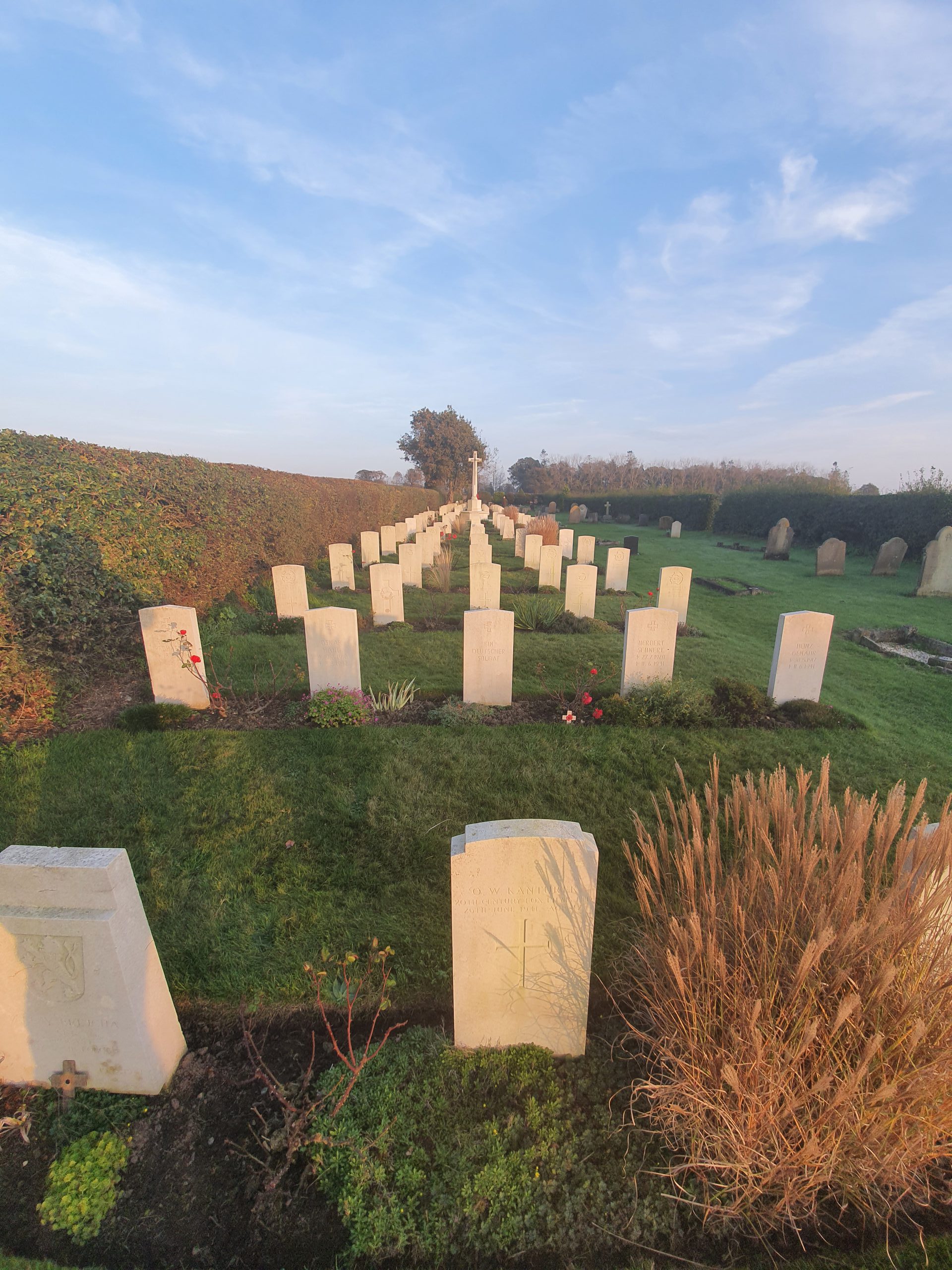
    This is a rather unusual gravestone, or at least the inscription element of it, at Scottow Cemetery. Otto Walter Kanturek was born in 1897 in Czechoslovakia and worked as a film-maker in Germany and the United States, specialising in aerial photography during the early years of the Second World War.

    Otto was at RAF Coltishall as he was filming some scenes of aircraft for the film A Yank in the R.A.F. which was being produced by Twentieth Century-Fox Film Studios. One of the shots they were trying to film was in the air, with Otto in one plane filming two Hurricane planes that would fly by. Unfortunately, one of the Hurricane aircraft crashed into the plane which Otto was in, and although the pilot was able to eject to safety, everyone else was killed.

    The sad incident was reported in the press at the time, also noting that Jack Parry, another videographer, was killed in the incident. It was mentioned in the media of the time that Otto had been the cameraman to all of the Gracie Fields films which had been made in the UK. This story was also featured by the BBC Inside Out television programme in 2006, who were able to interview one of his colleagues, Bryan Langley (then aged 97), who said:

    “If it wasn’t for Otto, I wouldn’t have been a Director of Photography for many years. He helped me with my career, a wonderful man”.

  • Scottow – Scottow Cemetery (Tadeusz Szymanski)

    Scottow – Scottow Cemetery (Tadeusz Szymanski)

    The grave of this Polish airman who served in the City of Warsaw Squadron (No. 316 Polish Fighter Squadron) is located at Scottow Cemetery, and there’s an excellent biography of this man, Tadeusz Szymanski (1917-1992), at http://aircrewremembered.com/szymanski-tadeusz.html. His record as an aircraft pilot is exceptional, with more details at http://polishsquadronsremembered.com/316/44/Mustangs1944.html.

    Tadeusz married his wife Betty (nee Kay) in 1942, and she is now buried next to her husband.

    The wonderful Imperial War Museum have a photo (© IWM FRE 14842) of Tadeusz, this was taken on 12 July 1944 and he was checking the wing of his P-51 Mustang.

    A photo from the same day (© IWM FRE 14843) of Tadeusz carrying the damaged wing tip from his aircraft.

    The Air Crew Remembered web-site linked above mentions:

    “We knew that he had been a pilot and was rumoured to have invented the technique of flying along side V1 rockets and ‘flipping them over’ with a wing tip so that they crashed into the North Sea, rather than landing in England. However if you asked him he would just shrug it off with a smile.”

    So, this is perhaps why his wing tip was damaged in these photos. By all accounts, this was a heroic individual.

  • Scottow – Scottow Cemetery (Illegitimi non Carborundum)

    Scottow – Scottow Cemetery (Illegitimi non Carborundum)

    This ‘Latin’ phrase was on a relatively recent grave in Scottow Cemetery, and I’ve never heard of it, but it’s apparently in relatively frequent usage. It’s not an actual Latin phrase, just a deliberately badly corrupted version of it, and it effectively means ‘don’t let the bastards grind you down’. The phrase was first during the Second World War and I’m not sure how I haven’t heard of it before…..

  • Scottow – Scottow Cemetery

    Scottow – Scottow Cemetery

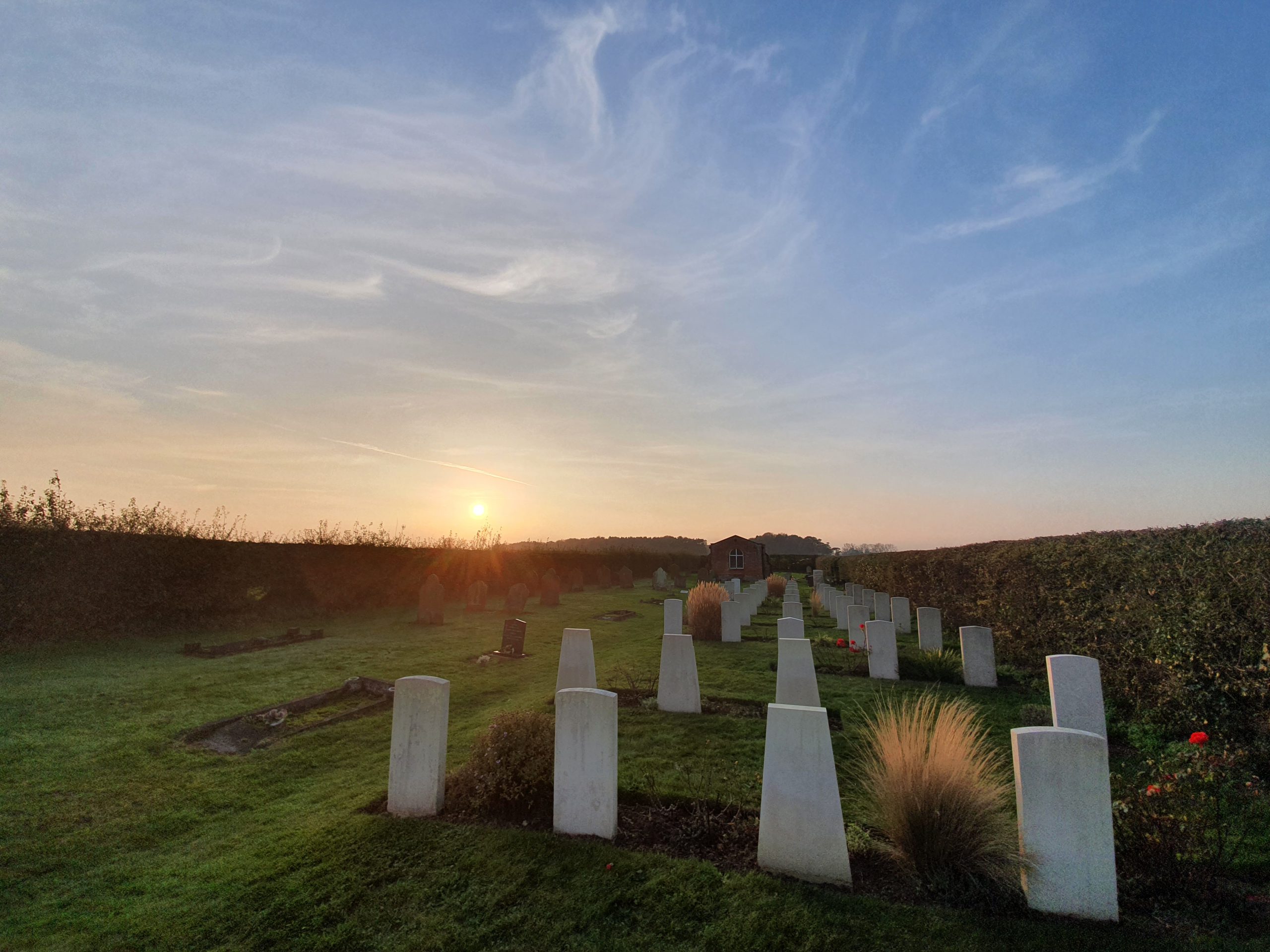
    I’m not sure that I’ve been here for over thirty years, this is the combined parish and war cemetery at Scottow. I remember when visiting as a child the slightly confusing nature of the war graves here (more of which in later posts) as there were servicemen buried here from all over Europe, including from the German military.

    The cemetery and mortuary chapel were opened in 1902, I assume as Scottow Church had no more spaces for burials.

    War graves from RAF Coltishall were placed here until September 1943, when space became short and then those who died were laid to rest in North Walsham church. Later on, further military burials returned here and continued to be until the airfield’s closure a few years ago.

    As an aside, it was tradition for new air bases to be named after the local railway station, but RAF Buxton wouldn’t work because of the similarly named town in Buxton. Instead they went for another nearby railway station, choosing Coltishall as their air base name. This is why the air base was never called RAF Scottow, even though the site had previously been known as Scottow Aerodrome before the RAF got there. Buxton and Coltishall railway stations still sort of exist, but they’re now on the Bure Valley heritage railway line which operates between Hoveton & Wroxham and Aylsham.

    A purchase of some more land has recently been made and this is the new cut through into this additional space.

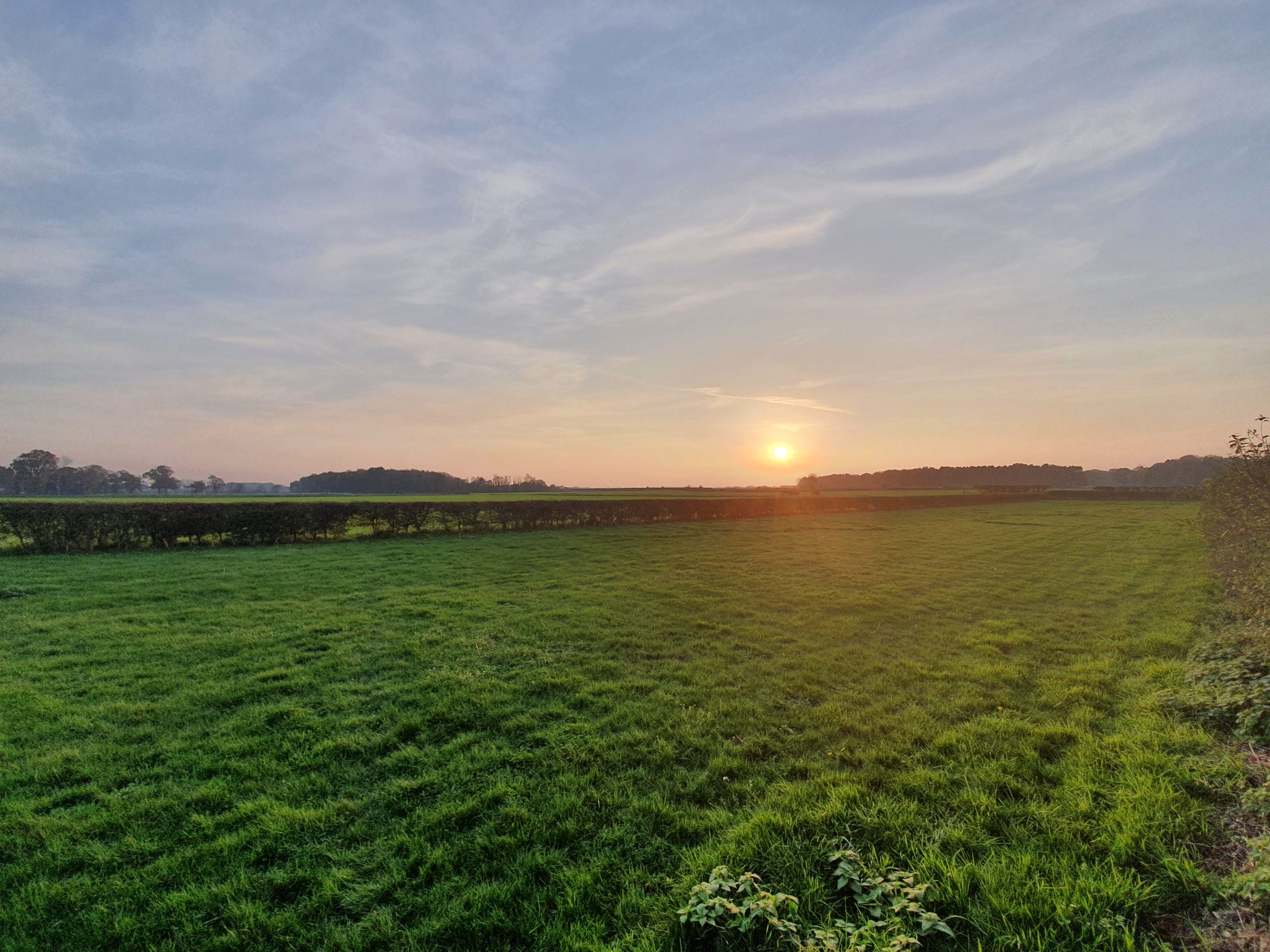
    This is the new space that has been opened up for future burials, which should prove sufficient in size for at least another couple of generations. There’s something quite peaceful about this spot, and there was in many ways even when RAF Coltishall was operating. Perhaps there was something quite appropriate about former airmen being buried so near to the landing strip of a military airbase, but tranquility will hopefully now take over.