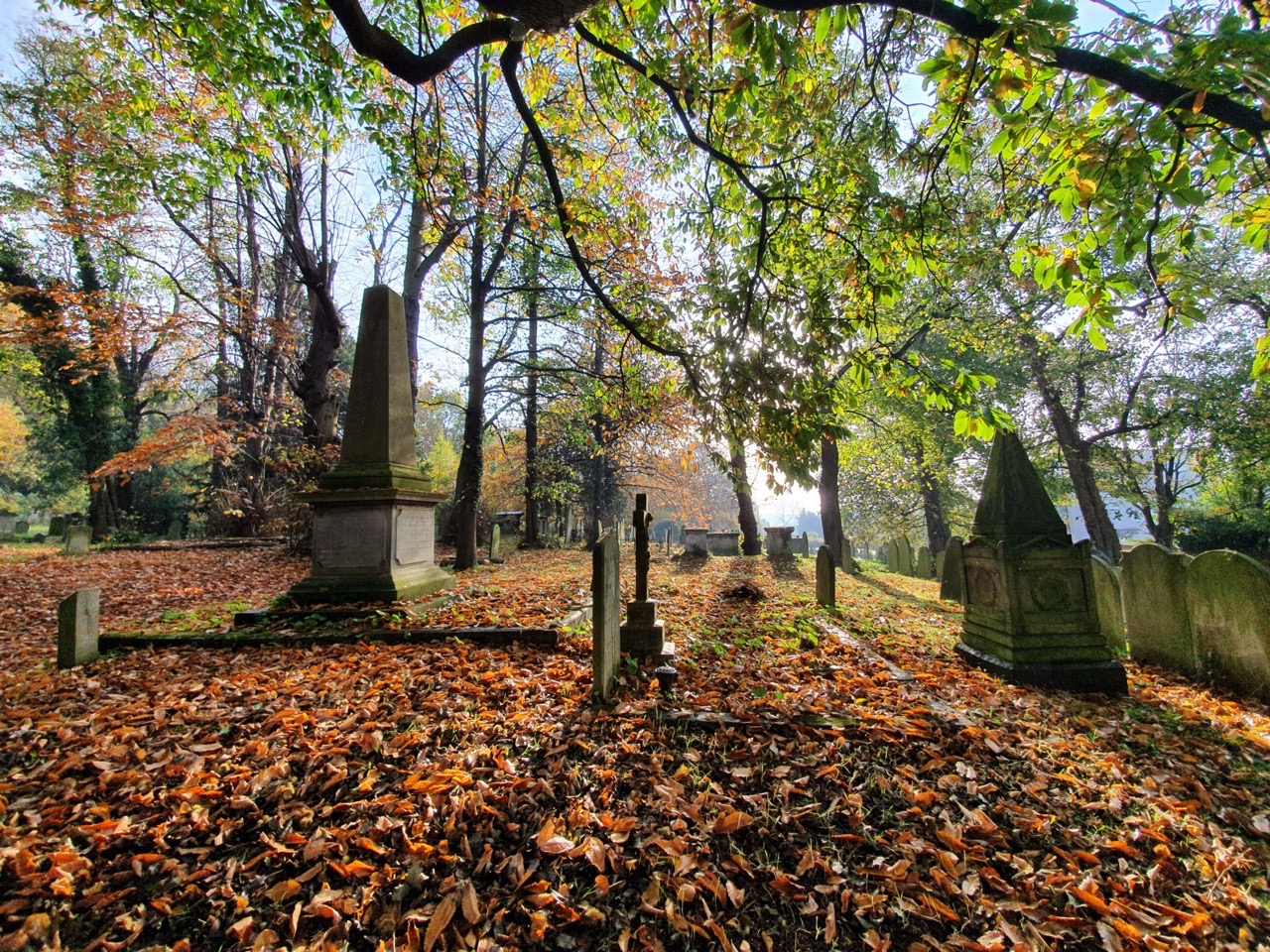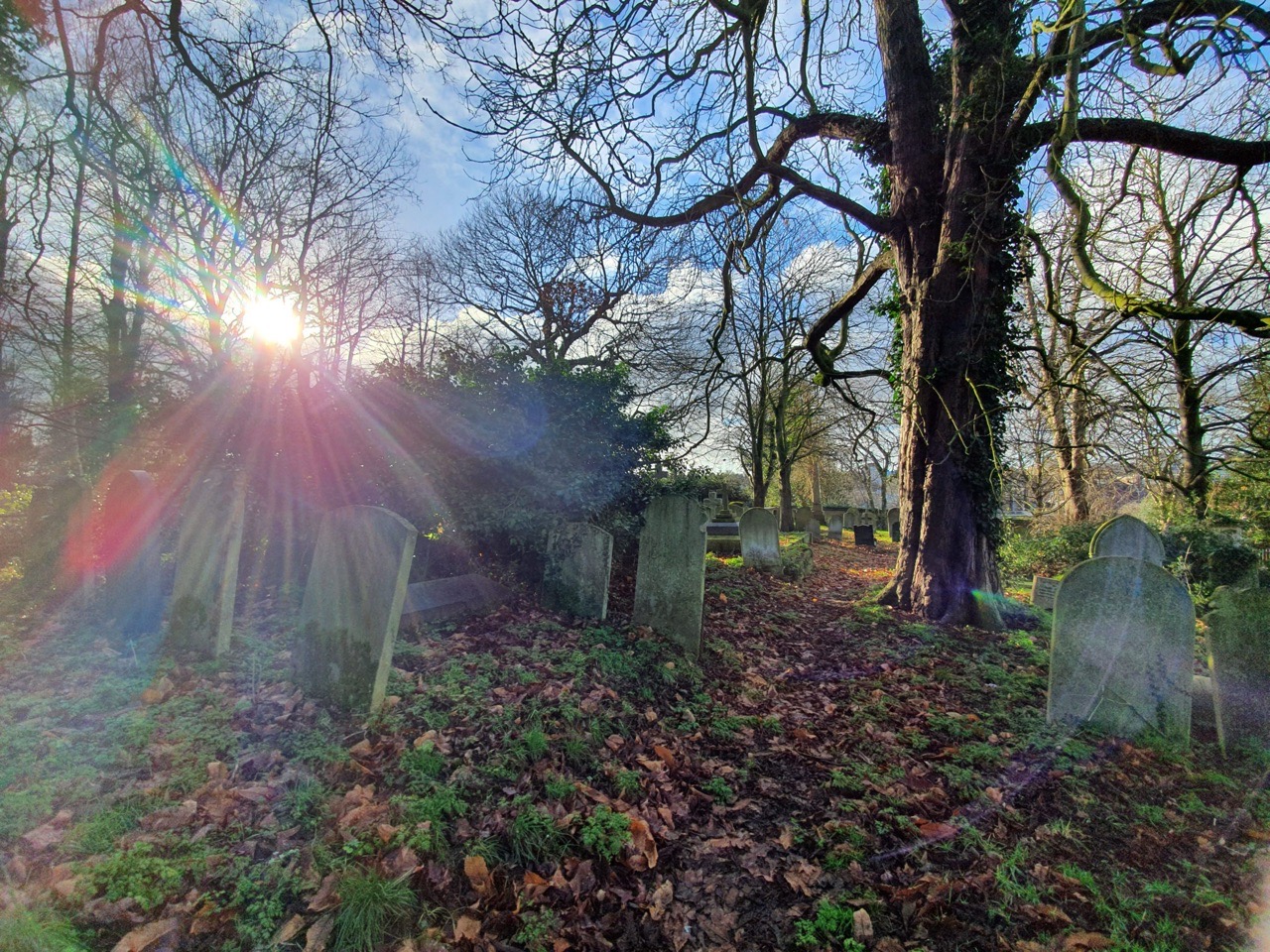
Tag: Rosary Cemetery

  • Norwich – Rosary Cemetery (Edwin Vickers and George Vickers)

    Norwich – Rosary Cemetery (Edwin Vickers and George Vickers)

    This gravestone at Rosary Cemetery in Norwich suggested initially that there might be something of a story, with two deaths at relatively young ages both in the same year. I’m not entirely sure I’ve found much of a story here, notably because I haven’t found out why these brothers died in their 30s.

    Edwin was born in Penkridge, Staffordshire in 1838, the son of William Vickers and Harriet Vickers. George was born in Hyde, Cheshire in 1842, also the son of William and Harriet. Edwin and George also had James and William as brothers and Martha and Emma as sisters.

    At the 1851 census, the family had moved to Norwich and were living at 24 Railway Cottages on Carrow Road in Thorpe. William was working as a journey blacksmith, with in this instance that word journey deriving from the French ‘journee’ meaning day as this was how frequently they’d be paid. It evolved from when there were masters and apprentices, with journeyman being in the middle of that scale. The family had only just moved to Norwich as William, the youngest in the family, had been born in Shropshire.

    George married Mary Anne Meek in early 1869 and it appears that their daughter Jane was born on 19 March 1869 (perhaps not an ideal situation in Victorian times). She went to St Peter Parmentergate National School and the family were living at Rising Sun Lane. Jane later went to Thorpe Hamlet Girls’ School and she left in 1881.

    At the 1871 census, George was living at the Thorolds Buildings in St Peter Parmentergate, along with his wife Mary Anne and their daughter Jane, aged 2. At the same census, Edwin was living at Castle Meadow, also in St Peter Parmentergate, along with a Maria Goatley.

    We know a little about Edwin Vickers due to an argument that took place in 1874 which led to Robert Baxter, the landlord of the Nag’s Head pub smashing Edwin’s windows. The argument was concerning who could use an out-building at the rear of their properties, although the matter was later resolved by the mutual landlord. It though tells us (I say us, but mean me….) that Edwin was a carpenter, but this is unfortunately the only information that I can find in the media of the time about either him or his brother.

    Edwin Vickers died on 22 January 1876 at the age of 37 and George Vickers died on 19 November 1876 at the age of 34. George was buried in the same grave as Edwin and I think that George’s wife remarried, hence why she isn’t listed on the grave. Why they died so young is another mystery that I can’t resolve, but maybe someone knows….
  • Norwich – Rosary Cemetery (Samuel Brock)

    Norwich – Rosary Cemetery (Samuel Brock)

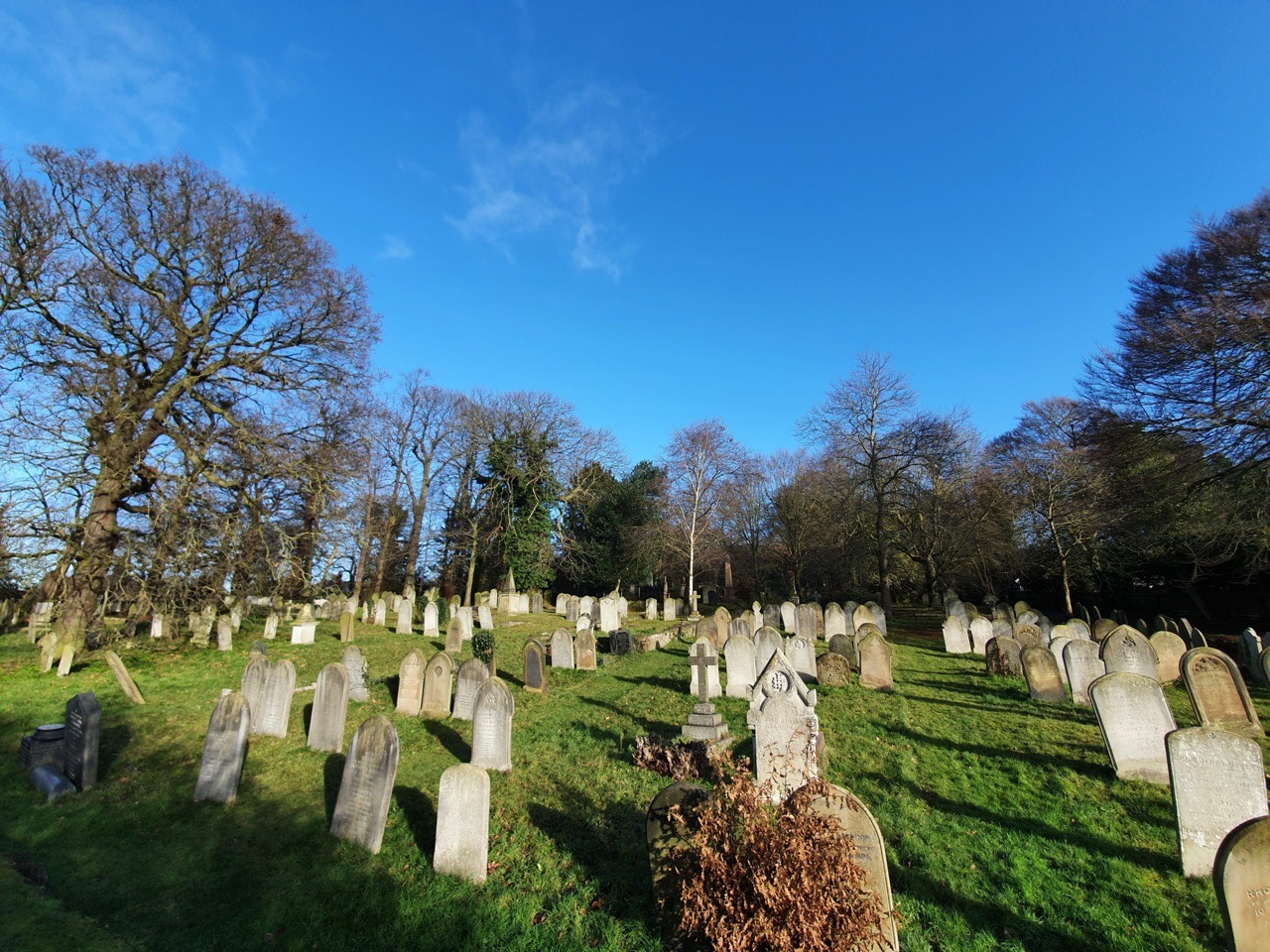
    This is the grave of Samuel Brock which is located in Rosary Cemetery in Norwich.

    Samuel was born in 1810 and he married Ann Steward at St. John the Baptist Church in Old Lakenham (a church I visited a couple of weeks ago) on 27 October 1834.

    At the 1841 census, Samuel and Ann were living on Middle Street in the St. Augustine parish of Norwich. They lived with their sons Samuel, aged 4, and William, a new-born. Samuel appeared on the electoral registers at this time, because he operated a shop on Middle Street. This street name changed to become the northern end of St. George’s Street where it met Botolph Street, and this area has now been partly demolished.

    At the 1851 census, the couple were living on Botolph Street along with their son Henry, aged 16, and a servant Mary A Wells, who was aged 17. Samuel was working as a baker, by this time having a shop on Botolph Street, and Henry was still studying. This didn’t help the family in terms of their finances, as the local press reported in 1857 that Samuel had gone insolvent. And for this ‘crime’, Samuel was sent to Norwich prison, although I can’t find out for how long. However, there’s no record of any of Samuel’s family in the 1861 census.

    At the 1871 census, the couple were living at Howletts Yard, located off Botolph Street. This yard had fifteen houses and was demolished as part of the city’s slum clearance in 1935. Botolph Street used to link Augustine Street to Magdalen Street, a part of Norwich wrecked by the Anglia Square development.

    Howletts Yard isn’t marked on this map from the 1920s, but it’s the one above Cat & Fiddle Yard. The house that Samuel Brock and his wife lived in is where Iceland now stands on Anglia Square.

    Samuel died on 15 August 1874 at the age of 64 and his son, Samuel jr, took over the bakery. A notice in the Norfolk News said “Samuel died after a long affliction, borne with Christian fortitude”.

    At the time of the 1881 census, Ann lived with her son Samuel jr on Botolph Street, along with Anna, his wife, and their children Harry and Anna (there are a lot of Ann or Anne Brocks in this story). Ann Brock died on 11 March 1883 at the age of 72.

    There isn’t perhaps much of a story to tell about Samuel Brock beyond where he was living and what he did. But, it’s a slice (excuse the pun) of a baker’s life in the north of the city centre, in an area which has now nearly entirely been demolished. What I have found out about Samuel is that his finances sound challenging and his health seems to have been poor, this could not have been an easy life.

  • Norwich – Rosary Cemetery (Alexander Thomas Lewthwaite)

    Norwich – Rosary Cemetery (Alexander Thomas Lewthwaite)

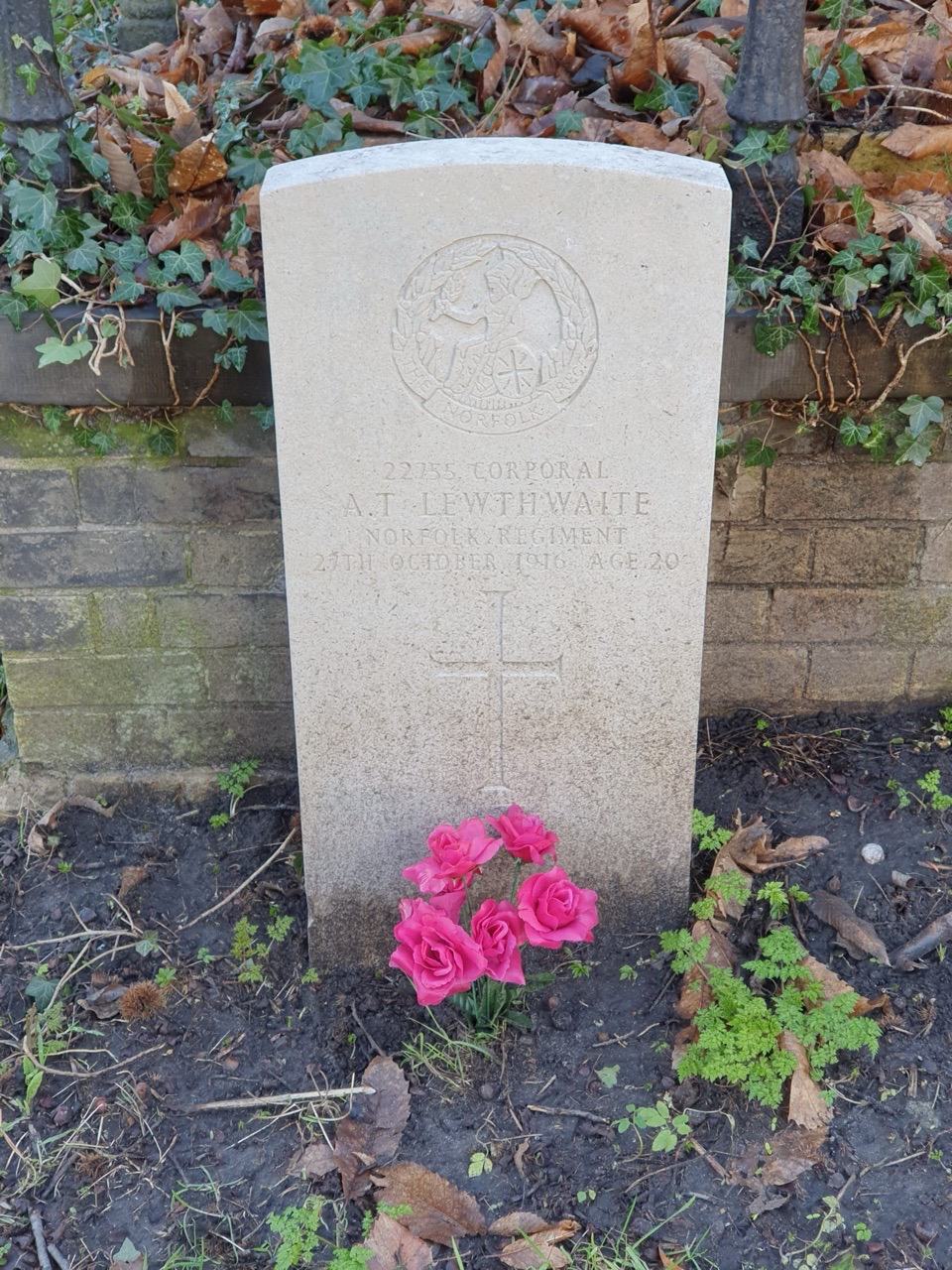
    This caught my eye yesterday at Rosary Cemetery and I’m not sure how I haven’t seen it before, the war grave of Corporal Alexander Thomas Lewthwaite.

    There aren’t that many war graves at the Rosary Cemetery, they’re mostly at Earlham Cemetery which has two areas to commemorate the war dead. There are though 31 war dead at the Rosary Cemetery, with 19 having lost their lives in the First World War and their details are above.

    Alexander was born in Manor Park, West Ham in London (although then technically in Essex) in 1896, the son of Robert Kendrew Lewthwaite and Leonora Lewthwaite. By 1901, his family had moved to Croydon Road, Caterham, Godstone which was in Surrey. Alexander was by then five and he lived with his parents, then both aged 40, along with Robert P (aged 9), Leonora Hilda (aged 8) and Evelyn May (aged 6).

    The family had moved again by the 1911 census and it’s clear that there was a difference of opinion somewhere along the line between Robert and Leonora, primarily since they had “judicially separated” according to the census. This is a legal term which can still be used today, to signify that the couple are no longer living together, but they do remain married. This wasn’t entirely uncommon at the time, but I suspect that Leonora would have faced some social disapproval when people discovered her arrangements.

    Whatever the reason was that Leonora had to move, she was living in Claxton in 1911, along with Leonora Hilda (aged 18), Evelyn Mary (aged 16), Alexander (aged 15), Kathleen Errol (aged 9) and servants. The family moved again over the next few years, this time to 2 Lakenham Terrace in Norwich.

    Alexander enlisted into the military (service number 22755) on 4 December 1915, by which time he was 19, standing 5’10” tall and weighing 9 stone. He remained at his home base until 5 December 1915, before returning to Norwich on 22 January 1916, so it doesn’t seem he saw any front line military action. He went to Colchester between 23 January and 16 March 1916, then remained training in Essex.

    It was at that training at Ray Farm Encampment (which was near to Parkeston in Essex, next to Harwich) that something dreadful happened. During some firearms training, Alexander was shot by Alfred Ernest Turner and he died nearly immediately from brain injuries caused from that rifle bullet. This was a mystery then and actually still is today, they weren’t using live ammunition and so the death just shouldn’t have happened.

    The police came to investigate and an inquest was held the next day which heard from some of the men at the site. There was a decision that this was “an accidental death causing injury to the brain”. Alexander was aged just 20.

    This is the letter sent on the day of the death in an attempt to establish the circumstances of what happened. As an aside here, these are part of the burnt documents which were damaged following an air raid in September 1940. The bomb destroyed two thirds of the military records which were stored at Arnside Street in London, about 4 million pages were lost. These ones were salvaged from the fire, but unfortunately were badly damaged.

    Sergeant Walter Crane, who was in charge of the recruits, explained what had happened.

    William Murrell Claxton came to investigate the matter from a police perspective.

    The explanation of the matter to the inquest from Charles Kenneth Hatherall Wyche.

    And, the testimony from the man who fired the gun which had fatal consequences, Alfred Ernest Turner.

    As for what actually happened, it’s clear no-one really knows. Alfred was clearly questioned about whether he had deliberately killed Alexander, which remains a possibility although there’s no obvious motive.

    I don’t understand what happened with Alexander’s grave at the Rosary Cemetery, as it seems that his gravestone was added following his death and there’s no reason why his body wouldn’t have been buried. There was though a new gravestone made in 1996, perhaps just because the old one was damaged. I’m unsure of why his grave is where it is in the Rosary Cemetery, it’s in an unusual place next to an older tomb and that doesn’t seem to have a familial link.

    What isn’t recorded is what Alexander’s parents thought of what had happened. It might be enormously difficult to lose a son during the First World War, but the pain of this must have been compounded by the circumstances of how he lost his life. It’s unclear to me whether anything sinister took place or it was just incompetence, but, either way, this was perhaps a life needlessly lost.

  • Norwich – Rosary Cemetery (Isaac Brett & Lucy Brett)

    Norwich – Rosary Cemetery (Isaac Brett & Lucy Brett)

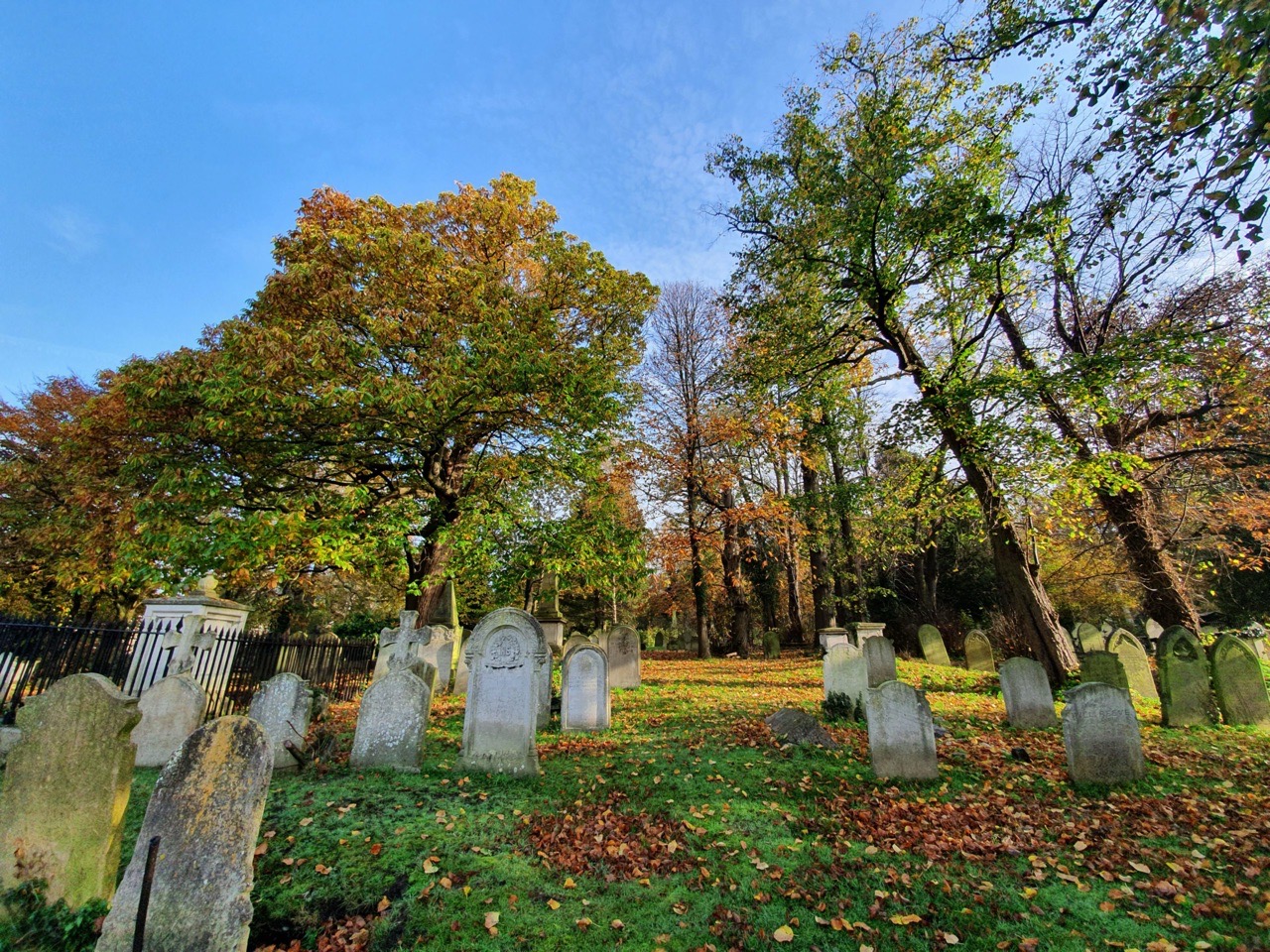
    Since I’ve been grounded again by the Government, I thought I’d meander around the Rosary Cemetery located near to me in Norwich, in an attempt to see what stories lie there. It might not be the most fascinating blog content, but it’ll keep me quiet for a few weeks….

    This isn’t entirely ideal in terms of reading the inscription on the grave, and I’m not going to fiddle about with shrubbery on a gravestone. I can just imagine half the stone will come off in my hand, probably with a gaggle of people happening to walk by when that’s happening. So, the easiest alternative is to hack around on findagrave, a web-site which has many names already listed.

    Although the details aren’t entirely accurate on findagrave (which is understandable – look at the state of that ivy….), it was enough to work out that this is the joint grave of Isaac Brett and Lucy Brett.

    Isaac Brett was born in Caston, a village located near to Attleborough, and he was baptised on 12 July 1798. He was the son of George Brett and Mary Brett, and he remained in the area as in the 1841 census he was living nearby with his wife at Gap Farm at Rockland St. Peter.

    His wife was Lucy Howell and he married at Caston church, the same place where he had been baptised, on 7 January 1828. Lucy had been born in Norwich in 1802 and had seemingly moved to be nearer to where her husband lived.

    At the 1851 census, Isaac and Lucy had moved and were living alone at Upper King Street in Norwich, with the enumerator noting that Isaac was a shoe maker and he employed six men. They were living at the same address at the 1861 census, this time living with their 11-year old grandson, John Page, who was already working as a banker’s clerk.

    Isaac died on 15 January 1863 at the age of 64, leaving effects valued at just under £450 (around £30,000 in today’s money) to his wife. At the 1871 census, Lucy was living with another one of her grandsons, George Page, who was aged 13. By 1881, Lucy had moved in with her grand-daughter, 33-year old Lucy Raven, who was living with her family near Mulbarton, having married Benjamin Raven who was 23 years older than her.

    Lucy was still living with her grand-daughter at the 1891 census, but they had now moved to Stratton St. Mary (as an aside, this, alongside Stratton St. Michael were merged to become Long Stratton) and Lucy died shortly after the census was taken, on 10 April 1891 at the age of 89.

    There’s not an amazing story here that I’ve yet found, just a family which seemed to stick together, but I’m intrigued as to the work that Isaac Brett did. He looks like he was a hard-working shoemaker, especially as he was employing several men, but I’ve yet to find out much more about him. Hopefully, I’ll return to this in the future…..

  • Norwich – Rosary Cemetery (Henry Brett)

    Norwich – Rosary Cemetery (Henry Brett)

    Since I’ve been grounded again by the Government, I thought I’d meander around the Rosary Cemetery located near to me in Norwich, in an attempt to see what stories lie there. It might not be the most fascinating blog content, but it’ll keep me quiet for a few weeks….

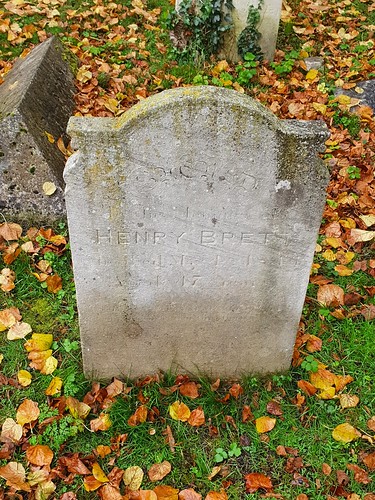
    henrybrett

    Unfortunately, there’s not much story to be told here. But, on the grounds that I might find something else in the future, or someone might tell me more in the years to come, this is what I know so far.

    Henry was baptised on 27 October 1797 in Swaffham, the son of William Brett and Elizabeth Brett.

    He was probably married (by probably, I mean I’m not sure it’s the right person, rather than this being some kind of half marriage) to Ann Reynolds in Plumstead by Holt church on 19 October 1819. If this is the correct couple, neither of them could read or write, which wasn’t uncommon, but suggests a background of limited money in the families.

    In the 1841 census, he’s listed as living on Mousehold Heath, along with his wife Ann, their daughter Elizabeth and two 15-year olds who I don’t know the link to, Ann Royall and Edward Fake (I think the transcriber might be wrong on that name, but I can’t read it either to improve on it).

    Henry passed away on 4 May 1844, at the age of 47 years old. The Norfolk Chronicle duly reported this, adding that he was a farmer in Thorpe Hamlet. The gravestone has been attacked by foliage or weeds over the decades, so the bottom half is too hard to read.

    So, annoyingly, that’s it for the moment, but I’m intrigued by who this farmer was on Mousehold Heath and where exactly he lived.

  • Norwich – Rosary Cemetery (William Ford + Emily Ford)

    Norwich – Rosary Cemetery (William Ford + Emily Ford)

    Since I’ve been grounded again by the Government, I thought I’d meander around the Rosary Cemetery located near to me in Norwich, in an attempt to see what stories lie there. It might not be the most fascinating blog content, but it’ll keep me quiet for a few weeks….

    I nearly gave up with my researches into this family, as I was struggling to find anything of much interest relating to William Ford and his wife Mary Ford. That is, except from the very sad nature of the lives mentioned on the gravestone. Mary Ford, William’s wife, died in 1845 at the age of 58, having already lost their daughter Lucy in infancy, but then their children Hannah and Marianne both died in 1846, at the ages of 18 and 17 respectively.

    I also struggled to work out where this couple lived in 1841, as I found a census record, but Mary was listed as Lucy, so I assumed it was a different family as there were no children and they only lived with their housemaid Emily Stacey. Although, everything else fitted together. William Ford worked as a shoemaker in Norwich and had premises at Colegate Street, St. George’s and he lived at Heigham Cottage.

    Given the lack of obvious story, I thought I’d abandon this one, until I paid attention to the name of Emily Ford at the base of the gravestone. Emily was born in 1823, which didn’t quite make sense to anything in terms of being a child or sister of William. It then transpires that she was William’s second wife, marrying him in 1852 and living with him until he died on 23 October 1858.

    Emily died on 20 December 1881, at the age of 59, and she appeared in the 1861 and 1871 censuses with her occupation being listed as living off property income. But then, something about that strange 1841 census came back, namely I realised that William had married his much younger housemaid. That’s quite impressive, marrying someone who is thirty years younger, but I wonder what Mary Ford would have thought about this arrangement.

    Emily died when living at 32 Queen’s Road in Norwich, where by all accounts she lived a life of such comfort. Her death was reported in the local paper, noting that she was the relict (the archaic word for widow) of William Ford, but giving no more information. And, once again, I do wonder what Mary would have thought that her former housemaid would end up sharing a grave with her.

  • Norwich – Rosary Cemetery (Emma Jane Sendall + Herbert Sendall)

    Norwich – Rosary Cemetery (Emma Jane Sendall + Herbert Sendall)

    Since I’ve been grounded again by the Government, I thought I’d meander around the Rosary Cemetery located near to me in Norwich, in an attempt to see what stories lie there. It might not be the most fascinating blog content, but it’ll keep me quiet for a few weeks….

    This grave tells a story immediately, the death of a mother aged just 21, with her baby dying shortly afterwards at just a few months old. It commemorates the life of Emma Jane Sendall, born as Emma Abel and baptised on 27 July 1851. She was the daughter of James and Martha Abel of the Cranworth with Letton parish and she had a sister.

    At the age of 9, she was listed on the 1861 census as living at Gressenhall, as a pauper in a workhouse. She was with her father and sister, with her father being an agricultural labourer. That children were living in workhouses was ridiculous, but she was there just too early, as it wasn’t until the late 1860s that Thomas Barnardo started to open homes for impoverished children to live.

    This couldn’t have been a pleasant life for Emma Jane, but by the time of the 1871 census, she was living at Hammond’s Yard with her grandparents and sister, back in Cranworth, near to Mitford.

    In the late 1860s, a man called James Sendell married a local lady in Mitford, and I wonder whether Emma Jane somehow met his brother at that time, Arthur Sendall (born in around 1847). She married him in 1872 and perhaps this was looking like a new start for Emma Jane, something a little more positive. She had a child with Arthur in early 1873, named Herbert Sendall. Unfortunately, Emma Jane died in April 1873 and her only child died on 11 June 1873, with both being buried in the same grave.

    It’s perhaps possible to think of Arthur standing by this grave, mourning the loss of his wife, with perhaps their child also present. And then Arthur would have been back just weeks later, to bury their child. There was never much chance of any information being available about Emma Jane given that she spent much of her life as a pauper. And she would have likely remained anonymous, had it not been for her marrying Arthur, who seemed to have had at least a little money so that he could pay for a gravestone.

  • Norwich – Rosary Cemetery (Thomas Swindell)

    Norwich – Rosary Cemetery (Thomas Swindell)

    Since I’ve been grounded again by the Government, I thought I’d meander around the Rosary Cemetery located near to me in Norwich, in an attempt to see what stories lie there. It might not be the most fascinating blog content, but it’ll keep me quiet for a few weeks….

    This grave commemorates the lives of three people, Hannah Swindell, her husband Thomas Swindell and his second wife, Caroline Swindell.

    Thomas Swindell was born on 1 February 1815 and was baptised at the Baptist Church in Knutsford on 26 February 1815. He was the son of Thomas and Elizabeth Swindell and he married Hannah Witter on 4 February 1843. They had five children, which I’ve listed on the post I wrote about Hannah, with Thomas working as a Primitive Methodist Minister.

    There’s a mass of material on Thomas, not least that provided at https://www.myprimitivemethodists.org.uk/content/people-2/primitive_methodist_ministers/s-2/thomas_swindell where there’s a photo of him. There’s no point my copying material over from that very useful site (which also has information about his son, Theophilus Witter Swindell who became an important figure in Great Yarmouth), but it’s of note that he travelled around the country with his preaching, including Preston, Bolton, Wrexham, Great Yarmouth, Docking, Upwell, Aylsham, Swaffham, Cambridge, Thetford and ending up in Norwich in 1875.

    At the 1871 census, Thomas was living on Arnold Street in Lowestoft, along with his wife Hannah and three of their children. He had moved to Norwich in the 1870s to live at Bloomsbury Place, before moving to Essex Street in Norwich by the 1881 census, when he lived with his son Arthur Swindell (by then a Professor of Music) and his second wife, Caroline Swindell. Hannah had died on 23 January 1876, with Thomas marrying Caroline Simpson (1828-1899) in the summer of 1878.

    By the time of the 1891 census, Thomas was living with Caroline at a property on Grove Road in Norwich. He was still living at this residence when he died, on 8 November 1897. Caroline was to die a couple of years later, but I can sort of picture her at Rosary Cemetery at what was likely a well attended funeral given the size of Thomas’s family and his reputation in the Methodist Church.

  • Norwich – Rosary Cemetery (Hannah Swindell)

    Norwich – Rosary Cemetery (Hannah Swindell)

    Since I’ve been grounded again by the Government, I thought I’d meander around the Rosary Cemetery located near to me in Norwich, in an attempt to see what stories lie there. It might not be the most fascinating blog content, but it’ll keep me quiet for a few weeks….

    This gravestone, which is leaning forwards hence the slightly strange camera angle, commemorates the life of Hannah Swindell. It’s in rather good condition, other than where the weeds have attacked the base, and also commemorates Hannah’s husband, the Reverend Thomas Swindell and his second wife, Caroline Swindell. More on these two other individuals in separate posts, as I find it a little unusual that they’re all on one grave.

    Hannah was born on 20 March 1819, the daughter of Thomas Witter and Mary Witter. She was baptised at the Baptist Church in Knutsford on 25 April 1819 and she met her husband Thomas Swindell and they were married on 4 February 1843 in the same church (I mean the same church she was baptised in, obviously the husband and wife were married in the same church….).

    Hannah and Thomas had five children, Mary, Thomas, Theophilus (a marvellous name), Frederic and Arthur. Hannah died on 23 January 1876, at the age of 56. The inscription on her grave reads “she was a Christian of unblemished reputation, considerable usefulness and eminent piety, and now sleeps in Jesus till the morning without clouds shall dawn”.

    There’s one thing that’s evident here, which is that there is reams of material on Thomas Swindell, her husband, and his work and contribution to society. There’s nearly nothing relating to Hannah, so I’d say that in terms of who she was as a person, the best we have to go on is that inscription on her gravestone and that she seems rather dutiful. Thomas travelled extensively during his career, and perhaps that “usefulness” was in supporting him with his work. Too often women are a footnote in history, and that’s happened here as well, so hopefully I’ll find out at some point in the future some more information about her as a person. Indeed, I’m quite intrigued as to what she would have thought about Thomas’s second wife being added to her headstone.

  • Norwich – Rosary Cemetery (Richard Andrews)

    Norwich – Rosary Cemetery (Richard Andrews)

    Since I’ve been grounded again by the Government, I thought I’d meander around the Rosary Cemetery located near to me in Norwich, in an attempt to see what stories lie there. It might not be the most fascinating blog content, but it’ll keep me quiet for a few weeks….

    This is the grave of Richard Andrews, and I’m guessing (from the damaged section of the stone) also that of his wife Ann Andrews, the parents of James Andrews whose gravestone is nearby. I don’t feel that I could really tell the story of James, there’s just not enough information I can find beyond when he was born and died.

    Richard Andrews was born in 1786 and I mentioned when writing about their son, James, where Richard and Ann were at the 1841 and 1851 censuses. James was born on 14 August 1814 and died on 18 August 1837.

    I can find details of only one Richard Andrews born anywhere near Norwich in 1786, a child baptised on 12 February 1786 at Great Hautbois church. He was the son of William Andrews, who worked as a farmer, and the christening was probably at St Theobald’s, a church now in ruin. I can’t write with any certainty that it’s the same Richard Andrews though….

    Richard married Ann (nee Long) on 25 November 1812 at Taverham. The actual marriage register, still visible at Norfolk Record Office, notes her name as Anne, but we know from later censuses that the wife of Richard was born in Taverham, and Richard’s home parish is noted as St. Michael Coslany Church, which is where his son was christened a couple of years later.

    Richard died on 11 October 1861 at the age of 75, with this being reported in the Norwich Mercury the week after, noting his address as Lame Dog Road, which matches with the census records. Unfortunately, the newspaper didn’t report anything else about his life, so I feel that this is yet another story where nearly everything of note  is left untold.