Back to my explorations of the Railway Times, now into 1838. This really does feel like a sub-optimal way of carrying gunpowder about the place….
“On Thursday se’nnight a serious accident happened on the works of the Great Western Railroad, near this city [Bristol], owing to excessive carelessness in the use of gunpowder. It appears that one of the men had just brought a fresh supply of gunpowder for blasting the rock, and had deposited a considerable quantity in his cap, which he placed near to the candle used in the blasting. One of the men in passing accidentally kicked down the candle, which communicated with the powder, an explosion took place, and five persons were more or less severely burnt. The unfortunate sufferers were conveyed to the infirmary.”
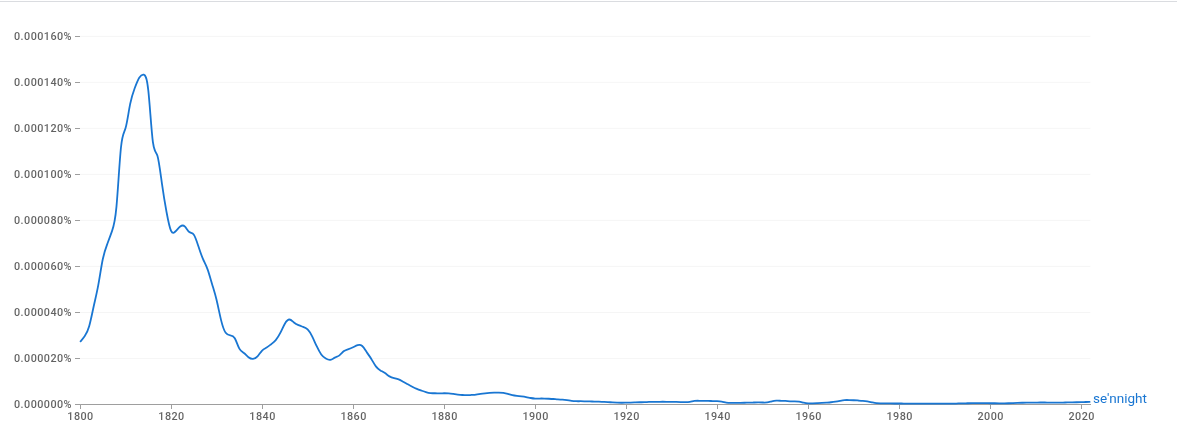
As an aside, which I think I’ve referred to before, the falling out of usage of the word “se’nnight” feels unfortunate. Meaning one week, in the same way as fortnight means two weeks, it’s a useful way of describing a period. Let’s break out Google’s Ngram that monitors word usage, I haven’t used this in a while.
It’s those pesky Victorians who forgot to use it….
After a traditional meal we walked the 45 minutes or so to Batumi Central railway station, even though it’s not really very central.
I had high hopes for this train, it’s a double-decker that’s relatively new to Georgian Railways.
Georgian Railways, operating since 1872, with their first passenger service operating between Poti to Tbilisi.
The train was already at the platform, so I had a little look at the front (or back, I can’t remember) whilst waiting for the doors to open. One illogicality of the train was that although we had a compulsory seat reservation, they hadn’t marked what carriage was which from the outside.
Oooh, Stadler, like the Greater Anglia trains I’m now so used to. With that, it was time to board and there were document checks when boarding on, with the staff member pointing us where to go. He seemed cheerful and helpful, as did all the staff on board the train.
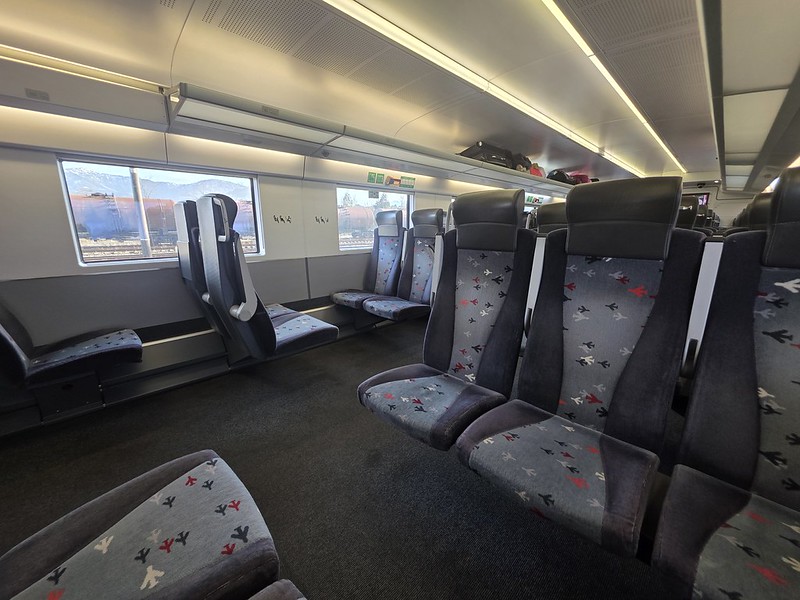
This interior is, broadly appalling and was something of a disappointment. Five seats across really don’t fit here, so there’s no comfort available when the train is full. They’ve also crammed so many seats in that passengers will have their knees hitting each other, with no table seats. There are power points but they’re in an odd recessed location, although the wifi worked well. And why have they decided to have planes on the seats of a train?
The internal signage was good, but I wonder why they’ve had Stadler build trains to a high build quality and then demanded from them a cramped interior? Ironically, the older trains looked like they were falling apart, but they were more spacious. But, the train was clean and tidy throughout, with even the toilets being in reasonable condition.
However, the train wasn’t very busy and so we had more than enough space and I was able to enjoy the rather beautiful view as the train went by the Black Sea at the beginning of its journey.
There are videos of this, and much else, to come….
There’s no buffet car, but there’s an affordable vending machine which was a more than suitable replacement.
I haven’t done a proper Jet Lag Snack Zone (a YouTube channel that I think is inspirational!) element yet, that’s something else that’s coming up, but these beef flavoured crisps from the vending machine were a bit chunky but provided a solid snack. 7/10.
Back to interior photos, here’s the upstairs of the train.
I’m pleased to note, that unlike the train in Turkey that was delayed for 12 hours, we arrived into Tbilisi on time. I very much enjoyed this rail journey and it was reasonably priced, but we were fortunate that it wasn’t busy. It’s a shame that they’ve packed so many seats in here, the train is a beautiful thing and the internal decor is bright and cheery.
After a significant delay, we were off again….. This is the railway station at Bostankaya, which is only a small village but has a nice transportation arrangement. Regardless of whether it was on the timetable, we tended to stop at every station en route before a staff member gave us the go ahead to continue.
The views were beautiful along this stretch of the route, although I was working out that an arrival time of midnight was now too optimistic, it was looking more like 01:30 and that felt sub-optimal. Especially as the initial arrival time was 16:00.
It was something of a surprise that there was actually any rail service in operation, the snow was over two feet deep here.
At 17:10, we rolled into New Kangal railway station which opened in 2012.
And at 17:35, the train arrived into Çetinkaya railway station, the last one of the journey that we would see in daylight.
As it was getting dark and there was nothing to look at out of the window, Jonathan and I went to the buffet car.
This is Bağıştaş railway station and at some time in the future, it would be nice to visit these locations to explore them. It was now 21:00 and it was evident that we wouldn’t be in before 02:00, but Jonathan and I thought that was reasonable and just hoped for no more delay. In retrospect, that was aspirational.
Another delay.
Excuse the poor quality photo, but at 22:07 we arrive at Kemah, the site of atrocities where thousands of Armenians were murdered during the First World War.
Arriving into Tanyari railway station at midnight, so we had now been on the train for 30 hours. Without Internet.
A cross between a dog and a polar bear.
Into Aşkale railway station for 02:30 and the train decided it would stop here for thirty minutes. This didn’t surprise and delight me.
Ilica railway station at 03:55, but we were getting there….
At 04:25, we arrived, over 12 hours later. We were safely in Erzurum and now just had to hope that we could get into our hotel.
It was a delight to be in Erzurum, as my loyal readers won’t be surprised to hear after these three blog posts….. I did enjoy the railway journey, but would have enjoyed it a lot more if I had worked out data on my phone in advance or got an e-sim. Either way, it had been a proper adventure. Videos and the like will follow…
So, here we are at 07:00 in the morning arriving safely into Sivas and all was on track (I use that pun too many times) with our journey. There was a lot of snow and we were just a little behind schedule, but we still expected to arrive at not much later than 16:00 on a journey that was scheduled to take just over 22 hours.
08:11 and I wondered what was happening….. We had remained in some stations for a while, so this didn’t feel entirely abnormal.
10:19 and I thought I’d get off the train and not much seemed to be happening.
If Jonathan and I had known that we’d be here for hours, we’d have likely gone and explored the town a little. To be fair, I’m not sure that anyone knew what was happening and we just had to assume that the track was snowed up ahead. There weren’t any announcements on board and no track display information boards, so we couldn’t really work out what was happening.
We’d now been here for three hours and I was starting to wonder what time we’d be arriving into Erzurum.
At 11:02 they provided us with a free snack and drink. I’m easily bribed by food and so this made me feel more positive towards the rail network.
Then, there was lots and lots of nothing. I hardly complained about the lack of Internet and I just sat there wondering how much therapy I’d need after this 36 hours without online access. At 14:26 there was some excitement, the train horn sounded and the train went back about two metres. Then, that was that.
Then at 14:53 the train horn was sounded again and staff started blowing whistles, it looked like we were ready to go. And, six minutes later, the train started moving after eight hours sitting on the train at the platform.
Shortly after, the crew arrived with free kebabs and drinks that they had secured at the station. This pleased me.
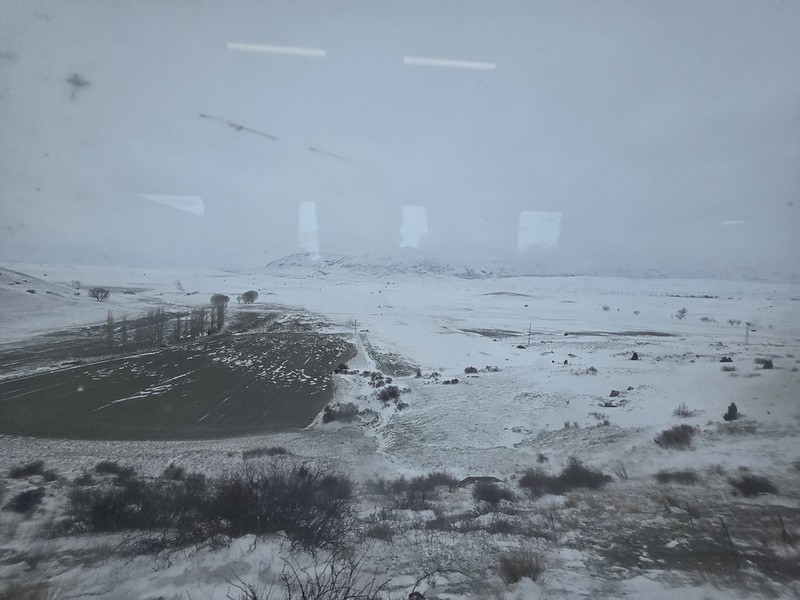
The snowy weather that the train encountered for most of the journey, but particularly the second half.
Free food and drink secured.
The doner kebab was delicious.
Anyway, we were now set and I worked out that we’d be arriving at around midnight into Erzerum and our hotel. Whether or not they had a 24 hour reception we weren’t entirely sure, but I thought that midnight would be OK. Obviously though the arrangement wasn’t that easy, but more in the next post….
The title of this post is something of a hint about just how long this rail journey took. As a spoiler, it was meant to take 22 hours and it actually took nearly 36 hours. Without Internet. I’m still recovering.
Jonathan was excited about the trip ahead…. As some background, this train from Ankara to Kars (we were getting off in Ezrurum, which isn’t far short of Kars) can be done on a tourist train or a local train. The former has frivolity and fun, the latter doesn’t. Guess which one I wanted.
This is the marketing on the platform for the tourist train, the one that we didn’t take. I like peace and quiet on a train, not dancing.
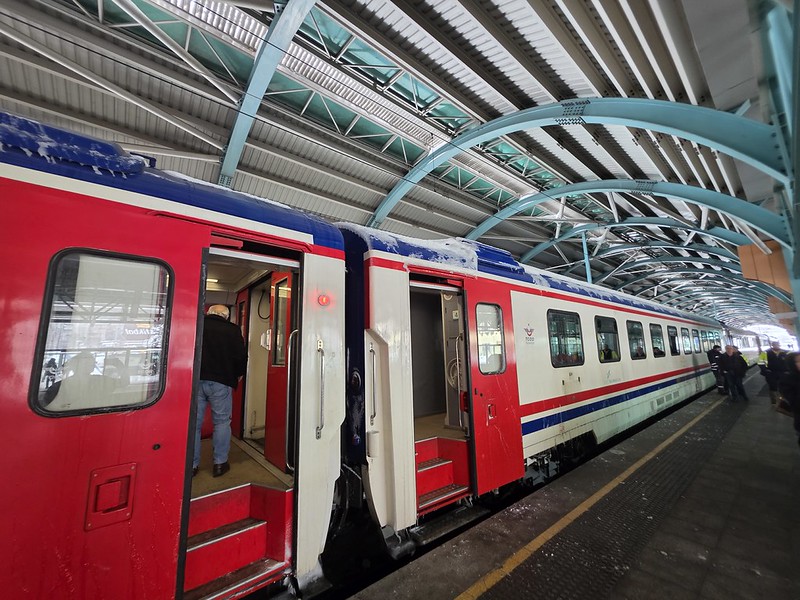
I don’t want to overwhelm my two loyal blog readers with excitement, but I’ve made quite a few videos of this trip and I’ll get around to uploading them at some point. I did record our train arriving onto the platform, but here it is. Yes, it doesn’t look entirely modern…..
We found our carriage and were excited about the trip ahead.
And off we go. I have better photos of the carriage (I had enough time, without having any Internet, to take them) but more of that later. I was pleased that there was power on the train, but very annoyed about the lack of Internet.
I accept there’s hardly much to look at in the photograph, so readers will have to use their imagination. This is Kırıkkale, which means ‘broken castle’ in Turkish, and which has a population of 190,000.
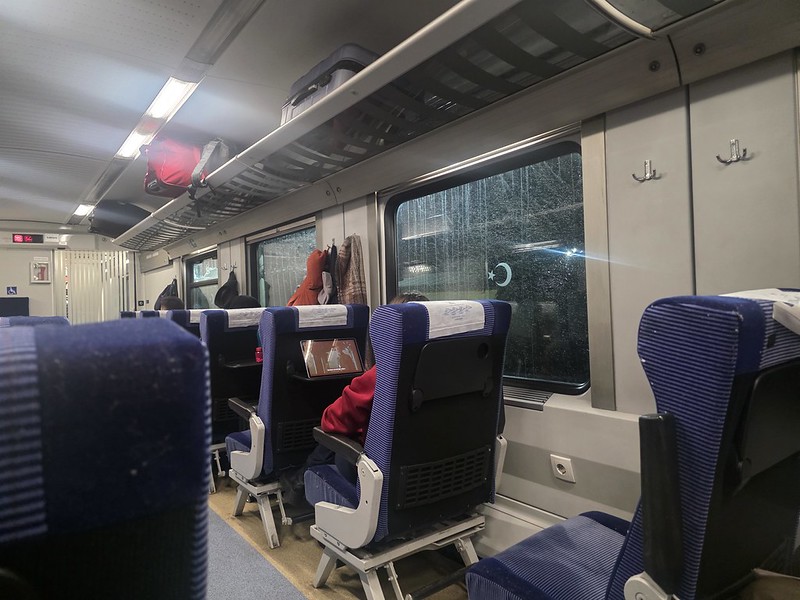
The seating was comfortable, it’s 2+1, so that was spacious enough and there was plenty of leg room. Although Jonathan and I had seats next to each other, the train was rarely that full that we couldn’t spread out elsewhere in the carriage.
Jonathan’s decadent slippers.
This is the small town of Şefaatli, with a population of just under 10,000.
I have quite a lot of photos like this….. This was still on the same day we boarded the train, just before midnight, so we’d been on for fewer than six hours at this point.
This passenger had a lovely time, but I was taking a photo as we had arrived in the large city of Kayseri at 02:00.
At this point we decided to have a walk about the train. There are four carriages and a buffet car on the service, with the carriages being somewhat of a mish-mash of different designs, temperatures and lighting arrangements. The carriage we were in seemed a reasonable compromise between them all, primarily it wasn’t too hot.
On this first visit, I resisted the temptation, although I can’t say that I managed that throughout the entire journey. I do have some snack reviews of food that I took on board, but there’s plenty of time to write about those…
The buffet car menu.
Jonathan got a tea and I enjoyed watching the country go by in the dark in different surroundings for a while…
And at 07:00 we arrived into Sivas. I’m going to leave this post here as I have a lot to say about this, as we were still at Sivas nearly eight hours later…..
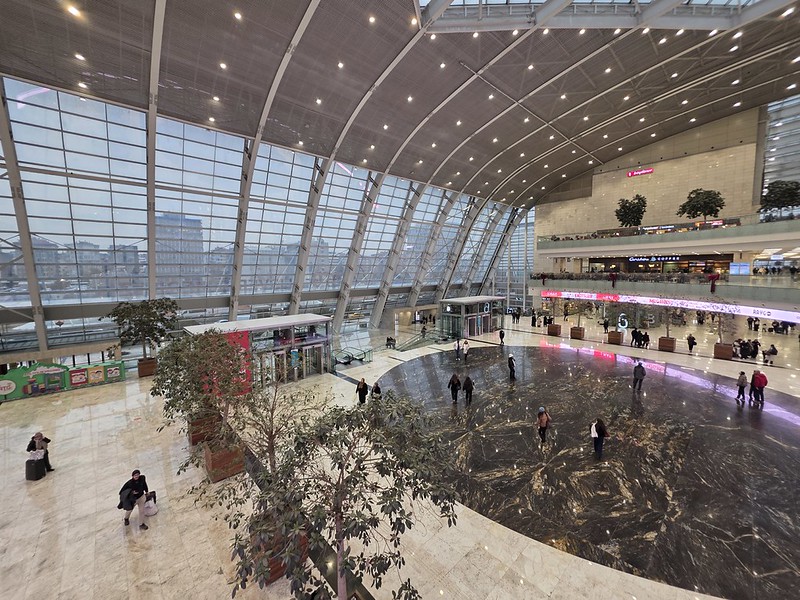
That enormous building at the back is Ankara railway station, which certainly surprised Jonathan as this wasn’t there last time he visited the city. Jonathan is more sceptical of buildings like this than I am, I’m all for shiny new shopping malls, craft beer bars and restaurants, but he’s perhaps more traditional. The building was opened in 2016 and it’s where the high speed rail services depart and arrive from.
As with most large public buildings in Turkey, there’s a security process before entering. Indeed, part of the sad history of this city is the bombing that took place here in 2015 which killed 109 people.
They even have a Popeyes…. It was a delight of a building internally, part shopping centre and part railway station, it’s certainly a modern arrangement. It also had a convenience store where we purchased snacks for our long train journey that lay ahead.
This new building is on the left and the original railway station, which is still in use, is on the right hand side.
The main concourse of the older station.
The board was most useful than this, it’s just that the photo has given the text a rather less useful feel.
There’s us, the 18:00 service.
The frontage of the older station which was opened in 1937 in the art deco style, replacing the previous 1892 railway station.
Back in the fancy new building, there’s a viewing terrace that has extensive views.
After safely switching platforms during the three minute connection time, I was safely at Hove railway station. To be fair, this isn’t going to be the most complex piece of transportation during this trip, but I was pleased that there were no delays here.
The original Hove railway station opened in 1840, but this was closed in 1880 and the railway station at this site opened in 1865 and was originally known as Cliftonville. It was renamed West Brighton in 1879, then renamed to Hove & West Brighton in 1894 before taking its current name of Hove in 1895.
Here the Southern Railways Thunderbolt rolling into the platform. It was a relatively busy train and an announcement was made that it was stopping additionally at Three Bridges to assist passengers having difficulty with the cancelled services between Brighton and London Gatwick.
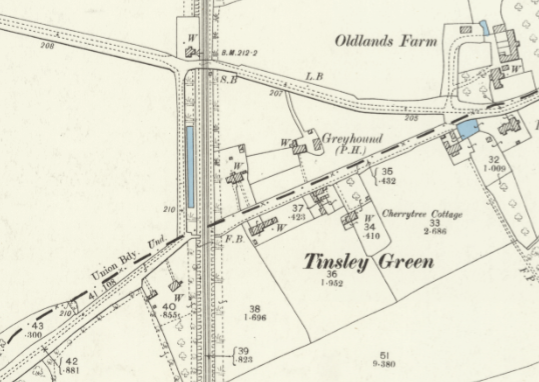
We arrived on time into Gatwick Airport railway station which was rebuilt in 1958 from the former Gatwick Racecourse station. As an aside there was also a railway station at Tinsley Green, renamed Gatwick Airport in 1936 (one of the first airport railway stations), but this was later demolished (to make way for the 1958 station) and this was a little further along the line towards Three Bridges.
As an update, Jonathan had already arrived at Gatwick about 45 minutes before, so this meant that we were now both safely at the airport ready for the flight. It was good to arrive on time given we didn’t have a lot of time to spare and it was then promptly announced that our flight was delayed.
The morning of our first day started with my walking from the bargain priced Travelodge Brighton Seafront to Jonathan’s more decadent hotel.
A free breakfast courtesy of Jonathan’s accommodation arrangement. Jonathan was going to Gatwick via Flixbus on a bargain priced service which goes from the centre of Brighton. The journey was absolutely perfect in many ways other than they cancelled it, part of the reason that I didn’t book it in the first place.
Jonathan decided to get the train, although his options were somewhat reduced at that point. I had got a £4 rail ticket as part of the national rail sale, but that went from Brighton station to Hove station before connecting to another service. This station opened in 1840 and is mostly still there, but it’s hard to see the original building because of later extensions.
Mine was the 10:13 service and I was pleased that it was operating as usual as a number of services had been cancelled due to over-running engineering works. Jonathan had already departed on the first service he could, better to be safe than sorry when getting to an airport.
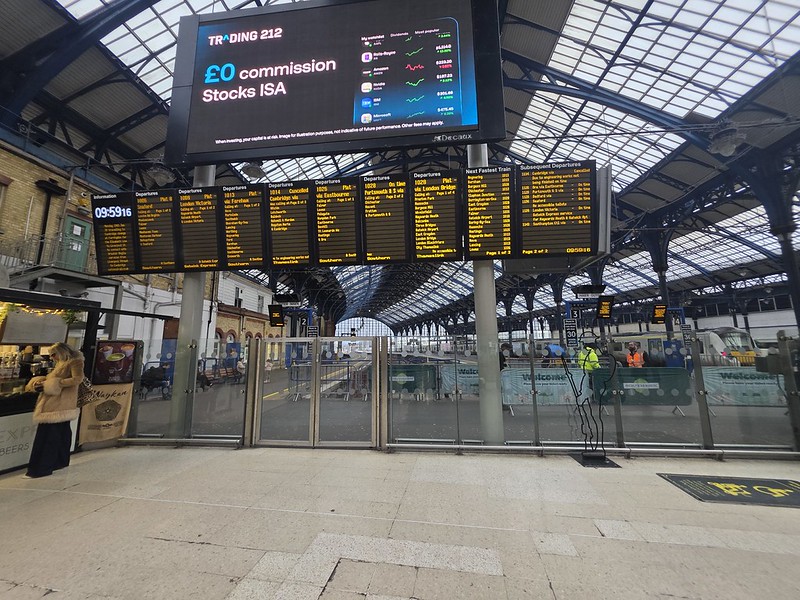
They announce the platforms around ten minutes before the train departs with this one departing from platform two. There are eight platforms at the station and some very careful gate line staff who were carefully checking all the tickets, something which took a few minutes as the barriers were rejecting a fair number of tickets, including mine.
My Southern Railways train sweeping in. I had cut this whole arrangement quite tight (well, tight for me), arriving just a couple of hours before my flight departed, due to wanting to get the £4 fare.
I got settled in for the four minute rail journey. There were power outlets and I must have charged my device by around 2% during the extensive journey. The train was relatively clean and organised, with plenty of free seats.
And safely into Hove railway station, where I had a connecting train to Gatwick Airport which departed just three minutes after my train from Brighton got in. A few others were doing the same connection and it feels too tight to me for those who aren’t easily able to navigate the subway between the platforms.
Anyway, that was the first part of the journey done….
My journey started at Corby railway station when Richard dropped me off before he went onto something quite specialist. This is definitely rail progress for the town, there was a station built here in 1879, but that was closed in 1966. This was clearly a ludicrous decision and it left Corby without a rail link (one of the biggest towns in the country with no railway station), until wiser heads prevailed and this station was opened in 2009, bringing the railways back to the town.
Although not the most decadent of railway stations, and there’s only one platform, the train I needed to get me into St. Pancras arrived on time.
The East Midlands Railways train isn’t the most exciting, there are no power points and they’ve shoved five seats across which really doesn’t work. The guard made an announcement that due to train cancellations this service would be very busy towards London, but, fortunately, it wasn’t too bad at all.
We arrived into St. Pancras on time, although it was all a bit chaotic on the platform as they had passengers waiting for two trains and it took over five minutes to get to the ticket barrier.
One quick underground journey on the Victoria Line between King’s Cross St Pancras and Victoria. Fortunately, this service was operating as usual, although the Piccadilly Line was closed.
This is the Southern Railways train to Gatwick Airport, which despite being 12 coaches long was packed by the time we left London. There are some bus replacement services on the other line into Gatwick, so sensible passengers switched to this route. As a positive point, there were at least power points on this train.
There was an incident on the train when a passenger pressed an emergency alarm in the toilet and the driver made three announcements calling for the guard before announcing he would stop the train if the situation wasn’t resolved. It was unclear to me what the guard was doing, but the train was split into separate units so if the guard was in the bit at the back, it might have been rather more challenging to resolve the situation.
After a quick change at Gatwick Airport, I boarded another service to Brighton. The efficiency of the services meant, to my slight disappointment, that there was no Delay Repay…..
Into Brighton railway station and it’s all happening now….
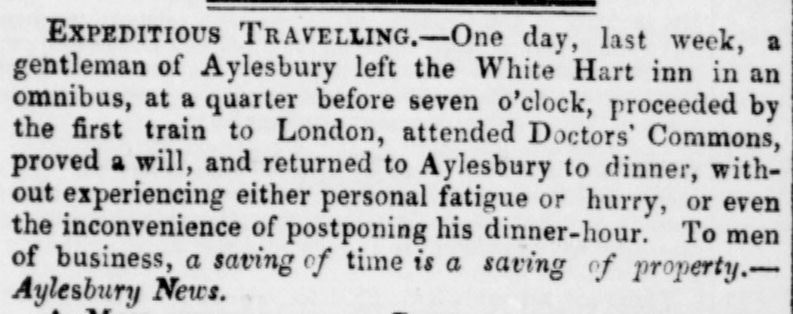
One running theme of the 1830s was the sheer excitement of so many people about the possibilities of the rail network and the amount of time it could save them.
The Railway Times reprinted a news story that had been published in Aylesbury News in November 1837, although they must have got the omnibus to another nearby station (perhaps Tring railway station which had opened in October 1837) as the railway was another eighteen months from opening in Aylesbury.
“One day, last week, a gentleman of Aylesbury left the White Hart inn in an omnibus, at a quarter before seven o’clock, proceeded by the first train to London, attended Doctors’ Commons, proved a will, and returned to Aylesbury to dinner, without experiencing either personal fatigue or hurry, or even the inconvenience of postponing his dinner-hour. To men of business, a saving of time is a saving of property.”
This feels like a perfect example of the sort of thing that would have excited me, to be able to get a lunch in London without any “personal fatigue or hurry” and without having my evening meal late…