Tag: Palma

  • Palma – Royal Monastery of Sant Francesc (Sacristy)

    Palma – Royal Monastery of Sant Francesc (Sacristy)

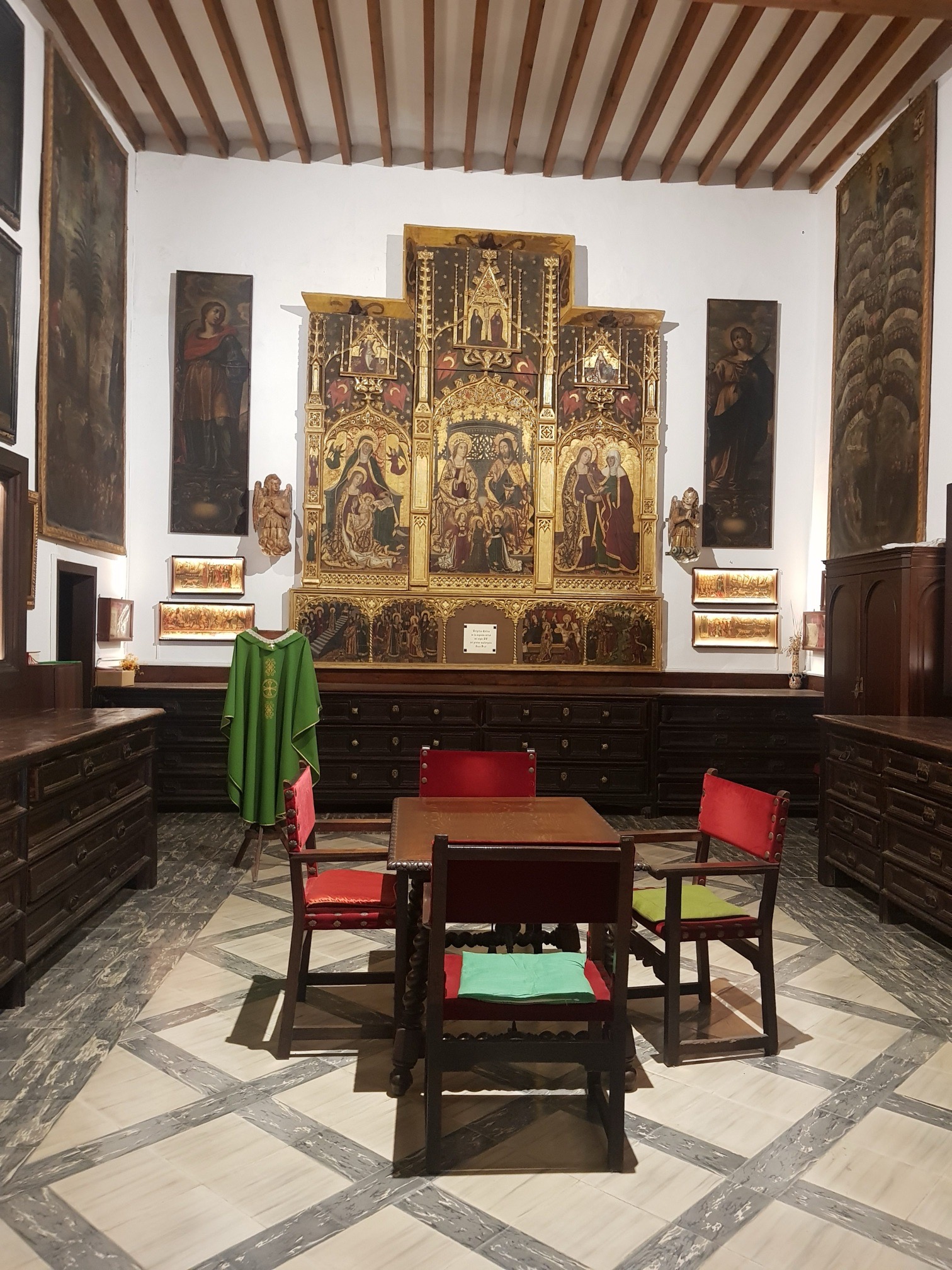
    Further to my main post about the Royal Monastery, there was much more to see within the complex of religious buildings. The sacristy, where the priest prepares themselves before the service, is a spacious room which is located just off the main church, through a short passage.

    There are two elements of particular interest here, with the first being the large Gothic style altarpiece which dates to the fifteenth century. Secondly, located underneath this, are four paintings which show the life of St. Ursula from the late thirteenth century. As an aside, there’s only church in the UK which is dedicated to St. Ursula, which is at Llangwryfon, in Wales.

    A selection of some of the vestments which were once used during services in the church itself.

  • Palma – Royal Monastery of Sant Francesc

    Palma – Royal Monastery of Sant Francesc

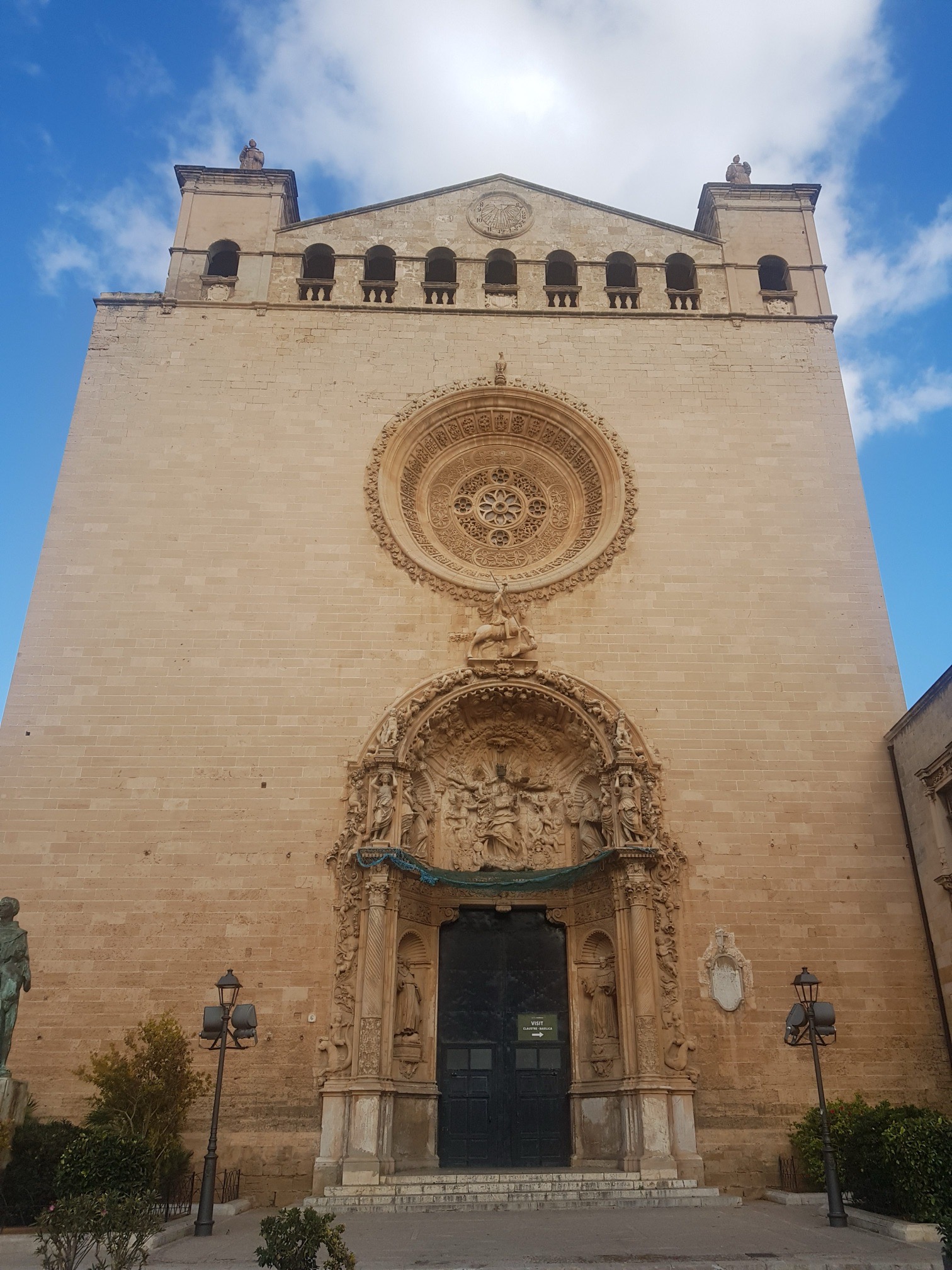
    I was hovering around the entrance to this former monastery in my very best confused manner and I was pleased that a kind lady came out to tell me that I could come in, even though it looked closed. She was a real ambassador for the church, welcoming, friendly and engaging. It also meant that, to all intents and purposes, I had the monastery building to myself for some time.

    The entrance to the church is via the cloisters, with the lower Gothic designed section dating from the fourteenth century, although a second tier was added in the seventeenth century.

    A view of the church from within the cloisters.

    The altarpiece was installed here in 1739.

    A look back along the nave of the church, which is larger than this photo perhaps suggests. The church is the second largest in the city, behind only the Cathedral, with its Royal designation as King James II of Majorica laid the foundation stone on 31 January 1281.

    But, the experience was heightened for me by being the only one in the church and that’s quite a rare feeling in such a large and impressive religious structure. I could hear the clock in the sacristy, which was a little distance away, with the church itself being entirely still and quiet. Without sounding overly trite, it did seem possible to imagine what it must have been like for the monks when the construction of their monastery ended and they took over control of such a peaceful and contemplative location.

    The way that the building has been used has changed many times over the centuries, so there are numerous blocked off doors around the site. This door leads to the exterior of the building, with an extension visible on the left hand-side, I assume made to create one of the private chapels.

    This church was home to Franciscan monks until 1835, when the 140 members of the order were all expelled and the building confiscated. This was all due to Spain’s Prime Minister of the time, Juan Álvarez Mendizábal, who decided to close all the monasteries in Spain and seize their assets without compensation. After this, the building was used for numerous purposes, including as a private residence, a military barracks and also a court. The Franciscans were able to return in 1906 and they converted many of the buildings to be used as a school, which opened in 1952.

    Anyway, more on this building in separate posts as it sufficiently intrigued me.

  • Palma – Ombu Trees

    Palma – Ombu Trees

    I’m not a tree expert, but these are impressive trees which are located at Plaça de Llorenç Villalonga, near to the city’s cathedral. If they are ombu trees, they’re fast growing South American trees which offer plenty of foliage cover.

  • Palma – Baños árabes (Arab Baths)

    Palma – Baños árabes (Arab Baths)

    There’s not much left of the Moors in Palma, nearly all of the Muslim architecture has been destroyed and lost in the near thousand years since they were in Mallorca (the Balearic Islands were controlled by the Muslims between 902 and 1229). But, the Arab Baths are an exception, created in around the tenth to twelfth centuries.

    The garden area around the baths, which was once used as an orchard.

    This is the Caldarium, or the hot water bath room, which has a domed roof. The columns aren’t all the same, which comes down to a decision made by the builders nearly one thousand years to use recycled building materials, which is very environmental. This means that there are a collection of slightly random pillars, some Roman and some later, which have been used in the construction.

    There were at least five baths during the Muslim period of the city’s history, with this one thought to be attached to a private house, rather than a public facility.

    The barrel vaulted cold room, located next to the main domed room.

    There’s not a vast amount to see at the site, but it’s still fairly astounding that there is anything left at all given just how old this structure is. It’s not clear what the building has been used for over the last several hundred years, but it has likely just been used for storage and that’s what has saved it.

  • Palma – Demolished House

    Palma – Demolished House

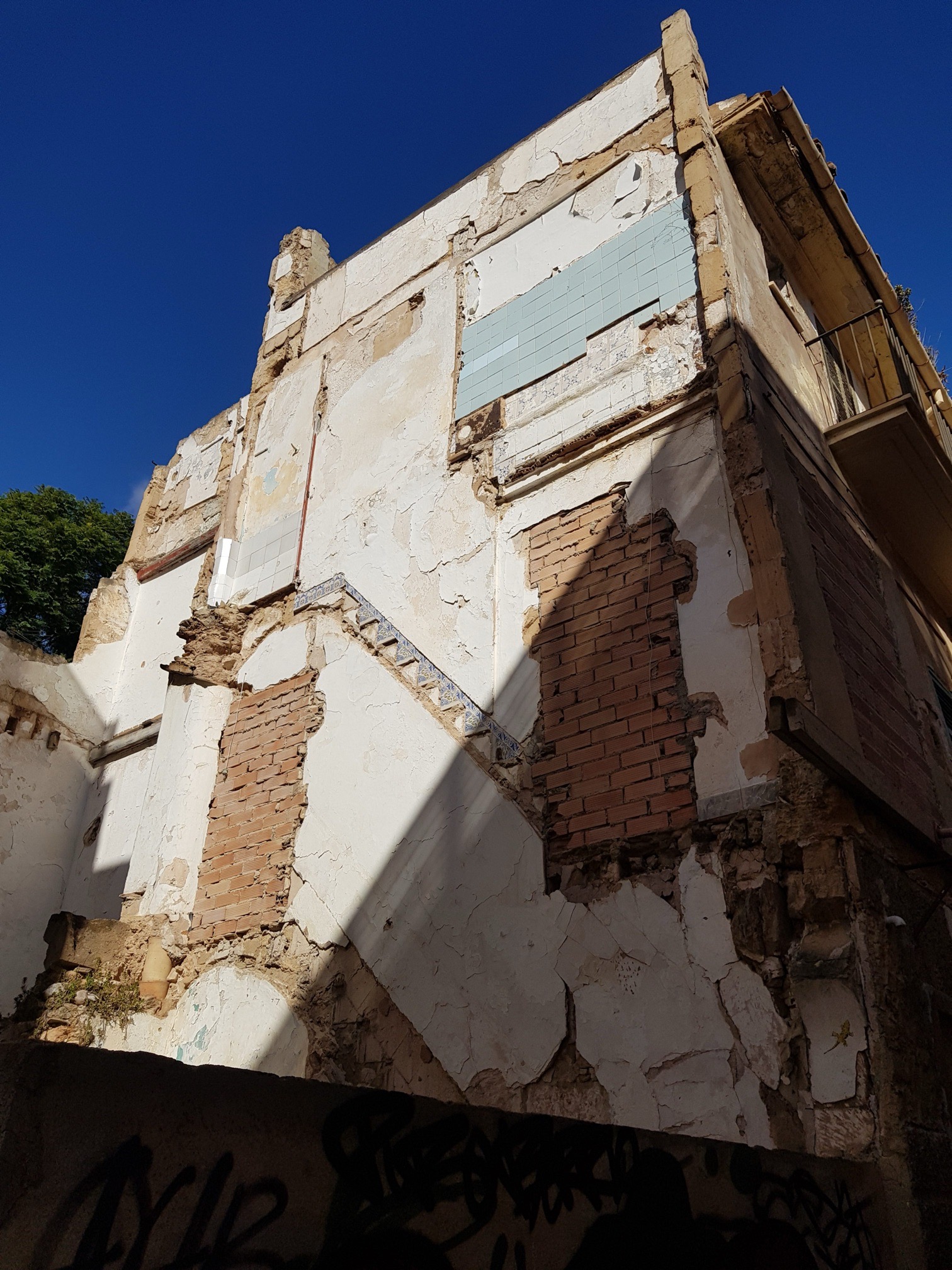
    There’s not much of a story here, but these ghosts of where buildings used to stand can be just a little intriguing. It’s possible to see where the stairs once were in the building, along with where a bathroom was located.

  • Palma – Ca’n Joan De S’aigo

    Palma – Ca’n Joan De S’aigo

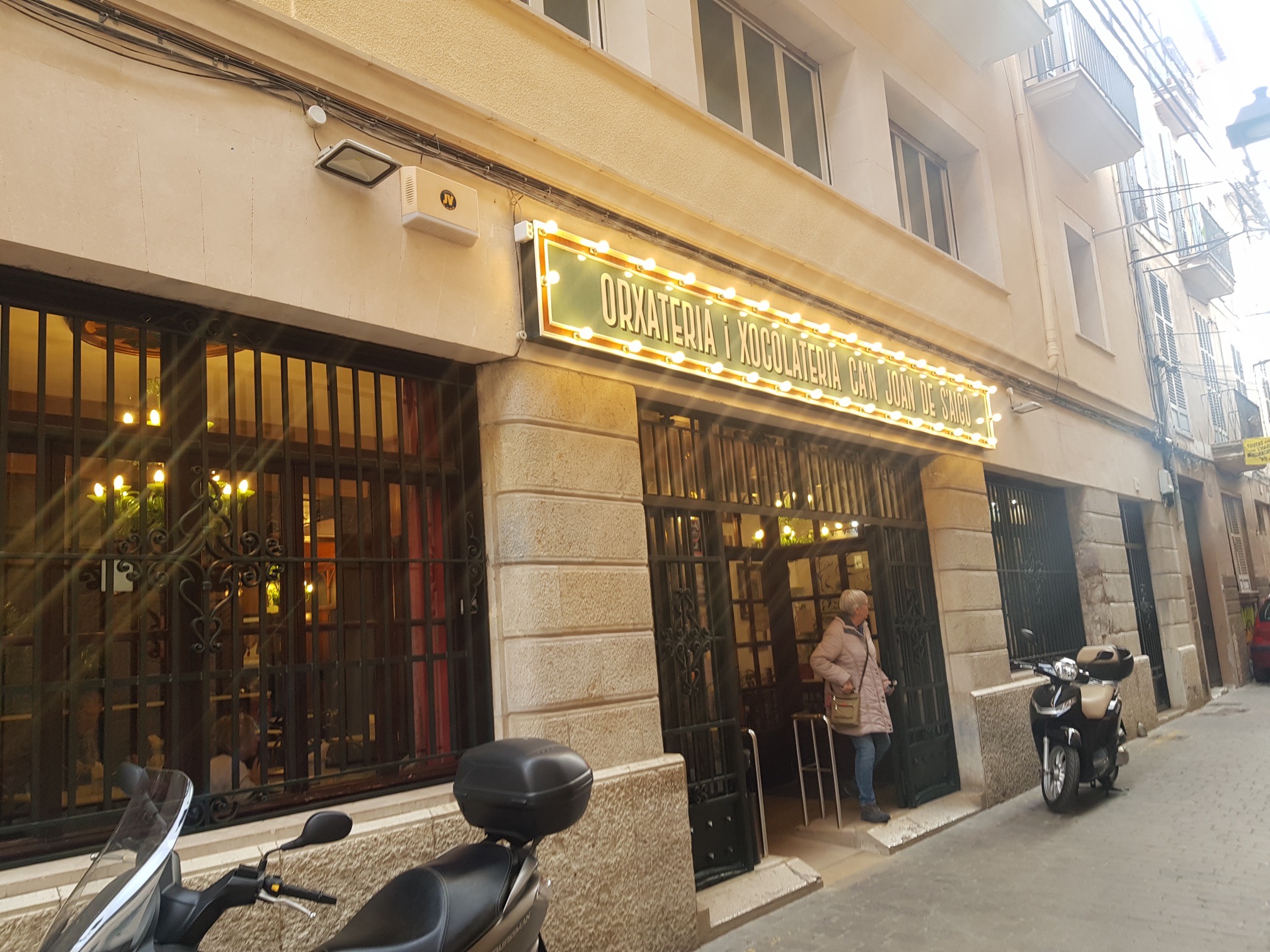
    This chocolate and dessert cafe was opened in the eighteenth century, one of the earliest of its type in the country. The cafe has a feeling of heritage, it reminded me of some of the older cafes in Trieste. Anyway, it was also one of the relatively few locations in this part of Palma that was open in the afternoon, and since it was well reviewed, I felt a little visit was necessary.

    Grand surroundings, but the environment still felt informal and comfortable. The service was attentive and engaging, with the staff members smiling and greeting customers promptly. Some reviews said that customers should order at the counter, but there seemed to be a full table service in operation when I was there. It was helpful that there were menus in English, although the pastries section still used the Spanish terms and that’s understandable as there’s probably no obvious English word, but I did quickly rush to Google to find the most local option that I could find.

    Thanks to Google, I made a decision. This spiral pastry is a speciality of the Balearic Islands, the Ensaïmada, and I went for the Chantilly Cream option. It was a larger pastry than I was expecting with a generous filling of cream, with the pastry being light and sweet. The coffee was also entirely acceptable, with a rich taste. The pastry and coffee came to around £3.75, reasonable given the comfortable and historic surroundings.

    At lunch-times and during the evenings, it’s apparently often so busy that a queue forms and there can be quite a wait for a table. I can see why, there’s some tradition here and it’s the original branch as a couple of other cafes have been opened by the same family. It was also notable that when I was in the cafe there was a mixture of locals and tourists, rather than it just being a tourist trap.

  • Palma – Lonja de Mallorca

    Palma – Lonja de Mallorca

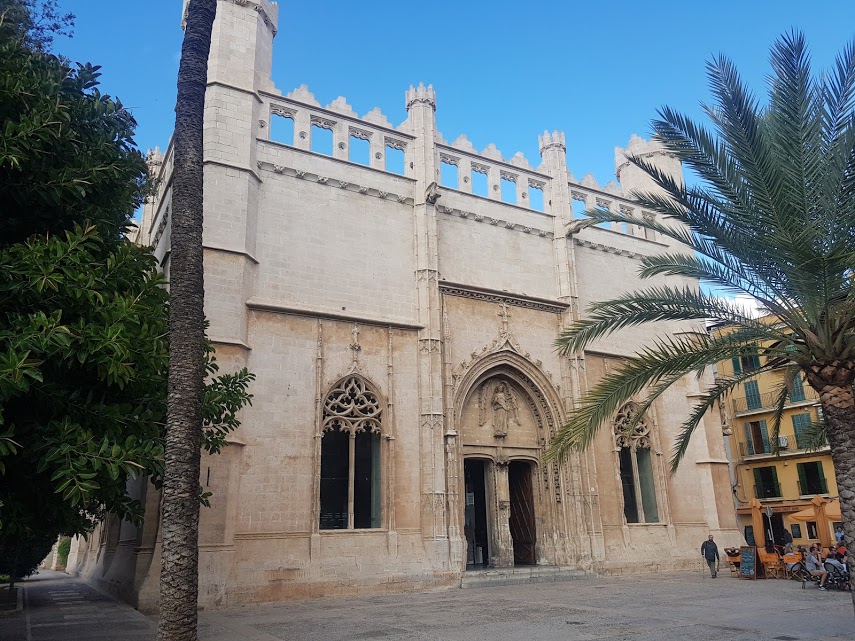
    The planning process to construct this building began in 1403 and it was paid for by the Guild of Merchants, who operated it until the middle of the nineteenth century. They looked after the city’s commerce and were also responsible for ensuring that the harbour was kept in a state of good repair.

    The grand front door of what is seen as one of the most important secular buildings in the city. The building’s architect was Guillem Sagrega, a local man who was born in the city in 1380 and died in Naples in 1454. He was clearly an influential figure, since he was also for a period in charge of the construction of Palma Cathedral.

    The building was used as a military warehouse during the Napoleonic Wars and for much of the twentieth century it was used as an art gallery and museum. From the exterior it looks like a religious structure and there are numerous construction elements which are shared with cathedrals and churches.

    The view from one of the grand windows at the rear of the building.

    The late Gothic design with six supporting columns and rib vaulting to the ceiling. The space is apparently often used for art installations, but when I visited it was entirely empty, loyally guarded by one security guard sitting in the corner.

  • Palma – Es Foner Statue

    Palma – Es Foner Statue

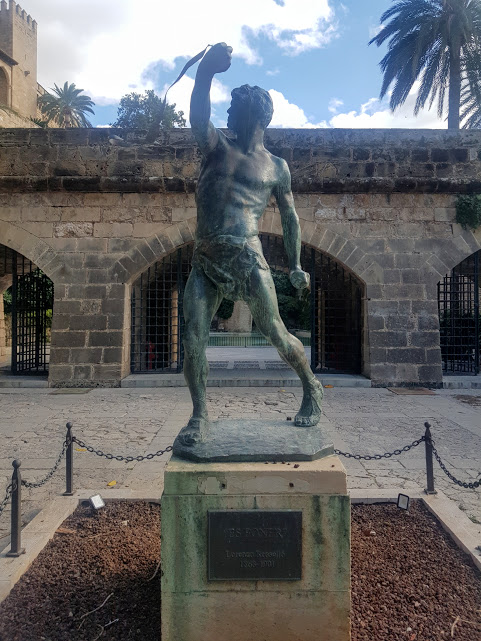
    The statue was sculpted by Lorenzo Rossello, a local artist who died in 1901 at the age of just 34. It depicts a warrior with a catapult, perhaps a Phoenician.

  • Palma – Walk into the City

    Palma – Walk into the City

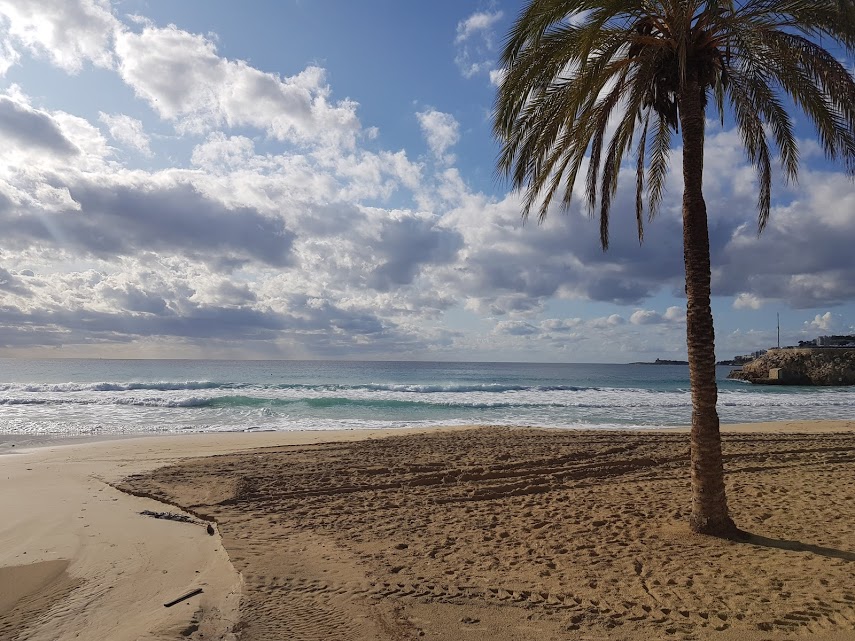
    I’ll be walking into Palma several times over the next week, which takes around 75 minutes in each direction. The above photo is near to the hotel and I think it’s fair to say that I’ve had worst views in the morning.

    This is certainly one of the most beautiful walks that I’ve had into a city centre, with the path being clear and wide along the route. There were hundreds of yachts in the harbour and I sometimes wonder how it is that so many people can afford to own one, with a few of them being what I’d consider to be super-yachts. The cathedral also looms on the horizon for much of the walk, it looks like a ship itself and the area around it is well maintained and spacious.

  • Palma – Paraires Tower

    Palma – Paraires Tower

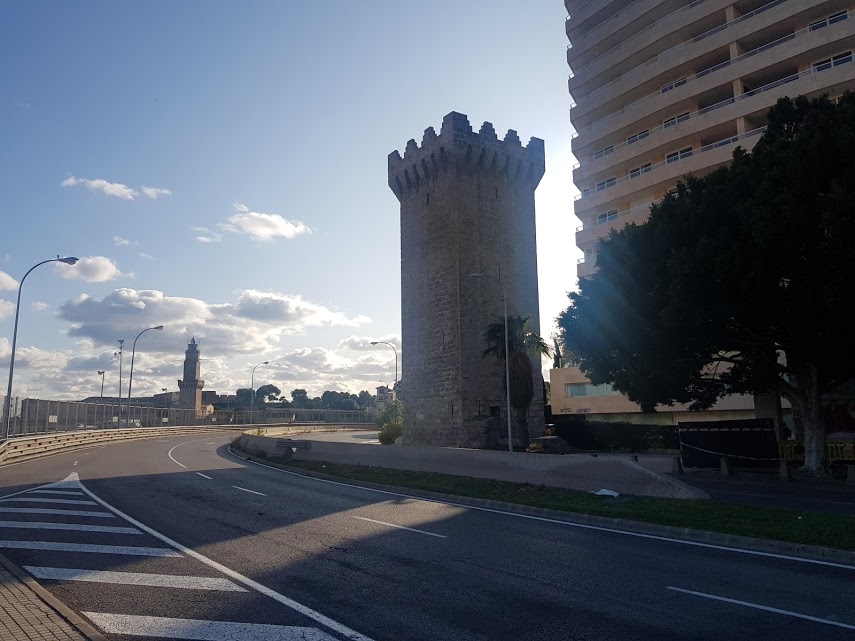
    This tower was constructed in the fourteenth century, although the foundations date back to the Roman period.

    An attractive information board about the tower.

    Originally this was one of two towers, the other is Porto Pi, which had a boom stretched between them to prevent entry into the harbour.