Tag: Oświęcim

  • Oświęcim – Auschwitz-Birkenau Concentration Camp (Execution of Rudolf Hoess)

    Oświęcim – Auschwitz-Birkenau Concentration Camp (Execution of Rudolf Hoess)

    From May 1940 until January 1945, other than for a short period in early 1944 when he was in Berlin, Rudolf Hoess was the camp commandant at Auschwitz-Birkenau. He managed to evade capture after the end of the Second World War, but British forces eventually caught up with him, arresting him in his new role as a farm-worker. The trial was under the control of the new Polish government and it began on 11 March 1947. Hoess was found guilty on 2 April 1947 and after some deliberation, it was decided that he should die at Auschwitz on 14 April 1947.

    This is the location where Hoess was hanged for his crimes against humanity. The execution was photographed, but the public was mostly limited from watching, following the grisly scenes in Poznan when Arthur Greise was executed when it turned into almost a day out for families.

    Copyright Auschwitz Museum

    Hoess being escorted to the gallows. Before he died, the Polish authorities had encouraged him to write his memoirs, to ensure that his story was told. Before his death, Hoess had sought the presence of a priest, which was allowed and Hoess was the last person to be killed at Auschwitz-Birkenau.


  • Oświęcim – Auschwitz-Birkenau Concentration Camp (Railroad Car)

    Oświęcim – Auschwitz-Birkenau Concentration Camp (Railroad Car)

    This railroad car has been placed at the ramp at Birkenau concentration camp where victims were hounded off trains to face the selection process, where most were sent immediately to their deaths. Over 120,000 of these cars were produced in Germany between 1919 and 1925, designed to transport freight around the country. Thousands of them were ultimately used to transport victims as part of the Nazi’s final solution plan, each initially intended to hold 50 people but there were frequently over 150 in this small space.

    The railroad car here was restored with funding from Sir Frank Lowy, the former chairman of the Westfield shopping centre company. His father, Hugo Lowy, was beaten to death here on the ramp when he refused to leave his Jewish prayer shawl on the train. Frank Lowy only found out about this over forty years on and he said about his father:

    “Actually, in a way, in all my sadness, I felt very proud: that my father was able to make such a sacrifice of his life for his principles. I finally found out what happened to him. I used to dream about him, but after I discovered it, I didn’t dream anymore. You know, it was kind of a closure. In my dreams about my father, he bent over me and I didn’t know if he was really there or not. I dreamed about him many, many times. The dreams have not returned. So it must have been some kind of closure.”

    The railroad car may not have been one which actually transported prisoners, but is an authentic one from the period. What is known though is that Hugo Lowy died at around the spot where the railroad car is now placed. A tribute not just to him, but to all those who died here.

  • Oświęcim – Auschwitz-Birkenau Concentration Camp (Room of Shoes)

    Oświęcim – Auschwitz-Birkenau Concentration Camp (Room of Shoes)

    Much has already been written about this room at Auschwitz-Birkenau, the shoes that were taken from victims when they arrived at the concentration camp. There are around 25,000 pairs of shoes here, this would be about the number of shoes taken every day or two at the camp, to give this some sense of perspective. The leather smell from the shoes is also evident when visitors walk into the room as the shoes very slowly decay.

    United States Holocaust Memorial Museum, courtesy of Yad Vashem (Public Domain)

    This photo was taken at Auschwitz in May 1944, when the female prisoners were given the task of sorting the shoes that had been taken from mostly Hungarian Jews.

  • Oświęcim – Auschwitz-Birkenau Concentration Camp (Birkenau – Wooden Barrack for Children)

    Oświęcim – Auschwitz-Birkenau Concentration Camp (Birkenau – Wooden Barrack for Children)

    It’s hard to imagine the suffering that would have taken place in this small area, formerly a wooden barracks at Birkenau where children were kept. They were mostly Jewish twins, kept alive for a while so that Josef Mengele could conduct experiments on them.

    Mengele would work in his laboratories every morning, before rushing to the ramps where Jewish prisoners were being brought in by train in vast numbers nearly every day. Usually Hungarian Jews, he would monitor the selection process of who would live and die, looking particularly for anyone he considered might be useful for his medical research.

    The children would for a while receive sufficient food and drink, and for the twins, it was essential that both stayed alive. If one died, usually due to some experiment initiated by Mengele, then the other would be killed so that there could be a comparable autopsy.

    Today, there isn’t much left of this barracks. Like many others on the site, it was only ever a temporary wooden structure and it wasn’t well-built at the time meaning it has since been lost. All that remains now is the bricked area in the centre of the barracks, which was part of a rudimentary and mostly ineffective brick heating duct.

  • Oświęcim – Auschwitz-Birkenau Concentration Camp

    Oświęcim – Auschwitz-Birkenau Concentration Camp

    I visited Auschwitz-Birkenau just over four years ago, in 2016, which pre-dates this blog. I’ve never wanted to re-visit the camp, although it’s somewhere that perhaps in an ideal world that everyone would want to go and see, to understand what happened here.

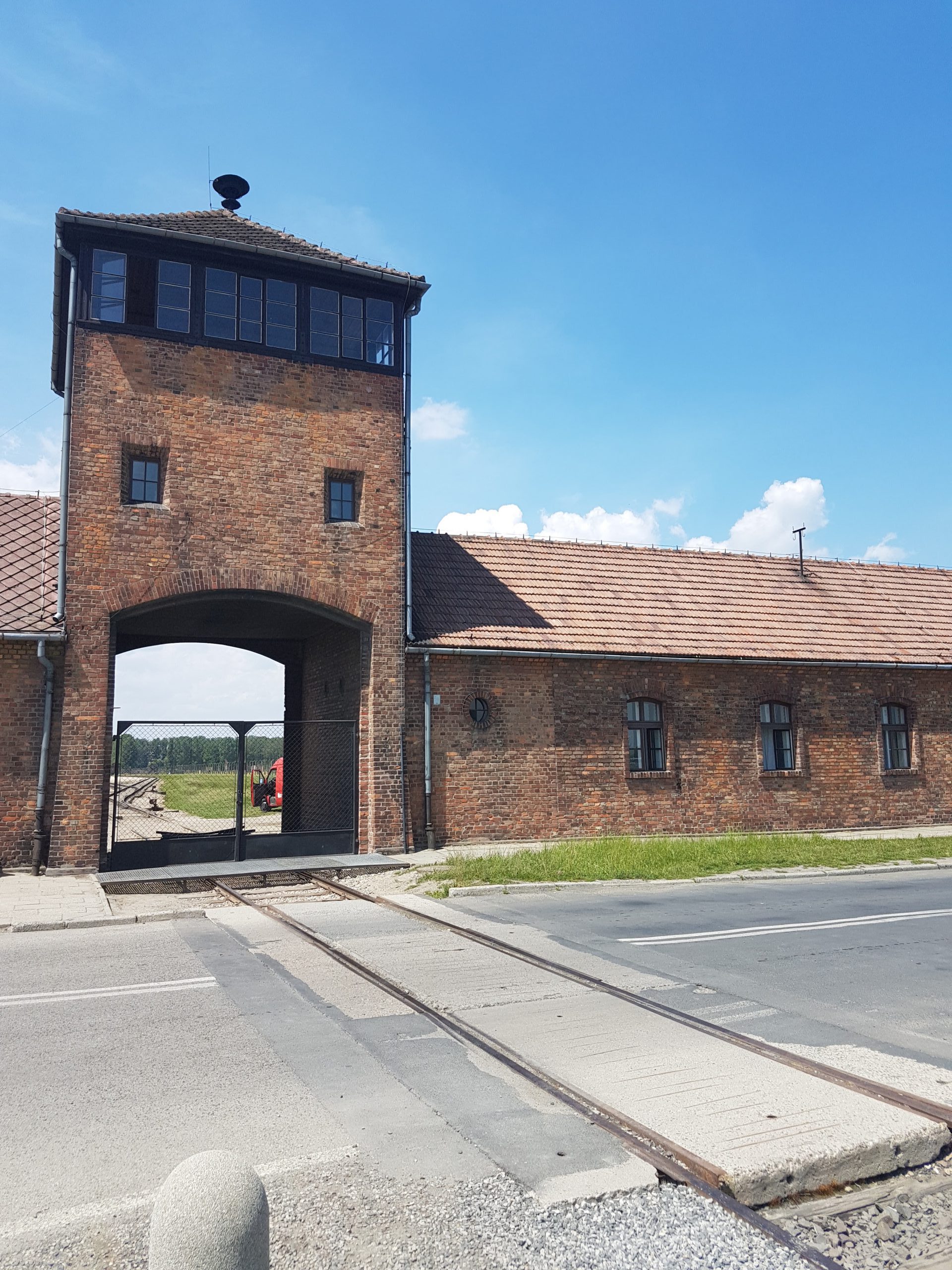
    I’ll put more photos up over the next few days in separate posts, but there are three I took that day that are the most memorable to me.

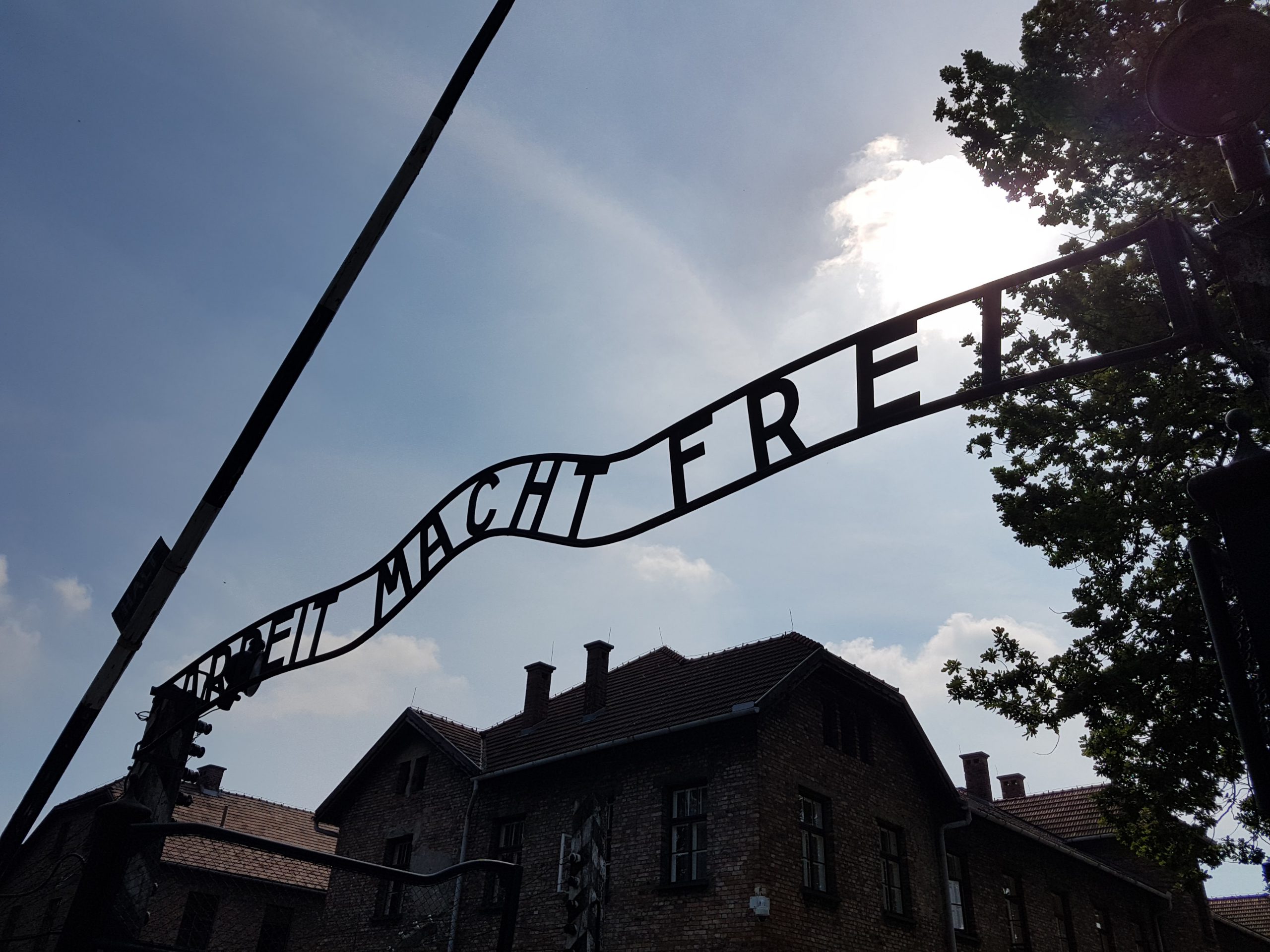
    This is a replacement sign as the original one was stolen in 2009. It was recovered, albeit cut into three pieces, but the replacement was left up and the original is now in the camp’s museum. It’s at the entrance to Auschwitz (Auschwitz and Birkenau are two different camps, but are nearby and are grouped together) and it’s one of the first things that visitors see. I had deliberately arrived early on in the morning as I didn’t want to go around in a guided tour, I preferred to walk around on my own. So, there were relatively few people around at this time and the camp felt quiet and still.

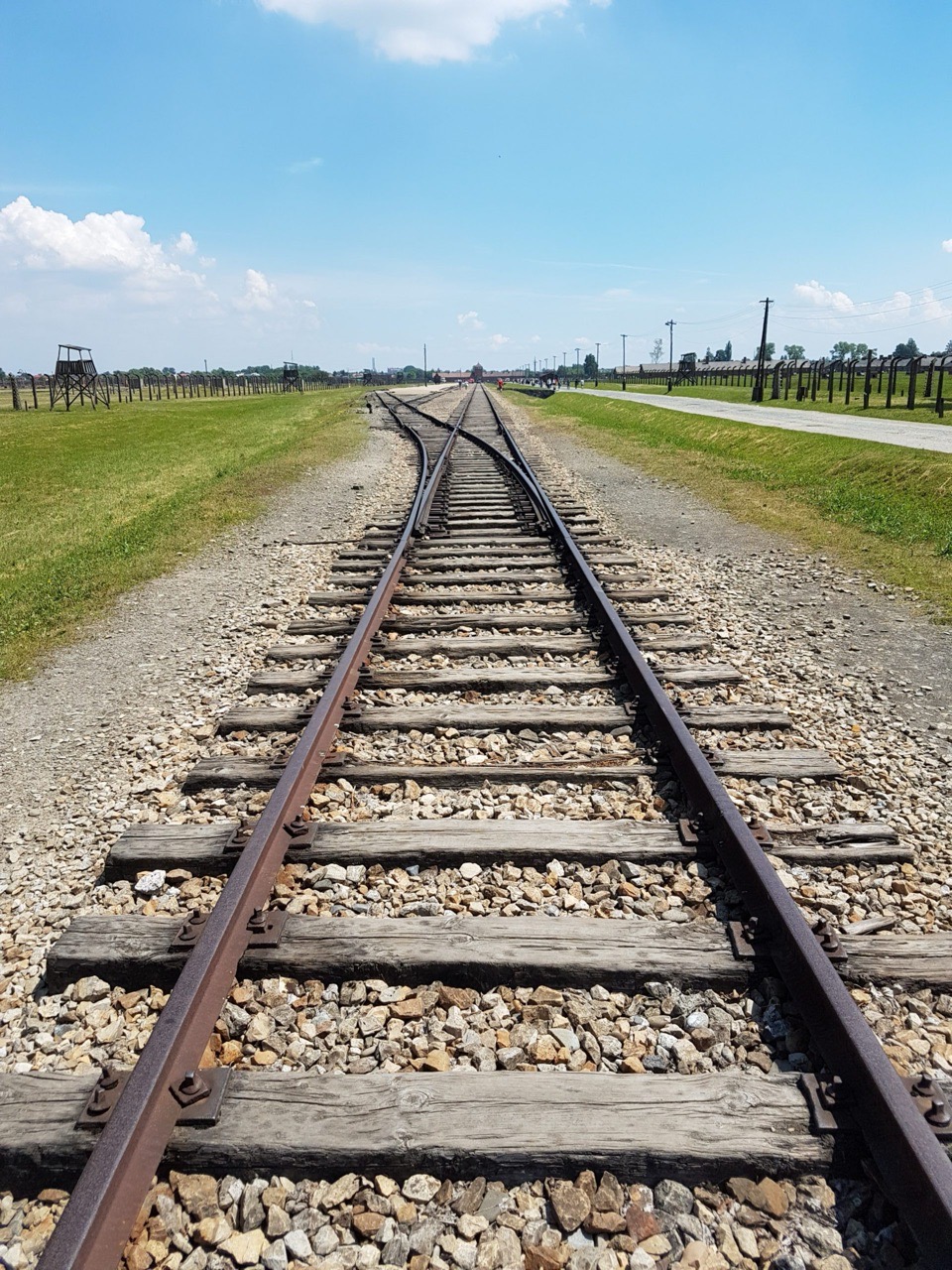
    This is the railway line that led into Birkenau, the right-hand side is the ramp, where selections would have been made on who would live and who would be killed immediately. Thousands of people would arrive here, 80% would be killed immediately including nearly all the children. For some children, they never realised what was happening. They usually arrived on cattle trucks and parents would often provide reassurance to their children that things would be better here. I’m not sure that many parents thought that it would be, but that gave some hope to the hundreds of thousands of innocent children who were denied the chance to live their life.

    Something like 1.1 million people died at Auschwitz-Birkenau, although the true number will never be known. The number is too big to comprehend. Thomas Buergenthal, a child survivor from the camp said about the 6 million Jews killed in the Holocaust:

    “One of the problems with the six million number is that nobody can imagine that. You cannot personalize six million. You can personalize one person. I think it expresses a reality. It is true, because each one of those souls was killed, and each one had an individuality of his own, a history, a memory, a life, and that is lost in this whole discussion when we sort of cavalierly go over and speak about six million. It’s important to keep that in mind.”

    So, I picked one individual from the many photographs on the walls. Seweryn Głuszecki, with a colourisation of his photo at https://facesofauschwitz.com/gallery/seweryn-gluszecki/. So little is known about him, he was born on 19 June 1925 and arrived at the camp from Krakow on 17 April 1942. He died on 20 June 1942. Seweryn’s father Norbert and his brother Rudolf were also transported to Auschwitz. Norbert died on 13 May 1942 and Rudolf died on 24 June 1942.

    It’s only when thinking of one individual, whoever it might be, that the realisation of just how enormous a figure 1.1 million people is then starts to make sense.