Tag: Norwich

  • Norwich – Earlham Cemetery (Frederick Thomas William Jillings)

    Norwich – Earlham Cemetery (Frederick Thomas William Jillings)

    This is the war grave of Frederick Thomas William Jillings, located at Earlham Cemetery, but not in the main Commonwealth War Graves section. Frederick was born in Lowestoft in 1901, his parents being Frederick and Ellen Jillings, who lived at 11 Bevan Street in the town. Frederick (the elder) had a boot repairing shop and Frederick had two older sisters, Elsie and Florence.

    By the 1911 census, the family had moved to 4 Gertrude Road in Norwich, with Frederick the older being a boot machinist, as were Frederick’s two older sisters. When the First World War broke out, Frederick was only 13 and since only 18 year olds were ever conscripted, it probably felt a long way away for him. There was sadness in the family though in 1917, when Ellen died, leaving her husband and three children.

    The First World War loomed large though and Frederick joined up in mid-1918, just when the conflict looked like it might be coming to an end. He was sent to join Number 2 Southern Company in Hampshire, but was then moved to the Royal Army Medical Corps (RAMC) in Blackpool. Above is a painting (© IWM Art.IWM ART 3681) of the inspection tent for the RAMC in the town, which is the unit that Frederick was sent to. At this time Frederick was told he needed glasses during his medical inspection and it’s a nice thought that he was perhaps one of the soldiers in the image….

    Unfortunately, Frederick’s war came to an end after just 149 days of service, he became ill and was transferred to Colchester General Hospital. He died there of bronco-pneumonia on 12 February 1919, at the age of just 18.

    As an aside, Frederick (the older) continued living at his property at 4 Gertrude Road in Norwich until his death in 1944, with his two remaining children both staying single and living with him. They must have been fiercely difficult years for him during the First World War, losing his wife and son within just a couple of years each other.

  • Norwich – Earlham Cemetery (Harry Land)

    Norwich – Earlham Cemetery (Harry Land)

    This is the war grave of Harry Land, located at Earlham Cemetery, but not in the main Commonwealth War Graves section. Someone might contact me here, as I’ve had to make a big assumption to work this one out. The military records of Harry aren’t available, nor is there any information on the Commonwealth War Graves web-site giving further details of an address of next of kin.

    So, working back, he served in the 10th battalion of the Suffolk Regiment, a reserves unit which never left the UK. On the date of Harry’s death, this battalion were stationed in Dovercourt in Essex, having just moved from Colchester. And on the day that Harry died, 23 April 1916, a death was registered in that area of someone with the same name who was born in 1884, so we now have a birthdate.

    There is only one Harry Land in East Anglia that I can find with that birth-year, he was born on 24 May 1884 and was the son of Harry and Charlotte Land. At the 1891 census, Harry (younger), his parents and siblings were living at King’s Road in Norwich, with Harry attending the Prospect Row Council School and then the Carrow Boys School. The family lived at Cypress Street at this point, moving to 9 Geoffrey Road in Norwich by 1901, when Harry was working as a gas-fitter and bell-hanger. At the 1911 census, Harry still lived with his parents and siblings, this time at 45 Carlyle Road in Norwich and he was now working at a corn and seed store.

    This is the best I can do, and I don’t understand why he would be in the Suffolk Regiment, something which concerns me slightly about whether this is right. Anyway, hopefully this little mystery might get solved one day.

  • Norwich – St Benedict’s Church

    Norwich – St Benedict’s Church

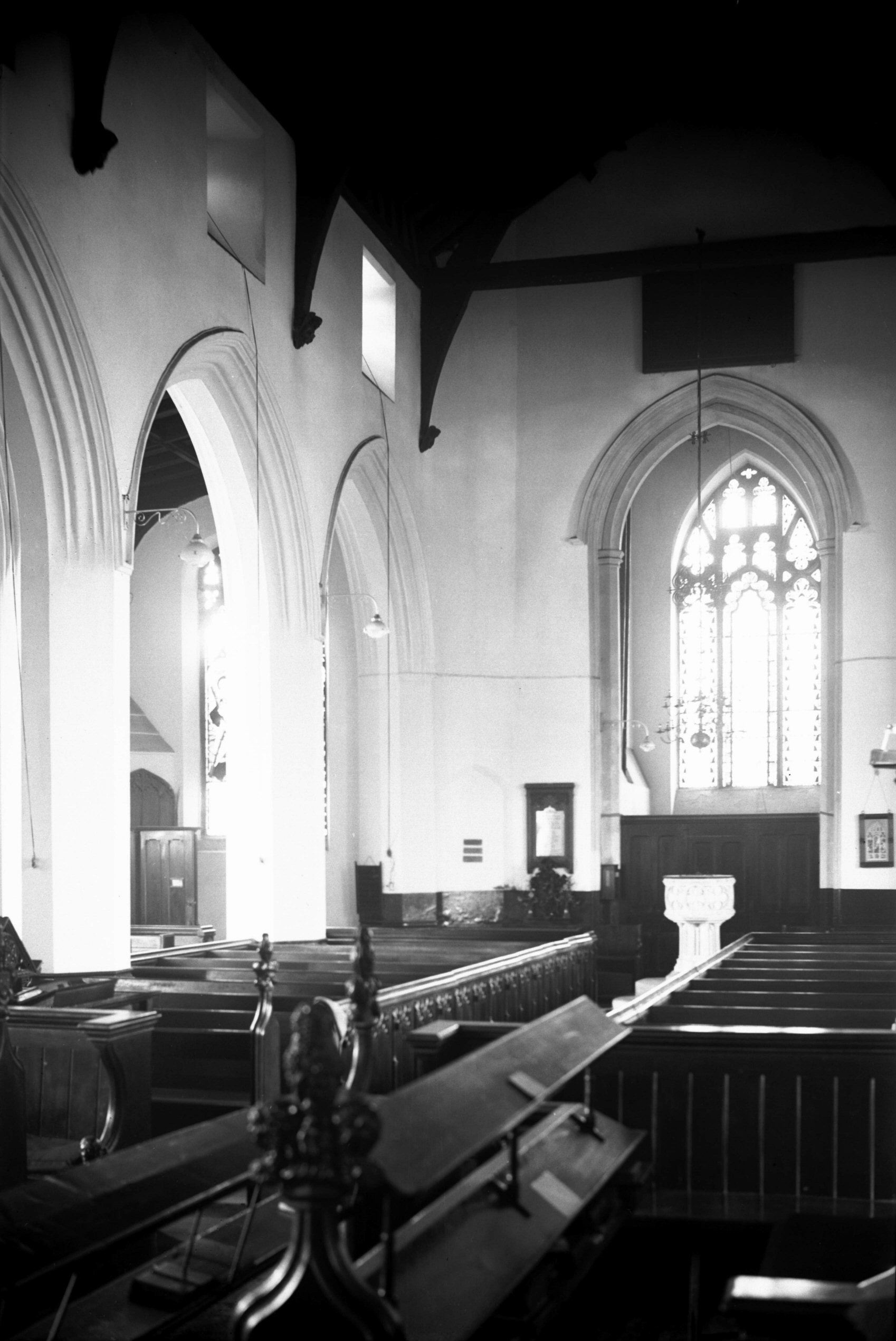
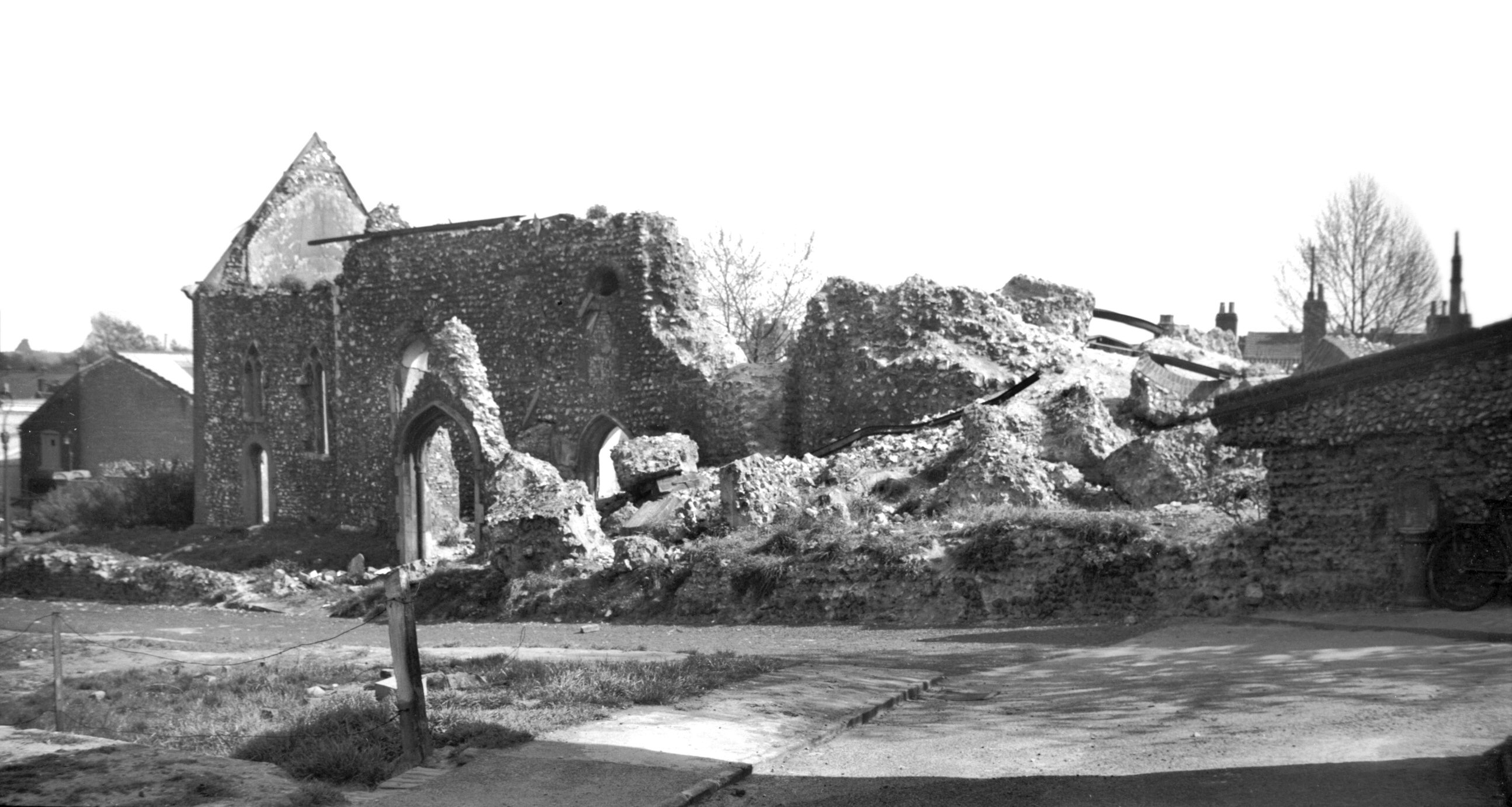
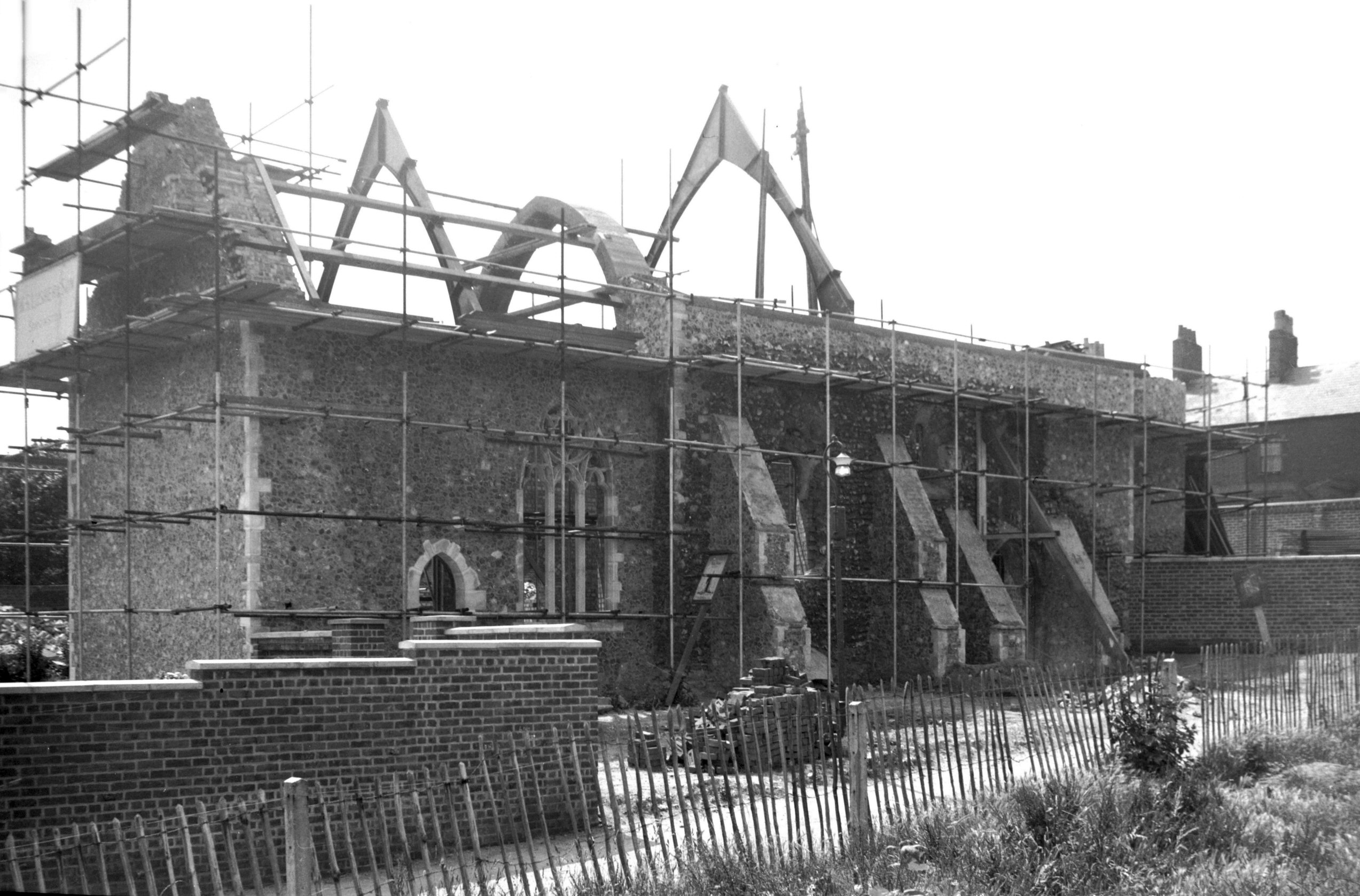
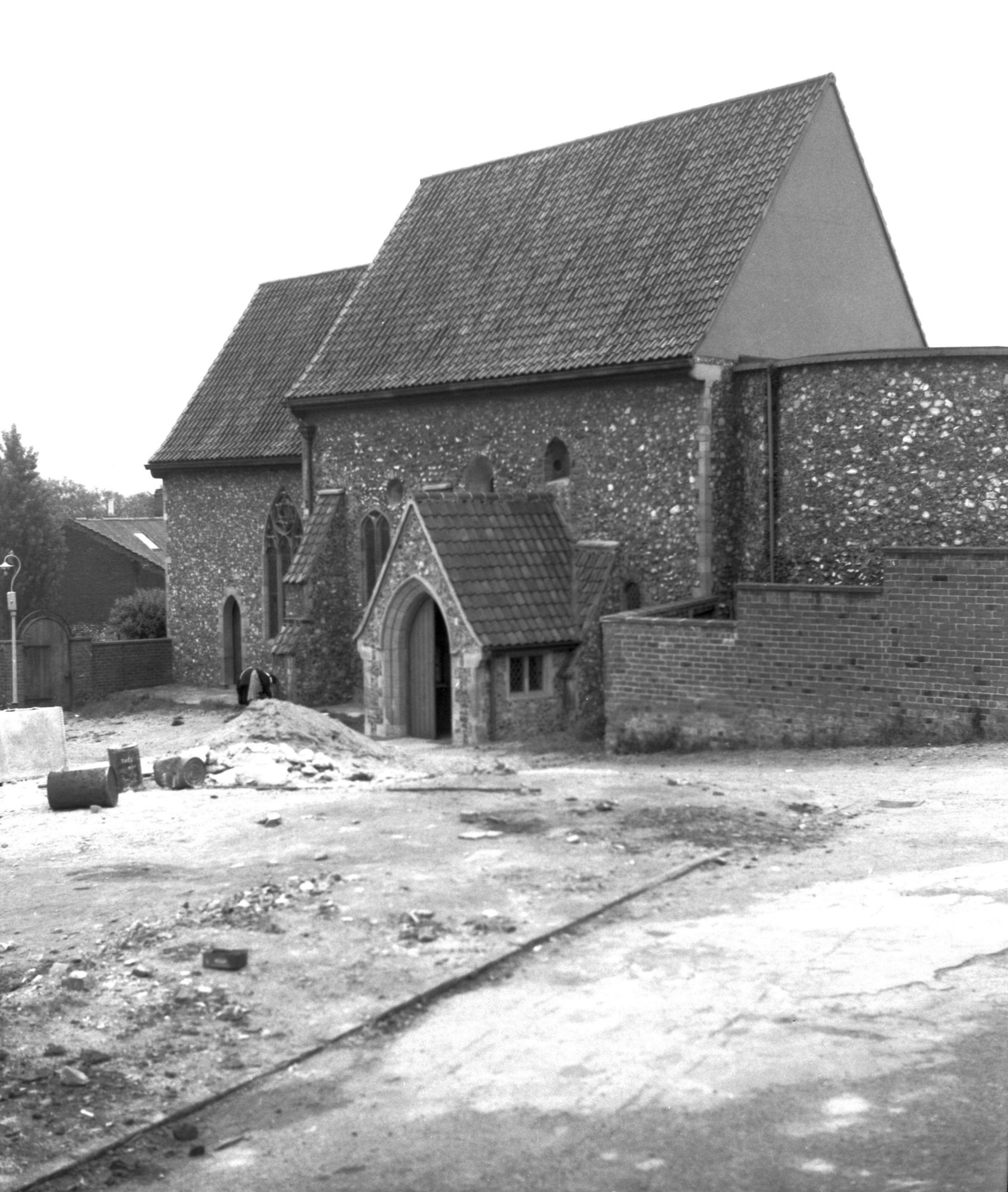
    I’ve been meaning to visit the ruined church of St. Benedict’s for a while, but finally managed it on my little meander yesterday. As mentioned in that post, this is how the church looked in 1934.

    This is the rather urban environment from 100 years ago, with the landscape now entirely changed. Grapes Hill has been mostly destroyed by road construction, whilst the Second World War saw the end to this area of housing. And, indeed, also to St. Benedict’s Church, destroyed by German bombers in 1942.

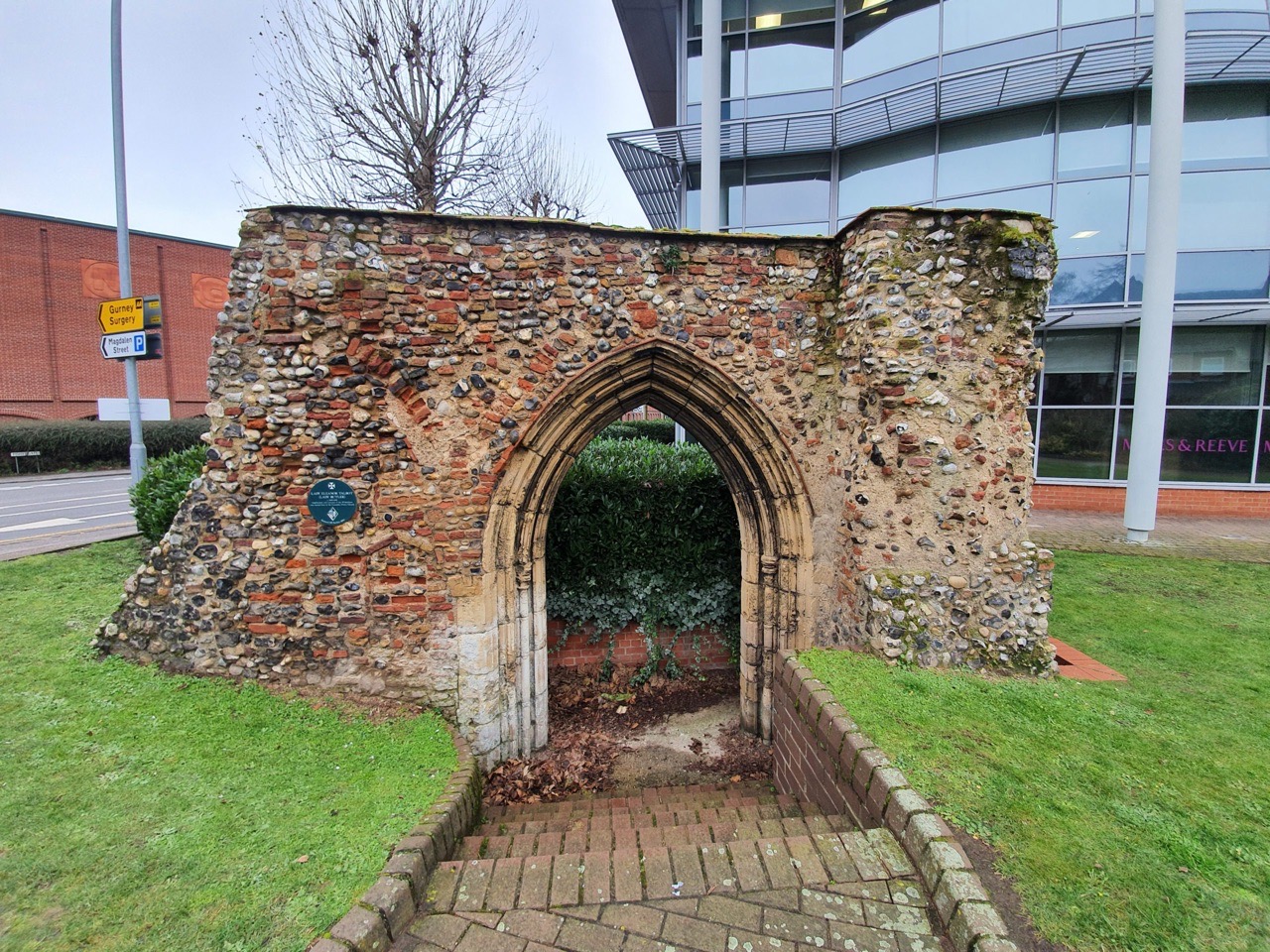
    This is a sad end to the church, although a designer at one point tried to make it the centrepiece of a new housing development. Personally, I’m unsure why a decision wasn’t made to secure and retain the walls that were left, making the area into a peaceful park and then putting the housing around that. Instead, this is probably the inevitable outcome, but at least the tower is still here.

    The tower has now been pretty much abandoned though, barriered off to prevent anyone getting near to it. This is an eleventh century tower (or possibly slightly later, the nave was from that date and the tower was likely built slightly after) of not inconsiderable importance and is rightly Grade I listed. There was a large archaeological investigation in 1972 when the housing was built here which meant that the area is well recorded. There was a font of note dating from 1320, although that was safely transferred to Erpingham Church as it escaped damage during the air raid bombing.

    The church had been restored in the early 1860s, with a re-opening event on Thursday 4 August 1864 to show off their new organ and interior restoration. It had been a hard fought battle to get funds for this, I can’t help but feel sad for those who would have sacrificed to make a donation to repair this building given the ultimate outcome.

    There was perhaps a more interesting meeting in August 1894, when concern was raised about the church’s tower and roof, which was leaking. Someone at the meeting said that it was the duty of the parishioners to ensure that the church remained in good repair, something that would have no doubt gone down with some incredulity given the limited wealth of the residents. But, legally, this was right, it was their problem and the stones falling from the tower damaging the roof needed fixing.

    A debate, which from reporting seemed quite heated, ensued about what had actually happened to the church funds. It was said that a third of the charitable funds from the church went to the poor, a third to the churchwardens and a third to the fabric of the building. So, what happened to that third to ensure that the fabric of the building didn’t suffer? No-one seemed quite sure.

    The chair of the meeting declared that they were a poor parish and help was needed, saying the church couldn’t meet the ordinary expenses of the building, let alone extraordinary ones. So, a fund-raiser was needed. There was then a debate about how much some basic repairs would cost, with £5 being suggested. One person at the meeting wasn’t impressed, he said the scaffolding would cost more than that. Someone else mentioned they were pleased that the matter discussed now was raising money and not worrying about the money had gone. This is why I suspect the meeting got quite sidetracked…. Anyway, it was agreed that the church should raise some money from a few supporters to pay for immediate repairs, leaving a general request of parishioners to meet the expected larger bill required to properly fix matters.

    As can be seen, a big effort has been made to provide an informative history to the church….. Other than this (which I had to zoom in to see as it’s behind the barriers) there is no information board about the site at all, something that the site probably could do with. Informative and orientation boards can be enormously useful to understanding a building and giving some interpretation to what the area looked like.

  • Norwich – Earlham Cemetery (Walter Harry Loades)

    Norwich – Earlham Cemetery (Walter Harry Loades)

    This is the war grave of Walter Harry Loades, located at Earlham Cemetery, but not in the main Commonwealth War Graves section.

    Walter was born in 1894, the son of Joseph and Caroline Loades (nee Chatton). He had an older brother, Sidney, and a younger brother, Reginald, and they lived at 24, Brunswick Road in Norwich (in a property which looks on Google Maps to have been pulled down). Walter worked as a clerk and I’d like to think that his life was peaceful (well, he was single anyway).

    Unfortunately, the First World War meant that Walter had to enlist, and as his service records have survived, there’s plenty of information about what happened next. He saw a medical officer in Grantham on 26 May 1916, with Walter bring described as healthy. The records are detailed enough for us to know that he was 5’6″ tall, with a 33 inch chest and a weight of 9.7 stone.

    He joined the machine gun corps and was sent as part of the British Expeditionary Force to serve in France. The records note that he was on a boat from Folkestone to Boulogne on 17 July 1916, then he was transferred to nearby Camiers the day after. On 23 July 1916, Walter joined his company, but was sent to a field hospital on 2 November 1916 with scabies, a common problem in the trenches.

    After returning to his company, Walter was badly wounded on 16 February 1917, with gunshot wounds to his legs, face, elbow and mouth. He was sent for medical treatment to the hospital shop Gloucester Castle on 9 March 1917, then transferred two days later to the Mill Road Infirmary in Liverpool. He remained there until 23 May 1917 when he moved back to his home county and the Norfolk War Hospital (later better known as St. Andrew’s Hospital) where he remained until 5 September 1917.

    Unfortunately, his medical situation remained dire and he was transferred to Tooting Hospital for treatment. He died there on 11 September 1918 at 15:00 with the doctor noting that his ‘spastic paraplegia’ was the cause of death. Walter was buried at Earlham Cemetery on Tuesday 17 September 1918 at 12:00 with his family present at his burial. The War Office seemed unaware of the burial and when enquiring was told that Walter’s father, Joseph, had arranged the burial for his son. This likely explains why this grave is in a different part of the graveyard to the war burials, with the headstone I assume being added at a later date.

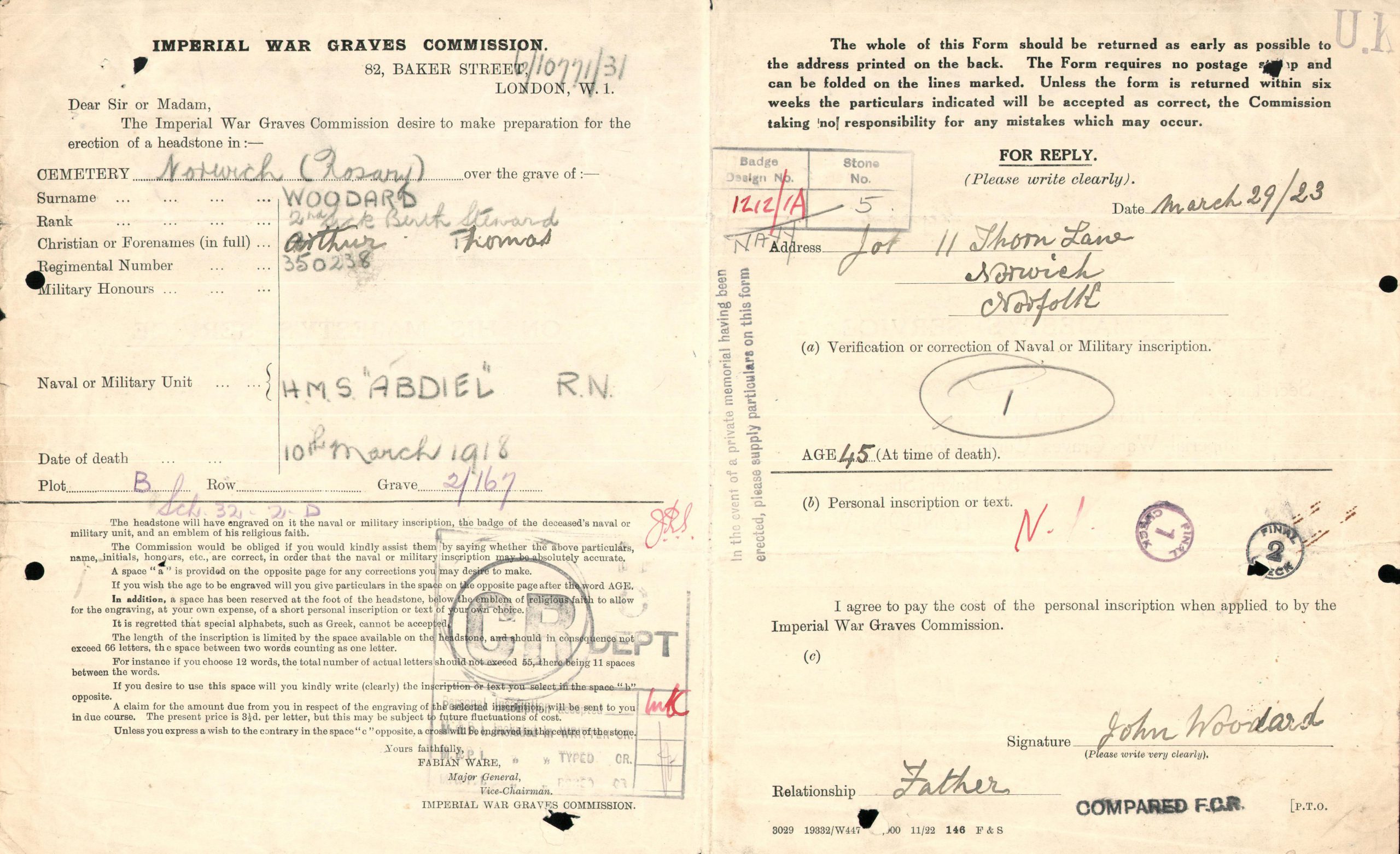
    The declaration signed by Joseph on behalf of his deceased son, confirming the death and having that witnessed by Alfred Gates, the Vicar of Lakenham, who lived at 7 Newmarket Road in Norwich. Joseph died in the first part of 1939, so at least never saw the outbreak of another war which he thought his son had died in order to prevent. I can’t help but feel that this must have been endlessly traumatic for the family, not just a death but watching their son seriously injured for such a long period.

  • Norwich – Earlham Cemetery (Henry Rowles)

    Norwich – Earlham Cemetery (Henry Rowles)

    This is the war grave of Henry Rowles, located at Earlham Cemetery, but not in the main Commonwealth War Graves section. There’s not much information on this gravestone, nor indeed on the Commonwealth War Graves web-site, and I had expected another story of a young life cut short. Instead, I’ve been on an unexpected journey with Henry….. (and I hope I’ve got this story right).

    Henry Rowles was born in Witney on 17 February 1857, the son of Henry and Elizabeth Rowles. In 1861, he’s listed as living with his parents and siblings on the High Street in Witney, with his father working as a fuller. Things went a bit awry and at the 1871 census, Henry was listed as residing at Her Majesty’s Pleasure at Oxford County Gaol (which only finally closed in 1996). He had robbed a counting house with a friend called Henry Davis and was sentenced to four months imprisonment with hard labour. A Henry Rowles was executed at the same prison a few years later for murder, but they don’t appear to be linked.

    Anyway, by the 1881 census, Henry’s teenage waywardness had been rewarded (or punished, depending on how you look at it) when he was serving Her Majesty in the Dragoon Guards, training in Aldershot. For reasons unknown, he met Emma Jackson in Norfolk and they were married in 1883, being listed as living in Queen’s Road in 1891 along with their only child, Frederick.

    By the 1901 census, Henry had moved to 9 St Mary’s Alley in Norwich with his now much larger family, although he had lost two children. Bringing this story forwards to the First World War, it appears that he enlisted in the Royal Defence Corps. This was a unit that had former soldiers in, or soldiers who were too old, who weren’t sent overseas but instead performed guard duty roles in the UK, such as guarding bridges, structures or prisoners of war. It’s likely that Henry was doing the latter, as that’s what most members of the Corps were doing.

    When in service for the 155th company of the Royal Defence Corps, Henry died on 8 November 1918 with the flu, with his body being returned to Norwich for burial. Unfortunately, his military records have been lost and so there’s a chunk of the story here that can’t be told. But, I imagine Henry was an interesting character……

  • Norwich – Earlham Cemetery (Robin Henry Hubert le Brasseur)

    Norwich – Earlham Cemetery (Robin Henry Hubert le Brasseur)

    This is the war grave of Robin Henry Hubert le Brasseur, located at Earlham Cemetery, but not in the main Commonwealth War Graves section. Robin was born in 1884 in Hampstead, London, the son of Robert and Agnes le Brasseur.

    Robert le Brasseur was clearly a wealthy man, he had founded the law company Le Brasseur and Oakley in 1881, which still exists today in the large legal business now named RLB Law. In 1891, the family were living at 63, Belsize Avenue, with three servants supporting them. They’re also listed on something new to me, which is the 1893 Westminster Roman Catholic Census. The family were living at the same location in 1901, although things must have been going well, as they now have five servants to serve their every need and whim.

    The family then moved to Carey Street in London, which by chance I visited a few weeks ago in the hunt of the Victorian Star Yard toilets. I would say that the le Brasseurs might have used these toilets, but I suspect they probably didn’t, not given the huge property which they owned.

    But, back from this decadence to Robin. He was educated at Wimbledon College and although I can’t find his war records on-line, he joined the RAF and soon became a Lieutenant. By 1916, he was part of the No. 16 Squadron of the Royal Flying Corps, a dangerous unit to be in as flight technology was hardly developed at that point.

    Despite the dangers of his job, Robin didn’t die in a plane crash, but during a period when he was off-duty following service in France. Robin was travelling from Cromer to Norwich, but the tyre burst on his car near to the Plough & Shuttle public house in Marsham (that pub is still there, it changed name to the Flags in 1985 and then to the Plough Inn in 1999) which led to his car crashing into a house. The local press reported that Dr. Morton and Dr. Little came from Aylsham to assist, with Robin being taken by “a motor ambulance” to the Norfolk War Hospital (which later became known as St. Andrew’s Hospital in Norwich, which closed in 1998). Robin died at 7am the following morning, 24 May 1916, aged 31.

  • Norwich – Earlham Cemetery

    Norwich – Earlham Cemetery

    I’ve never visited Earlham Cemetery before, so I decided to meander along today as part of my walk from the city centre.

    This is North Lodge, built in 1855 and this entrance to the graveyard was for religious non-conformists. The building was used by the superintendents, one at each lodge, who resided and worked from the building.

    South Lodge, also built in 1855, which came onto the market in 2015 when it was sold by Norwich City Council, after having not been lived in since the 1920s. This was the property used by the superintendent at the Church of England entrance to the cemetery.

    These two photos are from the Jewish area of the cemetery.

    This is the Catholic chapel, with this and the Jewish cemetery mortuary chapel being the only two nineteenth religious buildings on site left. The beautiful Church of England and non-conformist dual chapel arrangement in the centre of the graveyard were ripped out in the 1960s and replaced by a crematorium designed by David Percival. Percival also designed St. Augustine’s Swimming Pool (since demolished) and the former Norwich Central Library, the one I liked and which unfortunately was destroyed by fire in 1994.

    One of the iron grave location markers.

    The Commonwealth War Graves area, although there are also some stones of others who died during the First and Second World Wars dotted around the cemetery. I’ve discovered since visiting that there’s an old military graves area, which I didn’t notice whilst meandering around. I’ll have to go back at some point to have a look at that (and I did, more about that here).

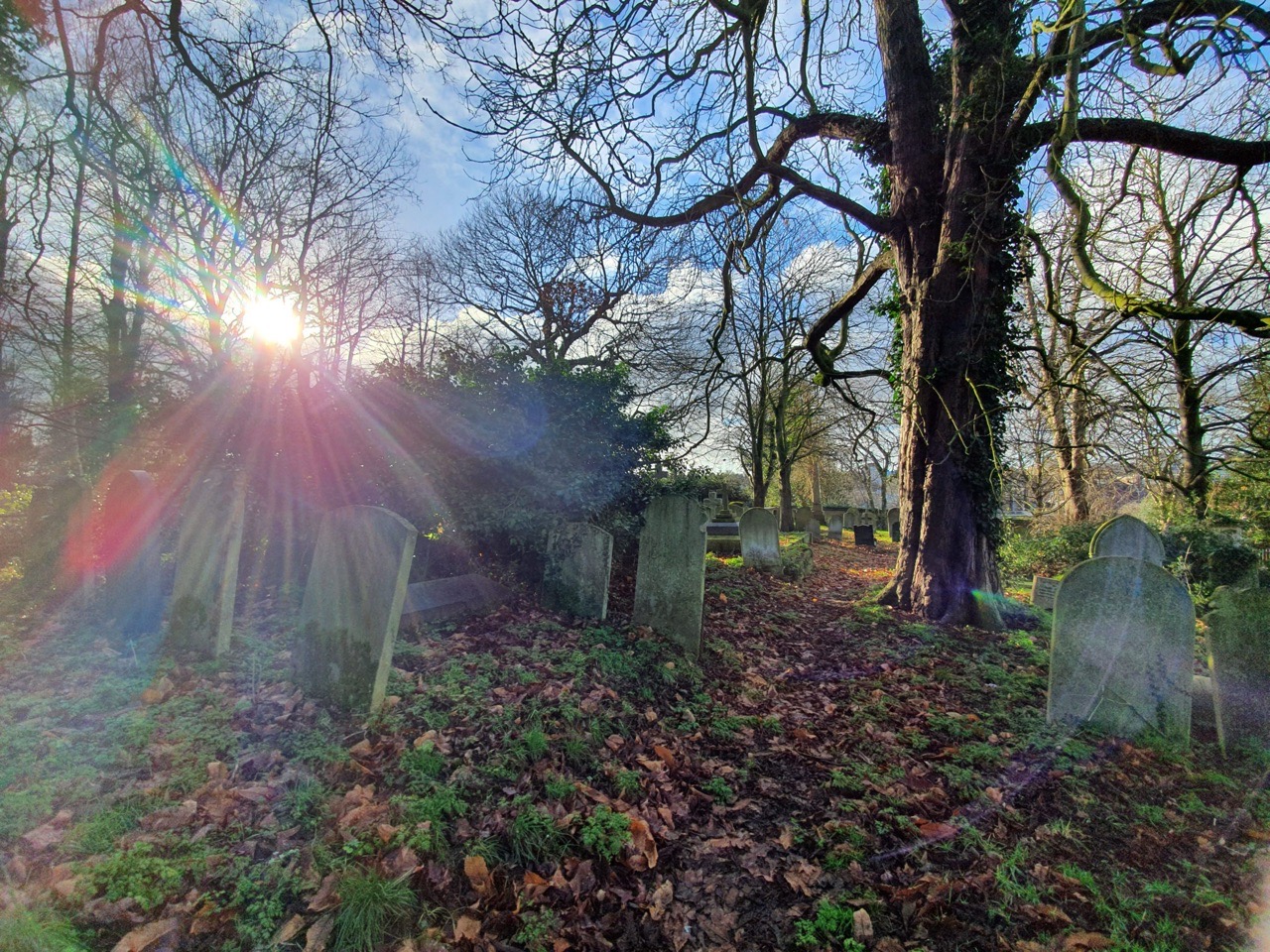
    The crematorium gardens. And below, just a few random photos from the cemetery grounds. It’s a huge site and although there were plenty of people walking around, it’s such a large cemetery that it still felt quiet and peaceful. A lot of the crosses on graves seem to have been tipped over to prevent them falling, but the general maintenance around the entire cemetery seems excellent.

  • Norwich City Centre to Earlham Cemetery (and back)

    Norwich City Centre to Earlham Cemetery (and back)

    I decided last week to make an effort to walk to some of the places in Norwich which I haven’t managed to go to, or haven’t realised existed until recently. I called them micro-adventures, although they’re not overnight ones. I’ll be glad when Nathan and I can get going on the next GeoGuessr challenge (where we select a random location using GeoGuessr and just go there on public transport and see what happens), I liked those  🙂

    Anyway, I was more on the lookout for things that I’ve never noticed before, so this walk was a little random. But there we go….

    I’ve walked by this sign in the Cathedral Close many times before and never noticed this plaque noting where the Cathedral Bell Tower used to be. Unfortunately, the tower was taken down in the late sixteenth century, otherwise it could have made for quite the sight for those entering the Close.

    At the moment, due to the latest reconstruction of Tombland (which seems to partly involve changing the last reconstruction from a couple of years ago), the Erpingham Gate in the above photo is temporarily taking all the traffic into the Close whilst the Ethelbert Gate is closed.

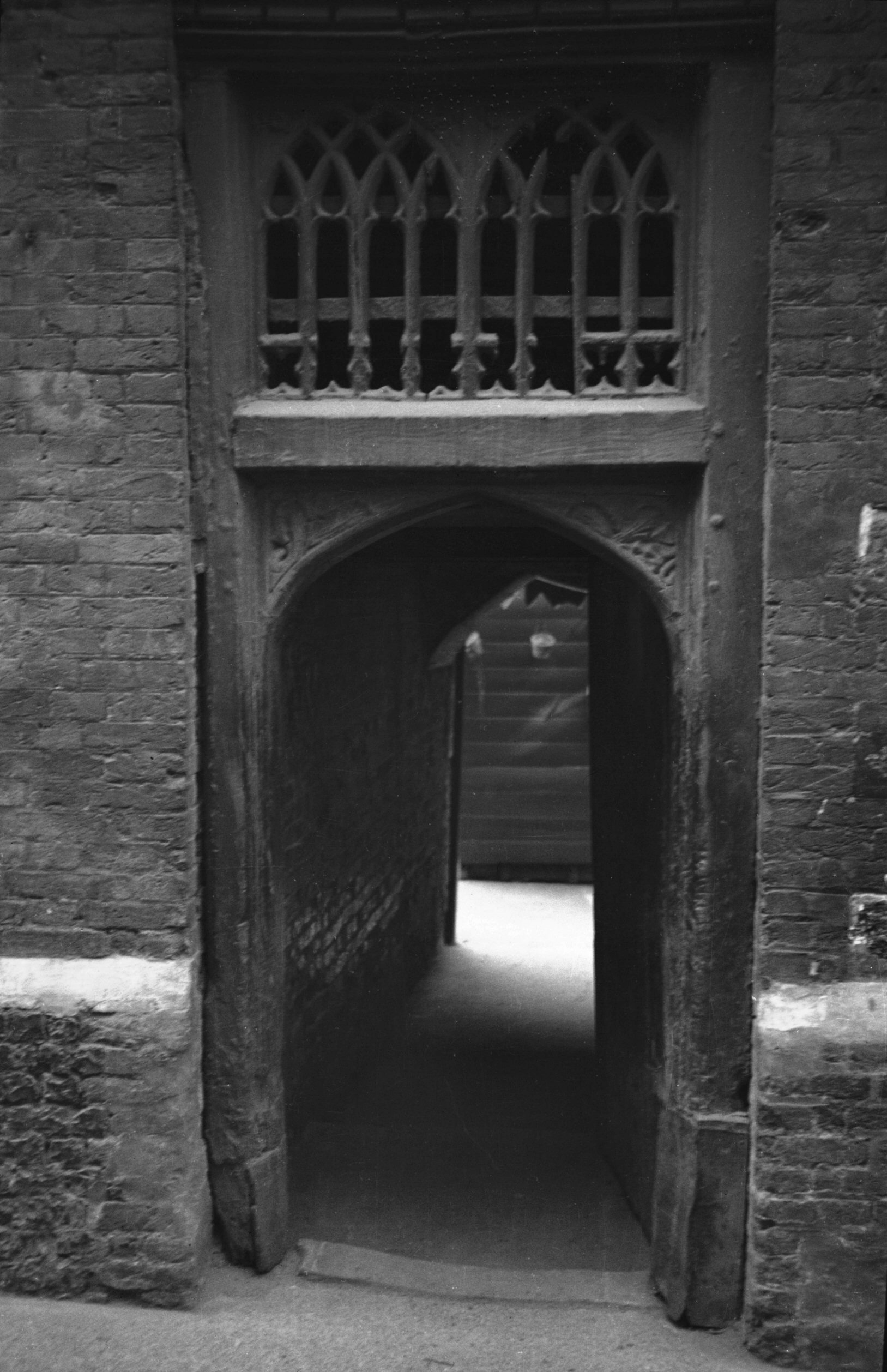
    This cut-through between Tombland and Princes Street shows the slightly wonky nature of the buildings here. I’ve walked this many times, I just like it….

    A plaque for the Maddermarket Theatre that I’ve never noticed before. As the sign notes, the theatre’s building started off as a Roman Catholic Chapel at the end of the eighteenth century, before becoming a theatre in the early twentieth century.

    And a sign noting where William Kemp morris danced his way to Norwich, apparently jumping over the wall of St. John the Baptist church to finish his adventure in 1600.

    The cut through underneath the church tower of St. John the Baptist Church.

    Another one of the city’s interesting markers showing where pubs once stood, in this case, the Farriers Arms between 1830 and 1895.

    In this case, the pub is actually still there, now trading as the Belgian Monk.

    A mural on the back of a wall on what I think might be the rear of Guildhall Tesco Metro, depicting the Castle, Cathedral and City Tower, part of the ‘City of Stories’ tagline.

    And another new one on me, this plaque is located on Dove Street and notes that it’s where Anthony de Solempne set up his printing business when he moved to Norwich from the Netherlands. It was de Solempne who printed the first book in Norwich, Belijdenisse Ende, a book in Dutch meaning ‘a Confession of Faith’.

    The Roman Catholic Cathedral in Norwich was designed by George Gilbert Scott, also called St. John the Baptist, with this one being the second largest Catholic Cathedral in the country. Last time I went here it was on a guided tour on the Heritage Day Open Weekend and the guide fell down the stairs. Which wasn’t ideal.

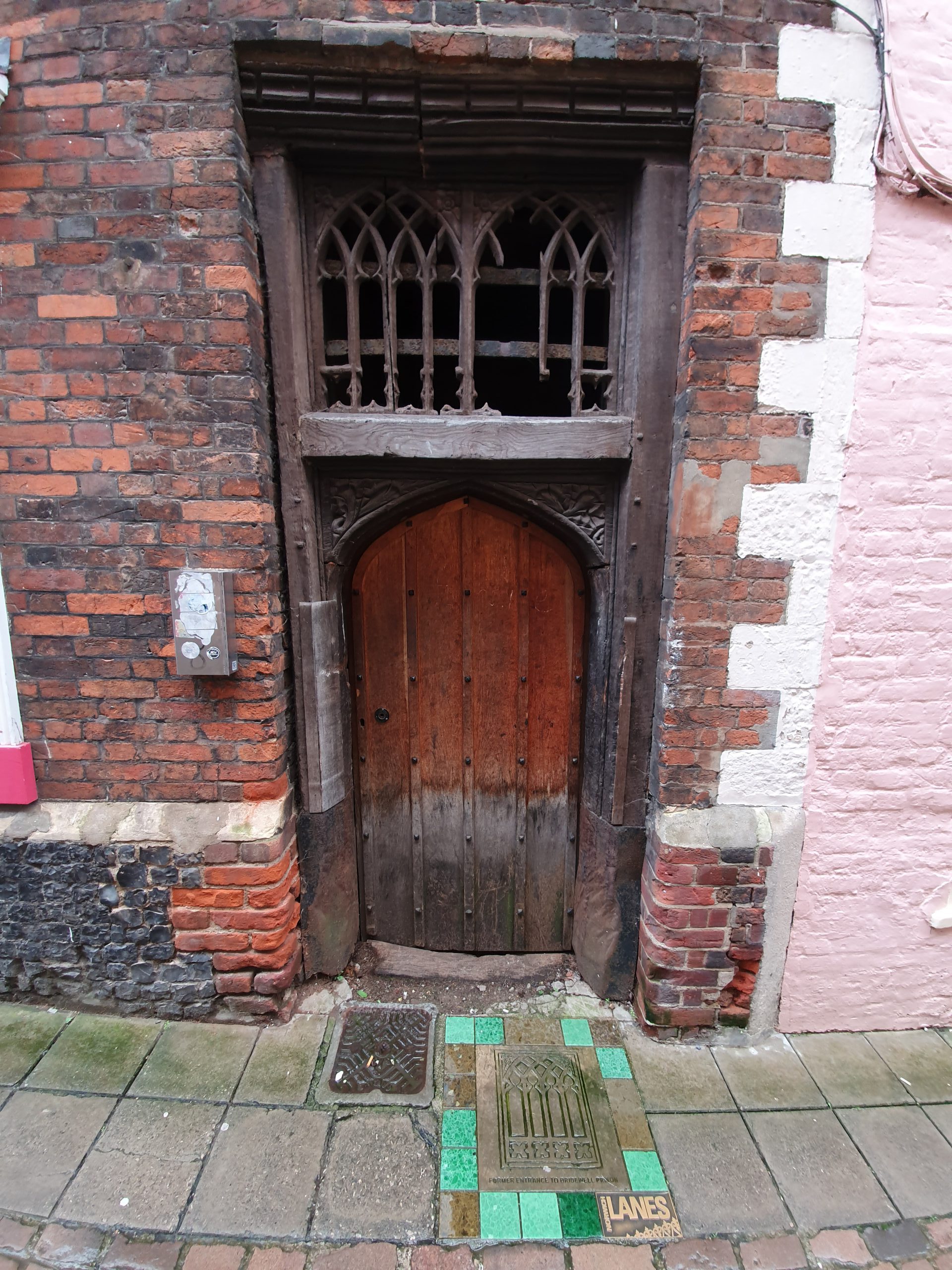
    I think I had known this but forgotten, but the Cathedral was built on the site of the City of Norwich Gaol, open between 1827 and 1881.

    The prison isn’t on many maps I usually use, but it is visible on this mid-nineteenth century tithe map.

    I’ll write more about Earlham Cemetery in separate posts, but this is the war graves area. There was a friendly lady who was clearing weeds and tending the graves who noticed I was intrigued by the Polish graves and she pointed out where the German ones were. I only noticed later that there was a Commonwealth War Graves Commission van nearby, she seemed a very good representative of this enormously worthwhile organisation.

    A lot of the cemetery feels quite remote, but it’s well tended and cared for.

    One of the more impressive tombs. I went to look at the Jewish section of the graveyard and managed to get a little lost in the crematorium gardens, which were rather peaceful with the water fountain and quiet feel. I didn’t want to trample over their grass, so went back the way I came and managed to only just avoid a funeral procession.

    This is the site of the historic Earl of Leicester pub which the city council gave approval to demolish in 2005. What a marvellous idea that was, here it is in 2020 (the big green bit with nothing on it, not the houses behind it). I’m slightly surprised that the city council hasn’t tried to build a car park on the site.

    Unfortunately, Brasov Restaurant has now been closed and the building is being refurbished into something new.

    And this is the former JD Wetherspoon’s City Gate, which closed about ten years ago.

    The new student accommodation building that has been built on what was the car park to Toys ‘R Us. It’s in my opinion a depressing looking building, devoid of interest and entirely ignoring the city wall in front of it. Alumno Group, who designed the building, must have been delighted when this got approved by Norwich City Council. Anyway, I’m sure that it’s lovely inside.

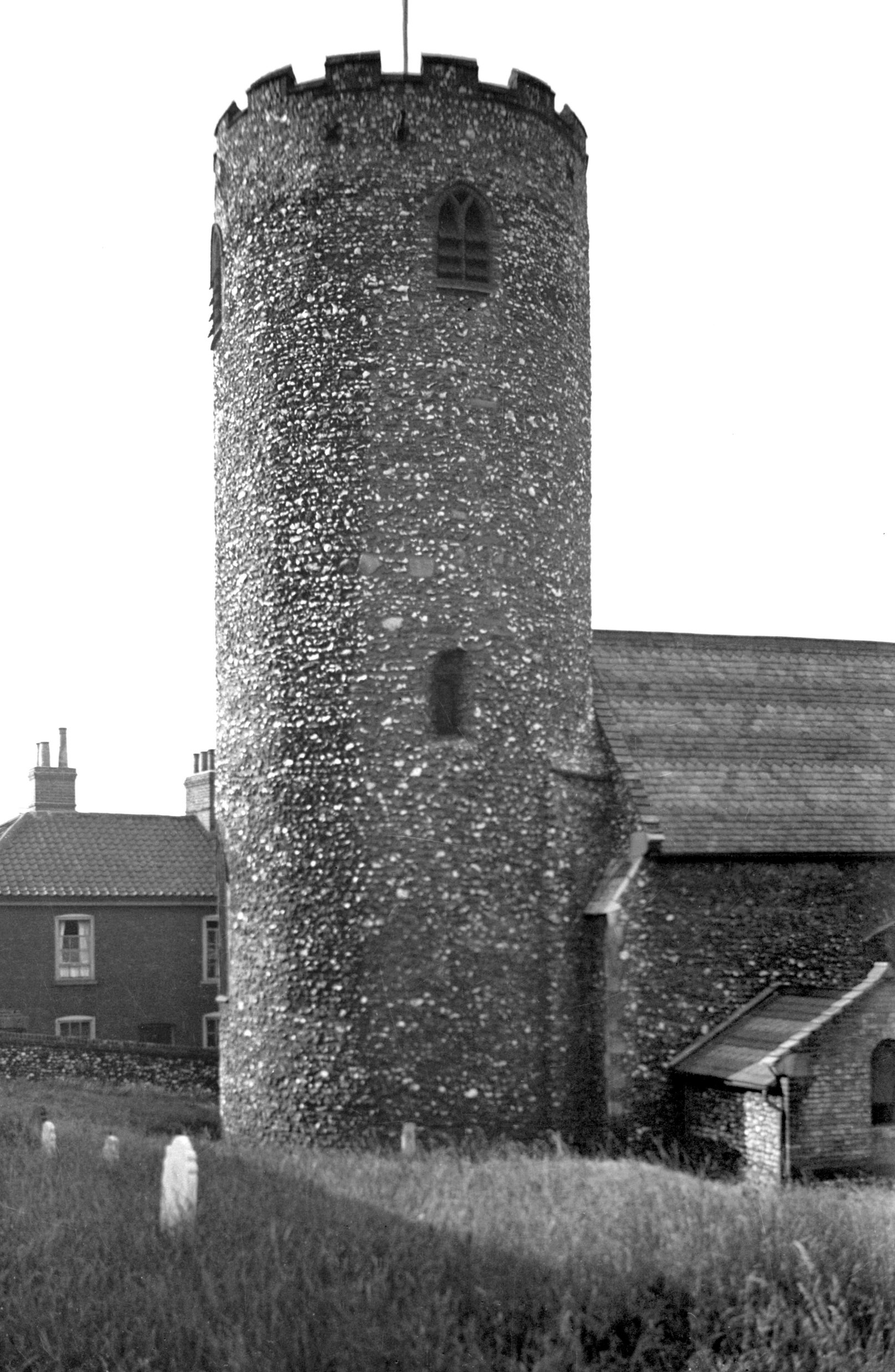
    I’ve never gone to investigate St. Benedict’s Church Tower and it’s hard to imagine that this is the same church as appeared in George Plunkett’s photo from 1934.

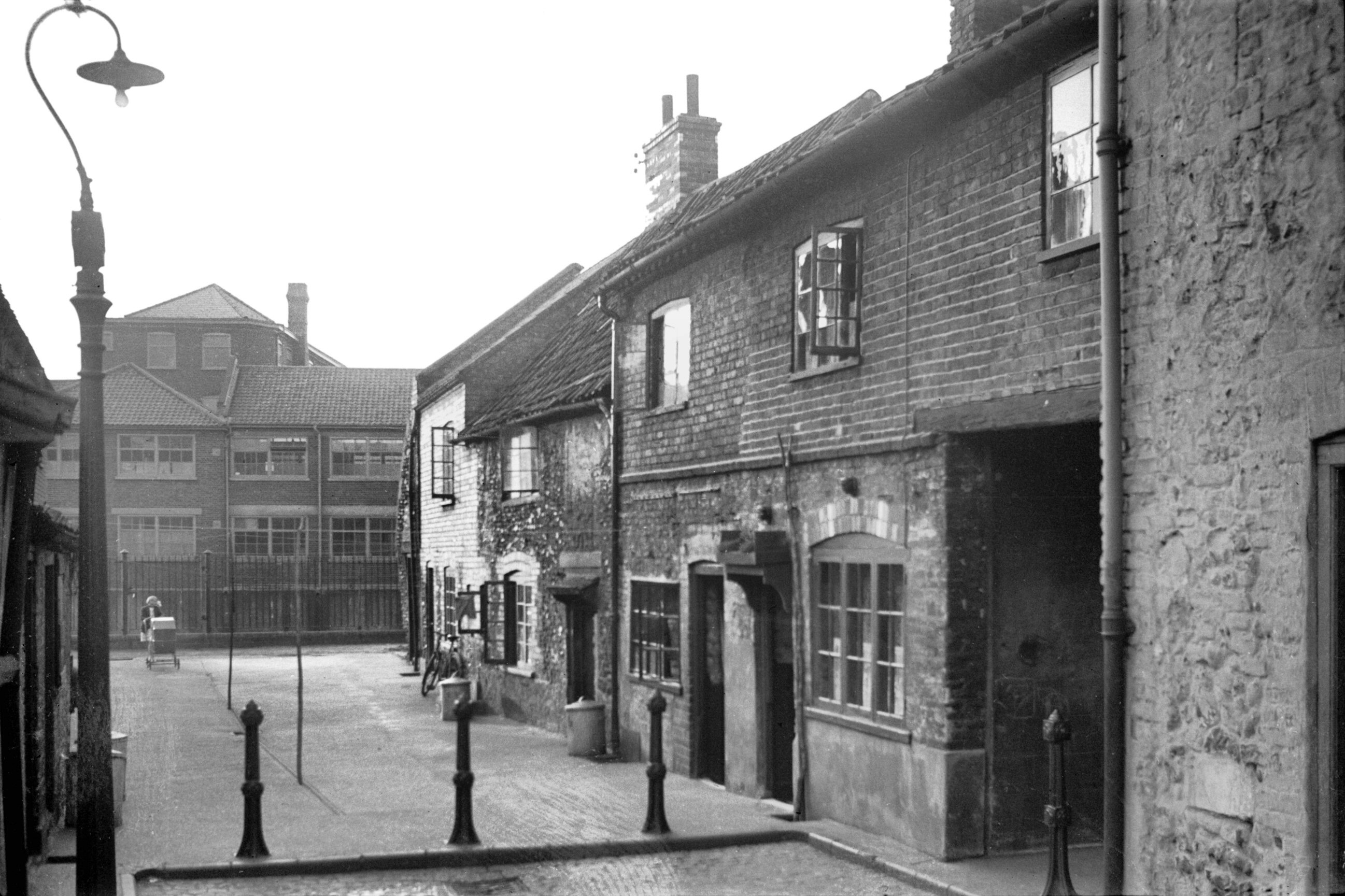
    Hales Court, which isn’t a path that I’ve seen before. Today it connects Cleveland Road with Chapel Field North, but the former road is relatively new, this was previously just all housing.

    Excuse my lack of graphical skills, but the green line is the old route of Hales Court and I took the photo from where that small red blob is. As may be evident, I’ve marked this map up myself and didn’t get professional help.

    And this is where Hales Court meets Chapel Field North.

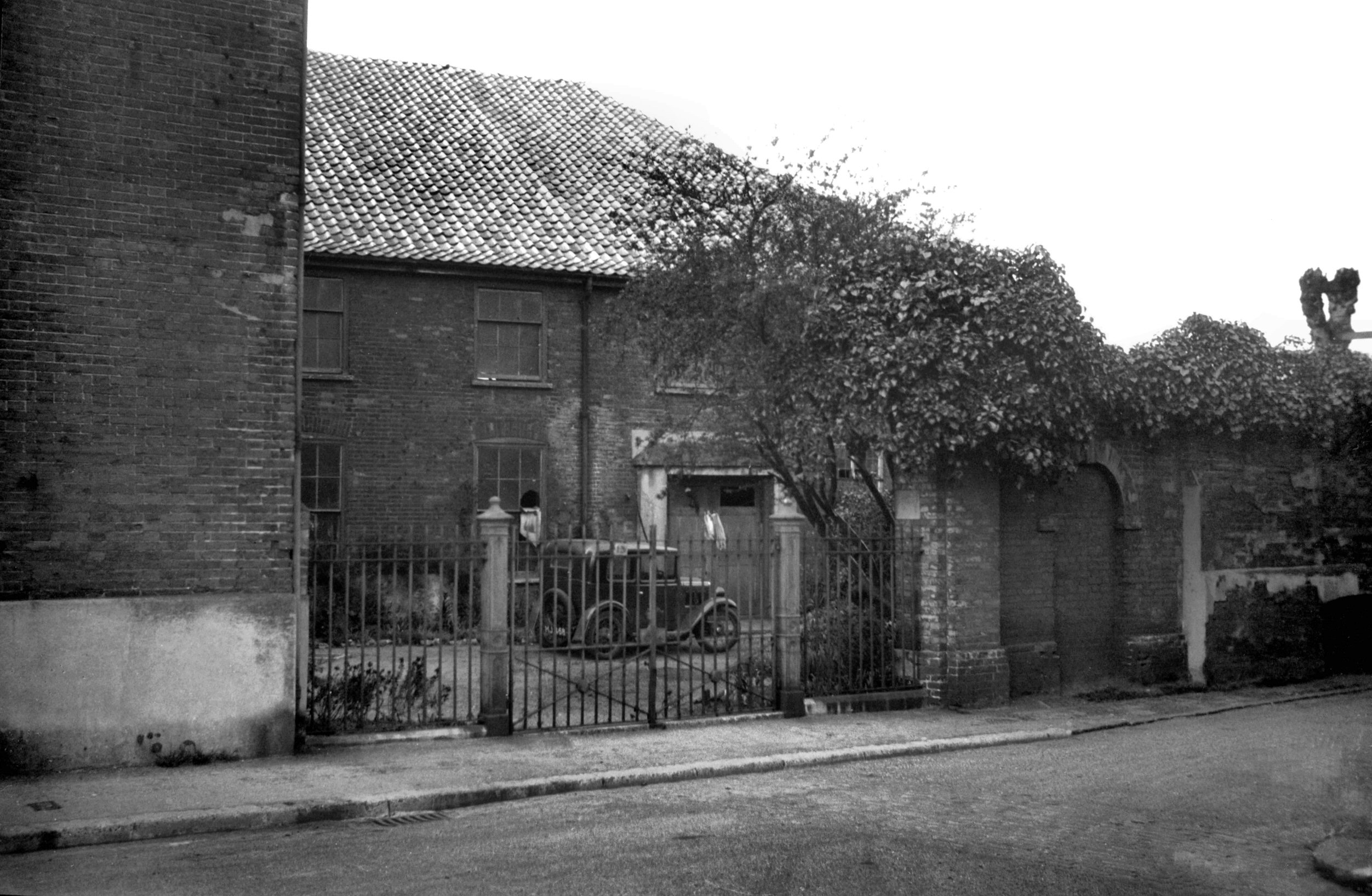
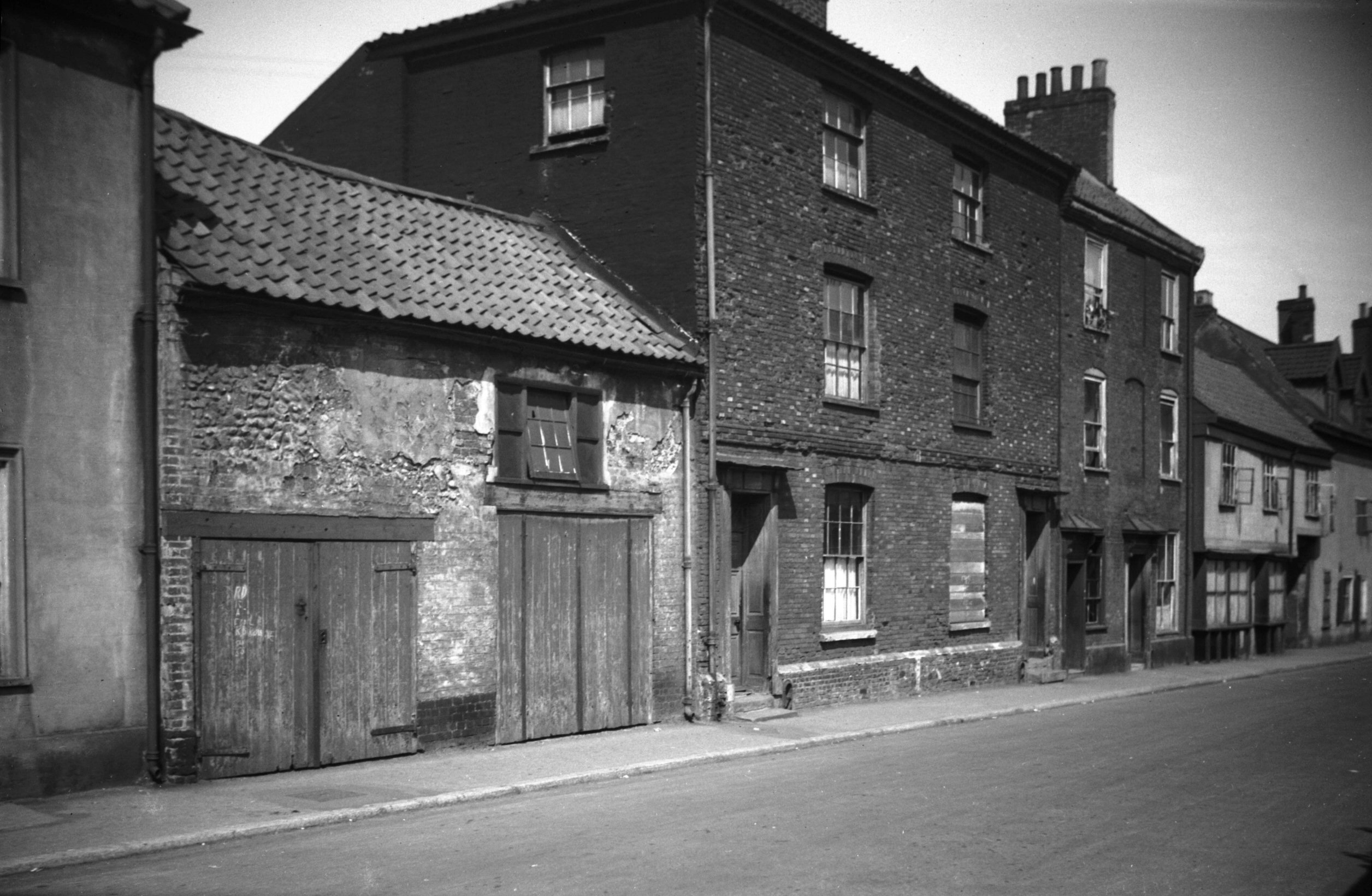
    Cow Yard, which has now been rebuilt behind that gate following the demolition of some older residential properties. George Plunkett has a photo of this from 1936.

    Something else that I’ve never noticed before, a plaque to the artist Henry Ninham who lived here.

    And here’s the house that Ninham lived in.

    An old stone sign embedded into the wall at Ninhams Court.

    Now renamed after the artist, this was formerly known as Master’s Court.

    And that put me back into Norwich city centre, having managed to see numerous pieces of history that I’ve paid no attention to before. It reaffirms my theory that there are always new things out there to discover, even in familiar areas, even if they are a little niche. The walk was about 5.5 miles and I spent a little longer in the cemetery than I had anticipated, but more on that in later posts…

  • Norwich – Rosary Cemetery (Isaac Brett & Lucy Brett)

    Norwich – Rosary Cemetery (Isaac Brett & Lucy Brett)

    Since I’ve been grounded again by the Government, I thought I’d meander around the Rosary Cemetery located near to me in Norwich, in an attempt to see what stories lie there. It might not be the most fascinating blog content, but it’ll keep me quiet for a few weeks….

    This isn’t entirely ideal in terms of reading the inscription on the grave, and I’m not going to fiddle about with shrubbery on a gravestone. I can just imagine half the stone will come off in my hand, probably with a gaggle of people happening to walk by when that’s happening. So, the easiest alternative is to hack around on findagrave, a web-site which has many names already listed.

    Although the details aren’t entirely accurate on findagrave (which is understandable – look at the state of that ivy….), it was enough to work out that this is the joint grave of Isaac Brett and Lucy Brett.

    Isaac Brett was born in Caston, a village located near to Attleborough, and he was baptised on 12 July 1798. He was the son of George Brett and Mary Brett, and he remained in the area as in the 1841 census he was living nearby with his wife at Gap Farm at Rockland St. Peter.

    His wife was Lucy Howell and he married at Caston church, the same place where he had been baptised, on 7 January 1828. Lucy had been born in Norwich in 1802 and had seemingly moved to be nearer to where her husband lived.

    At the 1851 census, Isaac and Lucy had moved and were living alone at Upper King Street in Norwich, with the enumerator noting that Isaac was a shoe maker and he employed six men. They were living at the same address at the 1861 census, this time living with their 11-year old grandson, John Page, who was already working as a banker’s clerk.

    Isaac died on 15 January 1863 at the age of 64, leaving effects valued at just under £450 (around £30,000 in today’s money) to his wife. At the 1871 census, Lucy was living with another one of her grandsons, George Page, who was aged 13. By 1881, Lucy had moved in with her grand-daughter, 33-year old Lucy Raven, who was living with her family near Mulbarton, having married Benjamin Raven who was 23 years older than her.

    Lucy was still living with her grand-daughter at the 1891 census, but they had now moved to Stratton St. Mary (as an aside, this, alongside Stratton St. Michael were merged to become Long Stratton) and Lucy died shortly after the census was taken, on 10 April 1891 at the age of 89.

    There’s not an amazing story here that I’ve yet found, just a family which seemed to stick together, but I’m intrigued as to the work that Isaac Brett did. He looks like he was a hard-working shoemaker, especially as he was employing several men, but I’ve yet to find out much more about him. Hopefully, I’ll return to this in the future…..

  • Norwich – Rosary Cemetery (Henry Brett)

    Norwich – Rosary Cemetery (Henry Brett)

    Since I’ve been grounded again by the Government, I thought I’d meander around the Rosary Cemetery located near to me in Norwich, in an attempt to see what stories lie there. It might not be the most fascinating blog content, but it’ll keep me quiet for a few weeks….

    henrybrett

    Unfortunately, there’s not much story to be told here. But, on the grounds that I might find something else in the future, or someone might tell me more in the years to come, this is what I know so far.

    Henry was baptised on 27 October 1797 in Swaffham, the son of William Brett and Elizabeth Brett.

    He was probably married (by probably, I mean I’m not sure it’s the right person, rather than this being some kind of half marriage) to Ann Reynolds in Plumstead by Holt church on 19 October 1819. If this is the correct couple, neither of them could read or write, which wasn’t uncommon, but suggests a background of limited money in the families.

    In the 1841 census, he’s listed as living on Mousehold Heath, along with his wife Ann, their daughter Elizabeth and two 15-year olds who I don’t know the link to, Ann Royall and Edward Fake (I think the transcriber might be wrong on that name, but I can’t read it either to improve on it).

    Henry passed away on 4 May 1844, at the age of 47 years old. The Norfolk Chronicle duly reported this, adding that he was a farmer in Thorpe Hamlet. The gravestone has been attacked by foliage or weeds over the decades, so the bottom half is too hard to read.

    So, annoyingly, that’s it for the moment, but I’m intrigued by who this farmer was on Mousehold Heath and where exactly he lived.