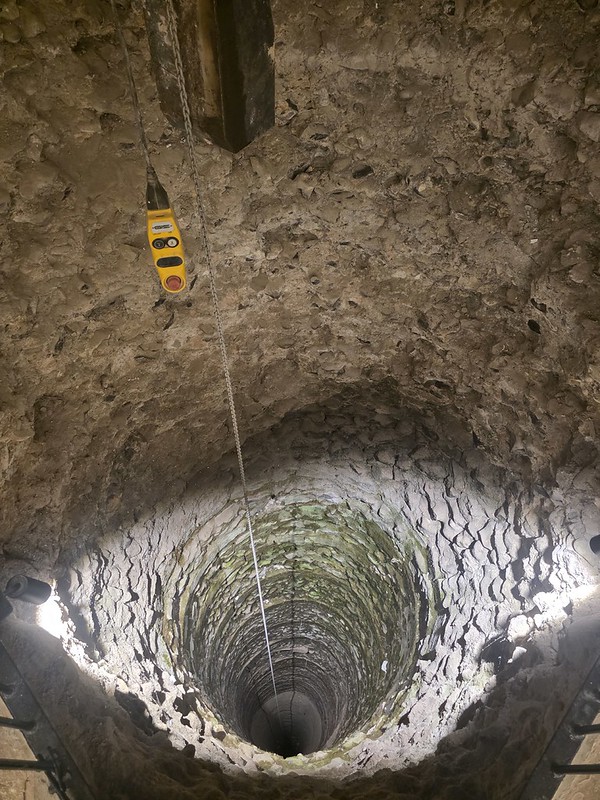
I’ve been to Norwich Castle Museum again and that means I need to correct something…. I mentioned in my post about the well in the castle that it’s now covered and kids (or anyone else for that matter) can’t throw coins down it.
It has transpired that it is still possible to access the well by going to a lower floor, although they don’t seem to encourage anyone to throw things in it, but I think that’s more than understandable. There are though some coins at the bottom, but I decided not to try and take a zoomed in photo of them for fear of dropping my phone. It’s a long way down there and I’m neither sure that my phone would survive the fall, nor that the museum staff would give its retrieval the same priority as I would.
The stonework in the well and there’s an automatic winch thing now, something the medieval workers would have likely quite enjoyed rather than doing all that winding by hand.
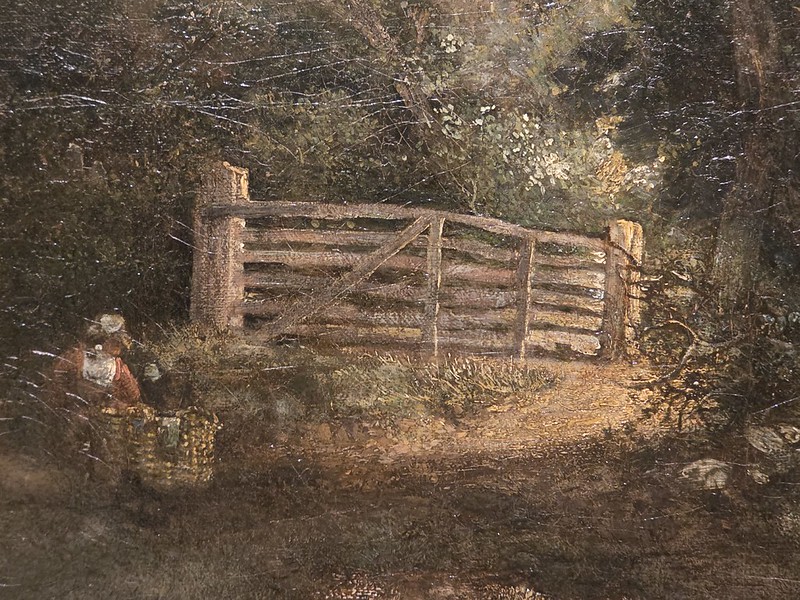
It’s a gate, but this is a rather lovely painting by John Crome (1768-1821) and the museum notes that it’s potentially the “quintessential Crome painting”, with a peaceful feel to the whole arrangement. It dates from around 1810 and it was donated by Russell James Colman (1861–1946) as part of his legacy to the museum. The artwork is known as either ‘The Gate’ or the ‘Norgate Crome’, but I prefer the former as I like simplistic.
As someone who likes walking, there’s a certain charm in paintings of gates, muddy paths, fences, stiles and clumps of trees. There’s a permanence to this, as although the scene could be anywhere, there’s a good chance that it looks pretty similar today. Well, unless Crome has selected a gate that’s now under a housing estate, but I think a more romantic frame of mind is probably useful here.
Artworks of nothing much at all can sometimes be really rather intriguing, the figure in the painting is almost irrelevant and the viewer (perhaps not the most appropriate word there) has no idea what is beyond that gate. But, travel is about never knowing what is around the next corner, so that fits in well.
One real advantage about the traditional elements of the collection at Norwich Castle Museum is that they’ve got an excellent depth of information on their website about the exhibits. All of the new exhibits in the Castle Keep are devoid of reference numbers, which makes matters much more complex in trying to find the item in the online collection. This is an x-ray of the artwork and although it might not tell me very much, I really quite like looking here at the nails at the edge of the painting. I should probably get out more….
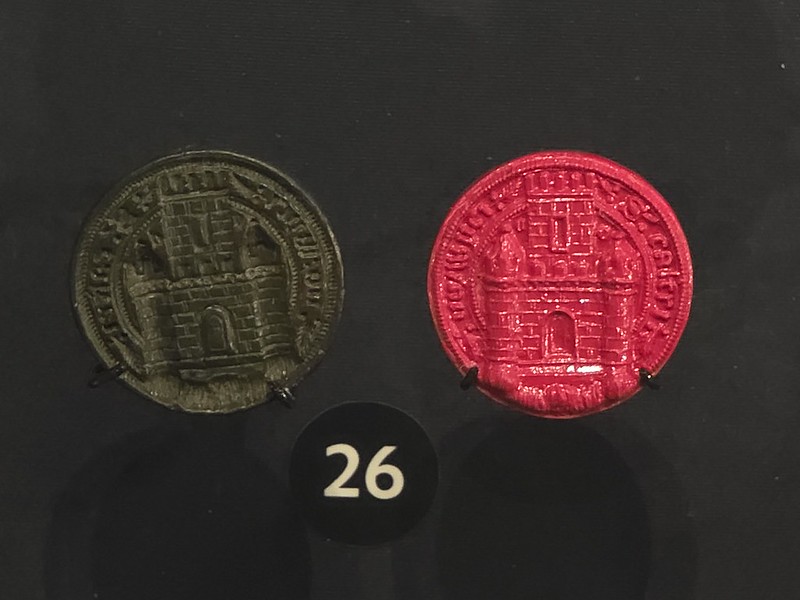
This might only be a very small exhibit, but it’s the seal from Norwich Castle itself. It’s dated from between 1400 and 1500 and was found in the village of Wereham in Norfolk, which is located near to Downham Market. It was discovered in 1952 and was transferred to the collections of Norfolk Museums Service.
Written on the seal is “S’CASTRI NORWYCI” which breaks down to:
S’ is an abbreviation for Sigillum, meaning “seal”
CASTRI means “of the castle”
NORWYCI / NORWICI means “of Norwich”
Quite what this was doing in a field in Wereham is a mystery, one which isn’t likely to ever be solved…. It’s a rather lovely piece of castle history though.
I think that this is really rather lovely, it’s an altarpiece that once stood at the east end of a church. The doors with the decorated wings are missing, but it has retained much of its colour although some of this appears to have been through restoration (not that I claim to know what I’m talking about, but it feels over-restored to me and a bit too new). The museum simply notes that this is from around 1450, it’s from South Germany and they don’t know what church it’s from.
Unfortunately, it’s not clear who owns this as it’s not listed in the collections of the British Museum or Norfolk Museums Service, but it’s probably the latter.
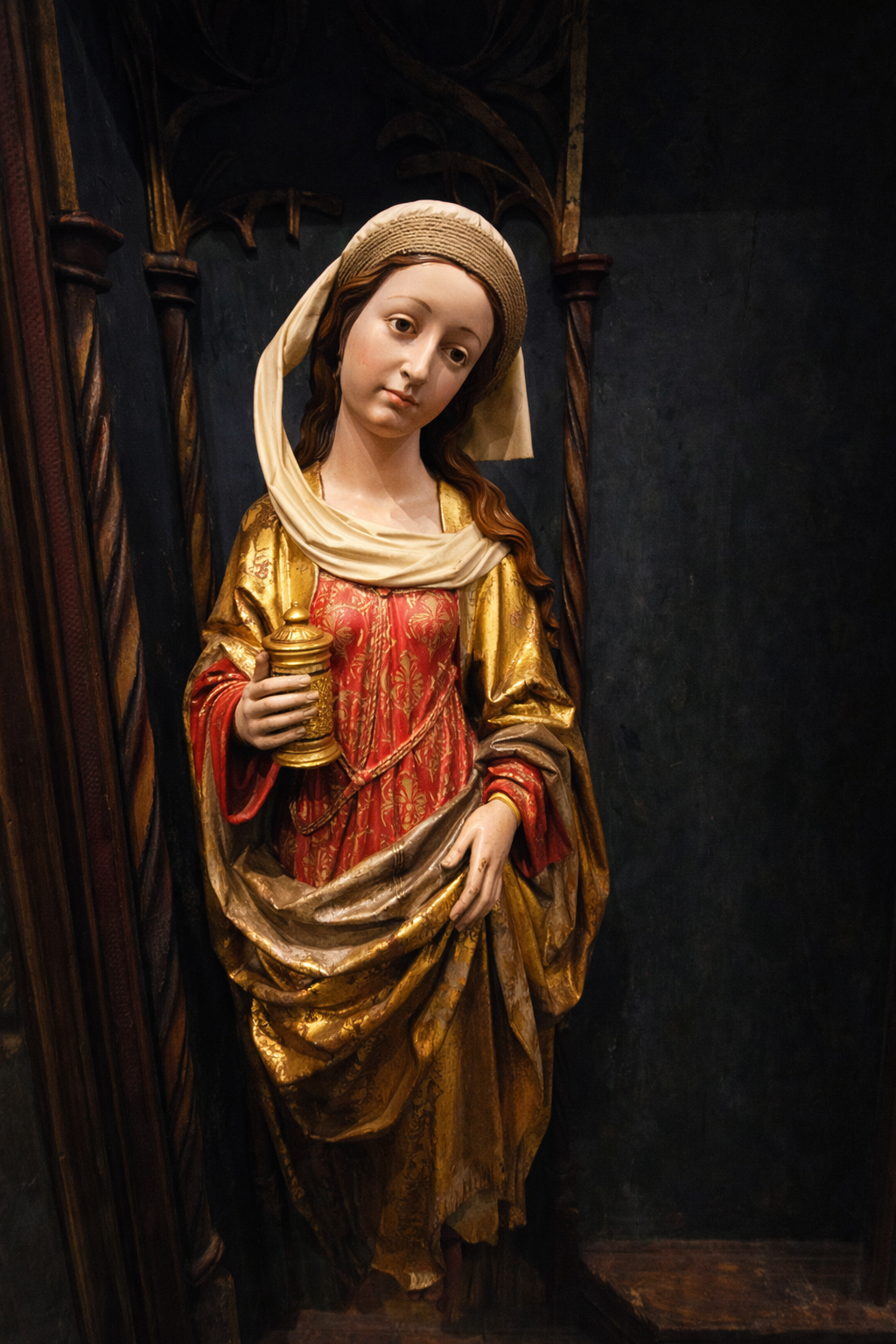
The museum doesn’t know who this is, other than it’s a female saint. I asked AI for ideas and it claims that this is St Mary Magdalene with “extreme confidence” which is rather strong. It also notes that it is likely to be from Germany and dates to around 1490, so it’s not much disagreeing with the museum on that.
Obviously, I asked AI what the statue would have once looked like. Yet again, I am surprised and delighted at this.
Not much doubt about the Virgin Mary, the central figure.
The museum notes that this is “probably St. Barbara”, and I’ve felt the need to ask AI and it agrees. I’m conscious that AI isn’t necessarily always accurate, but it generally ties into what knowledge is known, so I’m getting ever more confident.
As the sculpture looked a bit surprised, I asked AI to bring this one back to life as well, and it now looks more pious.
On this, I wanted to know whether this would have been in a German church or an English church. AI has given me a series of references to show that this was highly likely made in Germany, as many altarpieces were, and shipped to England. It is confident on this as apparently the three saints portrayed were the ones most commonly requested by the English market.
Even if AI is wrong on some details, I like the background knowledge that it gives me on nearly every exhibit. I do rather think that the museum could be doing a little more here, adding depth
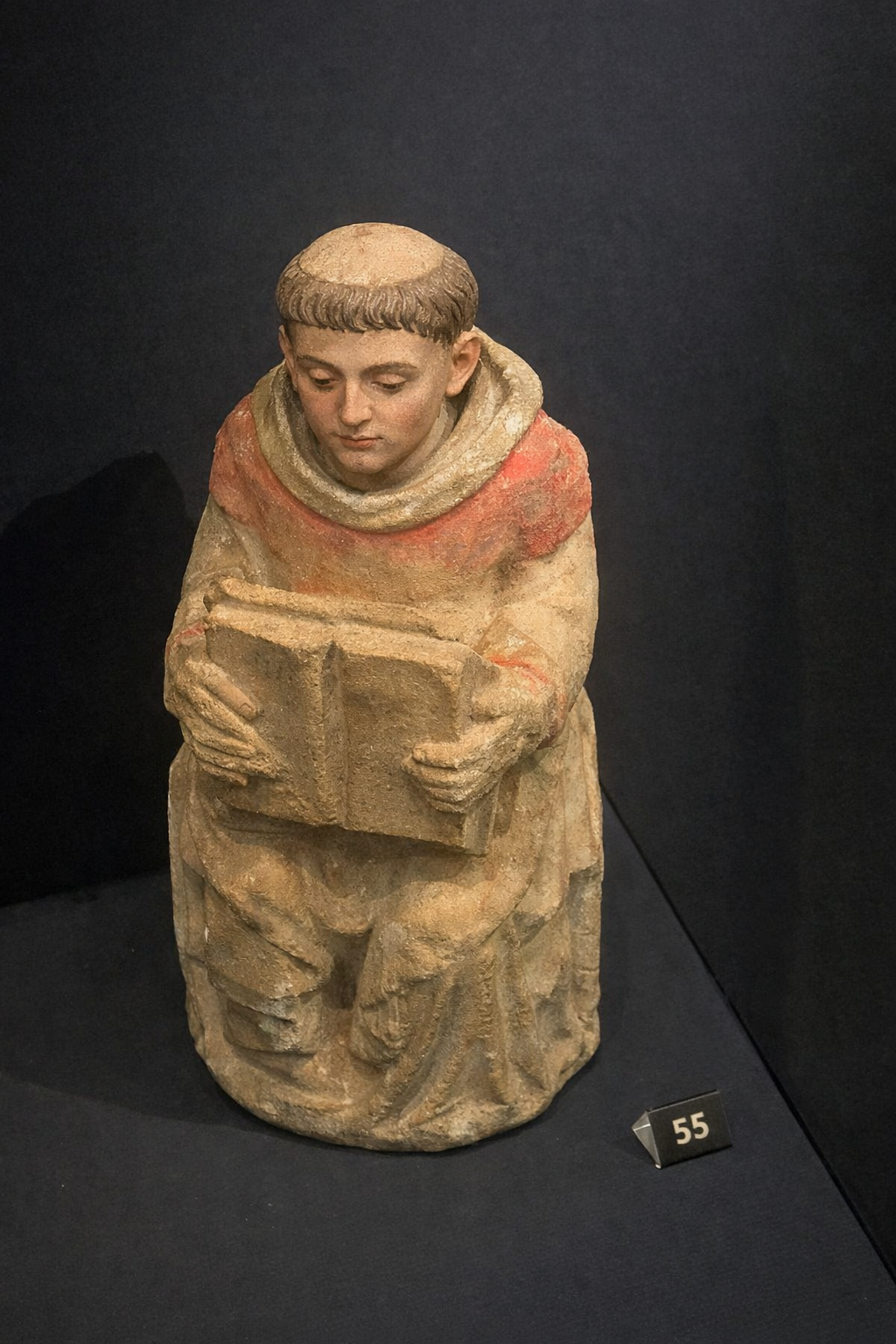
These are bits of the tomb belonging to Thomas Howard, Duke of Norfolk (1425-1485), who had a rather decadent set-up at Thetford Priory. Unfortunately for him, the monastery was dissolved in 1540 and despite the pleadings of numerous nobles, the church and tomb were destroyed in 1547. I’ve been to the remains of Thetford Priory a few times, but it seems that I have failed to take a photo of where the tomb once stood. I’ll pop back at some point….
Some praise to AI here, I asked it to bring the statue back to life with the angel that might once have been here. AI thinks that it was a monk and not an angel, and I think it might well be right. Once again, I rather like what AI has done here.
The grieving family, who remained Catholic, decided to create a new tomb at St Mary-at-Lambeth, but this was recklessly destroyed by the Victorians when they decided to rebuild the church. In turn, that church was nearly demolished in the 1970s when it became redundant, but fortunately, that at least has been saved.
I understand that these bits of the tomb were recovered in the 1930s, although I can’t find the items in the collections of either Norfolk Museum Service or the British Museum to be able to discover more about that.
There was certainly some decorative effort made with this tomb, which must have been of a substantial size. I really rather like that these bits have survived as if the story had been different and the church not demolished, then it’s likely that the tomb would still be there today. I wonder what the work crew tasked with smashing up the tomb would have thought…..
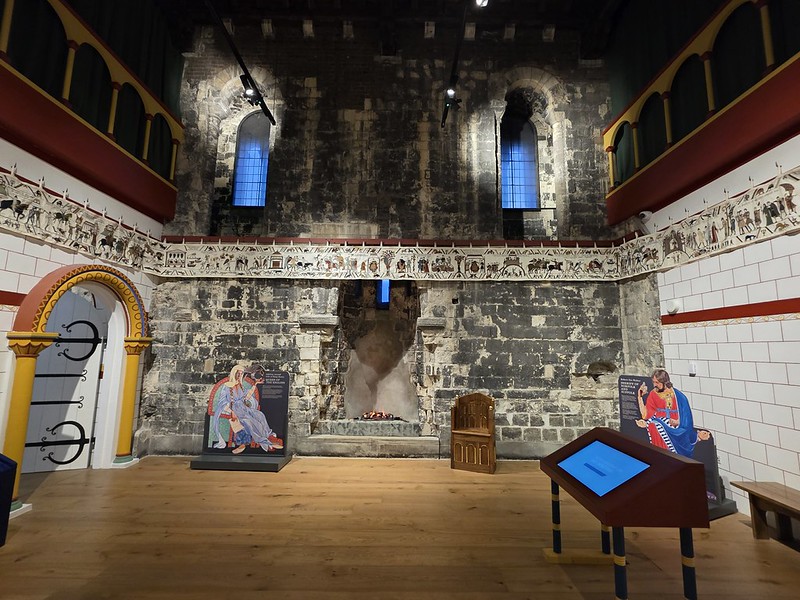
No, this isn’t a Travelodge with the sofa removed which gives it large amounts of floor space with a bed shoved in a middle, this is the third room that has been recreated at Norwich Castle, the other two being the Great Hall and the Chapel.
I’ve visited what Historic Royal Palaces say about this and they write about rugs on the floor, large wooden pieces of furniture placed around the room, probably a table, a roaring fire (I do accept that Norwich Castle can’t do this) and maybe even more decorative and colourful (although Norwich Castle has done this to some degree) design.
Far me it for me to moan, but all told, I think this is a generally a slightly shoddy arrangement where the museum hasn’t provided many information boards at the site, or details online (unless you hunt back through a really rather excellent site transformation blog they wrote several years ago whilst the work was ongoing and which isn’t linked from their website anywhere that I can find), about how they’ve decorated these rooms.
The craftspeople they’ve had do work on the bed, the doors and numerous other elements have all been done to a very high standard, but there’s little mention of the work that’s gone into this so that visitors can find out more or gain an understanding into the quite expensive projects. As an example, there have been thousands of hours of work on the tapestry by volunteers, but you wouldn’t know that from the museum’s website, although they have referenced it on their blog.
I rather get the impression that the museum ran out of time (and probably money and enthusiasm), so they’ve done their best in the time that they’ve had available. Anyway, I’m pleased that they’ve created the The Gallery of Medieval Life downstairs, but I was a little underwhelmed with these three rooms as I like information and attention to detail in explaining the history. Hopefully, as they have all this information, it’ll be added to their website in due course.
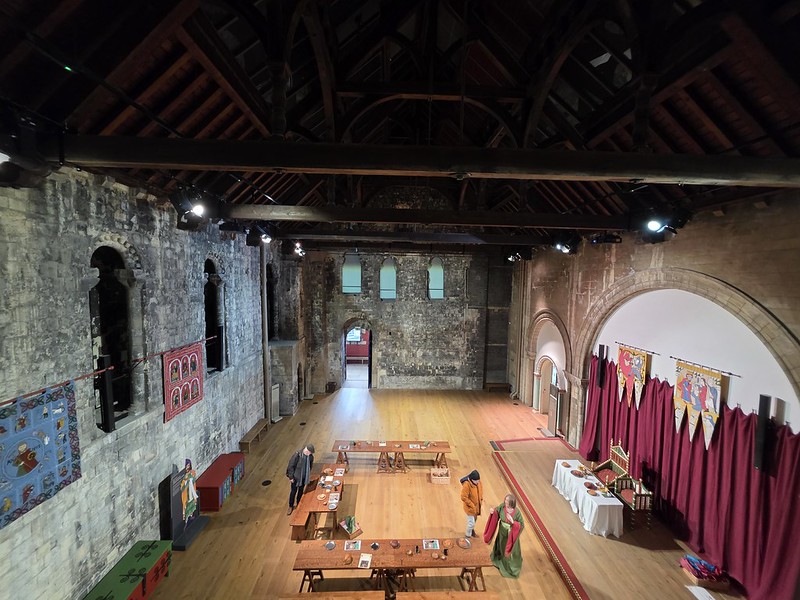
This is the recreated Great Hall at Norwich Castle Museum and they’re very proud of the work that’s taken place here. Personally, I’m not convinced, this feels like a school classroom and doesn’t show to me how majestic a room of this size and stature would have been. I’m not sure that the wooden floorboards do much here, they don’t give me vibes of castle.
Looking down the mezzanine level gives an impression look at the work that has taken place. I’m struggling to buy into this, there’s the rather beautiful stonework of the castle keep on the left and then some really rather basic looking interior decor. It’s meant to be set up for a large feast, but it more looks to me like wagamama after they’ve cleared 90% of the seating out. But, each to their own, others might be inspired by the photos.
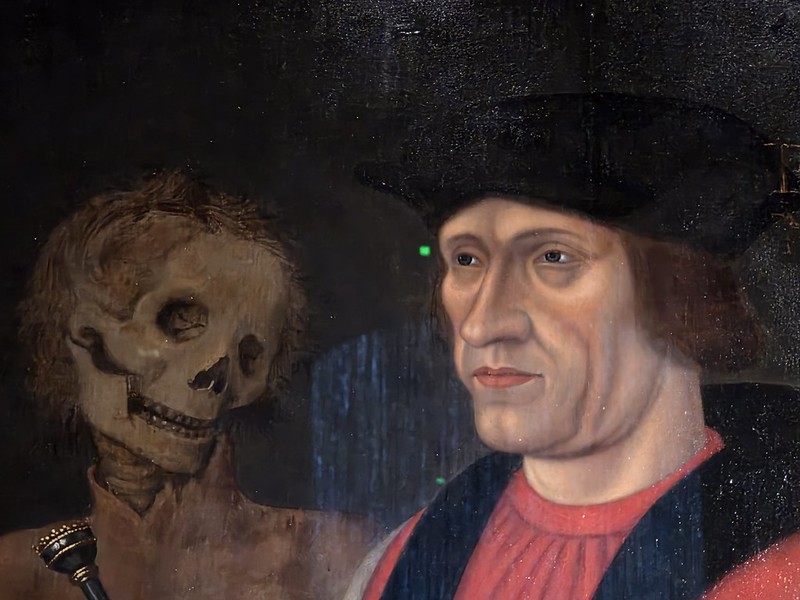
I think that being the Mayor of Norwich, and not just once but twice, in the early sixteenth century would have certainly been quite an intriguing role. Robert Jannys (1480-1530) was a grocer who evidently did quite well, he got himself involved in local politics and then reached the dizzy heights of being Sheriff as well as the Mayor. He made a lot of money, a great chunk of which he spent on supporting local churches, particularly St George Colegate (where his rather decadent tomb still stands), although I wonder how much of that was in hope that he would have a prosperous afterlife.
This cheery little corpse dressed in rags in the painting is a reminder of mortality, that perhaps even the richest of people at that time could become very poor overnight. The artist isn’t known, but it was painted between 1600 and 1650 and placed in the Guildhall, another institution to which Jannys had donated a significant amount. There’s an inscription on the painting which reads “For all welth, worship and prosperite fierce death.”
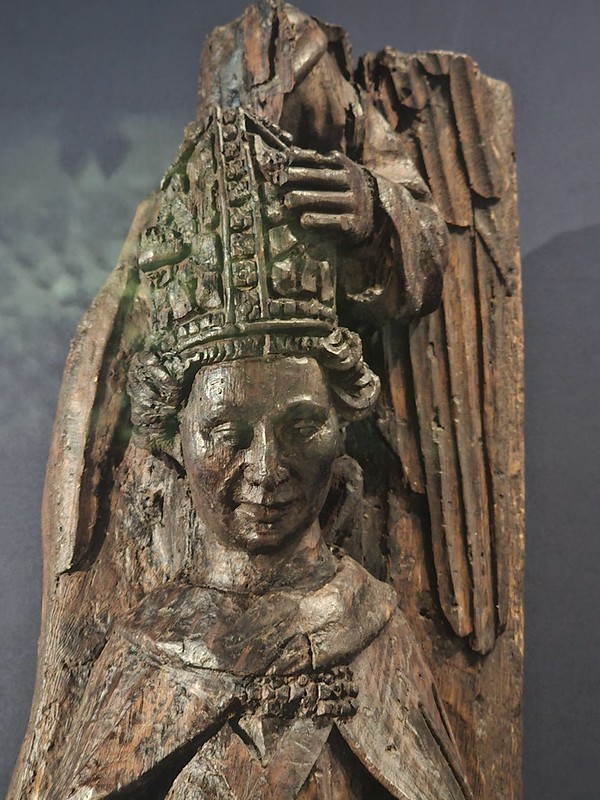
I’m easily intrigued and I really rather liked this wooden statue which is on display at the Gallery of Medieval Life at Norwich Castle Museum. The museum has focused on this as they wanted to show the mitre, the bishop’s headgear as they refer to it, something which had been a thing since around 1000. Interestingly, the mitre went away in the Church of England for several centuries in this country following the Reformation, it has only come back in the last 150 years.
This rather decadent piece of carving is from St. Peter’s Church in Upwell and was added to the collections of Norfolk Museum Service in 1891. Quite what happened then I have no idea, but I assume that there was some Victorian restoration at the church. It’s a little bit too big to be a pew end carving, but I’m not sure where it was located in the church.
It’s a defaced statue. But this is exciting, it was created in 1460s but was destroyed in the Reformation when the face was smashed up. It’s difficult to understate how evil the Catholic church had become, corrupt to the core and preying on the poorest in society, but it must have been devastating to communities to see their religious icons destroyed by the mob.
This is a time where I can mention the idiot that was Henry Brooke, Baron Brooke of Cumnor, who recommended in his report that several medieval churches in Norwich should be demolished. Fortunately, his report was so idiotic and simplistic that it galvanised a community against him, and the decision was not to demolish several city centre churches. That’s certainly a reputation to leave, that your work was so incompetent that upset enough people to change the situation and save these churches, with the City Corporation being forward thinking and brave in their offer to take on the leases.
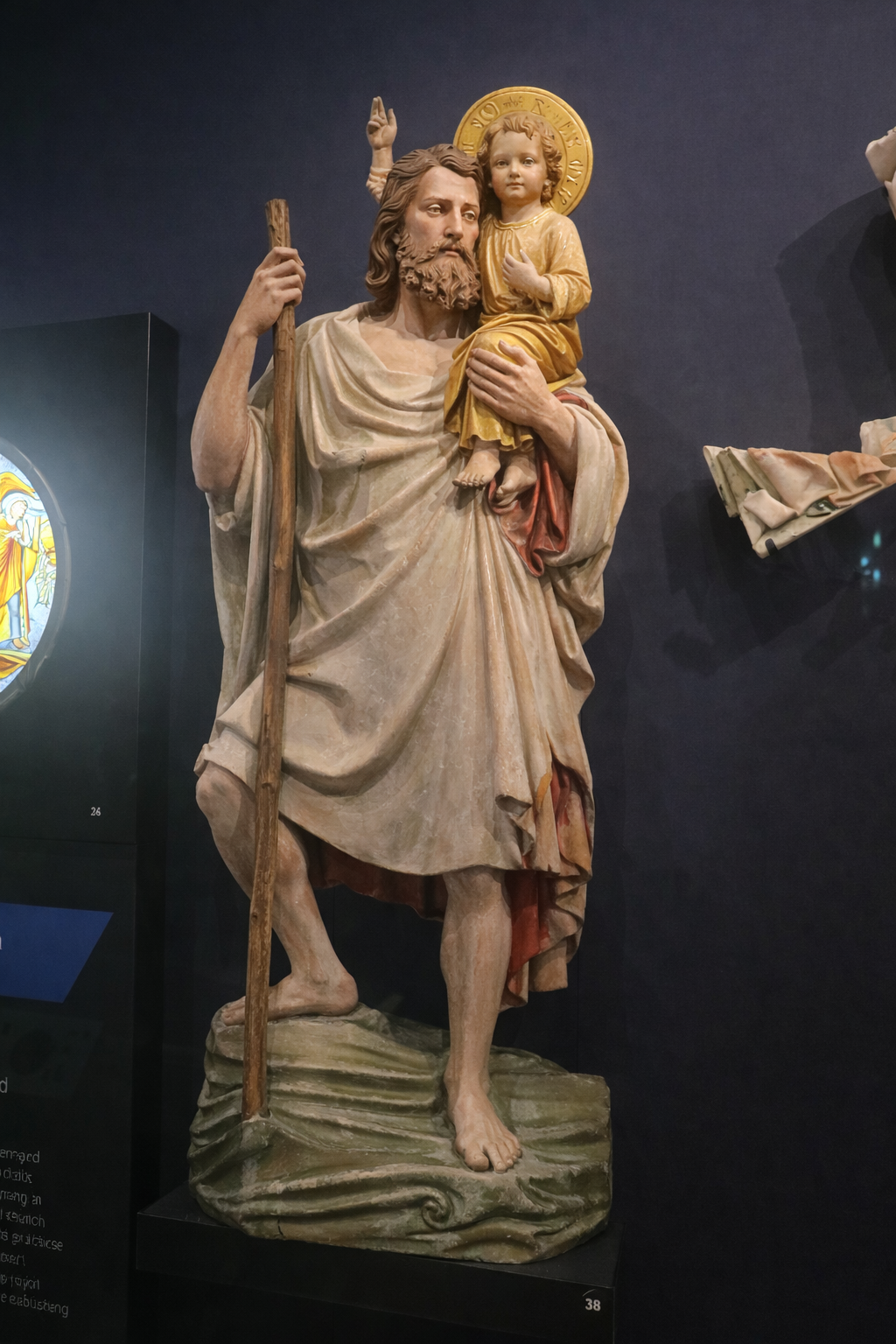
One of the churches that he wanted to demolish was St. Laurence’s Church on St. Benedict’s Street, which is also where this defaced statue was found discarded in the porch. There’s enough of it remaining for it to be identified as a sculpture of St. Christopher carrying Jesus Christ across a river.
Here’s AI’s attempt at completing the statue once again. It’s quite an impressive restoration to be fair.