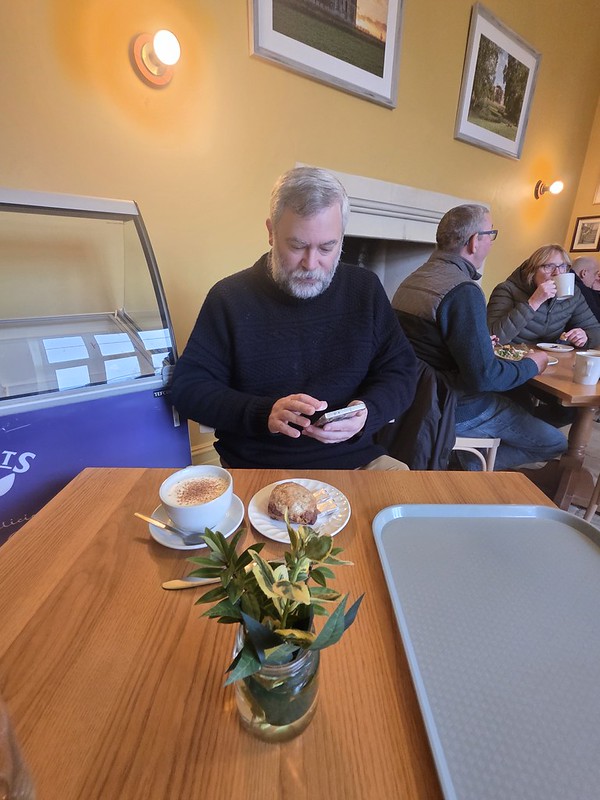
And the centrepiece of the National Trust’s focus at this historic site, their cafe which was full of decadently priced things to appeal to decadent people. Namely Richard in our case. There was a fine selection of scones and a ridiculously priced sausage roll at £6.75.
To calm my nerves at the high pricing, Richard treated me to a plum & ginger cider.
Richard quickly transferring some money to his current account to fund his purchases. He was delighted by his scone I’m pleased to say, he went for the monthly special of the cheese and marmite one.
Anyway, as cafes go it was certainly quite extensive as well as being the busiest part of the site. It did seem to be the case that some members had driven out to the venue just so that they could visit the cafe, which I suppose is why there’s such a focus on it…..
This is the manor house at Lyveden, a site which is perhaps best known for the incomplete Lyveden New Bield. The National Trust have owned the latter for over a century, but in 2013, they also acquired this manor house. Not much is known about the manor house that Sir Thomas Tresham lived in, this one dates to after 1615 and after his death.
In my radical view, that no-one will care about as I complain about many things, I think that the National Trust has rather botched this. They’ve acquired, at significant expense, this entire property and they’ve done pretty much nothing of note to it that explains the history of the site.
They’ve got one room painted in bright colours which is a very potted history of the estate, but it seems that they’ve primarily taken the opportunity to build themselves a substantial cafe, numerous offices for their own usage and some empty rooms. There is so much potential for more imagery, deeper histories, maps and just information about the site.
I got free access as I’m a National Trust member, but this site costs around £13 per person to get in and that gives access to the exterior only of the unfinished building, along with entry into this former manor house. If a family came here because a child was interested to see the former manor house, I’d suspect they might feel conned by the cost of entry. It’s £33 for a family and although I know the National Trust price entry highly to get people to join, this feels like they’ve taking advantage at this point.
“Very little to see for the money, only 3 rooms open in the manor house, one used to sell books, one for the cafe and the other painted a garish magenta colour had a few info boards on”
I don’t disagree with this review….
What appears to have actually happened is that the National Trust has acquired this property to operate as a cafe. Lovely as that is, it would be nice if they gave some sort of priority to the telling of history and explaining what is happening at the site.
Absolutely interesting, but does this have to be shoved at the bottom of the stairs?
Anyway, in fairness, I’m not entirely grumpy and I liked this exhibit. Although I wasn’t overwhelmed with things to look at in the house, other than the fine selection of scones.
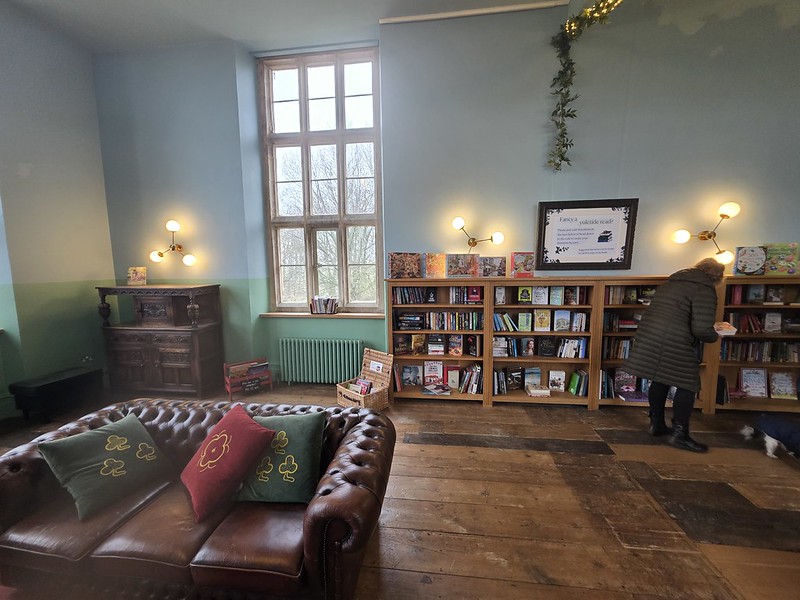
They had some books for sale in a room that I felt was really being used as an overflow area for the cafe.
No expense has been spared with the television that they’ve put in the fireplace.
Anyway, the next post is about the cafe, as I think that’s what the National Trust would like visitors to focus on.
My friend Richard loves scones and I love historic properties, so that meant we decided to go to a National Trust property for the day in mid-January. We opted for Lyveden New Bield, which is located near to Oundle, so roughly it’s somewhere inbetween Corby and Peterborough.
Lyveden New Bield was conceived in the late sixteenth century by Sir Thomas Tresham, a wealthy Northamptonshire landowner and devout Catholic. Tresham designed the building during a period of intense religious persecution under Queen Elizabeth I, intending for it to serve as a secret oratory and a powerful symbolic expression of his faith. Tresham’s vision was partly for a nice summer house when not as his main manor house just down the road, but it was also for a physical manifestation of his religious devotion at a time when taking part in Catholic services was a criminal act punishable by imprisonment or even death.
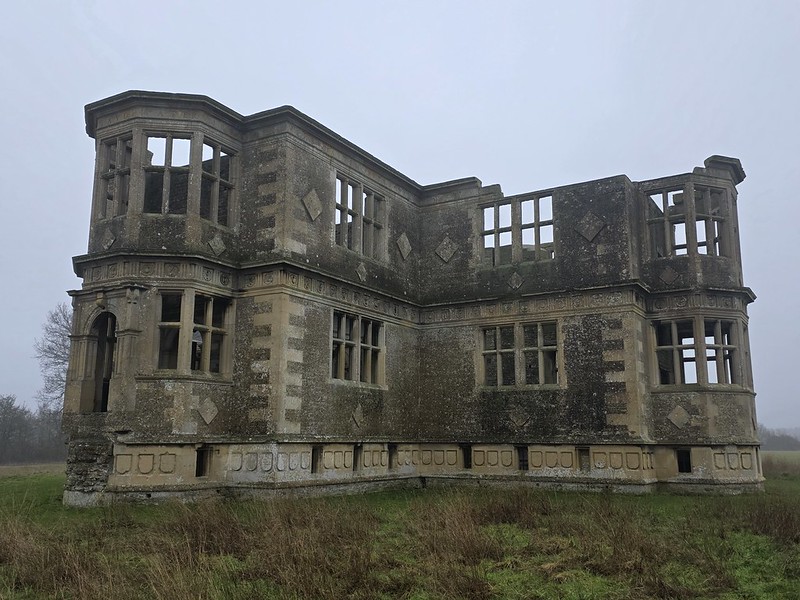
Full credit to the builders of this structure, it’s still in really quite decent condition centuries on, despite never having had a roof. Unfortunately, there’s no public access to the interior now, the National Trust have decided that it’s too risky.
The planned main entrance to the house. Construction on the New Bield began around 1595, but the project was never brought to completion as the work came to an abrupt halt following Sir Thomas Tresham’s death in September 1605.
Just months after Thomas’s death, his son and heir, Francis Tresham, became embroiled in the Gunpowder Plot, the failed Catholic conspiracy to blow up King James I and the Houses of Parliament. Francis died in the Tower of London on 23 December 1605, just before he could be executed, and the family’s estates were subsequently heavily fined or confiscated. Deprived of the funds and the leadership necessary to finish the intricate stonework and roofing, the house was left as an empty shell, preserved exactly as the builders had left it over four hundred years ago.
The site remained a ruin for centuries, eventually passing into the care of the National Trust in 1922. The survival is something of some note as it would have been easy for the building to be demolished at any time, or for it to be repurposed into a cattle shed or something.
I had to take this photo through the hole in the locked gate, but I did want to go and explore inside…… It’s not clear if the National Trust will ever allow entry again, they say that the closure is temporary but they don’t seem to be rushing to resolve the problems of what they claim is falling masonry.
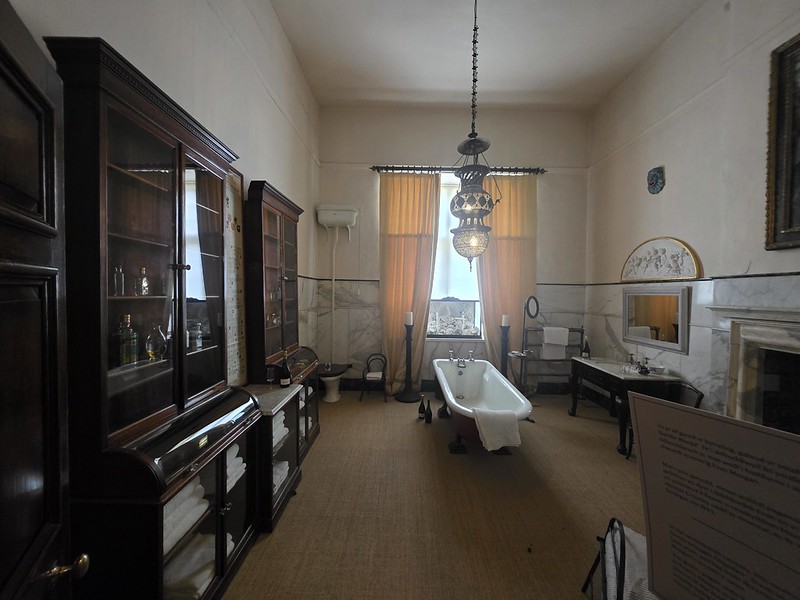
When Tredegar House was originally built this was a room known as the Green Wrought Chamber. The Victorians turned it into a bathroom and that’s how it’s displayed today.
Visible on the right hand side on the wall, above the mirror, is a pagan style head and that’s a nod towards what the National Trust call “the “Evan Morgan’s eccentric tastes” which I assume to mean they find him a bit odd.
Evan Morgan (1893-1949) was very interested in the supernatural and Aleister Crowley, who was a character however you look at it, stayed at the house on numerous occasions. Evan, who didn’t have children and is thought to have been gay (despite two marriages) left Tredegar to his uncle, Frederick Morgan. Evan had his bedroom in his adjoining room and there are numerous reports that he would meet his guests whilst lying in the bath. How the upper classes live….
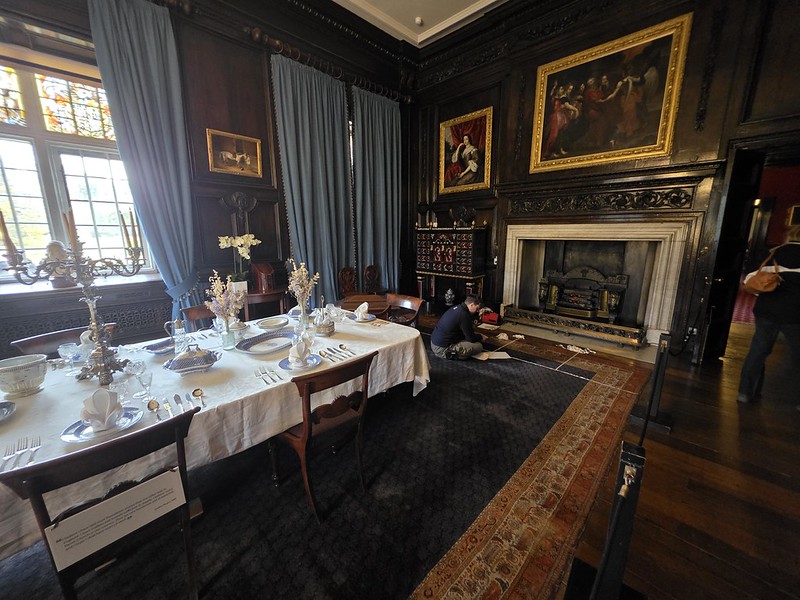
This is the rather grand dining room, previously known as the Best Parlour, the Great Parlour and the New Parlour. It was where the Morgan family would have dined with all sort of decadent foods such as pheasants, lamb and chicken bakes.
There was a man from the National Trust sitting on the floor and I didn’t like to ask what he was doing, but he seemed to be enjoying it. During the period that this building was in use as a Catholic girls’ school, this room was used as their chapel.
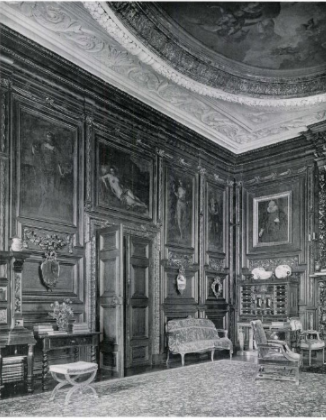
Here’s a photo of that fireplace from 1908.
I wonder if civil engineers could do this to ceilings, as it gives me a design idea. This was installed here in the 1860s, replacing an earlier one that was likely either not decadent enough or which was falling down.
A serving hatch in the room which was installed here during the Victorian period and which the note mentions is now a little rickety (they used a different word, but I think that’s what they meant). Apparently this room has apparently been used in Dr Who and Torchwood, amongst other TV programmes.
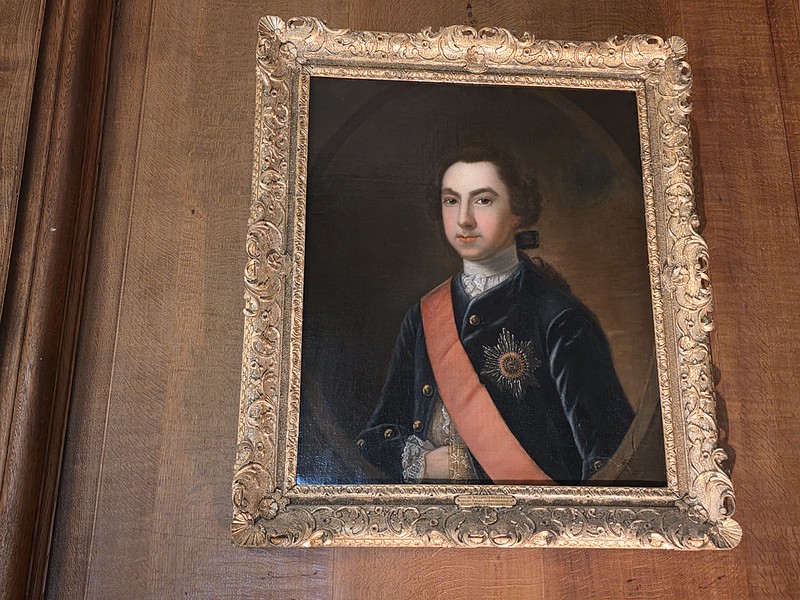
This portrait is of William Morgan the elder (1700-1731), the eldest son of John Morgan who was a Welsh politician of some note and of considerable influence. John also owned Tredegar House and passed it down to William in 1721 when he died.
William served as the Whig MP for Brecon and later for Monmouthshire, being returned for both in 1722, but he chose Monmouthshire. There was nearly always a Morgan as the MP for this constituency from the 1650s until the constituency was abolished in the 1880s, although one of the successor seats of South Monmouthshire was represented by a Morgan until 1906.
William married Rachel Cavendish, a daughter of the Duke of Devonshire, so that was handy at keeping power in the family. William was also one of the wealthy and enthusiastic Government supporters who was created a Knight of the Bath when that order was revived in 1725 and he was wearing his sash in the painting. William died young, although I’m not entirely sure what the cause of his death was as it doesn’t appear to have been recorded, but the estate was left to his son William Morgan the younger (1725-1763).
It’s not known who the painter was, but the National Trust note that on the artwork there is:
“Painted lower frame: Sir William Morgan, K B B.1700 D.1731 married Rachel, eldest daughter of William, 2nd Duke of Devonshire, KG
Written paper on crosspiece of stretcher frame: Sir William Morgan, Knight of the Bath, eldest son of John Morgan, esqr. of Tredegar. Belonged to Ruperra, 1783″
It doesn’t take much walking around Tredegar House to realise the power and influence of the Morgans on local and national politics, they had some considerable wealth going on here.
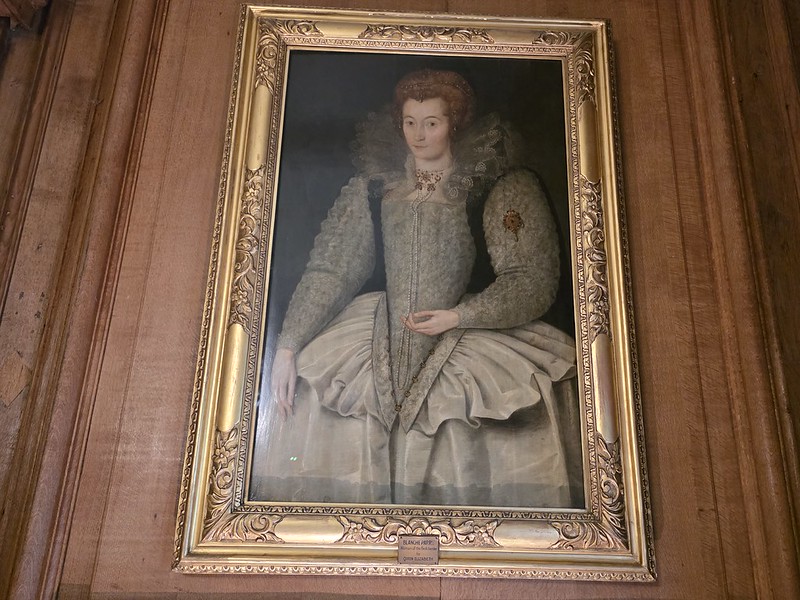
This painting at Tredegar House is of Blanche Parry (1508-1590) and is still owned by Newport Museums and Galleries. The fashion is very similar to that of Queen Elizabeth I, but Blanche was a Woman of the Bedchamber to her, so that is perhaps not an entire surprise. I suspect that this role, which was nearly always held by aristocrats and was more about travelling with the Queen and offering social support, was likely rather an interesting one and it came with some significant power. Parry was an aide to the Queen for over fifty years, so she must have picked up some considerable gossip during that period.
It might have been painted by Marcus Gheeraerts the Younger (1561-1632) who was perhaps best known for the Ditchley Portrait of Queen Elizabeth. The information about the painting also notes that the frame is from the eighteenth century, so it is later than the artwork itself. The realistic and grand artwork is also very much a statement of power and influence, no doubt a source of some pride to her family.
Blanche wasn’t directly linked to Tredegar House, but she was connected to the Welsh Marches, so perhaps there was some family history interlinked there. Or it might be that Newport Museums and Galleries acquired this artwork and thought that Tredegar House was the best place to just pop it.
This is quite a decadent room, some suggest that it’s the finest in the house. It was designed to be one of the state rooms, primarily where guests could relax at the end of the evening. The Morgans fancied some European influences in their grand room and it’s decorated with pine panels designed to look like walnut.
Here’s what the room looked like in 1908. During the Newport Council period, they plonked a bed in the middle of the floor so that people could lie down and look at the ceiling, but the National Trust have gone for a more tried and trusted method of using an angled mirror. They also did well to ensure that this room was kept well maintained when it was a school, although the council did refresh all the gilt decoration during their ownership.
Those twisted columns are designed to look like marble, but they’re actually made of wood. This was all arranged by William Morgan who managed to complete pretty much all of the decoration in the house without needing later generations to complete the work.
Our visit on the way back from Cardiff was to Tredegar House, a National Trust property located near to Newport. The current property dates to the 1670s, although there are some Tudor bits still standing, paid for by the wealthy Morgan family. The Morgan family began as landowners and managed to also benefit from the industrial revolution and got themselves involved in politics as well.
The property ceased to be used as a family mansion in the early 1950s, when it became a Catholic girls school. A new school was built in the 1970s, so Newport Council ended up buying it, hence the reference to the most expensive council house in Britain. By 2012, this house was a little bit of a faff for the council, so a decision was made to lease the property to the National Trust.
I thought that the layout was a bit bodged (by that I mean that we went the wrong way) and so we missed some of the route, but here’s the orangery.
These might look like rickety pipes, but they’re the remains of hothouses which once stood here.
A tree. This isn’t a blog about trees though, so I’ll limited myself to that description.
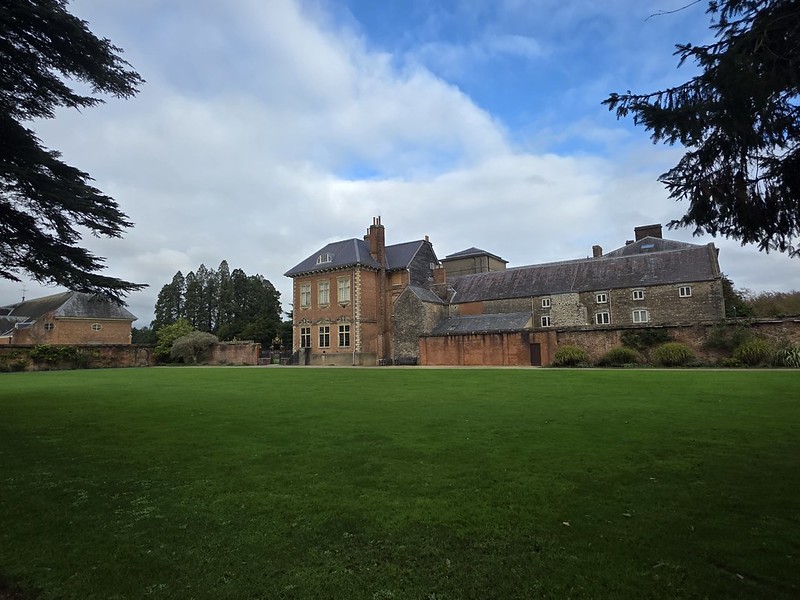
This is the side of the house, and that large section to the right is the former Tudor house owned by John Morgan that never quite got demolished.
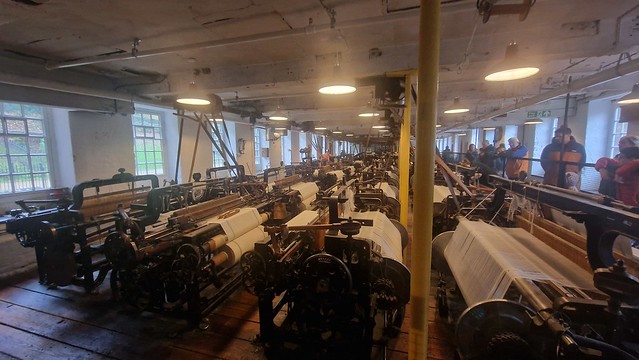
I’ll have to upload these photos as a job lot as I can’t really add a great deal of context to them (it might surprise my two loyal blog readers, but my knowledge of industrial equipment isn’t perfect to say the least), but they were what turned the cotton into clothing and other items at the mill.
The volunteers turned a lot of these machines on and they’re not the quietest things. I can only begin to imagine what the noise must have been like when all of the machines were running at full capacity. It’s no surprise that many people working here lost their hearing. Some of the machinery isn’t actually from the mill, but has been brought here to show the sort of industrial equipment that was here.
Some videos of the equipment (and Richard).
An apprentice’s indenture.
A wage cup from the mill, this is how everyone received their pay.
The toilet facilities at the mill for the workers.
The main waterwheel here is enormous, of a quite breathtaking size, but it was hard to get a photo of it to show just how substantial it was. This is the original wheel pit when they had a smaller waterwheel in operation.
I did manage to get a video of the waterwheel though from the side.
Liam likes engineering projects.
In April 1847, the original 1818 shaft was found to be cracked and so it was replaced with this new iron shaft. It was repaired in 1873 and taken out of usage in 1904.
Richard then bought a load of fabrics from the shop, although Liam and I resisted such temptations.
And with that, we all had to think of getting home. Richard went off in one direction, Ross and Liam in another, but not before they dropped me off at Manchester Airport’s free drop-off car park. For the observant, this is where my little series of posts about Berlin started….. Anyway, this was a quite marvellous weekend and excellent company, I’m looking forwards to the 2025 expedition which I think is to Cardiff.