Tag: National Museum in Warsaw

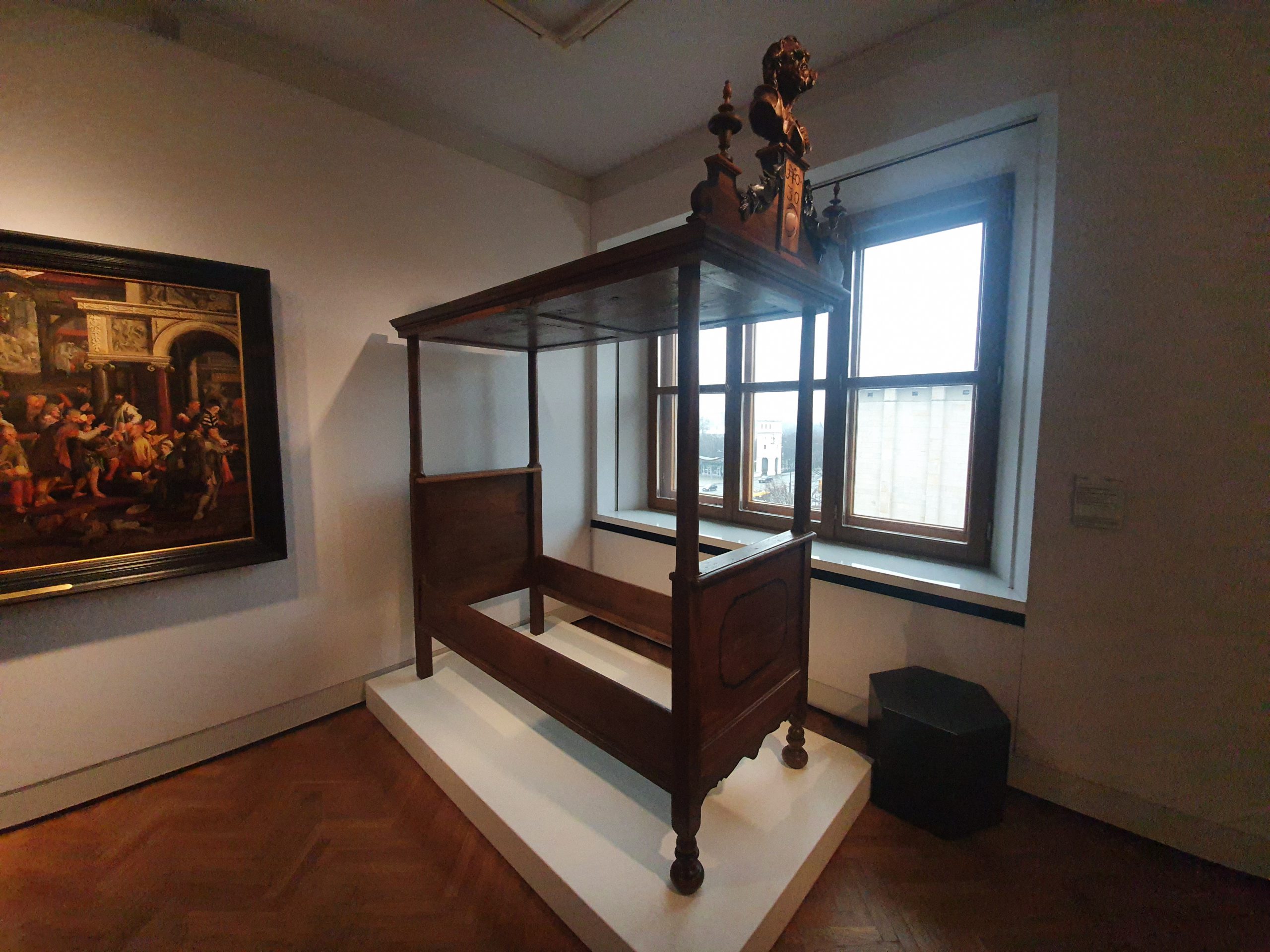
  • Warsaw – National Museum in Warsaw (Bed from Saint John of God Hospital)

    Warsaw – National Museum in Warsaw (Bed from Saint John of God Hospital)

    Fortunately, this isn’t the start of one of my little hotel reviews (I would be annoyed if that was the bed), but from when Richard and I meandered along to the National Museum in Warsaw a few weeks ago. I admit that a photo of a bed might not appear to be riveting blog content, but this oak and birch construction has some charm to it I think. It’s from the Saint John of God Hospital in Warsaw and it dates to between 1757 and 1760. It was donated to the museum in 1931 by the hospital itself, when I assume that it ceased to be needed.

    How on earth this bed survived is a mystery to me, given that nearly everything else in Warsaw was destroyed during the Second World War. And there were likely many more items in the collection that the museum would have focused on saving rather than traipsing a bed around the place during the traumatic war years. I’m going with the answer, as I feel I need a supposition here, that they moved it to the cellars of the museum where it avoided damage and didn’t attract the interest of any Nazi plunderers.

    Back to the hospital itself though, which was first built in 1728 next to the church of Saint John on Bonifraterska Street (which is still named after the Brothers Hospitallers of St. John of God) in Warsaw. It had eight beds, but it was clear that the church could help more patients, so they constructed a new building in 1760 which would support 34 patients. And that’s why they know when this bed was made, as it was made specifically for the new hospital building, all funded by the wealthy August Aleksander Czartoryski.

    The church today, courtesy of Google Street View.

    Like most places in Warsaw, the hospital and church buildings were badly damaged during the Second World War, not least because they were used by the Home Army in the Warsaw Uprising of 1944 when they were fighting back against the German occupiers. It was decided that the hospital wouldn’t be reconstructed following the end of the conflict, although the church was rebuilt.

    And I think there’s some magic here, that a bed constructed for patients in 1760 has managed to survive and is now tucked away in a corner of the country’s national museum. Although, and not wanting to be negative about the arrangements, it does look like quite a small bed which might not have entirely suited any tall patients. It is though perhaps one of the very few objects that remain of a hospital that helped so many people given that even the building itself has now gone.
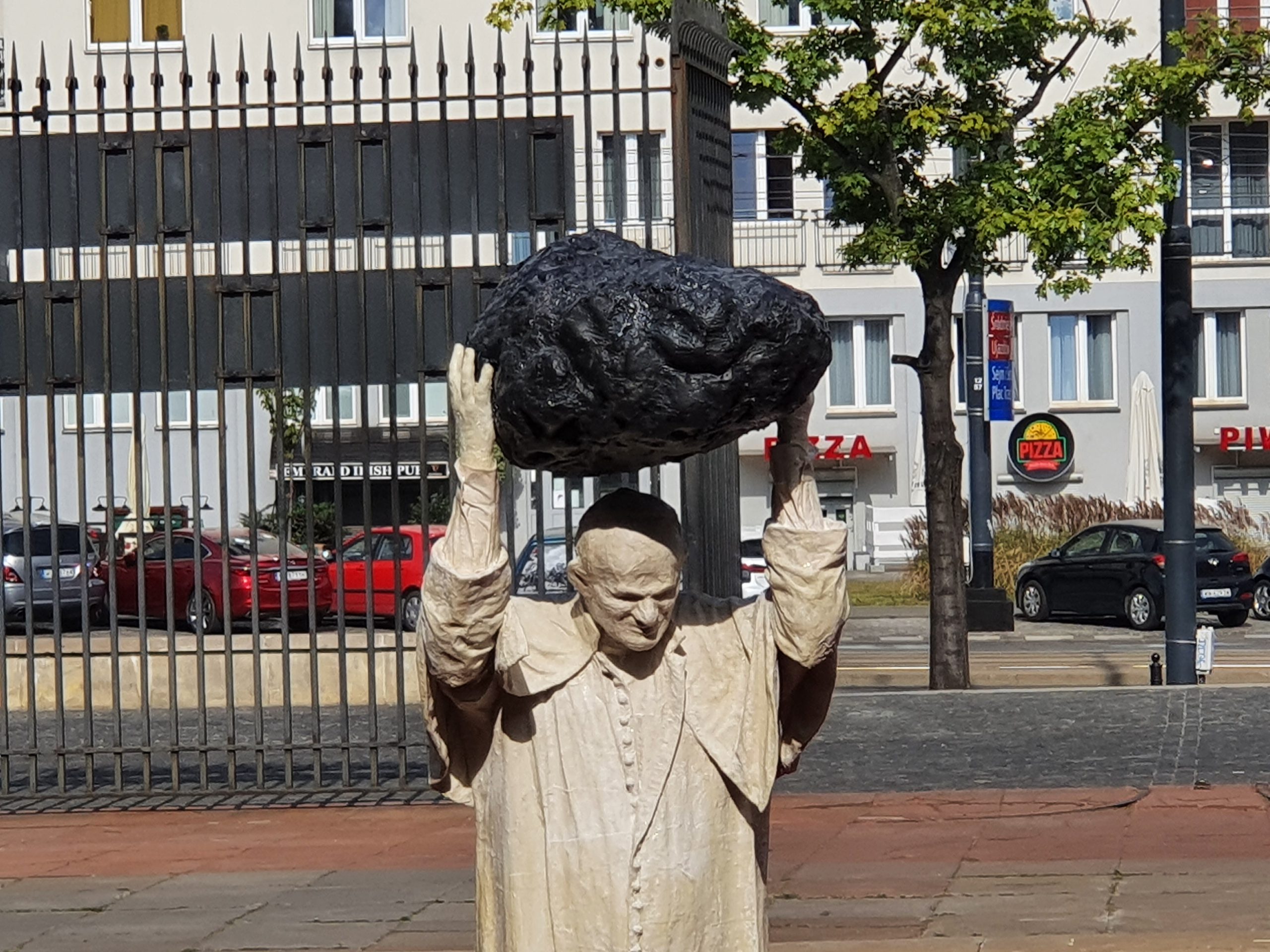
  • Warsaw – National Museum in Warsaw (Superhuman Pope Holding a Meteorite)

    Warsaw – National Museum in Warsaw (Superhuman Pope Holding a Meteorite)

    This art installation at the National Museum in Warsaw has attracted international attention over the last week, so I thought I’d meander along to see it. I spent some time at the museum in January and it’s an impressive place, with over 830,000 items in its collection, a remarkable effort given the challenges of the Second World War when certain people pinched great chunks of its works.

    Anyway, this sculpture has been created by Jerzy Kalina and is entitled “Poisoned Source”, depicting Pope John Paul II holding a meteorite. The water has been turned red and it’s in response to an artwork by Maurizio Cattelan from 1999 which showed the Pope being hit by a meteor which had knocked him out.

    I read in the Guardian (yes, sorry, I like the Guardian) that this was akin to someone trying to put luggage into the overhead compartment of an aircraft. And now, looking at the photos again, I can’t quite get that imagery out of my mind.

    The installation was attracting some interest, I took the photos to avoid including people where I could, but there was a constant flow of those who were intrigued by the work. I suppose that if any artwork can interest people then it has performed a role of some sorts. It’s being interpreted by some of the media as a sculpture which is designed to be pro-Government and pro-Church, but the artist has completed many works over the decades which are interesting talking points and this seems as good a way as any to mark 100 years since Pope John Paul II was born.

  • Warsaw – National Museum in Warsaw (Baptismal Font)

    Warsaw – National Museum in Warsaw (Baptismal Font)

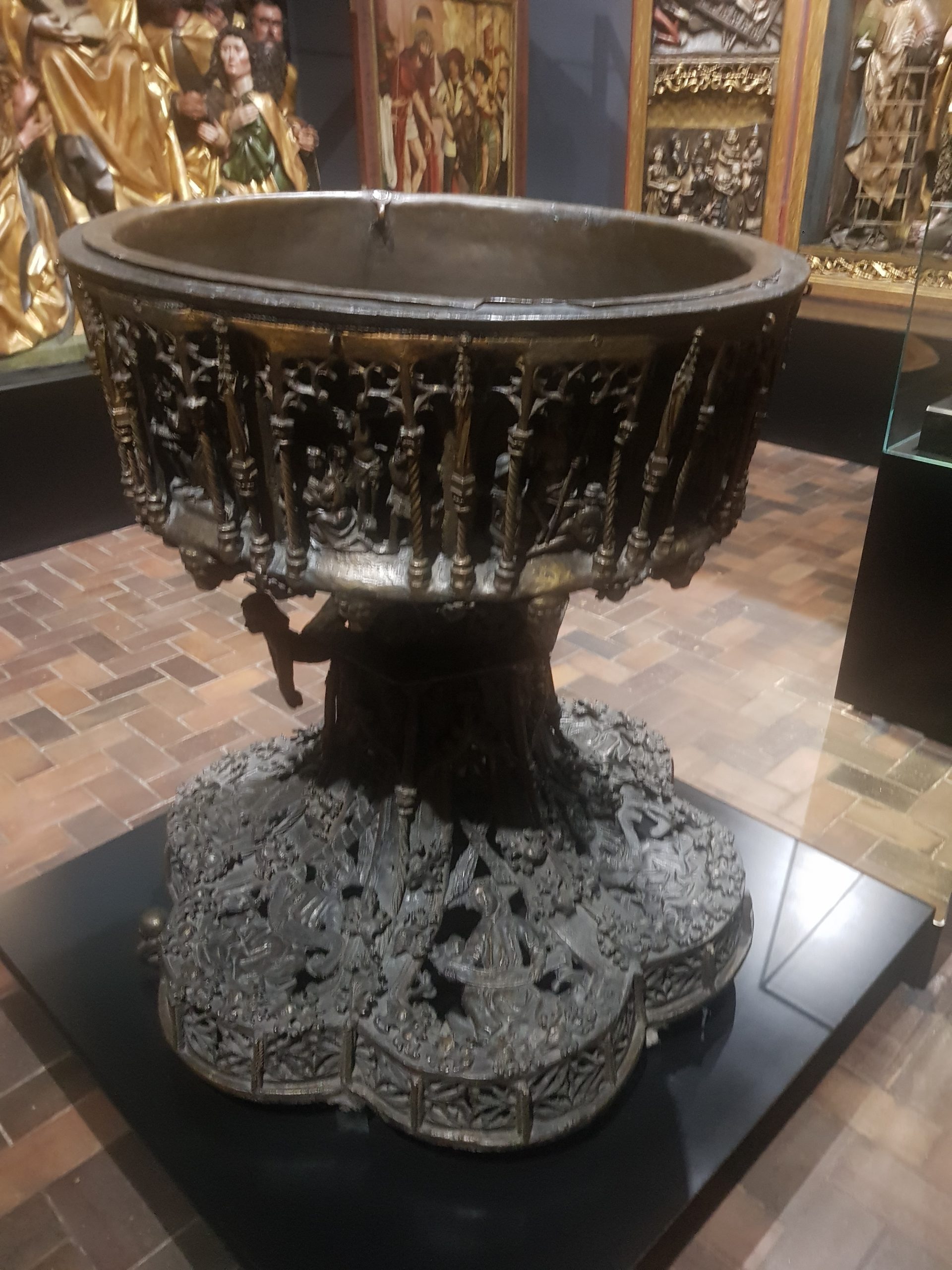
    What with the 1492 Carrying of the Cross and the Polychrome Statue of St. Barbara, half of the previous contents of St. Elizabeth’s Church in Wrocław seems to be on display in this museum. Anyway, this baptismal font is a notable piece of work, made from bronze and dating back to before 1477.

    The church today seems very proud of the artefacts and items that it still owns, with very little from before 1500, and I do wonder whether they cast half an eye over the collections in the National Museum that once came from here. This is certainly one of the most detailed fonts that I’ve seen though, so it’s worthy of having such a large national audience and it’s probably just a security headache in a church anyway with people trying to steal it.

  • Warsaw – National Museum in Warsaw (Carrying of the Cross – 1492)

    Warsaw – National Museum in Warsaw (Carrying of the Cross – 1492)

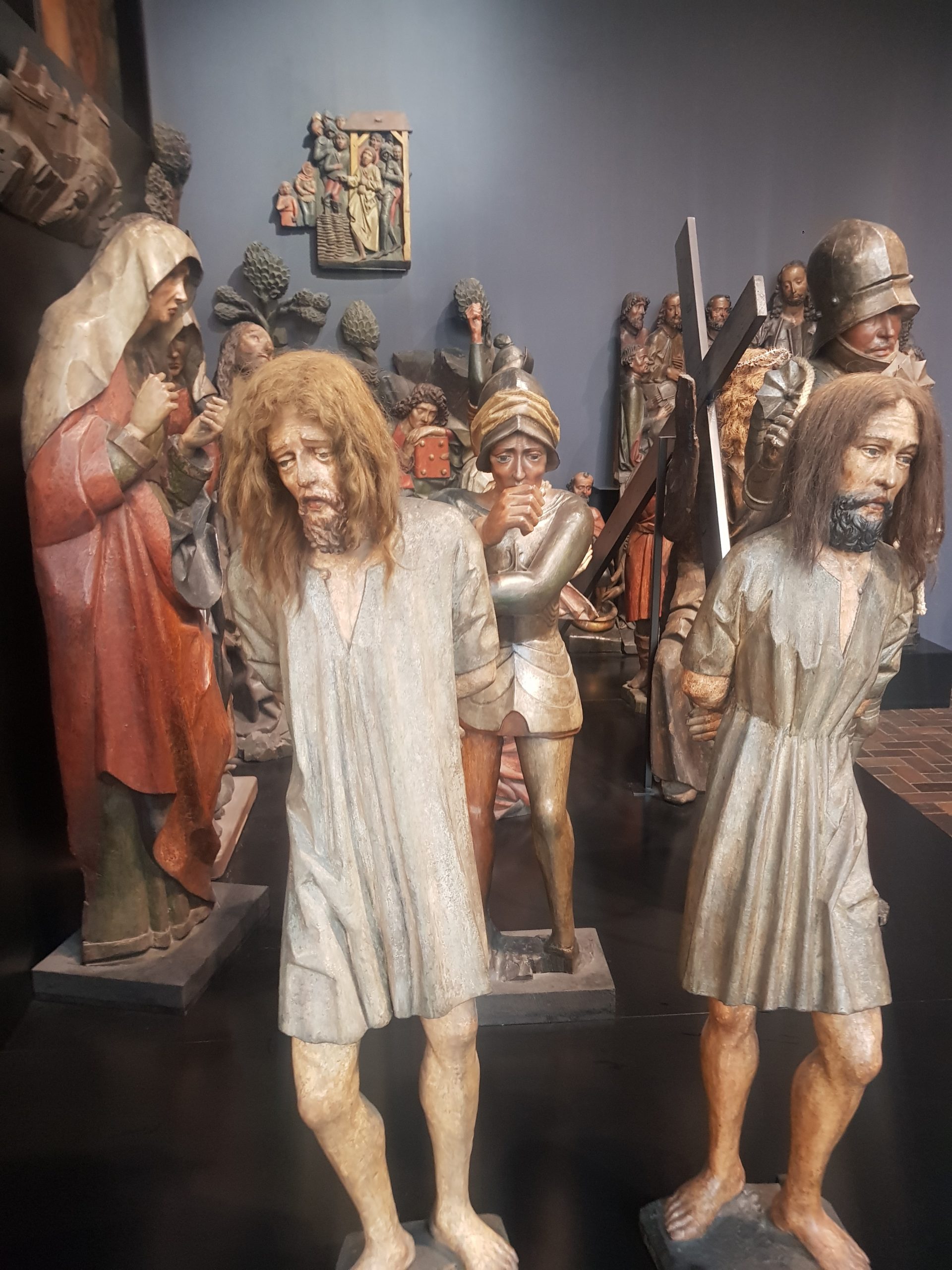
    This installation looks like it is almost new, representing the carrying of the cross, the Last Supper, washing of the feet and agony in the garden. The detail of the faces is quite astounding, even a little menacing, with the wooden figures dating back to 1492.

    The representation of the carrying of the cross.

    These sculptures were originally located at the Chapel of the Krappe Family in St. Elizabeth’s Church in Wrocław. This is the same church, which I’ve visited, that the museum’s Polychrome Statue of Saint Barbara is from. Johannes Krappe had taken over the chapel in 1477, but it wasn’t consecrated until 1492, by which time these figures had been installed. It’s not known who created and designed the figures, but their purpose was to teach the congregation the suffering that Christ had been through. I can imagine that they were not ineffective in that task, they’re emotional figures.

    I can’t find out the journey that these figures have taken over the centuries, their survival in such pristine condition is noteworthy in itself.

  • Warsaw – National Museum in Warsaw (Pietà from Lubiąż)

    Warsaw – National Museum in Warsaw (Pietà from Lubiąż)

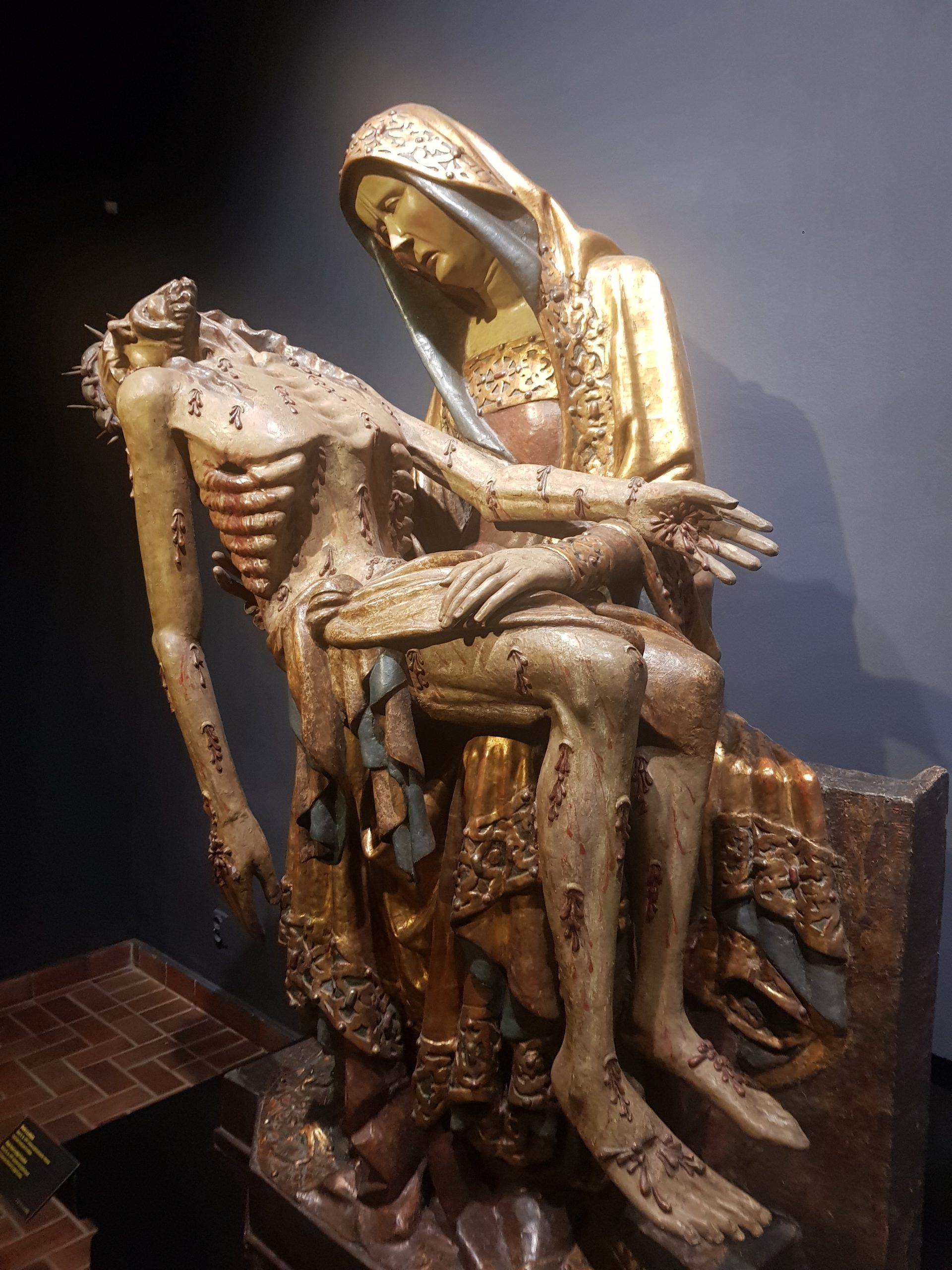
    I didn’t know this before, but a Pietà is a depiction of the Virgin Mary holding the dead Jesus on her lap. It’s quite eye catching given its colour and vibrancy, with the whole polychrome item being in a decent state of repair. It’s a beautiful item and it dates to around 1370.

    The card by the exhibit says that it comes from the Cistercian Monastery at Lubiąż Abbey, but the museum’s web-site which has more information, adds that it might also be from the Cistercian Monastery at Trzebnica. I hadn’t heard of Lubiąż Abbey, but it seems an amazing historic site, one of the largest Christian sites in the world. The monks were kicked out of their abbey in 1492 by Jan II the Mad, who from his name sounds a bit of a character.

  • Warsaw – National Museum in Warsaw (Polychrome Statue of Saint Barbara)

    Warsaw – National Museum in Warsaw (Polychrome Statue of Saint Barbara)

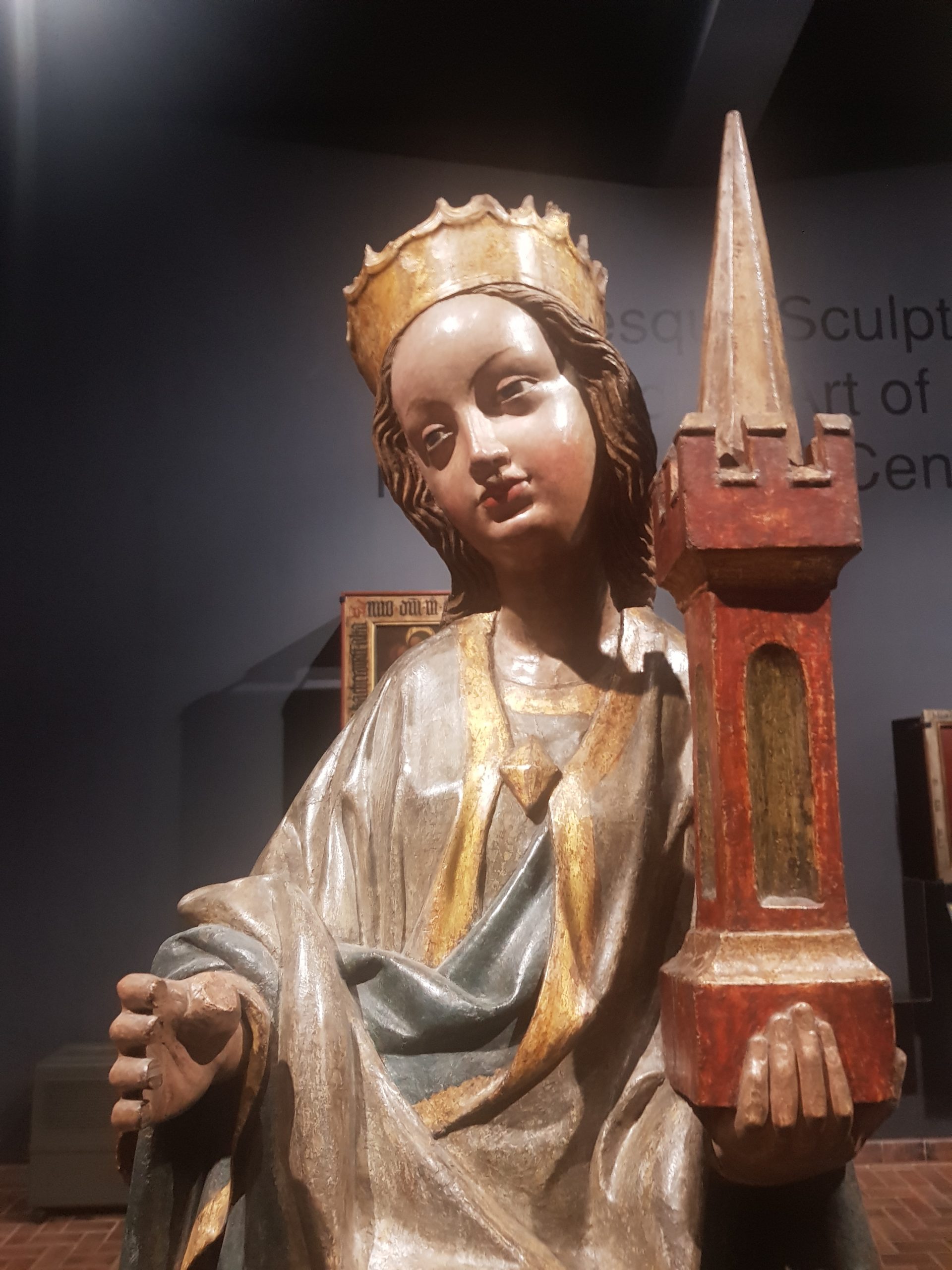
    This polychrome wooden statue comes from St. Elizabeth’s Church in Wrocław (a church I’ve visited) and dates to the early fifteenth century. It’s in a good state of repair and represents Saint Barbara, who is usually presented with a tower or chains.

    The church the statue is from is interesting as it was Catholic from when it was built in the fourteenth century until the Reformation in 1525, then Protestant until 1946 when it became Catholic again. History is full of quirks, if Hitler hadn’t started the Second World War then it’s likely that this statue would still be in the Silesian Museum of Fine Arts in Wrocław and the church from where it once came from would likely still be Protestant.

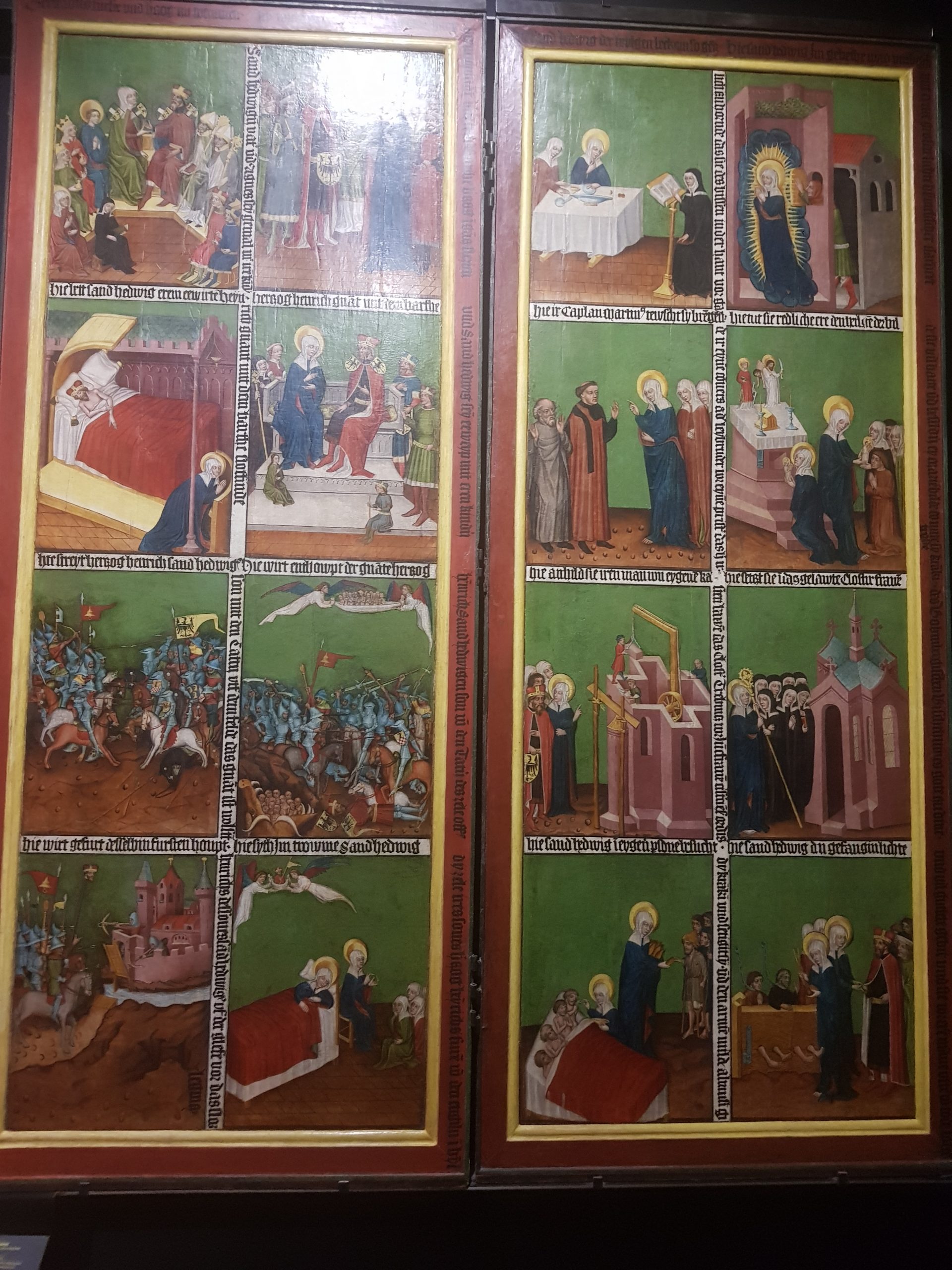
  • Warsaw – National Museum in Warsaw (Legend of Saint Hedwig of Silesia – Triptych Wings from Wroclaw)

    Warsaw – National Museum in Warsaw (Legend of Saint Hedwig of Silesia – Triptych Wings from Wroclaw)

    These triptych wings are in outstanding condition, given that they were originally painted on wooden panels in the 1430s or 1440s. They were constructed to be placed on an altar at the Church of St. Bernardine of Siena in Wrocław, a church which still survives although has been much modified and is now a museum. The monks were ordered to leave the monastery by the town council in 1522, as this was a city that was influenced by the writings of Martin Luther.

    The construction of a church.

    The caring for the ill.

    What entirely puzzles me is how and why these triptych wings survived. Their survival during the Second World War isn’t surprising as they were likely housed in Silesia, part of German then, but they had already made it through over 400 years since they were removed from the church. I assume that they were kept by a Catholic family, but there’s little obvious provenance other than the wings were probably later on housed at the Silesian Museum of Fine Arts, which closed in 1945.

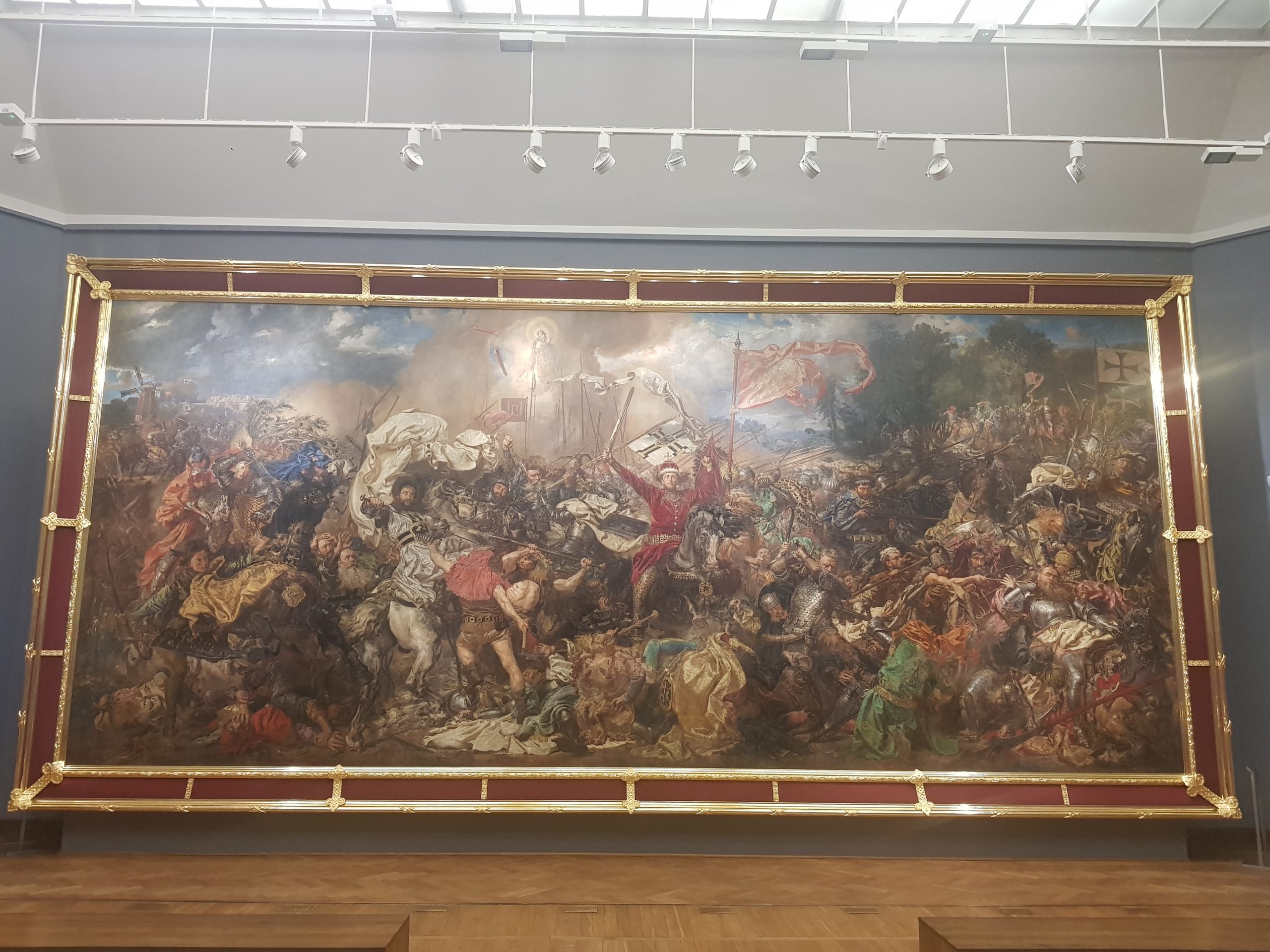
  • Warsaw – National Museum in Warsaw (Battle of Grunwald by Jan Matejko)

    Warsaw – National Museum in Warsaw (Battle of Grunwald by Jan Matejko)

    This is no insignificant painting either in measurement, 10 metres by 4 metres, or in terms of its history and heritage. It was painted by Jan Matejko and is of the battle which took place in 1410 which was seen as an important victory for the Polish-Lithuanian Commonwealth. The artist started work on the painting in 1872 and it wasn’t completed until 1878, with its first owner being the Warsaw banker, Dawid Rosenblum.

    The painting is a significant one in Polish history and so when the Germans took over the city of Warsaw during the Second World War, this was an artwork which they wanted to seize and destroy. Joseph Goebbels offered a reward of 10,000,000 Marks for anyone who could locate it, with some Polish citizens dying rather than admit to where it was hidden. It was actually located in a stable near Lublin (although some reports say it was hidden within a library), successfully making it through the war unharmed, although in need of restoration. The Germans did know that the painting was somewhere near Lublin, but they never received anything more precise than that to help them locate it. After the post-war restoration work had been completed, the artwork was placed in the National Museum in Warsaw, where it has been since, other than periods of time when it has been loaned out to other institutions.

    The painting itself is complex and quite cluttered, it’s beyond my historical knowledge to really understand what’s going on. However, it’s a monumental artwork and someone could perhaps look at it for hours before saying that they could really comprehend it. The history of how it survived is though one of the most intriguing elements about this artwork and its placement on an end wall within the gallery gives almost a sense of theatre to the painting.