Tag: National Army Museum

  • London – Kensington and Chelsea (Borough of) – National Army Museum (Child’s Shoe from Siege of Cawnpore)

    London – Kensington and Chelsea (Borough of) – National Army Museum (Child’s Shoe from Siege of Cawnpore)

    This is another emotive exhibit in the collections of the National Army Museum, a child’s shoe recovered from the well at Cawnpore. This was an uprising in India in what is now known as Kanpur, where for numerous reasons, there was a siege which forced British troops and residents to defend themselves. Nana Sahib led the rebellion against the British, seemingly as he hadn’t received a pension from the East India Company that he had wanted.

    Anyway, making a long story quite short, Sahib’s forces killed hundreds of women and children and threw their bodies into a well. The British soon recovered the territory, and committed a brutal shock and awe policy in retaliation with many locals humiliated and killed. This shoe belonged to one of the children who was killed, a reminder of a bloody siege.
  • London – Kensington and Chelsea (Borough of) – National Army Museum (Earl of Uxbridge Loses his Leg)

    London – Kensington and Chelsea (Borough of) – National Army Museum (Earl of Uxbridge Loses his Leg)

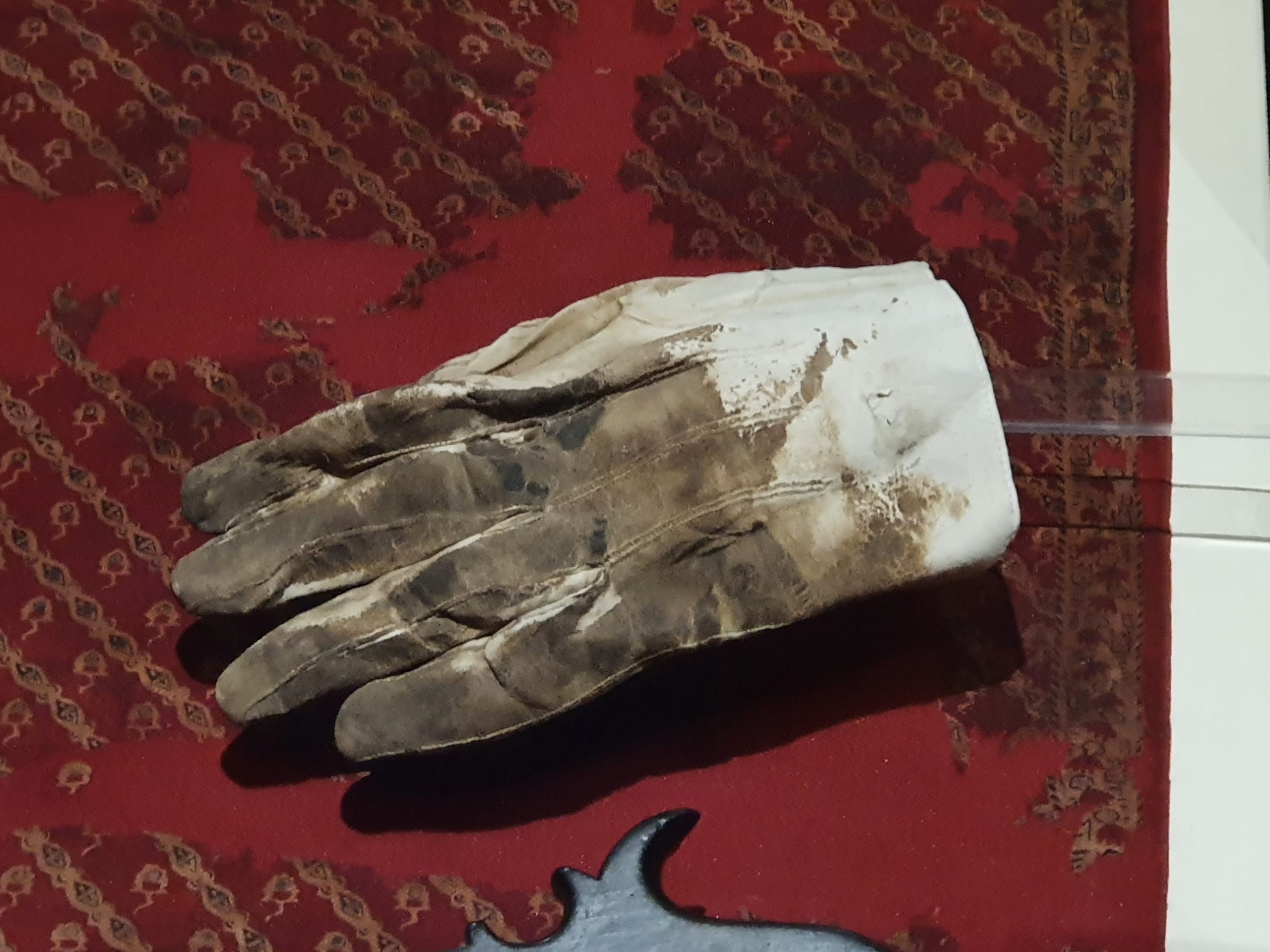
    Here’s a lovely cheery display at the National Army Museum, the saw which was used to cut the Earl of Uxbridge’s leg off. The note by the exhibit explains that “the Earl remained composed throughout the operation and his only comment was that the saw appeared somewhat blunt”. A stiff upper lip and all that… I can say, with some confidence, that if I was in the military I would be more vocal with my annoyance about such a situation.

    The little incident took place during the Battle of Waterloo when a cannon ball, one of the last to be fired that day, hit the Earl in the leg. It’s said (well, it’s written on Wikipedia) that he turned to Wellington and said “By God, sir, I’ve lost my leg!” and the response was “By God, sir, so you have”.

    The glove that was worn by Thomas Wildman, the Earl of Uxbridge’s aide, which got covered in blood when his master’s leg was sawn off. What a delightful day that must have been for all concerned. The Earl of Uxbridge, more commonly known as Henry Paget, was born in 1768 and he died in 1854.

  • London – Kensington and Chelsea (Borough of) – National Army Museum (Ruhleben Fighting City)

    London – Kensington and Chelsea (Borough of) – National Army Museum (Ruhleben Fighting City)

    This sign at the National Army Museum is from the area of Berlin that the British used to train for any attack on the city from the Soviets. The sign dates from around 1985 and the site was made to look like a city centre, even with some train carriages to add to the realism. The United States military had their own mock-up city nearby, known as Doughboy City. Ruhleben has survived today and is used by the German police for shooting practice.

    If the Cold War had taken place and fighting had broken out in Berlin, the troops that trained here would have been the ones who were called into action. Today, the area is a little more mundane, there’s a McDonald’s and an Aldi nearby. There’s a lot to be said for peacetime….

    https://de.wikipedia.org/wiki/Fighting_City#/media/Datei:Fighting_city_ruhleben_Berliner_Polizei.jpg

    And here’s what it looks like today. Well, in 2018 I think.

  • London – Kensington and Chelsea (Borough of) – National Army Museum (Captain Sir Tom Moore)

    London – Kensington and Chelsea (Borough of) – National Army Museum (Captain Sir Tom Moore)

    The museum is quite proud of this new addition to their collections, an official painting of Sir Tom Moore (or Captain Tom) by the artist Alexander Chamberlin, himself a former British army officer. Moore became famous in 2020 for his fund-raising efforts in walking 100 laps of his garden to raise a little money for the NHS Charities Together. This attempt to raise a little money ended up being just under £40 million, perhaps slightly more than he had initially anticipated. Moore, who is 100 years old, joined the British Army in 1940 and served in India and Burma.

    Moore said about the unveiling of this painting in August 2020:

    “It is wonderful to know that the portrait will be displayed at the National Army Museum to connect the public with this history, and I hope it continues to help tell the history of the British Army for decades, maybe even centuries, to come.”

    All rather lovely.

  • London – Kensington and Chelsea (Borough of) – National Army Museum (The King’s Man Film Set)

    London – Kensington and Chelsea (Borough of) – National Army Museum (The King’s Man Film Set)

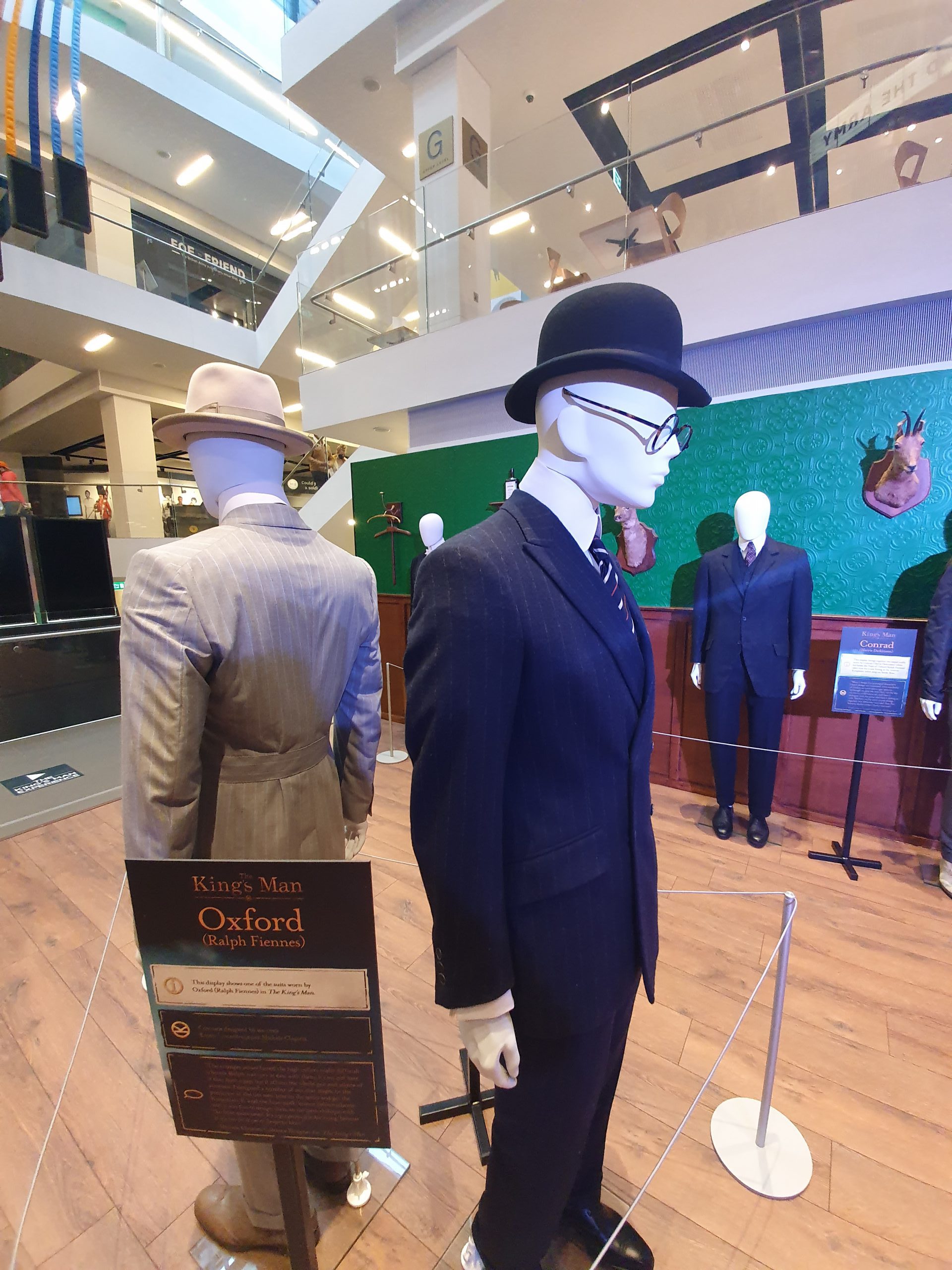
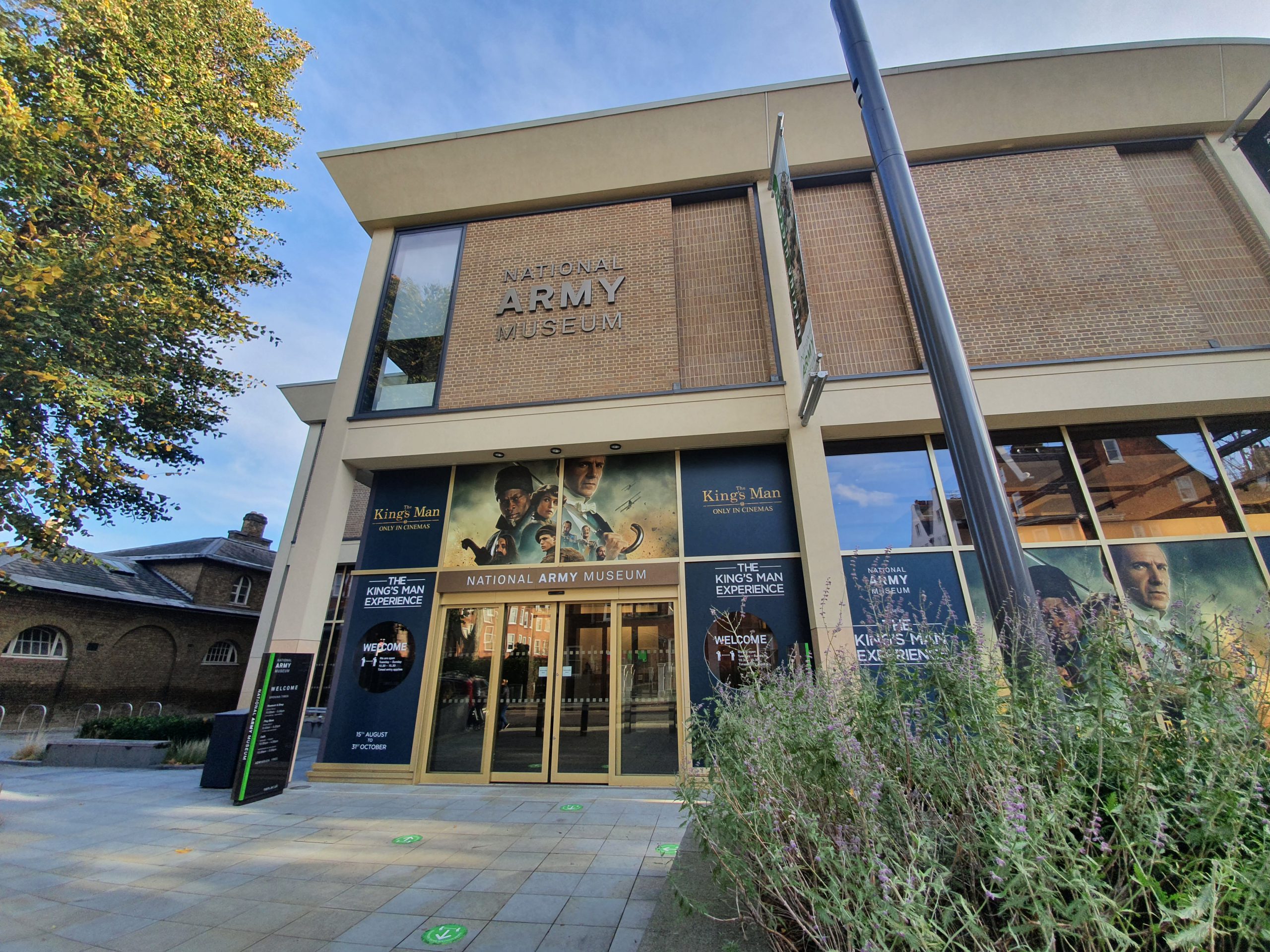
    This post is mostly just photos and it’s of the set of the King’s Man film, which is the third film in the Kingsman series and also the prequel, just to make things more confusing. The film is meant to be released in February 2021, although I’m not sure that anyone knows what is happening with the world of cinema at the moment. The film was initially meant to be released in late 2019, so the production team are probably quite fed up with the whole thing at the moment.

    Anyway, it was evident from the displays at the National Army Museum that a lot of attention and care has gone into the clothing and sets, they’re detailed even when standing close up. And now that I’ve seen these props in real life, I might actually watch the film. I have seen the first in the series, but not the second, with this prequel being from the time of the First World War and the run-up to that.


  • London – Kensington and Chelsea (Borough of) – National Army Museum (Note Written in Blood)

    London – Kensington and Chelsea (Borough of) – National Army Museum (Note Written in Blood)

    Well, this is cheery, a note written in 1810 by Joseph Fenwick in his own blood. The note reads “I am shot thro the body and arms – for God’s sake send me a surgeon, English if possible. If I do not recover God bless you all”. Unfortunately, Joseph died shortly afterwards.

    The note was written to Colonel Richard Blunt and this note was given to the National Army Museum by his grandson, Lieutenant-Colonel G E E Blunt. Fenwick had been wounded at Chamusca, in Portugal, whilst fighting for the 3rd Foot Regiment (the Buffs) in the Peninsular War.

  • London – Kensington and Chelsea (Borough of) – National Army Museum (Wellington’s Despatch Case)

    London – Kensington and Chelsea (Borough of) – National Army Museum (Wellington’s Despatch Case)

    This is the despatch case that was used by the Duke of Wellington during the Peninsular War of 1808 until 1814 and at the Battle of Waterloo in 1815. The National Army Museum acquired it in 1973, but their web-site isn’t very good at providing the provenance of items or where they’ve been. The museum notes Wellington’s quote, when asked why he was so successful, of “I was always on the spot – I saw everything; and did everything for myself”.

  • London – Kensington and Chelsea (Borough of) – National Army Museum (Napoleon’s Horse Marengo)

    London – Kensington and Chelsea (Borough of) – National Army Museum (Napoleon’s Horse Marengo)

    This is Marengo (something like 1793 to 1831), or at least what is left of him, who was Napoleon’s horse which he used in campaigns between 1800 and 1815. When Napoleon was defeated by the Duke of Wellington, the horse was taken to London and he lived here until he died in 1831. It was decided to preserve his bones and he was given to the Royal United Services Institute, which was founded by the Duke of Wellington, also in 1831. The Institute later asked Wellington for the skeleton of his horse, Copenhagen, so they could be displayed together, but this permission was refused.

    Now at the National Army Museum, I think the skeleton is clumsily displayed and I wasn’t sure why he wasn’t placed in an area of his own. It transpires that this was what the previous museum authorities thought was a good idea, it’s a recent innovation that he’s been shoved in this cluttered display. He’s missing a couple of hooves, which were taken for souvenirs and are now displayed elsewhere.

  • London – Kensington and Chelsea (Borough of) – National Army Museum (REME)

    London – Kensington and Chelsea (Borough of) – National Army Museum (REME)

    This is the display of the Royal Electrical and Mechanical Engineers (REME) corps at the National Army Museum. The REME also have their own museum at RAF Lyneham in God’s own county of Wiltshire, who the National Army Museum co-operates with. The smock in the top-right of the above photo is from the 1980s and the body armour in the bottom-right is from the 2003 Gulf War in Iraq.

    A recruitment poster from the 1980s for REME.

    'Think REME Gun Fitters'

    Not on public display, but this similar poster to the above is on the museum’s web-site.

    Cap and badge from the late 1950s.

    Cap badge, Royal Electrical and Mechanical Engineers, 1954 (c)

    A cap badge from the 1950s, from the museum’s study collection.

    Uniform patches from the late 1950s.