Tag: National Army Museum

  • London – Kensington and Chelsea (Borough of) – National Army Museum (Hellfire Corner Sign)

    London – Kensington and Chelsea (Borough of) – National Army Museum (Hellfire Corner Sign)

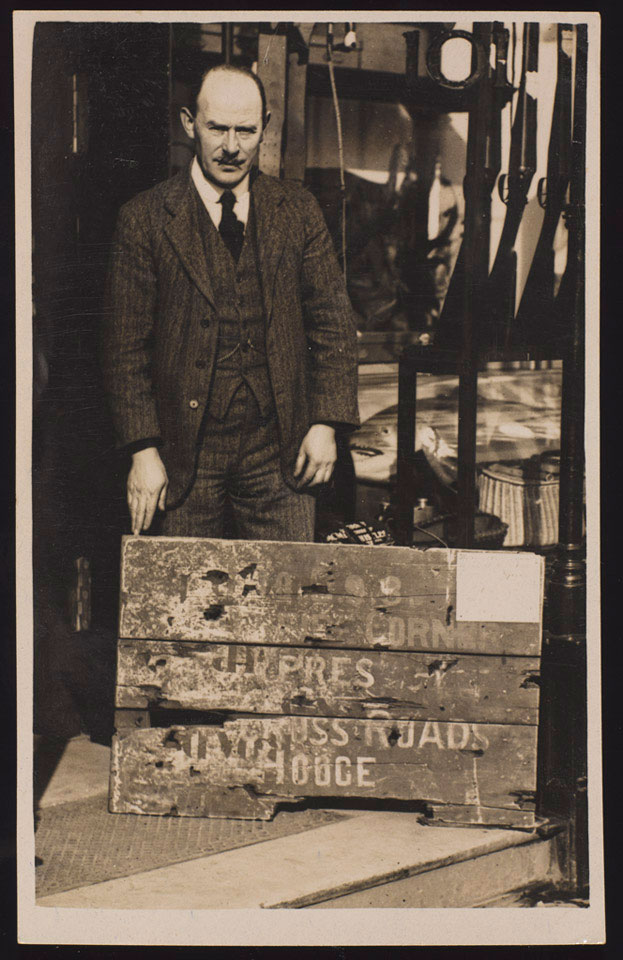
    The National Army Museum is very proud of having this item in its collections, it’s an original wooden sign that was in a dangerous location at a junction on the Menin Road leading from Menin to Ypres. Many soldiers would have gone by the sign during the First World War, but the area was under near constant attack by German soldiers whose nearby defences meant that they had good visibility and it became a very dangerous stretch of road.

    There’s a stone marker at the site now, an otherwise innocuous roundabout on the outskirts of Ypres. The marker is one of a series which show the furthest point that the German troops were able to reach.

    The sign was brought back from Belgium by William Storie (above) and he used it as a promotional device to encourage sales at his shop in Edinburgh. The above photo was taken in March 1920, with the sign being seemingly nearly undamaged since then, although it seems to have spent much of its life in a storeroom before being donated to the National Army Museum in 1996.

    There’s an interesting video above which shows Hellfire Corner (i) during the First World War, (ii) before the roundabout was constructed and (iii) how it looks now. It’s possible to see an earlier Hellfire Corner sign in the video, but the National Army Museum believes the one on display is the final one from that location.

  • London – Kensington and Chelsea (Borough of) – National Army Museum (Letter to Wife of Man Killed)

    London – Kensington and Chelsea (Borough of) – National Army Museum (Letter to Wife of Man Killed)

    This letter (clicking on the image brings up a larger version) is in the collections of the National Army Museum and was written on 23 November 1915 by Corporal Kempstell to the wife of the killed soldier Harry J Baldwin. This must have been a traumatic letter to write, and of course to receive, although it’s been very thoughtfully done and doesn’t seem to have been taken too much from a template.

    The museum notes that the place of death is never given, although there’s an address at the top of the letter which is the 2nd King’s Royal Rifles in France. I can find details of only one Harry Baldwin dying in 1915 and that person died on 22 November 1915, so I assume it must be the same one unless there’s something of a coincidence. Given that, the letter is nonsense, as Harry died in Basra fighting the Ottomans, so he wouldn’t likely have been killed by a German shell. Harry was buried near Basra, at a war cemetery which was moved to a new location in 1997.

    If it is the case that it’s the same Harry who died in Basra, I’m not entirely sure that the wife would have believed the rest of the letter when the truth came out.

  • London – Kensington and Chelsea (Borough of) – National Army Museum (Bombardier Beer Pump)

    London – Kensington and Chelsea (Borough of) – National Army Museum (Bombardier Beer Pump)

    This is an exhibit from the rather wonderful National Army Museum and, as another of my irrelevant asides, it’s a word that I always have to think to pronounce. In this case, the beer from Wells Brewery is pronounced as the English military word, whereas if talking about the French Canadian multi-national Bombardier train and aviation company, it’s the different French pronunciation.

    As for beer, and this pump was donated to the museum in 2015, it was marketed for a time as the “beer of England”, although that was somewhat aspirational branding. There was some controversy a couple of years ago when the pump clip moved away from the traditional one in the photo, with the St George’s Flag in the background, towards a more generic style. The brewers perhaps felt that the claim of being the ‘beer of England’ was not really based in reality, so they’re kept the new generic branding and changed their claim to it being a “British beer”. This, to be fair, is now accurate.

  • London – Kensington and Chelsea (Borough of) – National Army Museum (Earl Haig Fund Poppy Badge)

    London – Kensington and Chelsea (Borough of) – National Army Museum (Earl Haig Fund Poppy Badge)

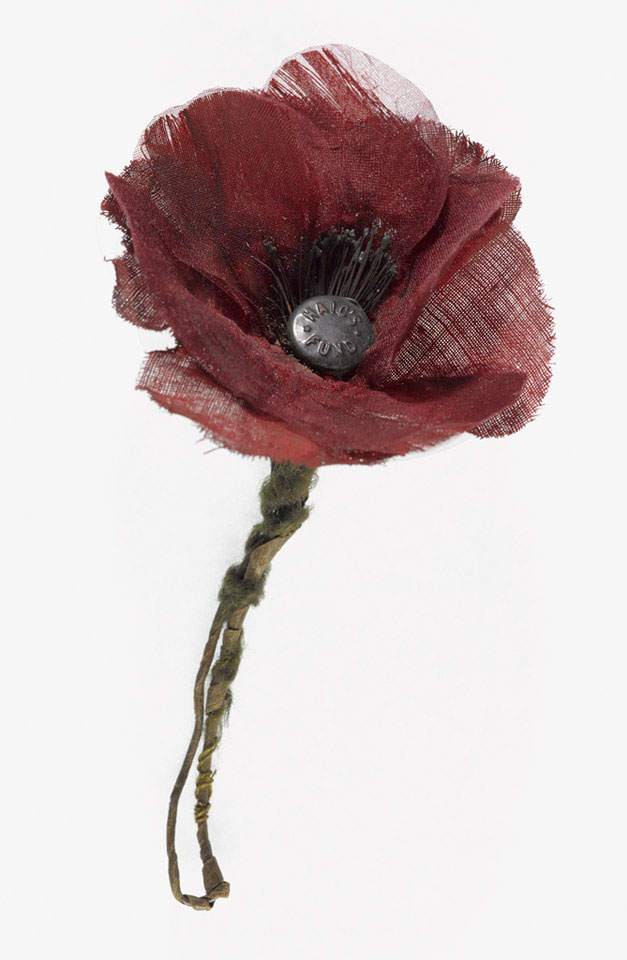
    This is my photo of the Earl Haig fund poppy which is on display at the National Army Museum.

    This image (courtesy of NAM) is much clearer though. The poppy was made at a factory in Edinburgh and the operations there were set up Earl Haig’s wife, as few of the poppies produced in London were getting to Scotland. The factory was opened in March 1926 and initially employed just two people, but this increased to over 100 within just a few years.

    The poppy in the collections of the National Army Museum dates to around 1930, at a time when poppies were made out of different materials which were charged at different prices. It wasn’t until 1954 that only the paper poppy was produced, with no fixed price but offered instead by donation.

    And one thing I never knew until today, the Scottish poppy has four petals, whereas those produced in the Richmond factory in London have two petals. Which goes to show how unobservant I am…..

  • London – Kensington and Chelsea (Borough of) – National Army Museum (Fragments of Arm Bone)

    London – Kensington and Chelsea (Borough of) – National Army Museum (Fragments of Arm Bone)

    This is another cheery little number from the collections of the National Army Museum, it’s fragments of bone taken from the damaged arm of Lieutenant Charles Fletcher, from the 48th Bengal Native Infantry. The incident took place during the Indian Rebellion when the compound at the Residency in Lucknow came under attack in 1857. A musket ball hit Fletcher, which isn’t ideal, causing this damage to his arm. The Residency building is still there in ruins, a reminder of the last days of the East India Company, before the 1858 Government of India Act transferred power to the British Raj. It’s an interesting souvenir to keep, I’m not sure that it’s something I would have kept in a little box though to remind me of the event….

  • London – Kensington and Chelsea (Borough of) – National Army Museum (Ration Biscuit)

    London – Kensington and Chelsea (Borough of) – National Army Museum (Ration Biscuit)

    I’ve seen ration biscuits that have been sent home in many museums, they weren’t particularly popular with troops and they did make for useful souvenirs. Bread couldn’t be distributed because it went mouldy, so members of the armed forces received these dried things usually made from flour, water and salt, which then had to be mixed with a liquid to become vaguely edible.

    The National Army Museum has this item on display, sent back home by Trumpeter S Foster from the 12th (Prince of Wales’s Royal) Lancers. It can’t be seen from how the museum has presented it, but on the rear is the receiver’s address and two postage stamps, so it really did go through the postal system. I imagine that amused the postal authorities and it is remarkably undamaged given its journey from South Africa.

  • London – Kensington and Chelsea (Borough of) – National Army Museum (Siege Bread)

    London – Kensington and Chelsea (Borough of) – National Army Museum (Siege Bread)

    This item is on display at the National Army Museum and it was kept by a soldier as a souvenir of war, displayed in what was likely originally a wooden packing case. The bread is from the Siege of Ladysmith which took place between 2 November 1899 and 28 February 1900, when supplies were short and so the bread was made from maize meal and starch. The museum also notes that the soldiers during this period would have also had the delight of eating horse-meat soup. It’s not known which soldier kept this little piece of bread, although the arms are that of the Army Ordnance Corps, but it makes for an interesting memento….

  • London – Kensington and Chelsea (Borough of) – National Army Museum

    London – Kensington and Chelsea (Borough of) – National Army Museum

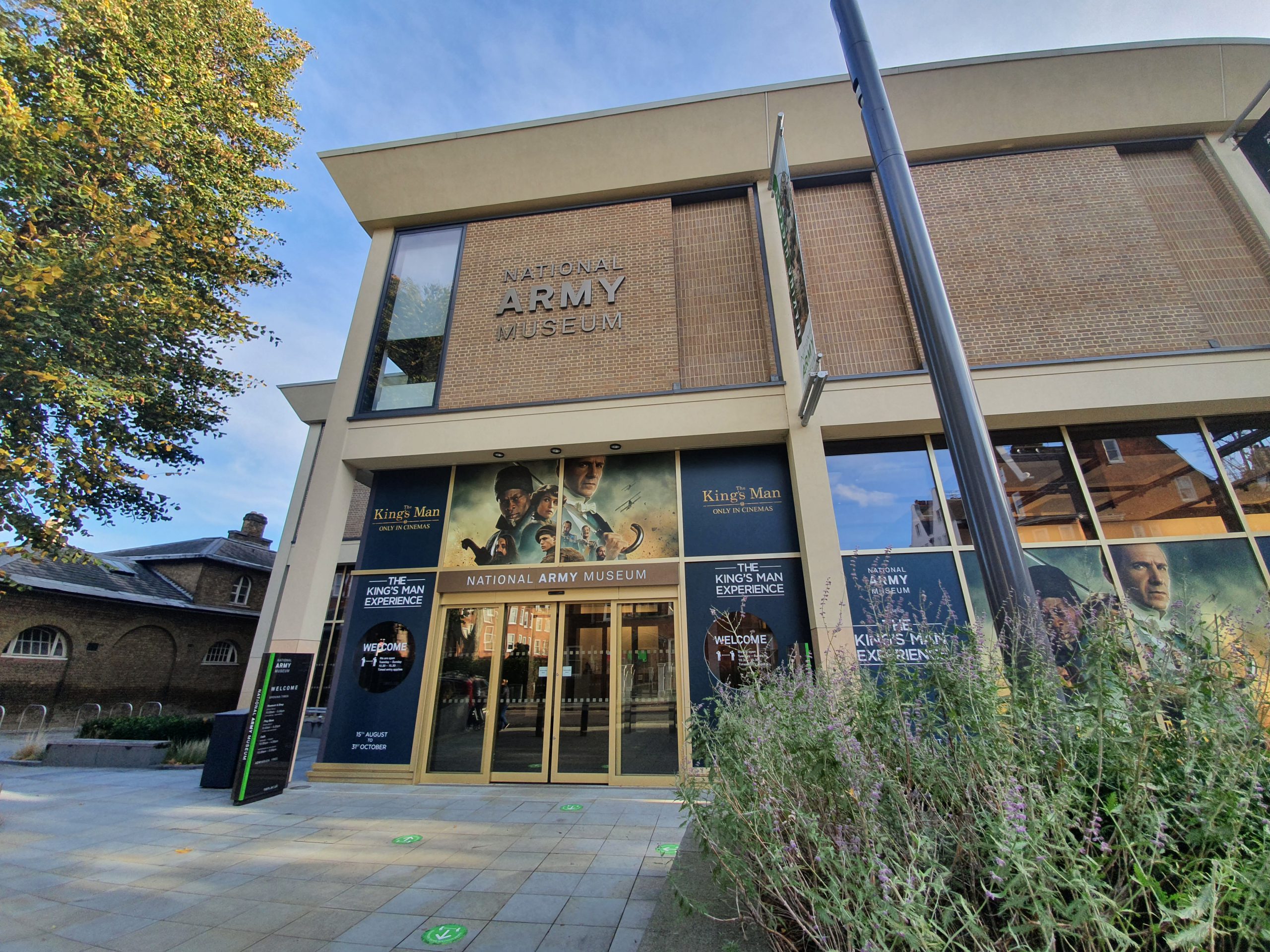
    I had read some reviews of the National Army Museum that their relatively recent expensive (nearly £24 million) refurbishment had dumbed down the museum and removed many of the interesting displays. So, I had made myself pre-annoyed at the museum before I had even visited. That’s the starting point of this expedition….

    The welcome at the museum was though friendly and the staff were helpful. Although, without jumping ahead, the only negative was a staff member merrily criticising a customer who had complained as someone who probably wrote in green ink. He proceeded to loudly say how he was proud to ignore the complaint to other staff members, which didn’t exactly give a great impression to visitors. I suspect he could have waited until no other visitors could hear before starting off on his rant. I don’t know what the complaint was, I think I would have liked to though, nothing beats some exciting drama like that (other than chicken bakes).

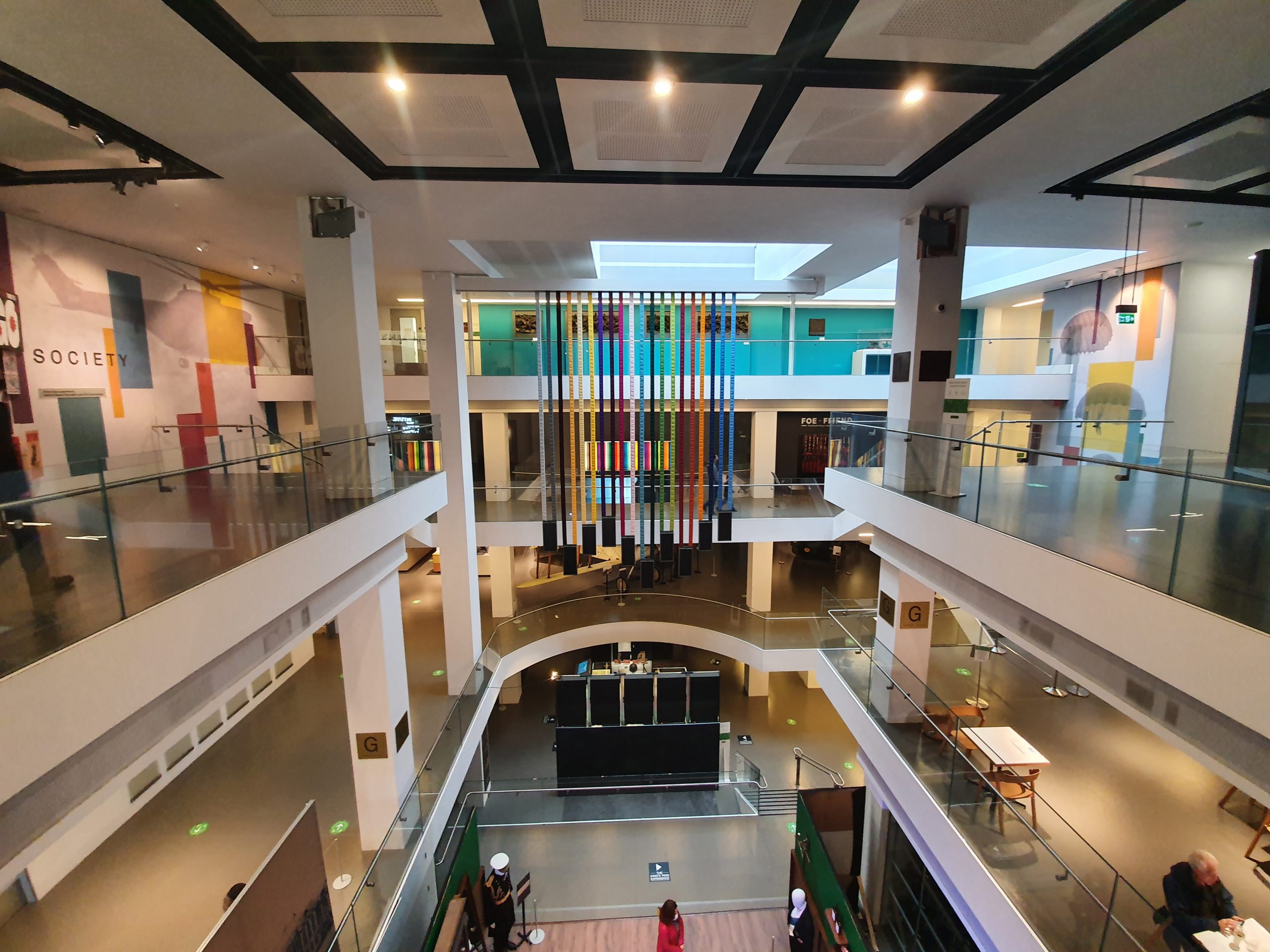
    The displays in the museum were bright, clearly displayed and there were numerous interactive elements. However, the interactive elements hadn’t negatively impacted on the experience and there were plenty to read, see and do. The museum is incidentally free of charge, although pre-booking is required at the moment.

    Most of the displays were uncluttered, although I didn’t like how the museum has changed the display of Napoleon’s horse from a dignified display case to shoved in with a load of other items. But, there are bigger things to worry about than a dead horse.

    I know that some visitors didn’t like this sort of approach, but I think that the museum is right in that war shouldn’t be glorified. That doesn’t detract from the bravery of the armed forces, but I imagine that most soldiers would rather they didn’t get involved in war zones and having to kill other people. So, questioning whether people could be a soldier seems a sensible approach, it can’t be that easy.

    Some interesting statistics.

    I’ve written separately about some individual exhibits, not least:

    Arm Severing Shrapnel

    Leg Bones of John Fraser

    Child’s Shoe from Siege of Cawnpore

    Earl of Uxbridge Loses his Leg

    Ruhleben Fighting City

    Captain Sir Tom Moore Painting

    The King’s Man Film Set

    Note Written in Blood

    Wellington’s Despatch Case

    Napoleon’s Horse Marengo

    REME

    There’s enough here for a visit to last at least two hours, with a cafe on-site for those who want that. Some displays really aren’t entirely suitable for children, but I suppose they can be ushered by quickly. There are elements that should engage children though, particularly the display where visitors can take part in a drill with some sergeant major (or whatever he is) shouting from a video screen.

    The museum was founded in 1961 and it’s in a brutalist designed building next to the Royal Hospital at Chelsea. The rebuilding and redesign was substantial, shutting the museum between 2014 and 2017, when it was reopened by HM Queen Elizabeth II.

    So, I left not being annoyed, which is always a bonus, as the museum seems quite thoughtfully laid out. It wasn’t particularly busy, so it all felt safe and secure given the current challenging environment. And as for those reviews which said that it apologised for war, I’m not entirely sure that it did, it was more just trying to make people think about what war meant and I’m not sure that’s the same.

  • London – Kensington and Chelsea (Borough of) – National Army Museum (Arm Severing Shrapnel)

    London – Kensington and Chelsea (Borough of) – National Army Museum (Arm Severing Shrapnel)

    More agonies of war at the National Army Museum, this is the shrapnel that severed Serjeant Major Andrew Stockton’s arm in 2006. The museum helpfully note that “pieces of his uniform are still stuck to the distorted metal”. Stockton gave Channel 4’s Alternative Christmas Message a few years ago where he talked about his experiences of being in the military and losing his arm. Not nice, but a reminder of what war is about.

  • London – Kensington and Chelsea (Borough of) – National Army Museum (Leg Bones of John Fraser)

    London – Kensington and Chelsea (Borough of) – National Army Museum (Leg Bones of John Fraser)

    The National Army Museum is a perfect reminder of just how painful, messy and disastrous war is, there are a lot of stories of agony here. This one isn’t different, these are the leg bones of John Fraser who lost them in Gibraltar in 1782. He thought he’d like to keep them so that they could be interred with the rest of him when he died.

    Fraser served in Gibraltar between 1780 and 1782, but he came home after losing his leg, which seems sensible. He did though become a captain of an invalid unit and he returned to Gibraltar a few years later as a judge advocate. He was perhaps fortunate to survive such a loss, living until 1843 when he died at the age of 83. He was buried at St Barnabas’ Church in Kensington, leg included, but for some reason they decided to remove it again during later work at the church. I’m not entirely sure that he would have been thrilled….