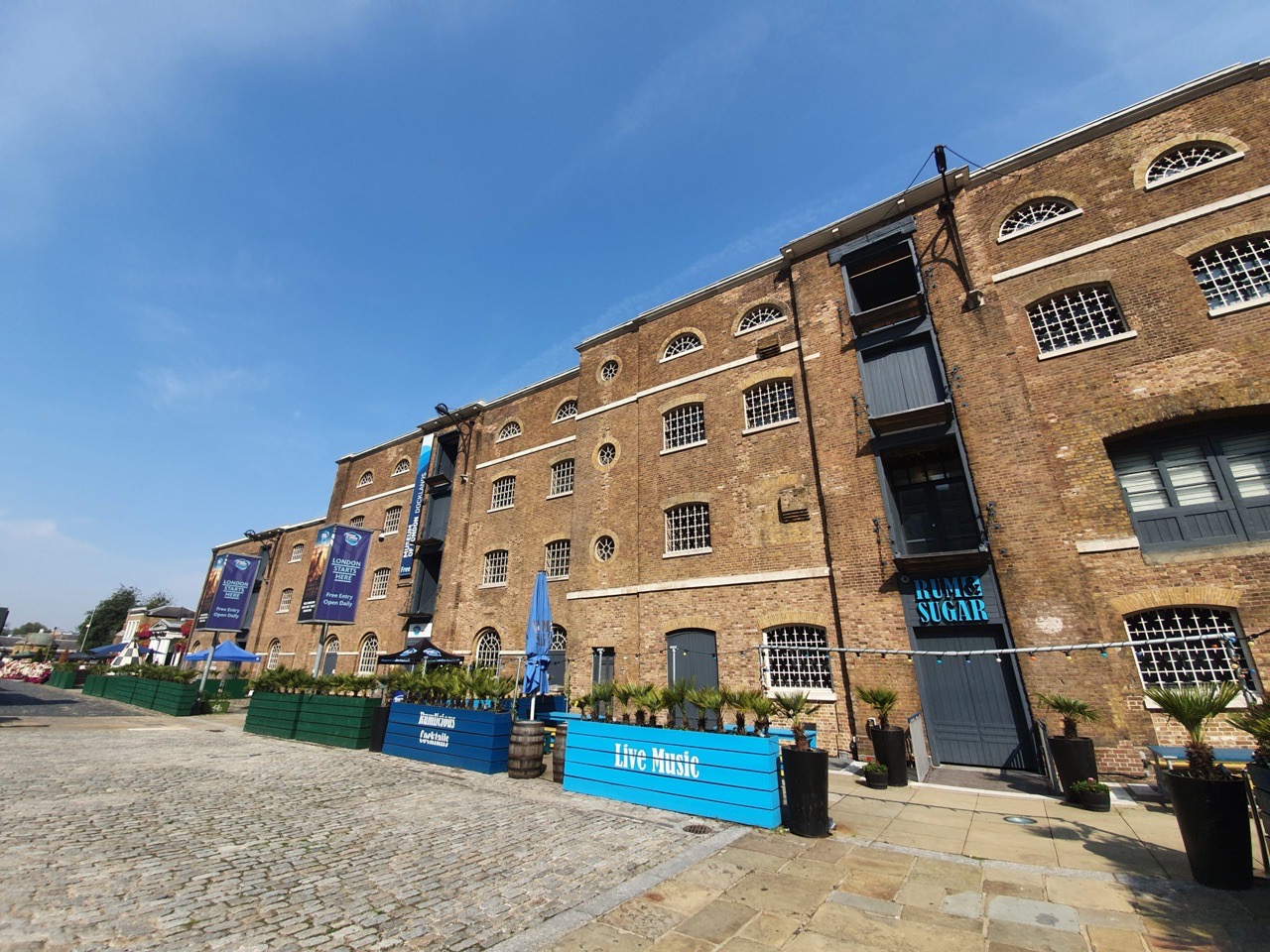
Tag: Museum of London

  • London – Tower Hamlets (Borough of) – Museum of London Docklands (St. Paul’s Church, Dock Street)

    London – Tower Hamlets (Borough of) – Museum of London Docklands (St. Paul’s Church, Dock Street)

    St. Katharine Docks, located near to the Tower of London, was once an important part of the city’s working docks, although it was damaged during the Second World War and is now more of a marina type affair. Back in the nineteenth century, the docks area was surrounded by slums and poverty, a dangerous part of London to be around.

    St. Paul’s Church was constructed on nearby Dock Street between 1846 and 1847, designed by William Cubitt & Co. Prince Albert came along to lay the foundation stone and the building was funded by wealthy donors and local seaman, who would have likely had little money. It could seat around 800 people and the church became an important part of the local community, trying to offer charity and guidance where it could.

    The church closed for religious services in 1968, but the building has remained and has now been converted into a nursery. There were hopes that a religious institution could continue to use the building, but it was finally sold in 1989. Anyway, this sign is one of the reminders of when the church was in operation, offering services throughout Sunday and offering a time when children could attend.
  • London – City of London – Museum of London (Ceramic Moulded Frog)

    London – City of London – Museum of London (Ceramic Moulded Frog)

    I’m quite impressed that from this fragment of pot that the Museum of London is able to know that it’s from the cult of Sabazios, a God from the Phrygian period. The pot dates from the second century and would have likely also had imagery of lizards and snakes on, which sounds awful if I’m being honest. It was found in 2010 when they demolished Bucklersbury House, an office building on Cannon Street, noted for incorporating a Roman Temple of Mithras in its cellar.

  • London – City of London – Museum of London (Plate Owned by Samuel Pepys)

    London – City of London – Museum of London (Plate Owned by Samuel Pepys)

    This is a new acquisition for the Museum of London and it belonged to Samuel Pepys, the famous diarist. It’s one of only three items of silver belonging to Pepys that still exists, with the other two now being in the United States. The silver is hallmarked, so it’s known that it was made in 1681 by Mary King in Foster Lane, a street near St. Pauls Cathedral that is still there. The one thing that the museum doesn’t state though is where this plate has been over the centuries (or where they acquired it from), although they note that its importance has only recently come to light.

  • London – City of London – Museum of London (Portrait of King Henry VIII)

    London – City of London – Museum of London (Portrait of King Henry VIII)

    The first thing I’ve discovered from this artwork is that the National Portrait Gallery is closed until the spring of 2023, I just thought that they were being a little slow to re-open after the health crisis. Anyway, this is one of the gallery’s artworks, currently on loan to the Museum of London.

    I’m puzzled that the Museum of London term this as a “portrait bust”, as I don’t know what that means. The National Portrait Gallery don’t use this terminology and it just looks like a portrait to me. It’s also mentioned to be after (ie, a copy of) a painting by Hans Holbein the Younger, with the gallery saying it was painted between 1536 and 1537, but other on-line sources say it might be 1538. Some people can be very precise….

    Anyway, it came into the collections of the National Portrait Gallery in 1871 and Holbein’s studio seemingly produced numerous versions of these paintings. It was painted during the process of the Dissolution of the Monasteries, relevant since the artwork is located within the exhibits on this subject in the Museum of London. I’m not sure that the King looks particularly strong in this image either, his eyes look tired and he doesn’t appear very magisterial. I’m not entirely sure who would have bought this and I don’t think that its provenance is known.

  • London – City of London – Museum of London (Fourteenth Century Royal Arms from Guildhall)

    London – City of London – Museum of London (Fourteenth Century Royal Arms from Guildhall)

    This rather lovely stone coat of arms is on display at the Museum of London and it dates to around the middle of the fourteenth century. The coat arms is from the Guildhall in London, which was where it was found in the roof during renovations of the building in 1864. The arms were for King Edward III after he claimed France (he claimed to be the heir as the grandson of Philip IV) and put the fleurs-de-lis into the coat of arms, alongside the English three lions. It wasn’t until 1801 that the fleurs-de-lis were finally dropped from the national coat of arms, a perhaps belated acknowledgement that the United Kingdom wasn’t going to include France.

  • London – City of London – Museum of London (Medieval Statue of St. Christopher)

    London – City of London – Museum of London (Medieval Statue of St. Christopher)

    This is a statue displayed at the Museum of London which was discovered in a Tudor Wall when Newgate Prison was being demolished in 1903. I feel that I have an affinity to St. Christopher since he’s the patron saint of travellers and I liked that the museum noted:

    “Medieval Londoners believed ‘whoever shall behold the image of St. Christopher shall not faint or fall on that day’”.

    What a rather lovely sentiment. It also meant that statues were placed in many locations around London, including the entrances to homes and bridges. The bridges element is important, as the legend goes that St. Christopher helped people across rivers, and then unbeknown to him, he helped Christ himself over a dangerous river.

    St. Christopher is also the patron saint of travel in general, so a fair few companies relying on this trade for survival might well be hoping that the saint can answer their prayers…

  • London – City of London – Museum of London (Model of Old St. Paul’s Cathedral)

    London – City of London – Museum of London (Model of Old St. Paul’s Cathedral)

    A model at the Museum of London of the old St. Paul’s Cathedral, destroyed during the Great Fire of London in 1666. Work has started on it at the end of the eleventh century and it was already the fourth church to be located at this site. By the time it was completed it was one of the longest churches in the world and for a while, it was also the tallest building in the world.

    The building was in a state of some disrepair, not least due to the English Civil War, by the mid seventeenth century and efforts were underway to restore it. Wooden scaffolding had been placed around the building, but then the Great Fire struck, and the building had little chance, especially given the handy wooden structure around it that soon caught fire.

    And the remains of the building after the fire. It was decided to start again with a new design, designed by Sir Christopher Wren, who had also been supervising the reconstruction of the old building.

    And its replacement, the modern St. Paul’s Cathedral.

  • London – City of London – Museum of London (Wellclose Square Prison Cell)

    London – City of London – Museum of London (Wellclose Square Prison Cell)

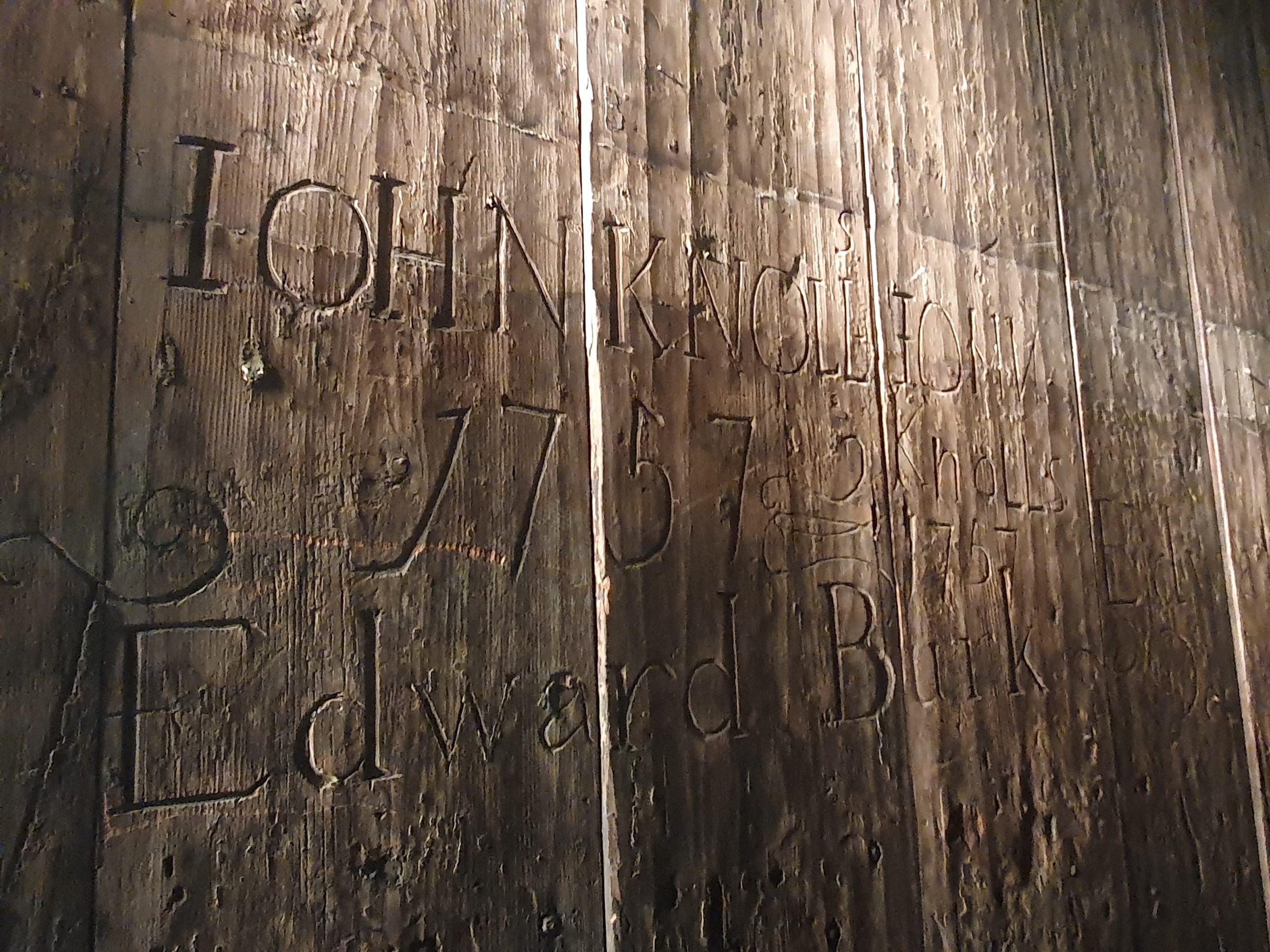
    This cell is on display at the Museum of London and is from the Wellclose Square Prison, also known as the Neptune Street Prison. It was primarily used as a debtors prison and this cell dates to around 1750, once located under the Cock and Neptune public house. Wellclose Square still exists, a short walk from the Tower of London, with the prison being used until the late eighteenth century.

    And some of the graffiti etched into the walls of the cell.

  • London – City of London – Museum of London (Lead and Glass from Merton Priory)

    London – City of London – Museum of London (Lead and Glass from Merton Priory)

    This might not look the most exciting of exhibits at the Museum of London, but there’s a lot of heritage in it. It’s a combined lump of smashed glass and window lead from Merton Priory, which would have been caused during the Dissolution of the Monasteries. It’s not known how old the glass and lead is, but it’s probably from the mid to late fifteenth century.

    Normally, this would have been carried away by those demolishing the building, but somehow it was overlooked and it was only discovered during excavations of the site between 1986 and 1990. It was quite a fall for the wealthy priory, which in 1437 had held a ceremony in honour of King Henry VI. The site is now a Sainsbury’s supermarket, which isn’t ideal (other than for shoppers) although the foundations of the chapter house remain. Not much else is left, materials were mostly taken to Nonsuch Palace, which in turn was demolished in 1682 to pay off gambling debts. But, at least some of the lead has survived, perhaps not in such a glamorous format as its design intended, but still here as a reminder that the priory once existed.

  • London – City of London – Museum of London (Savoy Grill Sign)

    London – City of London – Museum of London (Savoy Grill Sign)

    This sign, now in the Museum of London, dates back to 1929 when it would have been a little exotic in its styling (there would have been light bulbs behind it to provide sufficient illumination), designed to appeal to American tourists to the hotel. I like that museums keep quirky things like this, it reminds me of the Neon Museum in Las Vegas (I accept they have more than one sign though).

    The name of the bar at the Savoy, the American Bar, was also evidence of who it was trying to target, namely those wealthy American visitors to London. The bar, which was most decadent, was one of the first in the city to produce a cocktail menu and this was seen as most sophisticated. The museum notes that the grill restaurant would have served “terrapin, clams and oysters imported directly from the US”. I’m not sure about the terrapin….