
Tag: Morley St. Peter

  • Morley St. Peter – St. Peter’s Church (William Henry Beaumont)

    Morley St. Peter – St. Peter’s Church (William Henry Beaumont)

    The graveyard at St. Peter’s Church in Morley St. Peter.

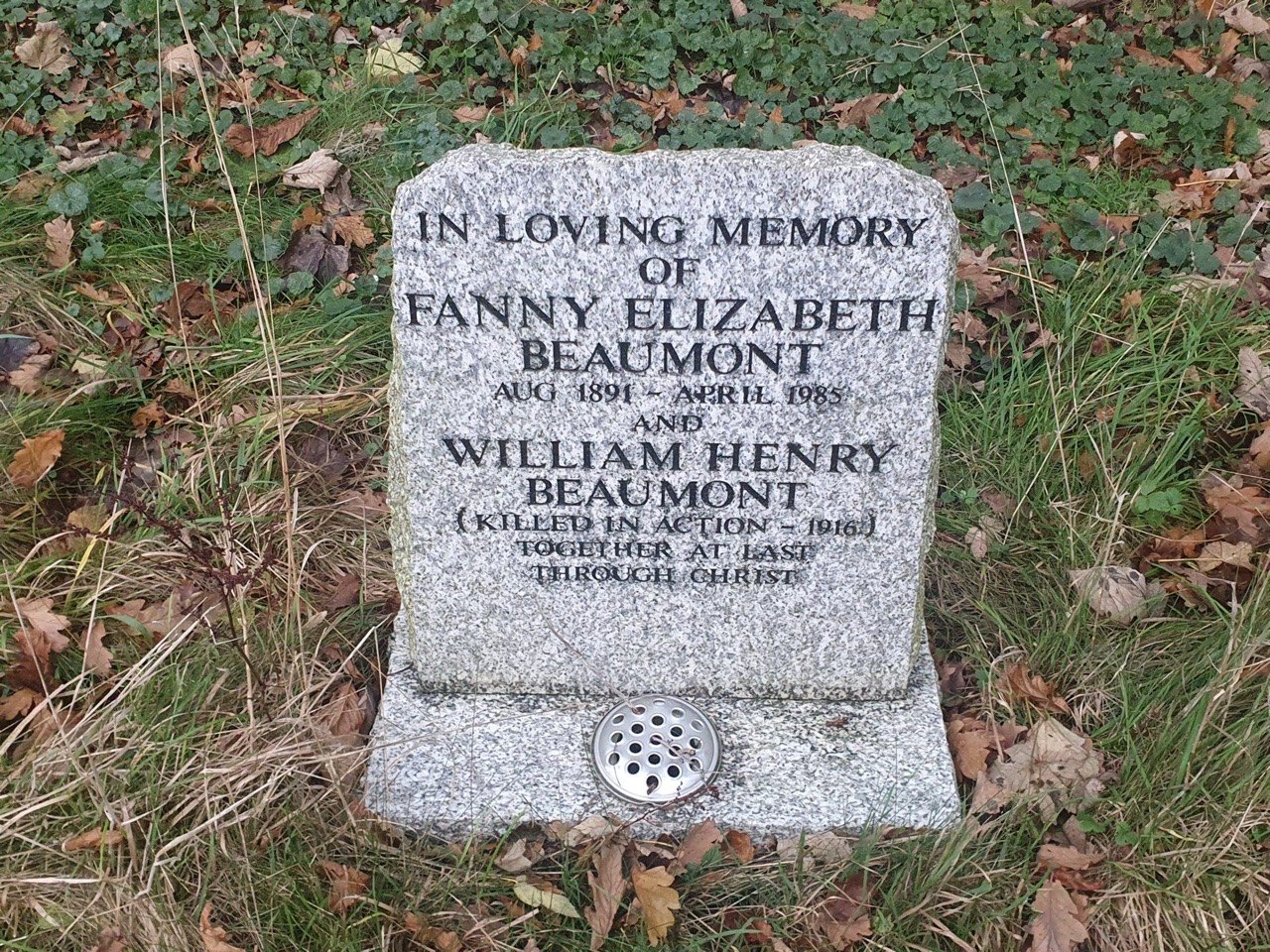
    Richard noticed this, which was of interest as it named William Henry Beaumont was killed in action in 1916. However, there was no record on the CWGC web-site of a war grave at the church and no-one from a local regiment of that name. Fanny (nee Burrows) had been born on 1 August 1891 and she died on 9 April 1985, just under 70 years after her husband.

    William was the son of Kate Beaumont of 21 Huntsworth Terrace in Marylebone in London, located near to Baker Street. William was in the 8th Battalion of the Royal Fusiliers and his service number was 18864. He died on Friday 7 July 1916 at the age of 25 and his name is recorded on the Thiepval Memorial, although his military records seem to have been amongst those which have been lost. He died in the Mash Valley area during the bloody battle to capture Ovillers.

    The neighbouring grave gave something of a clue, what appears to be the son of Fanny and William, namely William Henry James Beaumont, who was born in Marylebone on 16 January 1917 after his father’s death. By the time of the 1939 register, mother and son were still living at 30 Caithness Road in Mitcham, which was where William and Fanny had been living before he went to war. Of relevance primarily only to me, I’m fairly sure that I haven’t walked down that road at any point in the past, although I’ve been very near to it.

    The younger William lived until 30 November 2003. Which doesn’t really solve why any of the three have gravestones in this church, but I assume that the younger William moved up to Norfolk at some stage after the end of the Second World War (or the decades after it). Fanny’s death records are from near to Morley, so I assume she moved with her son and settled in this area.

    It’s hard to imagine what it must have been like having a husband die nearly 70 years before in such tragic circumstances, although it’s a shame that I can’t find William’s military records.
  • Morley St. Peter – St. Peter’s Church

    Morley St. Peter – St. Peter’s Church

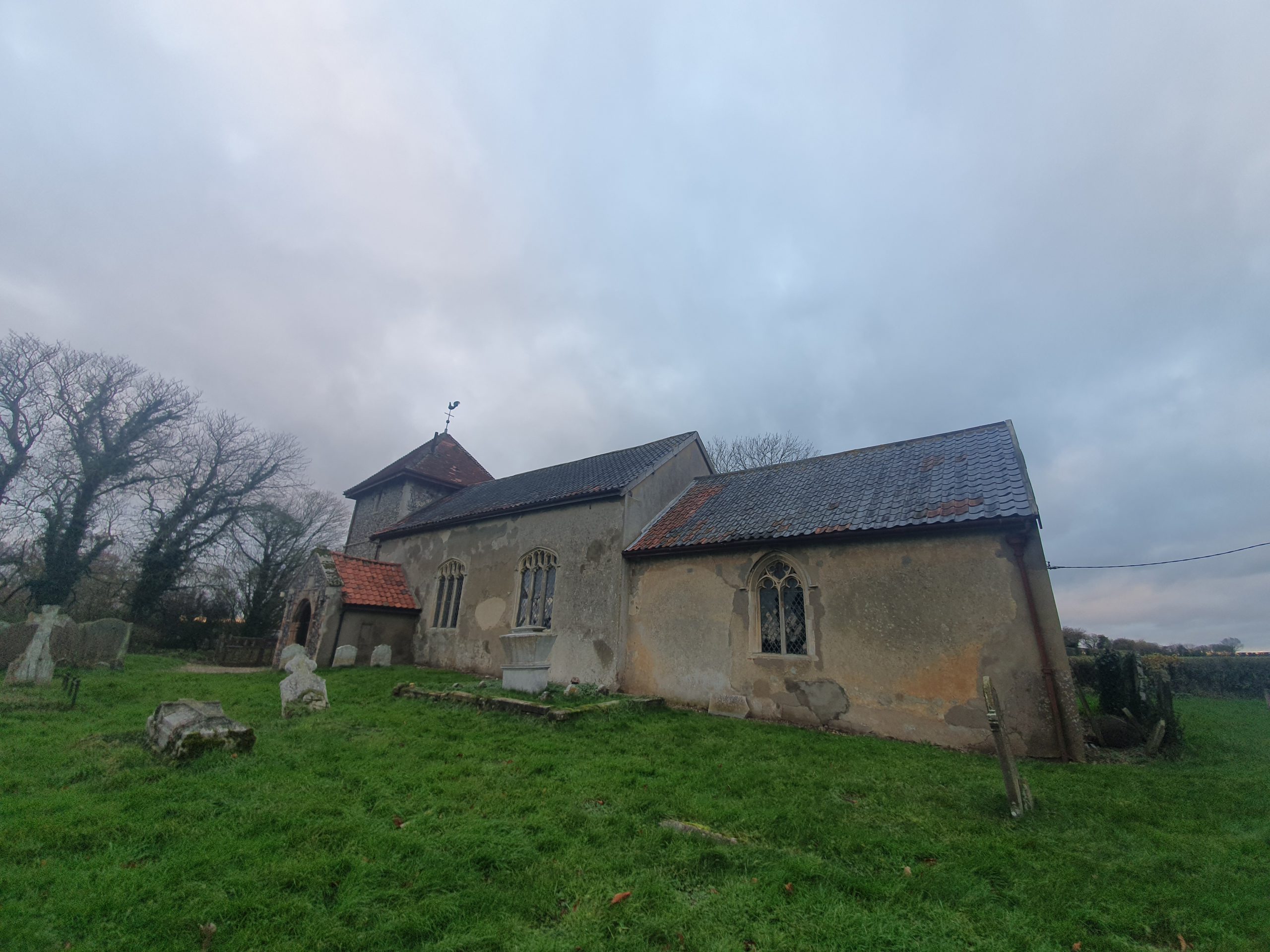
    St. Peter’s Church in Morley St. Peter (it’s by the Y of Morley in the above map from 1900) stands pretty much alone at the corner of a field, with no evidence of the village that perhaps once stood nearby. The wooded areas in the above map have mostly been ripped out over the last century, so it’s a relatively barren landscape.

    St. Peter’s has historically been the chapel of ease to St. Botolph’s Church which is situated nearby and it’s substantially smaller. The stone has been rendered over to protect it and it’s not in the best of condition.

    The tower is medieval and has lost at least one section, likely due to collapse than anything intentional although that event seems to have been lost to history. It now has a pyramid roof over the top, although the steps inside remain. There is apparently a traditionally held view that the church is pre-conquest, dating from around the late tenth century, although all of the current structure is medieval or later. The local church seem less convinced judging from their web-site and they believe that the church was constructed as a chapel at ease in the thirteenth century.

    The east window of the chancel, which was all reconstructed during the Victorian period.

    The porch is from the early sixteenth century and has seen better days.

    The dilapidation of the porch is more visible from the side.

    The church was locked, but to be fair, the keyholder details were provided on the noticeboard.

    An extension to the side chancel, likely from the nineteenth century. I suspect the Victorian renovators hoped for something of a religious revival to boost the attendance in the church, but the congregation size around here is highly limited.

    The repairs aren’t what I would call invisible.

    The churchyard is relatively substantial and there is a small section of recent burials.

    This path ploughs through the middle of the cemetery and then stops dead, but old maps suggest that it connected into an old path which has long since gone.

    The church is clearly in a bit of a state, but also seems well loved and peering in it seemed reasonably well maintained internally. It dips down quite a bit though, which means that the ground outside and the chancel are a little higher. The nave is aisleless and other than for the Victorians renovations, the church seems relatively untouched since it was built in the medieval period. All really quite charming.