This was our final church visit of the afternoon and Morley St. Botolph is certainly very different to the church at Morley St. Peter.

There is some evidence of a Norman church on this site and it’s possible that they constructed on a pre-conquest building. The church that stands today is mostly from the thirteenth and fifteenth centuries, although there was an extensive Victorian restoration. And a more recent disaster that I’ll come to a moment.

This illustration is from the middle of the nineteenth century, before the church was restored.

The chancel window, likely put in here quite early, perhaps in the thirteenth century.

The three stage tower, likely from the later part of the fifteenth century.

The blocked up priest’s door.

The vestry was a medieval addition, although it was in ruins by the nineteenth century and subsequently needed rebuilding by the Victorians.

The porch, probably thirteenth century, but heavily restored.

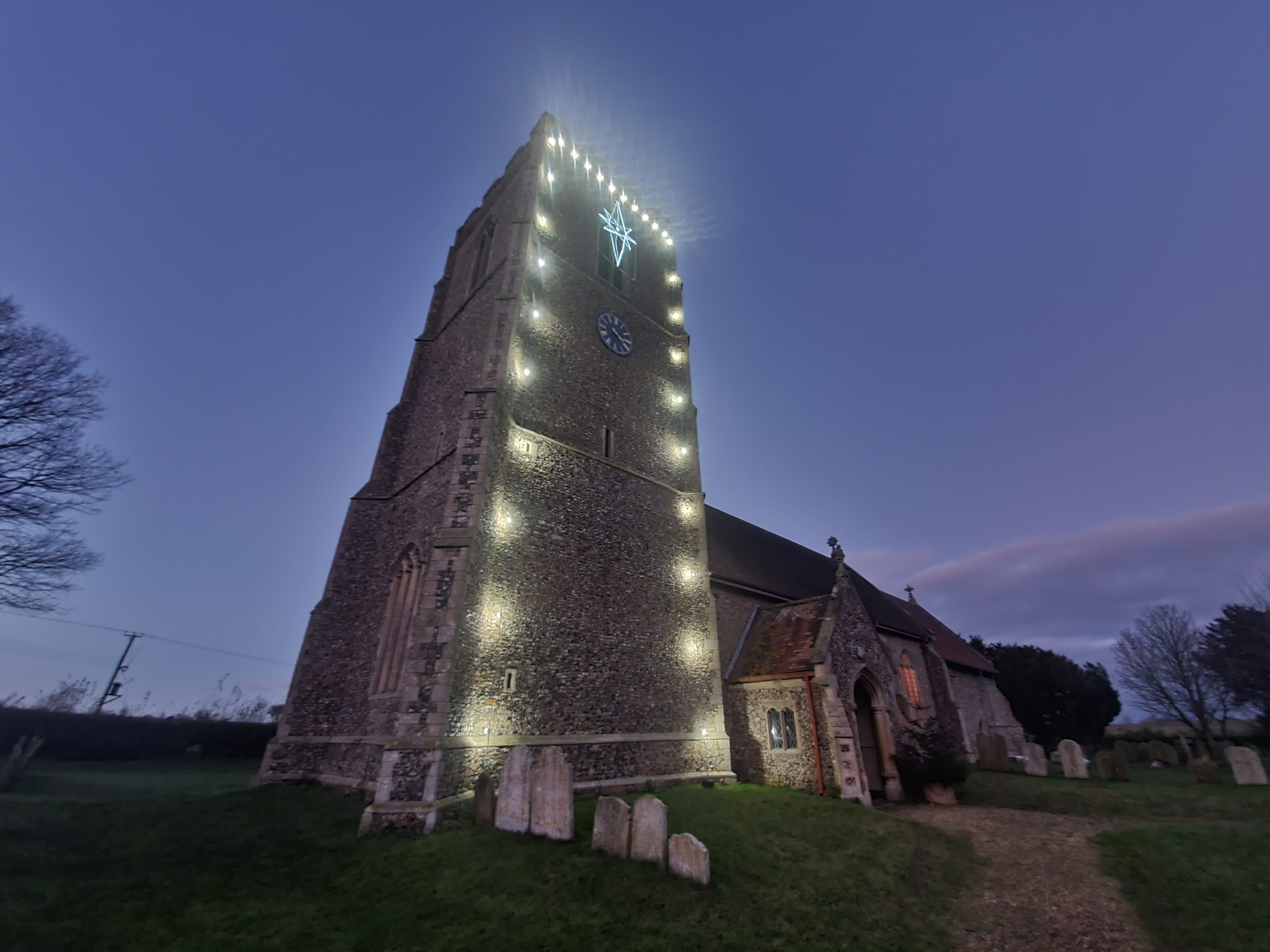
It was getting dark and as part of their festive celebrations, the church turned the lights on.

And another photo of after we had left the church’s interior, I thought that this was rather lovely.

The interior of the church was accessible as there’s a Christmas tree competition going on and the community had been invited to come and visit.

The interior of the church is mostly modern as there was a devastating fire in 1959 which destroyed most of the nave. The building was left derelict for a few years, but it was needed by the community and so a reconstruction project was started. The architect was James Fletcher Watson and he has ensured that the church has retained its medieval feel, with some quite attractive new wooden pews. I haven’t yet found any photos of the church in ruins, but the chancel section survived, albeit heavily fire damaged.

Nicely decorated and there’s the selection of raffle prizes to one side. As an aside, Richard paid £1 to enter and he’s hoping to win the slime.

Some of the Christmas trees from the competition, all from local community organisations.


A friendly volunteer turned on the main lighting after we said that we were looking around and he gave us a brief history to the history of the building. The lighting before this though was minimal, but the glow from the heating gave it a strangely warm feel. There was a warm welcome offered by the volunteers, with free hot drinks available which Richard partook in. Members of the community had come to look at the Christmas trees and I liked the enthusiasm of the volunteer at the little desk near to the door who was encouraging people to join in some fund raising projects next year.
It appears that this church is something of a hub for a number of local congregations and it has a welcoming feel to the whole arrangement. If it hadn’t of been that important cluster church then it might never have been rebuilt in the early 1960s and it could have been left to fall into ruins.