Tag: Memphis

  • Memphis – National Civil Rights Museum

    Memphis – National Civil Rights Museum

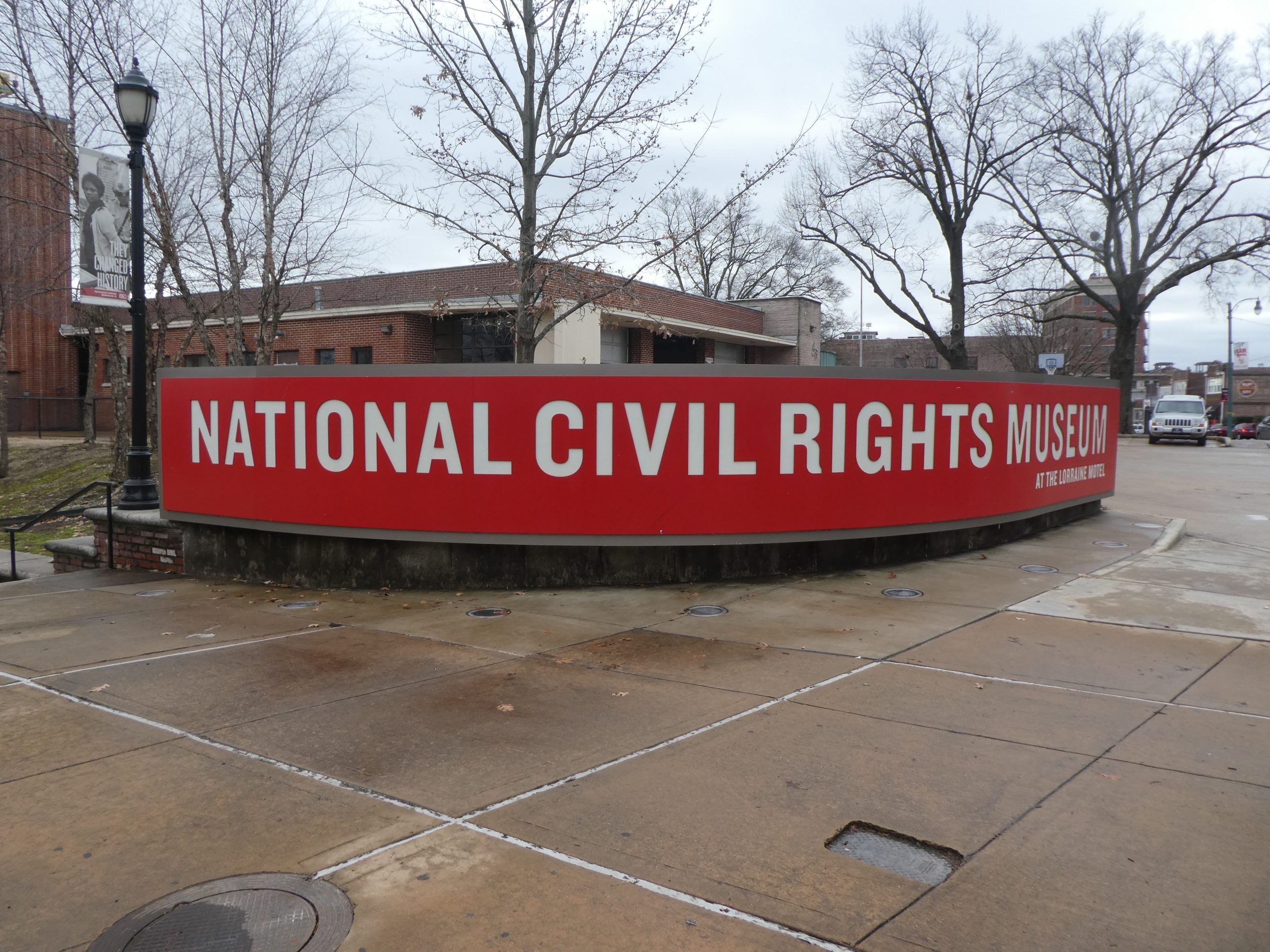
    I visited this museum in January 2018 and I had slightly feared that it might be a little bit preachy, telling people what to believe rather than engaging in the history of the civil rights movement. I had no reason to be concerned though, the museum was well curated, never tried to preach and was full of interesting and relevant exhibits in different forms whether that be video, text, artefacts or reconstructions.

    I’ve posted separately about:

    Martin Luther King’s Eulogy

    Martin Luther King’s Cell

    Jim Crow Today

    Freedom Riders

    I Am a Man

    Room 306

    Room 306 is where Martin Luther King was assassinated, and it’s possible to visit a second part of the museum which is the building located opposite, from where the bullet that killed him was fired. The hotel room in what was the Lorraine Motel has been preserved and this forms one of the final parts of the museum tour, it’s quite a sudden and dramatic ending to a visit in many ways.

    The room next to the bathroom where the shot was fired, showing visitors the view from where James Earl Roy fired the fatal shot. The motel can be seen clearly through the windows, which is now the main part of the museum. There is some debate about whether James Earl Roy was actually the murderer, but the museum addresses that and presents the various theories that have been raised over the years.

    The bathroom, now sealed off, from where the shot was fired. There was plenty to see in the museum and I was here for just under three hours, across the two different buildings. Visiting in a January weekday also meant that there weren’t too many other people around in the museum, so it was a quiet visit.

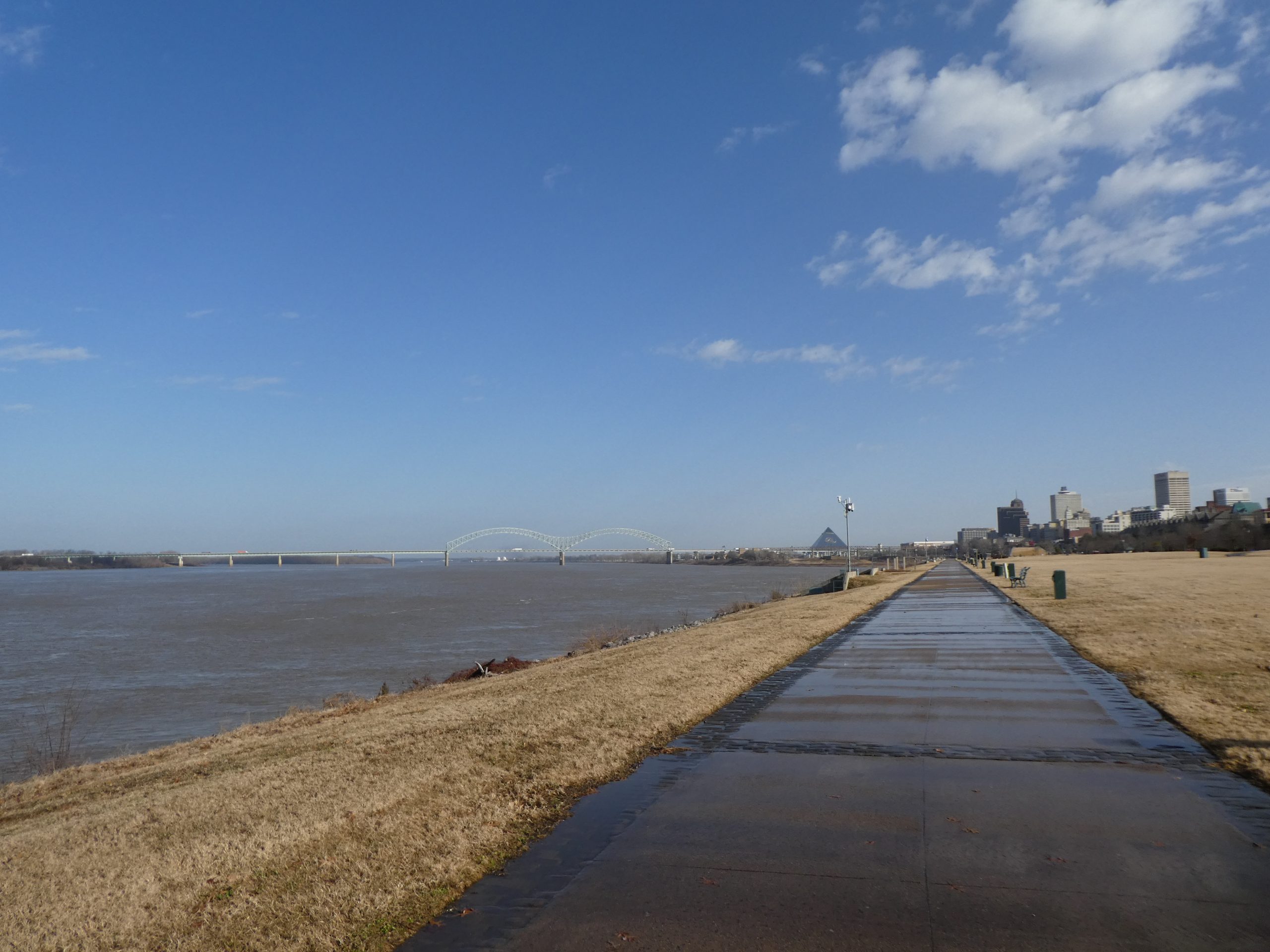
    It is fortunate that the two buildings have survived, and at times that wasn’t certain, and there was a modernisation of the museum which was completed in 2014. Memphis isn’t the wealthiest of cities and so the museum being sited here, especially given the importance of it being Martin Luther King, has at least brought some visitors to the city centre.

    The museum is very well reviewed, amazingly there are just 21 one-star reviews on TripAdvisor out of the nearly 9,000 reviews that have been left. Given the sensitive topic that the museum covers, this seems to me to be a considerable achievement for the curators and some of those 21 reviews have been left in error or are just ridiculous.

    And, finally, some more photos from the museum which include the replica bus that Rosa Parks sat on and the replica sanitation truck from the strike that led Martin Luther King to be in Memphis.

  • Memphis – Memphis Martyrs

    Memphis – Memphis Martyrs

    Yellow fever decimated the city in 1878, with this sign noting those martyrs who bravely remained to try and save as many as they could. Perhaps there are similar parallels to the coronavirus today. The disease was spread by the number of river passengers who stopped off in Memphis during their journey along the Mississippi. The epidemic cost the city $200 million and killed 20,000 of its residents, but it also changed its demographics permanently. Many richer white residents moved to cities such as New Orleans and Atlanta, leaving Memphis with a predominantly black and poor white population.

  • Memphis – National Civil Rights Museum (Martin Luther King’s Eulogy)

    Memphis – National Civil Rights Museum (Martin Luther King’s Eulogy)

    Part of the eulogy that Martin Luther King wrote on 4 February 1968, when he knew that his life was in danger. He was killed two months later, on 4 April 1968 and part of this eulogy was read out at his funeral.

  • Memphis – National Civil Rights Museum (Martin Luther King’s Cell)

    Memphis – National Civil Rights Museum (Martin Luther King’s Cell)

    This is a recreation of the prison cell that Martin Luther King was placed in following his arrest for taking in part in peaceful civil rights demonstrations in Birmingham in April 1963. Whilst in his cell, he wrote what became known as the ‘Letter from Birmingham Jail’ which called for peaceful protest against the injustices of discrimination.

    Much of the problem in Birmingham was Bull Connor, the city representative whose clumsy decisions accidentally brought the protests to international attention. Members of the civil rights movement knew that Connor and some other city representatives were unlikely to make coherent decisions, hence why they were keen to protest in the city, which was also heavily segregated.

    Martin Luther King controversially encouraged youngsters to get involved with the campaign, similar to that with the current situation with Greta Thunberg and the environmental campaign. Connor however decided to arrest the thousand children on the march and ordered water hoses and dogs to be set on them. Martin Luther King said that evening, “Don’t worry about your children who are in jail. The eyes of the world are on Birmingham. We’re going on in spite of dogs and fire hoses. We’ve gone too far to turn back.”

    President John F. Kennedy at this stage intervened as the crisis worsened and in May 1963 segregation started to end in Birmingham, or at least start to end officially. On 11 June 1963, the President made an announcement from the White House that there would be progress made on civil rights, which led to the 1964 Civil Rights Act.

  • Memphis – National Civil Rights Museum (Jim Crow Today)

    Memphis – National Civil Rights Museum (Jim Crow Today)

    The museum used many different types of exhibits to explain the history of civil rights and this graphic was presented early on in the exhibition route. It is a map of where in four major cities the African American, White, Asian and Latino populations currently live. So, although the Jim Crow laws of segregation no longer exist, it’s clear that the reality on the ground is that they still have a legacy effect today.

    It’s easier to see the New York map in the photo that I took, although the results are similar for the other cities which is clear segregation of blacks and whites. Latino and Asian communities tend to merge between the two, but are still often in their own defined areas of cities. In the home city of the museum, Memphis, the top right image of the four shows that there are very few areas where both communities are living in equal numbers. Much of this relates to white flight when white residents left the inner cities and moved to the suburbs, although that situation is reversing a little more now as city centres become more attractive again.

    The museum didn’t overplay this graphic, but it was a reminder for visitors arriving at the museum as to how division in the United States continues today.

  • Memphis – National Civil Rights Museum (Freedom Riders)

    Memphis – National Civil Rights Museum (Freedom Riders)

    The first time I had heard of the Freedom Riders was at this museum, a group of very brave passengers who deliberately rode on inter-state buses to contest those states who enforced segregation on these services. Due a decision by the US court, it was decided that inter-state passengers did not have to segregate, but in reality, they were forced to in some states.

    This is a very dramatic recreation of the Greyhound bus, one of two buses (the other was operated by Trailways) that were heading from Washington DC to New Orleans. They were heading to Birmingham, but the Greyhound bus which was about an hour ahead pulled into the city of Anniston in Alabama. The occupants were attacked with the police refusing to intervene, other than to eventually escort the damaged bus to the city limits.

    When the bus reached the city limits, it was attacked by mobs, many attached to the KKK, who slashed its tires and set fire to it. The occupants were nearly burned alive, but managed to flee the bus and were then attacked again by the mob. They then managed to get to Anniston Memorial Hospital where the medical staff weren’t keen to treat the freedom riders. Fearing that their hospital would be attacked if they helped them, the freedom riders were asked to leave, which they did.

    The attacks shocked the United States, or at least a portion of it. Robert F. Kennedy, the US Attorney General, intervened to allow the Freedom Riders to continue their journey. He then distanced himself from the aims of the civil rights activists, saying he wouldn’t intervene in constitutional matters. Robert F Kennedy wanted the rides to end because they were embarrassing the United States and he urged the riders to “cool down”. James Farmer, one of the most important civil rights figures, replied “we have been cooling off for 350 years, and if we cooled off any more, we’d be in a deep freeze.”

    Looking down on the bus, another powerful and troubling exhibit presented by the museum clearly with plenty of background information. As for the city of Anniston, it has seen its population fall every decade over the last half century and one organisation branded it the most dangerous city in Alabama.

  • Memphis – National Civil Rights Museum (I Am a Man)

    Memphis – National Civil Rights Museum (I Am a Man)

    This is one of the displays at the National Civil Rights Museum which relates to the sanitation strike which took place in Memphis. Black workers were paid less than their white colleagues, and treated more harshly with fewer opportunities, which led to a strike and march where they had posters with the “I am a Man” slogan on them.
    It was this strike that what the reason that Martin Luther King came to Memphis, and was sadly assassinated whilst staying in Room 306 at the Lorraine Motel.

    The above article was published by a local newspaper at the time, and there was some surprise amongst the ‘whites’ that the issue had escalated. But paternalism and the concept of inequality were always the main issue that underpinned everything.

    The phrase, which is perhaps better known more recently in some quarters today with Will in the Inbetweeners using the phrase (in an unrelated manner) when trying to buy alcohol in an off-licence. The phrase though dates back to the late eighteenth century, when a tract was published with the title “Am I Not a Man and Brother?” and it became used in the anti-slavery movement. It’s a very powerful line.

  • Memphis – National Civil Rights Museum (Room 306)

    Memphis – National Civil Rights Museum (Room 306)

    A visit to the marvellous National Civil Rights Museum ends, I think quite abruptly, with room 306. On the balcony outside this room, Martin Luther King was assassinated on 4 April 1968.

    One of my political heroes and perhaps the greatest American of the twentieth century, I’ve also been on a tour of his birthplace home in Atlanta.

    King’s room, untouched since he was killed. Today, there is plexiglass allowing visitors to look into the room and this is all integrated into the modern new museum building. It’s quite a sobering way to end a tour of the museum, a reminder of the fight that the civil rights movement has had for so long.

    The bathroom of room 306. The plexiglass that has been used is quite unforgiving when taking photographs and it’s hard not to get reflections.

    The balcony where Martin Luther King was shot.

  • Memphis – Gus’s World Famous Fried Chicken

    Memphis – Gus’s World Famous Fried Chicken

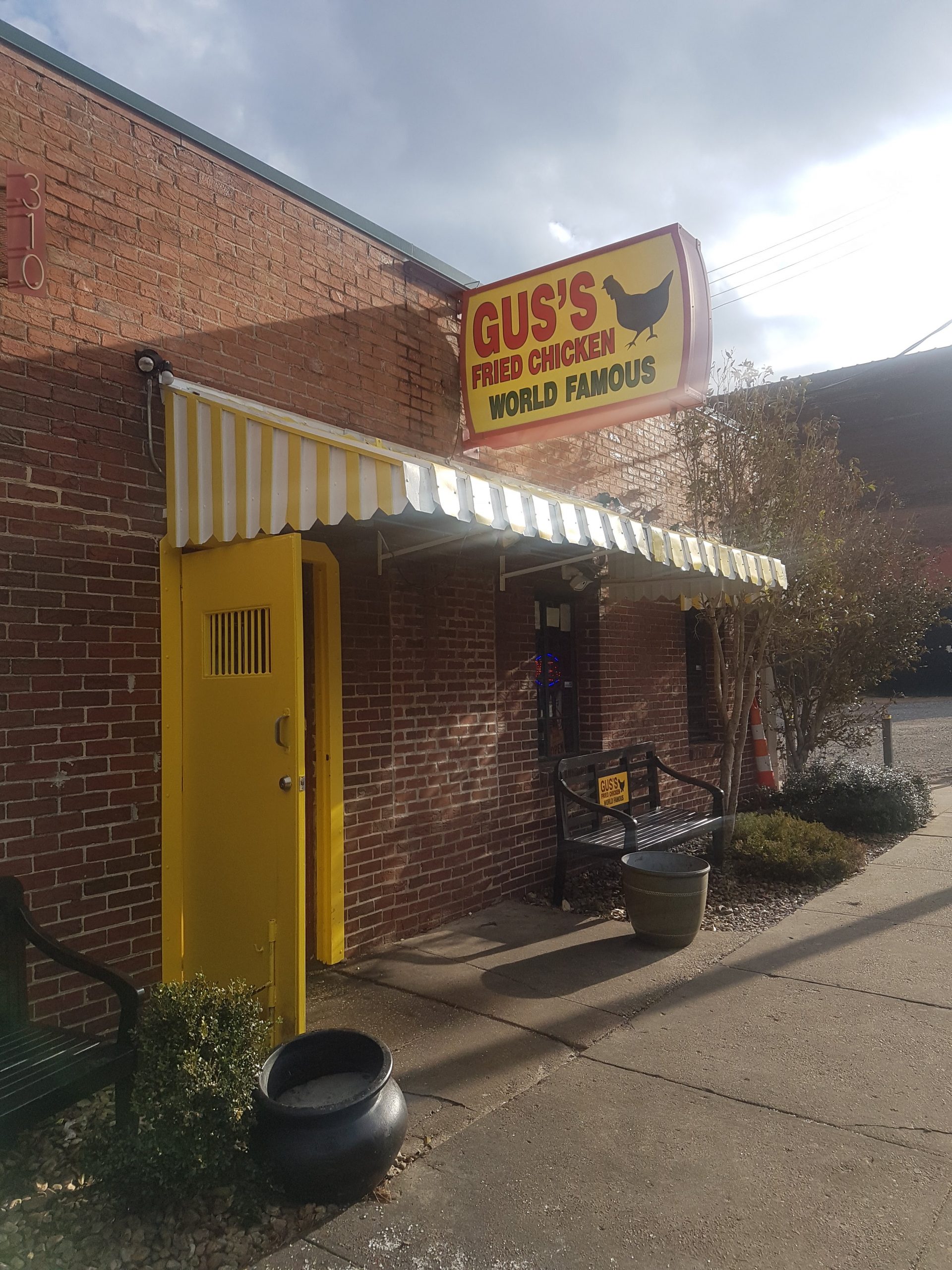
    Back to January 2018 and there was one restaurant in Memphis that was outstandingly well rated (and it still is) and something of a culinary experience. This was evident when I got there and saw how many people were standing outside waiting to get in, on a mid-week afternoon in January…. Fortunately, it was organised and so I went in and put my name on the list and was told there would be a table available in around thirty minutes. But, sometimes fine food is worth that wait. It’s like waiting in Greggs for eight minutes whilst they put a new batch of chicken bakes in so that I can get a beautiful piping hot one. And, soon enough, after around thirty minutes a staff member came outside and shouted “Julian”, so it was time…..

    The menu, all clearly laid out and I think highly tempting.

    This is Memphis, so of course the service was engaging, efficient and personable. It’s not large inside the restaurant, but it was atmospheric and had a sense of fun to it.

    Can’t beat a bit of hot sauce. Well, you can I suppose, but this was a perfect complement to the meal.

    And the main event, two pieces of chicken breast, a chicken wing, baked beans, slaw and fries. And I got an unlimited Dr. Pepper, so this truly is the land of dreams. And, as for the chicken, it was as near perfection in a fried chicken dish meal as I’m sure it’s possible to achieve. A crisp exterior, with no irritating flabby skin on the chicken, moist and tender chicken which fell apart with a really depth of flavour to the coating. The fries were moreish, fluffy on the interior and firm on the exterior and the slaw was creamy. Fried chicken shouldn’t need to be greasy, something which some KFC outlets haven’t yet worked out, it should be just like this.

    The wait at the beginning also added to the whole experience by increasing the anticipation for the food, with the service always being pro-active. I thought about this meal numerous times in the weeks after, this is a slice of the true America as far as I’m concerned. Impeccable. They have some more outlets in this small chain, I am today promising myself that I’m going to go back and visit another one.