Tag: Madrid

  • Seville – Renfe Train Journey from Seville to Madrid

    Seville – Renfe Train Journey from Seville to Madrid

    [I originally posted this in July 2018, but have reposted it to fix the broken image links]

    20180714_113203

    As I was in Seville for a few days, I thought that I’d take the opportunity to travel onto Spain’s capital, as I had never visited before. The ticket purchase was easy enough, via Renfe’s web-site, although the prices weren’t that cheap. An advance purchase ticket cost around £39, although it’s more expensive on the day of travel.

    I made a slight mistake in how I booked the tickets, which is that I opted to go from Seville San Bernardo railway station, instead of Seville Santa Justa railway station. This didn’t matter, and I don’t think it impacted the price, but it meant that I had a three minute connecting journey and it’d have been just as easy for me to walk to Santa Justa. The photo above is of Seville San Bernardo which is a relatively large station, although it’s much smaller than Santa Justa.

    20180714_114326

    On entering San Bernardo I was rather confused, although this isn’t a rare situation for me to be in. One advantage of the British rail network is that when there are automated gates, there are always staff present to help passengers. Other networks across Europe don’t seem to always have that requirement, so I was faced with a row of automated ticket machines and no way through them.

    I had the ticket on my phone, but there was no obvious way that the ticket machines could read that. So, I noticed there was a Renfe information desk, and after a five-minute wait I was able to speak to someone. She was helpful and she explained that I needed a card to get through the barriers, and she handed me one. That was that mystery resolved.

    20180714_114901

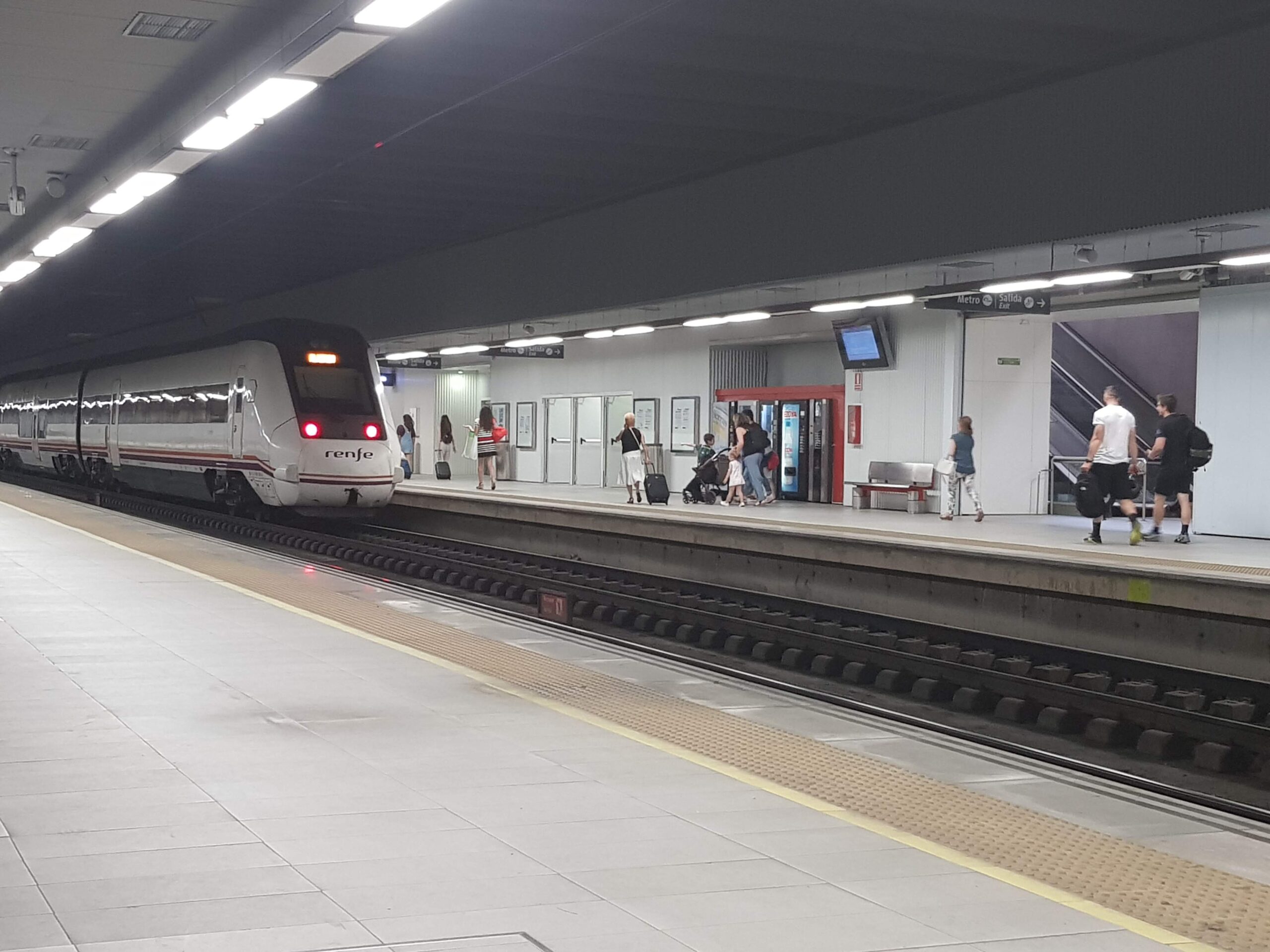
    The station was more like an underground line, although it had sufficient seats and was pleasantly air conditioned.

    20180714_121324

    Screens showed when the trains were coming through. Which is another problem with the Spanish rail network, as every journey requires a seat reservation. That meant I couldn’t have got an earlier train for my three minute connecting journey, and it meant that I had to have a seat reservation for that journey. I understand the need to have seat reservations for long distance journeys, but this seemed excessive for other journeys.

    Anyway, the train turns up on time and is packed, so the seat reservation system had failed anyway. I felt that I could manage the three minute journey in the train’s corridor, but it wasn’t a particularly pleasant trip as it was quite warm.

    20180714_132447

    My first impressions of the Spanish rail network were, at this point, rather negative. I’d had to work out how to get through the barriers, be limited as to what train I could get and then find that the train was full. But, fortunately, everything got much better.

    I liked that when I got off the train that there was a staff member with a sign telling customers what platform to go to for the Madrid train. This was rather like at an airport where staff are trying to get customers to their connecting service, and it was all very managed. I liked how at the entrance to platform two, which is where my train departed, that a staff member was checking everyone had a ticket. I didn’t have long to make my connecting train, so it was reassuring that I knew that I was in the right place.

    20180714_132535

    Going down the escalator to the train, where it was possible to see the security checks and ticket check that was on the platform. Since a rather serious terrorist incident on the Spanish network over ten years ago, they have since scanned baggage before customers can board. I’m not sure how effective the whole system is, but it perhaps gives reassurance to passengers. There was also then a ticket check, with all of the staff members being friendly and helpful.

    20180714_132924

    SNCF have an irritating habit of giving me a seat reservation and then not having a carriage which matches that seat reservation. This was much better, there was a staff member to guide customers, but the information on the side of the train was clear. I knew which carriage to board and the numbering of seats was also clear.

    20180714_134338

    Renfe staff handed out free headphones at the beginning of the journey to anyone who wanted them.

    20180714_153141

    There was a film showing on screens, which was the Greatest Showman, and customers could plug their headphones in to a connector at the seat if they wanted to listen to the audio. A rather nice idea, I’m not sure if any British rail company does something similar.

    Also by the screen there was an indicator which showed the time and how fast the train was going.

    20180714_143344

    I had been allocated a window seat and the terrain was quite varied along the distance. One slight issue is that there was air conditioning, but it only seemed to be working on the section by the window. This meant that I was only half cooled down, although the overall temperature in the carriage wasn’t too bad.

    20180714_132925

    Disembarking from the train in Madrid, with the service having been around 80% full. The train journey had taken 150 minutes and it arrived on time.

    20180714_161017

    Other passengers disembarking from the train.

    20180714_161503

    And, my first visit to Madrid now began….
  • Madrid – Puerta de Toledo (Gate of Toledo)

    Madrid – Puerta de Toledo (Gate of Toledo)

    [I originally posted this in July 2018 and have reposted it to fix the broken image links]

    20180715_113944

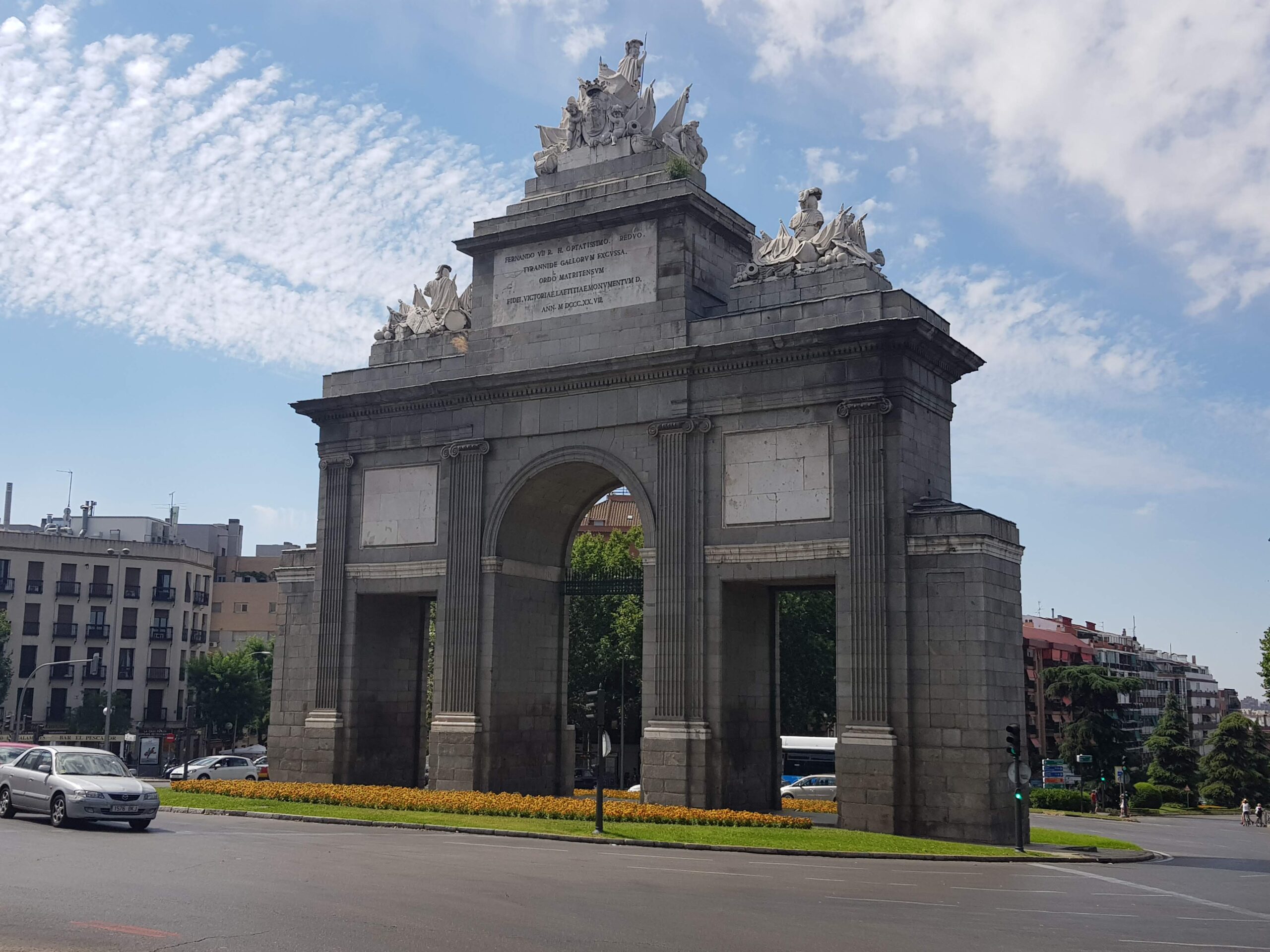
    Constructed between 1813 and 1827 is this gate, which was constructed to make Spanish independence from France. The inscription on the gate reads that Fernando VII, the father of the nation, has restored the country back to the people following the French usurpation. It was one of the last gates to be added to the city walls of Madrid, which at the time encircled the central part of the city.

    20180715_113830

    It’s rather difficult to get to the gate as it’s in the middle of a traffic island, somewhat left adrift from everything. It was once a main gateway to the city through which people, horses and carriages would have entered, although it is no longer used for that purpose.

    The gate was fully restored in 1995, although I thought that it was a slight shame that such a beautiful structure is now surrounded by cars. It also has a slightly more sinister past in that it was formerly the location for where locals would come to celebrate public executions.

    Although it’s not easily visible to the human eye, and indeed, not at all possible for me to notice, there are some problems with the central arch subsiding slightly. This was caused when someone decided that it would be a marvellous idea to place a tunnel just below the structure.

    Here’s what it used to look like, with the city walls visible on either side.

  • Madrid

    Madrid

    [I originally posted this in July 2018, but have reposted it to fix the broken image link]

    That’s the end of my short stay in Madrid, which was unfortunately just a little too hot. But, I’ll have to come again as I have two metro journeys left unused on my ticket, and I want to make the most of them. I might well come back during a slightly cooler period of the year though….

    It’s a rather lovely city, although I only got to explore a relatively small part of it. Not quite as vibrant as Seville, and perhaps not quite as historic as I had expected, but still full of atmosphere and character.

    Cibeles Airport Lounge

    Thyssen Museum (Floor 0)

    Thyssen Museum (Floor 1)

    Alvaro de Bazan Statue

    Puerta de Toledo (Gate of Toledo)

    Ibis Madrid Alcorcon Tresaguas

    Almudena Cathedral

    Beer in McDonald’s

    R-Line on Metro

    Museo de Historia de Madrid

    Oven Restaurant

    Thyssen Museum (Floor 2)

    Muslim Walls and Parque Emir Mohamed

    Campo del Moro (Moorish Gardens)

    Thyssen Museum

    Plaza de Espana

    Mercado de San Miguel

    Renfe Train Journey from Seville to Madrid

  • Madrid – Cibeles Airport Lounge

    Madrid – Cibeles Airport Lounge

    [I originally posted this in July 2018, but have reposted it to fix the broken image links]

    20180719_020807

    I had an early morning flight from Terminal 1 at Madrid airport and I noticed that the airside lounge was open 24 hours a day. This suggested to me that the security process also didn’t close at night, so at 02:00 I tried to get through security, and I was allowed through. The entire security process took under a minute, an efficiency that I appreciated at that time of the morning.

    The lounge is located in the non-Schengen area of Terminal 1, but I see no reason why anyone on a Schengen flight can’t go through as there are one-way exit doors back to the main part of the terminal. It just means going through the customs check at the airport. The lounge is then situated near to Gate B26 by going in the lift to the second floor.

    20180719_020727

    Technically access to the lounge is only allowed three hours before the flight, but I tried four hours before, just in case. The staff member was friendly and helpful, and scanned my Priority Pass app, saying that the early arrival was fine.

    It was clear that my entry didn’t cause any issues in terms of lounge capacity, as I was the only passenger in there. There was to be only one other person in the lounge during the three hours that I remained there, so it’s clearly not a busy lounge in the early morning.

    20180719_023133

    There were numerous different types of seating area, including comfortable low chairs, and some at tables. There were a large number of power outlets, located by most of the tables.

    20180719_020803

    The lounge is large in size and there are toilets inside the lounge, so passengers don’t need to go back into the main terminal. There was also a reasonable selection of magazines and newspapers, in a range of languages.

    20180719_020740

    There is a large central bar which contains food and drink, with refrigerated chillers located along its length. There were self-pour wines and spirits, as well as a decent range of soft drinks, and I was pleased with the chilled lemon Fanta. There were lots of different teas and also some flavoured waters. There was also a Nespresso machine, and unusually, there were very clear instructions on how to use it and a description of the four capsules that were available.

    20180719_021224

    The fridges contains a few different types of yoghurt, around eight different types of sandwiches and some pre-cut fruit options of apple and pineapple. The sandwiches were a little bland, but the chicken and mustard one wasn’t too bad.

    20180719_020753

    The pastry selection, of which I tried valiantly to make my way through on my own, but without entire success. I noticed that at lunch and in the evening that there were cooked meals available, with some of the options looking quite tempting.

    20180719_020747

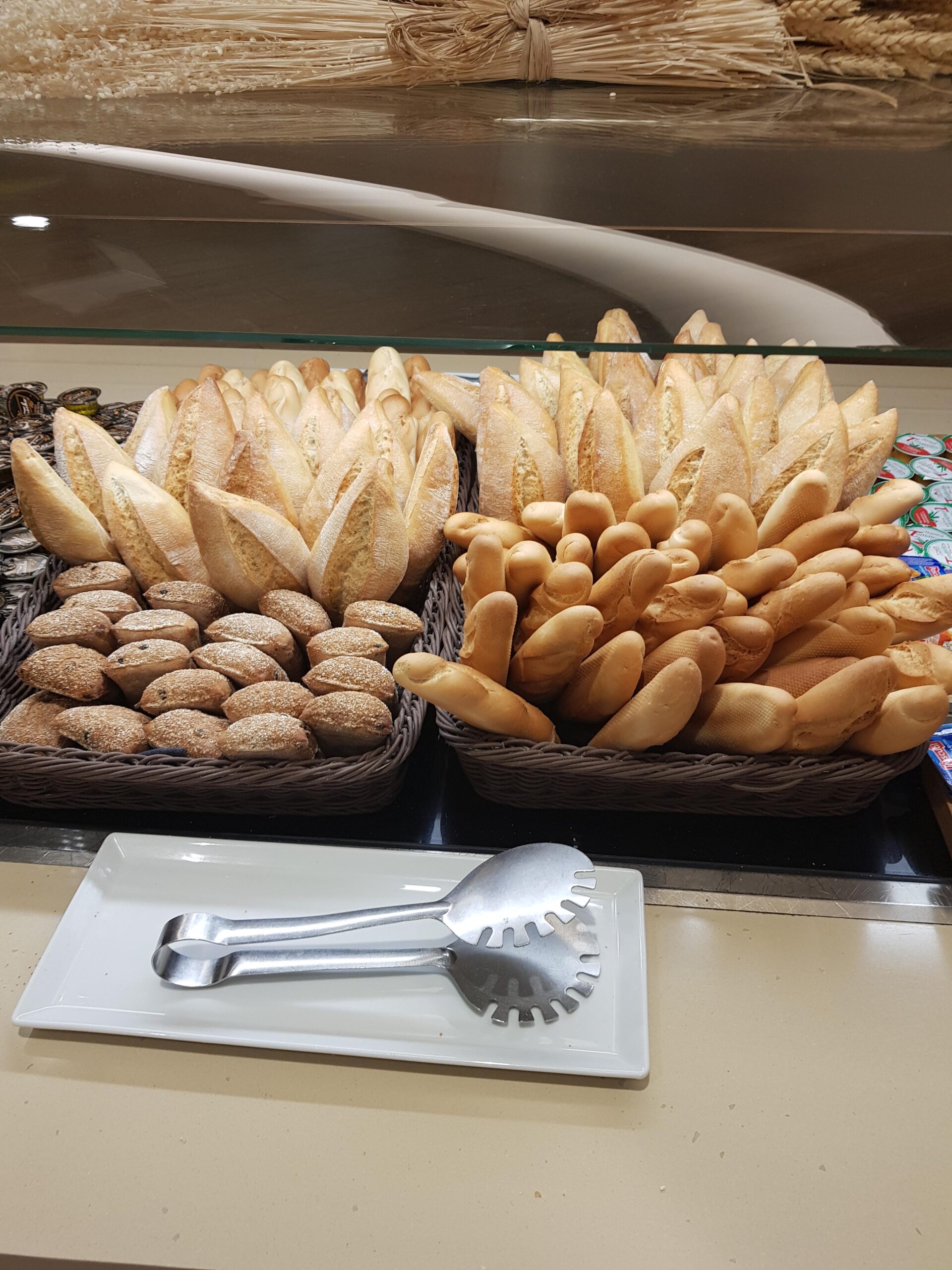
    There were also breads, jams, cereals and other options to choose from.

    I like the lounge, it was spotlessly clean and the staff member at the reception desk was helpful. I think customers with the appropriate status from Sky Team and Star Alliance can use the lounge, but on this occasion I used my Priority Pass.

  • Madrid – Ibis Madrid Alcorcon Tresaguas

    Madrid – Ibis Madrid Alcorcon Tresaguas

    [I originally posted this in July 2018, but have reposted it to fix the broken image links]

    20180715_155900

    For my time in Madrid, I decided to stay at this Ibis hotel, which was around a fifteen-minute underground journey away from the centre. It’d have been nicer to have stayed in the city centre, in the way I was able to in Seville, but it was just a little too expensive. I opted for this one as the room and breakfast came to around £40 per night.

    The hotel is around a twenty-minute walk from the nearest underground station, although there’s a slightly nearer railway station.

    20180717_191343

    The check-in process felt a little awkward, as it was mostly conducted in silence. The staff member seemed to speak English, but nonetheless, it was all efficiently handled. I was given my free drinks voucher, but this is perhaps the first time in my experience that it was only for a soft drink.

    20180717_191932

    I’m not sure why the free drinks voucher was only for a soft drink, perhaps the hotel isn’t very generous, or perhaps it’s limited by Spanish law from giving away alcohol. However, the Fanta they gave me free is actually more expensive than the wine, which was €1.95 per glass.

    20180718_113719

    The room. The sheet wasn’t like that, but I’d had to lie down after getting into the room as it was so hot outside. Ibis rooms have a standard design across the world, although this is the first time that the cushion to go on the bench on the right hand of the photo wasn’t there. I managed valiantly without it.

    20180715_160325

    This was a complete bloody mystery to me. I have no idea why they’ve provided an ashtray in a non-smoking room, with a no smoking sign placed on it. I had wondered whether it was in case I wanted to go and smoke outside, but they had ashtrays there anyway. Since I’ve never smoked a cigarette in my life, and don’t intend to start now, I didn’t find the need to locate somewhere that I could use my ashtray.

    If anyone from the hotel, over the next few years, ever reads this, I’d like to know the reasoning behind it though.

    20180715_071006

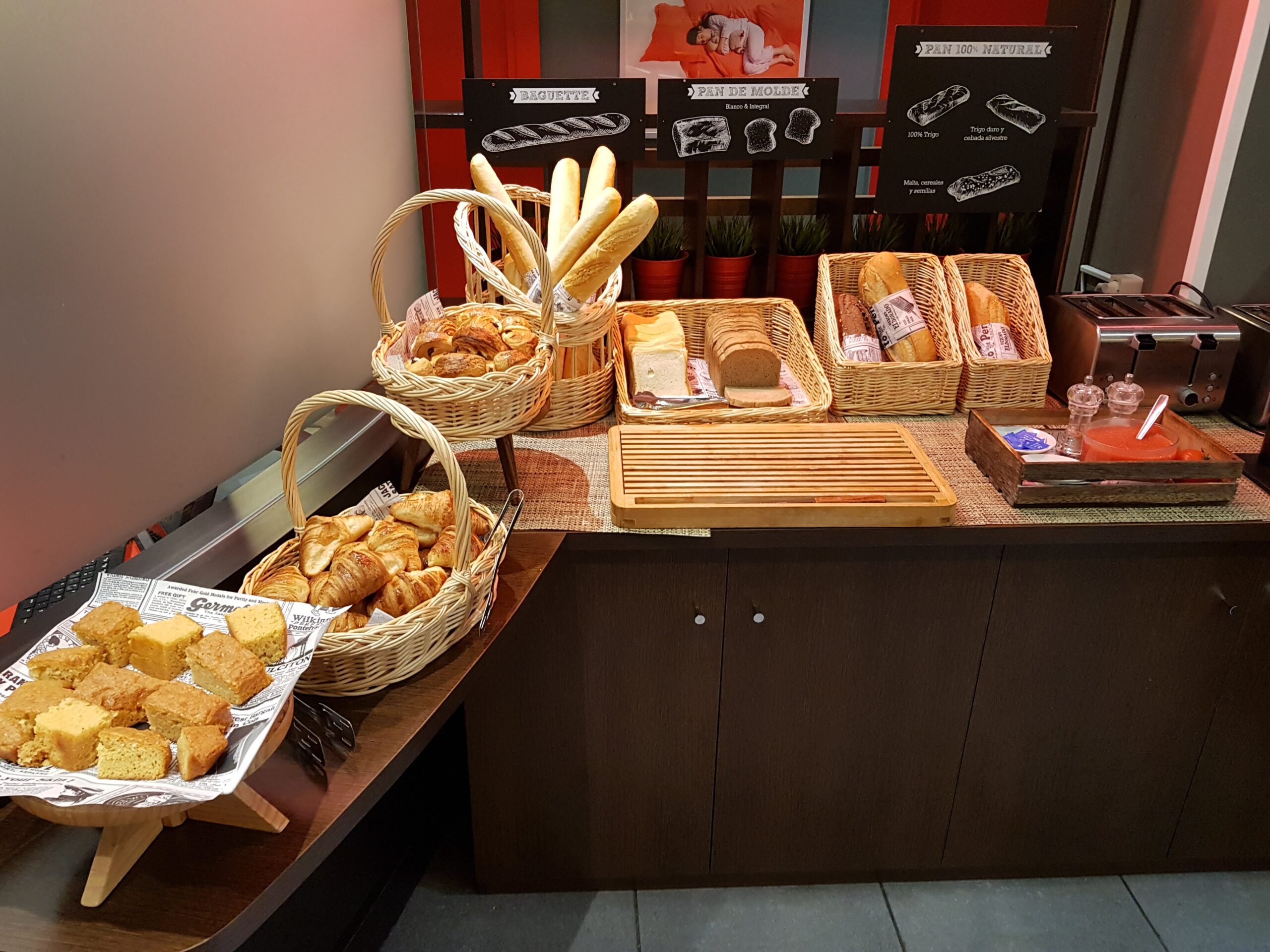
    The breakfast selection was reasonable and there was lots of choice, with numerous different types of bread.

    20180715_071418

    Churros or something similar.

    20180715_071012

    There were cold meats, cold cheeses, cereals, freshly squeezed orange juice, fruit and yoghurts available. It was all acceptable and kept topped up by the staff, who all seemed friendly and helpful.

    Overall, I thought that the hotel was a rather good choice, as it was clean, at the appropriate temperature for me (cold) and the breakfast met my expectations. I didn’t experience any noise issues either internally or externally and I thought that the price of the room was reasonable.

    The only limitation for me, as a walker, was the location of the hotel, as it was just a little bit of a trek to walk to and from the underground station in the heat (I might have mentioned that it’s hot in Madrid). The hotel does though have free car parking, so it’s likely much more accessible and appealing for those driving there.

  • Madrid – Museo de Historia de Madrid

    Madrid – Museo de Historia de Madrid

    [I originally posted this in July 2018 and have reposted it to fix the broken image links]

    20180717_122735

    I may have mentioned, on occasion, that it’s very hot in Madrid. So, it seemed a sensible idea to go into a museum to avoid the mid-day sun. The city’s history museum is free of charge and is centrally located, as well as having lots of positive reviews.

    The museum is located in what was formerly the Real Hospicio de San Fernando, a hospital building dating to 1673. One of the slight disappointments of this museum is that there was absolutely no evidence of this inside the building, as a modern refurbishment has made the interior look rather bland.

    20180717_114136

    This is Charles II, of the Habsburg dynasty and who was the last Habsburg ruler of the Spanish Empire. It is thought that his distinctive chin, which was shared by other family members, was the result of many centuries of in-breeding. Charles II also had significant health problems throughout his life and he died at the age of 38 having had no children.

    20180717_120001

    A model of a bull-fighting ring, which used to be very popular in Madrid, with numerous rings across the city. It’s not something that I’d ever want to go and watch though.

    20180717_121043

    I’m not sure who wrote the English translations around the museum, but the quality of English was excellent. I did like the description of coffee houses as “spots where people gathered to share news and gossip”. They sound quite interesting places, not that I’m one for gossip.

    20180717_121241

    The museum had an interesting collection of early photographs of the city, showing the evolution of Madrid from “a listless city at a standstill” (their words) to a modern capital. The photo is at an angle in an attempt not to get a reflection of me standing in front of it….

    20180717_120348

    To put it politely, some of the museum’s paintings weren’t of the greatest standard. They had a reasonably large collection and I was pleased that they had put so many out on public display, but the quality wasn’t always breath-taking. This large painting was though much more interesting and is of the Dos de Mayo Uprising, which is when in May 1808 many of the city’s residents rose up against the French troops who were occupying Madrid.

    20180717_122150

    An interesting advertising poster, and to pinch the museum’s text about it: “Advertising poster painted in oil on a type of beans sold in the Casa Díez Obeso of Hortaleza street in Madrid. It is a simple composition and somewhat naive and very explicit, accompanied by broad legends as befits the publicity of the time. The gentleman on the left chokes eating some beans of dubious quality until he acquires the celebrated beans and can enjoy a good dish, a circumstance that occurs in the vignette on the right. In the lower panel, a couple of farmers comment on the previous scene”.

    20180717_114355

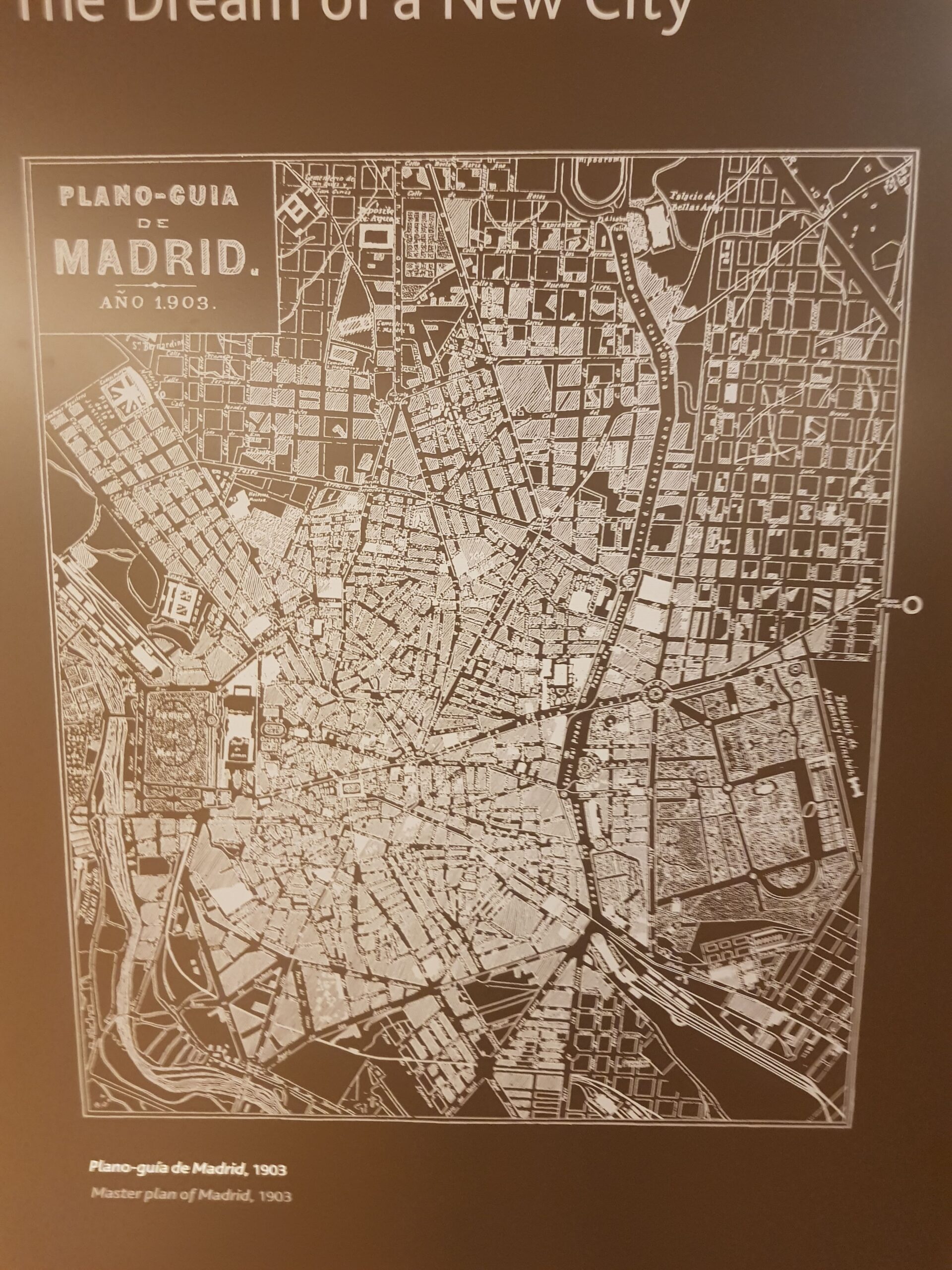
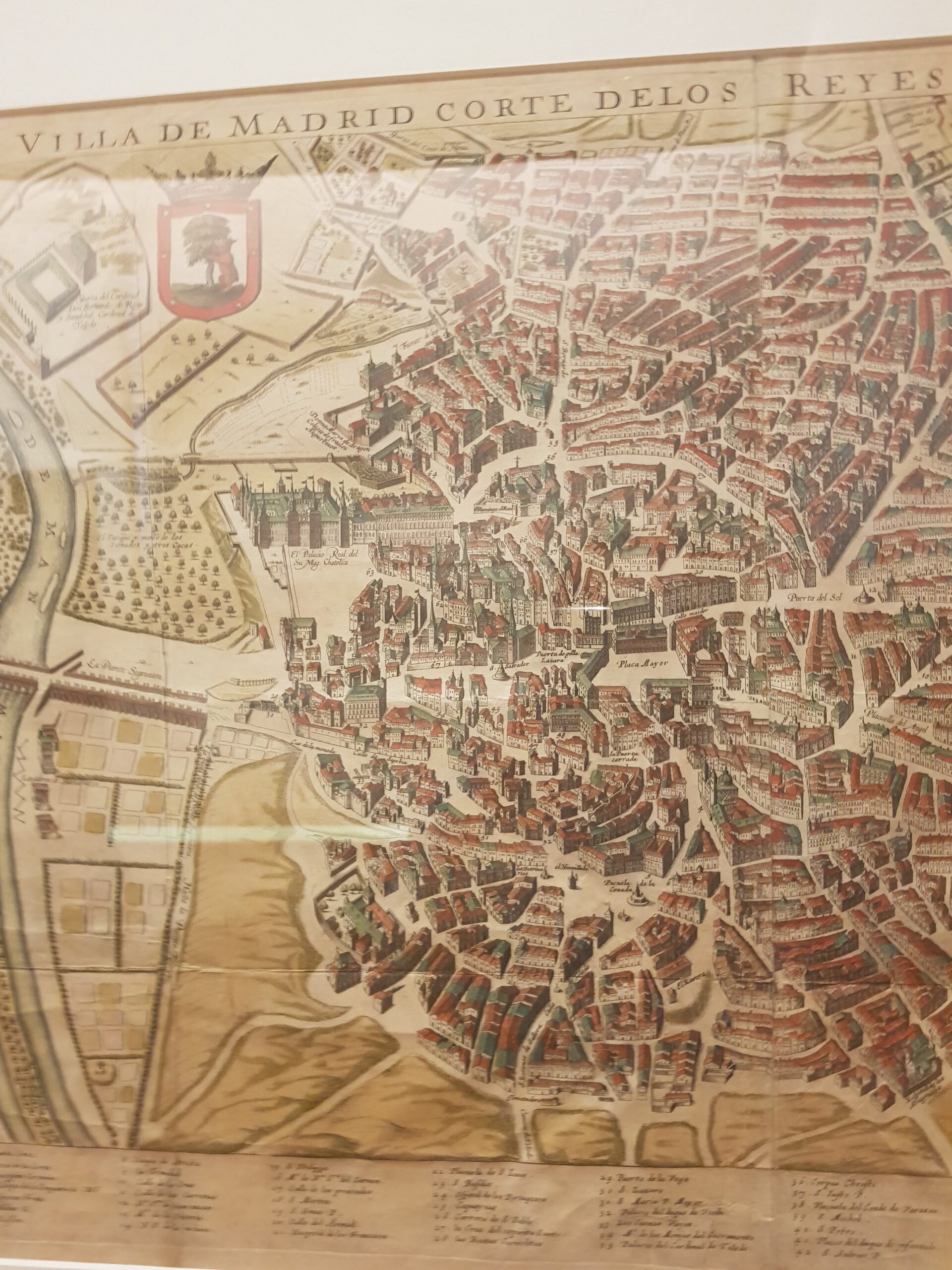
    The museum had a lot of maps on display, and I hadn’t realised how much of Madrid’s development and growth had been relatively recent. The museum explains how the city was rather hemmed in by its city walls, and Madrid hadn’t always been the country’s capital. This meant that it didn’t have its own cathedral and the infra-structure was also quite weak.

    20180717_120916

    There were plans to make the city more modern in the early part of the twentieth century, which meant more housing, office and retail complexes being built outside of the city centre.

    20180717_122226

    An omnibus, which the museum has dated from between 1800 to 1900, which is a little vaguer than I’d ideally like. However, it’s clear that they were common throughout the nineteenth century, before they were replaced by cars.

    Overall, I thought that this was a really well put together museum, which was broadly in chronological order. There wasn’t much coverage of Madrid post Second World War, but there was a depth to the collection and it seemed well curated. As mentioned, the quality of the English translations was also excellent, perhaps the best I’ve seen in Spain.

    Bearing in mind that the museum is free and covers four floors, it’s hard to complain about the value for money. Although, having said (written) that, I note that some people on review sites do still complain. Anyway, definitely recommend, and the air conditioning keeps the interior lovely and cool.

  • Madrid – Thyssen-Bornemisza Museum (Floor 1)

    Madrid – Thyssen-Bornemisza Museum (Floor 1)

    [I originally posted this in July 2018, but have reposted it to fix some broken image links]

    Following on from my visit to the excellent Thyssen Museum, I arguably stunned the art work with my analysis of the artworks on the second floor. Well, perhaps less stunned, as was totally ignored, but that’s probably for the best. I’ve rather forgotten exactly what floor some of the artworks were on, but from what I remember, the below were all on the first floor.

    20180716_144036

    Henri Matisse’s Canal du Midi which was painted in 1898 and which is apparently painted with oil on cardboard, which is then attached to plywood. Sounds very professional…. The painting was for a while owned by Leo Stein, the American art collector and older brother of Gertrude Stein.

    20180716_141507

    Édouard Manet’s Horsewoman which was painted in 1882 and is the only artwork by this artist that the gallery has. Manet was ill when he started to paint this artwork and the model was Henriette Chabot. He was keen for the artwork to be recognised by the Salon, a French organisation that was highly influential for artists, in 1884.

    20180716_143617

    Edvard Munch’s Evening which was painted in 1888. This, rather randomly, reminds me of the immense security operation there must be at the gallery, and indeed at tens of other galleries around the world. Munch paintings have been stolen on numerous occasions, and it must be very difficult to defend such a large building from a potential attacker.

    The painting includes Munch’s sister, Laura, and there are two other people in the artwork, standing by a boat. There were also once another two people in the painting, but Munch removed them, perhaps so that Laura remained the primary focus.

    20180716_141425

    Vincent van Gogh’s Les Vessenots en Auvers which was painted in 1890, shortly before he killed himself. The photo is taken from a strange angle as that’s the nearest I could get to it, as it was one of the most popular paintings in the gallery. Actually, I could have patiently waited for a clearer photo, but I didn’t have the energy to faff about.

    20180716_143555

    Henri Matisse’s The Yellow Flowers which was painted in 1902. It looks like a load of splodges to me, but I’m not very artistic, so let’s go with the gallery’s description instead. They say “the despondency triggered by the scandalous bankruptcy of his parents-in-law, who had been his financial mainstay during the early years, and the influence of the Nabis dulled his palette and simplified his compositions”.

    20180716_141346

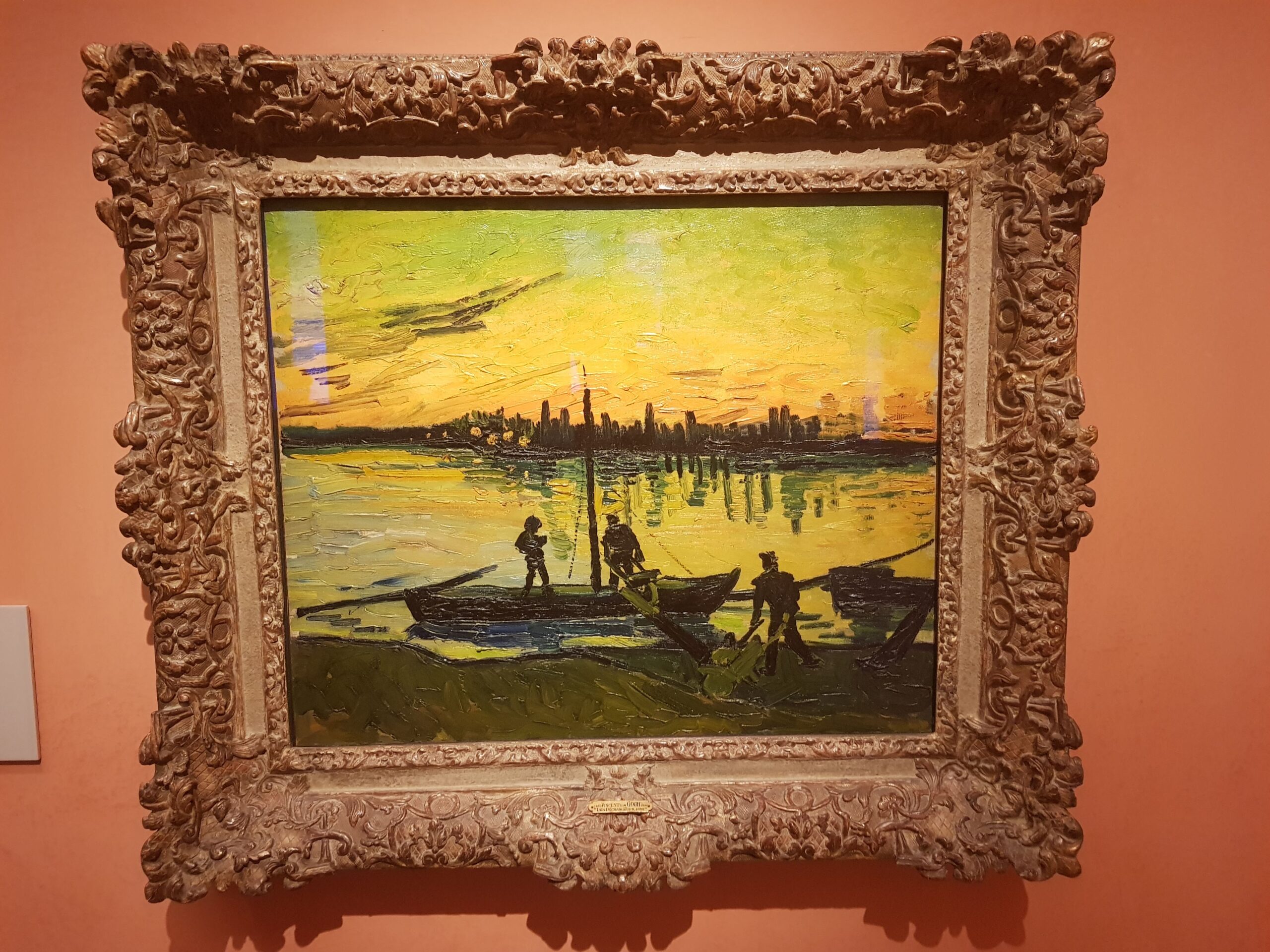
    Vincent van Gogh’s The Stevedores in Arles which was painted in 1902. The gallery has a long and detailed description of the meaning behind the painting, but the colours are certainly vivid and contrasting.

    20180716_143343

    Andre Derain’s Waterloo Bridge which was painted in 1906. It’s not entirely clear from the photo, but the painting is comprised of lots of paint dots (apparently called the pointillist technique) and it was painted from the Victoria Embankment. The Houses of Parliament are in the painting, although are a little difficult to make out.

    20180716_140733

    Something a little different, John Frederick Peto’s Toms River, painted in 1905. The painting is named after his house, and the HH is painted on, it is thought it refers to his grandfather, Hoffman Ham. The Star of David is there as an acknowledgement to the suffering of Jewish people, although it is hard for anyone to imagine just how much worse that got for so many Jews in the following decades.

    20180716_141301

    Paul Gaugin’s Street in Rouen which was painted in 1884. The gallery has eleven works by Gaugin and they show a range of his different artistic styles. The gallery notes that he painted this during the period in which he was moving from being an amateur to a full-time artist.

  • Madrid – Thyssen-Bornemisza Museum (Floor 2)

    Madrid – Thyssen-Bornemisza Museum (Floor 2)

    [I originally posted this in July 2018, but have reposted it to fix some broken image links]

    I spent rather longer at the Thyssen than I had anticipated, as I felt that there was such a depth to the collection. That this gallery has been established from a private art collection marks that even more remarkable.

    As I mentioned in the above post, the gallery has information on nearly every artwork on its web-site, which added an extra dimension to many of the paintings. I also could have downloaded photos from the gallery’s web-site rather than use my own photos, which are often not quite level, but it didn’t feel quite as personal…

    20180716_122746

    Canaletto’s Grand Canal from San Vio which was painted in 1723. The gallery has seven artworks by Canaletto, one of the largest collections of his works in the world. The gallery acquired this artwork in 1958 from the Liechtenstein collection, which slightly confuses me, as I’m not sure why it was sold. But other works by Canaletto were also sold at the same time, and at least has been bought back by the Liechtenstein collection. Their collection is housed in Vienna, although it can only now be accessed by going on a tour, there’s no standard access to the public any more.

    20180716_124837

    Edgar Degas’s Race Horses in a Landscape which was painted in 1894. The gallery has four works by Degas and this painting was once owed by Louisine Havemeyer. I confess my knowledge of artwork is rather limited, but I liked the description that the gallery has of this work, “it is also interesting to note the brilliant hues that Degas used as if they are spices in an exotic visual stew”.

    20180716_124819

    Edgar Degas’s The Pond in the Forest which was painted in 1867. The gallery doesn’t give any information on the history of this painting, but relying on the web-site again, they note “Degas laid his dark browns and greens onto a white primed canvas with large brushes and proceeded to use the palette knife to scrape the surface, revealing the canvas weave and the white priming throughout the painting”. I also like how Degas mocked those artists who painted outside, instead of sitting inside a Greggs to complete their artwork (I’ve obviously modernised the exact location of where Degas completed his paintings, but I’m sure it’s broadly accurate).

    20180716_122724

    Back to Canaletto, and this is the 1748 artwork of the South Facade of Warwick Castle. I hadn’t realised he had painted so many artworks in England, I had rather thought he had mostly concentrated on Italian scenes. Referring again to the level of depth on the gallery’s web-site, they’re able to share the information that this artwork was in Warwick Castle’s billiard room in 1853 and in the breakfast room by 1893. Warwick Castle, and most of its contents, were sold in 1978 and that is when this gallery purchased the work.

    20180716_122235

    Jan Brueghel I’s Christ in the Storm on the Sea of Galilee which was painted in 1596. The colours of this painting are bright and vivid, not quite what I would expect of an artwork which is over 400 years old. The oils are painted onto copper and there are similar artworks painted by the artist in numerous galleries.

    20180716_124731

    Claude Monet’s The House among the Roses which was painted in 1925. Painted just a year before the artist’s death and this artwork is one of a series of six. To my hopelessly untrained eye, I didn’t even notice the house (which I’m assuming is quite an important of the artwork given the title of the piece) until standing back a little.

    20180716_130918

    Raphael’s Portrait of a Young Man, painted in 1518 and for some time thought to have been painted by Giulio Romano. The face is beautifully painted, but I think it’s fascinating to read about the lengthy process of art experts deciding who painted it. It appears that it was painted by more than one person, following the analysis of the various brushstrokes and styles across the artwork. On the bright side for these art historians, it seems unlikely that whatever their decision is that they can ever be proved wrong…

    20180716_124800

    Pierre-Auguste Renoir’s Wheatfield, painted in 1879. The artwork was painted at Wargemont, in Normandy, and is an early impressionist piece.

    20180716_122056

    Peter Paul Ruben’s Portrait of a Young Woman with a Rosary, painted in 1609. It is known who the sitter is, which is unfortunate, and it’s thought that the painting remained in Ruben’s family until 1853. It was then owned by numerous private collectors before being purchased by the gallery in 1979.

    20180716_130952

    Hans Holbein of Joven’s Portrait of King Henry VIII, painted in 1537. This is the younger Holbein, and perhaps the best known for his paintings of members in the Tudor court. It’s not entirely clear whether this portrait was in the King’s private collection, but it was later owned by the Earl of Sutherland. It was then sold privately before being purchased by the gallery, and it’s one of the highlights of the collection.

    20180716_121720

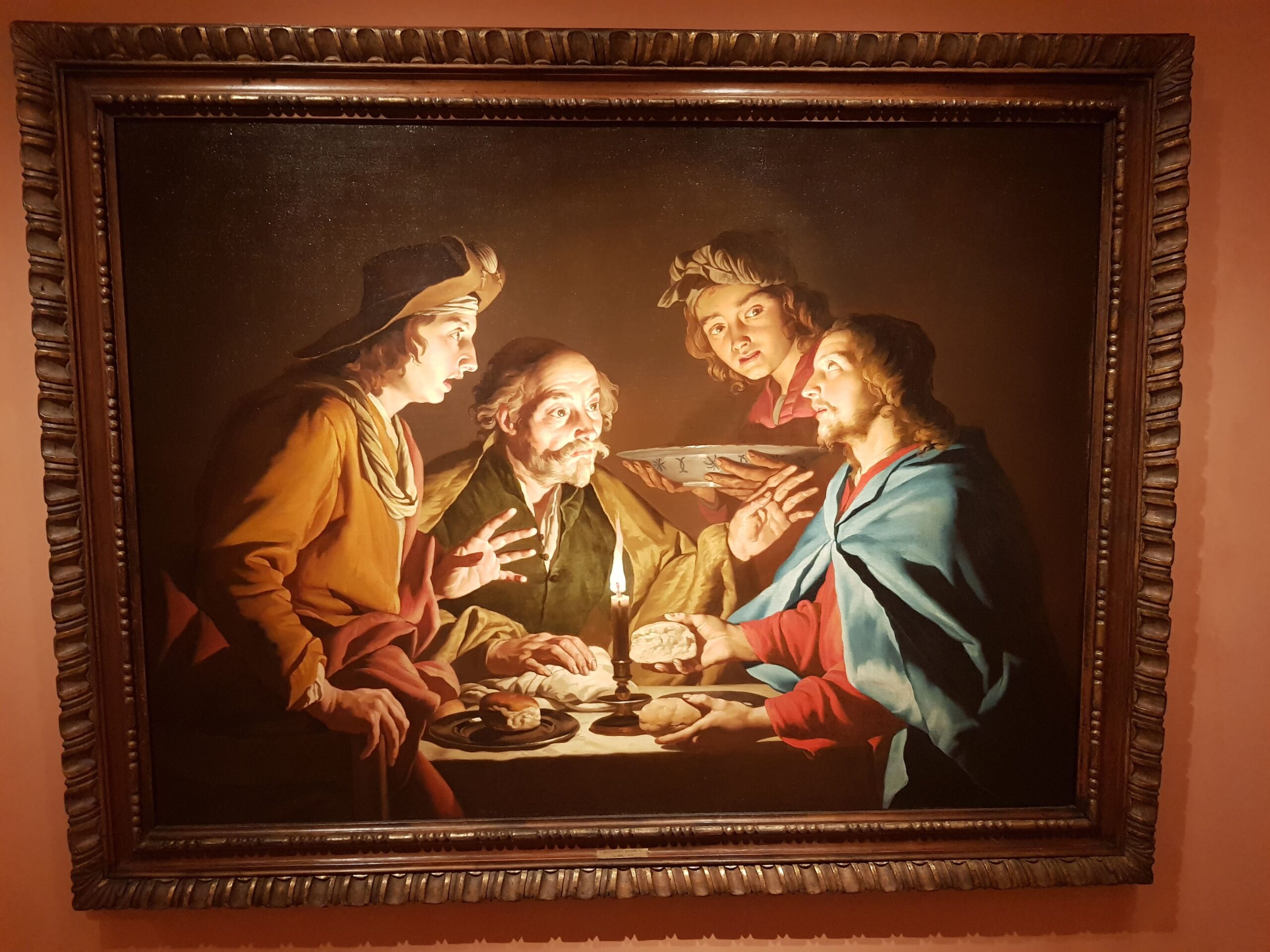
    Matthias Stom’s The Supper at Emmaus, painted in the 1630s. I hadn’t heard of the artist, but I did really like the colours which were used, it did feel that a light was being pointed at the centre of the canvas. For some time this painting was located in the West Indies, before being owned by a family of wine-growers in Bordeaux.

    20180716_125544

    John George Brown’s Tough Customers, painted in 1881. This was another artist that I’d never heard of, but I thought his artwork was particularly interesting. Reading more about him, apparently he’s popular, but art critics aren’t too impressed by his work. But I like him anyway  🙂   He liked painting street urchins and those with no money because he felt that he related to them. He was mainly painting children in New York, but he was actually a British artist who originally came from Durham.

    20180716_125654

    Another work by John George Brown, this time entitled The Bully of the Neighbourhood and this was painted in 1866. The gallery’s web-site notes that the artist liked to tell a story, which is clearly evident in this painting.

    20180716_130832

    Correggio’s Portrait of a Man, painted in 1520. It’s not quite agreed whether this painting is by Correggio or by El Greco, but it spent much of its time located in Brussels. It isn’t known who the sitter was, but it is currently thought that he had a role of a magistrate.

    20180716_124621

    Alfred Sisley’s Evening in Moret, painted in 1888. I always thought Sisley was a British artist, which is technically true, but he spent most of his life in France. The painting is of the River Loing in central France, and the artist painted numerous similar scenes in different seasons of the year.

    20180716_130752

    Wolfgang Beurer’s Portrait of Johann von Rückingen, painted in 1487, which makes this one of the earlier portraits in the collection. There was some detective work to ascertain who painted this work, and it was only established in the twentieth century.

  • Madrid – Thyssen-Bornemisza Museum

    Madrid – Thyssen-Bornemisza Museum

    [I originally posted this in July 2018, but have reposted it to fix some broken image links]

    I had a lot planned for today, which included walking around Madrid to understand the layout a little more, then an art gallery and then some churches and restaurants. Unfortunately, I got a little hot walking about so didn’t manage more than about a mile and then I visited Thyssen-Bornemisza Museum.

    The Thyssen, as it is known to friends (their friends, not mine), is an art gallery which I read had a manageable number of artworks, as opposed to the nearby Prado. I visited today as it was free entrance, which was sponsored by Mastercard. There was a long queue to get in, but it moved quickly and so it took under ten minutes for me to get in, which was very reasonable.

    I thought that two hours would be enough time for me to look around and I was aware that on Mondays the gallery opened from 12:00 until 16:00. So, I start my walking around the gallery at 12:10, and before I know it, it’s 15:45 and they’re starting to clear everyone out.

    The free entrance policy is a really good one, but it did inevitably make the galleries rather busy. But it wasn’t excessively crowded, and I do always fear for those galleries with nearly no-one in them, as they lack atmosphere. I also liked that they let visitors take photos, as that seemed to increase the level of engagement.

    Frankly, I thought that the gallery was impeccable in its presentation, design and flow. What I really liked is that their web-site has extensive details on just about every artwork in the gallery. So, a visitor can read in depth about any painting they like, as well as read more about the artist. I can’t begin to understand how long that took them to create, but it added substantially to my visit.

    Given that I haven’t managed to do much else today, I will write about some of the artworks that interested me, split over the three floors (floor 0, floor 1, floor 2 ) that there were located in the gallery. I’ll add links to those when they’re written, but I’d certainly recommend a visit here, even at the full admission price.

  • Madrid – Thyssen-Bornemisza Museum (Floor 0)

    Madrid – Thyssen-Bornemisza Museum (Floor 0)

    [I originally posted this in July 2018, but have reposted it to fix the broken image links]

    And in the last of my three part series which has shaken the art world (ahem) is the ground floor of the wonderful Thyssen gallery. Artworks I liked from the other two floors are at floor one and floor two.

    20180716_150653

    Francis Bacon’s Portrait of George Dyer in a Mirror which was painted in 1968. I hadn’t realised that Bacon died in Madrid in 1992, although this is his only artwork that the gallery has. George Dyer was Bacon’s partner, and he killed himself in 1971 by taking an overdose of drugs.

    This artwork went a little over my head, so I’m again reliant on the gallery’s web-site to try and explain what it’s all about. They note that “the violence and brutality of the image, focused on the distortion of the main figure whose face is contorted by a spasm, as if being subjected to a number of forces from which he cannot break free, is heightened by a circular halo of light from a source located outside the painting”.

    20180716_151052

    Pablo Picasso’s Head of a Man which was painted in 1913. I have no idea what this represents, and reading the gallery’s description, I’m not sure that they have either. They mention that elements of a face are visible and that it gives “a certain impression of reality”. I’m not entirely clear what that means, but then again, perhaps art isn’t always created to mean anything.

    20180716_150459

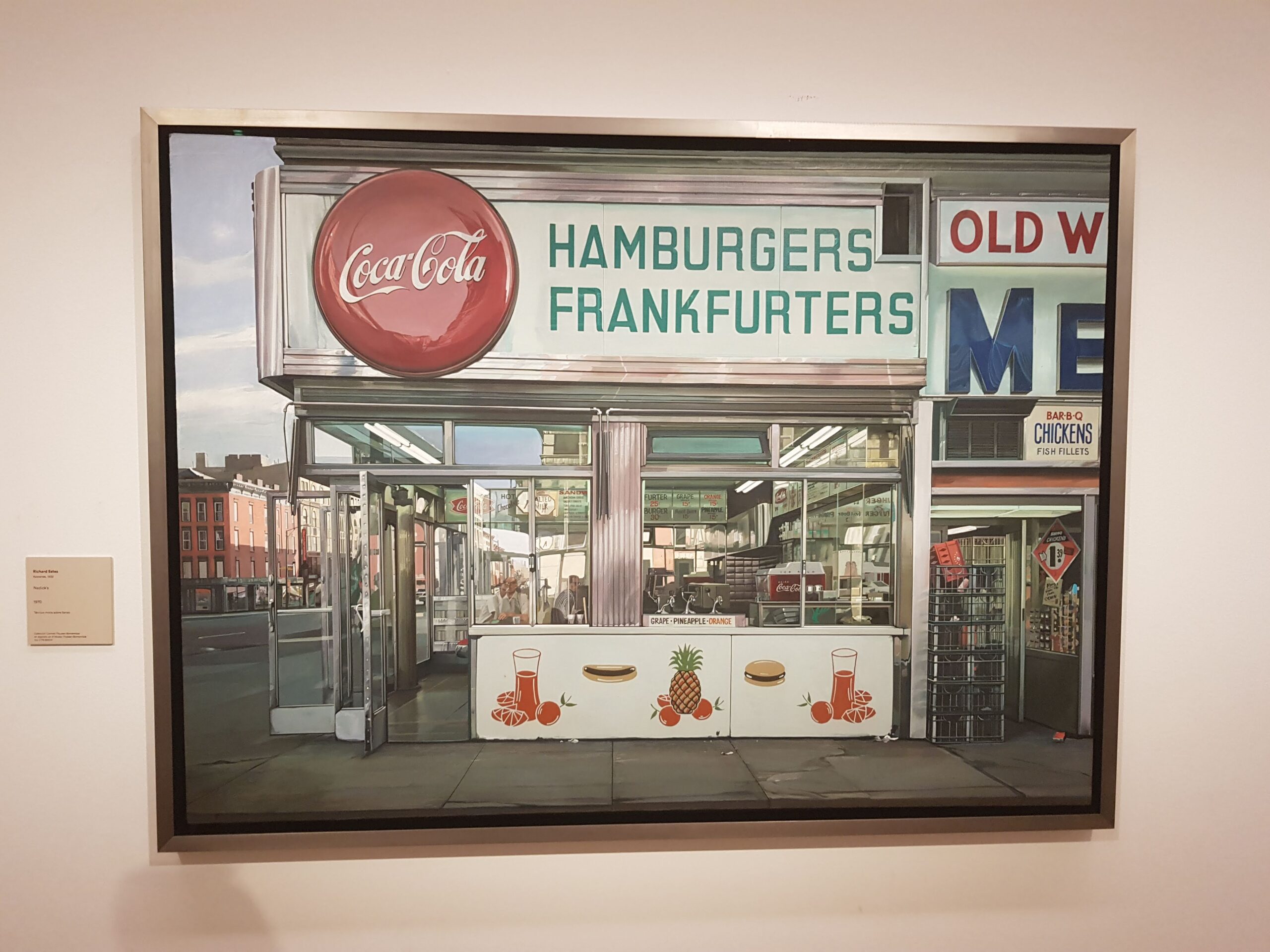
    Richard Estes’s Nedick’s which was painted in 1970. It’s apparently part of the photo-realism, or hyper-realism, and this is something that I can better understand. The content is obviously rather close to my heart, but the clarity of the painting and the clarity I thought is rather beautiful.

    20180716_150924

    Kurt Schwitters’s Merzbild Kijkduin which was painted in 1923. The gallery has five artworks from this German artist and this particular one takes its name from a village near the Hague. Until 1957 this artwork was owned by Hannah Höch, whose work was labelled as degenerate by the Nazis, and she buried her entire art collection, which I imagine locally includes this one, in a well in her garden.

    20180716_150441

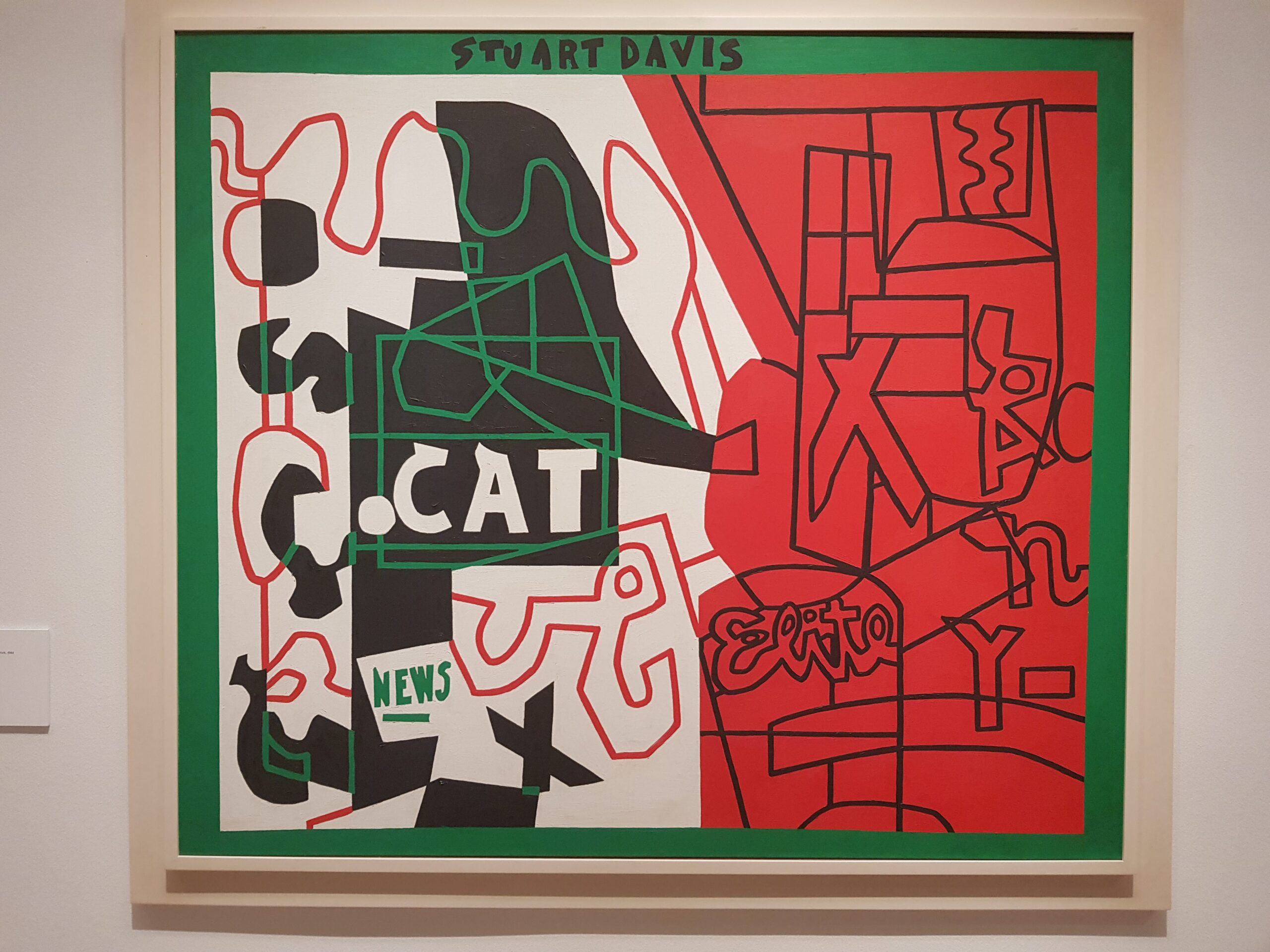
    Stuart Davis’s Pochade which was painted in 1956. I’m becoming ever more intrigued into how art experts explain artworks such as this, which don’t seem to mean anything. The gallery description of the artwork is interesting, but can’t explain what the point of it is, or any meaning behind it.

    The Wikipedia article about the artist notes “with the belief that his work could influence the sociopolitical environment of America, Davis’ political message was apparent in all of his pieces from the most abstract to the clearest”. I’m at a loss as to how this artwork influences the sociopolitical environment of the US, but I’d be interested to know what thinking lay behind it.

    20180716_150824

    Marc Chagall’s The Cock which was painted in 1928. This seemed a popular artwork when I visited, it seemed to attract people to come over. I can’t add anything much to it, other than to quote the gallery’s description that “Chagall depicts a loving embrace between the animal and a female figure that is generally identified as a harlequin”.

    20180716_150421

    Roy Lichtenstein’s Woman in Bath which was painted in 1963. This is the only artwork the gallery has by the artist, and it’s one they are proud of given their coverage of it in promotional material. To me, this sort of painting rather defines America in the 1960s. Apparently artworks by Lichtenstein reach tens of millions of pounds, quite remarkable given that it’s only fifty years old.

    20180716_150057

    Edward Hopper’s Hotel Room which was painted in 1931. This was another popular artwork with a queue of visitors waiting to take a photograph of it. The gallery has four of Hopper’s works and the theme of this painting is to show loneliness in a hotel room in a city. I rather like hotel rooms, but for those who don’t, there’s a lot of depth in this.