Tag: Ljubljana

  • Ljubljana – Day Two (Ljubljana City Museum – Sculpture of Adam by Janez Lipec)

    Ljubljana – Day Two (Ljubljana City Museum – Sculpture of Adam by Janez Lipec)

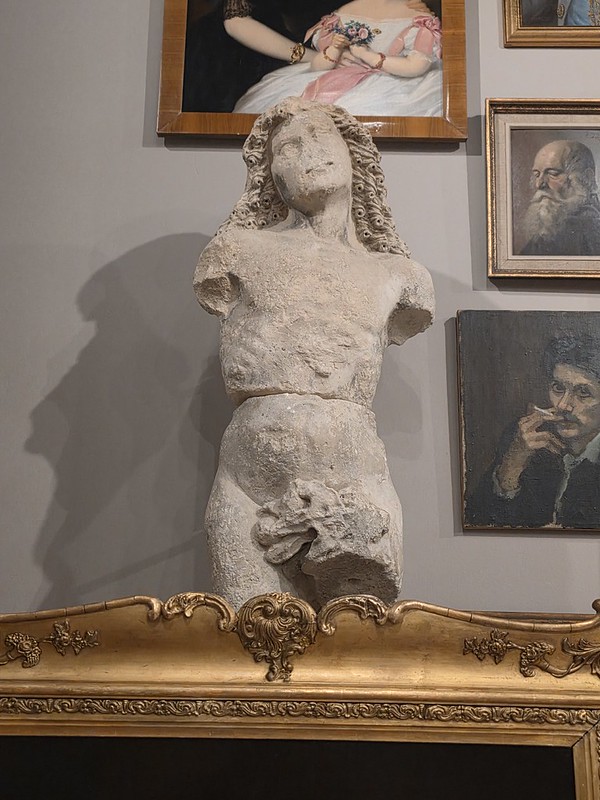
    This sculpture of Adam is today in the city’s history museum, but it was once outside the Town Hall alongside the sculpture of Eve (which is also on display here). There is nothing left of that Town Hall other than these two sculptures, it was was replaced with a new building in the early eighteenth century.

    There’s a symbolism to this sculpture which is that it was a tradition to kiss them (although I think Eve was the one that was usually used) when visiting Ljubljana to obtain good luck. It’s evident that this good luck hasn’t transferred to the stone sculpture itself, which has become rather worn and battered. However, to be fair, it dates to 1484 and most things over 500 years are going to show some signs of wear and tear.

    The sculptor for Adam and Eve was Janez Lipec and I’m sure he was competent, but it’s quite hard to judge his artistic skill now with the stone in this state. But, at least it has been preserved.

  • Ljubljana – Day Two (Cocktails in Divine)

    Ljubljana – Day Two (Cocktails in Divine)

    20251122_194438

    Steve and I are very tolerant people and we remained calm when our planned Indian meal had to be cancelled because Susanna and Bev found themselves drunk at a cocktail bar. They were so long at this cocktail bar that the Indian restaurant had closed, that’s how bad the situation became.

    Steve and I have never heard either of them talk about cocktails, but they were obsessed about it all day and claimed they’ve always liked cocktails. They cited a cocktail bar that they went to six years ago as evidence of this. Steve and I didn’t say anything. Fortunately, we had tripped into a craft beer bar by mistake, so all was well.

    20251122_194553

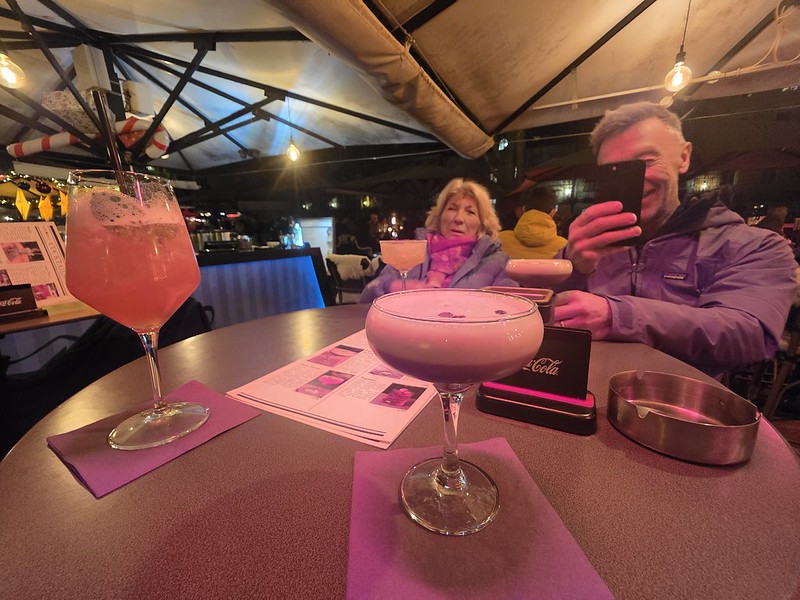
    Bev acquired me an espresso martini, which was very nice even though I couldn’t put a drink like that on Untappd. Bev and Susanna had already had several drinks by the time Steve and I got there, with Bev’s drink in this photo being the Miss Piggy. They were both very jolly, but that wasn’t a surprise since they’d had about a bottle of vodka each.

    20251122_194839

    She doesn’t get out much…..

    20251122_200802

    There were parts of animals attached to the chairs and patio heaters which combined to make the temperature outside the cocktail bar as positively tropical. I was too hot, but Bev and Susanna were far too gone to worry about the temperature.

    20251122_194435

    In fairness to the venue, the service was friendly, the location was clean and my cocktail did taste of a decent quality. But, all this excitement (especially as Bev had recruited a young English tourist to our group that probably wanted to be freed) meant one thing, I had to replan our evening meal and also get a beer to wash down the cocktail.

  • Ljubljana – Day Two (Ljubljana City Museum – Items from Partisans)

    Ljubljana – Day Two (Ljubljana City Museum – Items from Partisans)

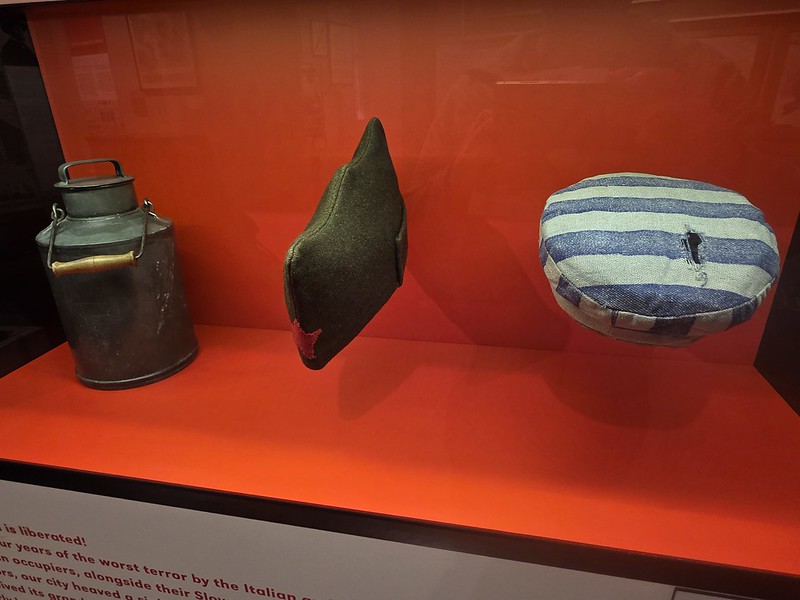
    This little selection of items on display in the museums are from Partisans involved in opposing the Italian and German occupying regimes during the Second World War. From left to right:

    (i) A milk can used by the Liberation Front activists for transporting illegal mail.

    (ii) A Partisan’s cap.

    (iii) The cap of an internee of Dachau Concentration Camp.

    The occupying forces obviously didn’t like all this opposition and they tried to crack down on it as much as they could, including by surrounding the entire city with barbed wire. Many were murdered at Gramozna jama and one of the most horrifying situations is that if there was Partisan success in some operation they would simply find some random innocent local resident and execute them instead. Others were sent to concentration camps such as Dachau, Ravensbrück or Mauthausen, none of these were particularly desirable outcomes either.

    Another place I’d like to visit is the Slovenia Partisan printing shop, located in Vojsko which is relatively near to the Italian border. The Italians and Germans never even found this printing press operation which was merrily printing tens of thousands of newspapers to distribute around the occupied territories.

    The bravery of the partisans was evident, despite their sometimes different thoughts on the future of the region. The Italians declared that the city was “full of rebels” and the Germans said that “it was impossible to secure”, showing just what opposition can achieve. Back to the original items, it’s rather lovely to see some link back to the bravery that they showed, as they were always at risk of being executed if they were caught.

  • Ljubljana – Day Two (Ljubljana City Museum – Barbed Wire)

    Ljubljana – Day Two (Ljubljana City Museum – Barbed Wire)

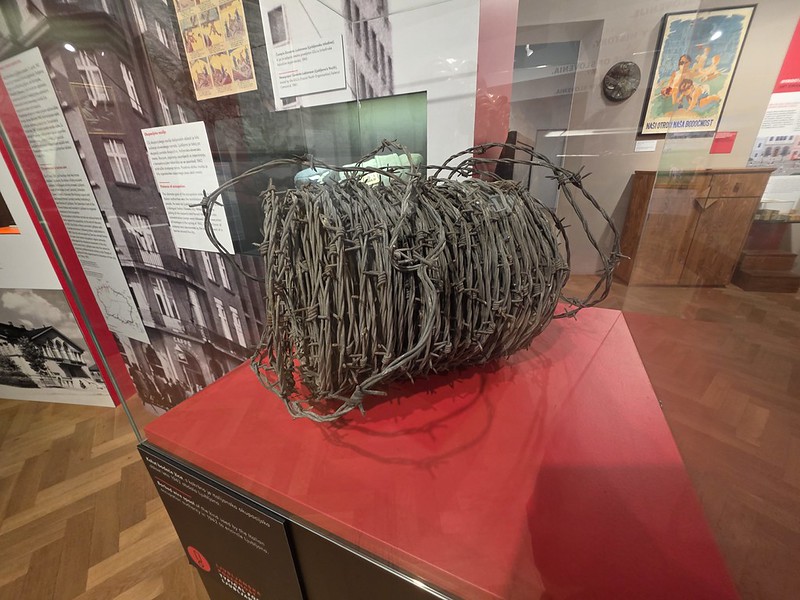
    I’m not sure if this exhibit at the city’s history museum is symbolic or an actual roll of barbed wire that they’ve found from World War Two, but it relates to the situation that Ljubljana faced in 1941. Italian forces seized the city, but they were soon overrun by attacks from partisans and panic in the Italian leadership set in.

    Much of the local population didn’t accept Italian occupation and the military felt that it could only respond by putting barbed wire up around the entire city. That was thirty kilometres of barbed wire, gateposts and checkpoints. Quite an effort really, but it was the only way they could find of trying to maintain order.

    The project was not a success. It was just too much area to secure with guards being bribed and partisans continuing to operate by just being resourceful. It also annoyed the residents of Ljubljana who found themselves hemmed into their own city, when they actually liked to leave it every now and then.

    It all fell apart for the Italians in 1943 when Mussolini was overthrown and the Germans stormed in to take over the city in case the partisans managed to run things themselves. The Germans quite liked the barbed wire fence, so they decided to keep that. They initially used Quisling guards to maintain it, but by 1944 there were fears that Tito’s forces would take the city, so what they considered as the better trained German military took over instead.

    Actually, whilst on the matter of Tito (1892-1980), who was a controversial politician who led the partisans and then led communist Yugoslavia for many years, he was someone who displeased Stalin who tried to kill him. I like Tito’s public response:

    “Stalin. Stop sending assassins to murder me. We have already caught five, one with a bomb, another with a rifle. If this doesn’t stop, I will send one man to Moscow and there will be no need to send another.”

    Classy to be fair. Tito ripped up the barbed wire fence when he took control of the country, so it was gone by the autumn of 1945.

    Today, there is a permanent reminder of this ridiculous barbed wire fence, it’s called the Trail of Remembrance and Comradeship and it’s a 33km walk around the city. Work started on the construction of this path in the mid-1970s and it was completed in the 1980s, a reminder of the only city in the Second World War that found itself entirely surrounded by barbed wire. I’d quite like to walk that one day, that’s another little project for my never-ending list.

  • Ljubljana – Day Two (Metelkova Squat and Artistic Centre)

    Ljubljana – Day Two (Metelkova Squat and Artistic Centre)

    20251122_162437

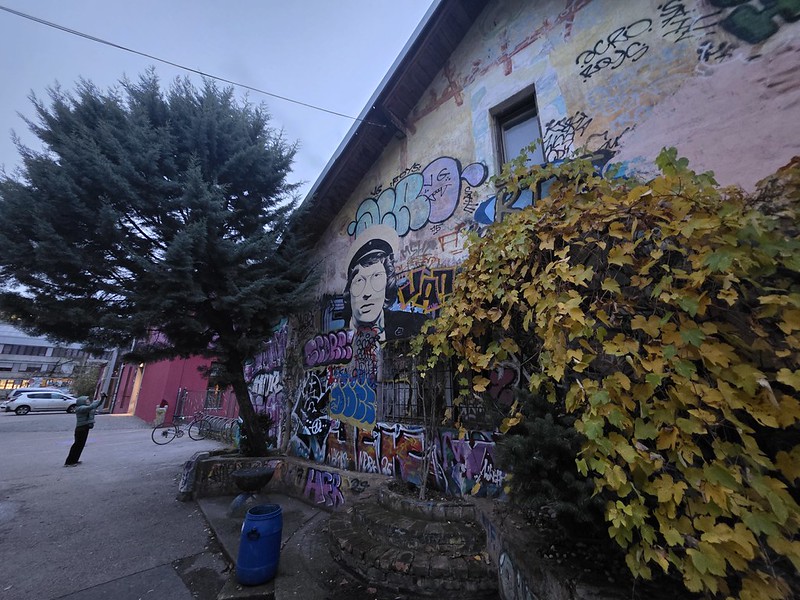
    Next on our list of places to visit was Metelkova, now something of a squat as well as being an artistic centre that has an unusual recent history. It was originally an Austro-Hungarian military barracks constructed in 1882, but when the Yugoslavian army withdrew in the early 1990s, it was unclear in the unfolding chaos what was happening with these buildings.

    Before the authorities could work out what future the buildings should have, they were taken over by a squat which by 1993 was declared as a self-declared autonomous cultural zone. By this point, it was going to be hard to get people to move out and they had some sympathy from the wider community so there wasn’t the political will to change things.

    Today, the result is really quite distinctive and intriguing. The former barracks are covered in a variety of mosaics, murals and sculptures, with new artworks being added as the community evolves. There’s a dichotomy here, there’s this free and untethered community which has also become a tourist zone where people come to take photos. There are some signs that say don’t take photos of the locals, that seems to be the compromise.

    The area is lively, although I didn’t feel entirely at ease here as it wasn’t quite clear what the set-up actually was. Apparently at night there’s a variety of clubs and bars which open up, with a variety of music being played. It’s perhaps all just a bit raucous for me, but Bev loved it and I think that she was tempted to move in.

    It’s not an ordered area full of straight lines and new upmarket apartments, but it is something different and quirky. There were more tourists visible than locals when we visited, but the community co-exists with the museums, residents and businesses located near to it. It’s been the heart of the alternative scene in Ljubljana for thirty years, with a focus on protecting minorities and people who might be seen as ‘different’, with its future seemingly secure.

    Anyway, here are my photos….

    20251122_162838
    20251122_162808
    20251122_162822
    20251122_162800
    20251122_162656
    20251122_162704
    20251122_162641
    20251122_162616
    20251122_162507
    20251122_162630
    20251122_162437
    20251122_162429
    20251122_162405
    20251122_162349
    20251122_162346
    20251122_162315
    20251122_162303
    20251122_162341
    20251122_162246
  • Ljubljana – Day Two (Ljubljana City Museum – Stow Cafe and an Annoyed Bev)

    Ljubljana – Day Two (Ljubljana City Museum – Stow Cafe and an Annoyed Bev)

    20251122_124325

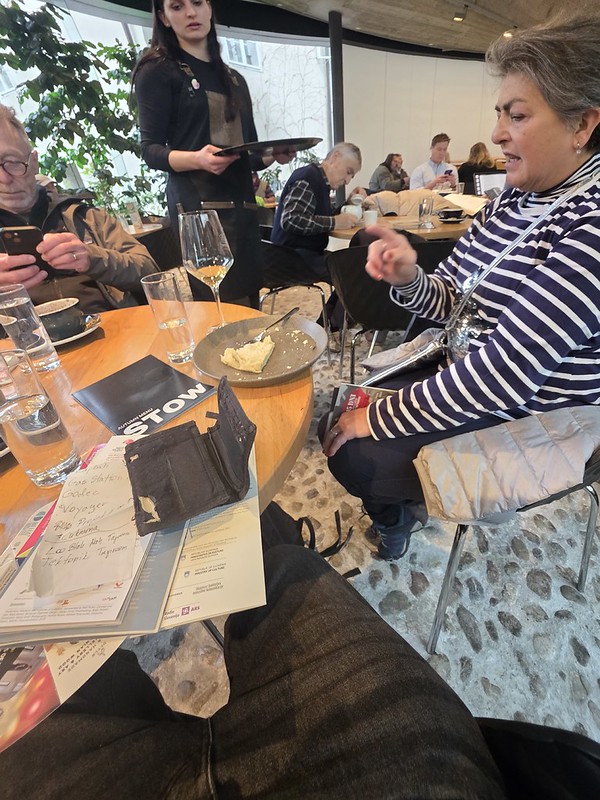
    Susanna and Bev like to have a cafe stop before doing anything intellectual, so when we arrived at the city’s history museum they demanded to have a drink and a piece of cake. It all looked a bit decadent for me if I’m being honest. As an aside, it also turned out that Susanna and Bev had never visited a KFC, so this shows that they have quite a narrow understanding of food and drink, but I didn’t say anything.

    20251122_121226

    My mind wasn’t changed after seeing all of this, I like an espresso but it felt a little overblown. So, I decided I wouldn’t have anything and would wait for the others, as I’m kind and thoughtful like that.

    20251122_124251

    Here’s Susanna in the main part of the coffee shop, it’s all quite minimalist and on-trend. It’s also very positively reviewed online, so they’re clearly surprising and delighting no end of customers.

    20251122_123452

    Bev wasn’t best pleased though, she decided that her flan wasn’t cooked properly on the base. Not afraid of looking like an angry tourist, she made clear her views on the matter much to the excitement of the staff members. Steve pretended that he wasn’t with Bev at this moment, but we’ve all been there.

    It transpired that the flan was bought in and so not directly the fault of the venue, but the quality was really very low and so that is their fault. Anyway, Bev punished the venue by promptly buying another cake, so that taught them.

    I left pleased with the arrangements though, I got a free glass of tap water and a little sit down. I note from the photo that I was looking at the list of craft beer bars that I had been given by the bar the previous evening, so I must have been more focused on that. I also note that I’d better switch to my new wallet as that one looks more ravaged in the photo than I realised.

    Anyway, with that we went to look around the museum with Bev only stomping about for around 45 minutes before she calmed down about the flan.

  • Ljubljana – Day Two (Ljubljana City Museum – Portrait of Dr Jozef Mader by Mihael Stroj)

    Ljubljana – Day Two (Ljubljana City Museum – Portrait of Dr Jozef Mader by Mihael Stroj)

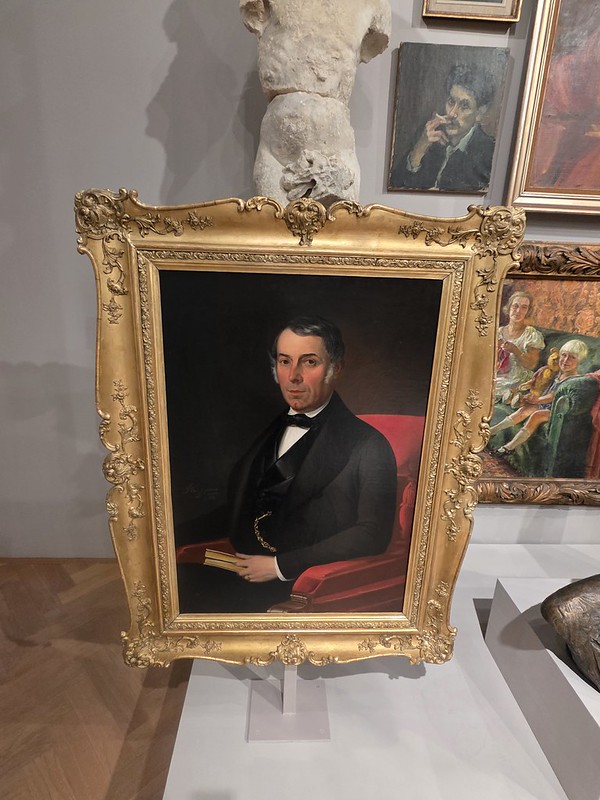
    This artwork is by Mihael Stroj (1803-1871), an Austro-Hungarian painter who became known for his paintings of the wealthy. He himself used the name Michael Stroy, perhaps in an attempt to attract a wealthy international clientele or perhaps just to ensure that his name was pronounced correctly. He’s helpfully signed and dated the artwork 1854 on the left hand side, which to be fair does help with the identification.

    Stroj had connections with Ljubljana throughout his life, but he settled in the city permanently in 1842 when he married Margareta Berghaus. The couple had five children and that seemed to put an end to Stroj’s travels.

    I don’t know much about his subject in this artwork other than it’s Dr Jožef Mader who was a medical doctor in the city. Clearly he had some money to spend on being permanently remembered in the form of an artwork as well as being able to afford quite a nice chair by the looks of it.

    It might not be the most important artwork in the country, but I rather liked the snapshot of time that it represented. The middle class were becoming wealthier and wanted to show off their prosperity, something not just limited to the nobility. It was also painted at a time of upheaval across Europe, just after 1848, and the rise of the Slovenian demands for some sort of independence from the Austro-Hungarian Empire.

  • Ljubljana – Day Two (Ljubljana City Museum – Painting of Pope Pius VI)

    Ljubljana – Day Two (Ljubljana City Museum – Painting of Pope Pius VI)

    Located in the city’s museum is this sculpture of Pope Pius VI (1717-1799). He looks quite serene here, which I think is something that Popes do tend to work on. He was in his Papal role for 24 years and I think it’s fair to say that they were quite stressful years for him.

    He was born Giovanni Angelo Braschi and he became Pope on 15 February 1775. This proved problematic for him, as the French Revolution kicked off in 1789 during his period in charge and losing the Catholic Church in France was sub-optimal to say the least. The privileges of the church were stripped away, assets stolen and there wasn’t much that the Pope could do other than to complain quite a lot. At this point, the future of the Catholic Church was in serious danger, there was perhaps nothing inevitable about its survival, or at least, not losing its independence.

    As if this whole French situation wasn’t bad enough, the French military marched into Rome and exiled Pius. Napoleon wanted to bring back the Catholic church at this point and stealing the Pope was quite handy in that arrangement, but Pius was to die in Valence, located in south-eastern France. His successor, Pope Pius VII, was appointed six months later and he ultimately also ended up being exiled in France.

    Pius VI was one of few Popes who died outside of Rome and when he was allowed to actually live in the Vatican he made improvements to the museums and galleries there. Not only did he try and add some culture to the Vatican, but he also oversaw early excavations in Herculaneum and Pompeii. He also oversaw the building of the rather lovely Pio-Clementine Museum and did something of an excellent job of improving the Vatican Gardens. Unfortunately, the Swiss Guard struggled somewhat at this time, so perhaps he might have been better to deal with his armies rather than his gardens, but there we go…..

    Back to the sculpture in question, it dates from around 1782, although it’s not known who created it. This would have been something of a halcyon period for the Pope, which is perhaps why he doesn’t yet look entirely stressed.

  • Ljubljana – Day Two (St George’s Chapel in Ljubljana Castle)

    Ljubljana – Day Two (St George’s Chapel in Ljubljana Castle)

    20251122_110842

    These are the steps down to St. George’s Chapel located at Ljubljana Castle. The chapel was constructed in the fifteenth century, although there was a large earthquake in the area in 1511 which might have required some rebuilding. We thought at first that it was shut as Bev man-handled the door to get us in, but it just transpired that we needed to use the internal entrance.

    20251122_110544

    It’s a beautiful and peaceful space, that would have once been the spiritual heart of the castle.

    20251122_110550

    The colourful ceiling and the crisp stencilling and decoration on the walls. Some of this was a Baroque modernisation from the eighteenth century, as they wanted to make the interior feel that bit more on-trend.

    20251122_110623

    There are Austro-Hungarian coats of arms, but there are also some from the Carniola Duchy. This Duchy had been important and powerful, but the 1815 Congress of Vienna fiddled around with the wider political landscape. This is also the gallery where the wealthier folk would have watched mass from a dignified distance, the two storey nature of the whole arrangement was quite handy for separation of the rich and the poor.

    20251122_110814

    There’s St. George and the dragon theme is important to Ljubljana as it’s their city emblem.

    This was one of my favourite rooms in the castle complex, it was colourful, vibrant and peaceful. It was restored during the works that took place a few years ago as part of the restoration of the entire castle complex.

  • Ljubljana – Day Two (Walk up Castle Hill)

    Ljubljana – Day Two (Walk up Castle Hill)

    20251122_095625

    Being brave, we decided to walk up Castle Hill to the, well, castle and then we thought that we’d take the funicular railway back down.

    20251122_095619

    The start of the walk.

    20251122_095722

    Sufficiently firm underfoot, which I always appreciate.

    20251122_100140

    Much of the view lower down was rather blocked by trees.

    20251122_100400

    Looking up at the funicular railway.

    20251122_100406

    Our first clear views over Ljubljana and beyond.

    20251122_100537

    There was evidence of an older path, but they’ve clearly spent a fair sum of money on this new wooden path.

    20251122_101120

    This photo was taken from just above the funicular railway station, the square type pod is visible at the bottom which transports people up and down. The walk to the top takes around ten minutes, or around three hours if you’re with Richard (I’m sure he won’t mind me saying that).

    20251122_100724

    And the view at the top, which I thought was rather lovely. Lots more about these mountains, and indeed other ones, in future posts. And, no, I didn’t climb any despite now being a climbing professional. Anyway, the main reason for climbing to the top was to look in Ljubljana Castle, so more of that coming as well.