Tag: King’s Lynn

  • First Bus – New Excel Buses

    First Bus – New Excel Buses

    First brought their new Excel buses into service in February 2020, although circumstances have meant that they’ve obviously been heavily under-used since. They run between Norwich and Peterborough, stopping at Dereham, Swaffham, King’s Lynn and Wisbech.

    This was my first foray onto public transport since March and so this Norwich bus station queueing system was new to me.

    There were only two of us attempting to board the bus in Norwich, so the queueing system wasn’t exactly overloaded.

    The front of the bus, with a clear new display screen.

    And looking back to the rear.

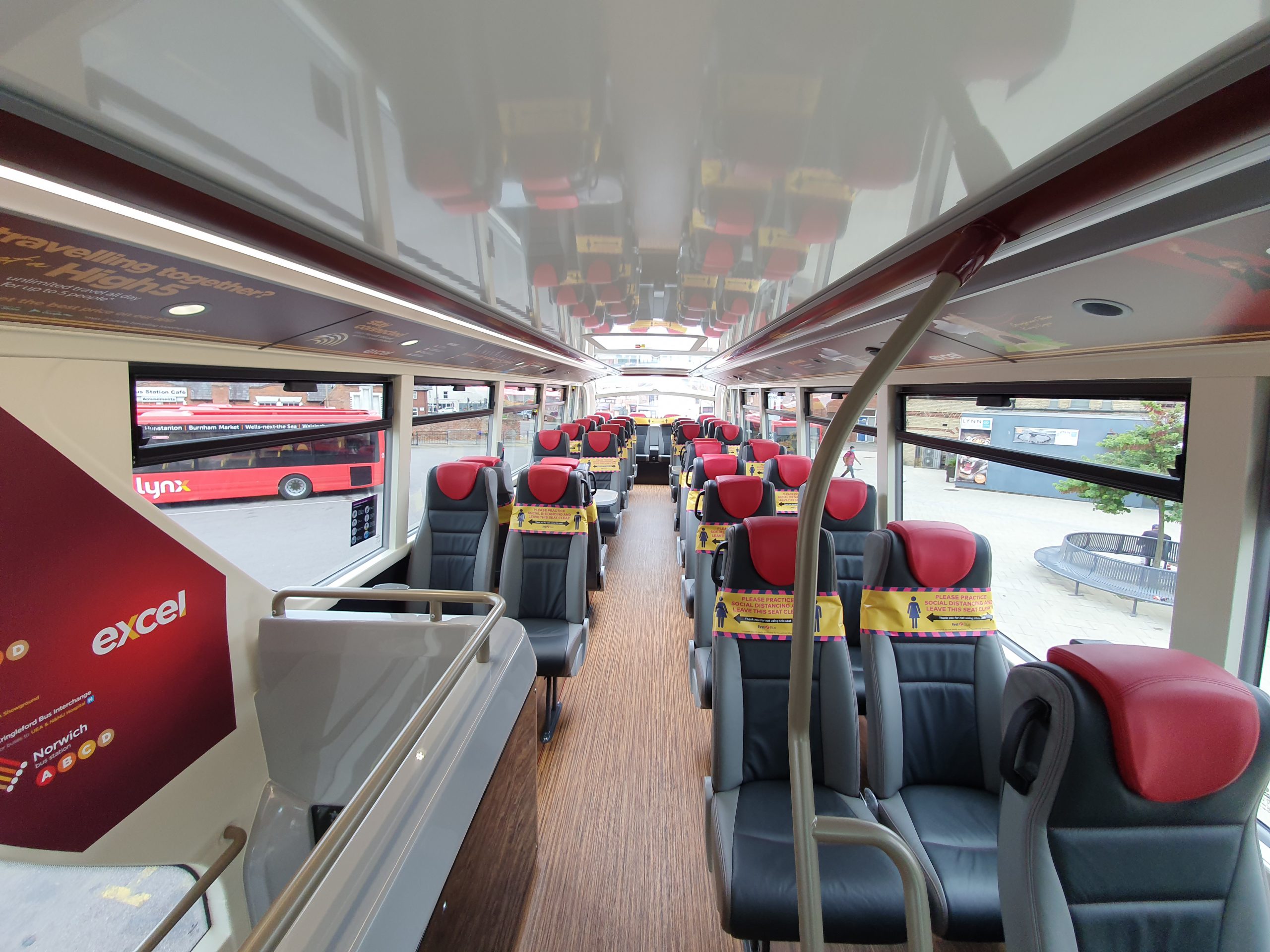
    The interior upstairs is light and airy, there are no shortage of windows.

    There are now tables at some of the seats and the seats themselves have USB power, wi-fi and there’s a stop button on every pair of seats. The seats are leather, which I personally find can get quite sticky in the heat, but there’s a modern feel to the whole arrangement.

    The seat and it’s clear they’ve spent a chunk of money on these buses. The ride doesn’t feel that comfortable, but it might well be that this is more to do with Norfolk’s roads than anything else.

    Health arrangements on-board.

    And, safely in King’s Lynn.

    Another one of the same fleet of buses in King’s Lynn.

  • King’s Lynn – Former Lynn Savings Bank Building

    King’s Lynn – Former Lynn Savings Bank Building

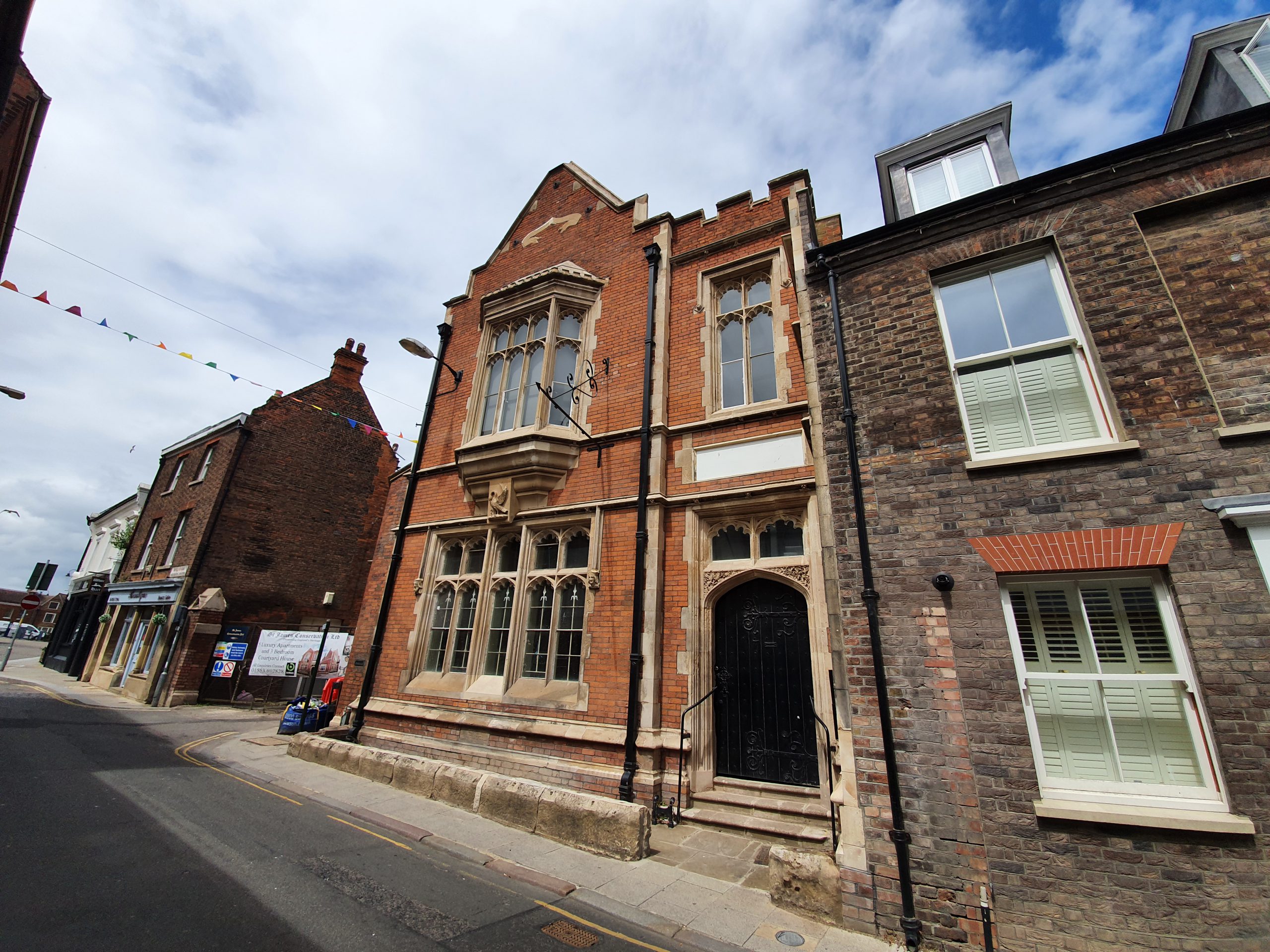
    This is the former Lynn Savings Bank building which was completed in 1858 and the gothic design was meant to give a feeling of reassurance, after some traumatic decades for banks. The bank had been trading since October 1817 from their previous premises at 118 High Street in the town, which were open to the public from 12.00 until 13.00 on Mondays. There are banks 200 years on with similar opening times…. The bank, I think, was later subsumed into the Trustee Savings Bank, now better known as TSB.

    The town’s pelican symbol, which is on the King’s Lynn Coat of Arms, is on the central corbel of the building, all designed to give it that official feel. The building was later used by the Royal Antediluvian Order of Buffaloes as their community building, who have recently moved their meetings to the Workers Club on Church Street.

    The building has now been converted into “four imposing apartments” according to the developers, plus another apartment in the former cellar which I’m imagining isn’t quite as imposing.

  • King’s Lynn – Nip and Growler

    King’s Lynn – Nip and Growler

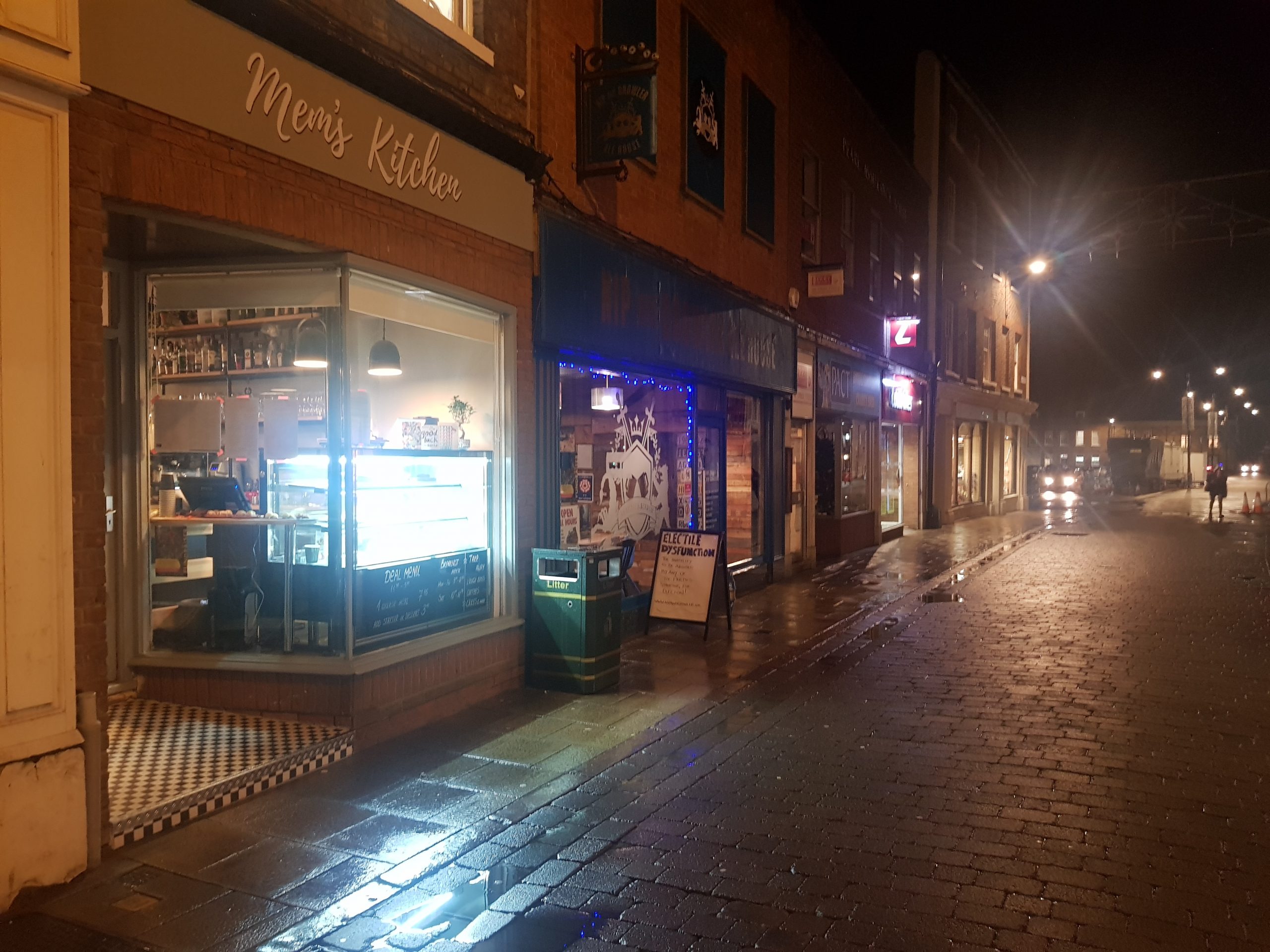
    This micropub, the first in King’s Lynn, opened in 2017 in what was formerly a Jessops camera shop, although in a previous incarnation this was the location of a pub, originally the Bull Inn. I know this the pub owners have taken the time and trouble to arrange for a comprehensive history of the building to be placed on their web-site at http://www.nipandgrowler.uk/. I like owners who are proud of their building and see it as part of the offering, and irritated at myself that it’s taken me two years to manage to come here.

    The pub specialises in local beers and ciders, which is a noble endeavour. But that hasn’t limited the quality or range of the selection, with the wonderfully friendly member of staff keenly telling me about the two dark options. This is one of the friendliest pubs that I’ve been in, there’s an atmosphere which just works well, something that is often lacking. Quirky, relaxed and comfortable. I like it.

    The interior of the pub, which makes it look quiet, but I took the photos during the brief gaps between customers. There’s some fun signage, but nothing forced like it’s come out of a modernisation organised by Craft Union, who seem to rip out atmosphere in pubs they ‘update’. There’s wi-fi and plugs, all sufficiently modern, but there are also board games for customers to amuse themselves with.

    The service was impeccable throughout my visit, little things like actually saying goodbye to customers is often overlooked by publicans and their staff and it’s not difficult when it’s clear someone is getting ready to leave. I have droned on to people about Hop and Vine in Hull, where the landlord has managed to create himself a marvellously welcoming atmosphere. There’s a different customer base here, but the atmosphere doesn’t lag far behind.

    Onto the beers, and I felt the need to try both of the dark beers.

    The Cocow from Ampersand Brewery near Bungay is a chocolate milk stout, which is very much my favourite kind of beer. This was beautiful, the flavours of bitter chocolate and a little bit of coffee in the mix, like some fine bar of dark chocolate. The flavours aren’t immediately obvious, they’re more of an aftertaste, but that works for me.

    The Father Grime is a stout from Brewboard, a brewery I hadn’t heard of, but they’re from Harston, near Cambridge. The promised biscuity flavour was there, quite a rich stout although without the strong and pleasant aftertastes that the Cocow had. But, still, very lovely.

    Overall, and this is just for my reference than because anyone else is interested, but this is certainly one of my pubs of the year. It’s also near enough for me to be able to visit again, which I most definitely will. What a delightful pub option though for the people of King’s Lynn, and I look forward to some micro-pub set-up opening in Swaffham to liven things up a bit.

  • King’s Lynn – King’s Lynn Minster (Carved Screen)

    This carved wooden chancel screen was originally made in 1584 and it’s another one of those marvels of history that it’s still here, although not in its original location within the church. I can’t find any actual evidence of this, but I assume that the chancel screen was built to replace the rood screen which would have been destroyed during the reformation.

    The screen was “beautified” in 1621 and although its age is apparent from the design, it’s still in excellent condition.

  • King’s Lynn – King’s Lynn Minster (West Facade)

    The west facade of King’s Lynn Minster, with the tide clock visible on the top right and the flood markers by the main entrance.

    And a very helpful illustration to the west front of the building, produced by the church.

  • King’s Lynn – King’s Lynn Minster (Eagle Lectern)

    This eagle lectern is made from brass, dates to the fifteenth century and it was once covered in rich jewels. The feathers are apparently slightly later replacements, but this bird is still something of a survivor given its age.

    There is a hole in the lectern’s beak which was once used to collect Peter’s Pence, money which was meant to go to the Catholic church although how far it actually went is a different matter. Despite Peter’s Pence being abolished at the time of the reformation, it was still collected in some areas, with it instead being seen as a tax to the church.

  • King’s Lynn – King’s Lynn Minster (Benedict Chapel)

    King’s Lynn Minster was, until the Reformation, once a Benedictine priory, and this chapel at the rear was part of that building. This section dates from around 1433 and it’s now used as an area for private prayer.

  • King’s Lynn – King’s Lynn Minster (Tide Clock)

    The Minster’s tide clock, with the lettering around the dial spelling out ‘Lynn High Tide’. When it’s high tide, which it wasn’t on my visit, the man in the moon will appear on the right hand side of the clock. It’s all rather clever, especially given that the original dates to around the seventeenth century. The original clock, which had been donated by Thomas Tue, was damaged during the tower’s collapse in the eighteenth century and then wasn’t looked after particularly well.

    The history of this tide clock seems confused, as some authors are claiming that this is the original clock, others that it’s a later replacement. It was certainly worked on during the 1990s by Colin Shewring, but it does appear to me to be the original clock restored rather than something entirely new. However, I’m not a tide clock expert to be able to know for sure……

  • King’s Lynn – King’s Lynn Minster (Unknown Gravestone)

    This one defeated me, I can’t read the name on the gravestone. Answers on a postcard (well, messages through the contact page of this blog) welcomed…

  • King’s Lynn – King’s Lynn Minster (Pillar Foundations)

    King’s Lynn Minster had to be reconstructed when there was a little incident in 1741 when part of it collapsed. The structure was rebuilt internally by Matthew Brettingham and the supporting columns of the church were reconstructed. The original larger column footprint is still visible, showing how substantial the foundations originally were, although since the building collapsed I wonder about the quality of the original civil engineering team….

    Anyway, as I understand, Brettingham changed the floor level by making it a little higher, which was later undone in the mid-nineteenth century during another reconstruction. This meant that the original floor level was restored, making these foundations visible once again. And, this looks better to me, it tells a clearer story about the architectural history of the church.