Tag: Kielce

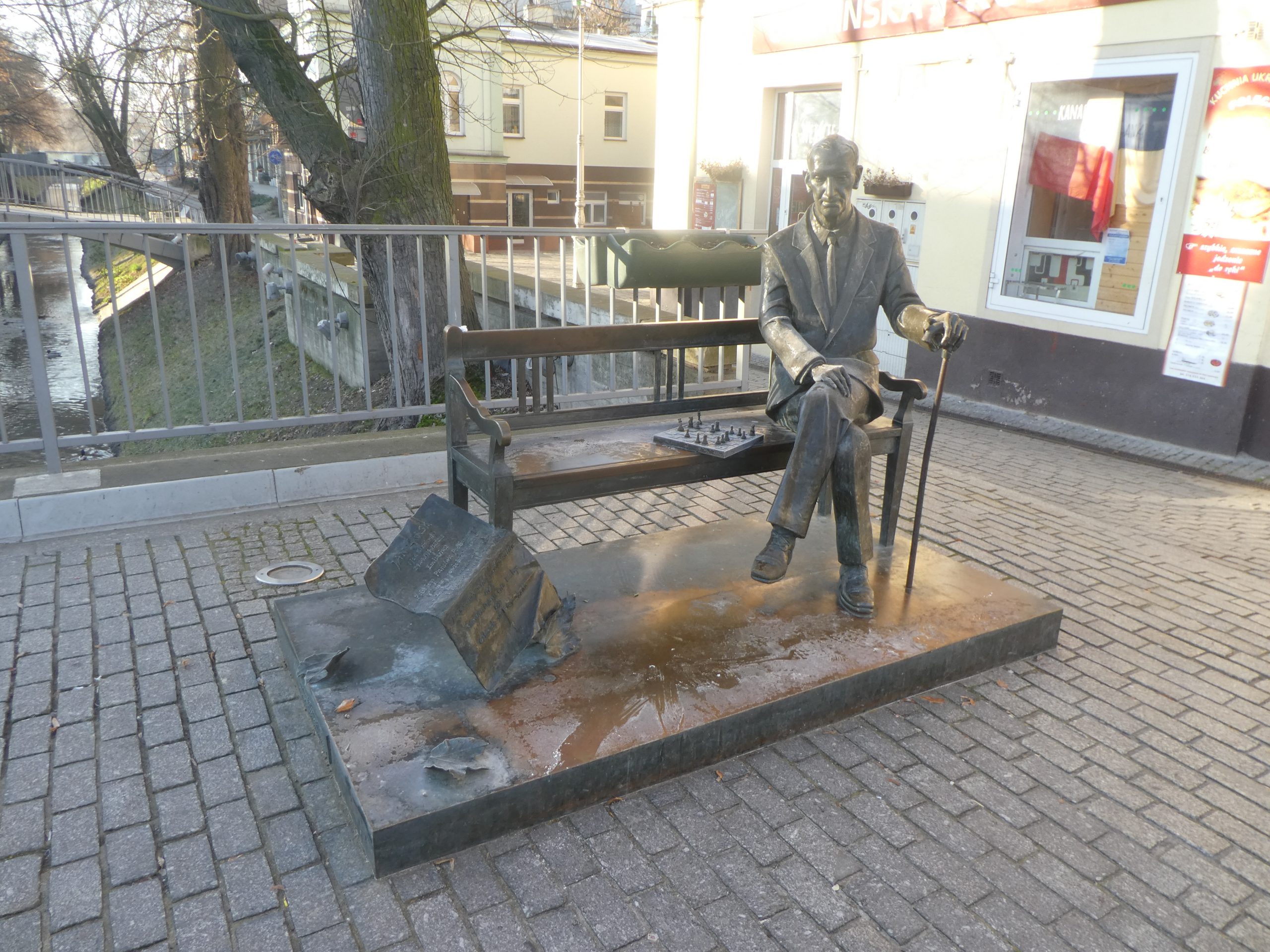
  • Kielce – Jan Karski Bench

    Kielce – Jan Karski Bench

    Jan Karski was one of those people who just have a story of ridiculous levels of bravery during a war, escaping capture, enduring torture and managing to transport themselves around the country looking to serve it. Karski’s reputation has primarily been sealed by the work he did in alerting the world to Nazi atrocities, as well as assisting the underground movement in Poland. He reported on the Warsaw Uprising, since he had become part of it, to the western powers and the Polish government in exile.

    Karski survived the war and decided he’d like to live in the United States, which he did, working as a lecturer specialising in Eastern European politics and affairs. One of his students was Bill Clinton and in 1982 Karski was given the honour of being added to the Righteous Among Nations list. He died in 2000 at the age of 86, having certainly lived a full life.

    Some information about his life.

    Well, I guess he liked chess.

    There are similar statues on benches in Karski’s honour in Warsaw and in Łódź, as well as in the United States, in New York and Washington DC.

  • Kielce – Stumbling Stones

    Kielce – Stumbling Stones

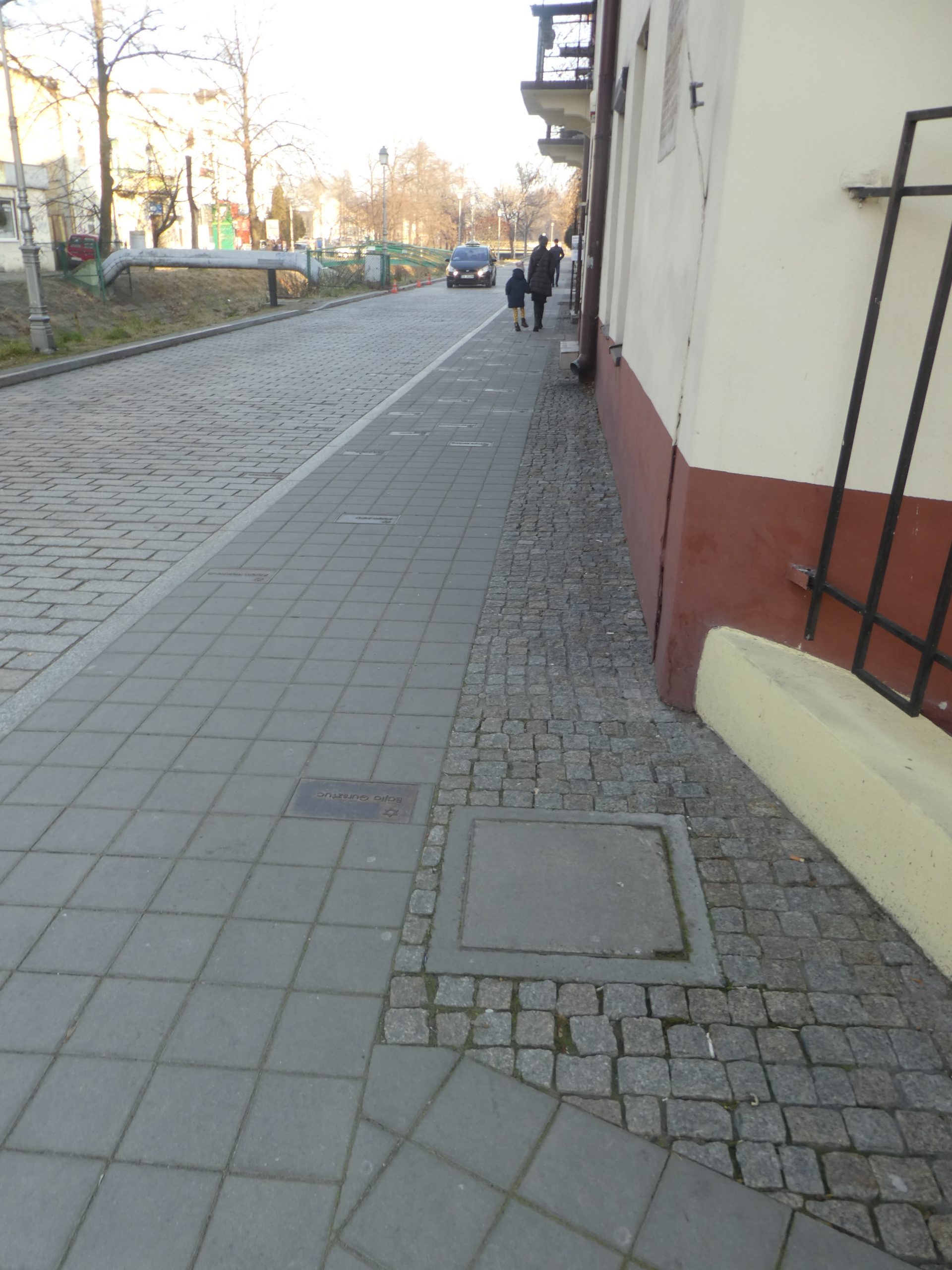
    I’ve written about stumbling stones before, or Stolperstein, which are located throughout Germany, as well as in Poland, France, the Netherlands, the Czech Republic and other countries. They’re usually cubes made of concrete with a brass inscription, which has the name of the Jew or Jews who were killed in the property which they’re located outside of.

    Here they have a different concept from in many other countries, as although they represent a similar meaning of where Jews were killed, these poor souls were killed after the Second World War. These memorial stones are located on a stretch of pavement outside ul. Planty 7, which is where 42 Jews were killed in a pogrom on 4 July 1946.

    In short, not many Jews returned to Kielce after the end of the Second World War, about 200 people out of a pre-war Jewish population of 20,000. Those who came back tried to rebuild their community, but an allegation was made that the Jews had taken a child and hidden him in the basement. The child in question had actually sodded off berry picking and the Jewish community had done nothing wrong. They tried to reason and although the Polish police initially refused to believe the story being told to them by the drunken father of the child, things escalated and the Jews were attacked. 42 Jews died and a similar number were injured, with this having devastating effects on the Jewish community across Poland, many of whom now felt entirely unsafe. It also tarnished the reputation of Kielce for decades, a mindless attack on the already decimated attack on the Jewish community upset many in the country.

    Anyway, here is the memorial which has been built for them, so that the names of at least some of the Jews who died won’t be forgotten.

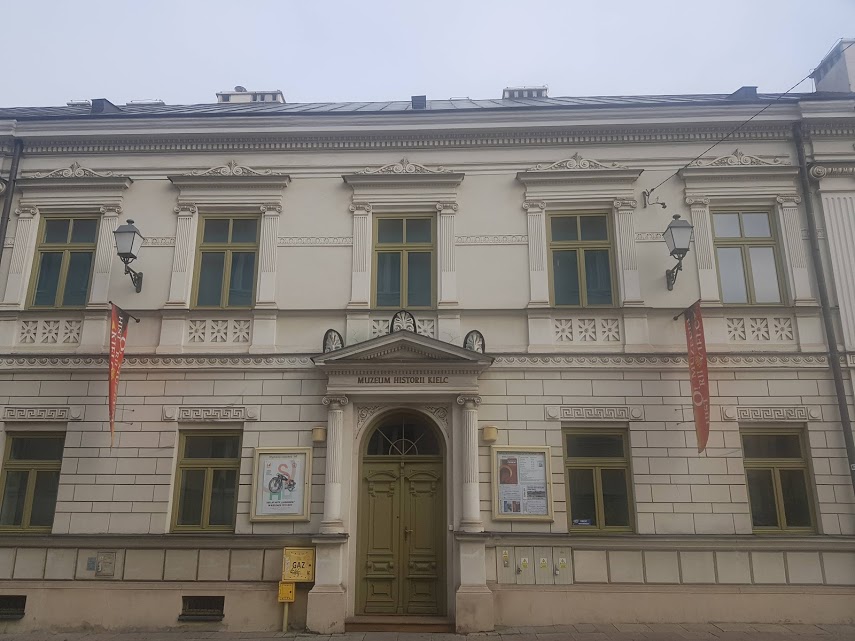
  • Kielce – History Museum of Kielce

    Kielce – History Museum of Kielce

    I had another of my little problems when visiting this museum. I had decided to visit the museum on a day when they were having a lecture about some local history matter. So, there were tens of people flooding into the museum building to listen to it and someone tried to offer me a seat and a drink. This clearly wasn’t ideal, I was hoping to see the museum, not the lecture as I wouldn’t have understand most of it as it was being given in Polish.

    So, stumbling with my best Polish, I found a staff member who initially thought I wanted to use the cloakroom to hang up my coat. Although, I obviously wasn’t wearing a coat, so the very helpful staff member pointed upwards in a questioning manner. I said yes, hoping that the museum was upstairs and that I hadn’t had some discussion on the after life with her. All was well though, she found an English speaking staff member who seemed genuinely pleased that someone wanted to see the museum.

    The next problem was that the museum area was locked, so we have to find a member of the security staff to unlock a series of doors. However, always willing and helpful, the museum transpired to be bigger and much more substantial than I had expected.

    A map of Kielce from 1828.

    In the nineteenth century, Kielce was effectively part of Russia and they implemented dual languages for their house numbering signs.

    A motorbike made by Huta Ludwików, a company which is still trading, in 1938 and which was the first to be made in the city.

    The entrance to the Jewish ghetto during the Second World War.

    A cassock and coat which was worn by Czesław Kaczmarek, the Bishop of Kielce from 1938 until 1963. Between 1951 and 1955 he was imprisoned by the communists because it was known that he had friends in the United States.

    Overall, this was a lovely museum, with helpful staff and absolutely no other visitors when I was there, other than for the lecture which was marvellously attended. Much of the display was available in English and it took the visitor through the city’s history in chronological order. There did seem to be some gaps in the narrative, but there is perhaps a limited amount of space and much of interest was in the rooms that they did have.

  • Kielce – Avenue of Fame

    Kielce – Avenue of Fame

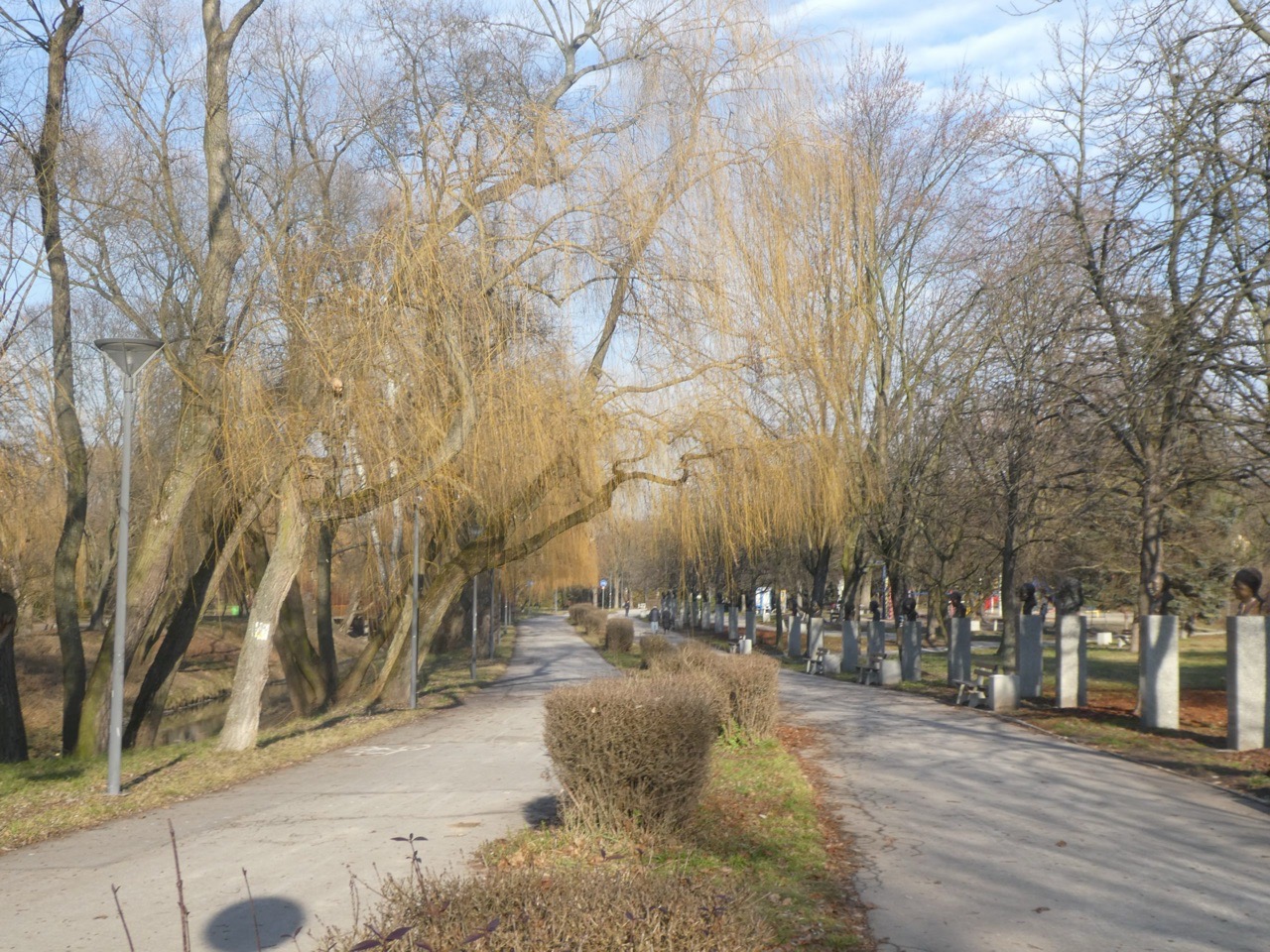
    I’m not entirely sure how the individuals are picked to be featured on the Avenue of Fame, but it’s an intriguing addition to Skwer Harcerski im. Szarych Szeregów, which is a city centre park.

  • PKP Intercity : Kielce to Warsaw

    PKP Intercity : Kielce to Warsaw

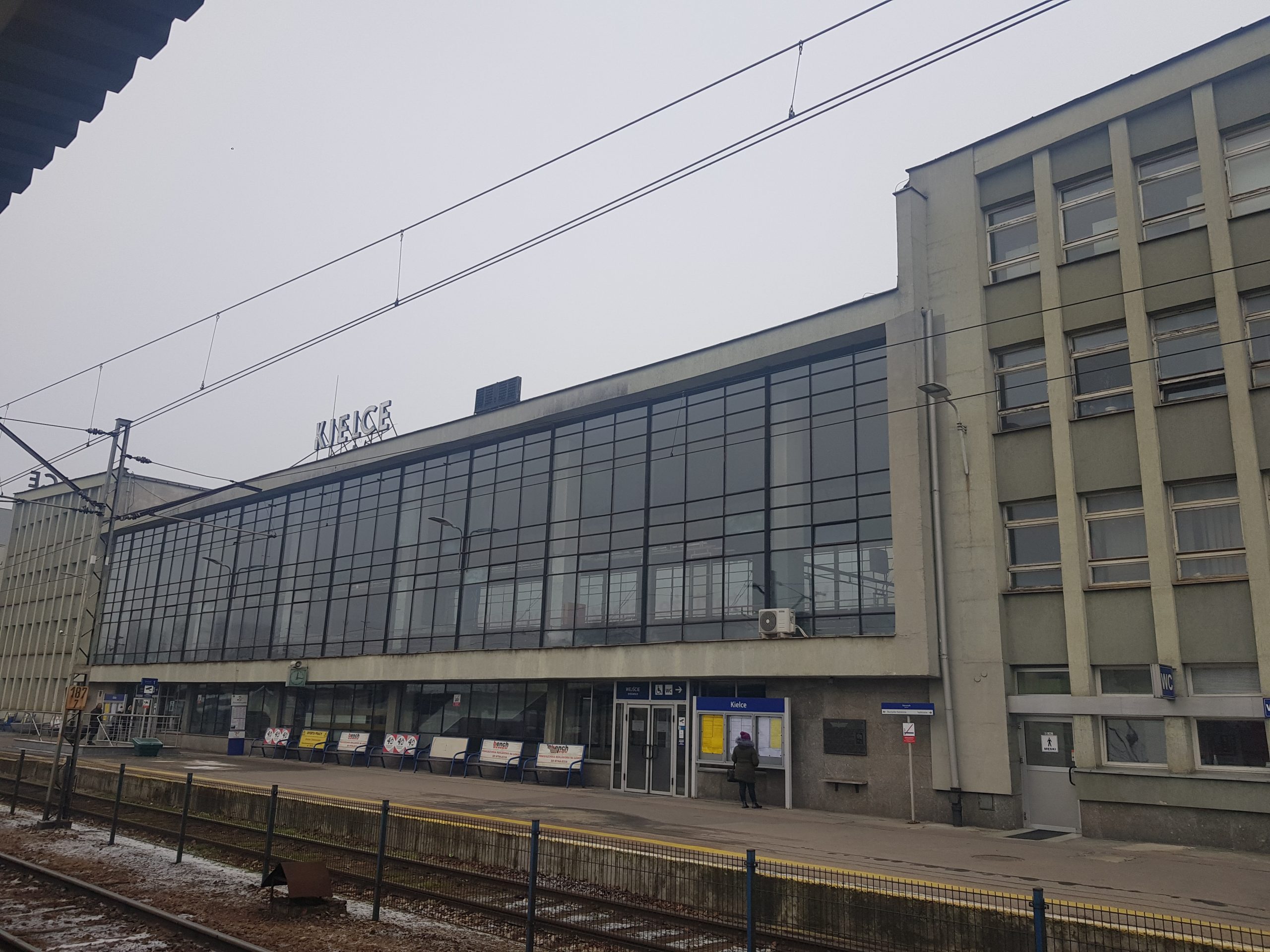
    Back at Kielce railway station, which had a light dusting of snow on the ground, getting the early afternoon train back to Warszawa Centralna. The service starts down in Krakow and ends in Olsztyn, with my ticket purchased on-line a couple of days ago.

    Artwork at the end of the subway at Kielce railway station.

    Kielce railway station waiting hall and ticket desks. The railway station was first constructed in the 1880s, but this is a much more modern building, albeit now quite dated.

    The old style split-flap boards, I miss these from London Liverpool Street.

    Lots of information boards, so it was clear from where the train was departing from.

    More platform, track and sector boards, which fortunately do make sense for those passengers paying attention.

    A busier service than I had anticipated, with the train being one of the older Stadler rolling stock, but it was all clean and well maintained.

    Boarding the train in Kielce. The journey was all smooth and on-time, with the train being nearly full. The seat reservation system works well, with the signage being relatively clear, although not perfect. The staff member performing the ticket check was helpful and polite, although I didn’t see any refreshment trolley working its way up and down the aisles on this service.

    The service starts from Kielce (where the 9hr 19 min) is above, then goes to Radom and then Warsaw. I noticed the very strange rail routing today on my map, although there is a line which goes directly from Radom to Warsaw without looping around. I assume it’s not a mainline, but there are no stops between Radom and Warsaw, so it’s an erratic route in geographic terms, which doesn’t make for the quickest of services.

    And safely into Warsaw…. There was a little problem here as the staff couldn’t open the doors, which led to the guard who was standing near me phoning someone. There was a good 60 second wait for the doors to open, which is fine when you are near the guard and can see what’s happening, but it’s nervy for those further down who just assume only their doors weren’t opening.

    It’s warmer in Warsaw and the air quality is better, I still have a sore throat that I’m putting down to air pollution in Kielce. Anyway, the train journey represented good value for money, around £6 for the three-hour long service.

  • Kielce – Ibis Centrum

    Kielce – Ibis Centrum

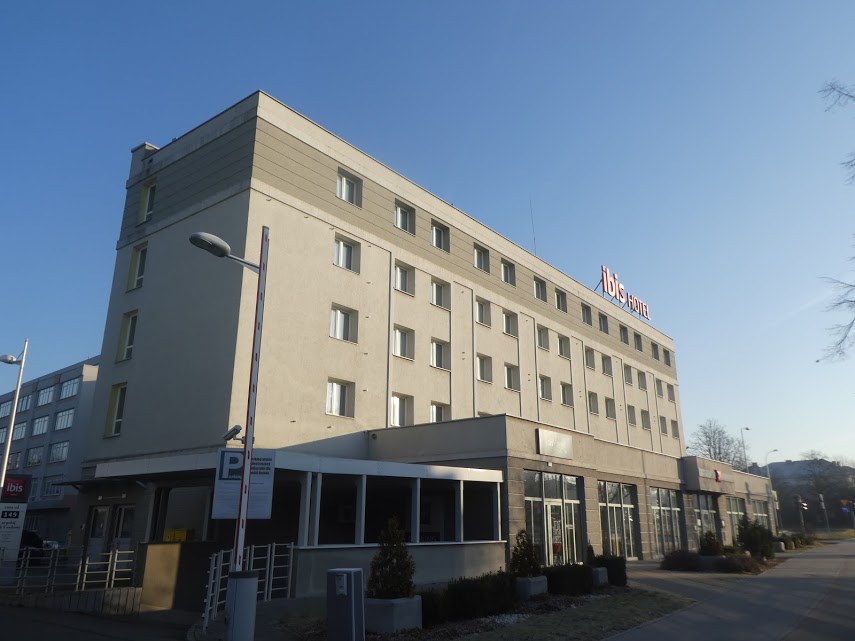
    Located a short walk from the city centre, and interestingly for me in what was once the city’s Jewish ghetto during the Second World War, this is a modern building. The welcome at the reception area was prompt and polite, with the staff member setting a friendly first tone.

    My room had its own mini corridor, very nice. Not that I could do much with that space, but it made the room feel a bit quieter.

    And the welcome gold amenity, very nicely done and this pleased me greatly.

    I was here for three nights and did do this for one day, earning 100 Accor points.

    The breakfast area, which is also where meals are served throughout the day and that’s the bar area on the right. It was never very busy. I’m not sure that the hotel needs such a visible car rental area though, it’s the first thing that customers see when entering and it’s not very subtle.

    The teas, coffees and juices are on the left hand side.

    Breads, croissants, apple pie and jams.

    Fruit, salad and hot dog accompaniments.

    Very lovely.

    The welcome drink, the staff member helpfully told me that I could have a darker beer, but she took the bottle and so I don’t know exactly what it was. It tasted fine though, it’s a nice change from the standard Zywiec.

    Without being rude to the band or hotel, this simply didn’t work as far as I’m concerned. The hotel knocked out its bar and restaurant for the evening, disturbing every single one of its customers (I know this as I was the only customer in the bar, and had to leave quicker than I wanted). The hotel is meant to be promoting its restaurant and it can’t do that by shutting it to put a band on. I know it’s all part of Ibis’s engagement with music, but I’m not sure that was how the concept was meant to work, shutting restaurants and bars in order to put very loud music on. Anyway, as a positive, it was nice of the hotel to engage with a band and try something different, as innovation is the key as they say. I’m not sure who says that, but I’m sure that someone does.

    The hotel was clean throughout and everything was well managed, although it always felt quiet (other than when the band was playing, which I could hear on the fourth floor). The sound proofing seemed effective, as there was no noise disturbance either internally or externally (other than the band) and the staff were always friendly and helpful. The air conditioning that the hotel use is though inadequate and would ideally be better, although it’s frequently not that good in Ibis hotels. Anyway, all told, all very lovely given that the room and breakfast was under £25 per night.

  • Kielce – Jewish Ghetto

    Kielce – Jewish Ghetto

    Before the Second World War, there were around 25,000 Jews living in Kielce, which was around a third of the city’s population. Only around 400 Jews from Kielce survived the Second World War, and some of those died in the Kielce Jewish Pogrom in 1946, which marred the city’s reputation for decades.

    There’s not much left from the ghetto period, but there is this memorial to it. One surviving building is the Jewish synagogue, although it’s not used by the community now, and I noticed that the Ibis Hotel that I stayed in is located within the former ghetto area. It’s all a modern area now, there are few traces of the horrors which took place here.

    This figure relates to when the ghetto was liquidated in August 1942, with over 20,000 people sent to Treblinka concentration camp, where they were killed. Many more died whilst living in the ghetto or during the transportation. The memorial is a necessary reminder of what was lost during the Second World War, with the Jewish community and its buildings being nearly entirely destroyed.

  • Kielce – Their Smog Problem

    Kielce – Their Smog Problem

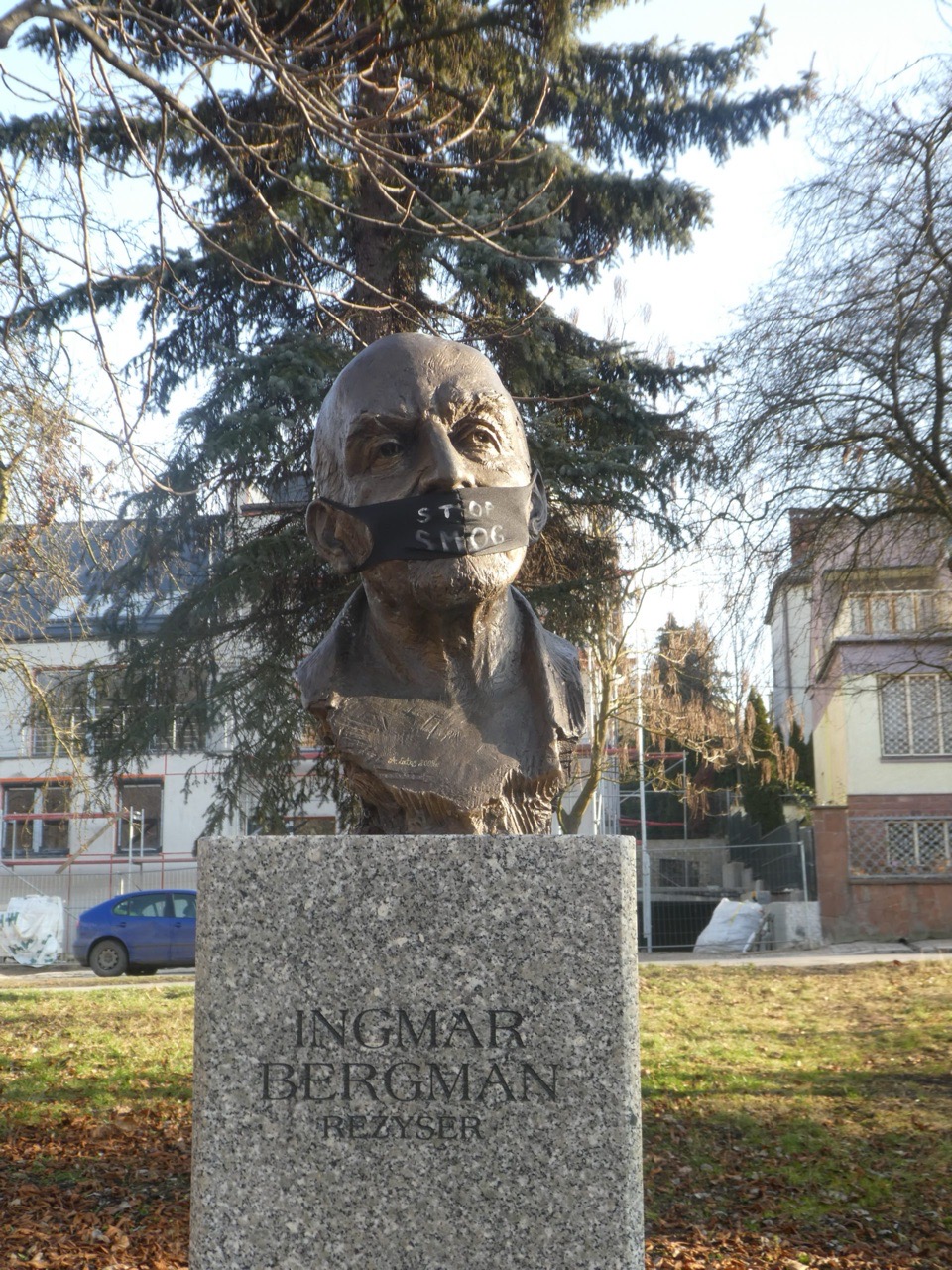
    I noticed in one of the city’s parks that some of the statues there have smog masks on them, which slightly bemused me at the time, although I thought no more of it. Anyway, yesterday evening I initially thought that the hotel’s air conditioning was somehow circulating cigarette smoke, which was slightly surprising as it’s a non-smoking hotel and it’s a relatively new build hotel.

    So, to deal with what seemed like smoke pollution, I opened the window, but it was apparent that it was getting no better. Indeed, this transpired to be a bloody stupid thing for me to do, as the problem wasn’t the hotel, it’s the air in Kielce. The smog here is at levels which should be unacceptable in any city, and although there are plans by the EU to cut down on the problem, it’s certainly not yet resolved.

    Looking at the levels for the last two days that I was here, they were low, so I never really noticed the problem. But, now the levels are high today, it’s definitely noticeable. It can’t be doing the health of the city’s residents any good at all, nor can it be doing anything to promote tourism to the region. I did feel slightly short of breath yesterday, which entirely confused me as that’s not something that I usually ever have a problem with. I’m leaving this wonderful city today, but I’ll be glad to be away from the air pollution.

  • Kielce – The National Museum in Kielce

    Kielce – The National Museum in Kielce

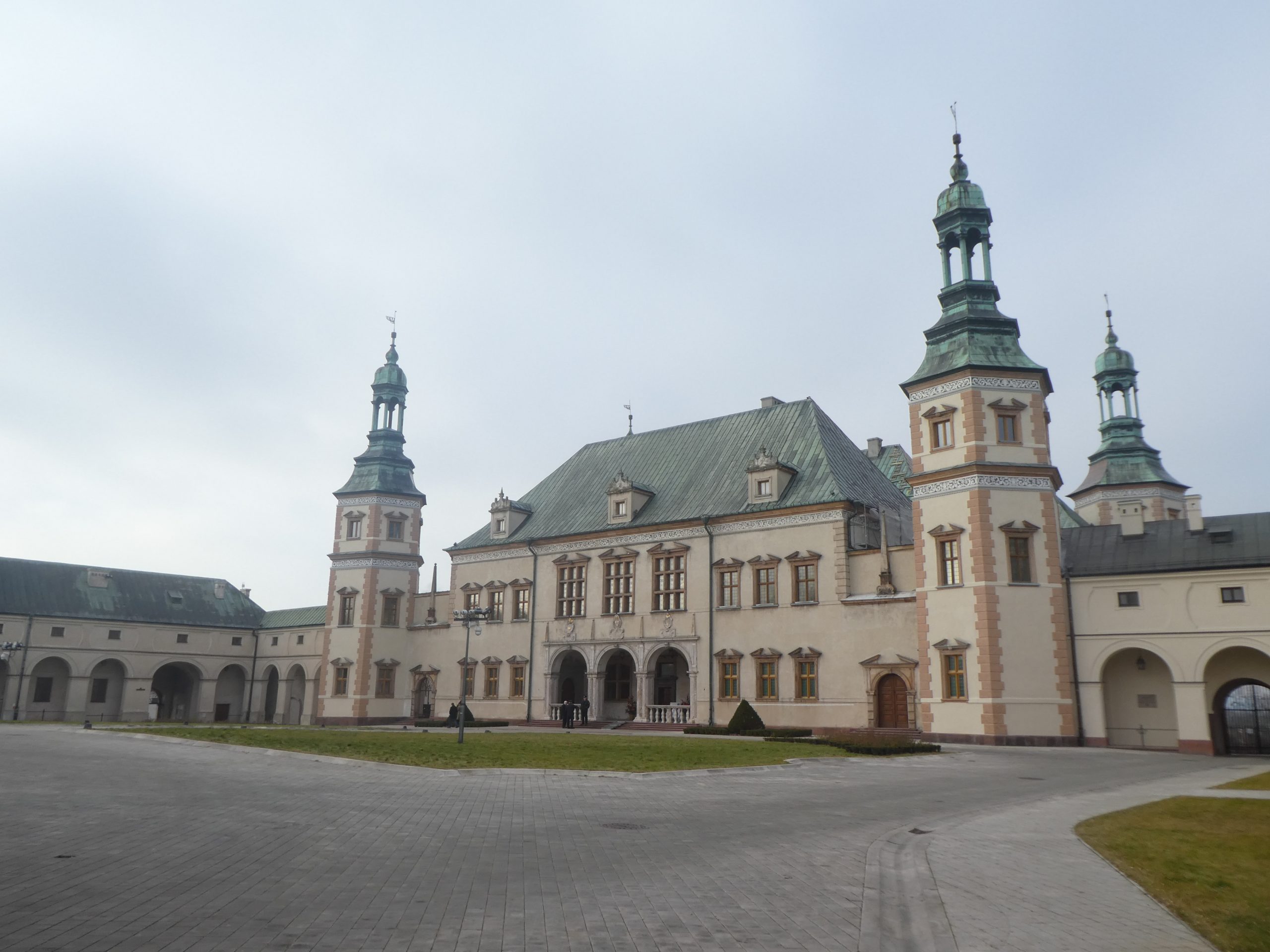
    This is the National Museum’s outpost in Kielce, located in the former Palace of the Krakow Bishops. As can be seen from the front of the building, not much expense was spared for the comfort of the bishops. Very humble…. Today, the building is used as a museum, although some of it is currently closed due to renovation work.

    The welcome at the counter was friendly, with the museum staff giving me a rather nice little book in English giving the history of the building. It’s one of the most professional books that I’ve seen given to visitors, equivalent to the books that museums usually charge several pounds for in the UK. I knew that entry to the museum was free on Saturdays, but I pretended to be excited when the staff member told me, not least because it was a relief I had got the correct day for free admission.

    The museum has a little problem at the moment with trying to get visitors around the building when part of it is shut. This is a particularly big problem for the staff when they have an English visitor who can only follow very basic instructions in Polish, and even then, likely wrongly. So, I was escorted through sections of the building at some speed, but it was always done kindly. I did get lost at one point, but so did a Polish visitor, so we teamed up to work out where to go. All was well, such is the benefit of an international collaboration.

    The first part of a visit to the museum is to see the former private rooms of the Bishops of Krakow, which were used between the building’s construction in 1642 until the State Treasury decided they wanted it in 1789. Above is the First Bishop’s Room, which was formerly the second antechamber, later used for private meals although it was for a long time a bedroom. Handily, there were cards in English in each room which gave a history of what it was once used for, as well as an explanation of the exhibits.

    Originally a lobby, this is the small room that Bishop Kajetan Soltyk used as a bedroom.

    The grand Upper Hall, where celebrations would have taken place.

    This well is from the eighteenth century and goes down a long way. I like the little alcove which is visible in the floor below, with this well being located within the centre of the former Palace.

    The next part of the visit is to the collection of the Polish paintings, which takes up fifteen or so rooms. There is also an international collection, but this is part of the museum which is closed, with many of the artworks temporarily being located at Szczecin. I’ve posted about the Amalfi Cathedral painting and the Concentrating Area XVII elsewhere, with the Polish collections being interesting, although I hadn’t heard of many of the artists.

    It’s a grand building and it’s positive that it is in use as a museum, as it has been used for all manner of things since it was taken in 1789. It’s been used by the local government, as a technical academy, a mining school, by the Poles in military campaigns and by the Germans in military campaigns. There has been some restoration work to show the painted ceilings and interiors as they might have been, although much of the original features have remained.

    All told, this is a nicely managed museum, especially given the technical problems they must be facing at the moment shunting visitors around the building. There’s also apparently an impressive garden which can be visited in the summer, which I can imagine isn’t as exciting in January……

  • PKP Intercity : Warsaw to Kielce

    PKP Intercity : Warsaw to Kielce

    Although I’ve been pleased with how good the services from Flixbus have been recently in Poland, I’m also conscious that I do prefer rail travel. The fare to get from Warsaw to Kielce was around £6 with both Flixbus and PKP Intercity, so on this occasion, I went for the rail option.

    The ticket purchasing process is all very easy with PKP and it can be done on-line and the ticket is sent as a PDF file which can be saved to the phone. Although international tickets and berth tickets need to be printed, there’s no such need for intercity services within Poland. I completed the purchase on PKP’s Polish site, but they do have an English version.

    Everything was very clear, this is platform 3 at Warszawa Centralna, with the yellow printed timetables visible, as well as on displays in numerous places. Like nearly everything else in Poland, the platform and railway station were clean and tidy.

    This tells passengers where to wait on the platform depending on which carriage their reservation is at, with mine being the 14:25 service to Krakow.

    The European way of presenting track information isn’t always obvious at first, this is platform 3, track 2.

    And the sector of the platform I have to wait at. So, platform 3, track 2, sector 3.

    Here comes the train, dead on time. I used my phone to take this and so it’s a bit blurry, but the signage along the train makes things nice and clear for passengers who want to check that this is the correct service. I appreciate this, I hate confusion when using public transport, especially when it’s avoidable. Also, trains across much of mainland Europe, and indeed the United States, have a number on, which makes it much easier to see which service is which. The UK don’t have this and perhaps they should….

    It’s not the most luxurious, but second class is sufficiently comfortable. There is wi-fi and power at every seat, both of which worked fine. The passenger next to me had an argument with the conductor for about three minutes, which seemed very exciting. It was more of a complaint than an argument and I was disappointed that I couldn’t follow exactly what was going on and what was being said. It was something to do with the out of order toilet, but I’m not sure exactly what, nor why the discussion went on for so long. But, little dramas like this are exciting.

    Disembarking at Kielce, the train arrived on time. I was surprised that the bulk of passengers got off here, I thought most would be going from Warsaw to Krakow.

    And Kielce railway station. All was well with this journey, the staff were polite and the ticketing purchasing was easy to understand. There is a catering carriage on board, but a staff member also pushes a trolley through selling hot and cold drinks, as well as snacks.