Tag: Holy Trinity Church

  • Royal Tunbridge Wells – Holy Trinity Church (Thomas Moon)

    Royal Tunbridge Wells – Holy Trinity Church (Thomas Moon)

    The gravestones at Holy Trinity Church in Royal Tunbridge Wells are now mostly shoved around the outside of the churchyard, some being more accessible than others.

    This is the grave of Thomas Moon, who was born in 1823. If I’ve got the correct birth record, he was baptised on 1 May 1823, the son of Richard Moon (who worked as a fishmonger) and Priscilla Moon. At the 1841 census, Thomas was living with his parents and his 1-year old brother, Henry. He died at the age of 24 on 19 April 1847 and was buried on 25 April 1847.

    And that, annoyingly, is the limit of what I can find. Why he died at that relatively early age, I don’t know…..

  • Royal Tunbridge Wells – Holy Trinity Church

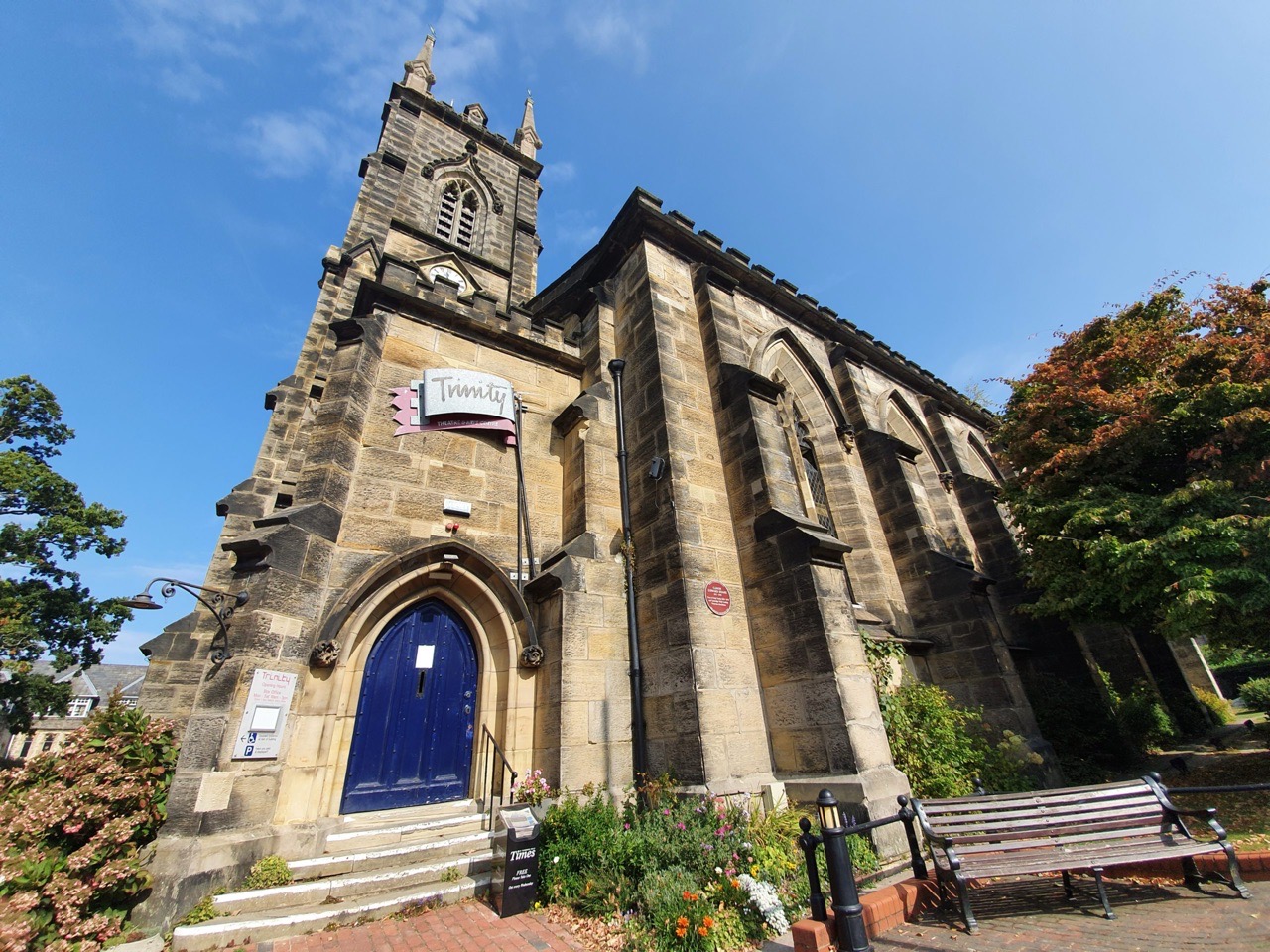
    Royal Tunbridge Wells – Holy Trinity Church

    What is now the Trinity Theatre, a well-respected theatrical hub for the area, was constructed as Holy Trinity Church in 1829. It was designed by Decimus Burton and was the main church for the town. Unfortunately for the building, by the 1960s there were falling congregation numbers and in 1972 the church was declared redundant. The Church Commissioners, who by all accounts were hardly pro-active in their efforts, left the building to dereliction and it was only due to pressure from the local community that funds were finally raised to re-open as a community theatre and arts centre in 1981.

    Over its history, the church has been noted for some of its vicars, not least Edward Hoare who took over in 1853 and built quite a reputation for his sermons, remaining in post until his death in 1894. The vicar in 1907 also seems to have been quite innovative, as he installed phone lines which led from the pulpit to the pews to assist the hard of hearing amongst his congregation to hear the sermons.

    Fortunately, the structure of the building has been saved.

    Less fortunately, the graveyard has been mostly decimated and the gravestones shoved to the outside whilst picnic benches and car parking spaces have been left to take over the space that has been left. It doesn’t feel very dignified and I’m not sure it’s what the families of those who died would have liked. But, it seems better to have this than to have entirely lost the building.

    And where there were once graves, there’s now a seat.

  • Chesterfield – Holy Trinity Church

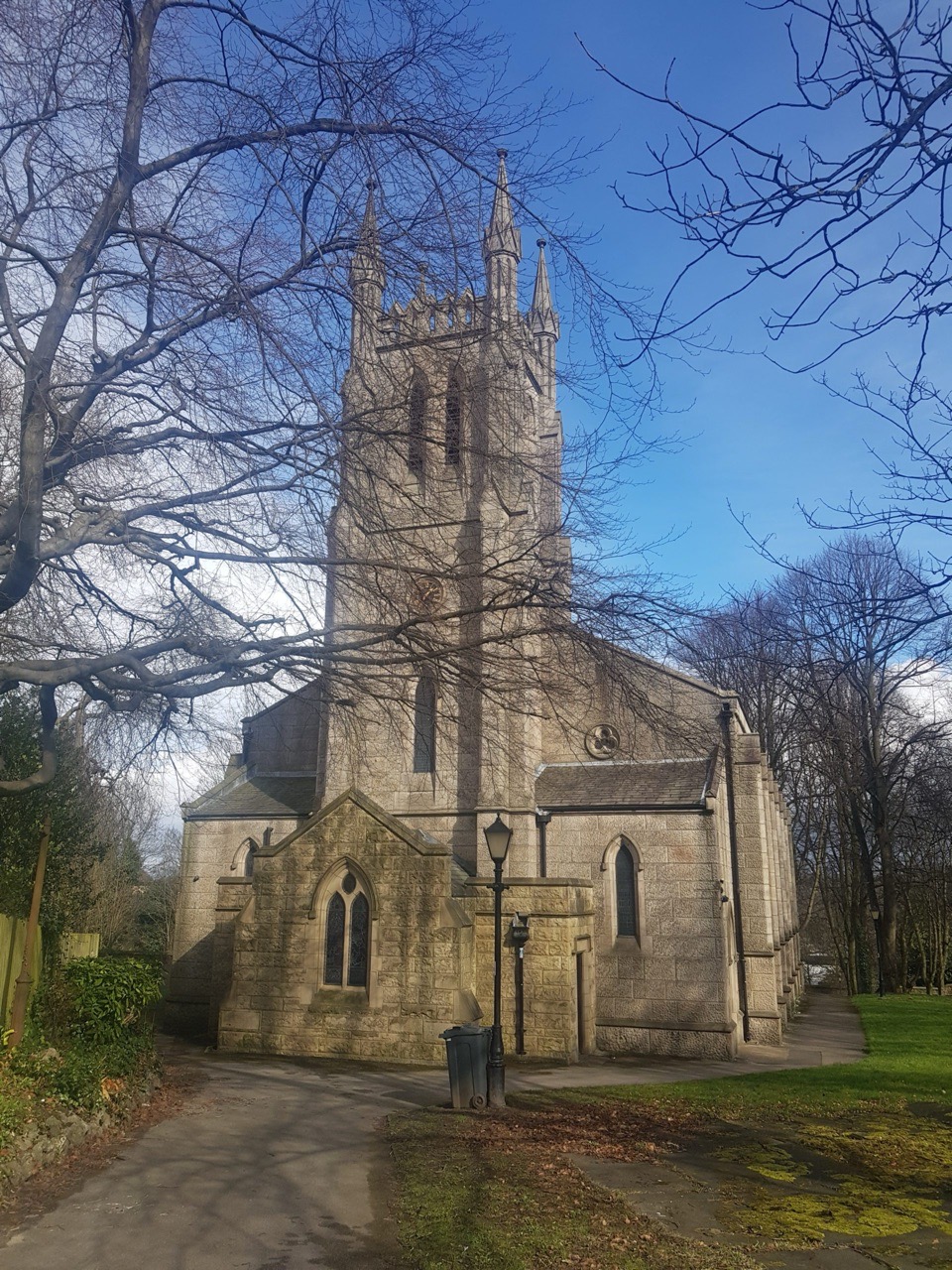
    Chesterfield – Holy Trinity Church

    This church is a short walk from the centre of Chesterfield town centre and is nearly always shut, which is rather unfortunate. From reading reviews though, this appears to be for the security of the building than out of any desire to keep people out.

    The church was built between 1837 and 1838, being designed by Thomas Johnson and, to be honest, it’s not a particularly innovative building, especially how bits have been shoved onto it. But it still felt dignified in the afternoon sun, with the churchyard appearing well kept.

    There’s a memorial outside which is to the family of George Stevenson, not to be confused with George Stephenson, the father of the UK railway network who lived nearby at Tapton House.

    This is an unfortunate coincidence, as the great George Stephenson is buried inside the church, with a very simple tomb just with the initials GS. The confusion about his burial location isn’t recent, as in 1876 a reader wrote to the Derbyshire Courier questioning an article which had mentioned that he was laid to rest in the churchyard. The reader wrote:

    “For those who are interested in local worthies, I beg to state that I attended George Stephenson’s funeral and his remains are deposited on the right hand side of the communion table, inside the rails of Trinity Church”.

    Stephenson died in August 1848 and the relatively basic burial was deliberate, a newspaper at the time mentioned “it is in keeping with his life”. On the day of the burial the shops in the town were closed and the streets were busy with people, wanting to see the funeral cortege of the great man.

    The inside of the church would have had box pews when it opened, although these were removed during the late nineteenth century. There is stained glass in the east window which was placed there by his son, Robert Stephenson in his father’s memory. Much in the church is original, not that I got to see it, such as the 1838 font and pulpit. It’s a shame that there isn’t a way for the church to open a little more frequently though.

  • Isle of Wight Trip – Day 0 (Cowes – Holy Trinity Church)

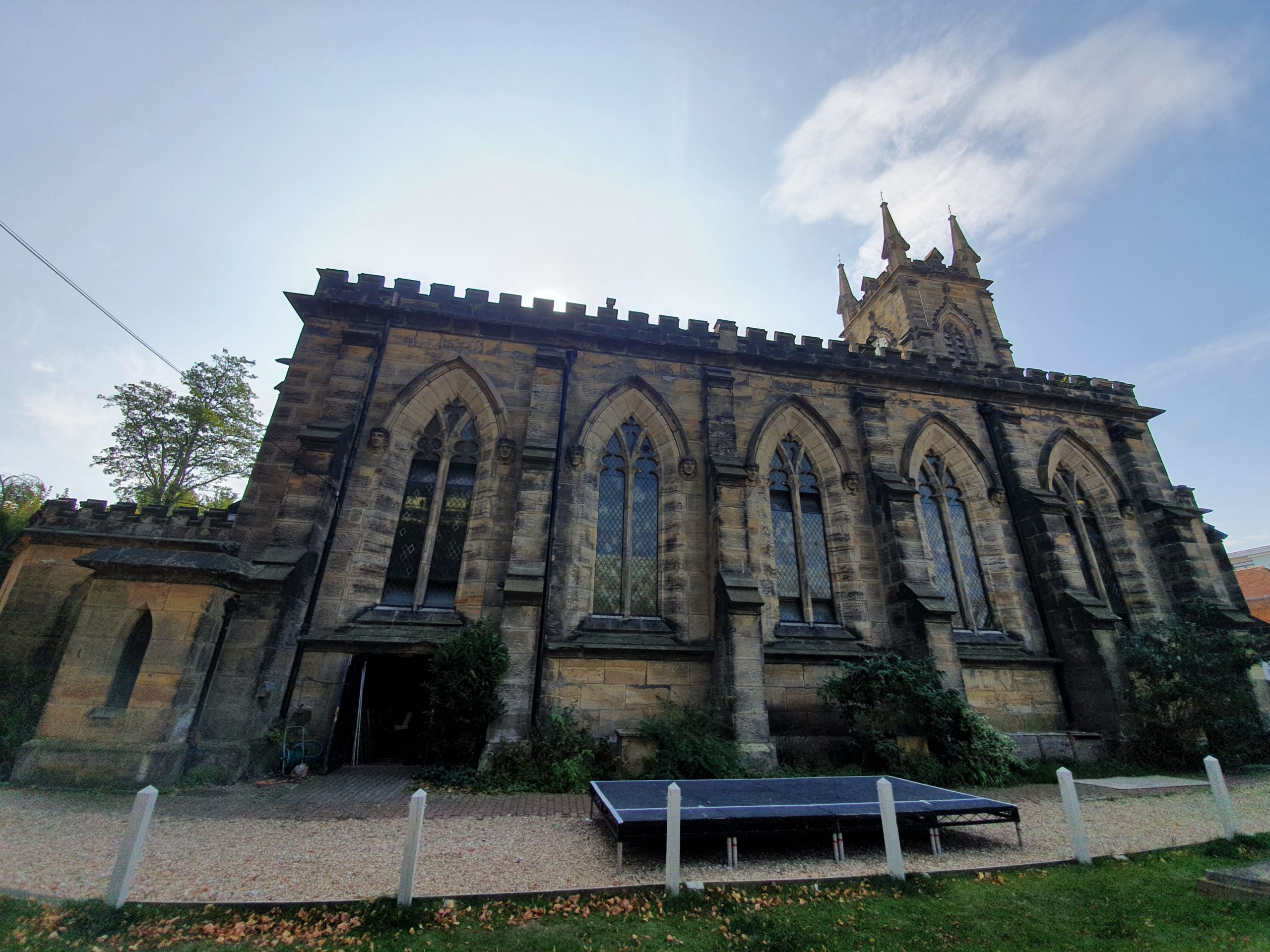
    Sadly, Holy Trinity Church in Cowes was locked when I tried to visit, so I wasn’t able to see inside. However, it was built in 1832 and was designed by Benjamin Bramble using primarily Isle of Wight yellow brick and was based on the same designs which were used for St. Thomas’s Church in Ryde. The church was funded by Sarah Goodwin and intriguingly she did this to provide employment for her son-in-law the Reverend Maximillian Geneste. How rather noble…

    The church was formally consecrated on 21 June 1832 by the Rt. Reverend, the Lord Bishop of the Diocese. There was a collection held after the service which was donated to the Funds of the County Female Penitentiary. I liked how the church was advertising for a new curate in 1867 and they wanted “an active, earnest fair preacher, of no extreme views”.

    A view of the tower which has extensive views out to sea, so it’s no surprise that there is a strong connection with the maritime community. In the garden of the church there is a memorial to those killed in the Fastnet Race in 1979, when fifteen yachtsmen died along with another four people who were watching the event from a yacht.

    It was mildly disappointing that I couldn’t get to see inside, but maybe another time.